What It Means When You Spot A Woolly Bear Caterpillar In Your Michigan Yard
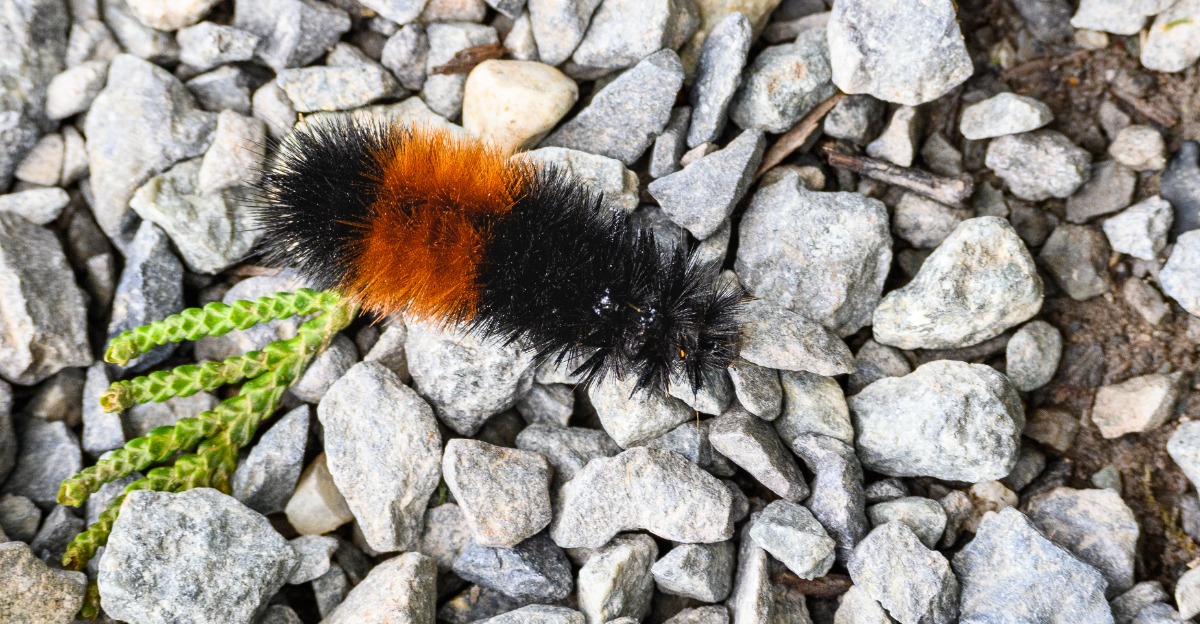
There is a moment every autumn in Michigan when something small and fuzzy hurries across the driveway. It moves with surprising purpose, like it has somewhere to be before the first frost settles in.
Maybe you paused. Maybe a kid in the yard scooped it up and watched it curl into a tight little ring in their palm.
For generations, folks around the Great Lakes have treated that tiny traveler as a walking weather report. Grandparents counted its stripes and made bold predictions about snow.
The truth is stranger and more interesting than the old folklore suggests. What that fuzzy visitor is really telling you has more to do with soil, leaf litter, and a remarkable survival trick than with the coming winter.
The Fuzzy Autumn Wanderer Crossing Your Driveway
That bristly brown and black traveler hustling across your pavement is the larva of the Isabella tiger moth, and it is on a mission. It is not lost, and it is not looking for your garden.
Michigan yards see the biggest wave of these wanderers from late September through October. By that point, the caterpillar has already spent the summer munching on low-growing plants like plantain, dandelion, clover, nettle, and grasses.
Its stomach is full and its growing days are finished. What it wants now is shelter, so it walks. Sometimes it travels a surprising distance, which is exactly why you keep spotting them on sidewalks, patios, and country roads.
Seeing one means the season has genuinely turned. The soil is cooling, daylight is shrinking, and the insect world is packing up for the year.
They are harmless to handle for most people, though the stiff hairs can leave sensitive skin feeling a bit itchy. Wash your hands afterward and you will be fine.
If you find one on hot asphalt or in the middle of a busy path, a gentle nudge toward the nearest leaf pile is a kindness worth doing. Use a leaf or a stick rather than pinching the body.
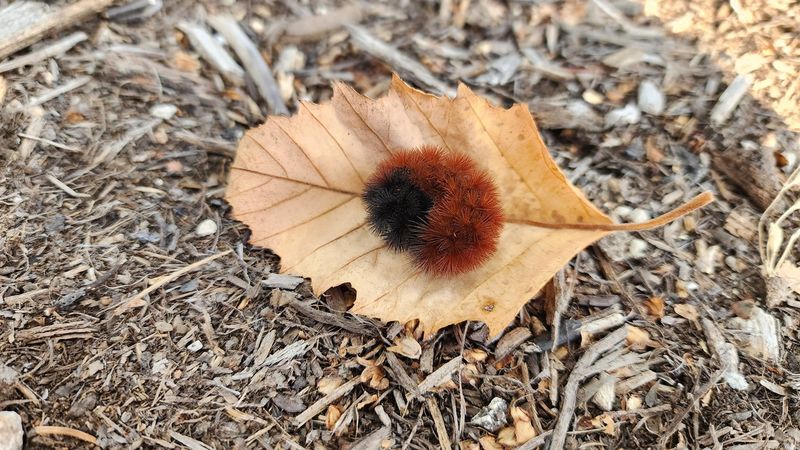
Here is the charming part. When startled, it curls into a tight bristly circle and plays possum, which is a defense against hungry birds rather than a trick for your amusement.
Reading The Rust And Black Bands Without The Folklore
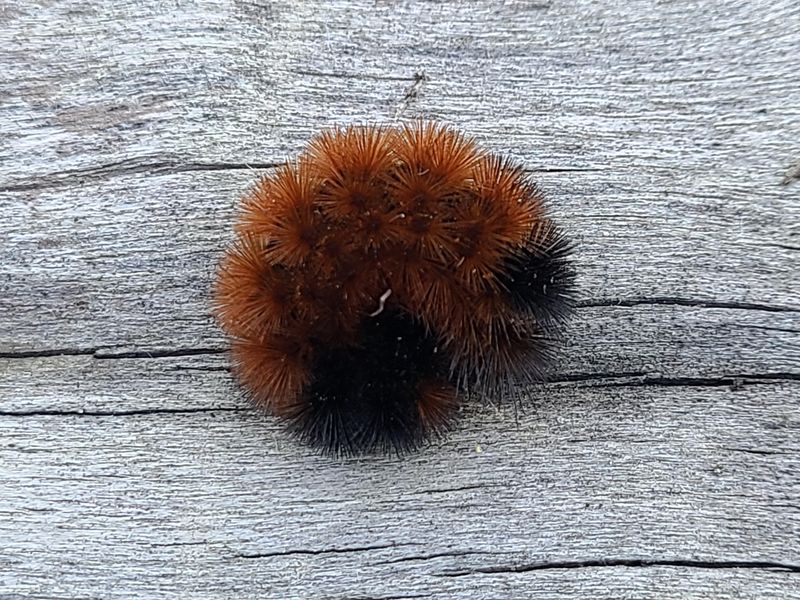
Ask around at a Michigan cider mill and someone will tell you a wide rust band means a mild winter. It is a wonderful story, and it is not how the stripes work.
Those bands change as the caterpillar grows. Each time it sheds its skin, the reddish-brown middle section tends to widen and the black ends shrink.
So a broad rust band mostly tells you that the individual is older and has been eating well. A mostly black one is often younger, or it hatched later in the season.
Moisture matters too. Caterpillars that grew up in a wet spot may end up darker, which has nothing to do with January snowfall in Traverse City or Detroit.
The myth traces back to a 1948 study by a curator at the American Museum of Natural History. He collected caterpillars in New York, made a forecast, and the press ran with it for decades.
Your Michigan Garden Changes Every Week. Your Plan Should Too.
Gardening in Michigan changes quickly throughout the season. Every Friday you’ll receive a simple weekly plan showing exactly what to plant, prune, fertilize, harvest, and protect so you never miss the right timing.
Later research found no reliable link between band width and upcoming weather. Even the original researcher treated it as fun rather than science.
That said, the stripes still tell you something useful. A yard producing plenty of plump, wide-banded individuals is a yard with healthy weedy growth and undisturbed corners.
Let the kids count bands anyway. Then let them in on the real secret, which is that the caterpillar is describing its own summer instead of your winter.
The Frozen Survival Trick Hiding Under Your Leaf Litter
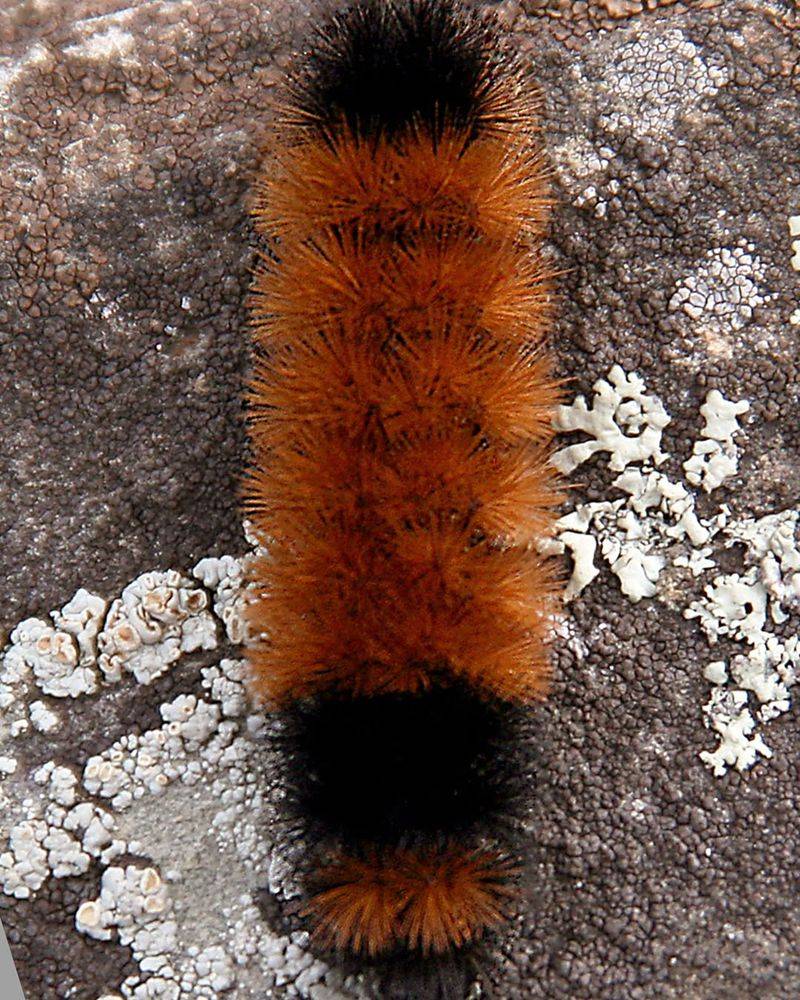
Most insects handle Michigan winters as eggs or pupae tucked away somewhere safe. Woolly bears do something far bolder. They spend the whole winter as caterpillars, out in the cold.
Once they find a hiding spot under leaf litter, loose bark, a log, or a rock crevice, they stop moving and let their bodies freeze solid. Ice actually forms in the spaces around their cells.
They pull this off by producing a natural antifreeze compound called glycerol. It protects the inside of their cells while everything around them turns to ice.
Cold snaps that would flatten other insects barely register. Relatives of this species living in the Arctic can survive temperatures far below anything the Upper Peninsula throws at them.
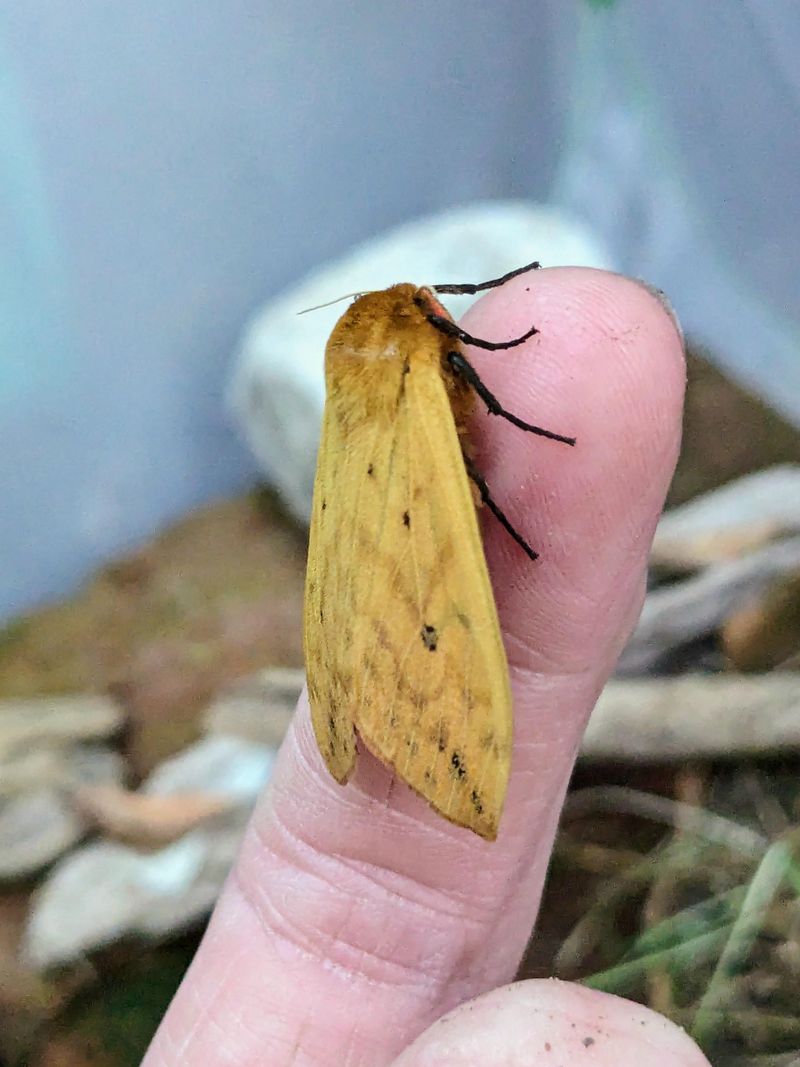
Come spring, the thaw wakes them up. They nibble a little, spin a fuzzy cocoon using their own bristles mixed with silk, and emerge weeks later as a soft yellowish-orange Isabella tiger moth.
Understanding that cycle changes how you look at your yard in November. Every bag of leaves hauled to the curb may be carting off a winter shelter.
Leaving a few unraked corners under shrubs or along a fence line costs you nothing. Those quiet patches are the difference between a caterpillar making it to spring and not.
The fuzz, by the way, is not insulation. It is mostly armor against birds and predatory insects.
Common Yard Habits That Work Against Them
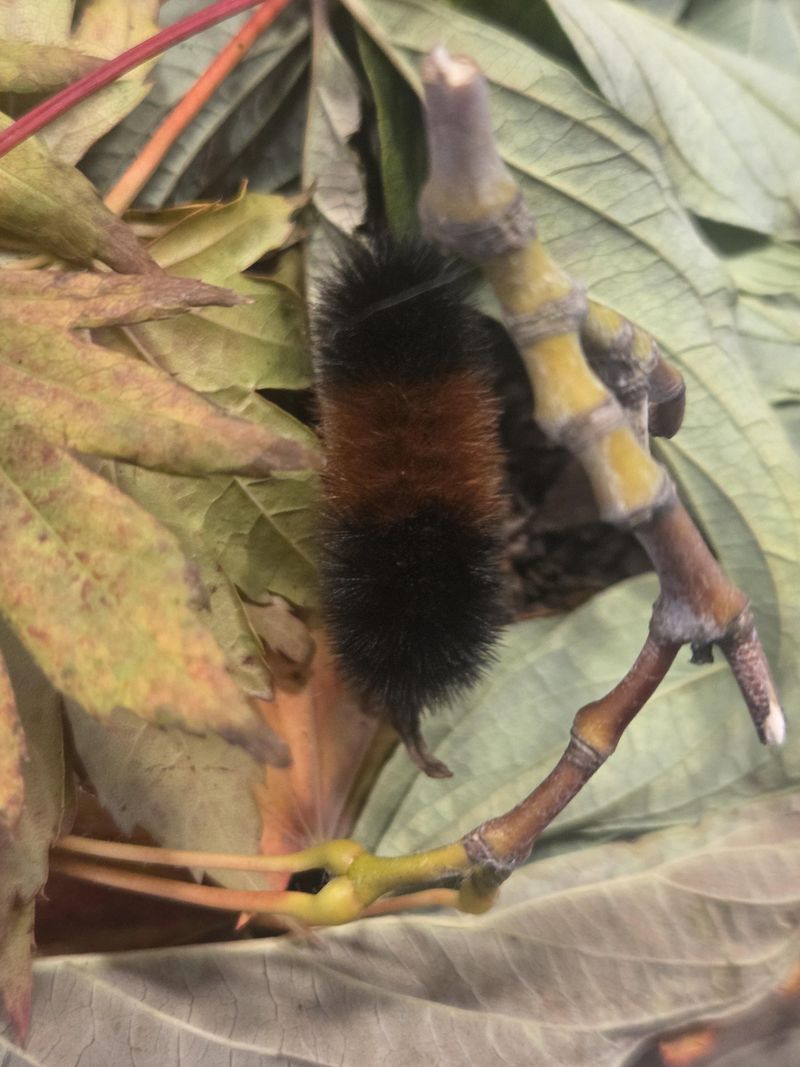
Here is the part where good intentions backfire. The tidiest yard on the block is often the toughest place for a woolly bear to survive the winter.
Stripping every leaf from the property in October removes the exact bedding these caterpillars depend on. Blowers and vacuums are especially rough, since they scatter or shred whatever is sheltering underneath.
Late-season lawn treatments cause trouble as well. Broad insecticide applications reach far past the target pest and hit harmless larvae hiding at soil level.
Weed killers create a slower problem. Wiping out every dandelion, plantain, and patch of clover removes the summer buffet that lets caterpillars grow fat enough to make it through the cold months.
Mowing very short right before frost strips away the last bit of cover at ground level. A slightly taller final cut leaves more hiding space.
Burn piles and fall bonfires deserve a second thought too. Brush stacked for weeks becomes prime winter real estate before anyone strikes a match.
None of this means abandoning yard care. It means shifting the timing and leaving a few messy zones on purpose.
Try mulching leaves in place with the mower instead of bagging them all. Shredded leaves feed the soil and still offer plenty of shelter.
Rake pathways and the front lawn if you like. Then let the back fence line, the shrub beds, and the woodland edge stay gloriously untidy.
Simple Ways To Make Your Yard A Safe Winter Stop
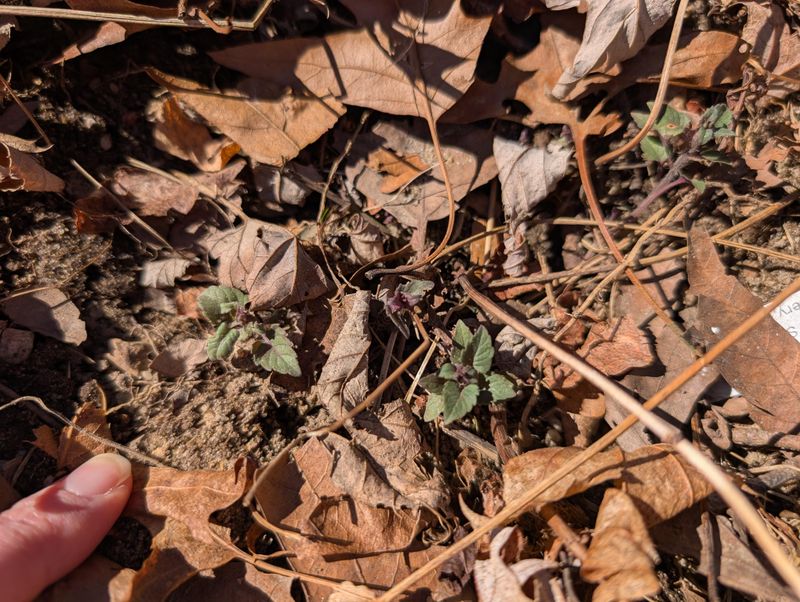
Helping these caterpillars mostly involves doing less work, not more.
Start by picking one or two low-visibility corners and declaring them off-limits to the rake. Under a lilac, along a back fence, or behind the garage all work beautifully.
Pile a few inches of fallen leaves over garden beds and let them stay put until temperatures hold steady in spring. Waiting until mid to late May gives sheltering insects time to finish their cycle.
A modest brush pile made from pruned branches adds structure and crevices. Toss a couple of flat stones or a chunk of old log nearby for extra hiding spots.
Skip the fall insecticide unless you have a real problem that requires it. Spot treatment beats blanket spraying every time.
Let some native plants grow in a sunny strip. Asters, goldenrod, milkweed, and even a few tolerated weeds keep next summer’s caterpillars fed.
Cut back on lighting near garden edges if you can. Bright outdoor bulbs disorient the adult moths that emerge in late spring and early summer.
Once the ground freezes, the work is finished. Your job becomes waiting.
Come April, watch those same leaf piles. Warm afternoons often bring drowsy woolly bears out for one last snack before they spin their cocoons and change into moths.
The Bigger Picture Behind A Single Fuzzy Visitor
One caterpillar on the sidewalk seems like a tiny thing. Zoom out, though, and it is a status report on your whole patch of ground.
Their presence suggests your yard still grows the broadleaf plants they eat and still holds the leafy debris they need. Chemical pressure is probably light. Soil life is probably active.
They also feed the neighborhood. Birds, shrews, and toads all take advantage of the fall migration, and the adult moths become food for bats on summer nights.
Researchers pay attention to them for another reason. Because woolly bears are common, easy to recognize, and tied closely to seasonal timing, shifts in when they appear can hint at broader climate changes across the Great Lakes region.
Michigan folks have an unusually warm relationship with this insect. Autumn festivals in the Midwest have crowned woolly bear mascots and even held caterpillar races for decades.
That affection is worth something. People protect what they recognize, and few insects get recognized as readily as a fuzzy banded caterpillar in a child’s hand.
So the next time one crosses your path, resist the urge to relocate it to a jar. Point it toward the leaves and let it go about its business.
Next summer, a pale golden moth may flutter past your porch light. That will be the same creature, having survived a Michigan winter frozen stiff and come out the other side.