What’s Behind The Silk Tents Showing Up Across Louisiana Lawns
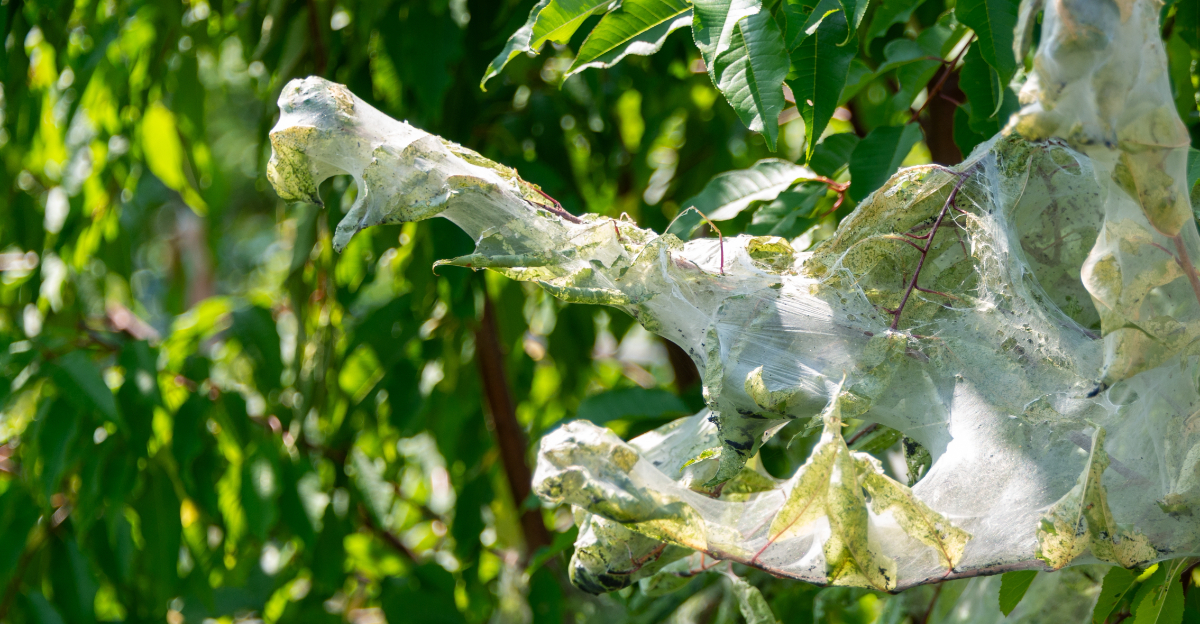
Pale silk clings to your pecan branches overnight, uninvited. Louisiana humidity turns those threads into a shelter above you. Leaves trapped inside turn brown and curl before you blink.
Neighbors trade theories across your fence, blaming spiders or drought. Nobody mentions the real workers resting quietly near your porch. Tiny caterpillars spin these tents while you sleep soundly.
They chew steadily, working in shifts above your quiet lawn. Autumn in Louisiana gives them ample time to spread near you. Watching branches turn brittle and brown catches your attention fast.
Calm attention serves you better once webbing takes hold. Understanding these insects changes how you handle your tree. Your next move determines whether that pecan tree recovers strong.
Each colony works quickly, stripping branches close to you. Ignoring them now only lets damage climb closer to you. Once you see what’s really happening up there, ignoring it simply stops being an option.
Silky Tents In The Treetops Signal Who Moved In
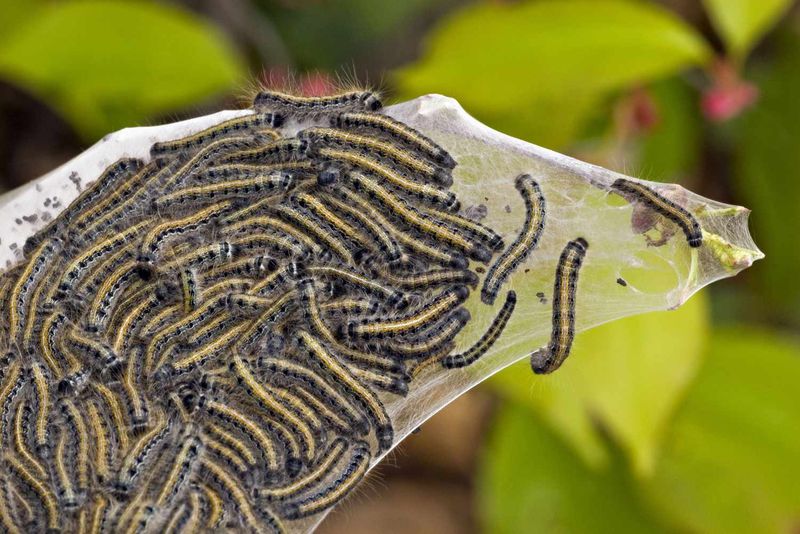
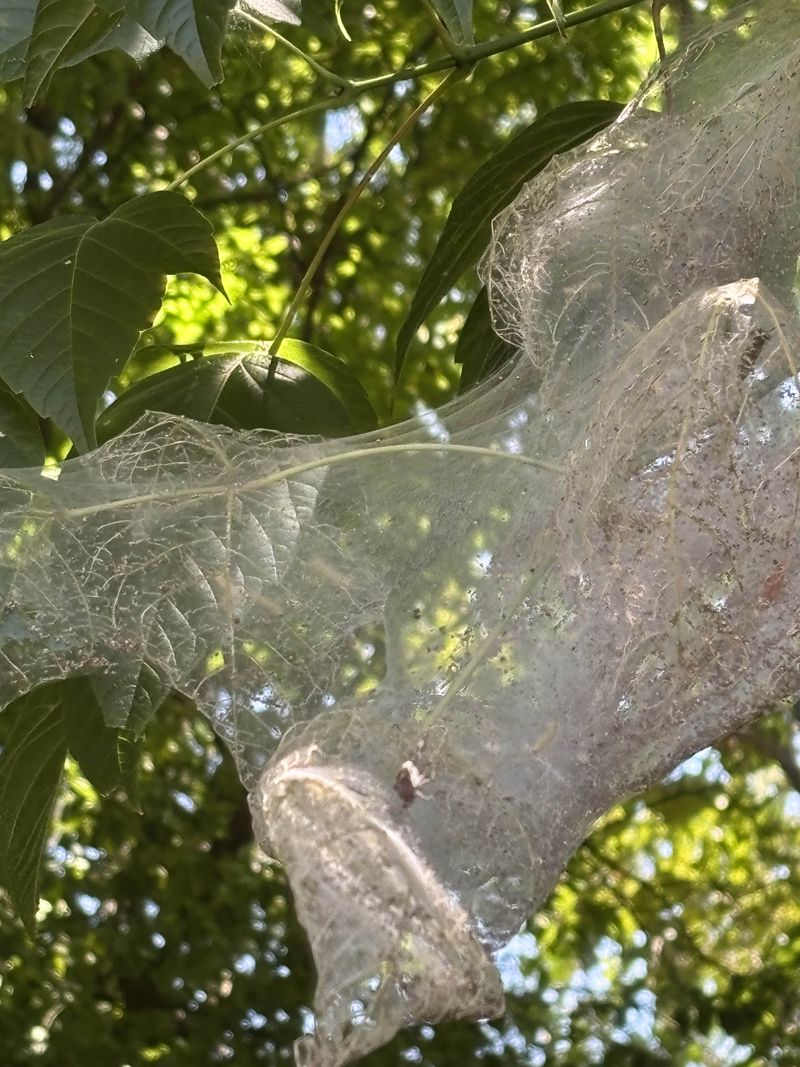
Look up along a pecan branch this month and you might spot what appears to be cotton candy caught in the leaves. Those silky bags showed up quietly, and they seem to grow larger overnight.
The tents usually start small, wrapping just a leaf or two at the tip of a branch. Within a week or so, the silk can swallow a stretch of limb two or three feet long.
Louisiana homeowners often notice them first in pecan, persimmon, sweetgum, river birch, and mulberry trees. Roadside stands of hackberry can look striking when several tents line up along the same branch.
What makes the whole thing easy to miss is the timing. The webs build up while folks are watching football and dreaming about cooler weather, so nobody sees the early stages.
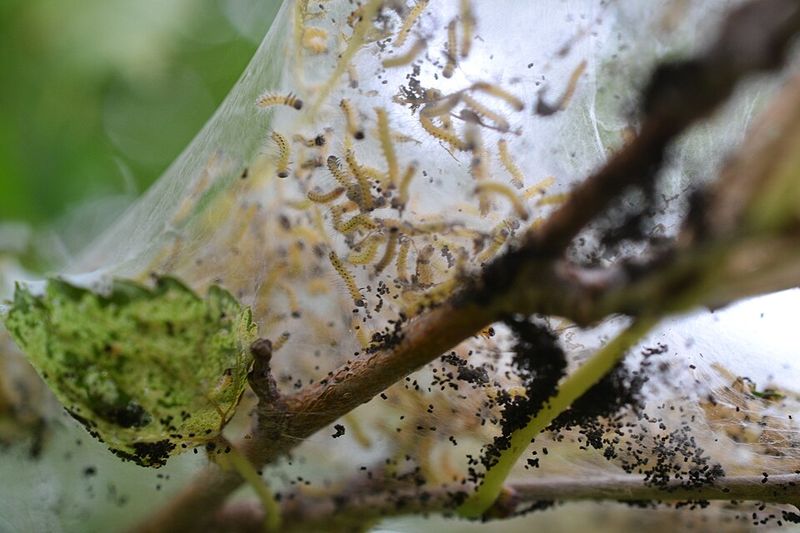
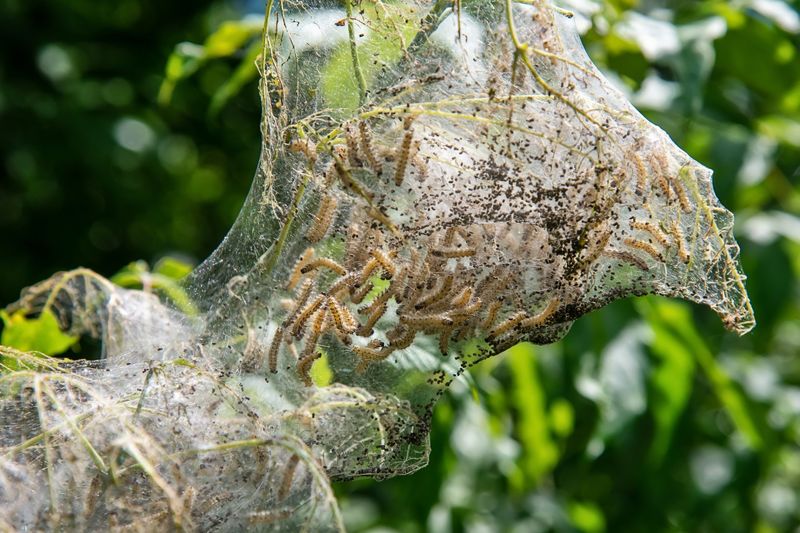
Take a close look and you will see chewed, brown leaf skeletons trapped inside the silk. Tiny black specks collect there too, which is simply waste from the residents inside.
Neighbors sometimes trade guesses about spiders, but the silk texture is a clue. Spider webs look flat and geometric, while these bags are baggy, layered, and stuffed with leaves.
A flashlight helps if you want to check without pulling anything apart. Movement inside the bag is the giveaway that the tent is still active rather than abandoned.
Marking the date you first see webbing gives you a handy timeline. If new silk keeps expanding week after week, you know the group is still feeding and spreading outward.
Meet The Fuzzy Culprits Behind The Webbing
Here is the surprising part: the architect of those tents is a caterpillar barely an inch long. Fall webworms wear a coat of long, soft hairs over a cream, tan, or greenish body.
Two color forms live in the South, one with a black head and one with a reddish head. Both spin silk, both feed in groups, and both belong to the moth species Hyphantria cunea.
The adult is a snowy white moth, sometimes speckled with dark dots on its wings. She lays a fuzzy patch of a few hundred eggs on the underside of a leaf.
Your Louisiana Garden Changes Every Week. Your Plan Should Too.
Gardening in Louisiana changes quickly throughout the season. Every Friday you’ll receive a simple weekly plan showing exactly what to plant, prune, fertilize, harvest, and protect so you never miss the right timing.
Once hatched, the young caterpillars stay together and feed under a shared roof of silk. The tent works like a mobile dining room that stretches as appetites grow.
Louisiana warmth allows two or three rounds of these caterpillars each year. The late-summer batch is the biggest and the one homeowners actually notice.
Those hairs can irritate sensitive skin, so gloves are smart if you plan to handle a web. They do not sting the way puss caterpillars do, though a rash is possible for some folks.
Come October, the caterpillars wander off the branch to spin cocoons in bark cracks and leaf litter. They rest through winter and emerge as moths when spring warms the soil.
Knowing the life cycle helps you time your response. Handle a tent while it is still small and you deal with a few hundred hungry mouths instead of an entire branch of shredded leaves.
Why Louisiana’s Warm September Rolls Out The Welcome Mat
Gulf humidity, long warm evenings, and a growing season that stretches into November hand these caterpillars extra innings. Parishes across Louisiana typically see webbing peak between late August and early October.
Mild winters also matter, because more cocoons make it through to spring. A bigger spring moth flight means a bigger late-summer wave of tents.
Louisiana yards happen to be stocked with favorite menu items. Pecan, sweetgum, black cherry, persimmon, mulberry, willow, and hackberry all rank high on the list.
Neighborhoods carved out of old woodlots tend to see the heaviest webbing. Trees along fence lines, ditches, and bayou edges often carry the first tents of the season.
Storms can shuffle the pattern too. Wind-thinned canopies let more light into branch tips, and branch tips are exactly where the silk begins.
Drought stress plays a supporting role. A tree already struggling with dry soil has fewer reserves to push out fresh leaves later.
Watering deeply during dry spells and mulching the root zone keeps trees in better shape. Healthy trees shrug off a few chewed branches with room to spare.
Keep an eye on the forecast as well. A cool, wet stretch slows the caterpillars down, while a warm run speeds their feeding.
Local extension agents track outbreaks each year and post updates worth reading. Comparing notes with neighbors gives you a rough map of which streets are busiest.
Understanding the why takes some of the alarm out of it. Big web years come and go, and quiet years usually follow the loud ones.
What The Damage Really Does To Your Trees
Here is the good news buried under all that silk: the harm is mostly cosmetic. By September, trees have already banked much of the food they need for the year.
Leaves in early fall are close to retirement anyway. Losing some at the branch tips rarely changes what happens next spring.
Young or newly planted trees deserve closer attention. A small trunk with limited leaf area feels heavy feeding more than a mature pecan does.
Pecan growers do watch webs carefully, since leaves feed the nuts. Heavy webbing during nut fill can trim size and quality on a backyard tree.
The bigger complaint is usually appearance. Gray, dusty tents full of brown leaves look rough hanging over a tidy front lawn.
Silk left behind after feeding ends can cling to branches for months. Rain and wind slowly break it down, though it often takes until winter.
Repeated years of heavy feeding can add stress on top of other problems. Trees fighting root damage, construction injury, or borers have less wiggle room.
Watch for signs that the tree needs help beyond the webs. Thin canopies, peeling bark, or mushrooms at the base point to deeper trouble worth a certified arborist visit.
Lawns underneath sometimes collect droppings and bits of chewed leaf. A quick rake or a rinse from the hose clears the mess before it mats the grass.
Perspective helps here, especially when the tents sit high overhead and out of reach. One rough-looking September in the yard usually turns into a full green canopy again by next April.
Smart, Simple Ways To Handle The Webs At Home
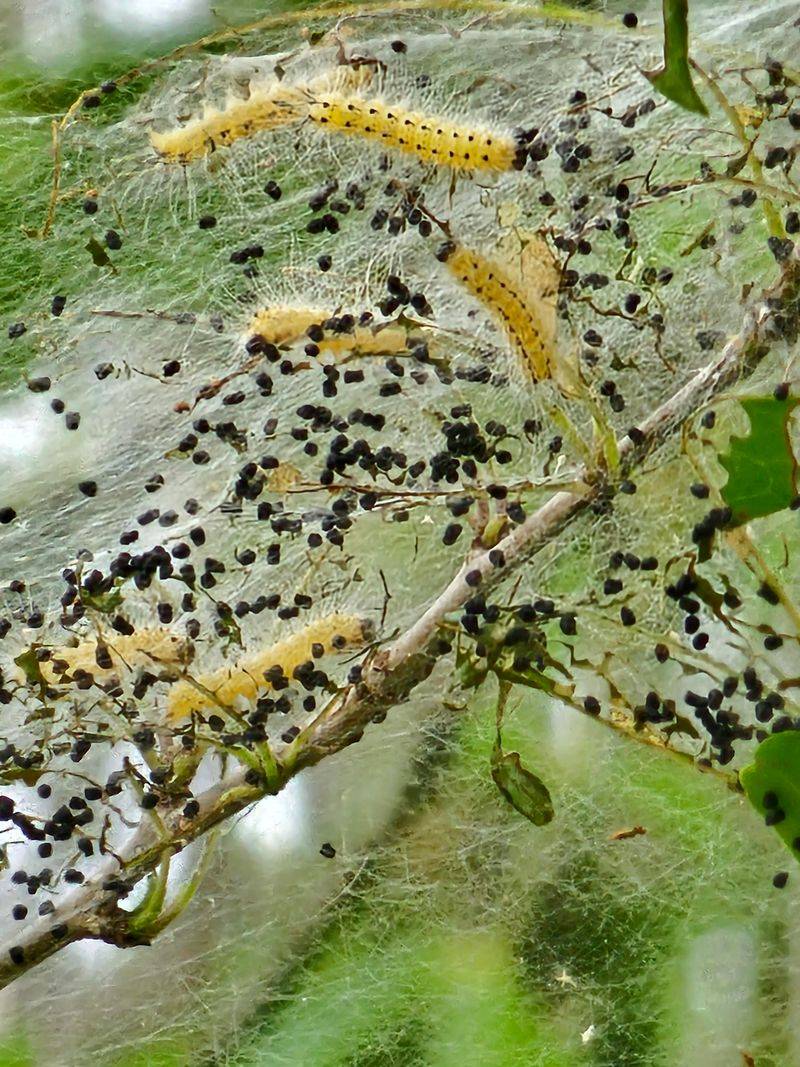
The simplest tool for the job might already be leaning in your garage: a long pole pruner. Snipping the tented branch tip and dropping it into a bag handles the problem in one move.
For webs you can reach, a rake or broom twisted into the silk pulls the whole bundle out. Bag the material and set it out with the trash rather than tossing it in the flower bed.
A strong jet from the garden hose also breaks tents apart. Scattered caterpillars become easy pickings for birds and wasps patrolling the yard.
Skip the old trick of burning webs on a pole. Fire scars bark, harms limbs, and creates a real hazard near power lines and rooflines.
If a spray feels necessary, products with Bacillus thuringiensis (Bt) or spinosad target young caterpillars gently. Coverage matters, because the spray has to reach leaves the group is actually eating.
Break the web open first so the mist can get inside. Late afternoon applications hold up better than midday ones in Louisiana heat.
Read the label for tree types, timing, and pollinator notes before mixing anything. Skipping broad-spectrum insecticides protects the helpful bugs doing free work for you.
Tall trees are a different story. Anything requiring a ladder or a chainsaw belongs in the hands of a licensed tree service.
Honestly, doing nothing is a fair choice for a big shade tree in September. Leaves are winding down, and the caterpillars finish their feeding within a few weeks.
Helpers Already Working In Your Yard
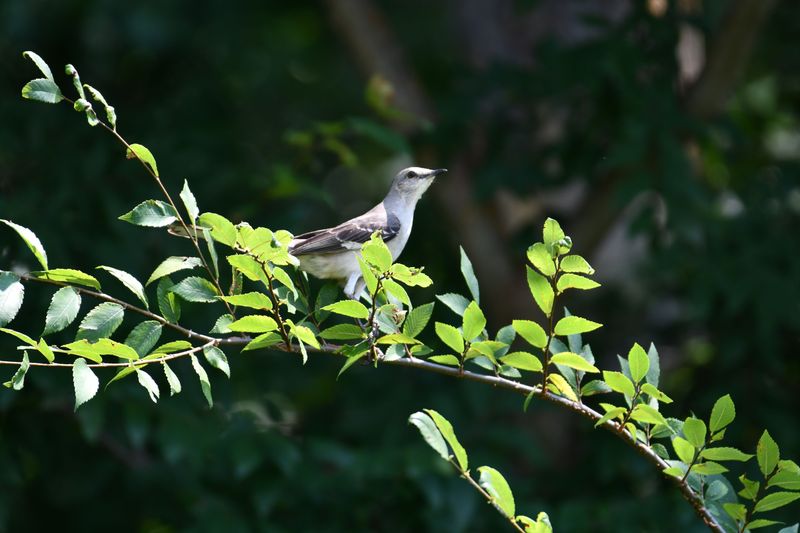
Dozens of bird and insect species treat these caterpillars as a food source. Yellow jackets, paper wasps, tiny parasitic wasps, stink bugs, and lacewings all join in.
Chickadees, wrens, cardinals, and mockingbirds tear into tents with real enthusiasm. Louisiana yards with berry shrubs and a birdbath tend to keep more of those patrols around.
Fun bit of trivia: this insect is native to North America, yet it hitched a ride overseas decades ago. It became a serious nuisance in parts of Europe and Asia, partly because its natural enemies stayed home.
That story shows how much free pest control your yard already provides. Wide sprays knock back the helpers along with the caterpillars, which can make next year busier.
You can stack the deck in a few easy ways. Plant native flowers like goldenrod, aster, and coreopsis to feed adult wasps and predatory insects.
Leave a little leaf litter in beds where beetles and ground predators hunt. A shallow water dish with pebbles gives wasps and birds a safe place to sip.
Winter offers one more small step. Scraping loose bark flakes and clearing debris piles reduces cozy spots for cocoons.
Come spring, check branch tips in May and June for the first small tents. Catching an early batch keeps the September show much quieter.
The real takeaway is patience with a side of pruners and a friendly nod to the wildlife. Louisiana yards have hosted these caterpillars for generations, and the pecan trees keep coming back.