What Florida Gardeners Should Know Before A Banana Plant Takes Over
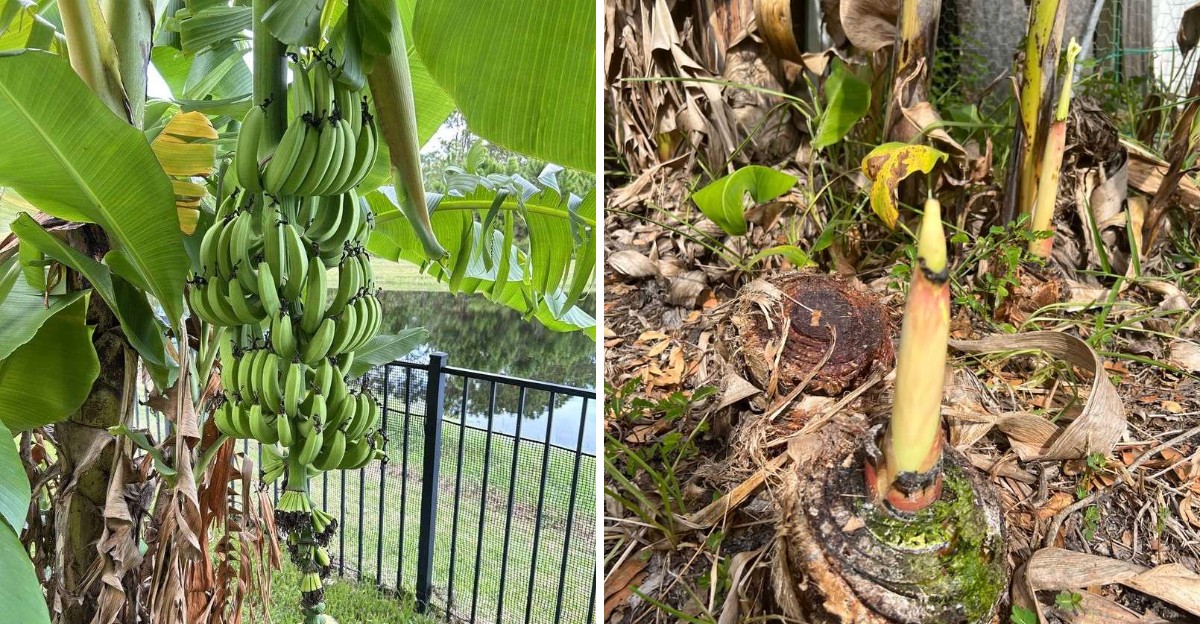
One innocent banana pup can arrive with the manners of a perfect houseguest.
It sits quietly in one sunny corner. The leaves look tropical. The whole yard suddenly feels more lush.
Then another shoot appears. Then another.
Soon, the little corner demands more space, more water, and possibly a vote at family meetings.
Florida weather gives bananas plenty of encouragement, so a plant that looked manageable at first can become a very different garden character surprisingly fast.
The funny part is that no disaster has necessarily happened. The plant simply follows its nature extremely well.
So how much room should you really give that friendly pup before it starts to negotiate for the patio?
A little foresight changes the whole story.
The right cuts, enough room, and a few timely checks can keep the tropical drama under control and still preserve lush leaves plus homegrown fruit.
Before that tiny start becomes backyard management, learn the habits beneath the soil first. Because this plant rarely respects vague boundaries for very long.
1. Rhizomes Push Out New Suckers Fast
That first new banana pup may look cute. The second still feels manageable.
The third is where the plot starts thickening.
Bananas spread from an underground rhizome, often called a corm or mat. The leafy “trunks” above ground are pseudostems, not true woody trunks.
That underground base stores energy and sends new shoots toward the surface. Warm Florida weather gives it plenty of time to stay active.
A healthy clump can push up pups around the original stalk, especially during warm, wet months. Rich soil, steady water, and fertilizer can make the clump even more enthusiastic.
This is the part many gardeners miss. Cutting a tall pseudostem does not automatically stop the next shoot.
The underground bud can stay ready for another round.
Keep an eye on fresh pups while they are still small. Decide early which ones belong in the clump and which ones need removal.
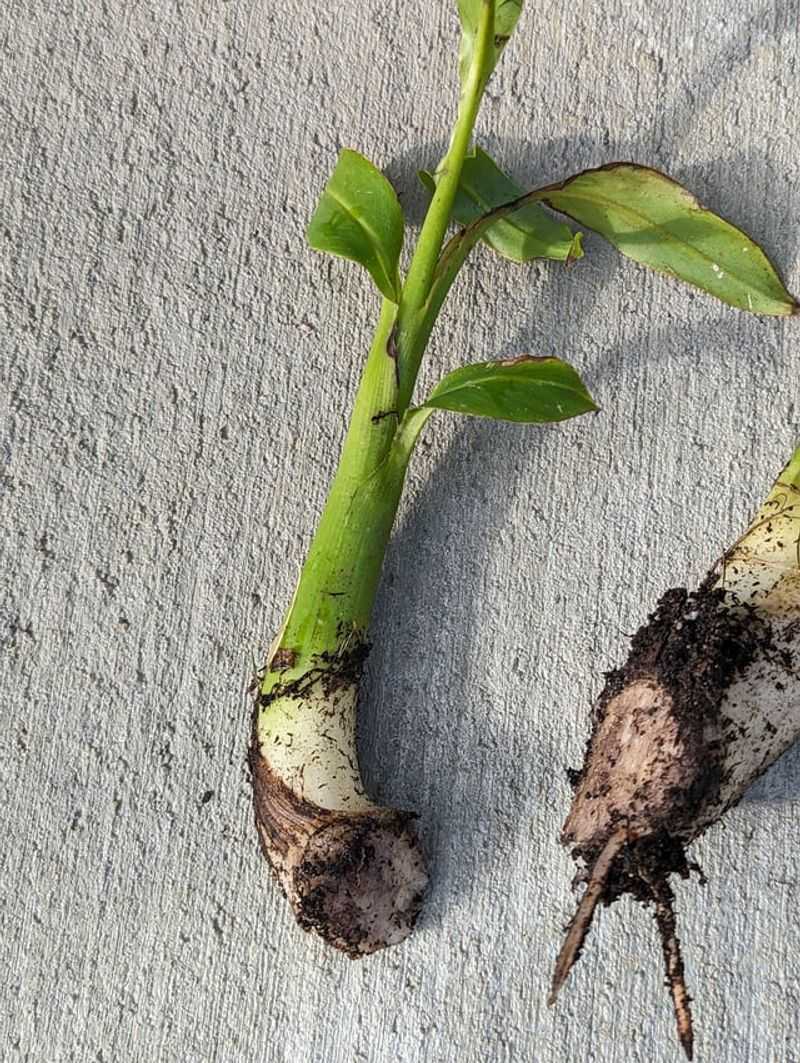
Sword suckers usually make better replacement stalks. Their first leaves look narrow and upright. Water suckers tend to have broader leaves and weaker connections.
You do not need to memorize every botanical detail.
Just remember where the real ambition lives.
The leaves may be waving politely above ground, but the expansion committee holds its meetings underneath the mulch. A sharp shovel and regular checks keep that committee from approving a backyard-wide development plan.
2. One Small Start Becomes A Thicket
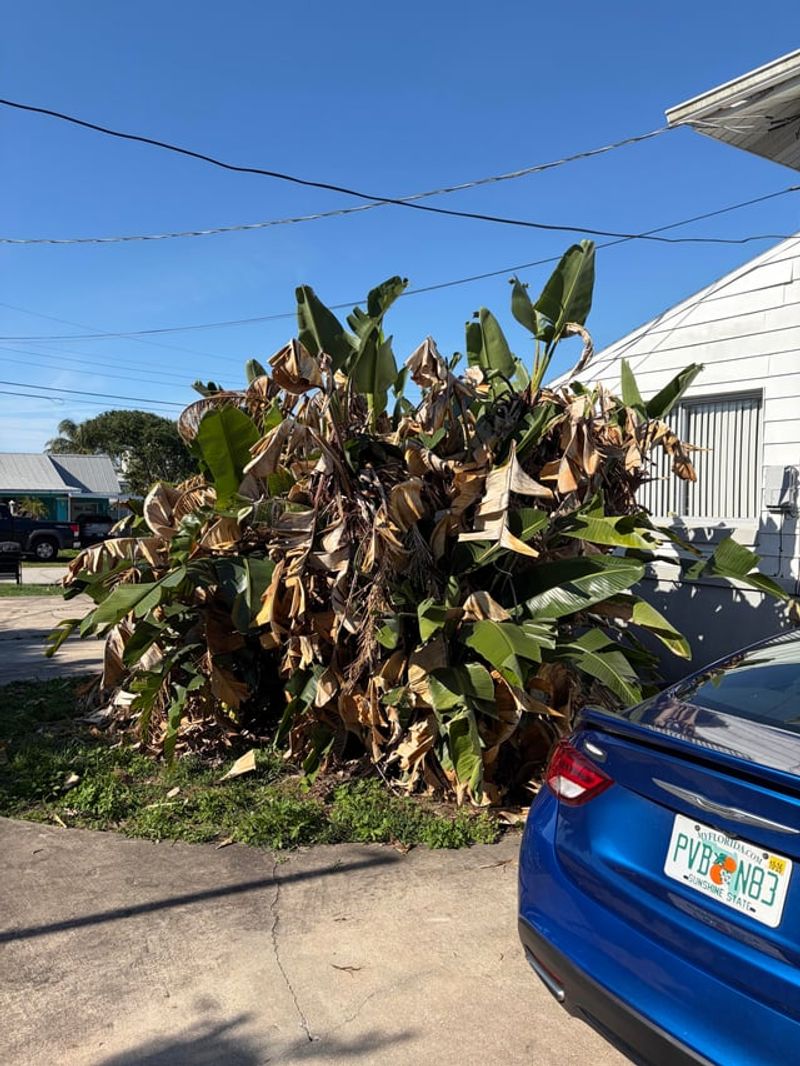
A banana plant rarely looks intimidating in a nursery pot.
Give it a few Florida summers, and the mood can change.
One stalk produces pups. Those pups mature and produce more pups. The clump can widen year after year unless someone edits the guest list.
That extra growth does more than fill empty space.
Crowded pseudostems compete for light, water, and nutrients. Leaves overlap. Airflow drops. The center can stay humid, especially during Florida’s wet season.
Fruit can suffer too. Too many stalks may leave the clump with smaller bunches and weaker overall production.
Nearby plants feel the squeeze.
Your Florida Garden Changes Every Week. Your Plan Should Too.
Gardening in Florida changes quickly throughout the season. Every Friday you’ll receive a simple weekly plan showing exactly what to plant, prune, fertilize, harvest, and protect so you never miss the right timing.
Large banana leaves can shade vegetables, herbs, and smaller ornamentals. Roots also compete for moisture around the clump.
Stand beside your planting spot and look past the cute starter plant. Give the mature clump room in your plan from day one.
Keep it away from narrow walkways and spots where constant sucker removal would become a chore. A little extra space now can save a lot of shovel work later.
That does not mean bananas need half the yard. They just need boundaries that make sense for the site.
A banana pup may arrive in a pot small enough to carry with one hand. Three summers later, it can act like it signed a lease on the entire corner. Better to negotiate the property line early.
3. Limit Stalks To Keep Fruit Quality
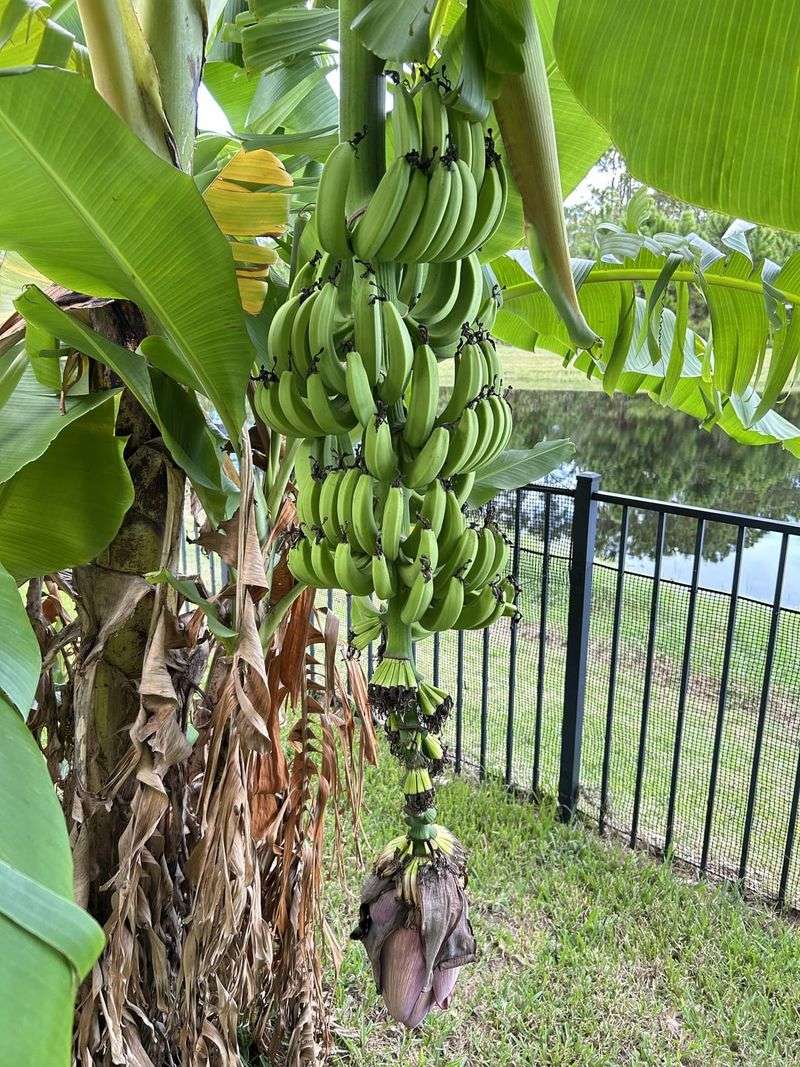
Bananas reward gardeners who know when to say, “That is enough stalks.”
A crowded clump may look lush, but more green does not always mean more fruit.
A practical home setup keeps one mature pseudostem, one follower about half grown, and one small sucker behind it. That creates three useful generations in the same mat.
The mature stalk handles the current crop. The middle stalk waits for its turn. The youngest one serves as backup.
After a pseudostem produces fruit, that stalk will not fruit again. Remove it after harvest and let the next generation step forward.
This system keeps competition lower and gives each remaining stalk better access to light, moisture, and nutrients.
Sword suckers deserve priority when you choose the next replacement. Their narrow early leaves usually point to a stronger connection with the underground mat.
Extra pups can go.
Mark your chosen stalks with ribbon when the clump gets confusing. That tiny trick saves you from staring at six nearly identical stems later and pretending you remember which one was next in line.
Check the lineup every few weeks during active growth.
The goal is not a perfectly manicured banana display. It is a productive clump with enough room to perform.
Bananas love a big family reunion. Your fruit quality may prefer a smaller dinner table. Three generations usually keep the conversation much less crowded.
4. Remove Extra Suckers Through The Season
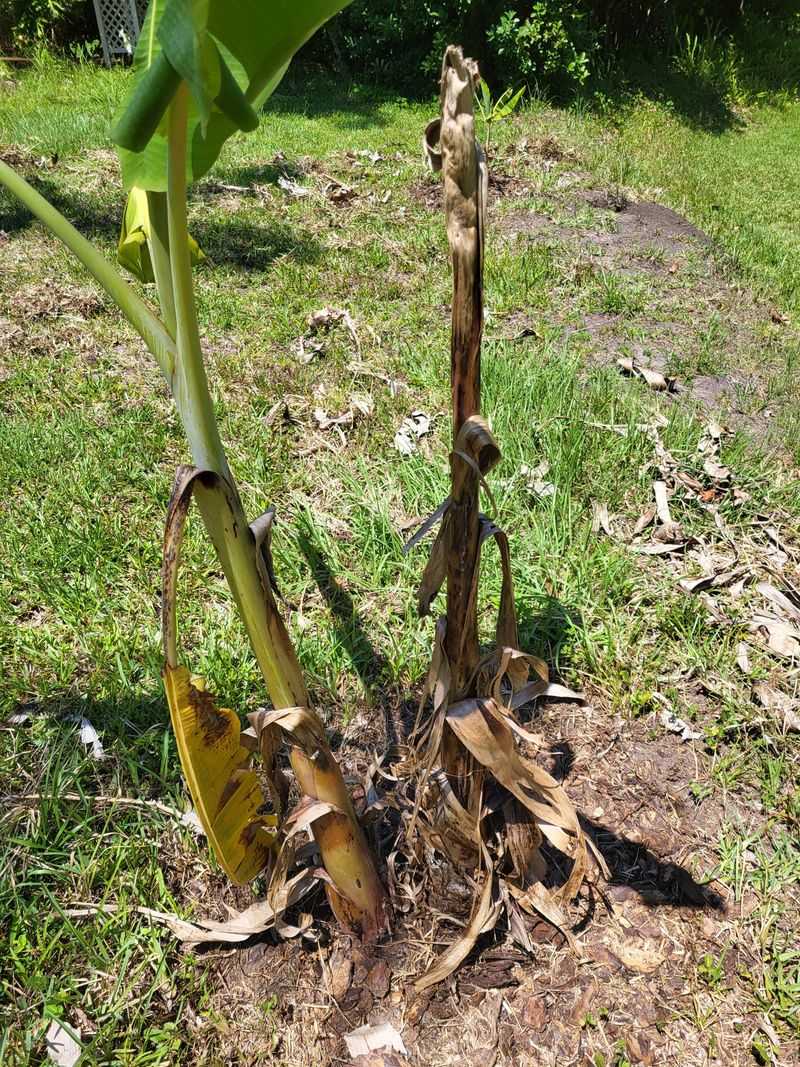
Banana control gets harder every time you tell yourself, “I will deal with that pup later.”
A small sucker can be quick work.
A tall, thick pseudostem turns the same job into a wrestling match with leaves.
Check the clump regularly through the warm months, when new shoots can appear quickly. Early removal keeps the job simple and helps preserve your chosen three-stalk lineup.
Use a sharp spade or sturdy shovel near the base of an unwanted pup. Cut down where it joins the underground mat and remove as much of the unwanted growth point as practical.
A simple cut across the top may not be enough. The bud below can send up another shoot.
That is why repeat checks matter.
Keep your good clothes far away from the project. Banana sap can leave stubborn brown stains, and your favorite shirt does not need a souvenir from garden maintenance.
Healthy sword suckers can also become gifts.
A pup with a solid piece of underground tissue and some roots may transplant into another suitable spot. Friends may happily take one, provided they understand the tiny tropical gift comes with future opinions about property lines.
Clean tools between separate clumps, especially when plants show suspicious damage or disease symptoms.
The easiest sucker to manage is the one you notice early.
Wait too long, and your five-minute cleanup can start feeling like banana season at the gym.
5. Barriers Slow Rhizome Spread Underground
A fence above ground does not impress a banana rhizome much.
The useful boundary sits below the soil.
A sturdy root barrier can help slow sideways spread in tight Florida yards. This can be useful near patios, walkways, narrow beds, or other places where surprise pups would become annoying.
Heavy plastic root-barrier material offers one option. The barrier needs enough depth and strength to redirect shallow underground growth instead of bending or breaking under pressure.
Leave a small lip visible above the soil. That makes wandering growth easier to spot before it sneaks over the top and settles outside the boundary.
Do not squeeze the clump into a tiny ring.
Bananas still need enough soil volume for roots, water, and nutrients. A barrier should guide growth, not turn the plant into a tropical prisoner with three square feet of yard.
Inspect the edge a couple of times each year.
Rhizomes can test seams, gaps, and the top edge. A barrier reduces work, but it does not replace your shovel forever.
Large bottomless containers set into the soil can create a similar effect in some small spaces. Drainage still matters, and the plant needs room to develop.
This works like a polite garden boundary rather than a concrete wall.
Your banana may still test the rules. At least now it has to file the paperwork before moving into the walkway.
6. Containers Control Growth In Small Yards
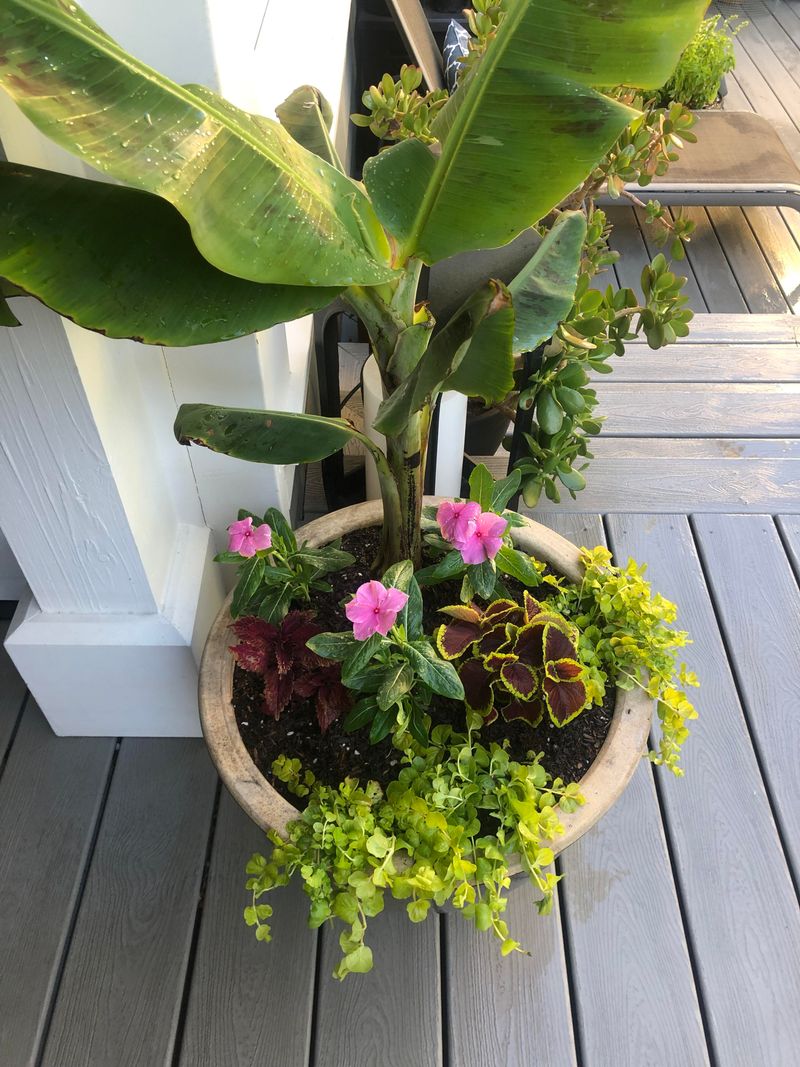
A banana in a pot still brings plenty of tropical drama.
The difference is that the stage has walls.
Containers can work well for gardeners who want bold foliage without an expanding mat in the ground. Compact banana selections make the most sense because full-size types can quickly become awkward in pots.
Start with a large, sturdy container and generous drainage holes.
Use a loose potting mix that drains well. Heavy yard soil can compact inside a container and leave the underground base with poor air around the roots.
Water becomes the big responsibility.
Banana leaves lose plenty of moisture during hot Florida weather, and container soil dries faster than garden soil. Check it often rather than relying on a fixed calendar.
At the same time, do not leave the pot sitting in water. Pups will still appear. The container does not cancel that habit. It simply gives you a clear boundary.
Keep one useful follower and remove extras before the pot turns into a crowded bundle of stems.
Every so often, the plant may need division or a larger container. That is the tradeoff for better control.
A wheeled plant caddy can make large pots easier to shift before rough weather or a cold night.
The banana still gets to be dramatic. It just has a much smaller dressing room and far fewer opportunities to wander backstage.
7. Cold Snaps Rarely Stop It For Long
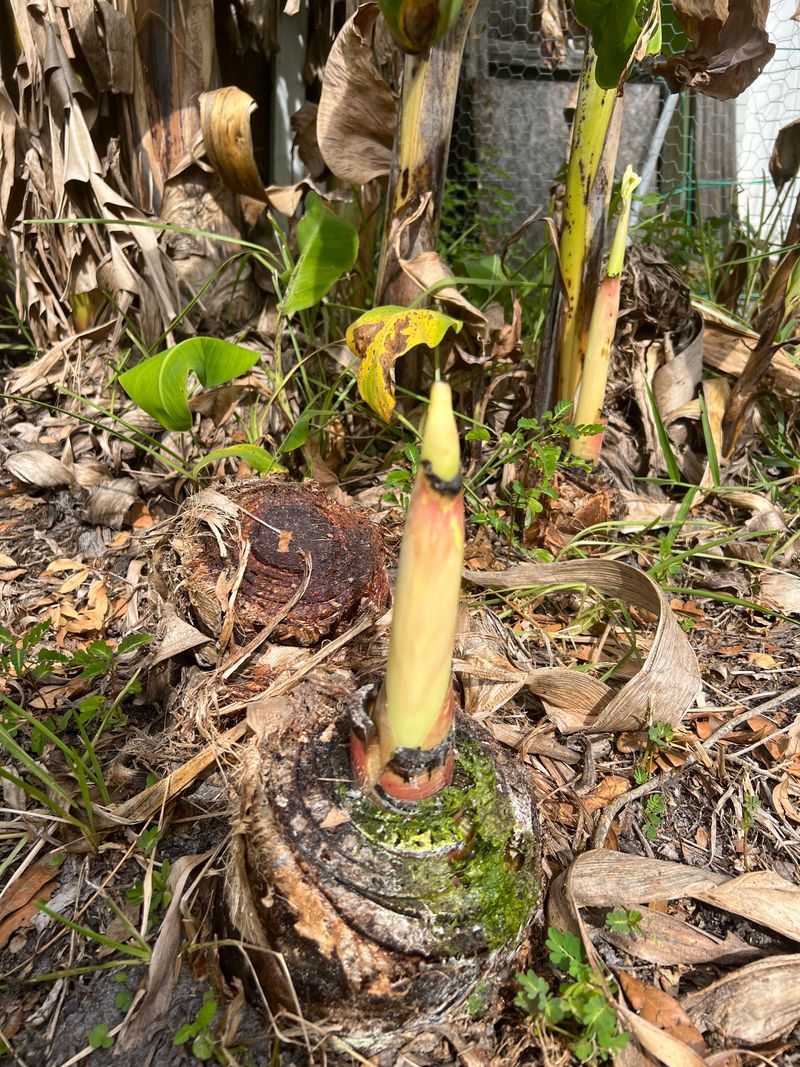
A rough winter morning can make a banana patch look finished.
Florida gardeners know the comeback can be surprisingly fast.
Cold can damage leaves and pseudostems, especially in North and Central Florida. The underground mat often has more protection from the surrounding soil.
Warm weather can bring fresh shoots from the base after damaged top growth disappears.
That resilience matters when you plan long-term control.
Do not assume winter will solve an oversized clump for you. A banana that looks flattened after cold weather may still have plenty of energy below ground.
Mulch over the root zone can give the underground portion extra protection before a cold spell. Smaller plants may also benefit from frost cloth or a sheltered position.
After cold damage, avoid a frantic cleanup the same morning.
Wait until the weather pattern settles, then assess the pseudostems and new growth. Spring makes the next step much clearer.
A stalk close to fruit production can lose valuable time after severe cold damage, so location matters. South Florida growers face fewer interruptions than gardeners farther north.
For removal, the underground mat remains the real target. Leftover pieces can push up new shoots.
Bananas are persistent in a very Florida sort of way.
One chilly night may flatten the leaves, but the plant below can already be planning its comeback tour. Your shovel may still need an encore.
8. Remove Fruited Stalks Before The Clump Gets Crowded
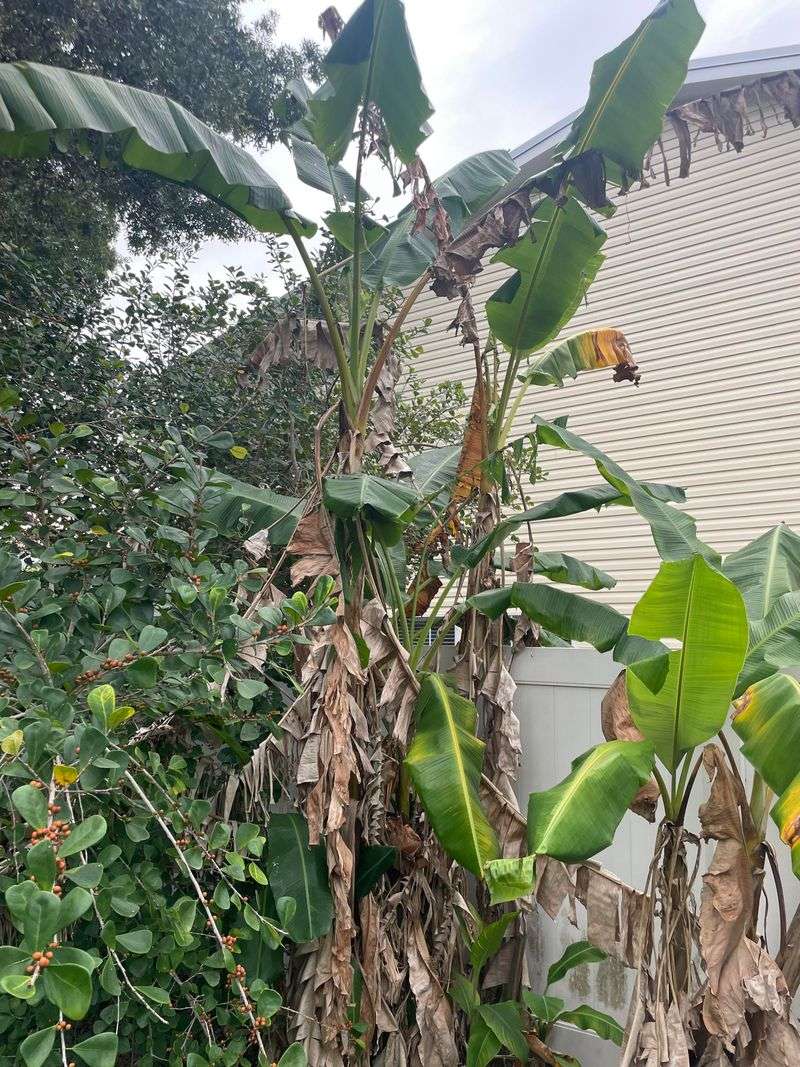
A banana pseudostem gets one big moment.
After it flowers and produces a bunch, that stalk will not fruit again. Leaving it standing only adds more bulk to an already busy clump.
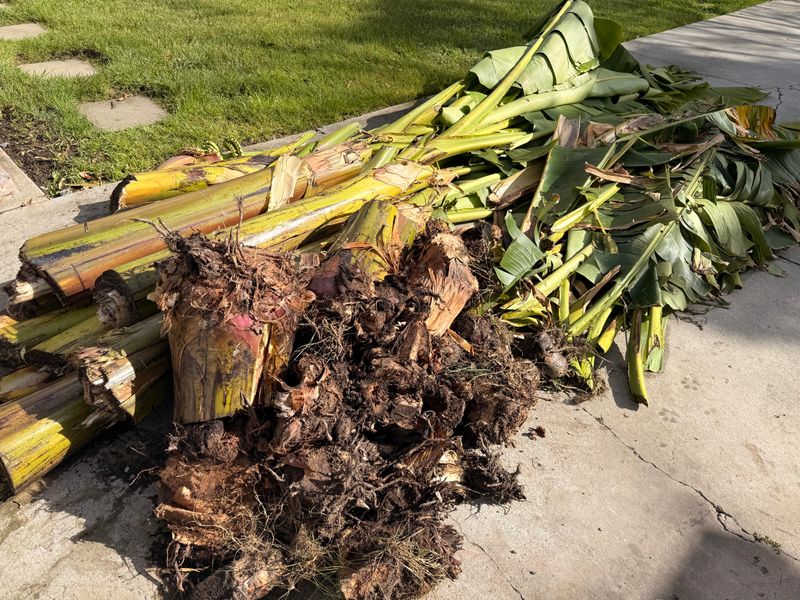
Once the bananas are harvested, cut the finished pseudostem back near ground level.
That opens space for the younger follower you already chose to replace it. More light reaches the remaining leaves, airflow improves, and the underground mat has fewer stalks competing for water and nutrients.
Do not rush the cut before harvest just because the stalk looks tired.
Leaves on a fruiting pseudostem still help support the developing bunch. Wait until the crop is ready, then let that stalk officially retire.
Use a sharp pruning saw or machete for thick stems. Cut carefully because banana pseudostems hold plenty of water and can be surprisingly heavy.
Chop the removed material into smaller pieces for compost or use it as organic matter around the garden, provided the plant looks healthy.
Keep the pieces away from the crown so the clump does not sit under a wet pile.
This regular cleanup keeps your three-generation system working smoothly.
One stalk fruits, one prepares, and one waits its turn.
Without that rotation, the patch can become crowded with yesterday’s performers.
Bananas may love an encore, but each pseudostem only gets one show. Clear the stage after harvest and let the next act have some elbow room.