What It Means When A Strange Whiteness Spreads Across Alabama’s Fields
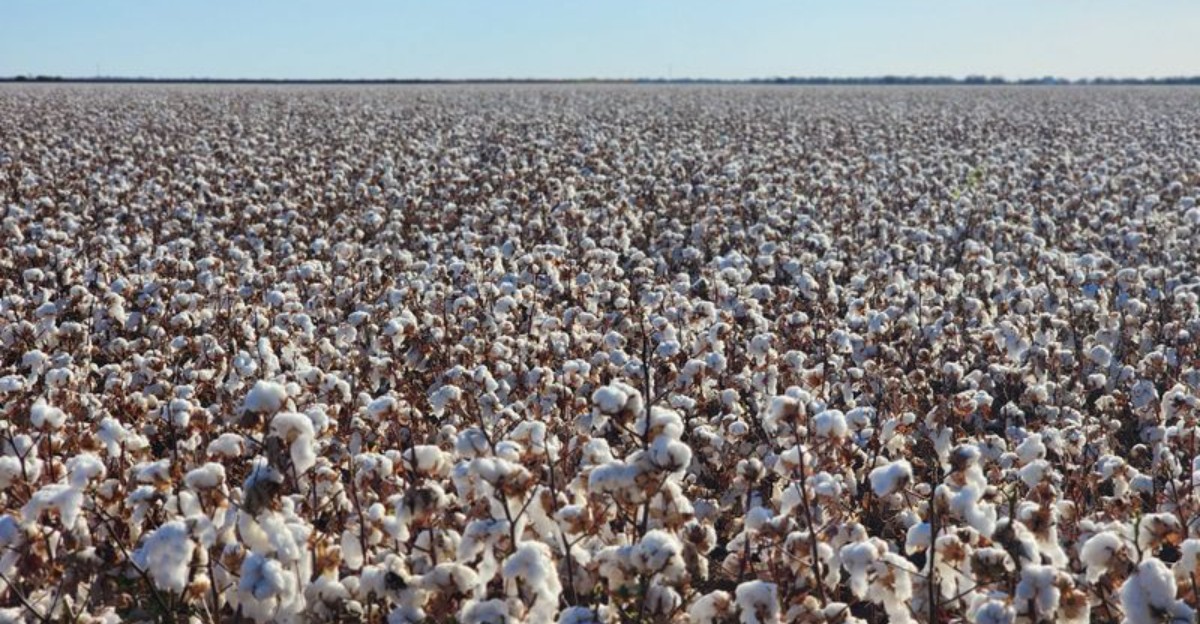
Cotton splits open across Alabama like a secret nobody warned you about. Something shifts in those fields once the bolls crack wide. Farmers watch this moment closer than you might expect.
Timing controls outcomes, and mistakes cost real money. You notice the color first, stark against dark soil. Trucks line up early, waiting for harvest to begin. Alabama farmland turns pale each September, right on schedule.
Weather decides whether that whiteness holds or falls apart. Prices ride on acres picked before rain arrives. Workers move fast once conditions turn favorable.
Machines roll through rows, stripping fields bare within hours. Nobody treats this moment casually around here. Curiosity brings outsiders, but rules exist for a reason.
Respect matters more than you think out here. Growers track each day left before harvest closes fast. Rain threatens quality, and each hour counts against you. Stay here, because what comes next will truly surprise you.
Bolls Splitting Open Turn The Rows Snowy
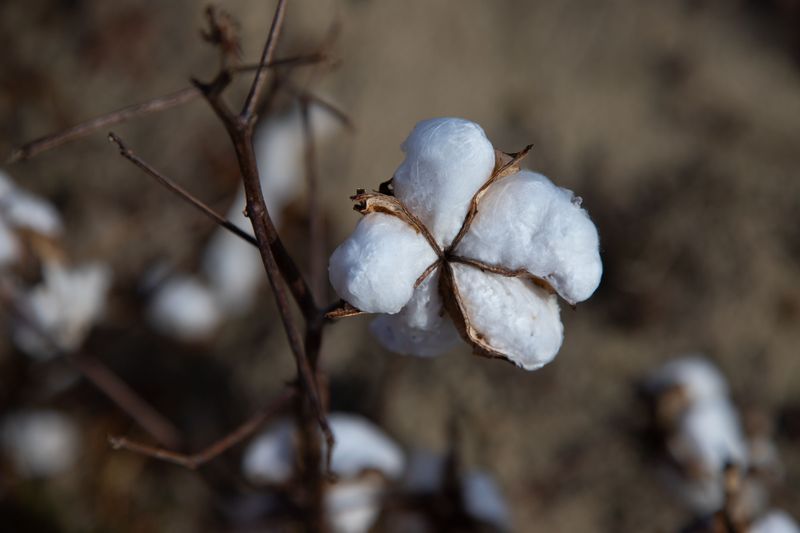
Drive a back road near Prattville in early September and the ground can look frosted, even when the thermometer reads ninety. That pale blanket is cotton, and it arrived on schedule.
Each fluffy tuft starts as a hard green pod called a boll. Inside, fibers grow for weeks, packed tight around the seeds like a wound spring.
When the fibers finish, the boll dries and splits along four or five seams. The lint pushes out, fluffs in the humid air, and catches sunlight.
Farmers call this stage cracking or opening, and it moves from the bottom of the plant upward. Lower bolls open first because they set first, back in July.
A field rarely opens all at once, which is why growers walk rows and count. They want roughly sixty percent of bolls open before the next step begins.
Sun scald, dry stretches, and insect pressure can nudge the timing earlier. A cool, cloudy August can push it later, sometimes by a week or more.
Fun bit of history: Alabama’s cotton trade dates back to the early 1800s, when similar scenes likely greeted farmers each September. Steamboats carried those bales down the Alabama River toward Mobile.
If you stop to look, notice how the fibers stay attached to the seed. That grip is what makes ginning necessary later.
So when whiteness spreads across an Alabama field, it is a plant finishing a job it started in spring. The strangeness is just biology, right on time.
Growers Are Counting Days, Not Guessing
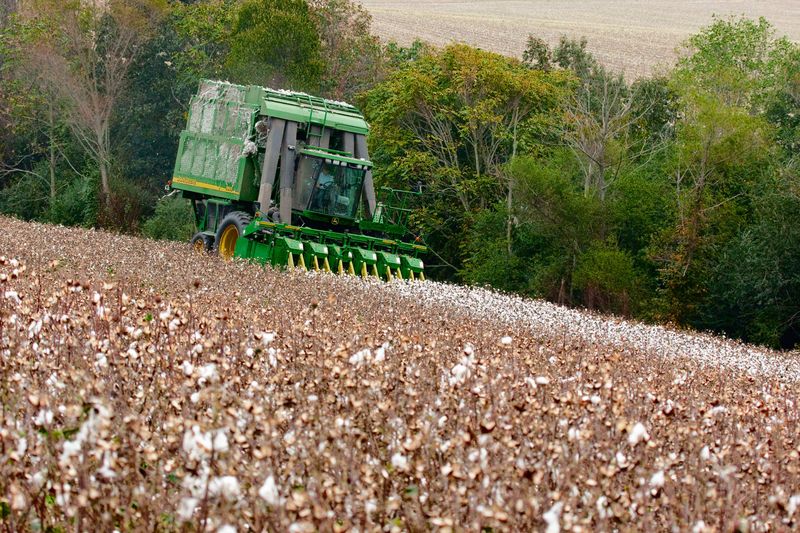
Ask an Alabama grower what occupies their mind in September, and the answer is usually a calendar. Picking too soon costs pounds, and waiting too long costs quality.
Cotton plants run on heat, measured in units farmers call DD60s. Roughly 850 of those units separate a young bloom from an open boll.
From the last useful flower, growers count forward about four to six weeks. That math tells them when the crop stops adding fiber worth harvesting.
Another tool is the sharp knife test. Slice a boll crossways, and if the seed coat is tan and the fibers string out, that boll has matured.
Your Alabama Garden Changes Every Week. Your Plan Should Too.
Gardening in Alabama changes quickly throughout the season. Every Friday you’ll receive a simple weekly plan showing exactly what to plant, prune, fertilize, harvest, and protect so you never miss the right timing.
Nodes above cracked boll, shortened to NACB, works as a second checkpoint. Once four nodes sit above the highest cracked boll, the finish line is close.
South Alabama fields near Dothan often reach that point before fields in the Tennessee Valley. A few hundred miles changes the schedule by a week or two.
Practical tip for landowners renting acres: ask your operator for scouting notes. Those numbers explain why one field sits untouched while neighbors roll.
Rain forecasts shift the plan too, since wet lint will not pick cleanly. Machines wait for dry mornings, sometimes idling until ten o’clock.
North Alabama growers also watch first-frost odds, which typically arrive in late October. That date sets the outer edge of the whole schedule.
Patience pays here. A field left standing a few extra days can gain grade, while one rushed can lose both weight and value.
Leaf Drop Is Planned, Not Accidental
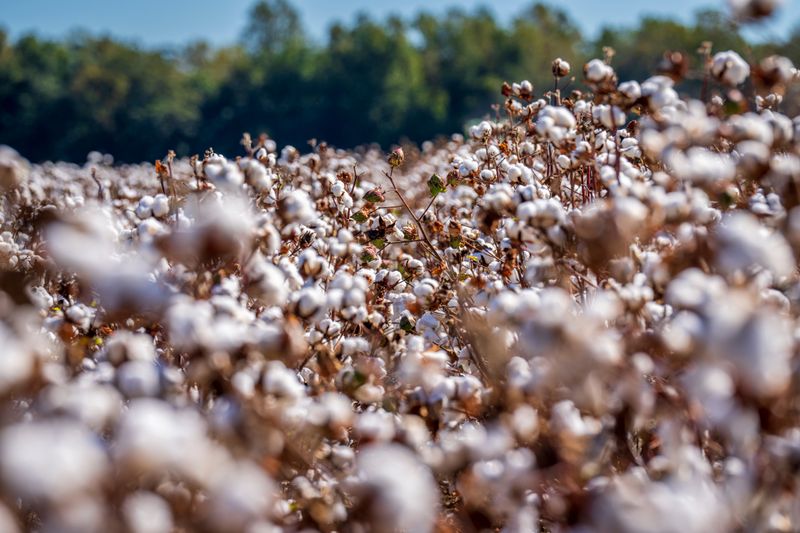
Here is the part that surprises visitors: those bare, stick-like stems holding white fluff did not lose their leaves by accident.
Growers apply a defoliant, a plant regulator that signals leaves to release at the stem. Within a week to ten days, the canopy thins out.
Clean stalks matter because green leaves smear chlorophyll and trash into the lint. Stained fiber grades lower and earns less at the gin.
Timing follows the same scouting checks, usually around sixty percent open bolls or four nodes above cracked boll. Going earlier can shrink the top crop.
Temperature drives how well the product works. Warm afternoons in the upper seventies and eighties help, while a cool snap slows everything down.
Some fields get a boll opener mixed in, nudging late bolls to split together. Others need a second pass when regrowth pops out after rain.
Cost matters too, since a defoliation pass runs real money per acre. Growers weigh that expense against the grade premium a clean field earns.
Neighbors sometimes worry about drift, and that concern is fair. Careful applicators watch wind speed, nozzle size, and buffer zones near gardens and ponds.
If you garden nearby, a quick call to the farm office usually gets you a heads-up on spray days.
Old-timers recall waiting on the first hard freeze to drop leaves naturally. Chemistry handed farmers control over a date that weather used to pick.
The result is a field that looks stark yet purposeful, ready for machines to move fast and clean.
Storms And Rain Can Dull That Bright Fluff
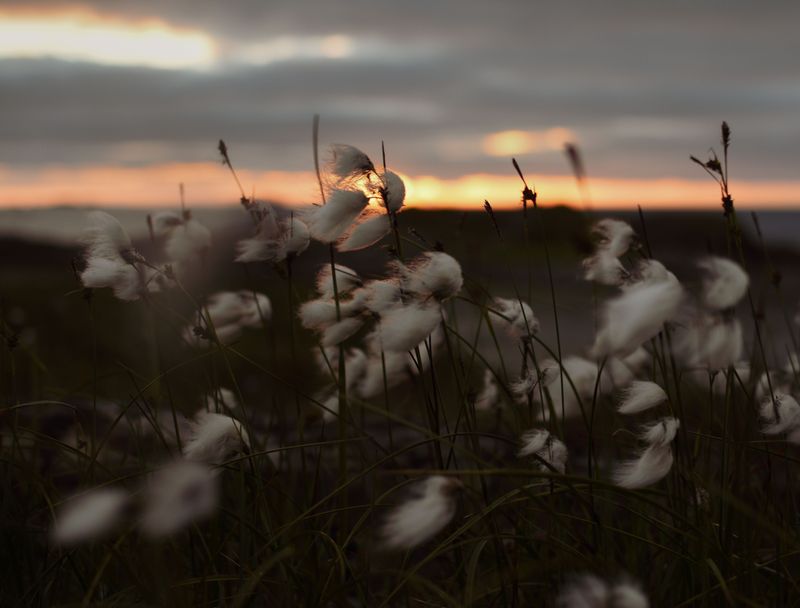
September in Alabama shares a calendar with peak hurricane season, and open cotton has no shelter. Wind strips lint from bolls and scatters it across turn rows. Heavy rain packs the fluff down and drives grit into the fiber.
Hurricane Michael in October 2018 flattened fields across the Wiregrass, and growers there still reference it when discussing bad years.
Repeated wet and dry cycles fade the color as well. Bright white lint slides toward gray or yellow, and grade slips right along with it.
That is why harvest crews run long hours when a front approaches. Picker lights burning past midnight are a familiar sight around Enterprise and Hartselle.
Dew plays a daily role too. Fiber picks best once moisture drops below roughly twelve percent, which often means a late-morning start.
Cool fronts bring another wrinkle: regrowth. Warm rain after defoliation can wake the plant, sending out fresh green shoots that stain lint.
Hail stays rare here, though a strong September thunderstorm can bruise open bolls in minutes. Insurance adjusters walk rows afterward, estimating losses acre by acre.
Farmers watch radar the way pilots do, refreshing the app hourly through harvest. Sunday afternoons off tend to disappear once the picking window opens.
A dry, breezy stretch is the gift they hope for, since it keeps fiber bright and machines rolling.
For homeowners near fields, expect dust, slow tractors, and lint on fences. A little patience on county roads goes a long way during these weeks.
Round Bales And Buggies Take Over The Back Roads
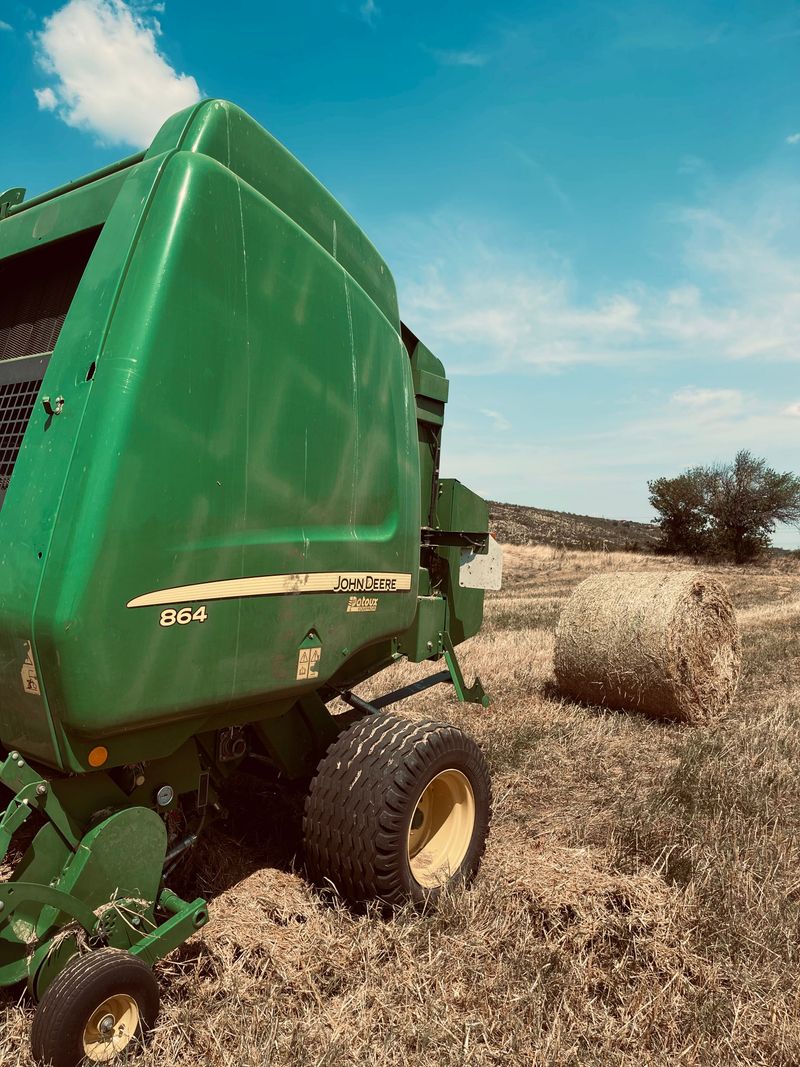
Ever spotted giant marshmallows wrapped in yellow or pink plastic sitting at a field edge? Those are cotton modules, and they show up the moment pickers roll.
Modern harvesters build round bales on the go, wrapping about 5,000 pounds of seed cotton in weatherproof film.
Colored wrap is not decoration. Pink wrap, made by manufacturers like Tama, often ties a portion of sales to breast cancer awareness and research, while other colors simply help crews track fields and moisture levels.
Older rigs use boll buggies and module builders, forming long rectangular loaves covered with tarps. Both styles end up at the same destination: the gin.
Gins separate lint from seed, then press the lint into 500-pound bales. Seed heads off to feed mills and oil processors.
The wrap stays on until ginning, protecting seed cotton from rain for weeks if needed. Crews keep plastic scraps out of the lint, since a shred of film can ruin a bale.
Trucks hauling modules move slowly and turn wide. Give them room on Highway 231 and similar routes through farm country.
Harvesters cost more than many houses, so operators run them hard through a short season. Alabama has roughly two dozen active gins (per USDA data), humming day and night from late September into December.
Kids in farm towns learn the sound of a picker before they learn to drive. Watch for those machines crossing at dusk, headlights blazing and dust hanging in the beams.
Wondering about the stray fluff on the shoulder? It fell off a truck, and yes, farmers would rather it stayed on board.
What The White Season Means For Small Towns
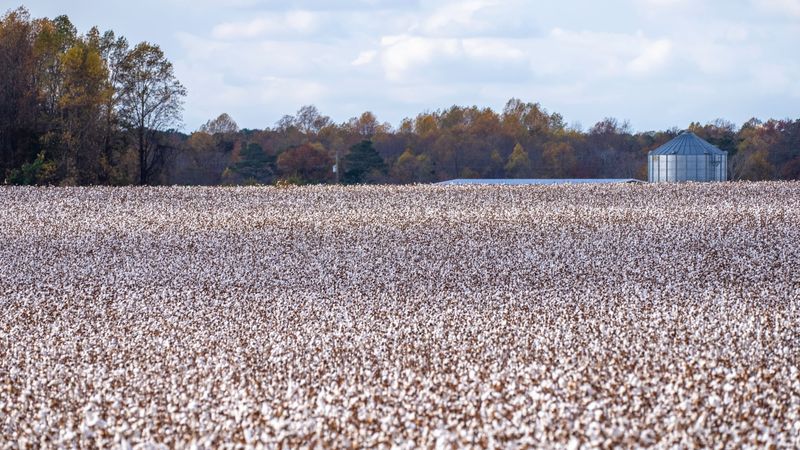
Behind the pretty scenery sits real economic stakes. A strong September lifts small-town business. Diners fill before dawn, parts counters stay busy, and seasonal drivers pick up steady work.
Yields vary by year and irrigation, often landing in the one-to-two-bale-per-acre range, though irrigated fields in the Tennessee Valley push higher.
Prices trade on the futures market in New York, so a bale from Autauga County answers to global demand. Cotton still echoes through Alabama’s old textile towns, some of which run yarn plants today.
Visitors love photographing the rows, and farmers understand the appeal. Stepping between plants, though, tramples fiber and can carry weed seed from field to field.
Shoot from the road shoulder, park fully off the pavement, and skip the fence hop. Taking lint from a field is taking a farmer’s income, and it’s treated as theft.
Curious for a closer look? County Extension offices and some gins host tours in October, and folks there are glad to walk you through the process.
Ask a farmer about the season and you will get a straight answer, plus a story worth hearing.
Fall festivals around Cullman and Fort Payne often work the harvest into their calendars. Pack a snack, take the back roads, and enjoy the view while it lasts.
Come November, the fields turn brown and quiet again. The whiteness holds for only a few weeks, which is part of what makes it feel unusual.