Why Virginia Boxwoods Start Turning Bronze In Fall And When To Worry
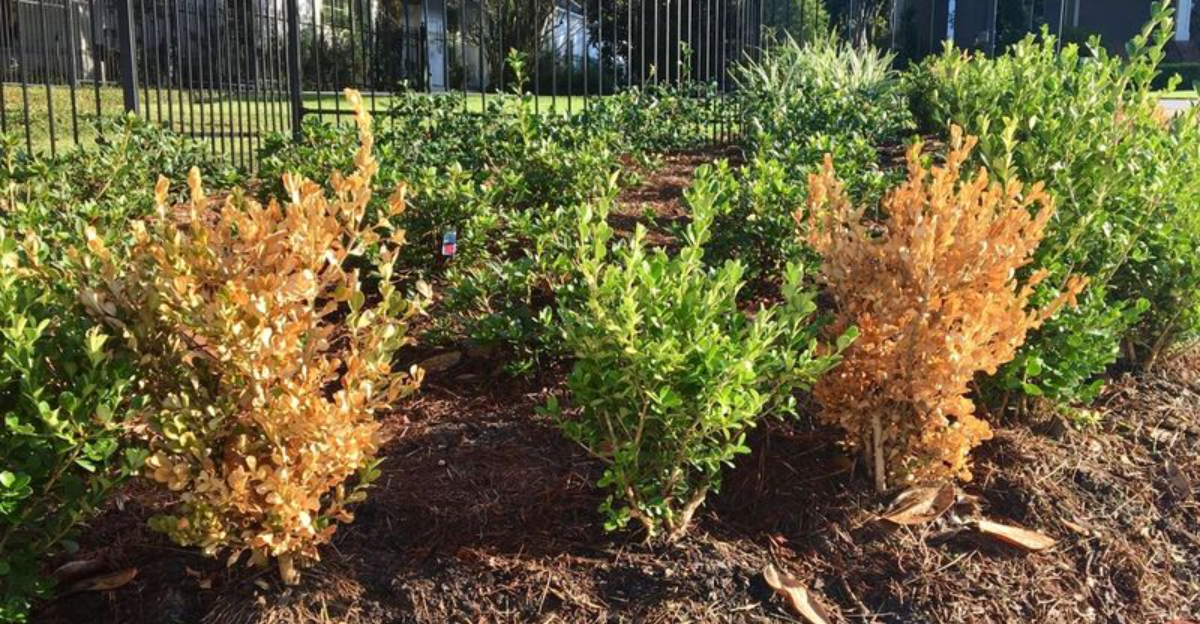
Boxwoods did not suddenly forget how to be green. As summer fades in Virginia, those familiar shrubs can take on a strange bronze or rusty-brown tint.
One day they look lush and green, and the next they seem to have changed almost overnight. For many homeowners, that is enough to trigger a quick panic.
But bronzing does not automatically mean something is seriously wrong. The changing conditions of fall can affect the way boxwood foliage looks.
In some cases, the color is temporary and fades as conditions improve. In others, bronze leaves are a clue that the plant needs a closer look.
Dry soil, pests, and disease can create similar symptoms, which makes it easy to mistake one problem for another. Knowing what to look for can save you from unnecessary treatments and guesswork.
Sometimes your boxwoods simply need time. Other times, they need a little help.
What Triggers That Bronze Color In The First Place
Picture a shrub that refuses to drop its leaves while every maple around it goes bare. That stubborn habit is exactly why boxwoods sometimes look coppery once nights turn cold.
Broadleaf evergreens hold their foliage all winter, so those leaves face freezing air, drying wind, and low soil moisture with no place to hide.
As temperatures fall, boxwood foliage can become more susceptible to environmental stress, particularly when cold conditions, winter sun, wind, and limited soil moisture occur together.
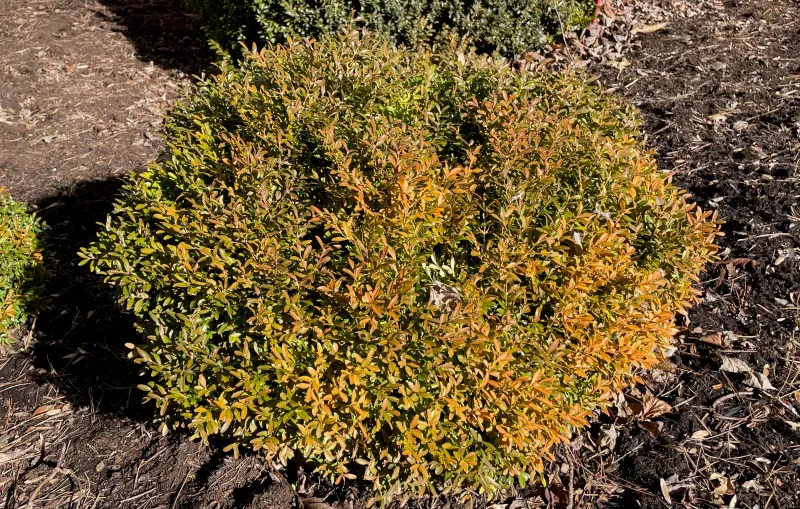
The result can be a bronze or rusty appearance, especially on foliage that is more exposed to the elements. The exact response varies with the cultivar and growing conditions.
Repeated freezing and thawing across winter, cold snaps in November, and stretches of dry weather all speed the shift along.
Sunlight adds to the effect too, especially on the outer leaves that catch the most light. The change is a stress reaction, not damage in the usual sense.
Here is the reassuring part.
Bronzing caused by environmental stress can improve as growing conditions become more favorable in spring, although the timing and amount of recovery can vary.
If the foliage remains discolored or the plant develops significant leaf loss, spots, or stem symptoms, take a closer look rather than assuming it is only seasonal bronzing.
So when you spot that copper tone in October or November, treat it as a seasonal costume change rather than a crisis, and keep watching for anything that looks different.
A Sunny Spot Can Make The Bronze Stand Out
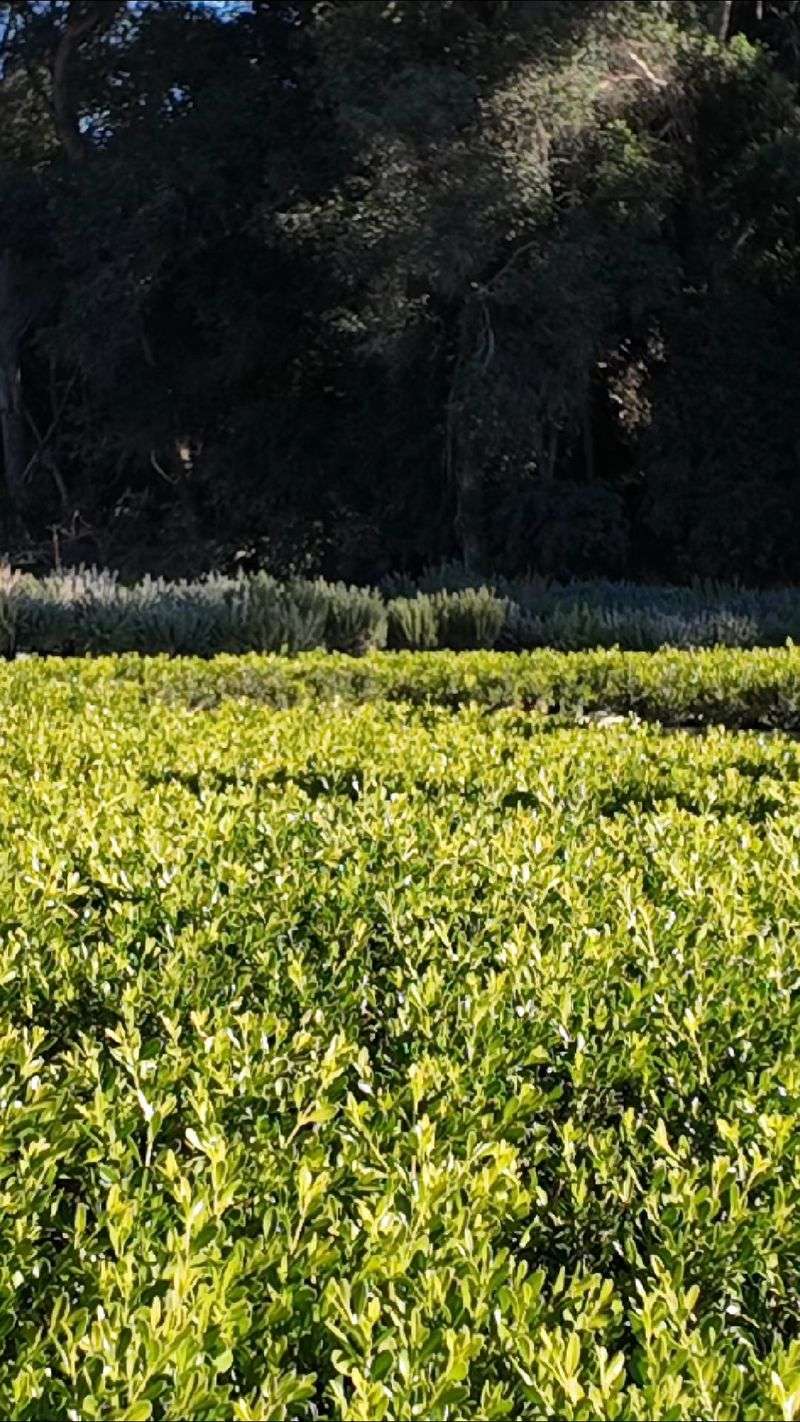
Ever notice how one side of a boxwood hedge looks rusty while the other stays green? Location explains most of it.
Shrubs planted along south or southwest exposures soak up the strongest winter light, and they show the boldest bronze coloring as a result. Bright sun keeps leaf tissue active even on cold days, pushing water out through tiny pores.
Add a steady winter wind sweeping across an open lawn or driveway, and moisture leaves those leaves faster than shallow roots can replace it, especially when the ground is chilled or frozen. The coppery color is the visible signal of that struggle.
Your Virginia Garden Changes Every Week. Your Plan Should Too.
Gardening in Virginia changes quickly throughout the season. Every Friday you’ll receive a simple weekly plan showing exactly what to plant, prune, fertilize, harvest, and protect so you never miss the right timing.
Boxwoods in more sheltered locations may show less bronzing because their foliage receives less direct sun and wind exposure.
Virginia Tech notes that boxwoods generally perform best with some shade, particularly afternoon shade, because winter sun can increase moisture loss when the ground is frozen.
When you plan new plantings around a home, walk the yard on a sunny afternoon and notice where the light hits hardest. Those spots call for varieties that resist bronzing, or for a windbreak such as a burlap screen on the exposed side.
Existing shrubs benefit from a temporary barrier too.
None of this is required for the shrub to survive, but it does keep your entrance looking sharp when everything else in the yard is brown.
Summer Drought Can Catch Up With Boxwoods In Fall
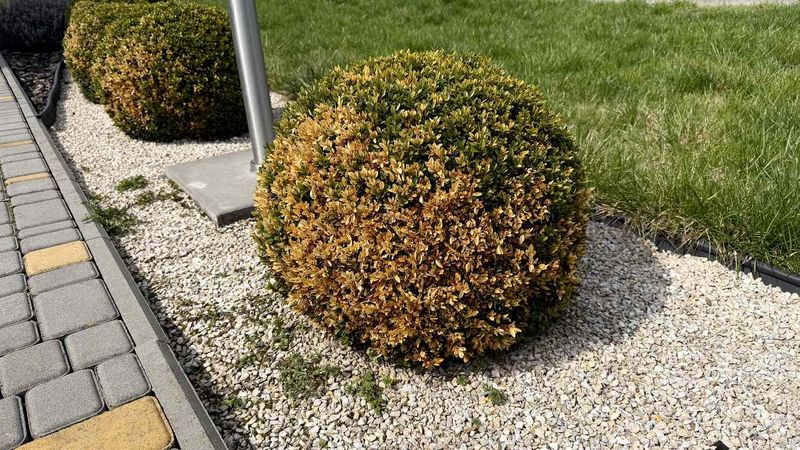
Dry Julys have a long memory. A summer with weeks of little rain can leave boxwoods running on empty, and the bill often comes due in October when foliage turns orange and bronze.
Boxwood roots sit shallow, usually in the top foot of soil, which is the layer that bakes first during a drought. When those roots cannot pull in enough water during the growing season, the plant never fully recharges before cold weather arrives.
Leaves keep releasing moisture through transpiration even in chilly conditions, so the shortage only deepens. Once soil dries hard or freezes, water intake nearly stops while water loss continues.
Gardeners call that physiological drought, and bronzed foliage is one of the clearest signs of it.
Foliage on the windward side often shows it worst. Prevention beats repair here.
Give boxwoods a slow, deep soaking during extended dry stretches, checking soil moisture rather than following a rigid schedule. The goal is to moisten the root zone thoroughly without keeping the soil constantly wet.
Newly planted shrubs need more frequent attention while they establish, while established boxwoods generally need supplemental water mainly during periods of drought or prolonged dryness.
A soaker hose left running low for an hour does the job better than any handheld spray, and your shrubs will show the difference by spring.
Some Boxwoods Are Simply More Prone To Bronzing
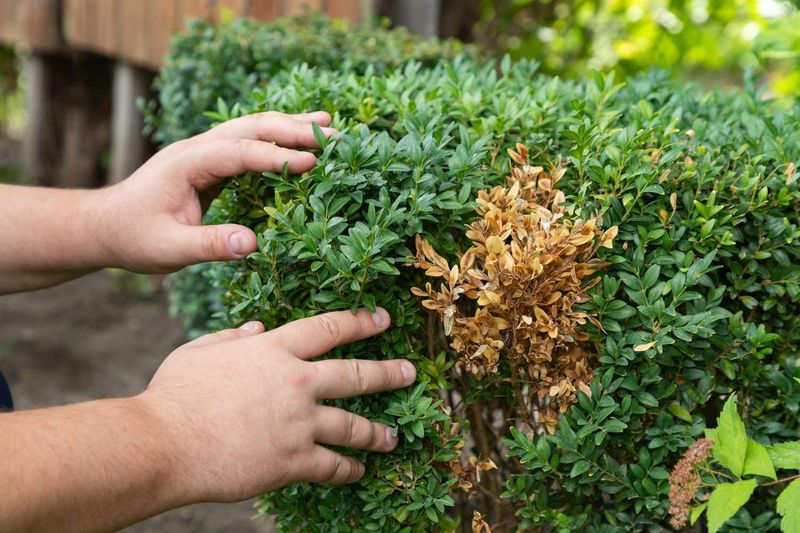
Genetics play favorites. Two boxwoods planted three feet apart in the same bed, sharing the same soil and sun, can look completely different in December because they carry different family traits.
Hybrids bred from a cross of Buxus microphylla var. koreana and Buxus sempervirens often handle winter color changes better, with many maintaining greener foliage through cold weather.
Names worth knowing include Green Gem, Green Mountain, Green Ice, Glencoe, Baby Gem, and NewGen Freedom.
Growers selected these specifically for winter color retention, and gardeners across the Mid-Atlantic report they stay noticeably greener.
Many straight Buxus sempervirens types, including the classic American boxwood so common around older homes, shift color more readily.
That is not a flaw, just a trait. Some homeowners even like the warm winter tone against brick and snow.
Fun bit of history: American boxwood is not American at all. It came over from Europe with colonists and has been part of Virginia gardens since the seventeenth century, which is why you see it framing so many historic homes.
If constant green matters to you, ask the nursery which cultivar you are buying before checkout, and match new plants to what already grows in the bed.
Mixing a bronzing type with a non-bronzing type in the same hedge creates an uneven patchwork every single winter.
Tiny Pests Can Be Behind Those Changing Leaves
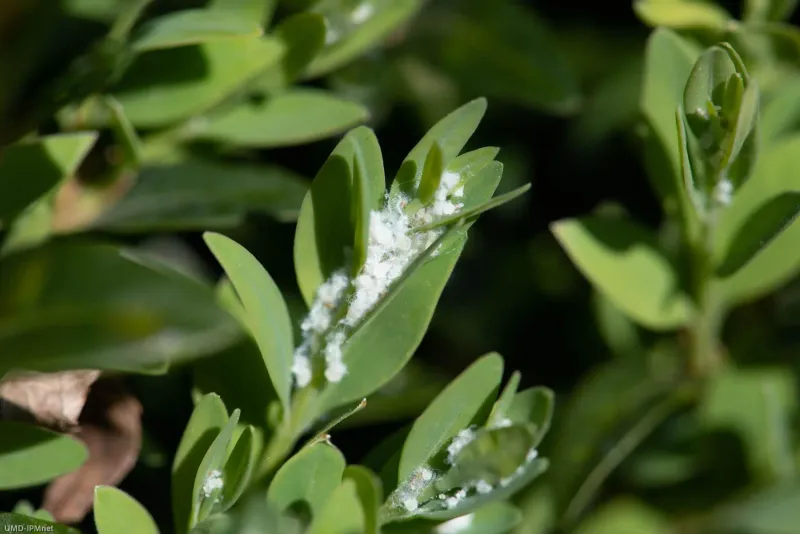
Flip a few leaves over before you blame the weather. Several small pests common across the state create discoloration that mimics ordinary bronzing, and each one leaves its own calling card.
Boxwood leafminer is one of the important insect pests affecting boxwoods in this state. The adult looks like a small orange gnat, and it lays eggs inside the leaf tissue in spring.
Larvae feed from the inside, producing raised blisters or pimple-like bumps on the underside along with yellow or orange blotches. Heavy infestations thin the plant out considerably.
Boxwood spider mites work differently. These specks feed on sap and leave fine yellow stippling that looks like someone scratched the leaf surface with a pin.
Hold a white sheet of paper under a branch and tap it, and you may see the mites moving.
Boxwood psyllids cause new growth to cup inward like a tiny spoon, sometimes with a white waxy fluff tucked inside. Their damage tends to be cosmetic rather than serious.
Pest damage often has a more localized or distinctive pattern, such as spots, stippling, blistering, or cupped new growth, rather than simply changing the overall color of the shrub.
This kind of damage shows up as spots, blotches, and blisters on individual leaves rather than an even warm tone across the whole shrub.
Check in spring and midsummer when pests are active, and treat then rather than waiting for fall, since timing matters far more than product choice.
When Fall Bronzing Could Point To Boxwood Blight
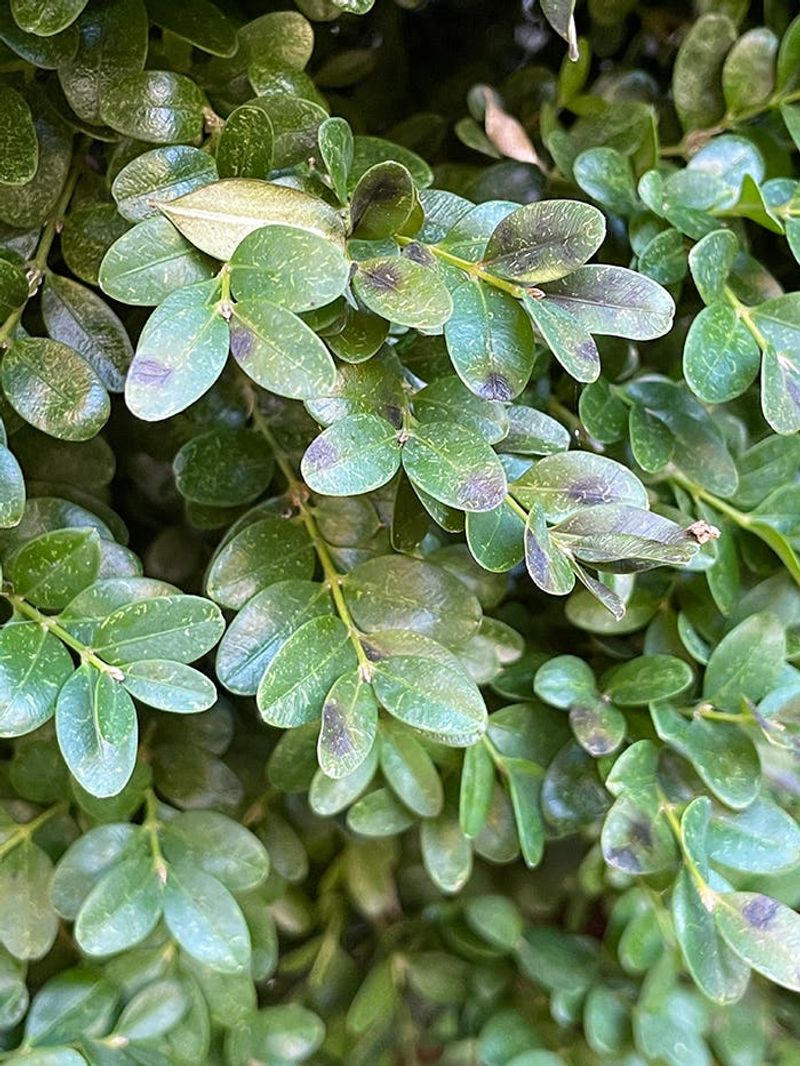
Boxwood blight is the one problem that makes gardeners sit up straight.
Caused by the fungus Calonectria pseudonaviculata, it was first confirmed in the state back in 2011 and has spread through nurseries and landscapes ever since.
Symptoms look nothing like tidy seasonal color. Brown leaf spots appear first, often round and edged with a darker border, sometimes joining together until a whole leaf turns tan.
Stems, especially young green growth, develop narrow black streaks that run lengthwise, and that streaking is the most reliable clue.
Defoliation is another important warning sign. Boxwood blight can cause leaves to drop quickly, leaving bare twigs where dense foliage once covered the plant.
Significant leaf drop makes the situation more concerning and should not be dismissed as simple seasonal bronzing.
Warm, humid weather, the kind Virginia serves up in late summer and early fall, helps the fungus spread fastest. Spores travel in splashing rain, on pruning shears, on gloves, on shoes, and even on holiday greenery brought indoors.
Suspecting blight means acting carefully. Avoid working around wet plants, clean tools with disinfectant between shrubs, bag any fallen leaves instead of composting them, and keep new boxwoods away from the area.
Confirming the diagnosis through a lab matters, because treating the wrong problem wastes time while the fungus keeps moving through your hedge.
Brown Spots And Falling Leaves Tell A Different Story
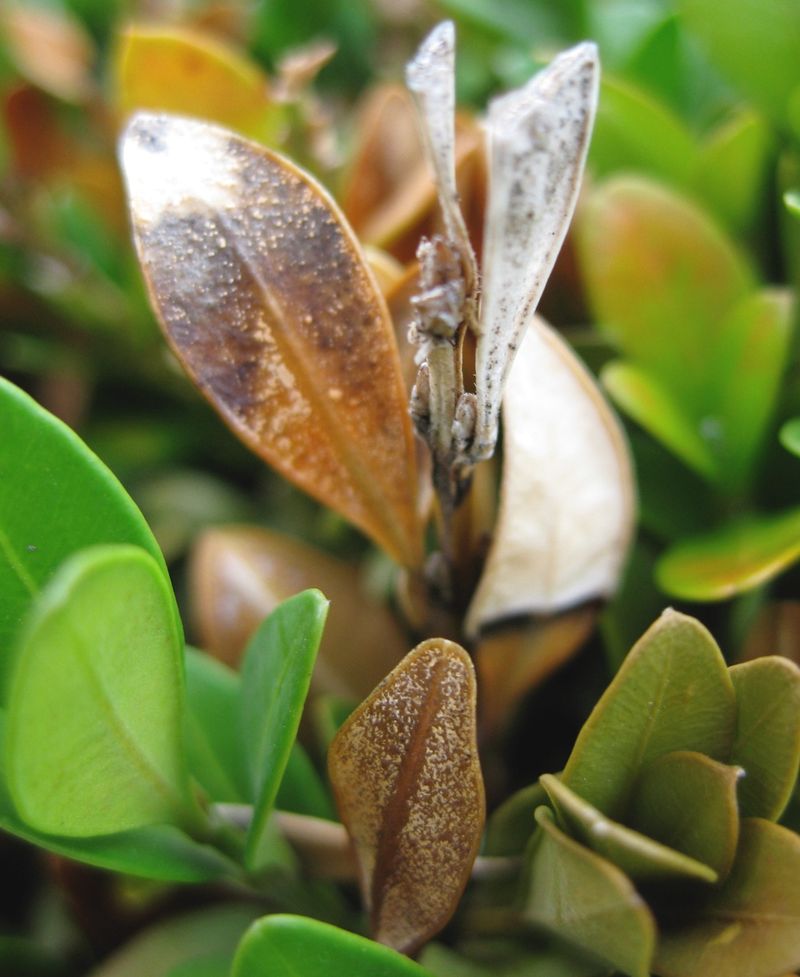
Sorting harmless from harmful comes down to three questions: Is the color even? Are the leaves staying on?
Are there spots or streaks?
Even bronzing across the entire shrub, with leaves gripping the stems tightly, points to weather stress.
Run your hand along a branch. If leaves hold firm and the color is consistent from top to bottom, spring will almost certainly bring green back.
Trouble looks messier. Damage that shows up in random patches, on one or two branches while the rest stays green, suggests something biological rather than environmental.
Brown spots with dark rims, black streaking on the stems, and leaves that dry out and then hit the ground in piles all signal disease.
Drought-stressed foliage may crisp at the tips, but it generally stays attached to the plant.
Defoliation is the loud alarm bell. Blistered leaves with bright yellow or orange blotches shift suspicion toward leafminer instead, and fine yellow speckling points to mites.
Knowing which pattern you are looking at saves both money and worry. Snap clear photos of the worst branches, including a close-up of the leaf surface and the stem, and note the date.
Comparing pictures over a few weeks tells you whether the shrub is holding steady or losing ground, which is exactly what most plant experts will ask about first.
A Little Fall Care Can Help Boxwoods Handle Stress
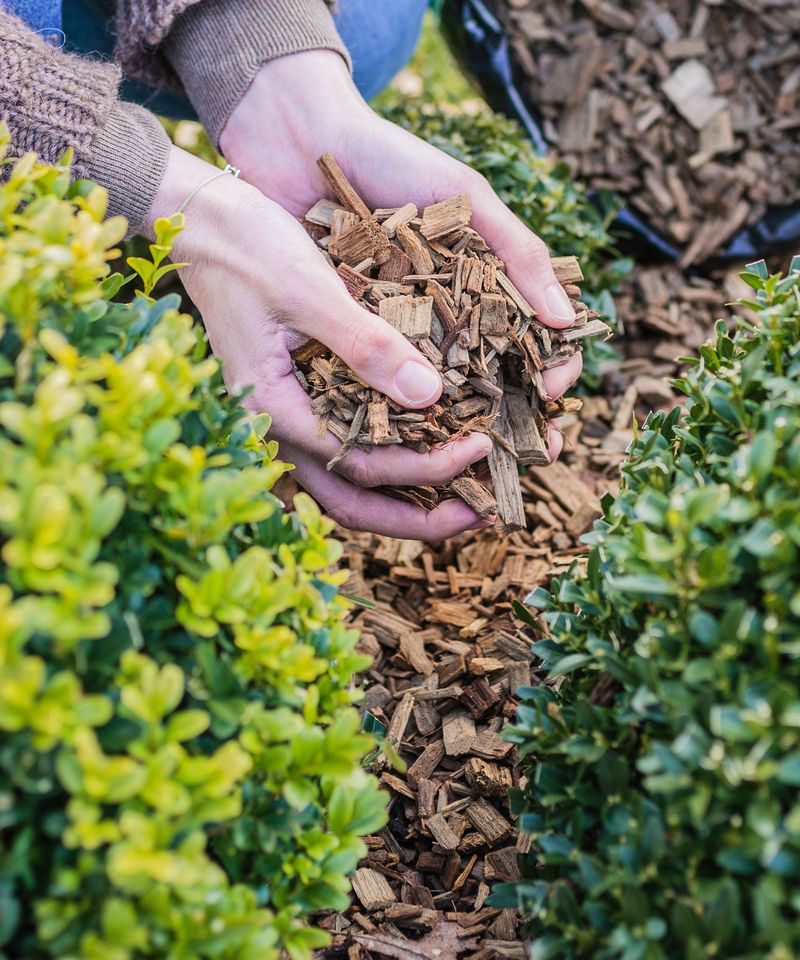
Autumn chores make a real difference here, and none of them take long.
Start with water.
Soak boxwoods deeply during any dry stretch through fall and keep going until the ground freezes, so roots enter winter fully charged. Young plants under eighteen months old want about an inch per week.
Mulch comes next.
Spread two to three inches of shredded hardwood, pine bark, compost, or pine straw over the root zone to hold moisture and buffer soil temperature swings.
Pull it back a few inches from the trunk, since piled mulch traps dampness against the stem and invites rot.
Drainage deserves attention too.
Boxwoods hate soggy feet, and Virginia clay holds water stubbornly. Amend heavy soil with compost, or set new plants slightly high on a small berm so water moves away.
Shield exposed shrubs from harsh wind and blazing afternoon sun with burlap screens on the south and southwest sides. Skip heavy pruning in late summer and early fall, because fresh tender growth has no time to harden off before cold arrives.
If a soil test shows that fertilizer is needed, follow its recommendations rather than adding nutrients simply because the foliage has changed color. Avoid pushing unnecessary late-season growth with fertilizer.
Sweep fallen leaves out from under the plant as well, since clean ground reduces disease pressure next season.
When Bronze Leaves Deserve A Second Look
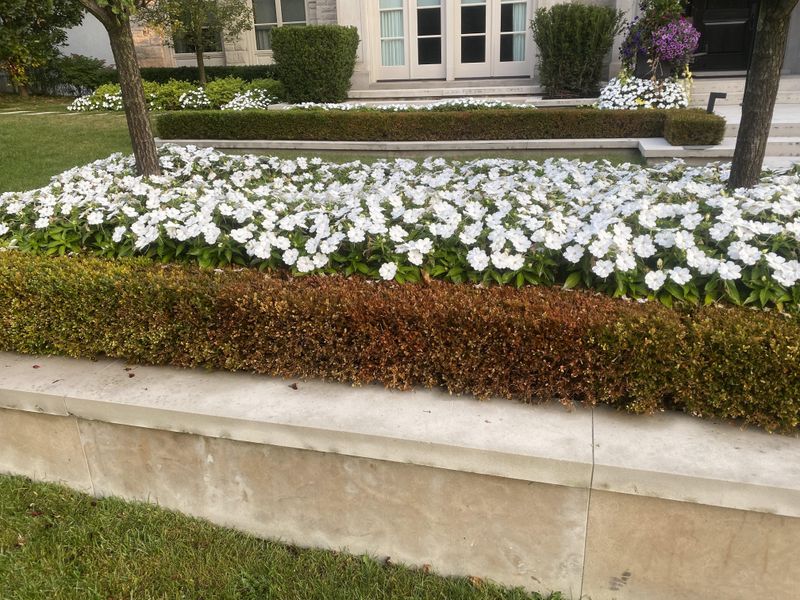
The pattern can provide a useful clue, but color alone is not enough to identify the cause.
A broad bronze tint with leaves remaining attached can be consistent with environmental stress, while spots, significant leaf drop, or dark stem streaks deserve closer attention.
Keep watching the plant as conditions change, and look for new symptoms rather than relying on color alone.
Move to investigation mode when foliage drops suddenly, when brown spots ringed by darker borders appear, or when black streaks show on green stems. Those three together strongly suggest boxwood blight, and quick action protects neighboring plants.
Damage confined to random patches rather than the whole plant also warrants a closer look.
Grab a hand lens and study the leaves. Blisters with yellow and orange blotches mean leafminer.
Tiny pale specks scattered like dust mean spider mites. Cupped, distorted new growth suggests psyllids.
Call for professional help when a shrub declines fast, when a large hedge is involved, when you cannot pin down the cause, or when an infestation has clearly outgrown a spray bottle.
Virginia Tech runs plant disease, nematode, and insect identification clinics, and your local Cooperative Extension office can walk a sample through the process for a small fee. A confirmed diagnosis beats guessing every time.
Keep a short log of what you see and when. That record turns a vague worry into useful information, and it often reveals that your bronzed boxwoods were perfectly fine all along.