Why Are Your Georgia Zinnia Leaves Turning White With Mildew Right Now?
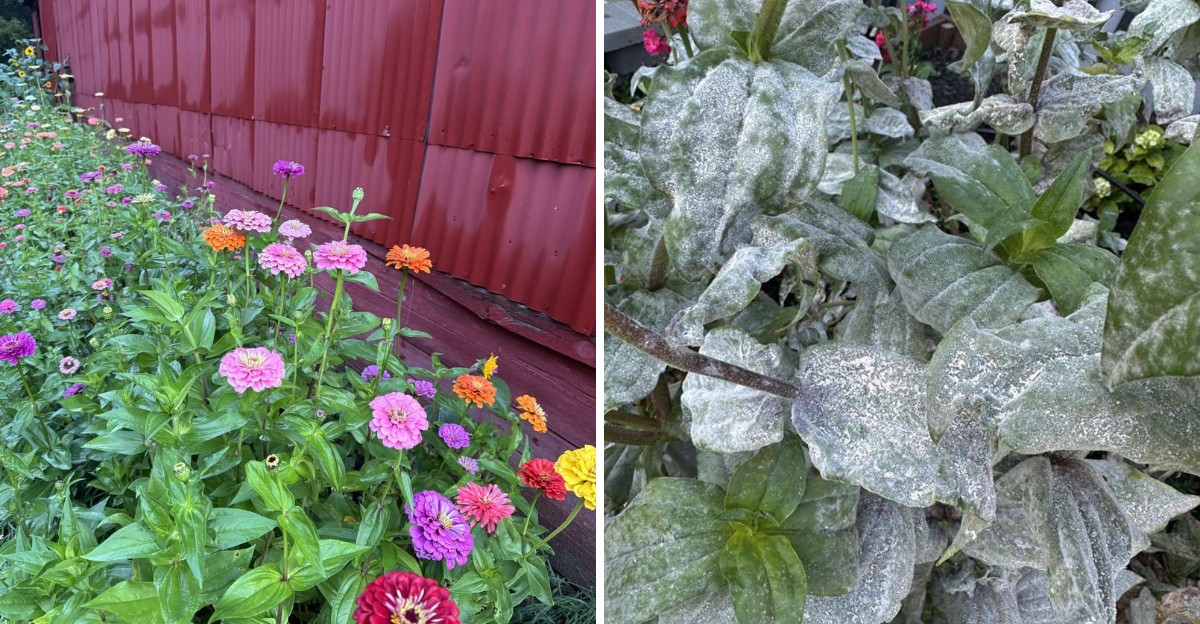
You walk out Saturday morning to cut a bouquet and stop.
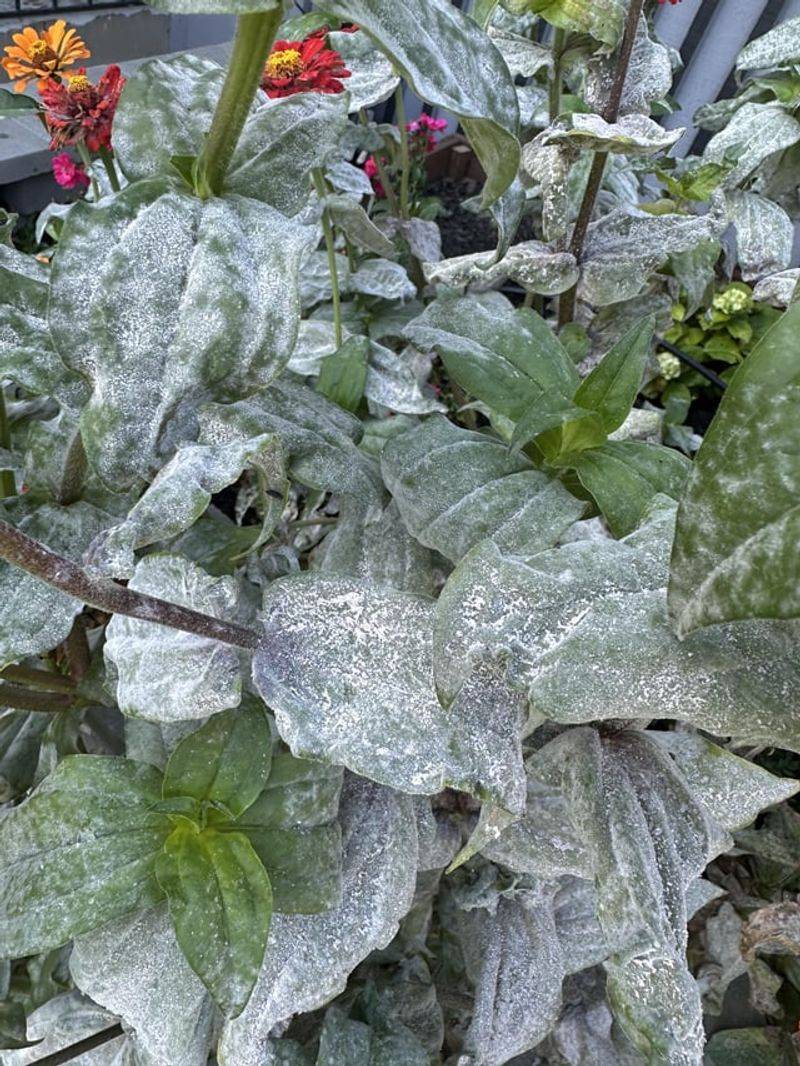
The zinnia leaves look like someone dusted them with powdered sugar overnight. Every lower leaf, and a few higher up.
Nothing about the week explained it. No rain, no obvious change, just Georgia doing what Georgia does in September.
That coating is powdery mildew, and it operates differently than most plant diseases.
Here’s the part that surprises people: it doesn’t need wet leaves at all. Humid air alone gets it started, which explains why outbreaks appear during dry stretches when nothing has watered those plants from above.
Warm days plus cool muggy nights create the ideal window. Late July through September delivers exactly that.
The reassuring news is that this is usually a beauty problem rather than something worse.
Curious what’s actually happening on those leaves?
1. Humidity Creates Perfect Mildew Conditions
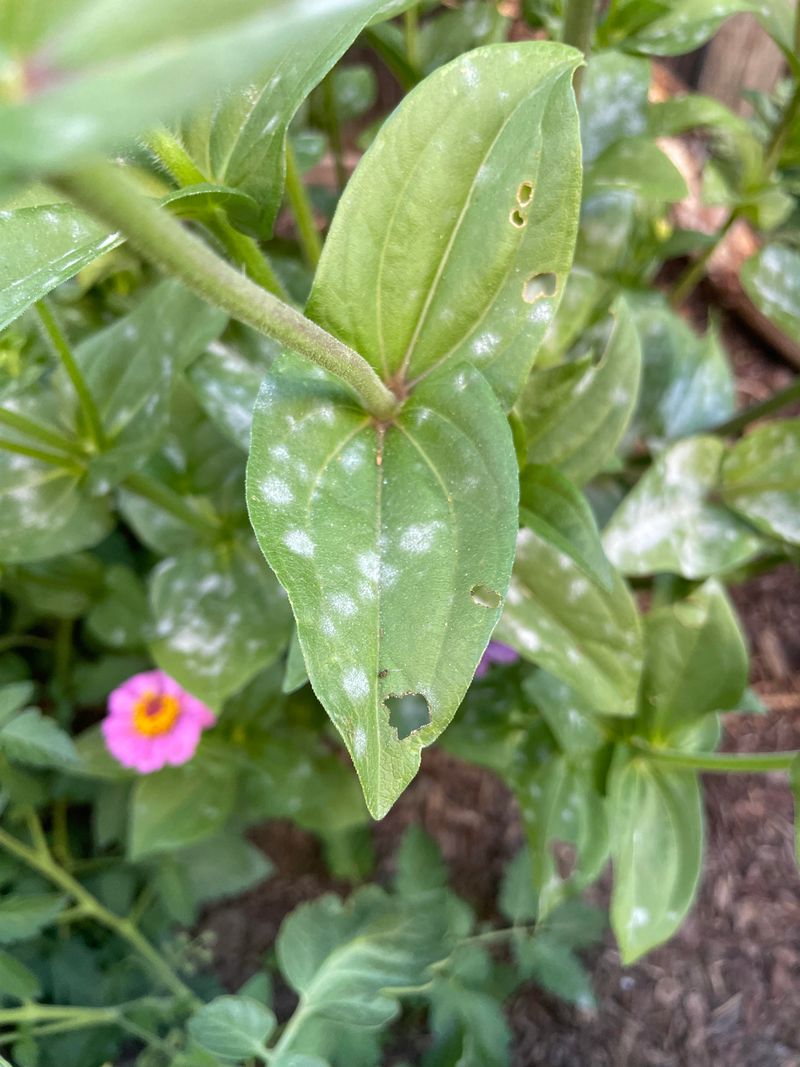
Georgia summers hand out humidity generously, and powdery mildew appreciates the gift.
Unlike most plant diseases, this fungus needs no standing water on a leaf to establish. High humidity in the surrounding air suffices.
That mechanism explains why trouble often appears after weeks without rain. Nothing got wet and the problem arrived anyway.
Warm days followed by cool muggy nights create the sweet spot. Late July through September in Georgia delivers that pattern reliably.
Dew settles heavily while air stays thick. Spores drifting on the breeze land on zinnia leaves and begin growing.
The white coating isn’t dust. Those are threadlike fungal strands and thousands of spores sitting on the leaf surface.
They feed on the tissue underneath while staying mostly external. That habit lets the fungus spread sideways across a leaf quickly rather than rotting through it.
Shady locations make everything worse. Leaves staying damp longer in the morning hold humid air well past sunrise.
North sides of houses and spots under tree limbs both qualify. Full sun for at least six hours dries that microclimate considerably faster.
Watch your zinnias once nighttime temperatures dip into the sixties while daytime highs stay in the upper eighties.
That temperature swing paired with Georgia humidity signals mildew season has arrived.
2. Crowded Plants Trap Damp Air
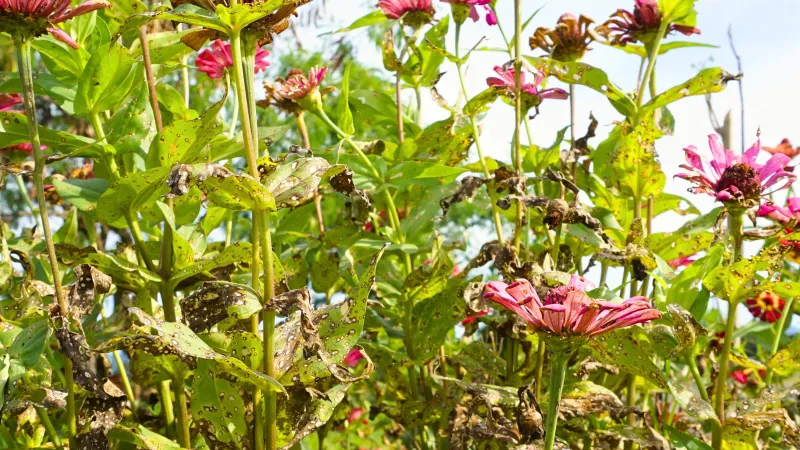
Seed packets say to thin zinnias to a foot or more apart. Most of us ignore that because tiny seedlings look lonely in a bed.
By August those cheerfully crowded plants have become a solid wall of leaves with almost no space between stems.
Air cannot move through a thicket like that. Moisture rising from soil gets caught under the canopy and lingers for hours.
The fungus gets exactly the still humid pocket it needs. Conditions rather than bad luck.
Crowding also blocks sunlight from reaching lower leaves. Shaded foliage dries slowly and stays weaker.
That explains why mildew typically appears first on the bottom third of a plant and works upward. Predictable progression.
Touching leaves make spread easier too. Spores travel only short distances on their own.
When one leaf brushes another all season, the fungus moves from plant to plant without much effort.
Your Georgia Garden Changes Every Week. Your Plan Should Too.
Gardening in Georgia changes quickly throughout the season. Every Friday you’ll receive a simple weekly plan showing exactly what to plant, prune, fertilize, harvest, and protect so you never miss the right timing.
Spacing matters more in Georgia than in drier states. Roughly nine to twelve inches between smaller zinnia types works.
Tall varieties like Benary’s Giant want up to eighteen inches. Give them that room even though a young bed looks sparse.
If crowding already happened this year, resist ripping everything out. Pull a few of the weakest plants to open lanes for airflow.
Then note it in a garden journal for next spring.
3. Overhead Watering Makes It Worse
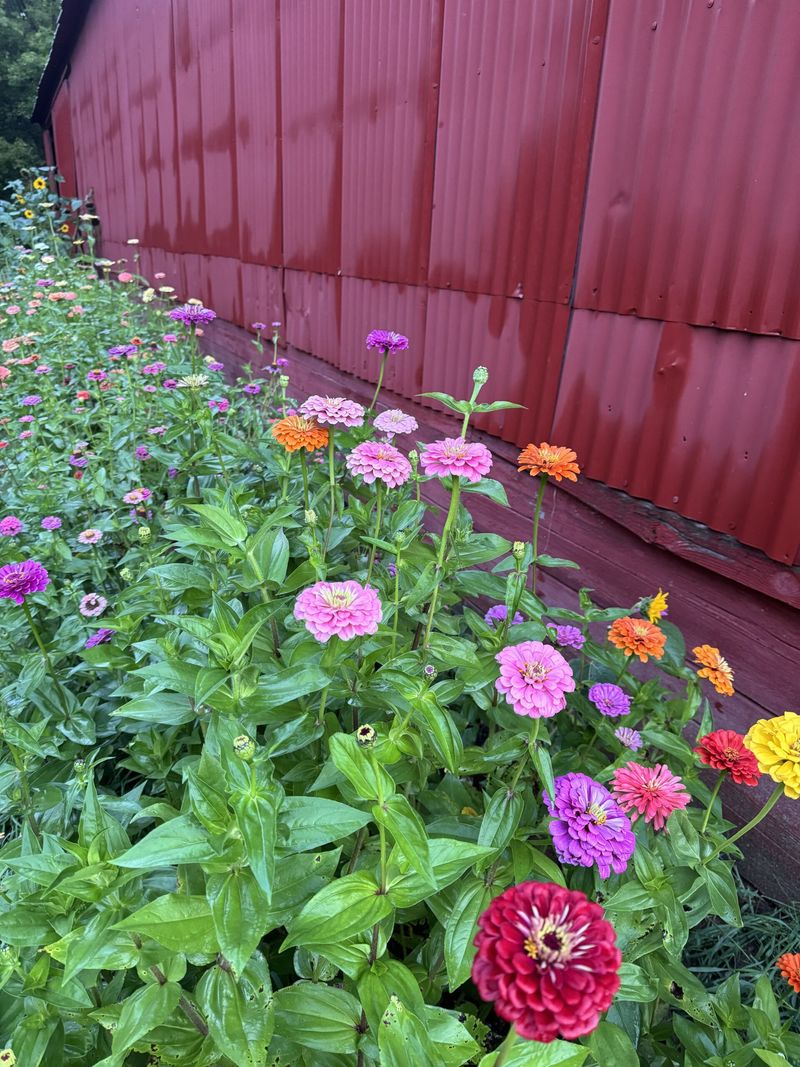
Grabbing the hose and spraying the whole bed from above feels efficient at the end of a long day.
Zinnia foliage pays for that shortcut though. Wet leaves at sunset stay wet for ten or twelve hours.
Powdery mildew spores don’t require free water to germinate. That humid layer clinging to soaked foliage overnight remains an excellent invitation.
Splashing water also throws spores from lower leaves onto healthy upper ones. Mechanical transport you’re providing.
Zinnias are prone to leaf spot fungi like Alternaria as well. Those genuinely do need wet leaves, so overhead watering doubles your problems.
Aim water at the soil instead. A watering wand held low, a soaker hose through the bed, or drip tubing under mulch all work.
Roots get moisture while foliage stays dry. That’s the entire goal.
Timing helps when hand watering is the only option. Water early morning so sun and rising temperatures dry splashed leaves within an hour or two.
Deep and occasional beats shallow and daily. One good soaking weekly that wets the top six to eight inches builds stronger roots.
It also keeps the canopy drier overall. Two benefits from one adjustment.
Mulch earns its place here too. A two inch layer of pine straw slows evaporation and cuts down on splashing considerably.
4. Powdery Mildew Rarely Ends The Show
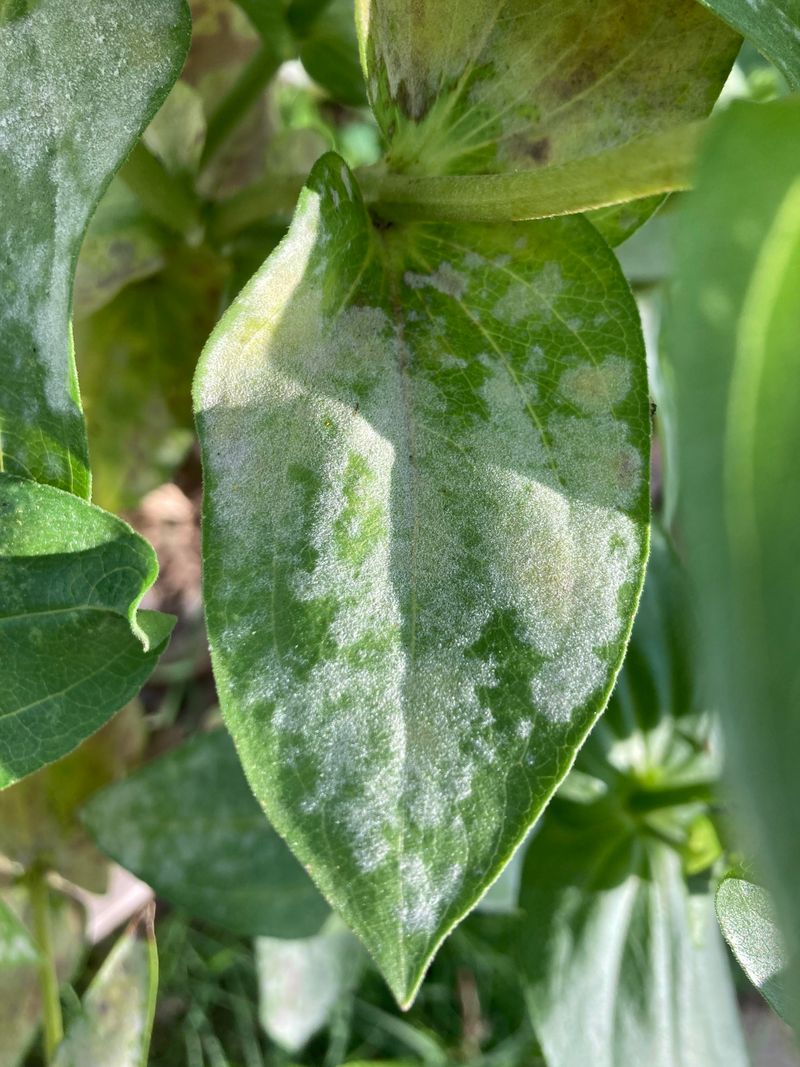
Here’s what panicked gardeners need to hear first. A dusty white zinnia is an unattractive zinnia rather than a failing one.
Established plants with healthy root systems generally keep blooming right through an outbreak.
What mildew actually steals is efficiency. The fungal layer shades leaf tissue and taps cells for nutrients.
The plant produces less energy as a result. That shows up as smaller flowers, fewer buds, and duller color.
Badly affected lower leaves may yellow, brown, and drop. Losing them looks alarming.
The top of the plant often keeps producing cutting flowers into early fall anyway. Appearance suffers more than production.
Seedlings and stressed plants are the exception worth noting. Young zinnias have less to spare.
Plants already struggling with drought, poor soil, or root problems decline faster under the additional pressure.
Skip the panic sprays. Household mixtures like baking soda solutions and diluted milk circulate constantly online.
Their effectiveness runs limited or unproven, and neither substitutes for a labeled fungicide.
If you choose a fungicide, apply early when only a few spots appear. These products work far better as protectants than cures.
Once a leaf is fully coated, that leaf won’t recover. Zinnias are annuals anyway, so a strong finish is the realistic goal.
5. Better Airflow Slows Its Spread
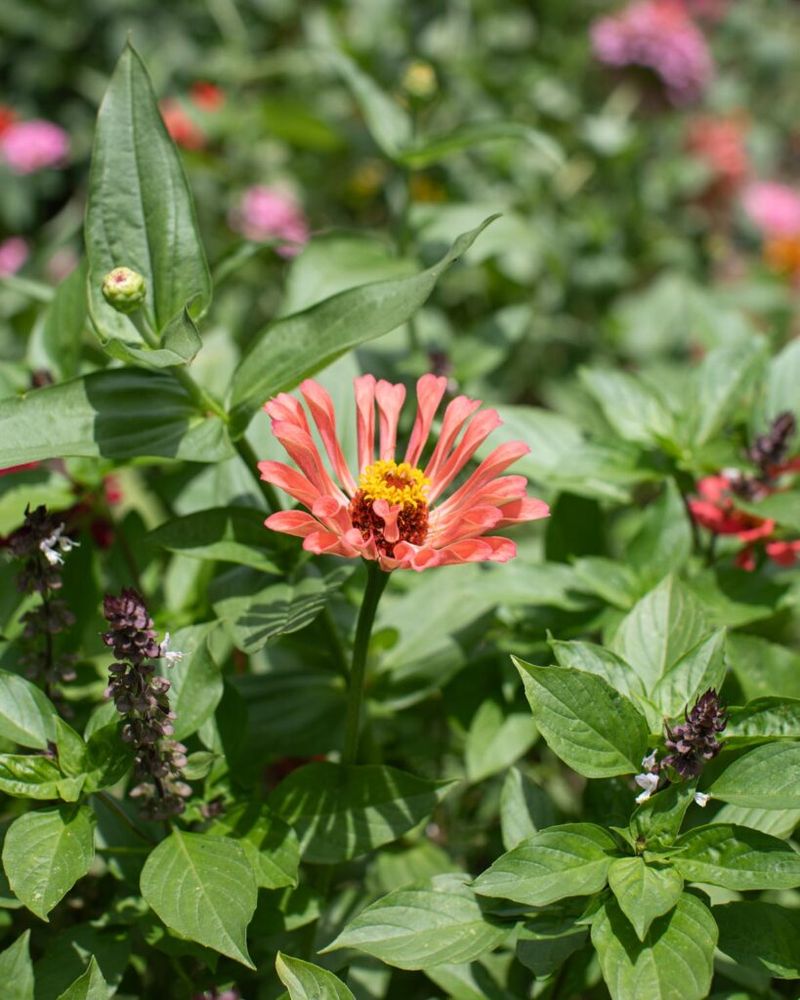
Your zinnia patch is essentially a room needing a window opened.
Moving air dries leaf surfaces and breaks up the humid pocket the fungus depends on. That’s the single most practical mid-season action available.
Start at the bottom. Snip off the lowest six to eight inches of leaves, particularly any already showing white.
Drop them straight into a bag rather than the compost pile. Spores travel from debris.
Thin from within next. Remove a few interior stems entirely so light and breeze pass through the middle of the clump.
Solid green walls bounce air rather than letting it move. Opening the center changes that.
Sanitize pruners between plants with rubbing alcohol. Spores ride on blades easily.
One careless cut carries the problem into a clean section of the bed. Small habit, real prevention.
Pull weeds hugging the base of your zinnias. Crabgrass and chamberbitter both thrive in Georgia beds by August.
Both add another layer of trapped moisture nobody notices until flowers look poor.
Cut flowers frequently too. Harvesting opens the canopy, encourages branching, and gives you something to enjoy indoors.
Avoid heavy nitrogen once mildew appears. Lush new growth is soft, tender, and exactly what the fungus prefers.
6. Resistant Varieties Reduce Future Outbreaks
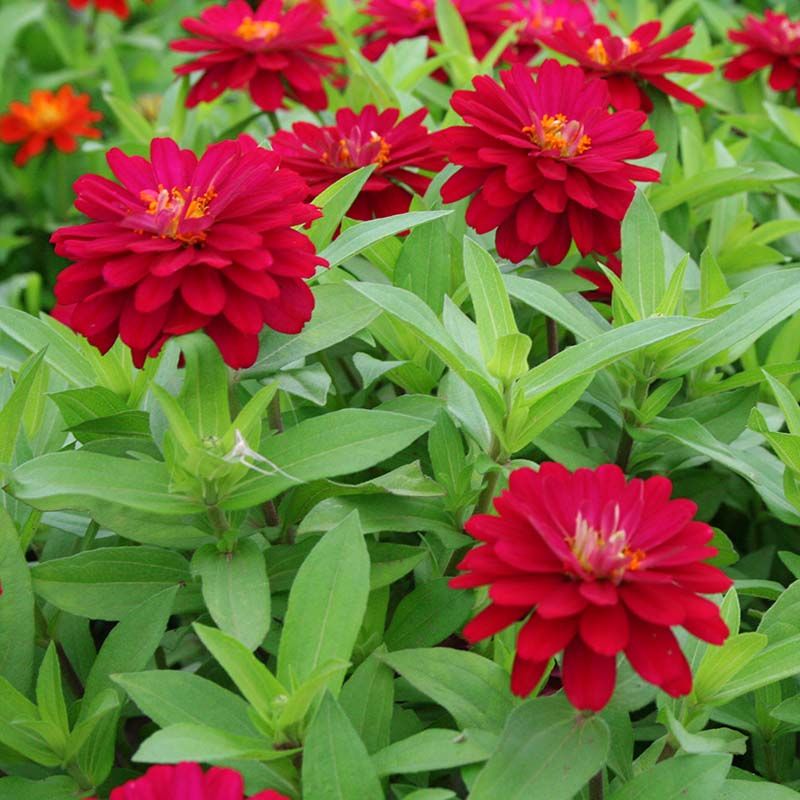
Plant breeders have chased mildew-proof zinnias for decades. Nothing is completely immune, and some types handle it far better.
Choosing wisely at seed-buying time saves more trouble than any spray does.
Zinnia angustifolia, sometimes sold as narrowleaf zinnia, carries strong natural resistance.
The flowers are smaller and daisy-like, and plants sprawl into tidy mounds that keep blooming through Georgia heat.
The Profusion and Zahara series come from crosses between Zinnia angustifolia and the big-flowered Zinnia elegans.
Gardeners get larger blooms with considerably better mildew tolerance. Trial gardens across the Southeast rate both highly.
Old-fashioned Zinnia elegans types tend to be the most susceptible. That includes the giant dahlia-flowered kinds people grow for bouquets.
Growing them remains worthwhile if you want long cutting stems. Just plan on extra spacing and closer monitoring.
Look for the words tolerant or resistant on seed packets and plant tags.
Resistance isn’t a force field. It usually means infection starts later and progresses more slowly.
Zinnias are native to Mexico, where drier air keeps mildew pressure lower. Georgia’s climate simply isn’t what these flowers evolved in.
Try a side-by-side test next season. Plant a resistant series next to your old favorite and let September make the decision for you.
7. Cleanup Now Protects Next Year’s Blooms
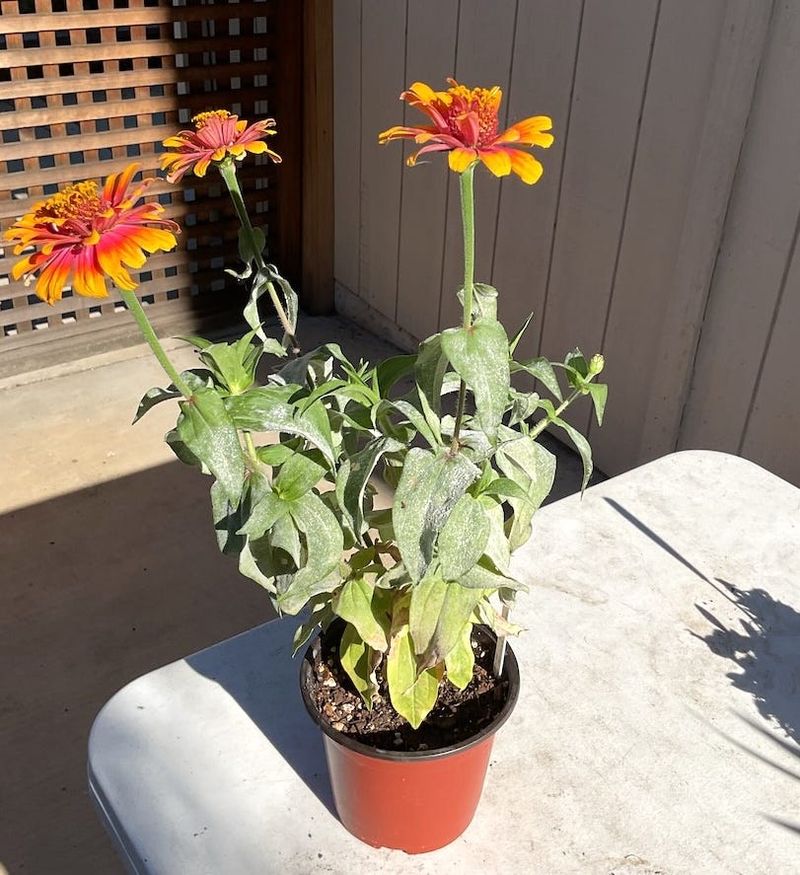
October brings the first light frost across much of Georgia. That’s your cue to clear the bed rather than let it collapse in place.
Fungal structures overwinter in old plant debris, waiting for spring seedlings.
Pull spent zinnias out roots and all once blooming finishes. Rake up every fallen leaf underneath them.
Those crumbly brown bits are where trouble hides. Thoroughness matters more than speed.
Bag the debris or burn it where local rules allow. Home compost piles rarely reach temperatures high enough, long enough, to handle fungal spores reliably.
Tossing infected material in is a gamble with next season.
Clean tools and containers before storing them. A scrub followed by a disinfectant wipe keeps this season’s problems from traveling into spring.
Save seed carefully or skip it entirely. Seed from heavily infected plants may carry other pathogens.
Fresh seed of a resistant series costs a few dollars for a considerably better start. Reasonable trade.
Rotate your planting spot where possible. Moving zinnias to a different bed for a season reduces the spore load in soil and debris.
Plan the layout while details are fresh. Sketch wider spacing, choose a sunnier corner, and set up a soaker hose for spring.
8. Catch It Early Next Season
Prevention beats treatment with this particular fungus, and timing determines which one you’re doing.
Start scouting in mid-July before symptoms appear. Check lower leaves and interior foliage first, since that’s where it begins.
Small white spots the size of a coin are the earliest visible stage. Easy to miss and easy to address.
Weather gives you advance warning too. When nights start cooling into the sixties while days stay hot, conditions have shifted.
Watch the forecast for that pattern rather than waiting for symptoms. A week of lead time changes your options considerably.
Preventive fungicide application makes sense on plants you genuinely care about. Products protect uninfected tissue rather than curing coated leaves.
Read labels for reapplication intervals and any temperature restrictions. Georgia heat limits when some products can be used safely.
Sulfur and potassium bicarbonate both appear in home garden fungicides for this disease. Follow label rates rather than improvising.
Removing the first affected leaves immediately slows spread more than most people expect.
Site selection is the free version of prevention. Full sun, good spacing, and morning exposure all reduce pressure before anything gets planted.
Notes on which beds had problems this year guide next spring’s decisions. Memory fades faster than mildew does.