What To Do If A Summer Storm Snaps Your Favorite Georgia Tree Branches
Georgia summer storms have a dramatic flair that is hard to argue with. One minute the sky is clear and the next there is a crack of thunder loud enough to rattle the windows, and by the time it passes your favorite shade tree is missing a significant piece of itself.
It is a jarring thing to walk outside to after a storm. Branches scattered across the lawn, leaves plastered to everything, and a tree that looked perfectly fine yesterday now wearing its damage openly.
Here is the reassuring part though: a broken branch does not automatically spell the end for a healthy tree. Many trees recover well from storm-related injuries when the trunk, major limbs, and root system are still structurally sound.
The first priority is always safety. After that comes careful cleanup, an honest assessment of the damage, and knowing which decisions are worth leaving to a certified arborist.
1. Wait Until The Georgia Storm Fully Passes Before Stepping Outside
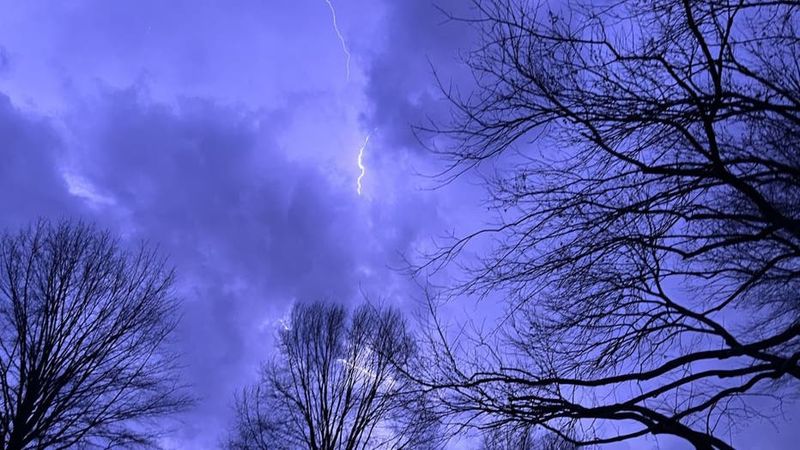
The biggest mistake folks can make is rushing outside the second the wind slows down. Storms in Georgia can arrive in multiple rounds, and another period of strong wind, heavy rain, or lightning may follow what seems like a quiet spell.
Wait until the storm has clearly passed and conditions are safe before heading outside to inspect your tree. While you wait, look through a window for hanging branches, split limbs, or sections of the tree that appear unstable.
Broken limbs suspended overhead can fall unexpectedly and create a serious hazard.
Lightning is another important reason to stay indoors. Current lightning safety guidance recommends waiting at least 30 minutes after the last sound of thunder before resuming outdoor activities.
A storm does not have to be directly overhead for lightning to remain a concern.
Once conditions are safe, put on sturdy shoes, long sleeves, and gloves before walking around the property. Wet grass, mud, fallen leaves, and scattered branches can make footing difficult after a summer storm.
Move slowly and look above you as well as at the ground. A damaged tree may have loose branches that are difficult to see from below.
If anything overhead looks unstable, avoid walking beneath it and leave that part of the inspection to a qualified tree professional.
2. Check For Downed Power Lines Around Your Georgia Property
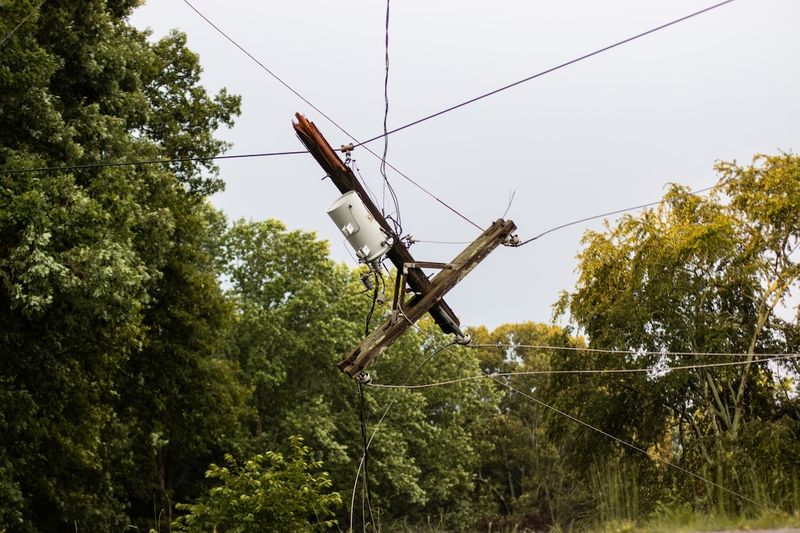
Before you touch a single branch, take a careful look around your yard for electrical hazards. Storms can bring tree limbs into contact with overhead utility lines, and a downed line may still be energized even when it is lying quietly on the ground.
A branch touching an electrical line should be treated as dangerous. Do not touch the branch, tree, fence, vehicle, or other object that may be in contact with the wire.
Georgia gets powerful summer thunderstorms, and wind or falling trees can damage utility equipment. If you notice a downed, sagging, sparking, or tangled wire, stay well away from the area and keep children and pets back too.
Do not rely on a specific distance as proof that an area is safe because electrical hazards can vary depending on the situation.
Your Georgia Garden Changes Every Week. Your Plan Should Too.
Gardening in Georgia changes quickly throughout the season. Every Friday you’ll receive a simple weekly plan showing exactly what to plant, prune, fertilize, harvest, and protect so you never miss the right timing.
Contact the appropriate utility company or emergency services to report a downed line. Let trained crews determine when the area is safe before beginning tree cleanup.
Water adds another reason for caution. Wet ground and conductive objects can increase the area of concern around damaged electrical equipment.
Avoid puddles, wet vegetation, fences, and other objects near a suspected energized line.
Once utility professionals have confirmed that the electrical hazard has been addressed, tree cleanup can begin. A broken branch can wait.
Electrical safety comes first, even when storm damage looks urgent.
3. Take Photos Of The Damage For Your Georgia Insurance Claim
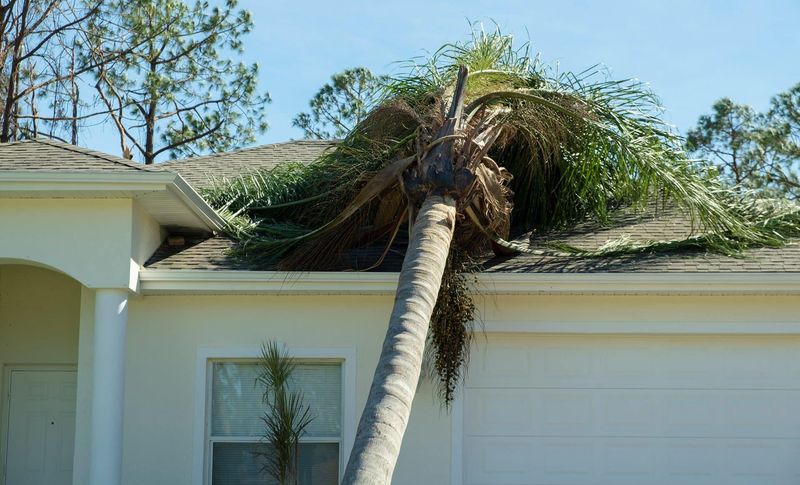
Grab your phone before cleaning up major storm damage, especially if a tree or branch has affected a house, fence, vehicle, shed, or other property. Clear photographs can provide useful documentation if you decide to file an insurance claim.
Take wide photos showing the overall scene as well as closer images of the damaged tree and anything the branch struck. If conditions are safe, photograph the area from several angles before moving debris.
Homeowners across Georgia may have different levels of coverage depending on their insurer and individual policy. Tree removal, debris cleanup, and repairs are not handled the same way under every homeowners policy.
Many policies have specific conditions determining when tree-related cleanup or removal costs may be covered.
Write down the approximate date and time of the storm while the details are still fresh. Local weather information may also help document when severe weather passed through the area.
Contact your insurance company or agent if significant property damage occurred and ask what documentation they require before cleanup begins.
Emergency work may sometimes be necessary before an adjuster can inspect the property, particularly when damaged trees create immediate safety concerns.
Keep receipts for professional tree work, temporary repairs, and other storm-related expenses. Some costs may qualify for reimbursement depending on your policy and circumstances.
Organized photos and paperwork cannot guarantee coverage, but they can make it easier to document what happened.
4. Remove Small Broken Branches Safely From Your Georgia Yard
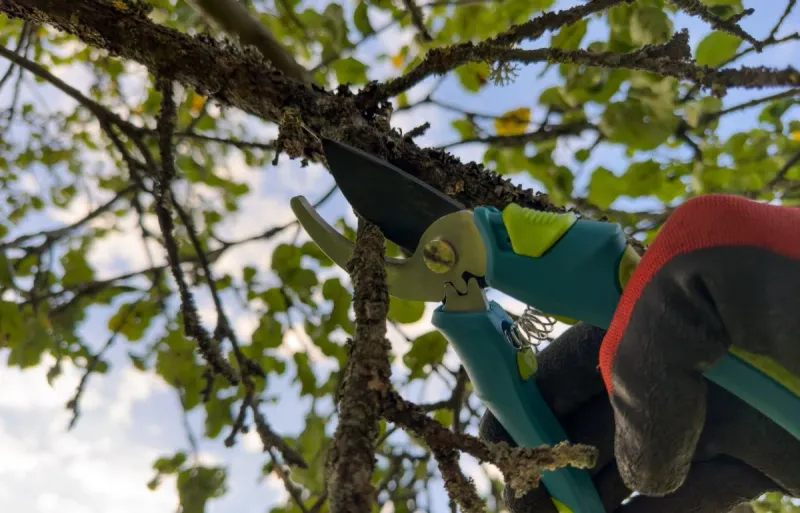
Once the area is safe, start with small broken branches that can be reached comfortably from the ground. Snapped twigs and lightweight hanging branches are generally more appropriate for homeowner cleanup than large limbs suspended overhead.
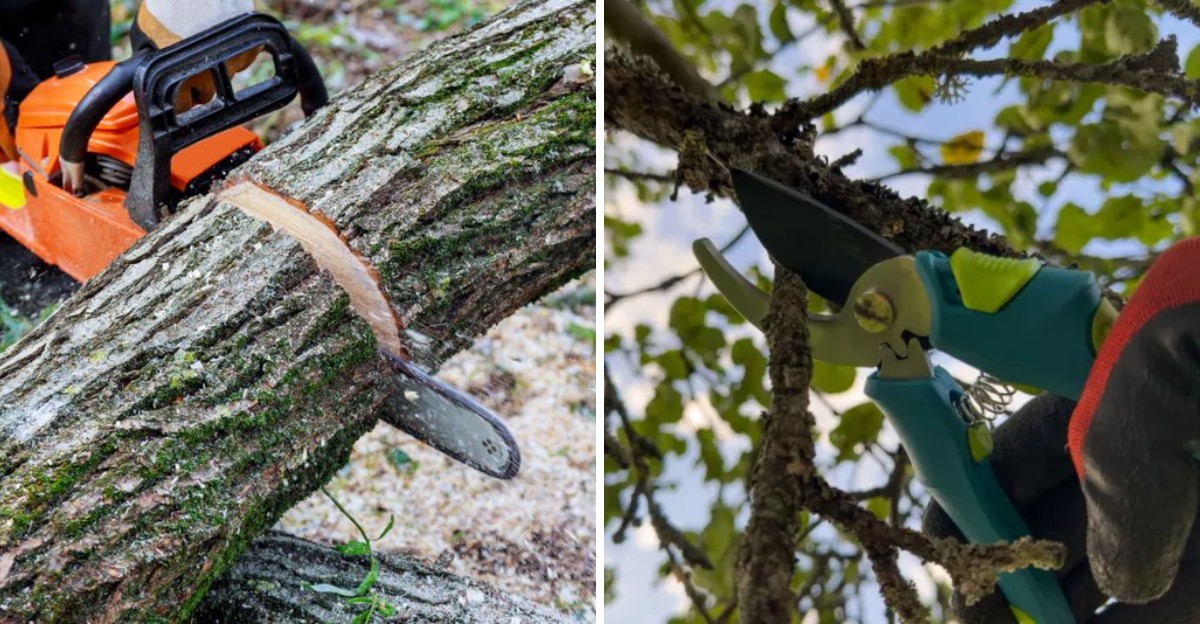
A good pair of sharp hand pruners or loppers can handle many smaller branches. Look for limbs that are cracked but still attached by strips of bark.
These damaged branches can become safety hazards and may create larger wounds if they tear away on their own.
Make pruning cuts just outside the branch collar, the slightly swollen area where a branch joins a larger limb or trunk. Preserving the branch collar helps the tree respond naturally to the pruning wound.
Avoid cutting flush against the trunk.
Long stubs should also be avoided. They can interfere with the tree’s normal wound response and may eventually become areas where decay develops.
Stay on solid ground while working. Wet Georgia soil, grass, and fallen leaves can become slippery after heavy rain, so climbing a ladder while handling cutting tools adds unnecessary risk.
Branches that require climbing, chainsaw work, or reaching overhead are better handled by qualified professionals.
Gather smaller debris as you work and check local rules for yard-waste disposal. Some communities offer curbside collection, while others have specific requirements for branch size or bundling.
Most importantly, do not turn cleanup into unnecessary pruning. Remove what was broken or clearly damaged and leave healthy branches in place unless there is another valid reason to prune them.
5. Call A Certified Georgia Arborist For The Big Broken Limbs
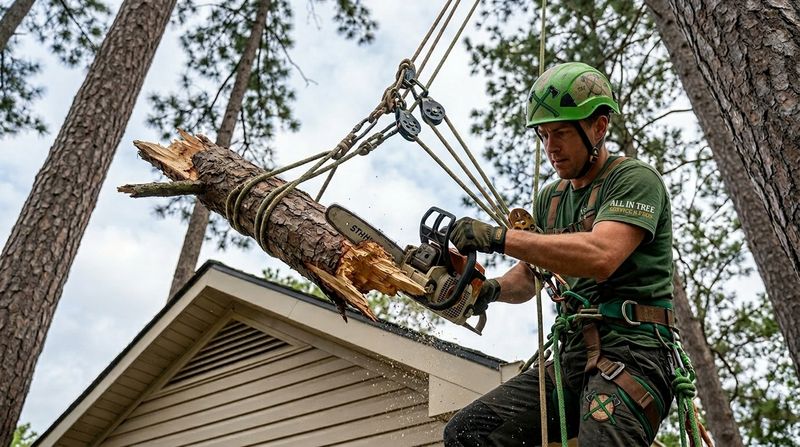
Some storm damage is beyond a reasonable homeowner repair. When a large limb breaks high in the canopy, a major branch splits, or part of the trunk has cracked, a qualified arborist can assess the tree more safely and accurately.
An ISA Certified Arborist has demonstrated knowledge of tree care through the International Society of Arboriculture certification program.
Certification alone does not mean every arborist performs climbing or complex removal work, so ask whether the company has the equipment, training, and experience needed for your particular situation.
A qualified arborist can evaluate more than the branch that obviously broke. Storms can create cracks, weakened attachments, hanging limbs, and structural problems that are difficult to recognize from the ground.
They can also help determine whether the tree has a reasonable chance of remaining structurally sound or whether removal should be considered. Some trees recover well after losing a branch.
Others may have trunk splits, extensive crown damage, or root problems that make retaining them less practical.
Ask for proof of liability insurance and workers’ compensation coverage where appropriate before work begins. Written estimates can also help you understand what the company plans to remove and why.
Large limbs can weigh hundreds of pounds and behave unpredictably once cutting begins. Trees under tension can shift suddenly as damaged wood is released.
Leaving complicated storm work to properly equipped professionals protects people, property, and the remaining tree. The goal should be an accurate assessment, not simply removing every branch that looks damaged.
6. Make Clean Cuts To Help Your Georgia Tree Heal Faster
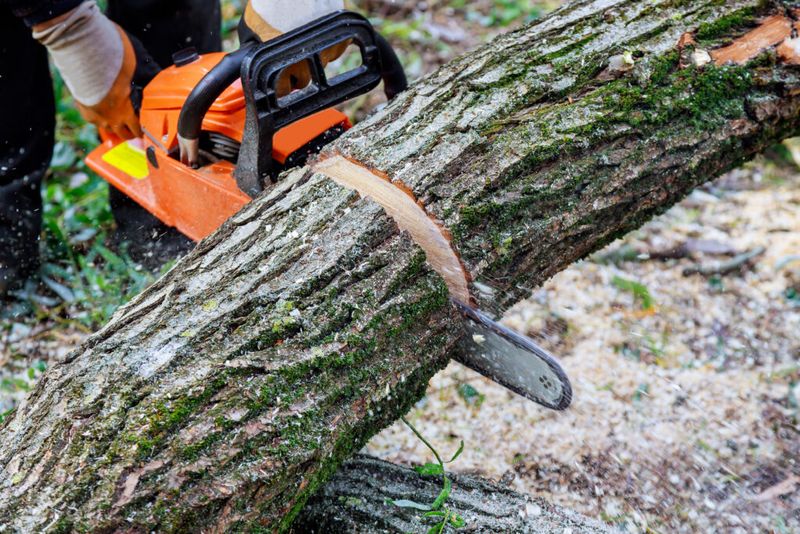
Trees respond to injuries differently from people. They do not replace damaged wood by healing it back together.
Instead, trees compartmentalize injured areas and gradually grow new tissue around wounds.
That makes proper pruning cuts important after storm damage. Jagged tears may leave a larger area of exposed wood than necessary, while an appropriate cut just outside the branch collar preserves tissues involved in the tree’s natural response.
Use sharp pruning tools that produce clean cuts without crushing the remaining branch tissue. Tool sanitation becomes especially important when disease may be involved or when moving between plants affected by certain pathogens.
Routine disinfection between every storm-damaged branch on an otherwise healthy tree is not necessary in every situation.
For larger branches that are still within safe reach, the three-cut method can reduce the chance of bark tearing. The first cut is made underneath the branch farther from the trunk.
A second cut from above removes most of the limb. The remaining stub is then removed just outside the branch collar.
Routine wound paint or pruning sealant is generally not recommended for most tree wounds. Modern arboriculture recognizes that trees have their own mechanisms for compartmentalizing injuries, and coatings generally do not improve that process.
Limit pruning to broken, hazardous, or clearly damaged wood after the storm.
Removing large amounts of healthy foliage can add unnecessary stress, especially during a hot Georgia summer when the remaining leaves are helping the tree produce energy.
7. Give Your Storm-Stressed Georgia Tree Water And Care
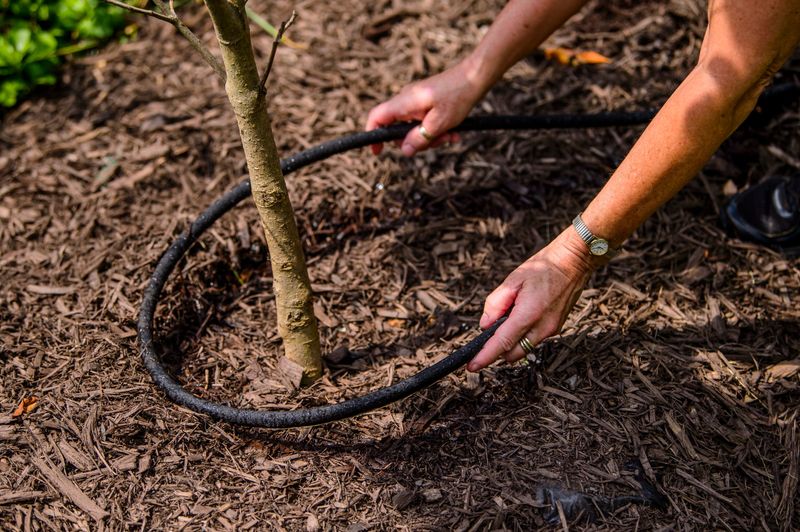
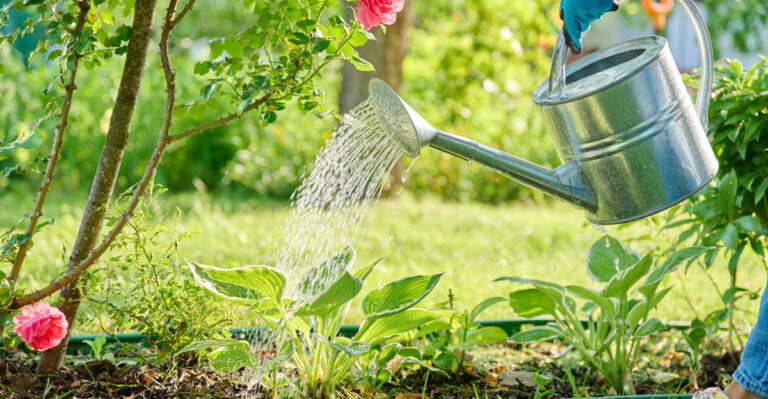
After cleanup, resist the temptation to assume that every storm-damaged tree needs extra water immediately. A summer storm may have already saturated the soil, and adding more water to an already wet root zone may not help.
Check soil conditions first. If the soil becomes dry during the days or weeks after the storm, slow, thorough irrigation can help reduce additional drought stress.
Newly planted and young trees generally require closer moisture monitoring than established trees with extensive root systems.
Apply water across the root zone rather than concentrating everything directly against the trunk. Tree roots extend outward into the surrounding soil, so irrigation should reach the area where absorbing roots are growing.
Mulch can also help moderate soil temperature and reduce moisture loss during Georgia’s hot weather.
Spread an organic mulch layer roughly two to three inches deep over part of the root zone when appropriate, but keep mulch several inches away from direct contact with the trunk.
Piling mulch against bark can create unfavorable moisture conditions around the trunk.
Avoid unnecessary fertilizer applications simply because the tree has experienced storm damage. Fertilizer does not repair broken wood, and stimulating additional growth is not necessarily what a stressed tree needs.
Nutrient applications should be based on actual need rather than used as an automatic recovery treatment.
Watch the tree over the following weeks and months. New foliage can be encouraging, but structural condition matters too.
If cracks expand, branches decline, or the tree begins leaning unexpectedly, another professional assessment may be worthwhile.
8. Prepare Your Georgia Trees Before The Next Big Storm Hits
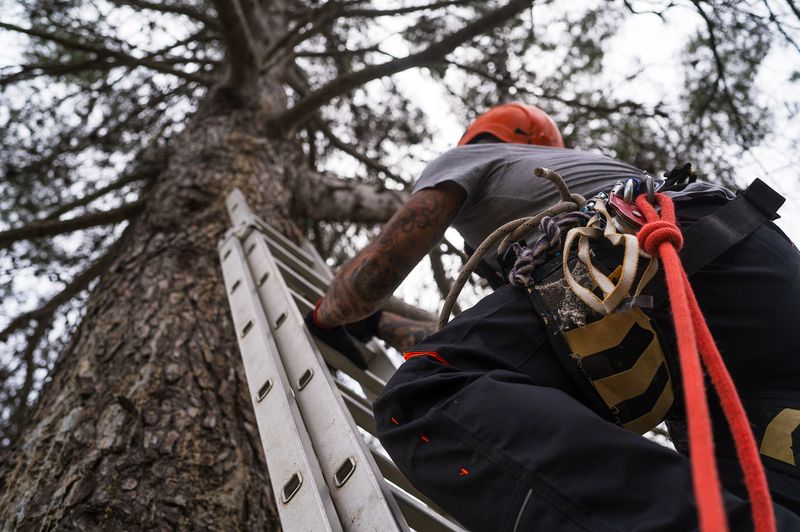
The best time to reduce future storm problems is during calm weather, when there is time to evaluate tree structure without an emergency unfolding overhead.
Healthy trees with sound branch attachments and healthy root systems may be better prepared to tolerate storms, although no tree can be made completely storm-proof.
Periodic inspection can reveal structural concerns before severe weather arrives. A qualified arborist may notice weak branch unions, cracks, decay, damaged roots, or poorly distributed limbs that a homeowner could easily overlook.
Pruning can improve tree structure when it is performed correctly, but the best timing depends on the species, tree condition, and purpose of the pruning.
Dormant-season pruning is appropriate for many trees, but winter should not be treated as the universal pruning season for every species growing in Georgia.
Avoid excessive thinning in an attempt to make wind simply “pass through” the canopy. Removing too much foliage can weaken tree structure and stimulate unwanted growth.
Structural pruning should focus on developing strong branch architecture rather than drastically opening the crown.
Water trees appropriately during extended dry periods because healthy roots contribute to overall tree vigor and stability. Root depth alone does not determine whether a tree will remain standing during a storm.
Soil conditions, root health, species, trunk structure, wind intensity, and previous damage all play roles.
Plant selection matters too. Choose species suited to the site, available growing space, soil, and local conditions.
Giving a tree enough room for its mature canopy and root system can reduce future conflicts with buildings, utility lines, and other landscape features.
A little preparation cannot control what the next Georgia storm brings, but thoughtful tree care can reduce avoidable problems and give valuable landscape trees a stronger foundation for the seasons ahead.