Hummingbirds Love This Georgia Native Plant That Blooms Into Fall
Migration season turns every dependable flower into valuable fuel for hummingbirds heading south. One native plant keeps offering bright blooms when that extra energy matters.
Its timing makes jewelweed especially useful as summer flowers begin fading from the garden.
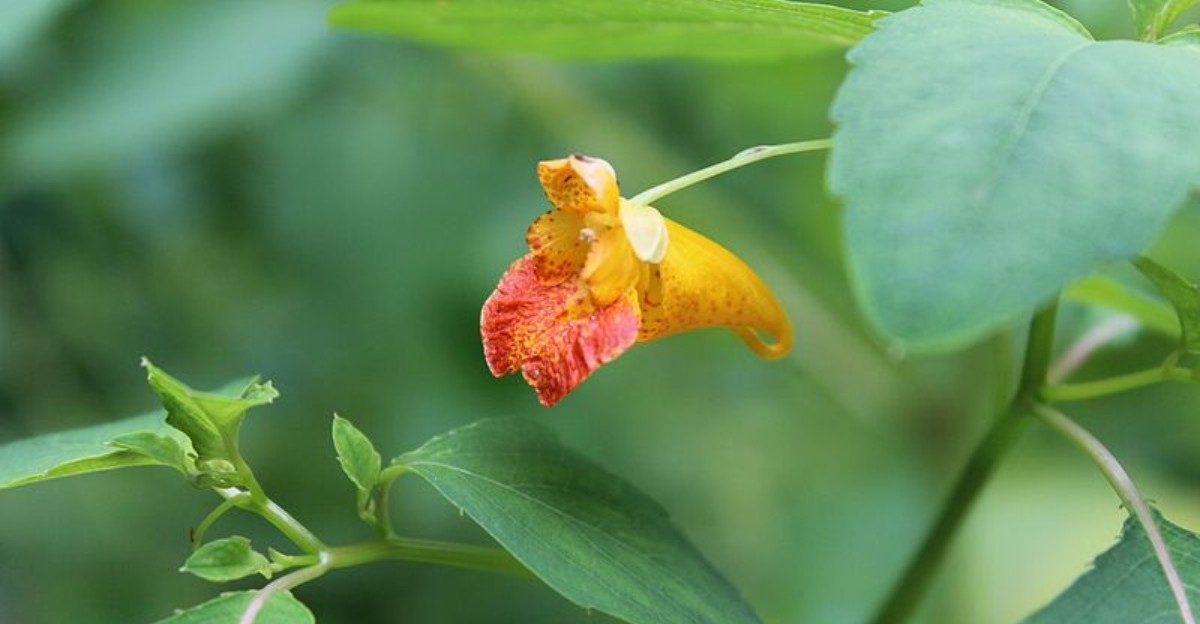
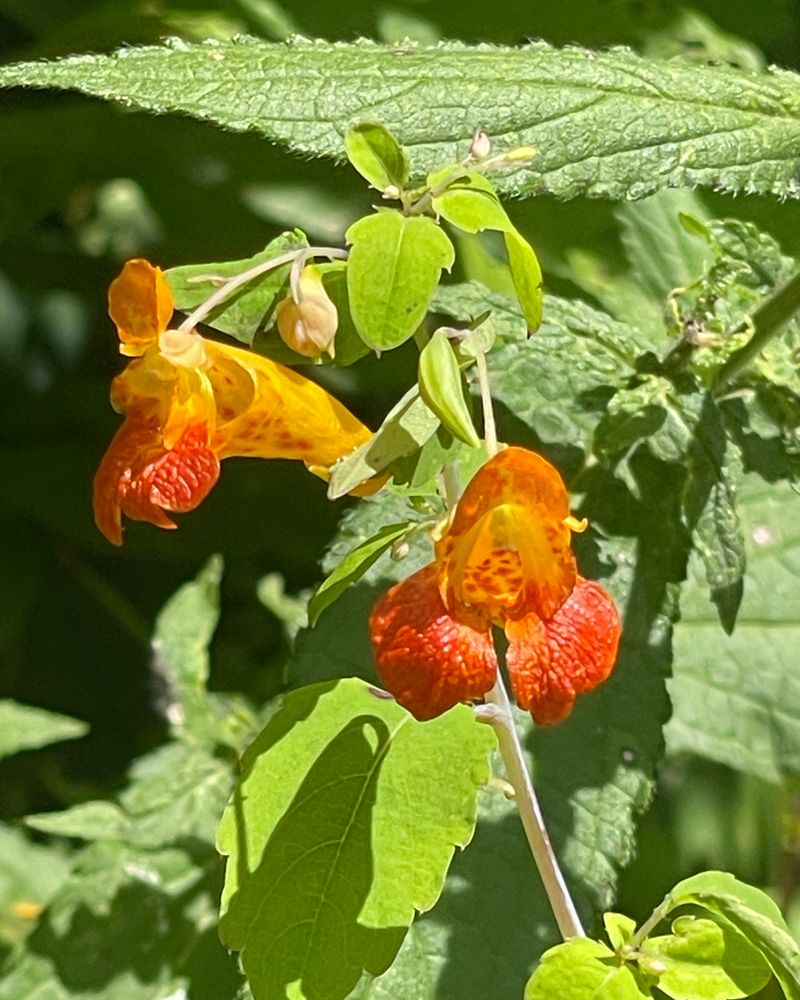
Orange tubular blooms appear on delicate stems and hold nectar that hummingbirds readily visit. In Georgia, jewelweed can continue flowering into fall while migrating birds are still moving through.
You also get striking color in areas where many traditional garden flowers struggle.
Jewelweed prefers damp, shady conditions, making the right location important for healthy growth. Give it a suitable spot, and its flowers can continue appearing as the season changes.
When migration picks up, those orange blooms provide hummingbirds with another natural place to stop and refuel.
1. Orange Flowers Keep Offering Nectar As The Season Changes
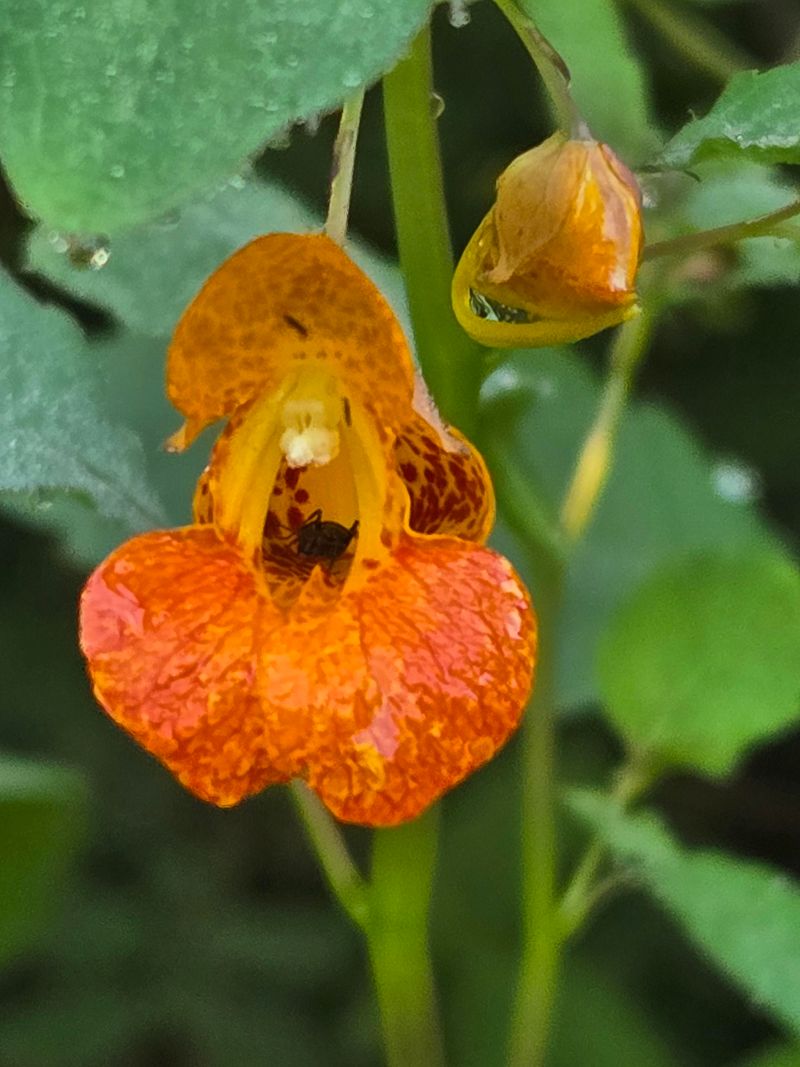
Bright orange dangles where almost nothing else is flowering. Jewelweed hangs its blooms on thin stalks, and they sway with the slightest breeze.
Each flower carries a curved spur at the back, and nectar collects there. That shape suits long-billed feeders far better than short-tongued insects.
Color plays a role too. Reddish orange tends to catch a hummingbird’s eye quickly, which helps a small patch get noticed in dim woodland light.
Bloom output usually rises through August and holds on while temperatures stay mild.
Nectar amounts shift with rainfall and shade, so a dry stretch can slow things down. Plants sitting in consistently damp soil generally keep producing longer.
Across north Georgia, these flowers often appear along the same shaded trails year after year.
Something worth watching: the spotted freckles inside the throat act like landing guides. Bees crawl in for them, and hummingbirds hover instead.
Gardeners sometimes mistake the plant for a weed and pull it early.
Leaving a small stand near a downspout or shady fence line costs nothing and gives late feeders something reliable. You can still trim back the edges if it spreads past where you want it.
Watch a patch at dusk and you will likely see traffic. That steady visiting is the clearest sign the flowers are doing their job.
2. Jewelweed Blooms From Summer Until The First Fall Frost
Timing is the whole story with this plant. Flowering usually starts around midsummer and continues until cold weather finally shuts it down.
Being an annual, jewelweed sprouts fresh each spring from seed. Growth stays slow for weeks, then picks up speed once the stems get tall.
Frost dates matter here.
In cooler mountain counties, blooming may wrap up by mid-October, while warmer coastal areas can stretch the show a few weeks longer. Weather swings shift that window every year.
Stems are hollow, watery, and soft, which is why a hard freeze ends the season quickly.
Before that happens, the plant pushes out a heavy round of flowers.
Gardeners in Georgia often notice the peak arrives right when zinnias and bee balm start looking tired. That gap is exactly where jewelweed fits.
Drought can cut the season short, and plants may wilt dramatically during dry spells.
Your Georgia Garden Changes Every Week. Your Plan Should Too.
Gardening in Georgia changes quickly throughout the season. Every Friday you’ll receive a simple weekly plan showing exactly what to plant, prune, fertilize, harvest, and protect so you never miss the right timing.
A little supplemental water during August helps, though it is not always practical in a wild corner. Plants near a shaded ditch usually manage on their own.
Nothing about the bloom period is guaranteed, since shade levels and rainfall change the outcome.
Even so, few native annuals hold their flowers this deep into the season without any help from you.
3. Ruby Throated Hummingbirds Visit The Tubular Flowers
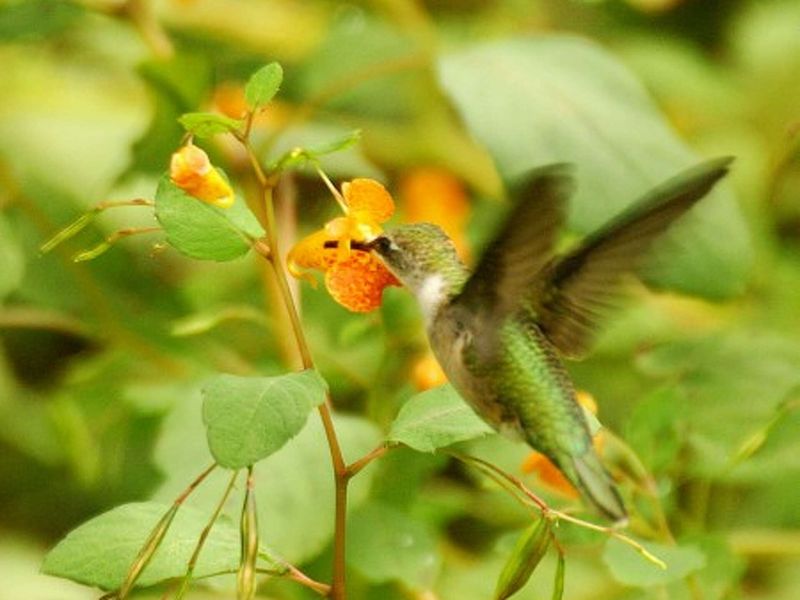
Ruby-throated hummingbirds are the ones you will see, since they are the only species that nests regularly in the eastern states.
Their bills fit the flower shape almost perfectly. The bird hovers, tips forward, and reaches into the curved spur without landing.
Pollen collects on the forehead during that visit and travels to the next bloom.
Feeding trips happen throughout the day, though early morning and late afternoon tend to be busiest.
Males often guard a good patch and chase off rivals. Watching those disputes near a jewelweed stand can be surprisingly entertaining.
Georgia yards with both feeders and native flowers usually see steadier activity than yards with feeders alone.
Real flowers offer small insects too, and hummingbirds eat plenty of those for protein.
Position matters if you want a good view.
A jewelweed patch within sight of a porch or kitchen window turns into free entertainment for weeks. Keep a low perch nearby, like a bare twig, since birds rest between feeding runs.
Not every patch attracts constant visitors, and bird numbers vary by neighborhood and season.
Skip pesticide sprays near the area, because they reduce the tiny insects hummingbirds depend on. Clean water in a shallow dripper adds another reason for them to linger.
4. Its Blooming Season Overlaps With Fall Migration
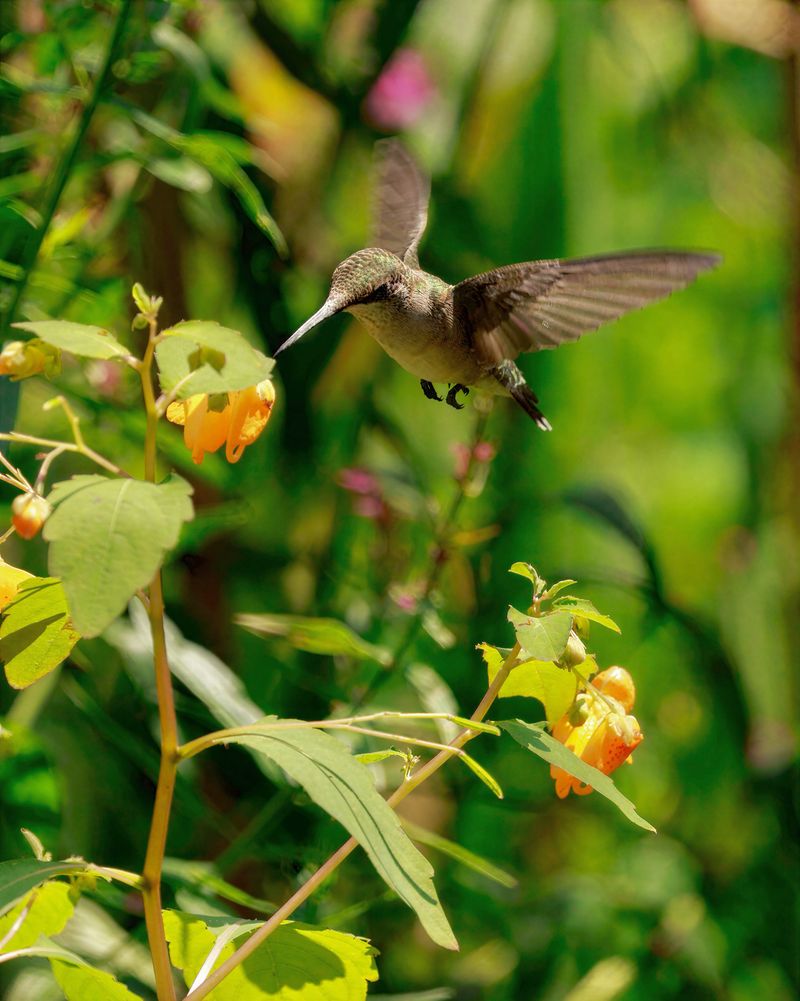
Late summer sends ruby-throats south, and they need fuel along the way. Jewelweed happens to be flowering right through those weeks.
Migration through the Southeast generally builds in late August and continues into October.
Birds bulk up before long flights, so dependable nectar sources carry real weight during that stretch.
Wild patches along creek bottoms often act like rest stops.
Travelers pause, feed for a day or two, then move on. A backyard stand can serve the same purpose on a smaller scale.
Not every bird you see in September is one that spent the summer nearby. Some come from farther north and are simply passing through Georgia.
Leaving flowers standing helps more than tidying up early does.
Feeders are still useful during this period, and there is no reason to take them down while birds are moving. Sugar water and native blooms work fine side by side.
Numbers shift year to year with weather patterns, so a busy season may be followed by a slow one.
Keep expectations reasonable and enjoy whatever shows up.
Late stragglers occasionally appear well into fall, especially in warmer parts of the state. Having flowers still open gives those birds one more option before the first hard cold arrives.
5. Seed Pods Help New Plants Return Around The Garden
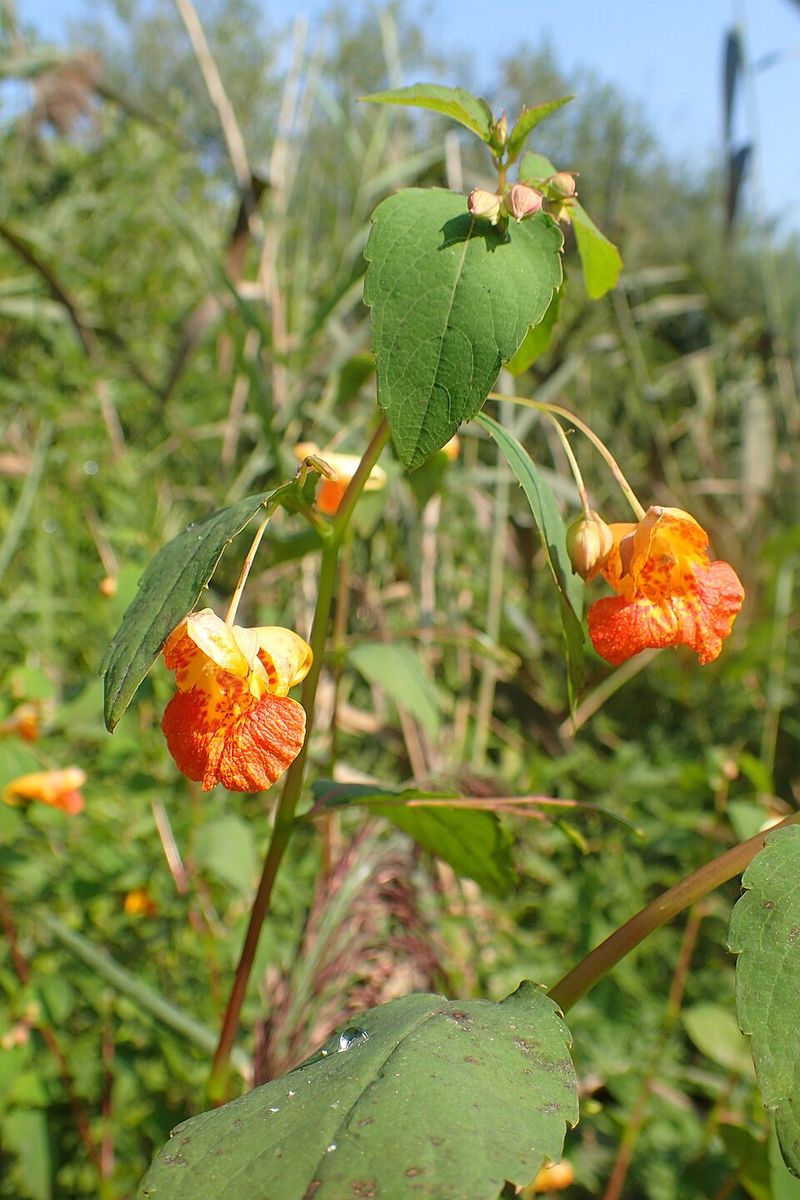
Touch a ripe pod and it pops. That spring-loaded launch is where the name touch-me-not comes from.
Seeds shoot several feet away, which spreads the colony a little farther each year.
Since jewelweed is an annual, those seeds are how a patch continues. No roots overwinter, so the pods do all the work.
Kids find the popping pods endlessly fun.
Germination happens in spring after seeds spend the winter cold and moist outdoors. Starting them indoors rarely goes well because they need that chilling period.
Gardeners across Georgia often report volunteers showing up in new damp spots after a wet winter.
Spreading can get enthusiastic in a good site.
Pulling extra seedlings in spring keeps things manageable, and the soft stems come up easily. Leave a few dozen and you will still have plenty of flowers.
Want it somewhere specific? Collect ripe pods carefully into a paper bag and scatter the seeds where you want them that same fall.
Success is never certain, since squirrels, birds, and heavy rain all move seeds around.
Some years produce thick stands and other years look sparse. Weather during spring germination usually explains the difference more than anything you did or skipped.
6. Damp Shady Areas Give This Native Plant A Good Home
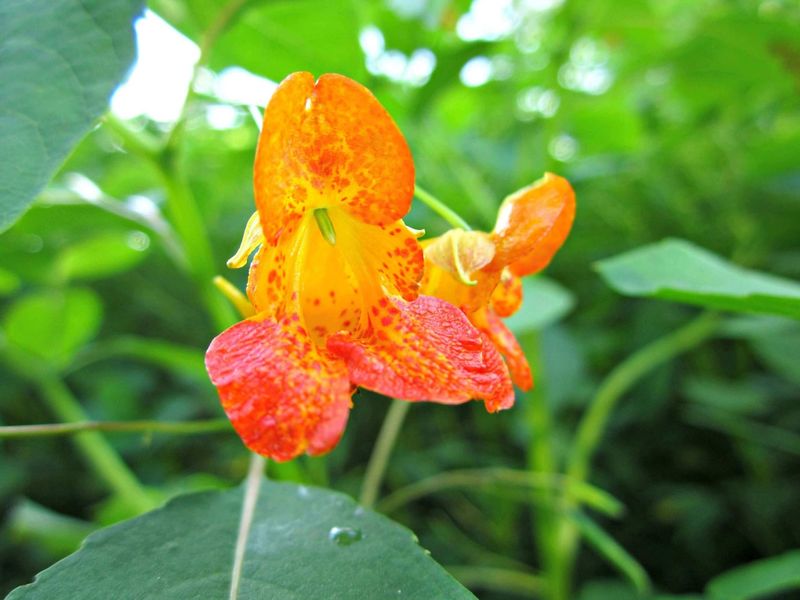
Moisture is the deal-breaker. Jewelweed wants soil that stays damp, and it sulks fast in dry ground.
Stream banks, seepy hillsides, drainage ditches, and low woodland edges all suit it well.
Full sun rarely works unless the soil stays wet, and even then leaves may scorch by afternoon.
Partial to full shade is the safer bet.
Rich, loose soil with plenty of leaf litter supports the tallest plants. Compacted clay drains poorly, which can actually help in some Georgia yards where water sits after storms.
Try the spot beside a downspout or the low corner that mowers get stuck in.
Plants may reach four or five feet under good conditions, though shorter growth is common in leaner sites.
Wilting during hot afternoons is normal, and stems usually perk back up overnight. Persistent drought is a different problem, and watering may be needed.
Avoid heavy fertilizer, since these plants get along fine with what the soil already offers.
Give them room, because crowded stems tend to flop.
Deer sometimes browse young shoots, and that can thin a patch in wooded neighborhoods. Fencing is rarely worth it for a plant this easy to replace.
Once a damp spot suits it, jewelweed usually settles in without much attention from you.
7. Late Flowers Make Jewelweed Valuable As Summer Color Fades
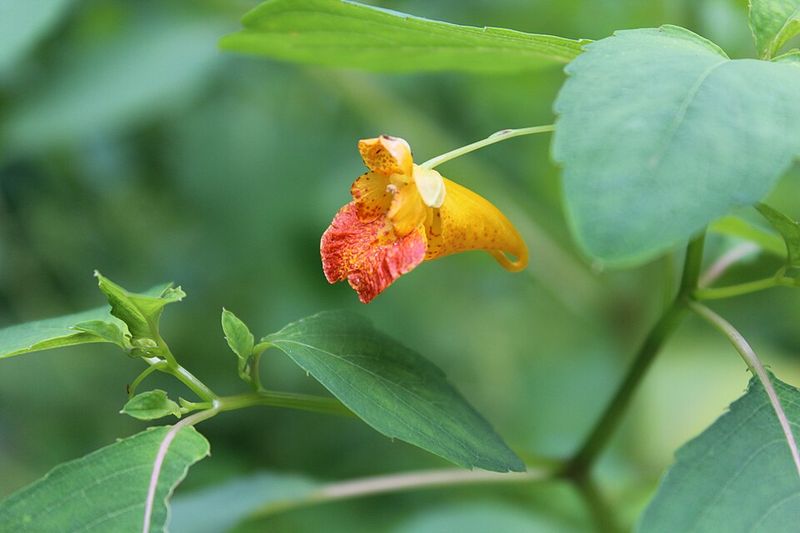
September gardens tend to look tired. Faded perennials, crispy edges, and a general sense that the show is over.
Jewelweed pushes against that. Fresh orange blooms keep appearing while other plants coast toward dormancy.
Pair it with cardinal flower, goldenrod, or blue mistflower for a shady spot with real late-season interest.
Ferns make a decent backdrop too, since they enjoy similar moisture.
Wildlife value goes past hummingbirds. Bumblebees work the flowers constantly, and songbirds sometimes pick at fallen seeds.
Native plant nurseries in Georgia occasionally sell seed, though most people simply transplant volunteers from a friend’s yard.
Keep expectations honest about looks.
Stems are floppy, foliage yellows toward the end, and the plant will never pass for a manicured border specimen. Tuck it behind sturdier plants if neatness matters to you.
Cost is basically nothing, which is a fair trade for those flaws.
Cut back the messiest stems in late fall after seeds drop, and the area cleans up quickly.
Every damp shade garden benefits from something blooming when the calendar says it should be finished. Jewelweed fills that slot with almost no effort, and the hummingbirds handle the rest of the entertainment.