Large Orb Webs Are Becoming More Noticeable in Some Arizona Yards This Fall
Walk out to your Arizona yard on a fall morning and you might stop short at the sight of a large, wheel-shaped web stretched between your patio posts or across a desert shrub. Spiders that build these webs have been quietly living in low-desert yards all along, but they tend to become more conspicuous from late summer into fall.
Before you reach for a can of spray, it helps to know what you are actually looking at and why these spiders are more useful than alarming.
Large Arizona webs do not prove a golden orb weaver
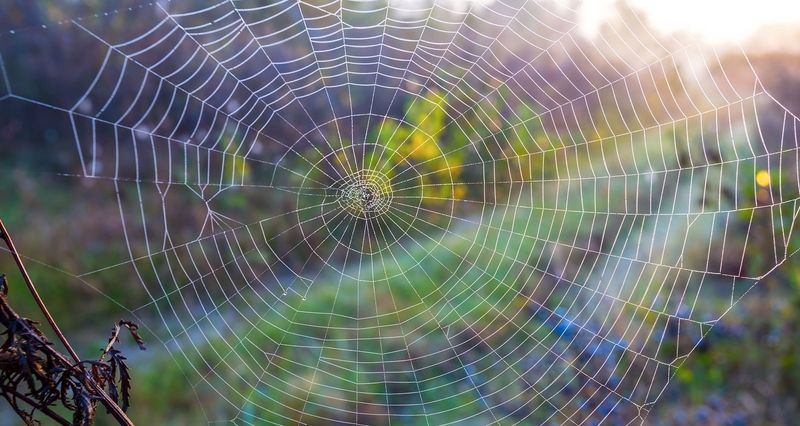
A big circular web in your yard can feel like a bold announcement, but the web itself does not tell you which spider built it. Orb weavers as a group share the same basic design: a spiral of sticky silk anchored to a frame of non-sticky threads, arranged in the classic wheel shape most people picture when they think of a spider web.
Dozens of different species build webs that look nearly identical from a few feet away.
The name “golden orb weaver” is where confusion tends to start. That name usually refers to Trichonephila clavipes, the golden silk orb-weaver, a very large species whose documented U.S. range covers the Southeast and extends south through Central and South America.
Arizona orb weavers include Neoscona crucifera, which University of Arizona Cooperative Extension specifically illustrates as a local example, along with Argiope species, the labyrinth spider Metepeira arizonica, and others. Common names like “banana spider” and “golden orb” get applied inconsistently to several unrelated spiders, which makes them unreliable for identification.
The practical working conclusion: a large circular web in your yard almost certainly belongs to a beneficial orb weaver, but its exact species stays open unless you have a clear photograph or a specimen examined by an expert.
Why some webs stand out after summer
Adult female orb weavers grow throughout the summer and reach their largest size by late summer or early fall. A spider that was small and easy to overlook in July can be noticeably bigger by September, and her web grows with her.
That size difference alone explains why the same spider that was in your yard all along suddenly seems to appear out of nowhere.
Timing also matters for activity patterns. Research on Neoscona crucifera shows that adult females may remain visible in their webs during fall and can become more active during daylight hours as temperatures moderate, making them easier to spot than during the peak of summer heat.
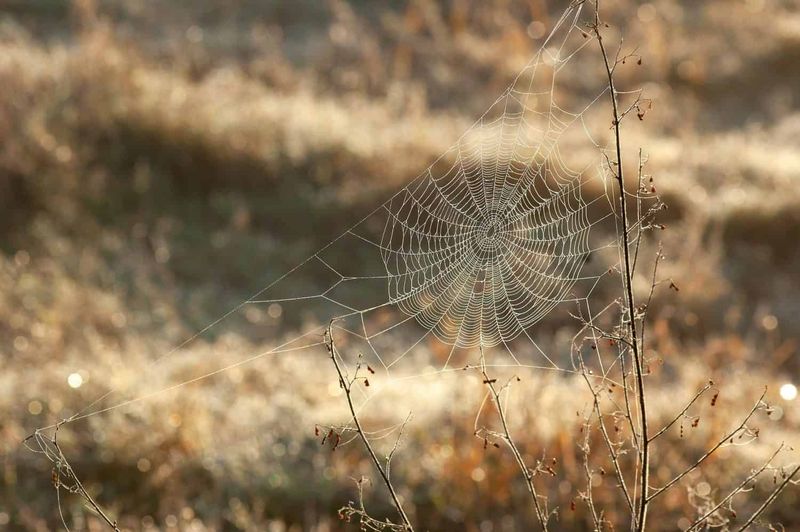
That said, the available sources do not prove that monsoon rainfall directly caused any particular yard’s webs to appear, or that Arizona experienced a verified statewide surge of large orb webs in 2026. What the evidence does support is a plausible seasonal pattern: spiders grow larger through summer, become more visible as temperatures ease, and their webs catch morning light in ways that make them hard to miss once fall arrives.
Noticing them more is not the same as there being more of them.
Your Arizona Garden Changes Every Week. Your Plan Should Too.
Gardening in Arizona changes quickly throughout the season. Every Friday you’ll receive a simple weekly plan showing exactly what to plant, prune, fertilize, harvest, and protect so you never miss the right timing.
The web catches insects rather than threatening people
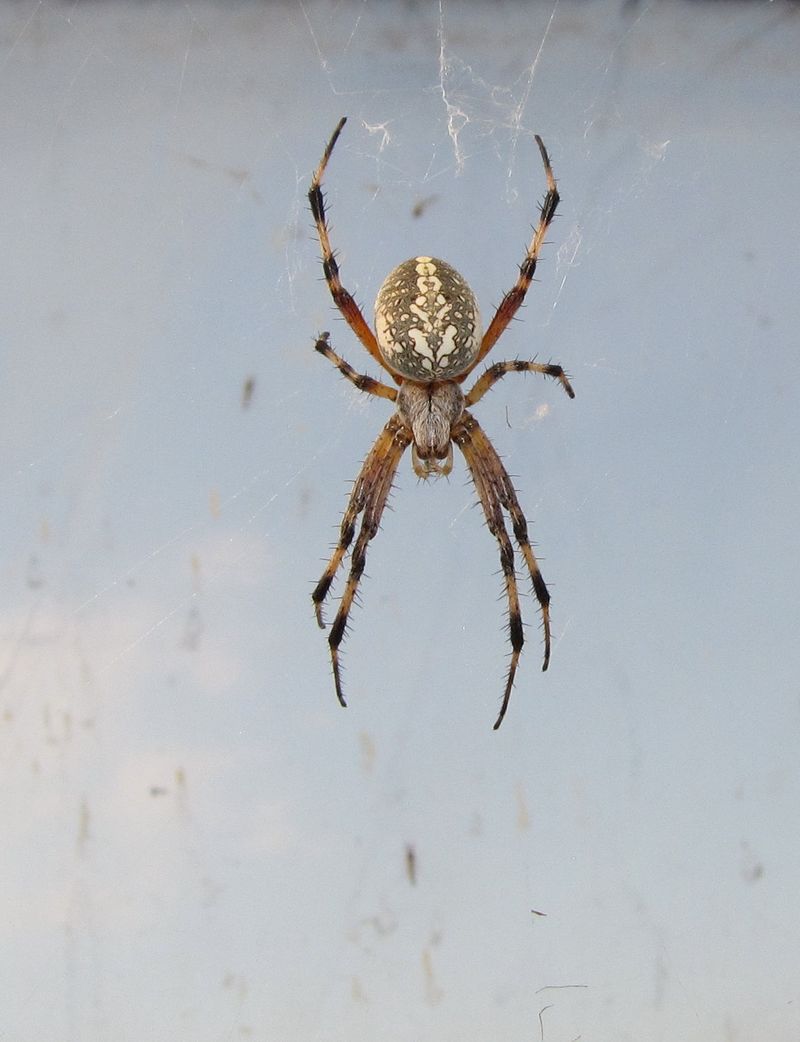
An orb web is a hunting tool, not a territorial marker or a warning sign aimed at the people living nearby. The spider builds it to intercept flying insects: flies, moths, beetles, bees, wasps, and similar arthropods that pass through the web’s plane and become entangled in the sticky spiral threads.
Once a prey item is caught, the spider moves quickly to wrap and immobilize it. The web is entirely focused outward, on whatever is flying past.
Placement follows the insects. Orb weavers commonly attach webs to shrubs, trees, eaves, porch railings, fence lines, and the corners of buildings because those spots offer solid anchor points near open air where insects travel.
Outdoor lighting is a particularly productive hunting location: lights attract moths and other flying insects after dark, and a web positioned nearby intercepts them efficiently.
A web that seems to vanish overnight is not a mystery. Many orb weavers dismantle or consume much of their web before dawn and rebuild in the evening, recycling the silk proteins.
A yard that shows a large web at sunrise may look clear by midmorning and show a fresh web again by the following dawn. The spider has not left; it has simply cleaned up for the day.
Orb weavers can benefit an Arizona yard
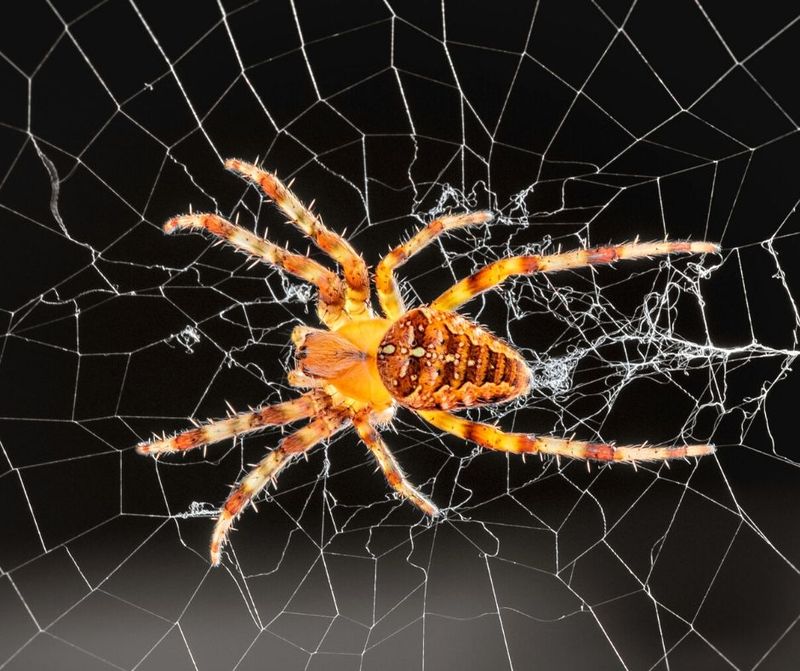
Orb weavers earn their place in a low-desert yard by catching insects that would otherwise be flying freely around your plants, patio, and outdoor lights. University of Arizona Cooperative Extension describes spiders broadly as valuable pest controllers in gardens, landscapes, and homes, and orb weavers fit that description well given the volume of flying insects a single web can intercept over a season.
The honest scope of that benefit matters, though. Orb weavers eat what lands in their webs: flies, moths, wasps, gnats, and similar flying arthropods.
There is no research supporting the idea that they provide reliable control of scorpions, ticks, or household pest populations. Scorpions and ticks are not orb-web prey, and promising that result would overstate what the evidence shows.
Think of orb weavers as opportunistic interceptors rather than targeted pest managers.
For a homeowner in Phoenix or Tucson, a web tucked under a porch eave or along a fence line in a low-traffic area is doing quiet, useful work at no cost and with no chemical input. Tolerating a web in a spot that does not interfere with daily movement is the lowest-effort option, and it keeps a capable insect predator working in your yard.
The spider will eventually move on or complete its life cycle, and the web will come down on its own.
How much risk does an orb weaver pose?
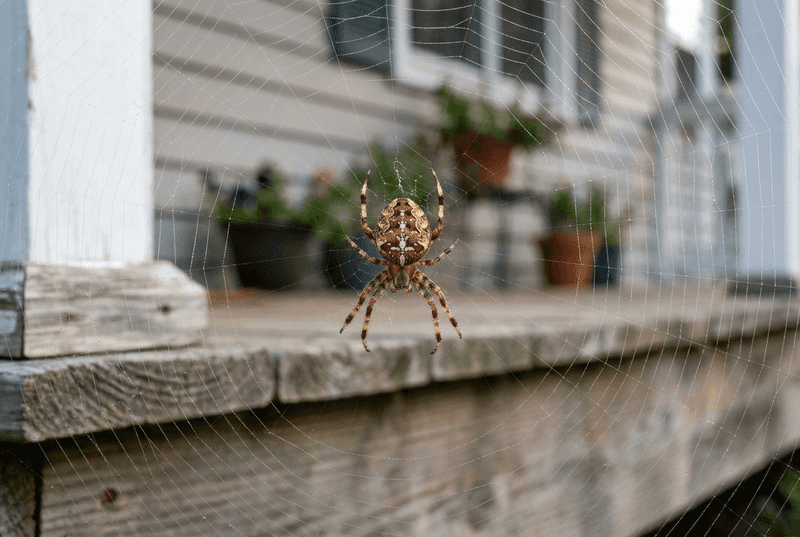
Spiders seen resting openly in a web during the day are among the least likely to bite a person. Their attention is directed at prey movement in the web, not at the much larger animals walking nearby.
UC IPM notes that orb weavers are only marginally capable of biting people because their fangs are generally too short to pierce human skin reliably, making a medically significant bite from one of these spiders uncommon.
That qualification comes with a practical limit. Any spider can bite if it is trapped against skin, pressed under clothing or a glove, or picked up.
The right response to an orb weaver in your yard is to observe it from a comfortable distance, not to handle it. Orb weavers generally avoid confrontation and will drop from a web or retreat when disturbed rather than move toward a person.
Orb webs also look nothing like the webs associated with Arizona’s medically important spiders. Western widow spiders and Arizona brown spiders, which University of Arizona Cooperative Extension identifies as the main local concerns in homeowner guidance, use irregular, tangled webs in sheltered, cluttered locations such as woodpiles, garage corners, and storage boxes, not open circular webs strung between shrubs or porch posts.
If a spider is found in a dark, enclosed space rather than openly in an orb web, it warrants more caution and should not be handled.
A final note on skin lesions: a sore, rash, or wound that appears without a witnessed bite should not automatically be attributed to a spider. Arizona Cooperative Extension points out that bites from other arthropods, chemical irritation, and medical conditions often produce similar symptoms.
A doctor is the right resource for an unexplained skin reaction, not a process of elimination based on which spiders were seen nearby.
Remove only the webs that interfere with daily life
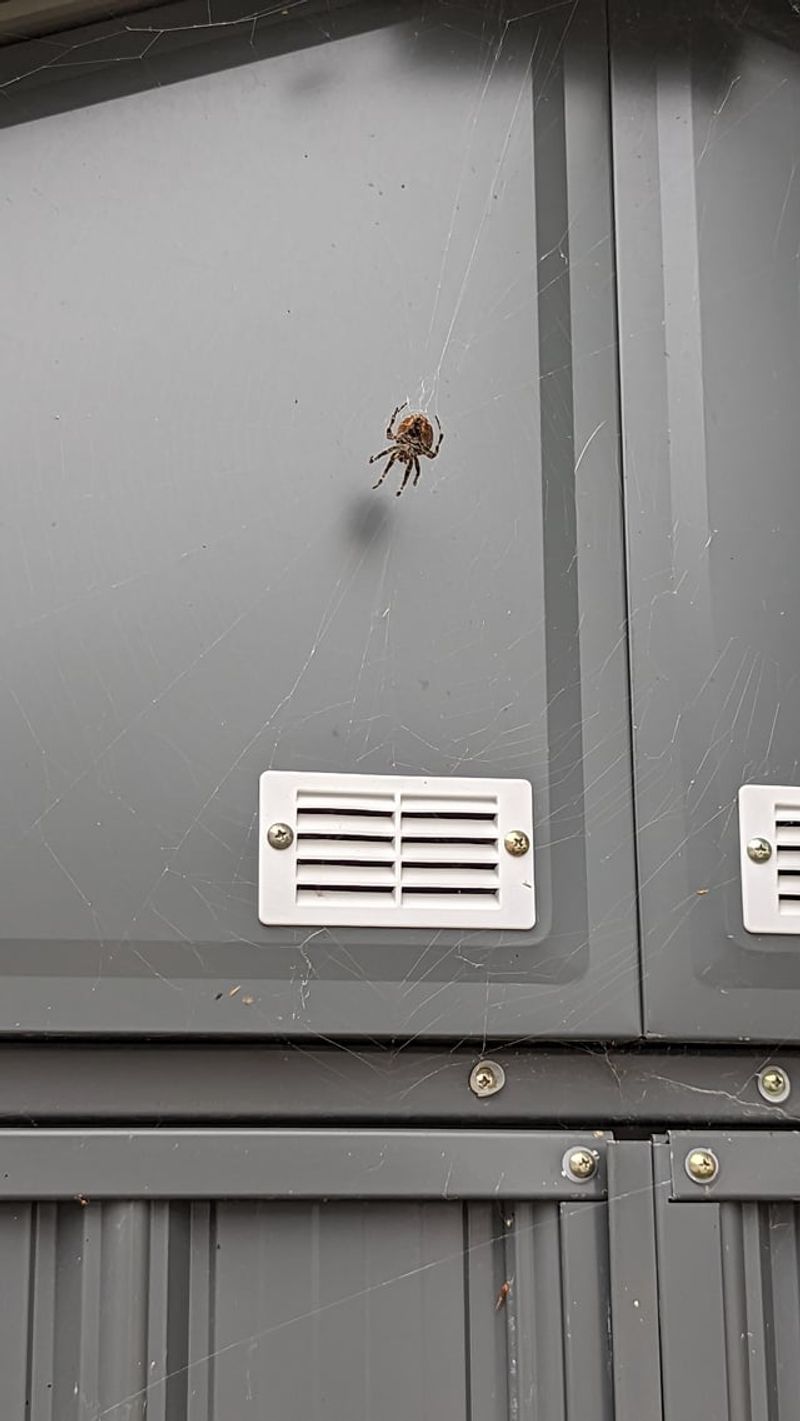
A web in an out-of-the-way corner of the yard, under an eave above the roofline, or along a back fence does not need to come down. Leaving it in place costs nothing and lets the spider continue catching insects.
The web will disappear on its own once the spider moves, dismantles it, or completes its seasonal life cycle.
When a web is genuinely in the way, such as across a doorway, over a play area, or in a spot where people walk regularly, the most practical fix is to knock it down with a broom or long-handled brush. That removes the web without harming the spider and without any chemical input.
UC IPM guidance states that pesticides are generally unnecessary for spiders and that control should focus on web removal and habitat management rather than broadcast spraying. Applying a broad outdoor insecticide to deal with an orb web eliminates a beneficial predator, leaves residue on surfaces, and does nothing to change the insect activity or lighting conditions that attracted the spider in the first place.
Protective habits matter more than chemical treatment. University of Arizona Cooperative Extension recommends wearing gloves and long sleeves whenever working in areas that may harbor spiders, particularly when moving firewood, reaching into storage boxes, or working in cluttered spaces like garages and sheds.
Those precautions apply to any spider you might encounter, not just orb weavers. Never pick up or handle an unfamiliar spider bare-handed, regardless of how harmless it appears from a distance.
Document the spider before assigning a species name
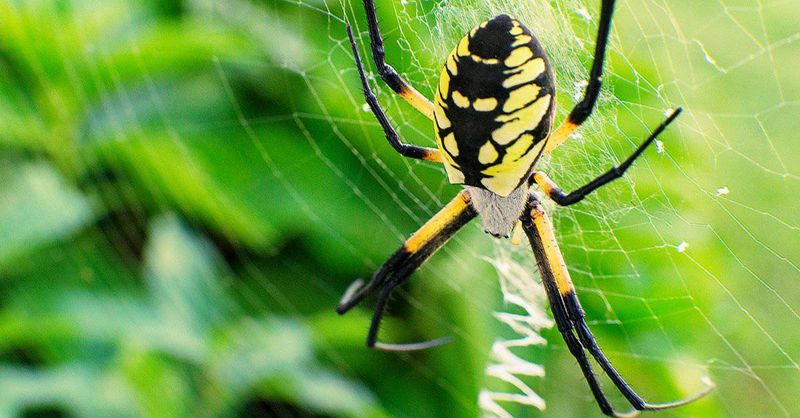
Getting a useful look at a spider does not require touching it or getting close enough to disturb it. A smartphone camera with a modest zoom can capture enough detail from a safe distance to make a reasonable assessment.
Photograph the spider from above and from below if the angle allows, and take a separate shot of the entire web so the structure is visible.
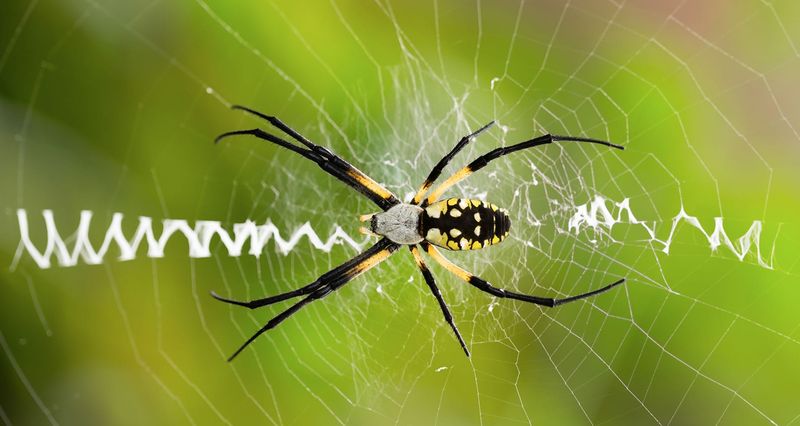
A few specific details improve any identification attempt. Note whether the web has a zigzag band of thick silk running through its center, called a stabilimentum, which appears in webs built by some Argiope species.
Check whether there is a separate tangled or sheet-web retreat attached nearby, which is a feature of labyrinth spiders like Metepeira arizonica, documented at the Arizona-Sonora Desert Museum as an Arizona species whose webs may be visible from spring through fall. Record the date, the location in the yard, and what the web was attached to.
Those observations are genuinely useful, but they do not guarantee a species-level answer. Web design, color, and size overlap between genera, and common names like “golden orb” or “banana spider” are applied to multiple unrelated species depending on who is using them.
The University of Georgia Cooperative Extension notes this kind of naming inconsistency in its identification guidance for large orb-weavers. A useful and honest conclusion is often this: the spider is most likely a beneficial, low-risk orb weaver, and that is enough to act on, even without pinning down an exact species name.
The practical takeaway for Arizona’s fall webs
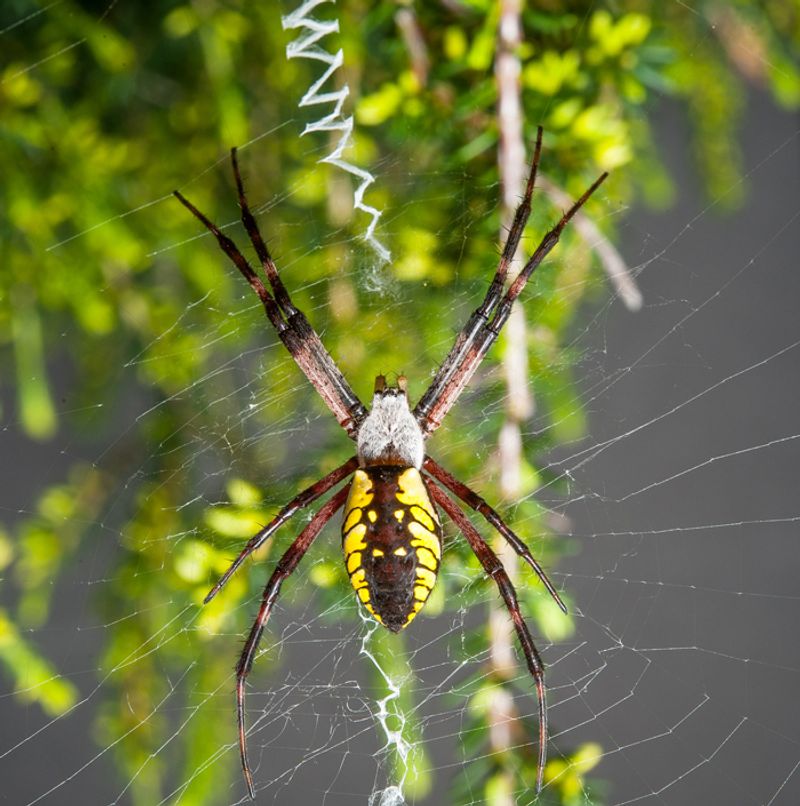
A dramatic web in your Arizona yard this fall almost certainly belongs to a beneficial orb-weaving spider doing exactly what it is built to do: catching flying insects. That conclusion does not require knowing the species name, and it does not support the idea of a statewide infestation or a confirmed spread of golden orb weavers across the region.
Webs that are out of the way can stay. Webs in doorways or play areas come down easily with a broom, no spray needed.
Gloves and long sleeves are the right protective gear when working in cluttered spaces. These spiders are generally low-risk neighbors, and a little distance is all the precaution most situations call for.
Arizona yards that make room for orb weavers get a capable insect interceptor working quietly in the background. The web is the evidence of that work, and a big one is worth a closer look before it disappears with the morning light.