Why Bur Oak Is The Only Texas Native Tree That Evolved Specifically To Survive Wildfires
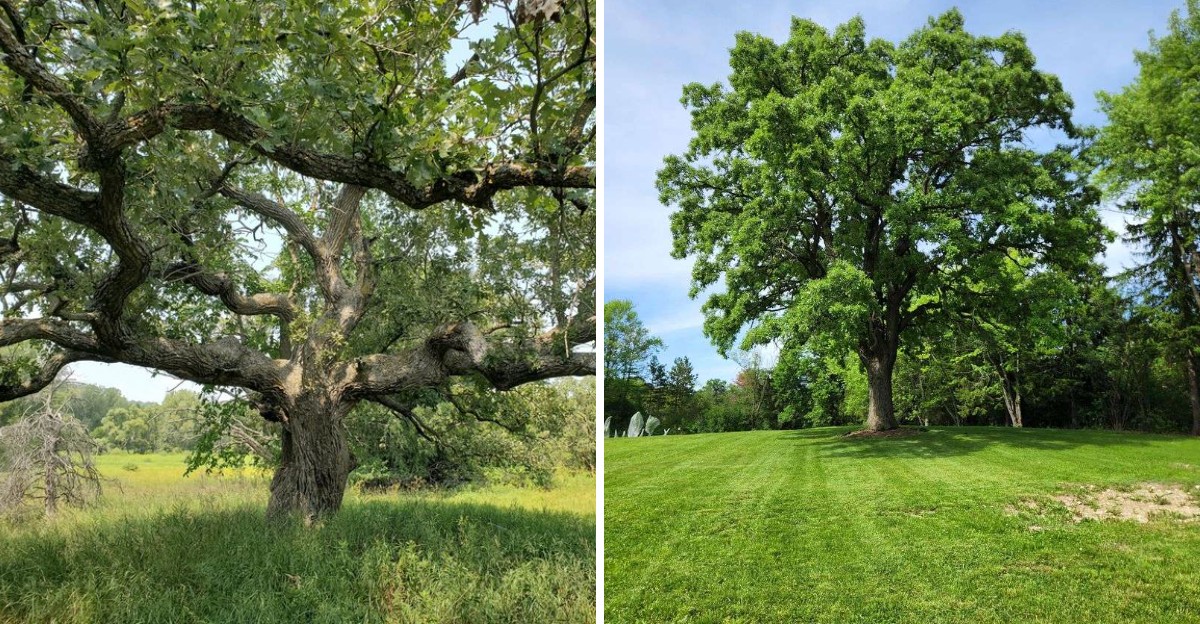
Drive through a stretch of North Texas prairie a year after a grass fire, and one image stands out from the wreckage.
Blackened fence posts, charred cedar skeletons, and standing right in the middle of it all, a wide old bur oak with scorched bark and a full green canopy overhead.
That contrast is not luck. Something about this particular tree was built for exactly this moment, centuries before anyone thought to study it.
Bur oak carries some of the thickest, corkiest bark of any tree in Texas, shaped by generation after generation of prairie fire sweeping through its home ground.
The full story runs deeper than bark alone, though. Roots, growth rate, even acorn size all play a part in how this tree keeps standing when everything around it burns.
There is also an honest correction worth making along the way, since bur oak turns out to have more company on this list than the headline suggests.
Seven things explain what actually makes this tree so tough, and which of its Texas neighbors deserve a little credit too.
1. Thick Corky Bark Insulates Against Heat
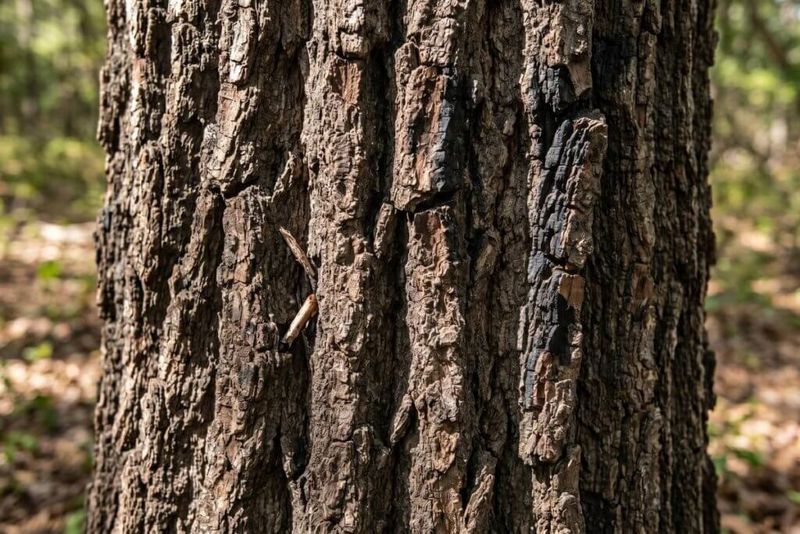
Run your hand along a mature bur oak trunk, and you feel something closer to cork board than smooth wood. The bark is deeply furrowed, spongy in places, and on old trees it can build up to a couple of inches thick.
That texture matters more than looks alone. Cork is full of tiny air pockets, and air is a terrible conductor of heat, meaning a fast-moving grass fire can scorch the outside while the tissue underneath stays cool enough to keep working normally.
The part being protected is called the cambium, a thin living layer just beneath the bark that moves water and sugars and adds new growth each year.
Damage the cambium all the way around the trunk, and the tree cannot survive, no matter how healthy the crown still looks up top.
Texas A&M Forest Service describes bur oak as having notably thick, corky bark, and that armor is exactly why the species keeps showing up in post-fire photos looking singed but very much alive.
A practical takeaway for anyone with one of these trees on their property. Resist the urge to scrape, pressure-wash, or string-trim the bark at the base.
Those rough ridges are protective equipment, not something that needs cleaning up.
Fun detail worth knowing. The same corky quality shows up on bur oak twigs too, which sometimes develop odd winged ridges that make young branches look almost prehistoric.
2. Prairie Fires Shaped This Tree For Centuries
Long before fire departments and highways, the middle of North America burned on a regular schedule.
Lightning strikes and fires set by Indigenous peoples moved through tallgrass prairie every few years, clearing brush and keeping woody plants in check.
Bur oak grew up in that world, quite literally.
Its natural range runs along the prairie-forest edge, the shifting boundary where grassland meets woodland, and in Texas that includes the Blackland Prairie, Cross Timbers, and river bottoms in the northern and eastern parts of the state.
Your Texas Garden Changes Every Week. Your Plan Should Too.
Gardening in Texas changes quickly throughout the season. Every Friday you’ll receive a simple weekly plan showing exactly what to plant, prune, fertilize, harvest, and protect so you never miss the right timing.
Trees living in a place that burns repeatedly face a simple filter. Survive the flames or disappear from the landscape entirely.
Over many generations, individuals with thicker, more insulating bark had better odds of reaching seed-producing age, and those traits kept getting passed along down the line.
Ecologists often call bur oak a savanna species for exactly that reason.
It can hold ground where grass fires would knock back thinner-barked competitors, which is why old photographs and land surveys of Texas prairies frequently show scattered giant oaks standing alone in open country.
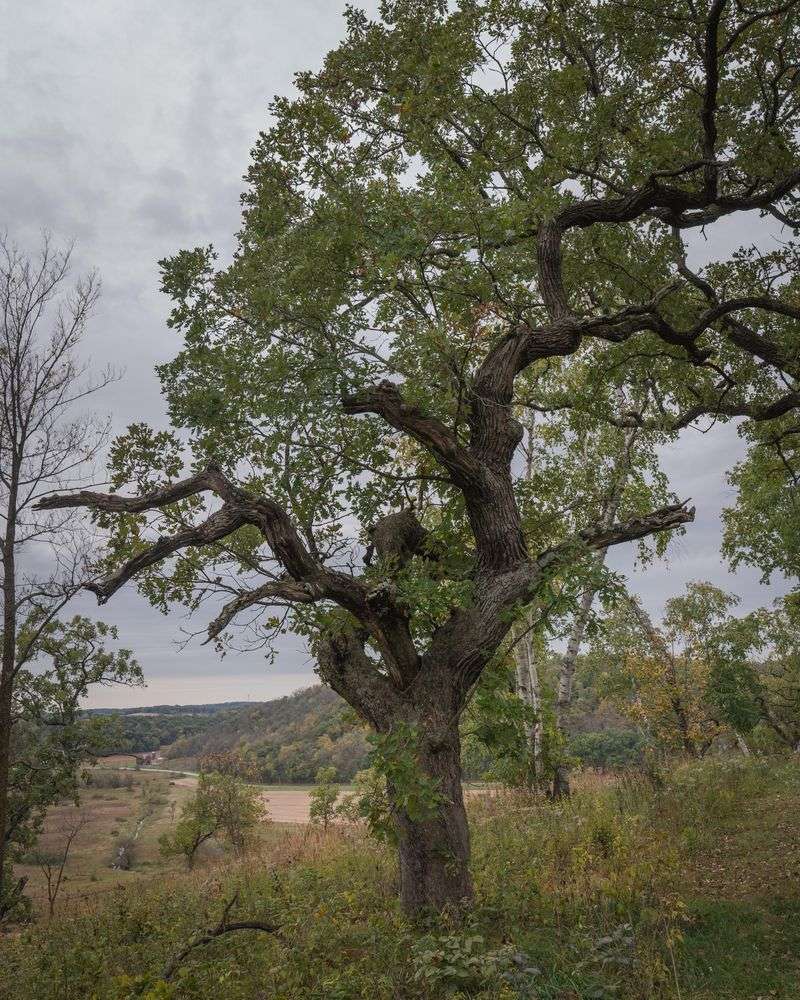
Understanding that history changes how the tree looks to modern eyes. Those wide, low-spreading branches are not just handsome.
They are the shape of a tree that grew up with plenty of sunlight and very little crowding, because fire kept the neighborhood open on its behalf.
Anyone restoring native prairie in Texas today is essentially working with that same old partnership between grass, fire, and oak.
3. Mature Trees Often Survive Where Others Do Not
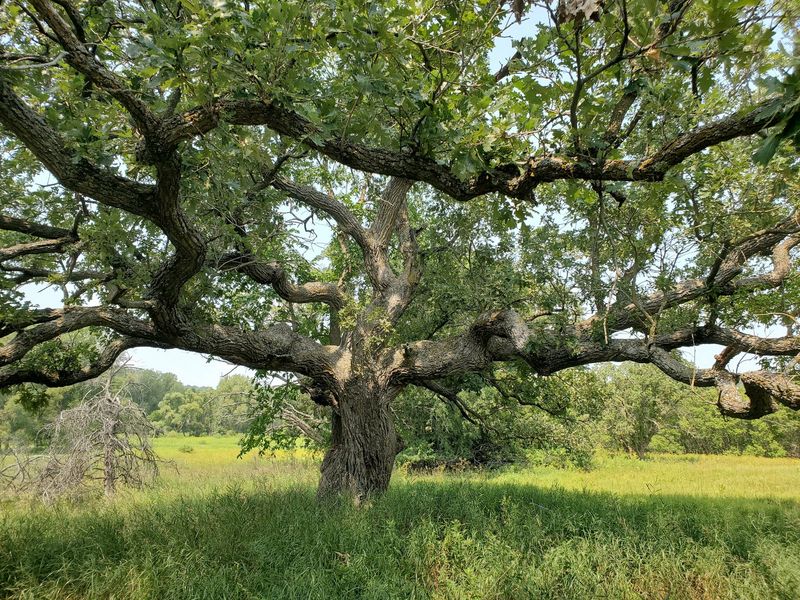
Age is the quiet variable in almost every fire survival story.
A bur oak sapling with pencil-thin bark stays genuinely vulnerable, while a hundred-year-old trunk wearing two inches of corky armor is a completely different proposition altogether.
Bark thickness builds up slowly, year after year, meaning the same species can have wildly different outcomes on the same piece of land during the same fire event.
Foresters see this constantly after Texas wildfires. The big trees leaf out again while the small ones in the understory do not.
Height plays a role too. Once a bur oak lifts its lowest branches well above the grass layer, a fast surface fire can race underneath without ever reaching the leaves, and flames that never touch the canopy do far less lasting damage overall.
There is a warning tucked inside that good news, though. A tree that looks fine right after a fire may still carry hidden cambium damage on one side of the trunk, and problems can show up a year or two later as thinning leaves or declining limbs.
Texas A&M Forest Service recommends giving fire-affected trees time, water during dry stretches, and a professional assessment before deciding to remove anything outright.
Plenty of scorched oaks that homeowners nearly cut down went on to recover completely on their own.
Patience, in this case, counts as a legitimate management strategy rather than procrastination.
4. Deep Roots Support Recovery After Fire
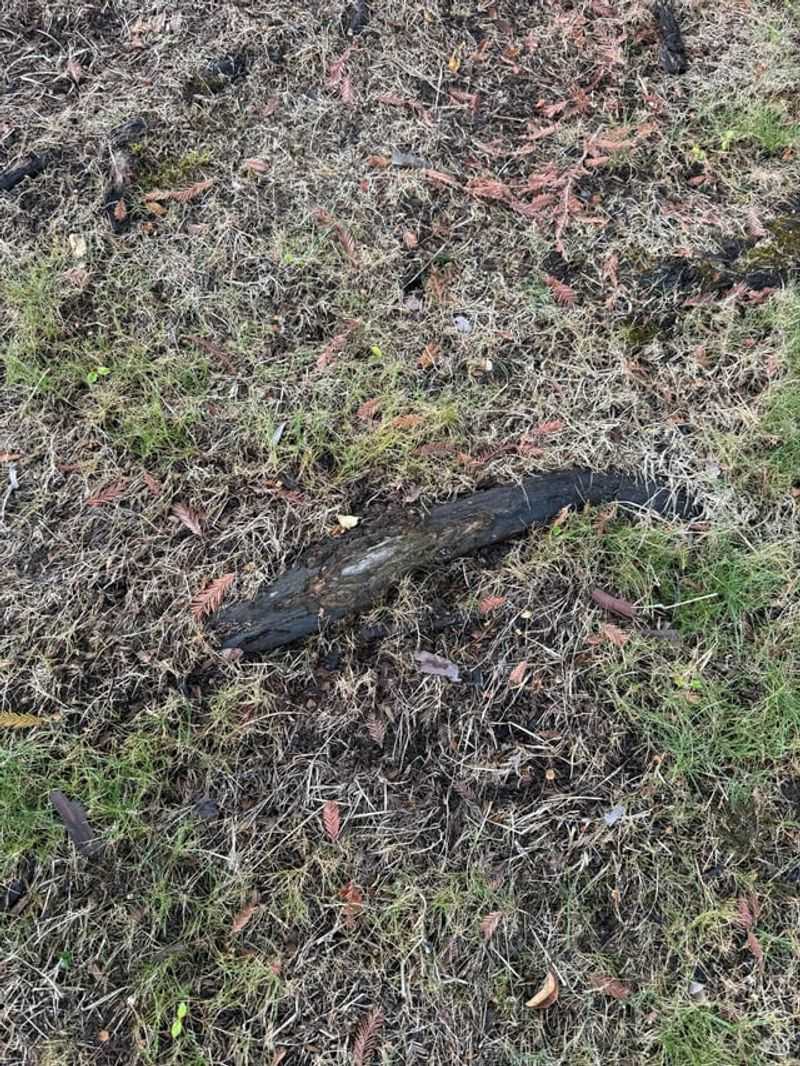
Most of what makes bur oak tough stays completely invisible from above ground.
Young bur oaks put remarkable energy into a deep taproot early on, sometimes growing more root than shoot during their first seasons, which frustrates gardeners expecting quick height on top.
Underground, that root system does two important jobs after a fire. It stores carbohydrates, the tree’s food reserves, and it reaches moisture far below the scorched surface soil where shallow-rooted plants come up dry and empty-handed.
A fire that takes out the top of a young bur oak often leaves the root crown able to push out new sprouts using those stored reserves. The visible tree starts over from scratch, but the underground half of it never actually stopped functioning.
That resprouting ability is common across oaks and is one reason oak species dominate so many fire-prone landscapes worldwide.
Some prairie oak clumps are far older than they look, having burned back and regrown more times than anyone could possibly count.
For homeowners, the lesson centers on the soil surface. Compacted ground, driveways poured over root zones, and heavy trenching near a bur oak all weaken exactly the system the tree depends on for recovery down the road.
Keeping a wide mulched area under the canopy, watering deeply during Texas droughts, and avoiding construction damage give the roots their best shot.
A bur oak with a healthy root system has real options after disaster, while one with damaged roots simply does not.
5. Bur Oak Is Not Actually Alone In This
Time for an honest correction, because the headline claim deserves one. Bur oak is not the only Texas native tree with real, documented wildfire adaptations, and treating it that way sells the rest of the state’s flora a bit short.
Texas A&M AgriLife Extension publishes wildfire landscaping guidance that specifically names several native trees with fire-resistant qualities, including net-leaf hackberry and western soapberry.
Those recommendations exist because researchers observed how those species actually behave around fire, not because they needed filler for a list somewhere.
Broader oak research adds more nuance to the picture. Thick bark is a fire-survival trait documented across many oak species, and post oak, blackjack oak, and live oak all persist in Texas landscapes that have burned repeatedly over centuries.
None of that diminishes bur oak, to be clear.
Among Texas natives, its bark is unusually thick and corky, its prairie fire history is exceptionally well documented, and it remains one of the clearest textbook examples of a fire-adapted tree anywhere in the state.
The accurate framing here is standout, not solitary. Bur oak is the species foresters reach for when explaining how bark thickness translates into fire survival, which is a genuine distinction worth celebrating on its own merits.
Getting this right matters practically too. Anyone planning a fire-wise landscape who believes only one species qualifies will end up with a far less diverse, less resilient yard than the science actually supports.
6. Other Texas Natives Share Fire Adapted Traits
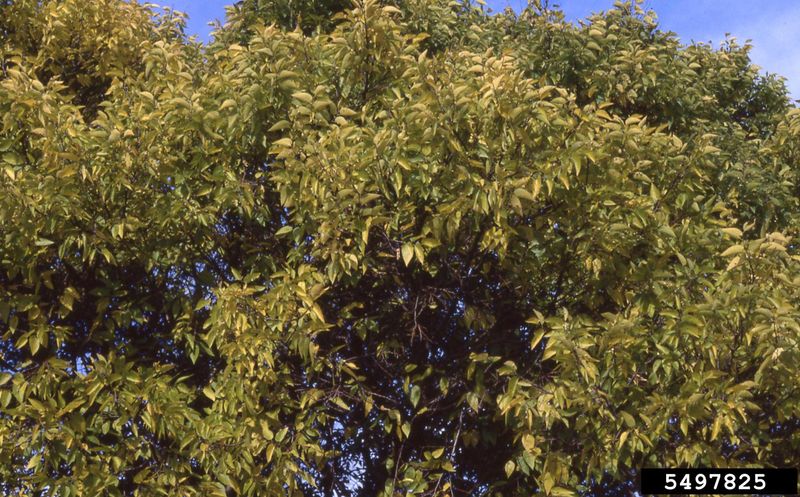
Meet the supporting cast, and they turn out more impressive than the label suggests at first glance.
Net-leaf hackberry, a tough small tree of West Texas canyons and rocky slopes, shows up on AgriLife’s fire-resistant plant lists thanks to its moisture-holding foliage and resilient habit overall.
Western soapberry earns its place too. Common across much of Texas, it produces translucent amber berries, turns brilliant yellow in fall, and handles heat, drought, and the rough conditions of fire-prone country with little complaint.
Other oaks contribute their own defenses to the mix. Post oak and blackjack oak built the Cross Timbers, a belt of woodland that historically burned often, and both persist through a combination of protective bark and vigorous resprouting from the root crown.
Live oak deserves a mention as well, since its dense, high-moisture leaves burn less readily than the resinous foliage of junipers and other evergreens found growing on the same properties.
Practical planting advice follows naturally from all this.
Mixing several fire-adapted natives near a home creates a landscape with more depth than a single species could ever offer, and it spreads the risk if disease or drought hits one type especially hard.
Placement matters just as much as species choice in the end.
Keep flammable materials, woodpiles, and dense shrubs away from structures, space trees so canopies do not form a continuous bridge, and let these tough natives do what they have done here for a very long time already.
7. Slow Growth Trades Speed For Toughness
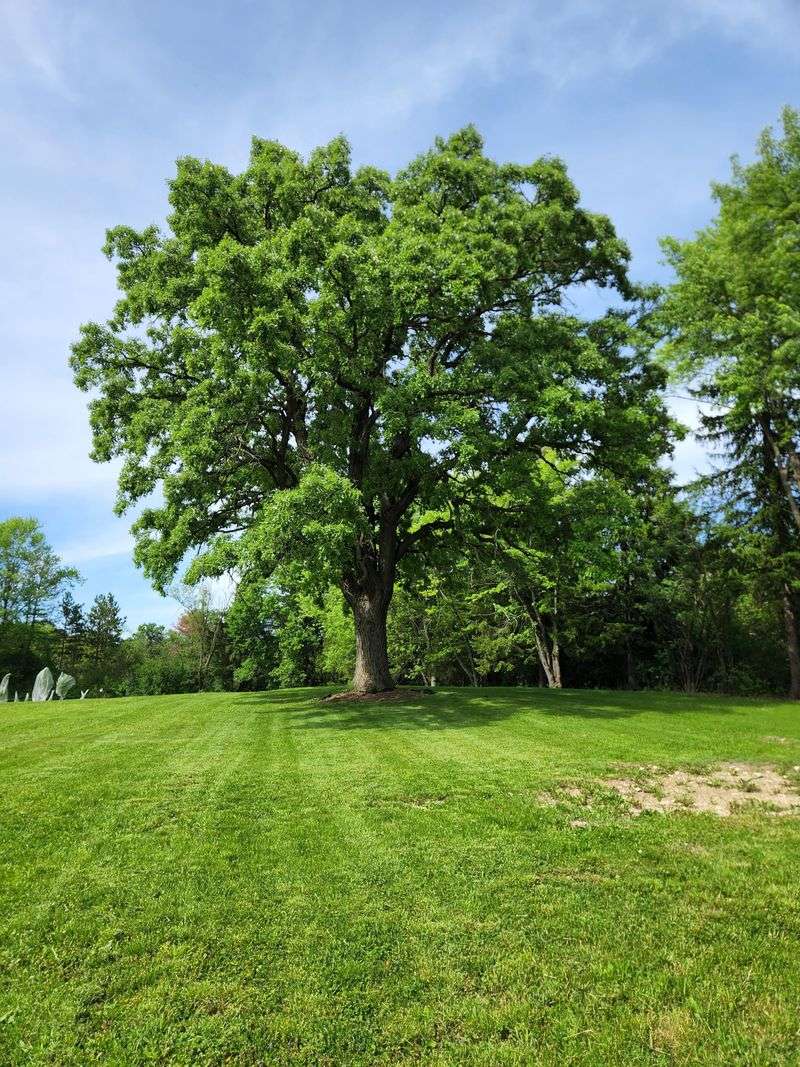
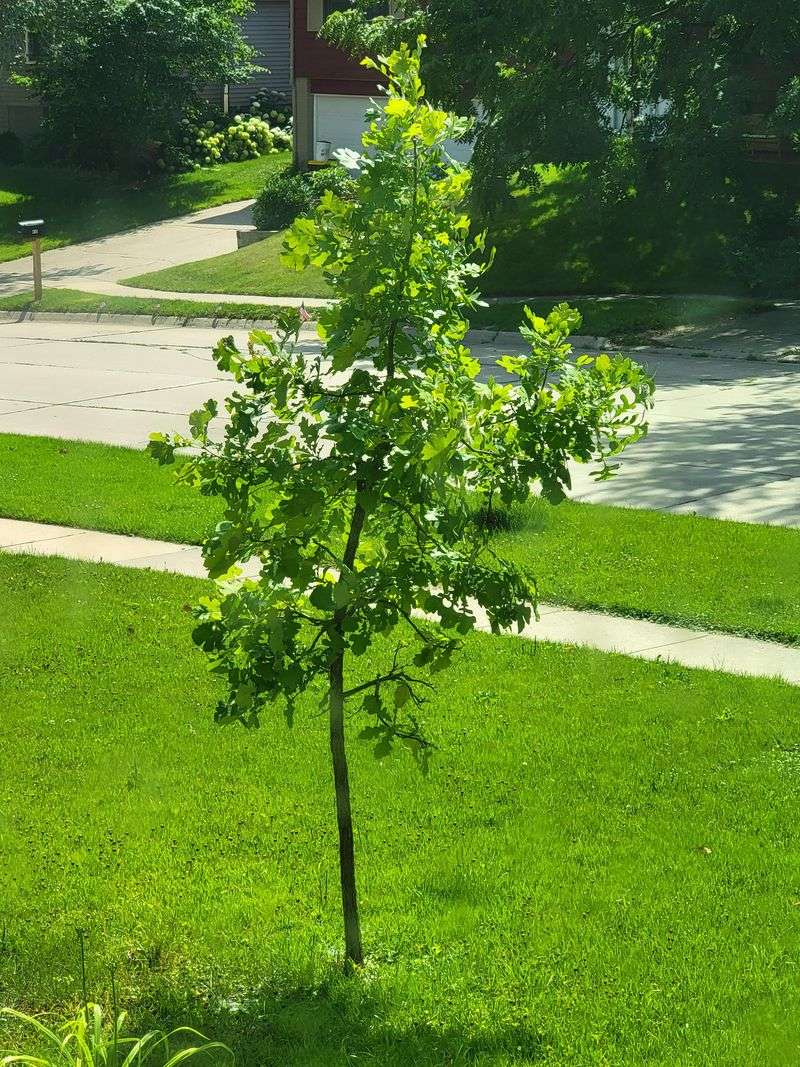
Impatient gardeners rarely fall in love with bur oak at first sight. It grows slowly, often adding around a foot a year in good conditions, while a fast shade tree nearby doubles that pace and looks impressive within a single decade.
What the slow lane buys instead is density. Wood laid down gradually tends to run stronger, and that same unhurried process builds the deep bark ridges and heavy limbs that let bur oaks shrug off ice storms, high winds, and fire alike.
Longevity comes bundled with the package too.
Bur oaks commonly live two to three hundred years, and some documented specimens have passed the four-century mark, meaning a single tree can outlast the house, the fence, and several generations of the family that planted it originally.
Acorns tell the same story of investment.
Bur oak produces the largest acorns of any North American oak, some over an inch and a half across with distinctive fringed caps, packed with enough stored energy to launch that famous taproot fast right out of the gate.
Planting one is genuinely an act of long-term thinking, maybe the longest-term thinking a backyard allows. Give it space, at least forty to sixty feet of room for the eventual spread, full sun, and steady water for the first few years while it settles in.
After that, mostly step back and let it work. The tree that survived centuries of prairie fire does not need much help from anyone. Just room, and time.