This Unusual Georgia Native Tree Looks Like A Spiky Tropical Plant
Not every tropical looking plant comes from somewhere warm and exotic. One strange native tree can create that illusion without ever leaving its home territory.
Its oversized leaves give the first surprise, creating a bold shape that stands apart from familiar woodland trees.
Then you notice the sharp prickles covering its stems and trunk, and the whole plant becomes even harder to forget. Georgia is well within its native range.
Even its seasonal changes refuse to make this tree look ordinary.
Flowers and dark fruit add another side to its appearance as the growing season moves forward. Still, its unusual growth means placement deserves some thought.
Discover what this tree actually is before deciding whether its wild, tropical look deserves a place in your landscape.
1. Those Huge Leaves Can Make This Native Look Almost Tropical
Nothing else in a southern forest looks quite like it.
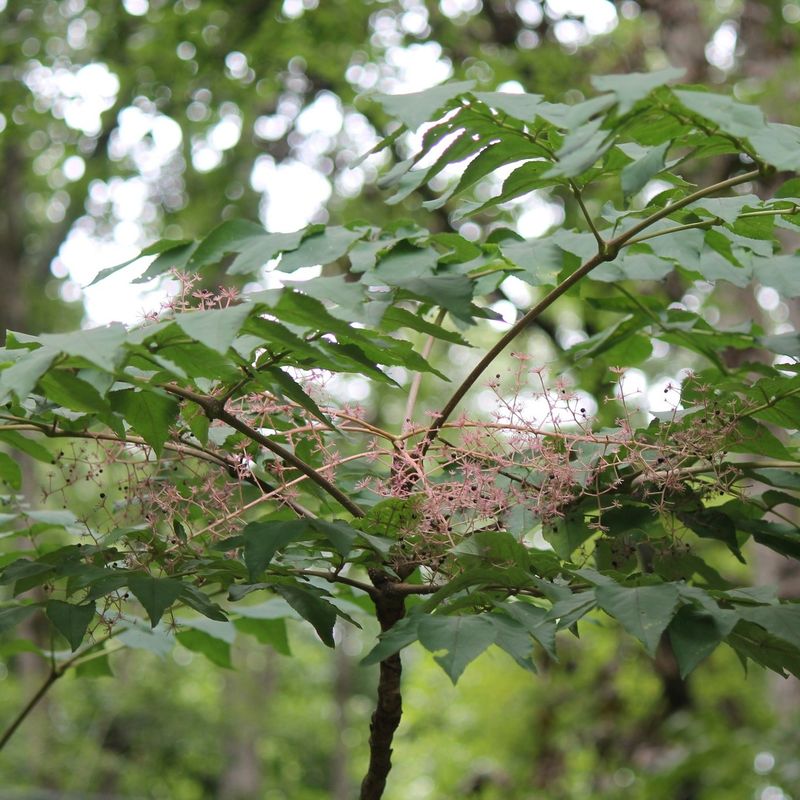
The leaves are massive, sometimes stretching three to four feet across, and they spread out from the stem like a green umbrella.
Standing under one feels strange. You expect palms or bananas, not something growing beside sweetgums and muscadine vines.
Part of the illusion comes from the bare stem below. Since foliage clusters near the top, the trunk stays exposed, which exaggerates that palm-tree silhouette.
Hikers in north Georgia often photograph it and come home convinced they found something escaped from a garden center. It is native, though, and has been growing in these woods far longer than any of us.
Size varies a lot depending on light and moisture. In rich, damp soil at a clearing edge, leaves get noticeably larger than they do on a dry slope.
The tropical look fades in winter. Once leaves drop, you are left with a skinny prickly pole that many people fail to recognize as the same plant.
Gardeners who like bold texture sometimes plant it on purpose. Placed against a fence or a wall of dark evergreens, those oversized leaves read as intentional rather than accidental.
Just give it room. Crowded against smaller shrubs, the scale feels off and the whole effect gets lost.
2. Devil’s Walkingstick Is The Plant Behind The Unusual Display
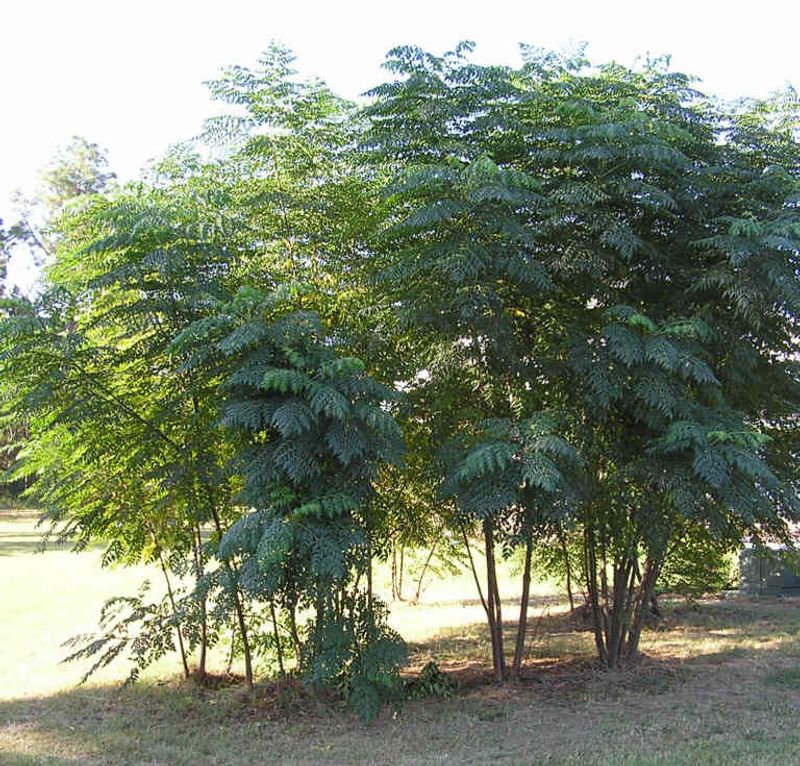
The name sounds like folklore, and honestly, it fits. Aralia spinosa earned it because the prickly stem resembles a walking stick nobody would want to grab.
Other regional names float around too, including Hercules’ club and prickly ash, though those get applied to different plants in different places. Botanical names help when you are trying to identify something for certain.
It belongs to the ginseng family, which surprises people. American ginseng and English ivy are relatives, oddly enough.
Range covers much of the Southeast and stretches north into Pennsylvania.
Across Georgia it turns up in the Piedmont, the mountains, and parts of the coastal plain.
Height typically lands between ten and twenty feet, though older specimens can push higher. Whether you call it a small tree or a large shrub depends on how it grows in a given spot.
Your Georgia Garden Changes Every Week. Your Plan Should Too.
Gardening in Georgia changes quickly throughout the season. Every Friday you’ll receive a simple weekly plan showing exactly what to plant, prune, fertilize, harvest, and protect so you never miss the right timing.
Suckering is normal behavior. One stem often becomes a loose colony over several years, which is worth knowing before you plant it near a tidy bed.
Native plant nurseries occasionally carry it, usually in small containers. Digging one from the wild is a poor idea, since the taproot resents disturbance and permission matters on private land.
Identification gets easier with practice, and that prickly stem is the giveaway.
3. Sharp Prickles Cover Much Of Its Tall Woody Stems
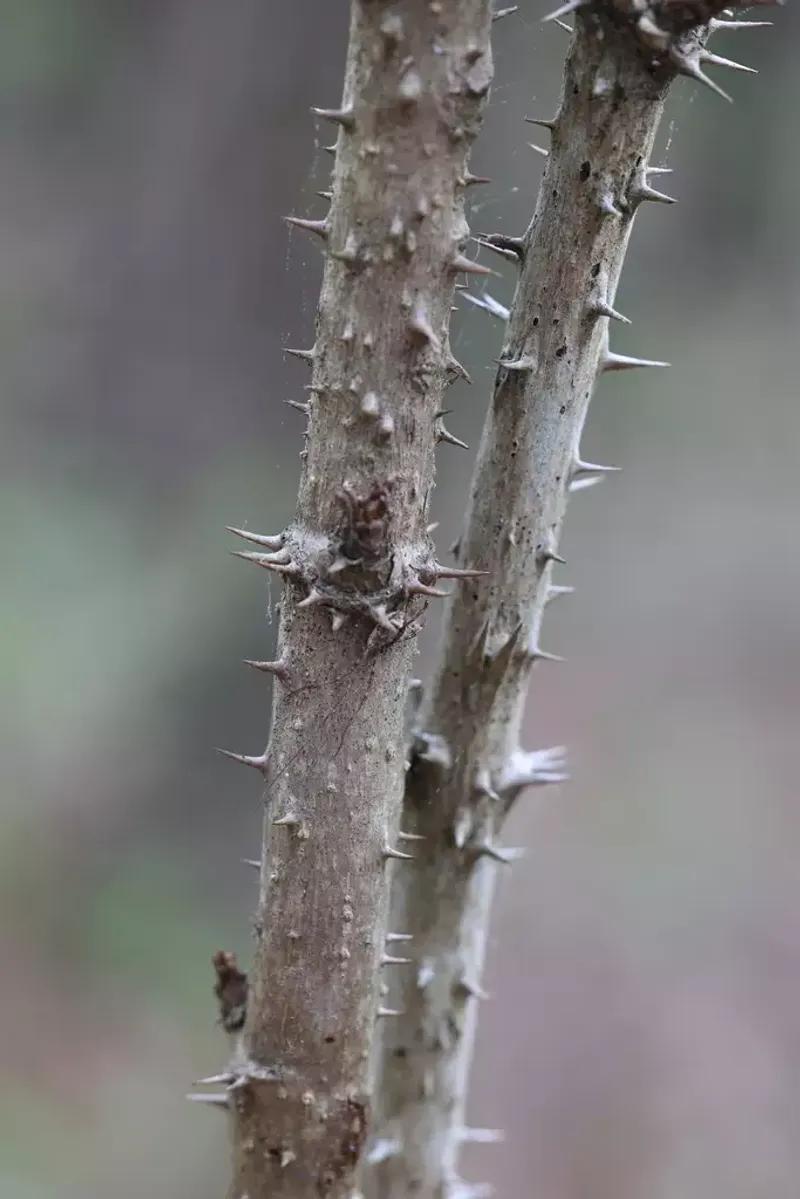
Grab this stem once and you will remember it. Stiff prickles run up and down the trunk, sometimes clustered so thickly the bark barely shows.
Prickles are not the same as true thorns, botanically speaking.
They come from the outer layer of the stem and snap off more easily than a hawthorn spine would.
Young growth carries the sharpest armor. Older, thicker trunks tend to lose some prickles as bark expands and roughens.
Gloves are worth wearing if you plan to prune or thin a colony. Leather ones work better than fabric, since the points push right through cotton.
Placement matters more than most people realize. Keeping it away from paths, mailboxes, and play areas prevents an unpleasant surprise for anyone brushing past.
The prickles likely discourage browsing animals, though deer pressure varies from one property to the next in Georgia and no plant is fully protected.
Kids and pets are the bigger concern in a home landscape. A scratch is not serious, but it stings and can bleed a little.
Cut stems stay sharp on the ground for a while. Piling brush carefully saves you from stepping on something hidden in leaf litter later.
Handled with a bit of respect, it causes no real trouble.
4. Large Compound Leaves Gather Near The Tops Of The Branches
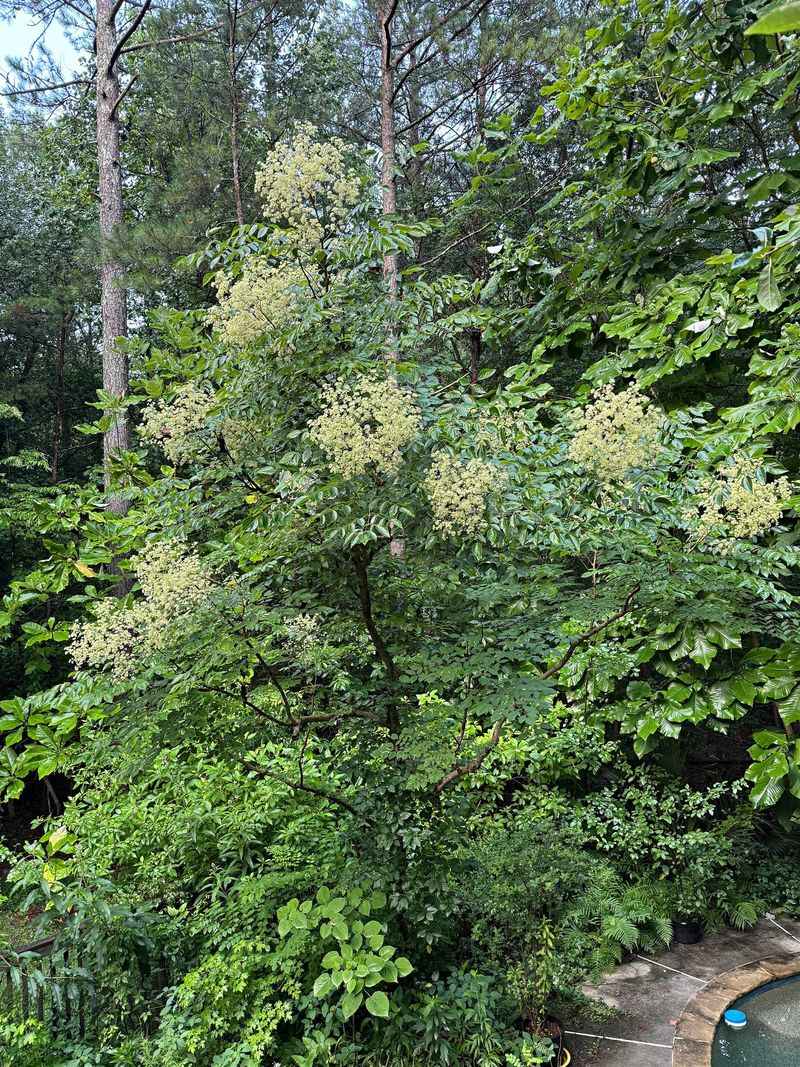
Look up into the crown and the structure gets interesting. Each giant leaf is doubly compound, meaning it divides into branches of smaller leaflets rather than being one solid blade.
Count the leaflets and you may find dozens on a single leaf. That fine division is what gives the canopy its lacy, layered appearance.
Clustering at the top is not random.
Leaves stack where light is strongest, leaving lower stems bare on plants growing in shaded woods.
Fall color leans yellow, sometimes with a bronze or purplish cast. It is not a showstopper compared to a maple, but it holds its own for a week or two.
Leaf-out happens late in spring. Gardeners across the state sometimes assume the plant failed over winter when nearby trees have already leafed out.
Wind can tatter those big leaves. A sheltered spot keeps them looking cleaner through August storms.
Because foliage sits high, you can underplant with shade-tolerant natives. Christmas fern or heuchera fills the empty space at the base nicely.
Raking is easy in a way. Whole leaf stalks drop, so cleanup involves fewer small pieces than you might expect.
The layered look also makes it a decent screen once several stems mature together.
5. Creamy White Flowers Create An Impressive Summer Display
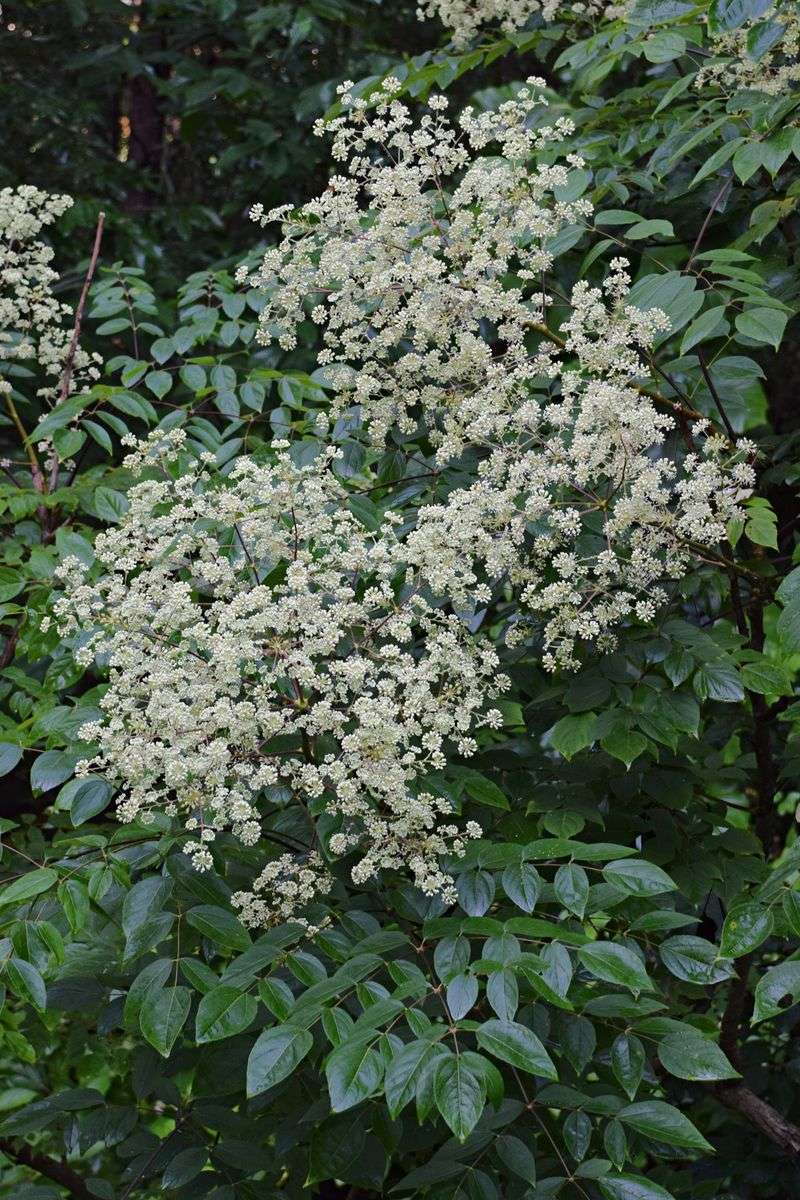
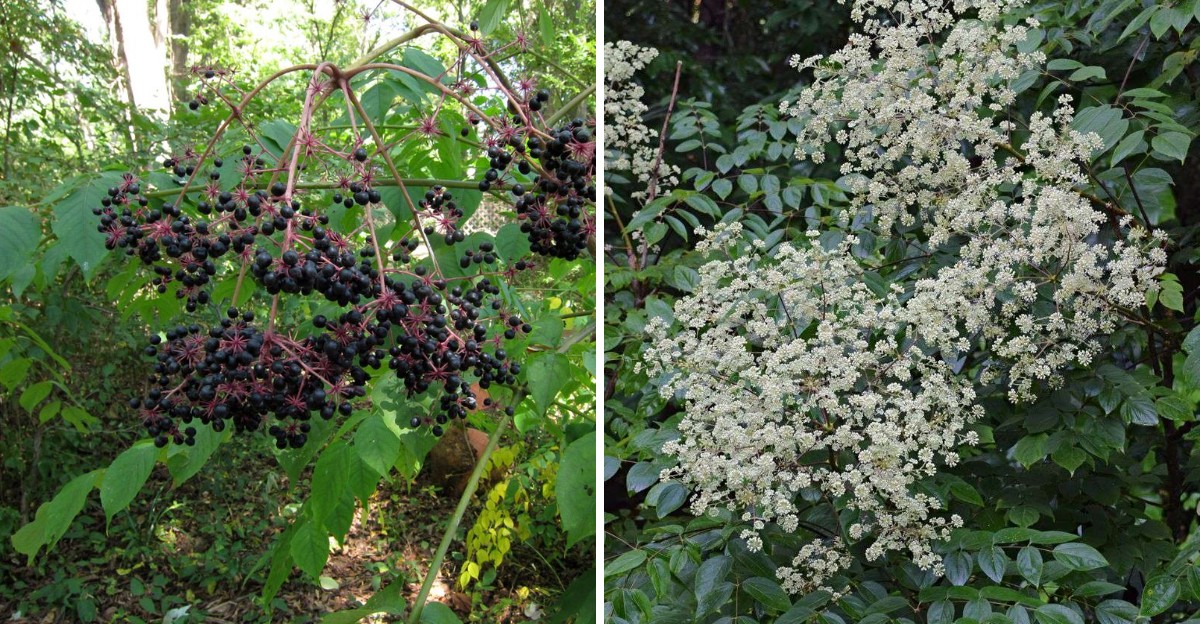
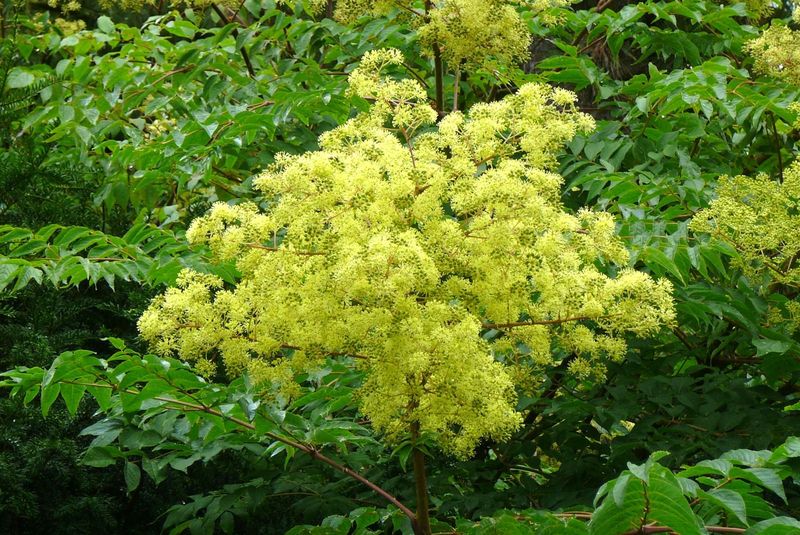
Midsummer is when it steals the show. Huge branched clusters of tiny creamy white flowers rise above the leaves, sometimes measuring a couple of feet across.
Bloom time generally falls in July and August here, though timing shifts with elevation and the weather that year. Mountain plants tend to flower later than coastal plain ones.
Pollinators pile on. Bees, wasps, flies, and butterflies all work the flowers, and the buzzing can be loud enough to notice from several feet away.
Late-season nectar has real value. By August, many spring bloomers are finished, so this fills a gap for insects in Georgia gardens and woodlots.
The clusters are not fragrant in any strong way. A faint sweetness is about all you will catch standing nearby.
Cut stems hold up reasonably in a vase, though the prickles make handling awkward. Most people enjoy them outside instead.
Flowering usually starts once a plant reaches a few years old and has decent light. Deep shade often means fewer blooms or none at all.
Position it where you can watch the insect traffic.
A spot visible from a porch or window turns August into something worth observing.
Spent clusters stay attached and gradually shift toward fruit.
6. Dark Berries Add Another Distinctive Feature Later In The Season
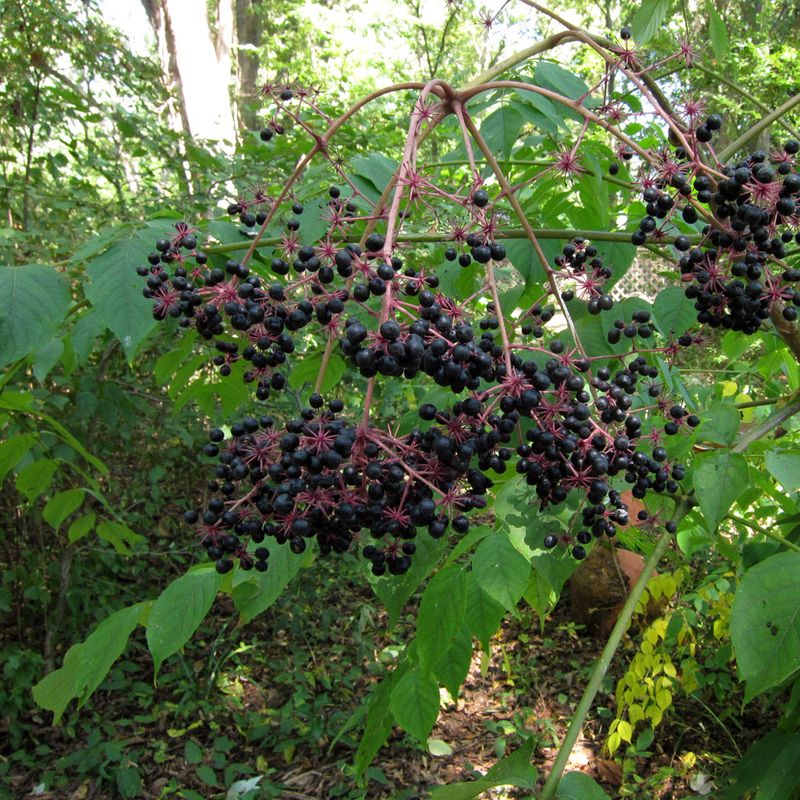
Flowers give way to something even more eye-catching. Small dark purple to nearly black fruits form in loose clusters, held on stalks that flush bright pink or red.
The color contrast is what people remember. Dark berries against magenta stems look almost artificial in September light.
Birds move in quickly.
Thrushes, mockingbirds, and other fruit eaters strip the clusters, sometimes within days of ripening.
Seedlings show up wherever birds perch afterward. Fence lines and shrub borders across the Georgia Piedmont often sprout volunteers this way.
Fruit is not considered good for people to eat, and some sources note it can cause stomach upset. Leaving it for wildlife is the sensible choice.
Stalk color lingers after the berries are gone. Those pink branches stay visible for a while, which extends the interest into October.
Yield varies year to year. Weather during bloom, pollinator activity, and plant age all influence how heavy the crop gets.
Gardeners who want fewer seedlings can clip clusters before they ripen. Long-handled pruners help you reach without tangling with prickles.
Watching which birds arrive is half the fun. A single plant can turn into a reliable feeding stop each early autumn.
7. Woodland Edges Give This Striking Native Room To Grow
Edges are where it thrives. Roadsides, old logging cuts, fence lines, and the sunny rim of a woodlot all suit it well.
Full shade tends to produce leggy, sparse plants.
Partial sun brings bigger leaves and better flowering, based on how it behaves in the wild.
Soil preferences are loose. Moist, well-drained ground works best, though it tolerates clay and rocky slopes found through much of northern Georgia.
Drought slows it down without much drama. Established plants generally hang on, but young ones benefit from watering their first summer.
Suckering is the main thing to plan around. One plant can spread into a clump over several years, so a naturalized area suits it better than a formal bed.
Root pruning helps contain it. Slicing around the clump with a spade each spring limits how far new shoots travel.
Consider it for problem spots. Steep banks, back property lines, and areas you rarely mow are good candidates.
Pairing works well with native shrubs like beautyberry or elderberry. All three feed birds and handle edge conditions similarly.
Give it a few seasons before judging. Early growth looks awkward, then the shape fills in and the tropical effect finally shows up.