Virginia Lawns Are Under Attack From Fall Armyworms And Homeowners Need To Act Now
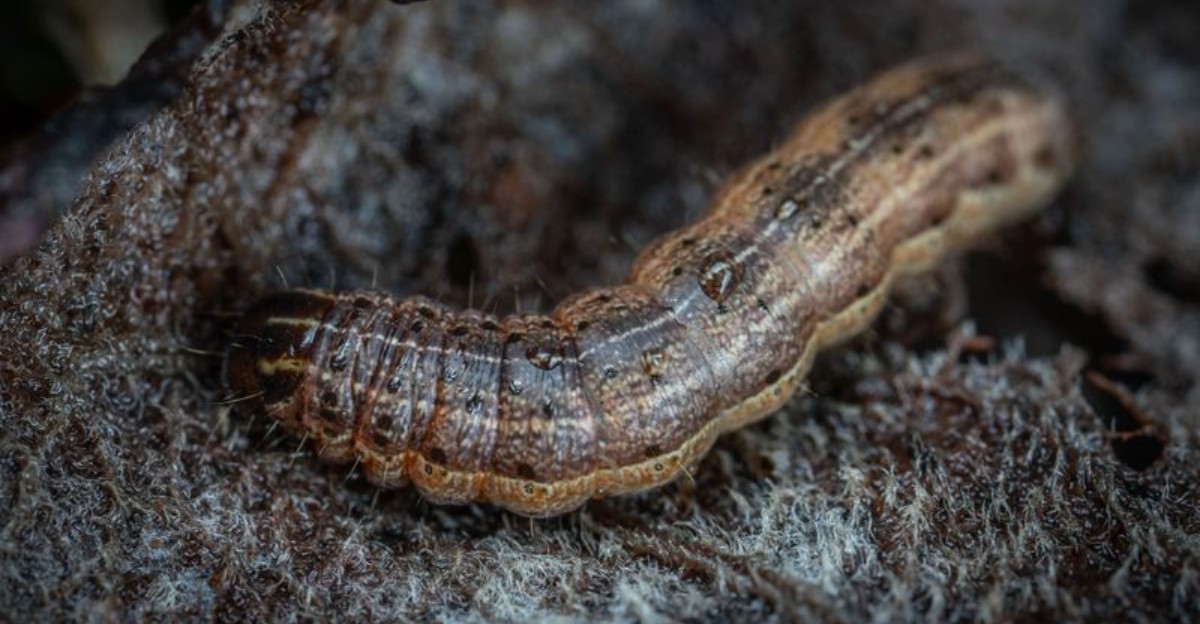
Your Virginia lawn can look perfect one day and turn patchy and brown the next, thanks to fall armyworms.
These small caterpillars move fast, chewing through grass blades and leaving behind damaged turf that can look like drought or disease at first glance. The good news is that you can stop the damage when you know what signs to look for.
Late summer and early fall are prime times for armyworm activity, so checking your yard now can make a big difference. Catching these pests early gives your grass a better chance to recover and stay healthy through the season.
1. Spot The Early Signs Of Fall Armyworm Damage In Lawns
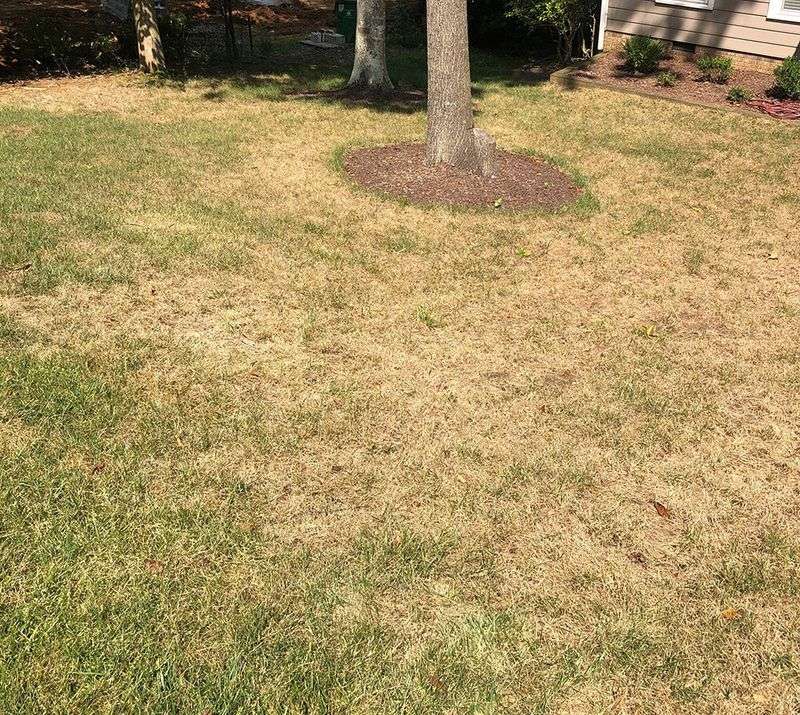
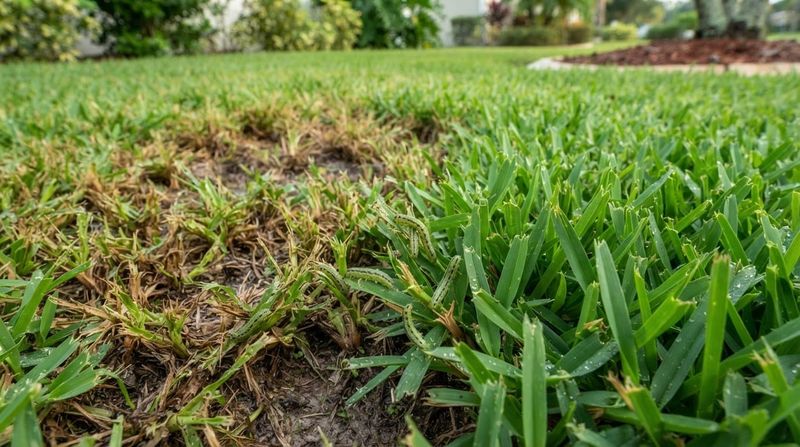
Picture walking outside with your coffee and noticing a tan patch that was not there yesterday. That kind of overnight change is one of the clearest hints that fall armyworms have moved in.
The earliest symptoms are sneaky because they copy other problems. Irregular brown or tan areas show up even when the lawn has been watered well, so many homeowners assume the sprinklers failed or a fungus took hold.
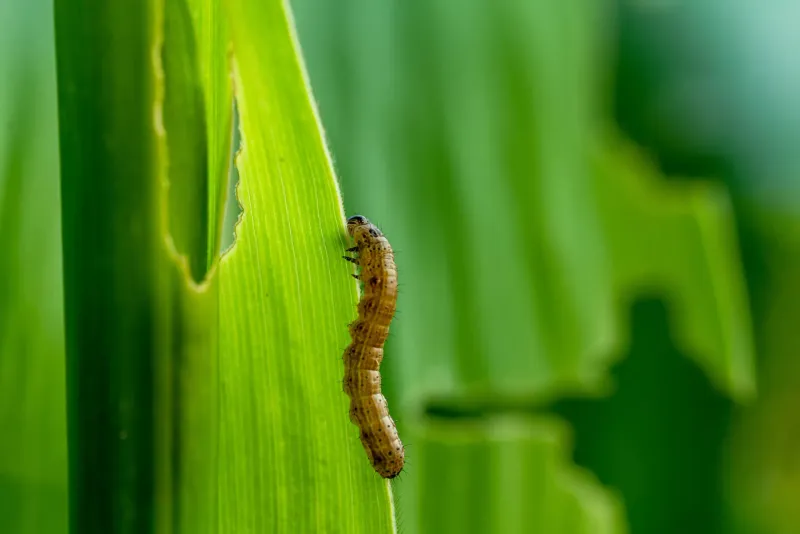
Get down on your knees and study individual blades. Chewed, ragged edges are a strong clue, and so is a thin, see-through look called a windowpane effect, where the caterpillars scraped away the green tissue and left a papery layer behind.
Birds give away the secret too. When robins, crows, or starlings suddenly gather and poke at your turf in numbers you have never seen before, they are usually feasting on caterpillars hiding in the grass.
As feeding continues, a sharp border forms between brown, chewed turf and untouched green grass. That line moves across the yard a little each day, which is exactly how these pests earned the armyworm name.
Keep a mental snapshot of how your lawn looked last week. Comparing week to week makes sudden shifts easy to catch, and catching trouble in the first day or two gives you the biggest advantage in protecting your grass.
2. Understand Why Fall Armyworms Spread Quickly In Late Summer
Here is something that surprises a lot of people: fall armyworms don’t live here year-round. Each year, adult moths migrate north from warmer regions, often carried by weather systems, and new generations develop during the growing season.
Once those moths land in Virginia, the clock starts ticking fast. A single female can lay hundreds of eggs, with some producing well over a thousand during their short adult lifespan.
Egg masses look fuzzy and pale, and they turn up in odd spots. Check plant leaves, fence rails, house siding, mailbox posts, and deck boards, because the moths are not picky about where they stick them.
Eggs usually hatch within several days, and larvae feed for a few weeks before pupating in the soil. The full life cycle can be completed in a few weeks under warm conditions, but cooler weather slows development.
Add those numbers up and a whole generation can finish in about 23 to 27 days. Several generations stack up in one season, which explains the population booms that follow warm, humid, rainy stretches.
Your Virginia Garden Changes Every Week. Your Plan Should Too.
Gardening in Virginia changes quickly throughout the season. Every Friday you’ll receive a simple weekly plan showing exactly what to plant, prune, fertilize, harvest, and protect so you never miss the right timing.
Since these caterpillars feed during the day and at night, damage piles up around the clock. That constant chewing is exactly why a lawn can look healthy on Monday and heavily stressed by Thursday.
3. Check Grass Blades For Hidden Armyworm Activity
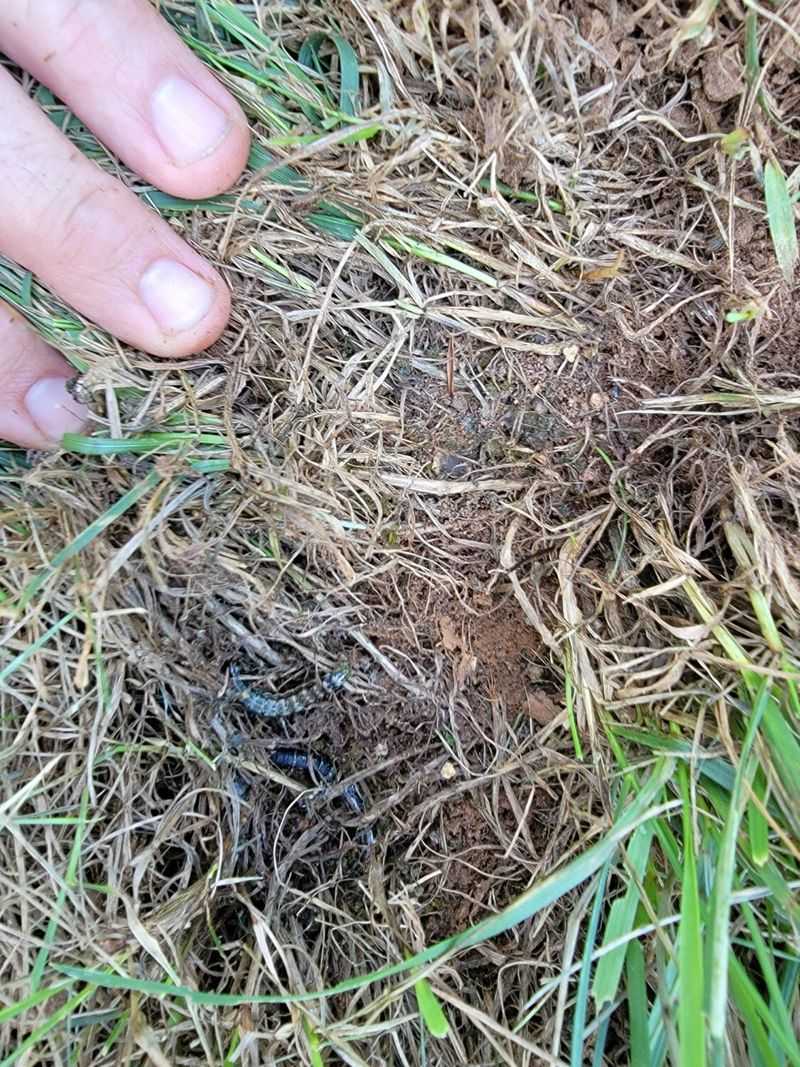
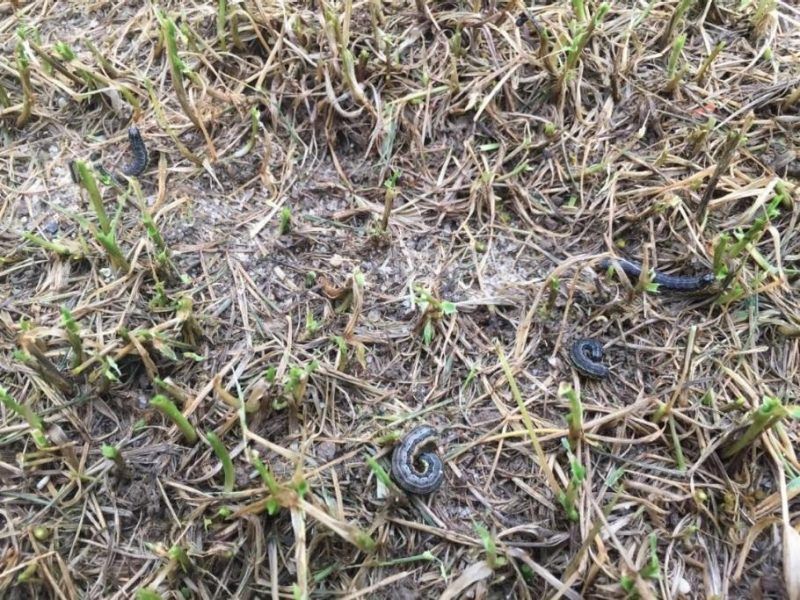
Finding the culprits takes a little detective work, because these caterpillars are good at staying out of sight. Damage usually shows up first, but confirming live larvae tells you whether treatment is actually needed.
Timing matters more than effort here. Search early in the morning, late in the evening, or after dark, since midday heat sends the caterpillars down into the thatch and soil where you will never spot them.
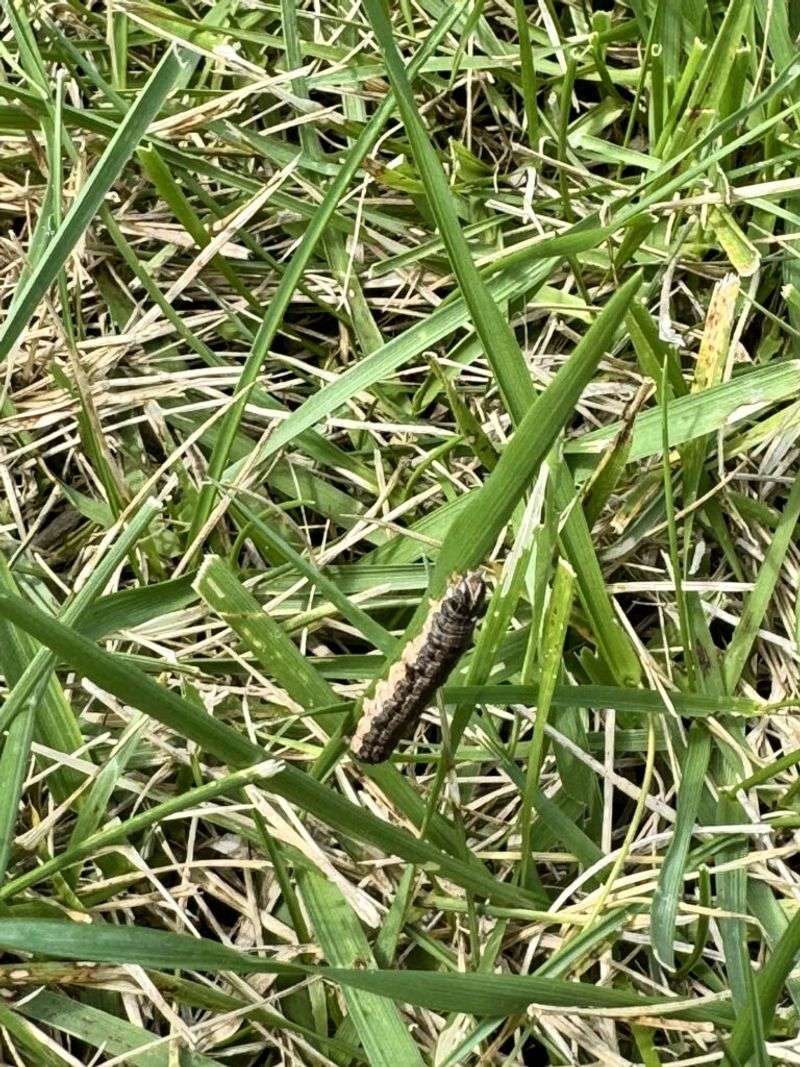
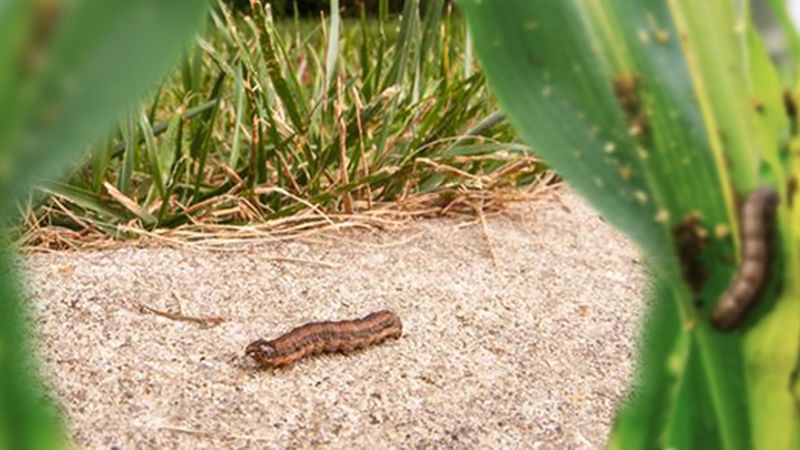
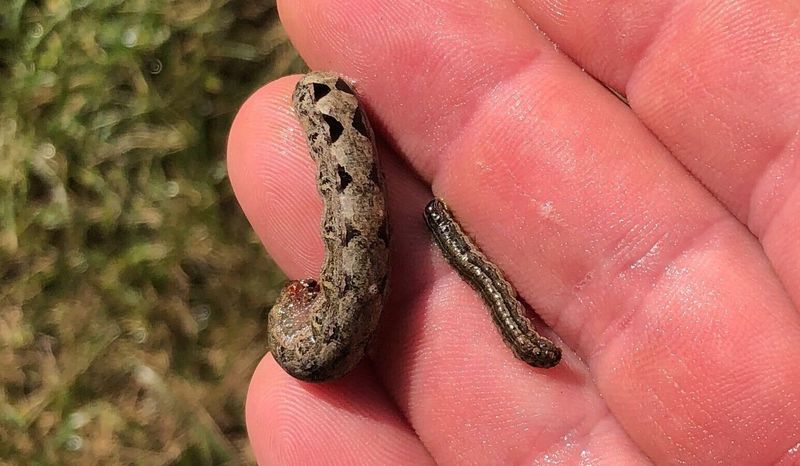
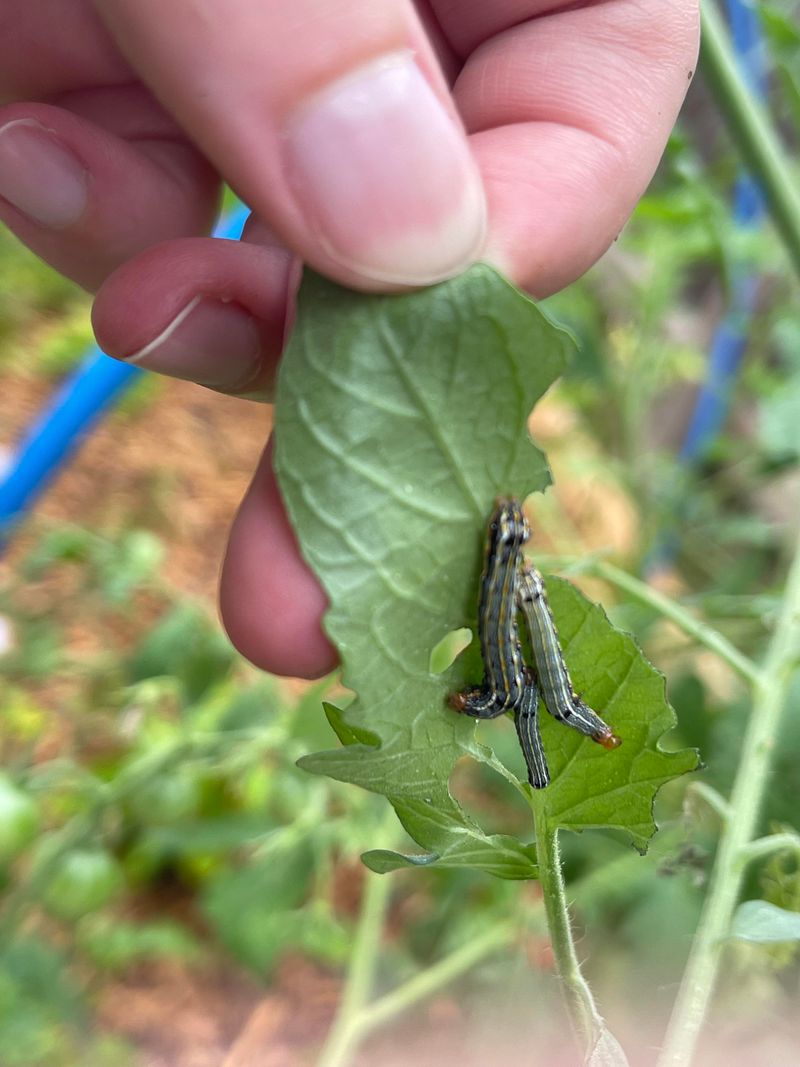
Young larvae look pale with a dark head. Older ones turn green, brown, or nearly black, with three light stripes running down the back, scattered dark spots, and a wide dark stripe along each side.
The surest identifier is an upside-down Y shape on the head capsule. Full-grown caterpillars stretch about 1.5 to 2 inches long, so they are easy to see once you separate the blades.
Frass, which is just insect droppings, collects near the soil line and looks like tiny dark pellets. Spotting frass without spotting caterpillars still counts as strong evidence.
For a quick check, try a soap flush. Mix one to two tablespoons of dish soap into one to two gallons of water, pour it over a two to four square foot area, and wait a few minutes.
Irritated caterpillars crawl up where you can count them. Finding several larvae per square foot can indicate that treatment may be needed, especially if the lawn is already showing visible feeding damage.
4. Know Which Lawns Face The Greatest Risk
Not every yard suffers equally when armyworms arrive. Freshly seeded lawns and newly laid sod sit at the top of the risk list because tender young grass makes an easy, appealing meal.
Young turf also has less stored energy. A mature lawn can lose its blades and push out new ones, while a six-week-old seeding may struggle to bounce back the same way.
Grass type plays a role in recovery. Fall armyworms will eat fescue, ryegrass, bluegrass, bermudagrass, zoysiagrass, and St. Augustine, but tall fescue lawns across Virginia often need overseeding afterward to look full again.
Bermudagrass tells a different story. Well-fertilized bermuda can actually attract these pests, yet its aggressive spreading habit helps it fill back in faster once feeding stops.
Dense, actively growing grass can support heavier feeding because it provides more plant material for developing larvae. Outbreaks also follow droughts sometimes, since stressed turf has fewer reserves and shows damage more dramatically.
Humid, rainy weather stacks the deck in the caterpillars’ favor by speeding up their life cycle. That combination of moisture and warmth is common in Virginia from August into October.
Strong cultural care lowers your odds of serious loss, though no lawn gets a free pass. Even a beautifully maintained yard can host a surprise visit, so scouting beats assuming you are safe.
5. Use Proper Lawn Care To Reduce Armyworm Problems
Good habits in August and September do more for your lawn than any rescue spray ever will. Regular walk-throughs during late summer and early fall put you ahead of trouble instead of chasing it.
Make scouting part of your routine. A five-minute look at the lawn edges, especially along driveways and fences where eggs get laid, catches problems while caterpillars are still small.
Wildlife can work for you. Birds, predatory wasps, ground beetles, and parasitic insects all feed on armyworm eggs and larvae, so flower beds and shrubs that invite them pay off.
Mowing deserves some thought. If you plan to treat, cut the grass first, then hold off on mowing for one to three days afterward so the product stays where it belongs.
Watering is about balance rather than volume. Soggy turf and constant moisture create ideal conditions for pests, while drought-stressed grass has a harder time regrowing blades.
Go easy on nitrogen too. Heavily fertilized grass grows soft and tender, which is exactly the kind of buffet these caterpillars prefer, though a reasonably fed lawn recovers better.
Dense, thick turf is the real goal. A lawn kept at the right mowing height with steady, sensible feeding has the strength to shrug off feeding damage and refill thin spots quickly.
6. Choose Effective Treatments Before Damage Gets Worse
Speed counts once feeding starts. Armyworms can strip a noticeable portion of a yard in just a few days, so waiting a week to decide almost always means more repair work later.
Products fall into a few groups. Pyrethroids such as bifenthrin, lambda-cyhalothrin, cyfluthrin, permethrin, and deltamethrin are widely used and work well against active larvae.
Other reliable choices include spinosad, chlorantraniliprole, indoxacarb, carbaryl, and trichlorfon. Some of the strongest results in field trials came from combination products that pair chlorantraniliprole with a pyrethroid.
Prefer a gentler route? Bacillus thuringiensis var. kurstaki, usually labeled Bt, targets caterpillars specifically and works best on small, young larvae before they bulk up.
Size really does change the outcome. Large, mature caterpillars shrug off treatments that would have handled them easily a week earlier, which is another argument for acting at the first sign.
Match the product to the situation. A small patch along one side of the yard may only need spot treatment, while widespread feeding across a lawn calls for a full application.
Read the label from top to bottom before anything goes in the sprayer. Rates, timing, safety gear, and pet or pollinator precautions are all spelled out there, and following them is required by law.
7. Apply Control Methods At The Right Time For Better Results
Timing turns an average treatment into a great one. Because larvae feed openly when temperatures drop, early morning and late afternoon or evening applications reach far more of them.
Spraying at noon wastes product. The caterpillars retreat into thatch and soil during peak heat, leaving your application sitting on blades they are not touching.
Liquid treatments can provide quick contact with active larvae, while properly applied granular products can also be effective depending on the active ingredient.
Liquids make contact faster and coat the blades where feeding happens, while granules take longer to release and settle in.
A little prep helps. Follow the product label for watering instructions before and after treatment.
Some situations may benefit from irrigation, while others require keeping the lawn dry so the product remains effective.
After application, hold the hose. Waiting about three days before irrigating again lets the product do its job instead of washing it off the grass.
Skip mowing for one to three days as well. Cutting removes treated blade tips and adds stress to turf that is already working hard to recover.
Plan for a possible repeat. Moths keep arriving and new generations hatch, so a second application is common during heavy outbreaks in Virginia yards.
Rotate chemistries if you treat more than once. Switching to a product with a different mode of action reduces the chance of resistance building up in the local population.
8. Protect Grass Roots After Armyworms Attack Turf
Take a breath before you panic about that brown lawn. Armyworms eat blades, not roots, which means the crowns and root systems underneath usually survive the attack intact.
Start with an honest assessment once feeding stops. Tug gently on a few brown plants, and if they hold firm in the soil, regrowth is very likely on the way.
Feeding the turf speeds things up. If the lawn needs nutrients, a soil test can guide fertilizer use.
A properly timed fall feeding can help damaged grass recover without encouraging excessive weak growth.
Water steadily but sensibly. Damaged areas need consistent moisture to support new growth, though soaking the yard daily does more harm than good.
Thin or bare spots deserve extra attention. Overseeding is often useful for thin tall fescue lawns because it does not spread with runners like warm-season grasses, although healthy plants can still gradually fill in through new shoots.
Core aeration pairs nicely with overseeding. Pulling plugs relieves compaction, improves seed-to-soil contact, and lets air, water, and nutrients reach struggling roots.
Organic soil conditioners and compost topdressing build better soil structure over time. Healthier soil means deeper roots and a lawn that handles future stress with less drama.
Stay patient through the process. With regular care and decent fall weather, most yards green back up within a few weeks and look like the damage never happened.
9. Avoid Common Mistakes That Let Lawn Damage Spread
Small missteps cost homeowners more grass than the caterpillars themselves. The most frequent one is misreading the symptoms and treating for drought or fungus while the real chewers keep working.
Waiting is the costliest habit. Every extra day lets larvae grow larger, and big caterpillars are far harder to control than the tiny ones that hatched last week.
Scouting at the wrong hour fools plenty of people. A midday search often turns up nothing because the larvae are hiding, leading someone to wrongly conclude the yard is clean.
Spraying under a hot afternoon sun creates the same problem in reverse. Product goes down, caterpillars stay tucked below, and money goes to waste.
Skimming the label instead of reading it leads to wrong rates, poor results, and sometimes harm to plants, pets, or beneficial insects nearby.
Mowing right after treatment strips away the material before it works. Give it a couple of days, then cut as usual.
Forgetting to re-check the lawn is the final trap. Moths keep migrating and new generations appear, so a treated lawn can host a second wave within weeks.
Mark your calendar for a follow-up walk. Ten minutes of scouting a week later protects all the effort you already put in and keeps your turf looking sharp.