Small Brown Butterflies Are Turning Up In Tennessee Yards And Landing Directly On People
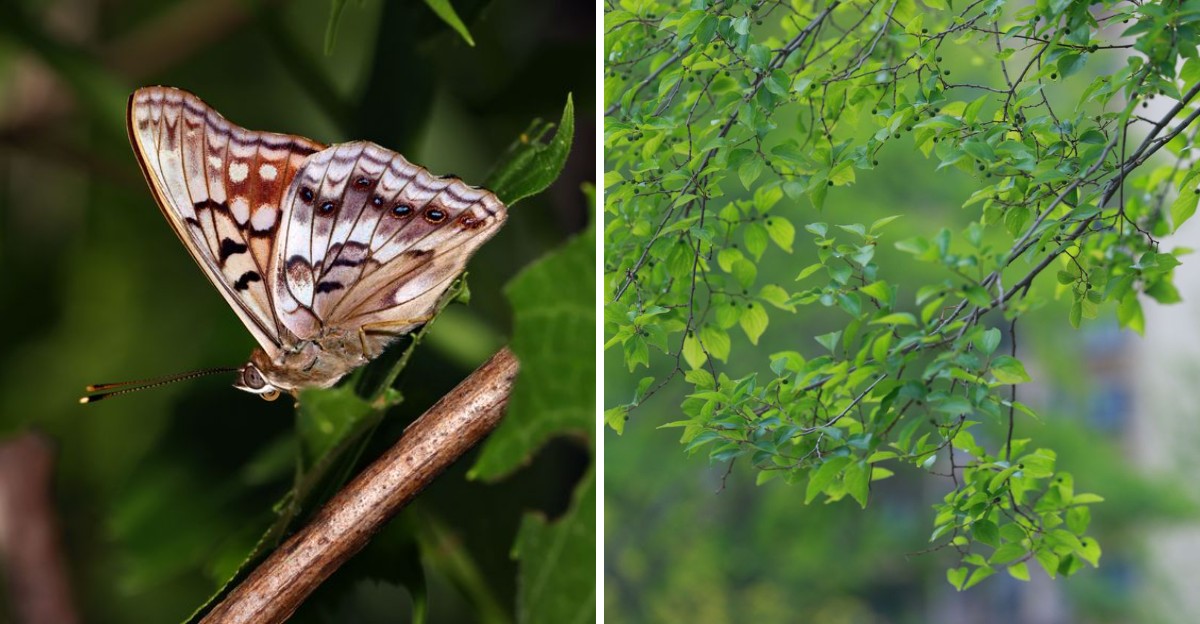
Something brushes your shoulder before you notice a thing. Wings flick past your ear with startling precision. Across Tennessee, porches near you are buzzing with the same story.
Your arm becomes a landing pad within seconds. Nobody warned you this could feel so personal. Tiny brown visitors keep choosing you over open space. Heat like this pulls strange behavior toward you fast.
This rush points to something specific. Some yards are seeing thicker clusters than usual. Knoxville neighbors trade stories you might recognize instantly. Memphis backyards show you the exact same thing.
September in Tennessee brings a wave you won’t expect. You could brush it off, or you could stay. Curiosity wins when wings land this close to your skin.
Bold behavior like this leaves you searching for answers. Answers exist, and they change how you see things. Wait until you find out why they refuse to leave.
The Hackberry Emperor Is Tennessee’s Friendliest Freeloader
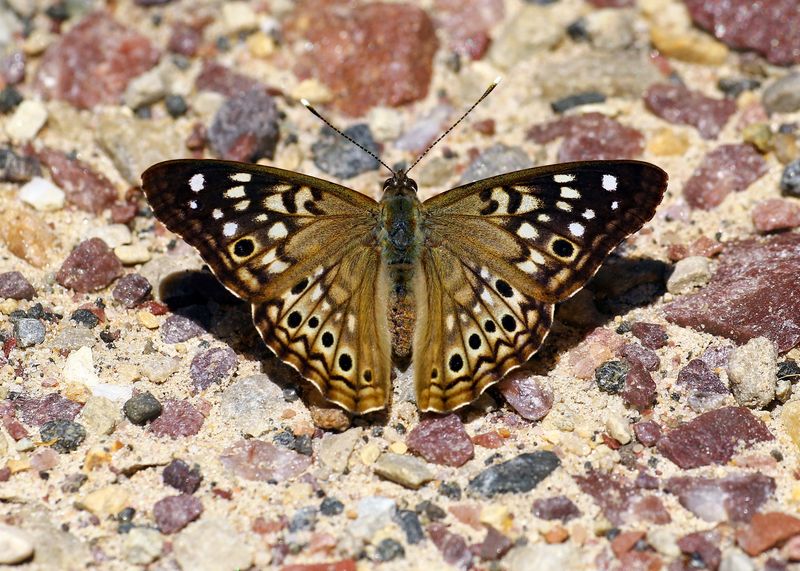
Picture a butterfly with the manners of a curious puppy. That is the Hackberry Emperor, a medium-small brown flier with white spots, rusty patches, and a row of dark eyespots along the hind wing edges.
Scientists call it Asterocampa celtis, and it belongs to the brushfoot family. Its front legs are short and fuzzy, so it appears to walk on four legs instead of six.
Wingspan usually runs between 1.5 and 2.5 inches, which makes it easy to mistake for a moth at a glance. Look closer and you will notice the crisp geometry on the upper wings and the soft gray marbling underneath.
Unlike showier species that drift past and keep going, this one investigates. It will circle a picnic table, inspect a car hood, and then park itself on somebody’s shoulder like it paid rent.
Males often stake out a favorite tree trunk or fence post and dart out at anything that moves, including people, dogs, and passing bicycles. That territorial habit explains a lot of the sudden face-to-face meetings.
Tennessee happens to sit in prime territory for them, with warm river valleys, wooded suburbs, and plenty of shade. From Nashville greenways to Chattanooga backyards, they turn up wherever their host tree grows.
Early September brings a strong second flight of adults, which is why yards feel busier than they did in June. The show usually runs through the first cool snaps of autumn.
Why They Land On Your Arm Instead Of Your Flowers
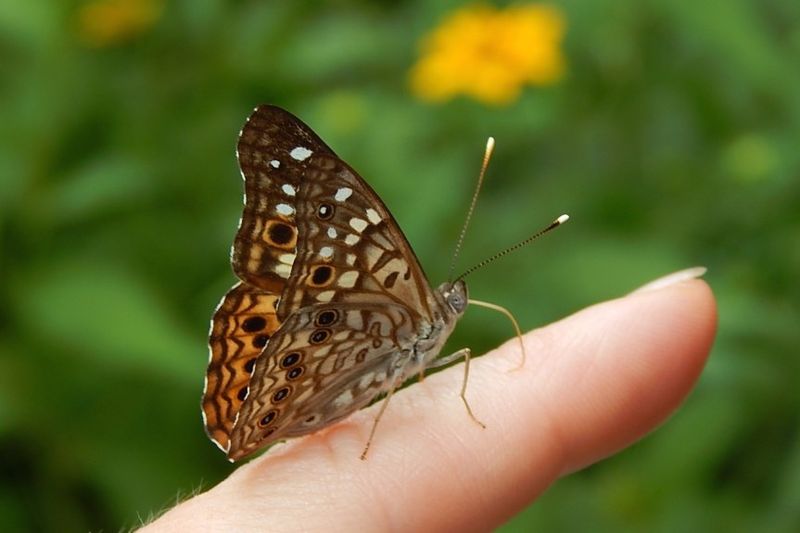
Salt. That is the short answer, and it explains almost the entire mystery. Hackberry Emperors get very little nutrition from flower nectar, which is unusual for butterflies.
Instead they seek out minerals, amino acids, and sodium from damp soil, tree sap, fruit that has fallen and softened, and yes, human sweat.
Sweaty skin after yard work offers the salt and minerals they seek. The butterfly uncurls its straw-like proboscis and dabs at the moisture, gathering minerals that males later pass to females during mating.
Naturalists call the behavior puddling, and you can watch it at any muddy driveway edge after a Tennessee thunderstorm. Groups will gather on wet gravel, stretching and sipping like customers at a counter.
Your Tennessee Garden Changes Every Week. Your Plan Should Too.
Gardening in Tennessee changes quickly throughout the season. Every Friday you’ll receive a simple weekly plan showing exactly what to plant, prune, fertilize, harvest, and protect so you never miss the right timing.
Warm skin, sweat, and the carbon dioxide you exhale all combine into a signal they can detect. Bright clothing is not required, though pale colors sometimes draw extra attention.
They also respond to movement, so waving your hands can invite more visitors rather than fewer. Standing still often ends the encounter faster than swatting.
The sensation is a faint tickle, a bit like a loose eyelash brushing your arm. There is no bite, no sting, and no reason for concern.
Sweaty ball caps, hiking boots, and camp chairs collect the same salty residue and pull in the same crowd. Leave a damp towel on the deck rail and you may find it decorated within minutes.
Blame The Hackberry Tree Growing Down The Street
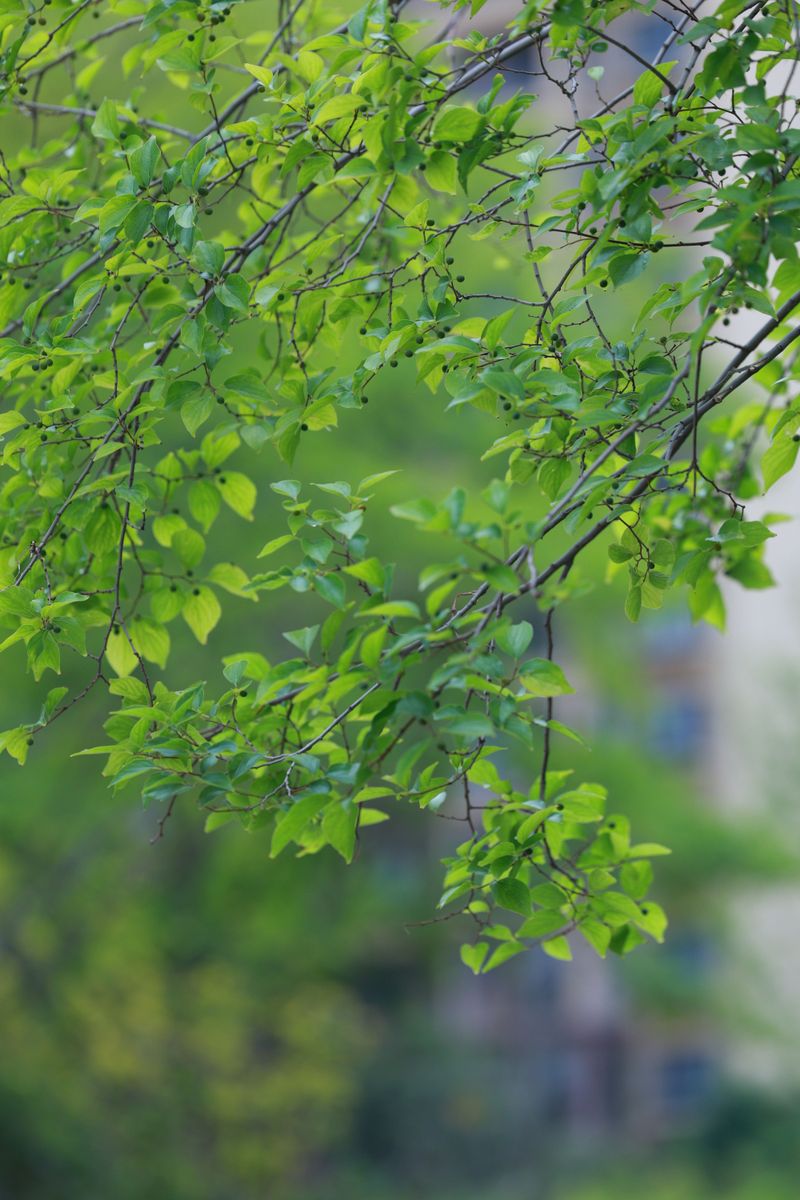
Every butterfly boom has an address, and this one lives on the hackberry tree. Caterpillars of Asterocampa celtis feed on hackberry and sugarberry leaves, and nothing else will do.
Hackberry trees grow all over Tennessee, especially along creek banks, fencerows, old lot lines, and city parks. You can spot one by its warty, ridged gray bark that looks like it was sculpted by a nervous artist.
Because these trees are tough, drought-tolerant, and quick to sprout, they show up in yards without anyone planting them. A single mature specimen can support hundreds of caterpillars across a season.
Females lay eggs in clusters on leaves and twigs, and the spiky green caterpillars feed together while young. They are harmless to people and rarely damage the tree in any lasting way.
If your neighborhood suddenly feels overrun, walk around and look up. Odds are good there is a big hackberry within a hundred yards, quietly supporting a large local population.
Some Tennessee homeowners consider hackberries messy because of the small dark berries that drop in fall. Birds like cedar waxwings, robins, and mockingbirds strongly disagree.
Removing the tree would cut the butterfly numbers, but it would also erase food for songbirds and shade for your lawn. Many gardeners decide the trade is not worth it. Tucking a hackberry into a back corner is a simple way to host wildlife without extra effort.
September Is Peak Season, And Here Is The Reason
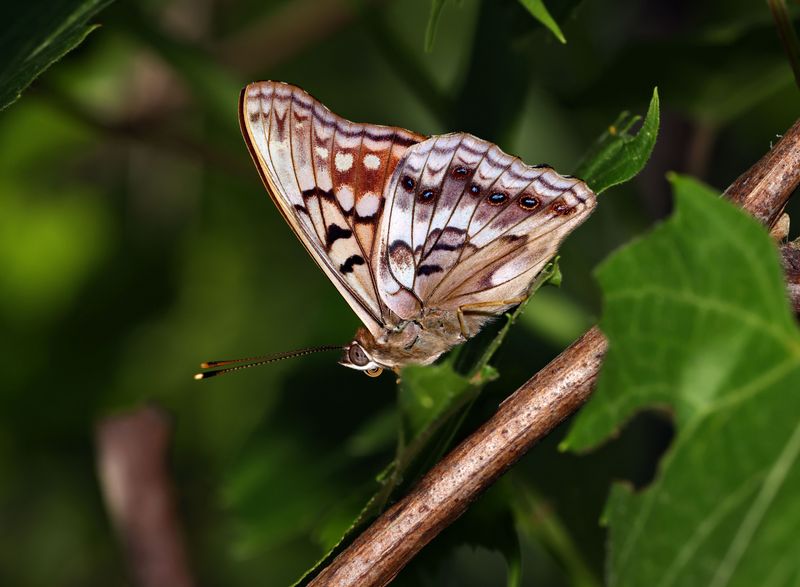
Timing explains the sudden crowd. In Tennessee, Hackberry Emperors typically produce two broods a year, and the late-summer generation is the bigger one.
Adults from that second flight emerge from roughly August into October, peaking right about now. Warm days, plenty of ripe fruit, and lingering humidity keep them active from mid-morning until dusk.
Weather plays a role too. A mild spring followed by steady summer rain gives caterpillars abundant leaves, and abundant leaves mean more butterflies weeks later.
Years with heavy storms or long dry stretches tend to produce quieter Septembers. Locals often notice the swing without knowing the cause.
The final generation of caterpillars does something clever as autumn arrives. Half-grown larvae roll into fallen leaves at the base of the tree and wait out winter there, then finish growing in spring.
That is a good argument for leaving some leaf litter under your trees instead of raking the ground bare. A loose layer shelters next year’s butterflies along with fireflies and native bees.
Middle Tennessee may see a stronger showing thanks to its limestone soils and creek corridors lined with hackberry, with East Tennessee valleys not far behind.
Once nighttime temperatures dip into the forties, activity slows noticeably. The yard goes quiet again, and the whole cycle resets underground and underfoot. Mark your calendar, because conditions permitting, next September could bring a similar show.
What They Can And Cannot Do
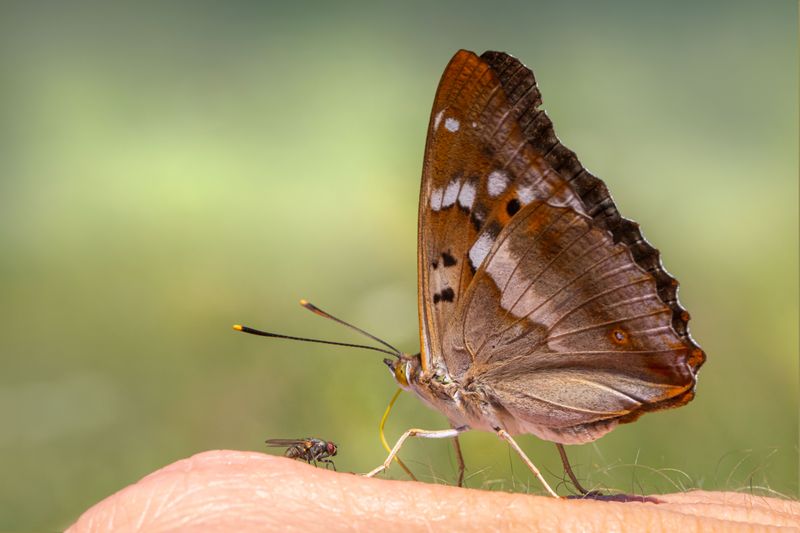
Let us settle the worry right away. A Hackberry Emperor cannot bite you, sting you, or carry anything that will make you sick.
Its mouthparts form a flexible tube built for sipping liquids, not piercing skin. The most it can manage is a delicate blotting motion that tickles.
Some people report a faint scratchy feeling, which comes from tiny claws on the feet gripping the skin. Those claws help the butterfly hold onto bark and are far too small to break skin.
Children usually love the experience once a grown-up explains what is happening. Holding out a damp finger and waiting is a wonderful way to turn a nervous kid into a nature fan.
The butterflies are fragile, though, so handling should stay hands-off. Wing scales rub away easily, and a firm grip can damage the wings permanently.
Pets pay them little mind, and a curious dog that snaps at one faces no real risk. Cats may chase, which is more of a hazard for the butterfly than the cat.
Caterpillars are equally harmless, with soft horned heads and no irritating hairs. You can move one to a leaf without gloves.
Insecticide treatments are unnecessary and would harm pollinators you actually want around. Patience costs nothing and the season is short.
Treat them as temporary guests and the whole thing becomes a memory rather than a nuisance.
Turn Your Yard Into A Front-Row Seat
Want the show to come to you? Skip the flower beds and set out fruit instead. Overripe bananas, sliced peaches, cantaloupe rinds, and mushy plums draw Hackberry Emperors far better than nectar plants.
Place the fruit on a shallow dish in dappled shade and refresh it every couple of days. A shallow tray of damp sand sprinkled with a pinch of sea salt creates an instant puddling station. Keep it moist and watch who shows up by mid-morning.
Position both setups within sight of a window or porch chair. Half the fun is watching the traffic patterns without leaving your seat.
Skip broad-spectrum yard sprays during late summer, since they hit butterflies as hard as they hit anything else. Spot-treating trouble areas works better and protects the good insects.
Leaving a small patch of ground unraked under trees gives overwintering caterpillars a safe place to hide. A brush pile in a back corner helps too.
Photographers get lucky with this species because it holds still and tolerates close approach. A phone camera and steady hands are plenty.
Try recording your sightings on a community science app like iNaturalist, where Tennessee observations help researchers track population swings. Your backyard note becomes real data.
Before long you may find yourself checking the fruit dish the way other folks check bird feeders. It is a quiet, easy pleasure that lasts through autumn.