This New Jersey Native Tree Is Turning Scarlet Weeks Before Anything Else In The Yard
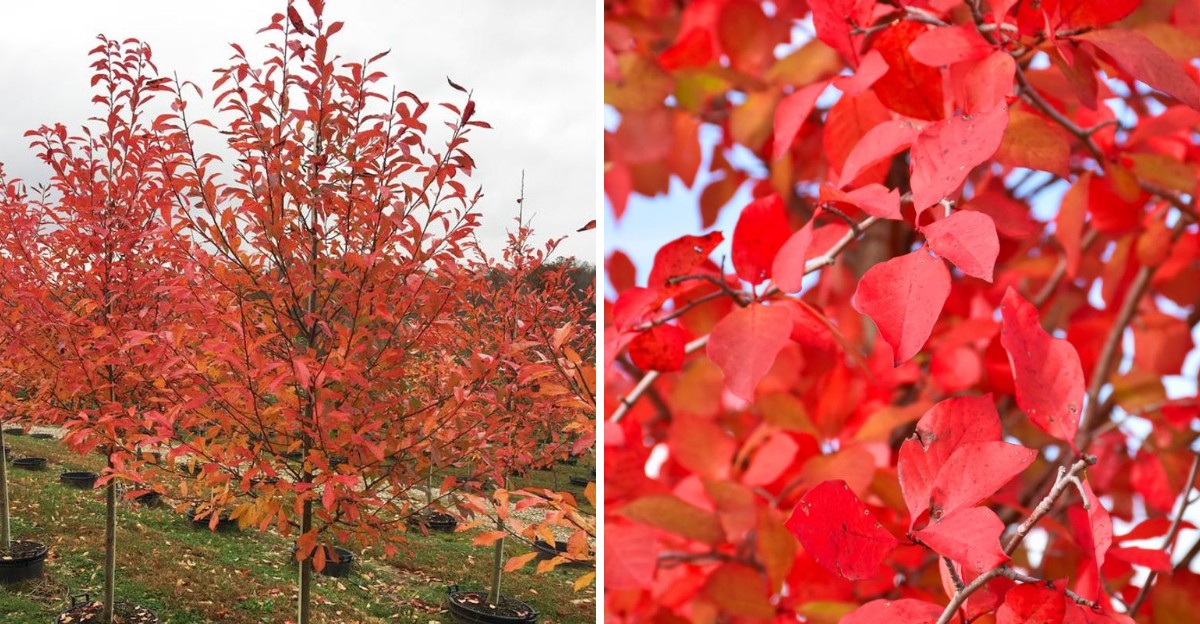
You notice it before anyone can explain it. Vivid red leaves appear while maples still cling to green. Neighbors slow their cars just to look twice. Kids tug your sleeve and ask what that tree is.
Answers surprise nearly all who listen in. New Jersey raised this tree long before subdivisions existed. Swamps, ridges, and roadside woods shaped its resilience. Nurseries played no part in shaping this native.
Early September brings its rich color, weeks ahead of schedule. Your yard becomes the block’s unexpected attraction. Understanding this tree changes how you see New Jersey woods.
Curiosity builds fast once you learn its real name. Questions pile up quickly, and your answers feel earned. Locals often mistake it for something imported or rare.
Few realize how uncommon this early transformation truly is. Something uncommon like this deserves more than a glance. What happens next will change the way you see trees.
This Tree Runs On Its Own Fall Schedule
Walk past a Black Gum in the first week of September and you might think it’s under stress. The top branches flush scarlet while the rest of the neighborhood is still wearing summer green.
Botanists call it Nyssa sylvatica. Around here, folks say Black Tupelo or Sour Gum, and all three names point to the same New Jersey native.
The early color is not a sign of trouble. Black Gum simply runs on its own schedule, starting to shut down chlorophyll production well ahead of maples and oaks.
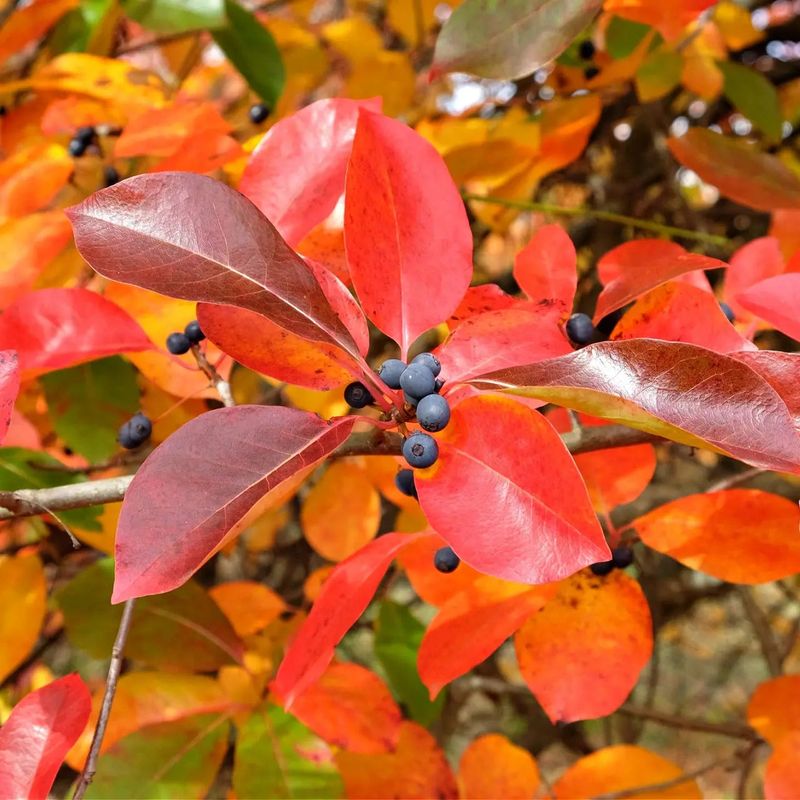
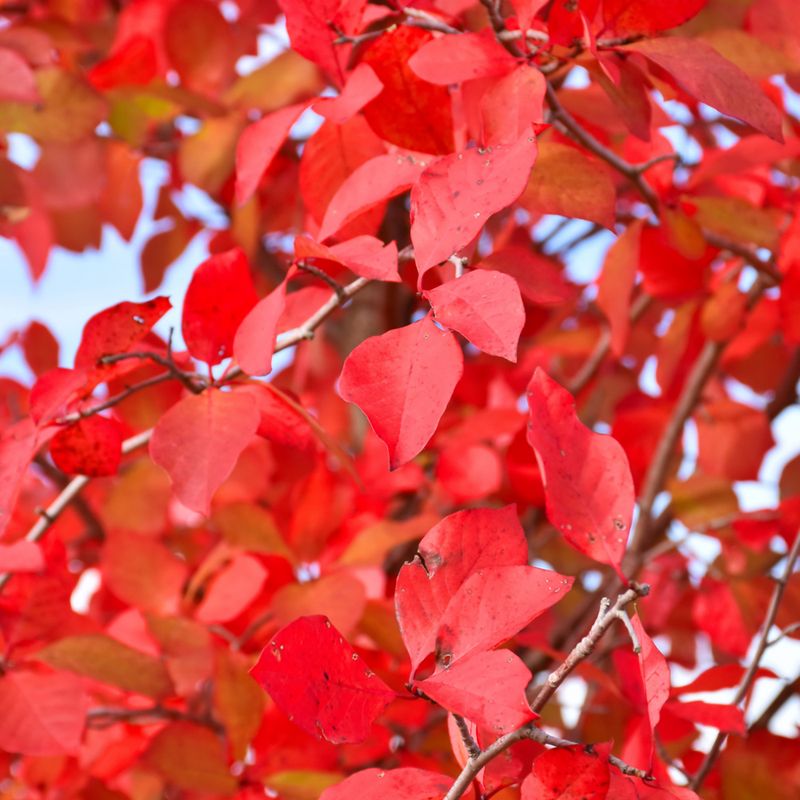
Leaves turn in patches rather than all at once, so a single tree can show green, gold, orange, and deep crimson on the same branch. Photographers love this stage because the colors overlap instead of blending into one flat tone.
The leaves themselves are simple ovals with smooth edges and a glossy finish. That shine catches low autumn light and makes the red look almost wet.
Color usually peaks between late September and mid October, depending on where you live in the state. Trees in sunnier spots color up earlier and brighter than those tucked under taller neighbors.
Fun bit of history: Nyssa comes from the name of a water nymph in Greek mythology, a nod to how happily this tree grows near wet ground.
Early settlers used the twisted, interlocking wood for tool handles and mallets because it resisted splitting. If you want fall color that arrives early and lingers, this is the tree that delivers both.
Where It Grows Wild Across The Garden State
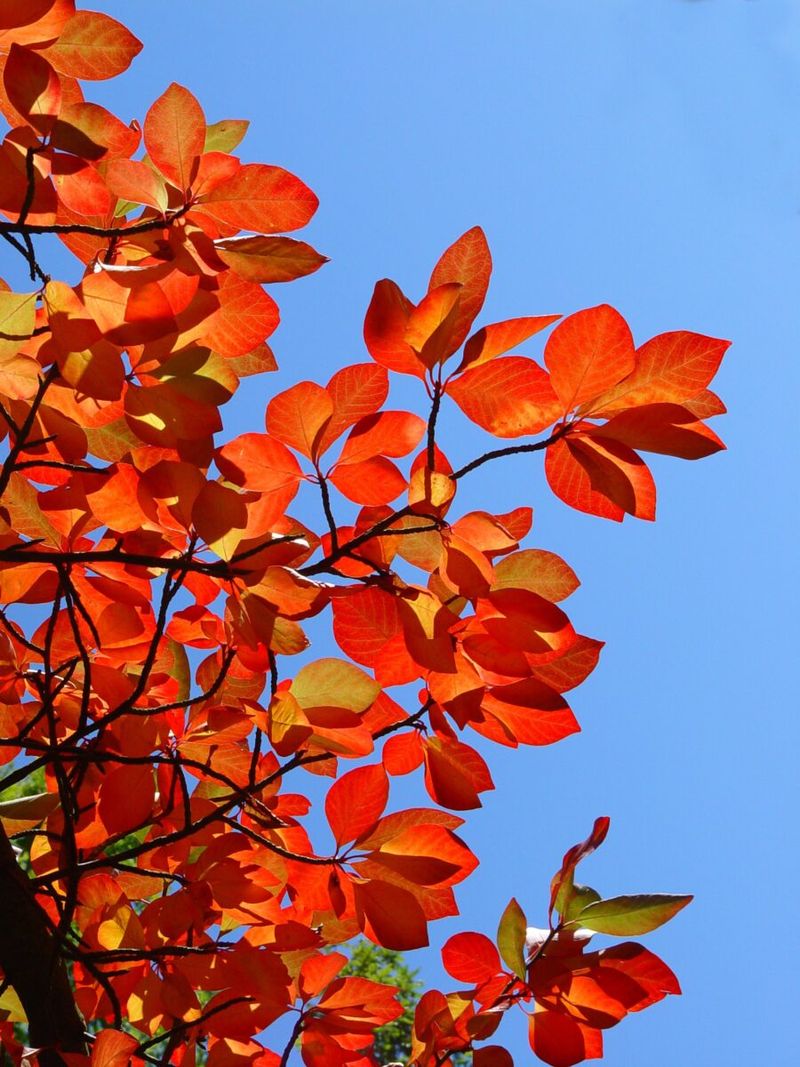
Long before anyone drew county lines, Black Gum was already rooted from the Pine Barrens to the ridges of Sussex County. Few native trees adapt to such a wide range of ground.
You will spot it standing in swampy lowlands with its feet in water for weeks at a time. Then you will find the same species clinging to a dry, rocky slope with barely any topsoil.
That flexibility is what makes it such a useful yard tree. Soggy corner where the downspout drains? It handles it. Sandy patch that bakes in July? Also fine.
Your New Jersey Garden Changes Every Week. Your Plan Should Too.
Gardening in New Jersey changes quickly throughout the season. Every Friday you’ll receive a simple weekly plan showing exactly what to plant, prune, fertilize, harvest, and protect so you never miss the right timing.
Coastal gardeners appreciate that Black Gum tolerates salt spray better than many hardwoods. Shore towns from Cape May up through Monmouth County can use it where maples struggle.
It grows naturally alongside red maple, sweetgum, American holly, and highbush blueberry. Copying those pairings in a landscape gives you a planting that looks like it belongs here, because it does.
Some of the oldest known trees in eastern North America are Black Gums, with individual specimens reported to live for centuries. Their slow, steady growth and rot-resistant heartwood help them stay standing that long.
In the wild they often grow with a straight central trunk and horizontal branches that angle out at sharp right angles. That layered silhouette shows up beautifully once the leaves drop.
Look for them along the Delaware Water Gap, the Pinelands, and plenty of forgotten woodlots in between.
Why Pollinators And Birds Line Up For It
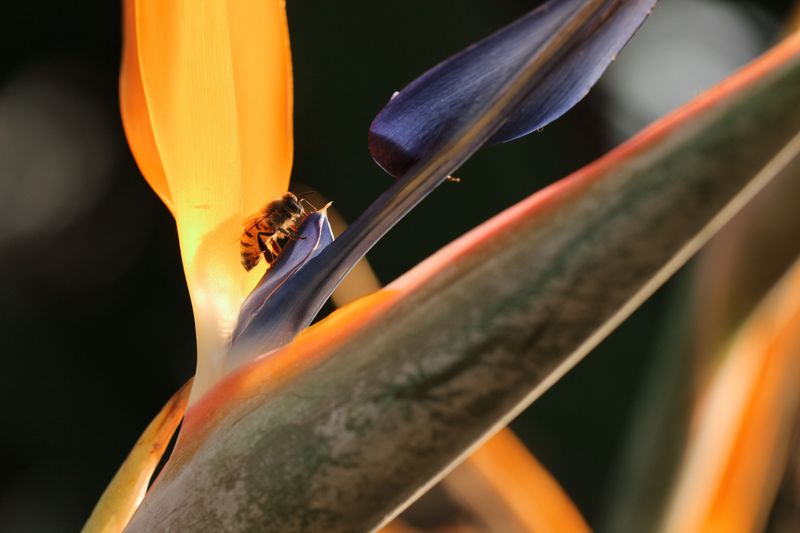
Down south, beekeepers prize a distinct honey from a related tupelo species, though that’s a different tree from the one in your yard. In late spring, tiny greenish flowers cover the branches and hum with activity.
The blossoms are easy to miss from the ground. Bees, however, find them instantly, and Black Gum ranks among the better native nectar sources in the region.
By early fall, female trees carry clusters of small dark blue fruits on bright red stems. The color contrast alone is worth a look, but the fruit does real work.
Robins, thrushes, woodpeckers, and wild turkeys feed on the berries heavily in September and October. Foxes and raccoons clean up whatever drops.
Because the fruit ripens early, it fuels birds right when migration is getting underway. That timing makes the tree more valuable than its modest fruit size suggests.
Older trunks tend to hollow out as heartwood softens, and those cavities become homes. Owls, squirrels, and wild bee colonies move in, which is part of why hollow tupelos were once called bee gums.
Caterpillars of several native moths feed on the foliage, and those caterpillars feed baby songbirds. It is a small ecological cycle that starts with one tree.
If you want fruit, plant more than one tree, since most Black Gums are either male or female. A pair or a small grove improves your odds considerably. Wildlife value plus early scarlet leaves is a rare combination worth planting for.
Picking The Right Spot Before You Dig
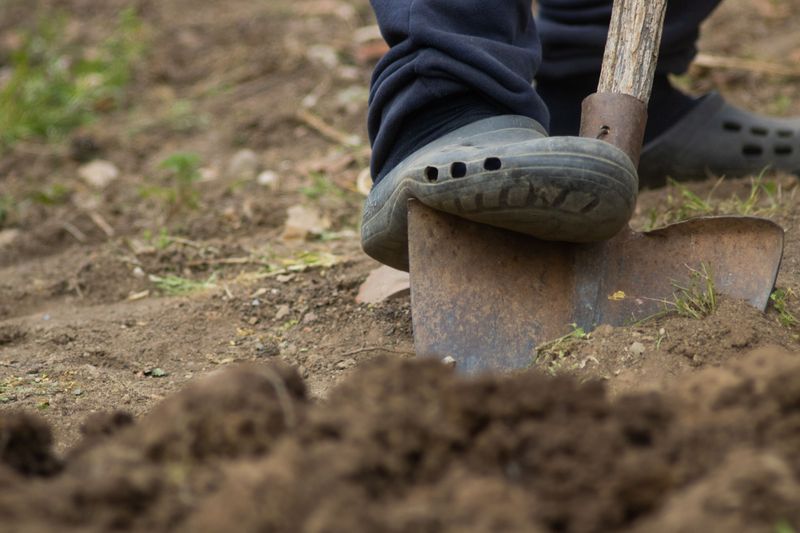
Here is the one catch with Black Gum: it has a deep taproot and strong opinions about being moved. Get the location right the first time and you save yourself a lot of grief.
Full sun produces the boldest red. Partial shade works, but expect softer oranges and a slower color change.
Give it room. A mature tree reaches 30 to 50 feet tall and 20 to 30 feet wide, sometimes more on good ground, so keep it clear of the house and power lines.
Acidic soil suits it best, which happens to describe much of New Jersey already. Heavy alkaline ground can cause yellowing leaves, so a quick soil test is money well spent.
Wet spots are fair game. Rain gardens, low swales, and pond edges all suit this species, though it will not complain about average garden soil either.
Buy container-grown or balled-and-burlapped stock and plant in spring if possible. Fall planting can work in early September while soil is still warm, giving roots time to settle before frost.
Dig the hole twice as wide as the root ball but no deeper. Set the trunk flare slightly above grade so the tree does not sink and struggle to establish.
Water deeply once a week for the first two seasons. After that, an established Black Gum handles dry stretches on its own. Skip the heavy pruning at planting time. Let the tree keep its branches and build energy.
Low-Fuss Care Through The Seasons
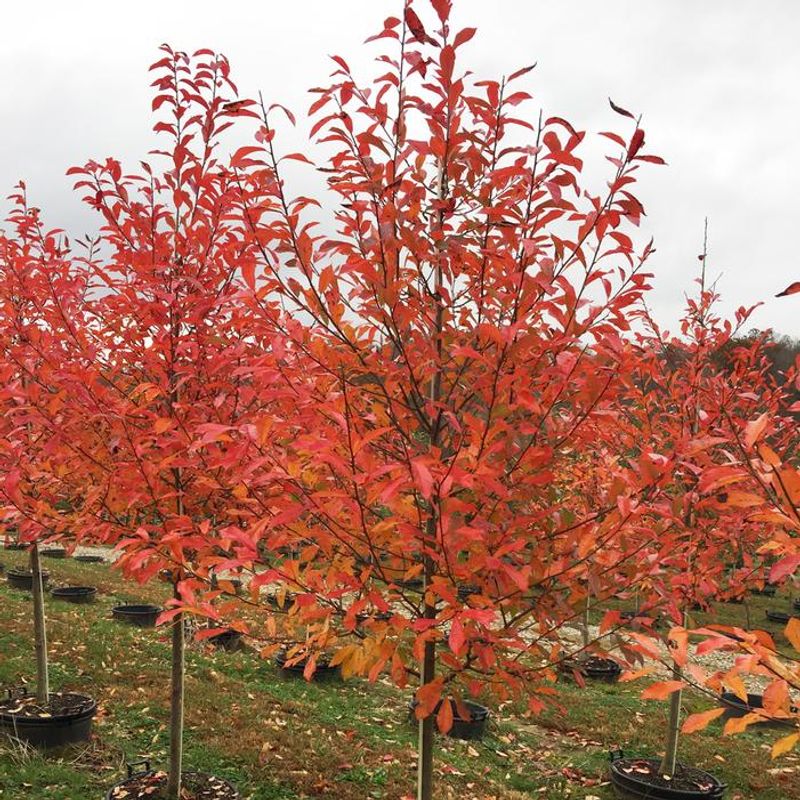
Once settled in, Black Gum asks for very little. That versatility is why it shows up more often in landscape plans these days.
Mulch is the biggest favor you can do for it. Spread two to three inches of shredded bark in a wide ring, keeping it a few inches back from the trunk.
Fertilizer is rarely needed in decent soil. If growth seems sluggish, a light application of a balanced slow-release product in early spring is plenty.
Prune in late winter while the tree is resting. Remove crossing branches, damaged wood, and any narrow crotches that could split later.
The natural form is pyramidal when young and more rounded or irregular with age. Resist the urge to shape it heavily, because the quirky branching is the charm.
Pests generally leave it alone. Leaf spot can show up during wet summers, though it mostly affects looks rather than health, and raking fallen leaves reduces it.
Deer browse young saplings, so a wire cage or tree tube for the first few years is smart insurance in most New Jersey towns.
Fallen fruit can stain a patio or walkway, which argues for placing female trees over lawn or mulch instead of pavement. Birds usually handle cleanup anyway.
Growth runs about one to two feet a year, which is moderate. Patience pays, since these trees settle in for the long haul and often outlive the people who plant them.
Standout Varieties And Smart Plant Partners
Nurseries have been busy with this species, and the selections are well-regarded, though availability can vary by location. If you want reliable color and a tidy shape, a named cultivar is the easy route.
Wildfire pushes out bright red new growth each spring, giving you two color seasons instead of one. Green Gable holds an upright, tidy outline with strong red fall color.
Afterburner earns its name with intense scarlet and a uniform habit that suits street plantings. Forum and Red Rage are also worth asking about, though not every garden center carries them, so calling ahead saves a wasted trip.
Straight species trees grown from regional seed are still a fine choice, especially for naturalized areas. They bring more genetic variety, which helps wildlife over the long run.
For companions, think about what blooms or colors at a different moment. Winterberry holly lights up with red fruit after the tupelo leaves drop, extending the show into December.
Little bluestem and switchgrass echo the warm tones at ground level. Serviceberry adds spring flowers and its own orange fall display.
Underplanting with native ferns, foamflower, or wild ginger softens the base without competing hard for water. Skip anything that demands constant tilling near those sensitive roots.
Placement tip: put your Black Gum where you will see it from a kitchen window or the driveway.
The early scarlet arrives quietly, and you want a front-row seat when it does. One tree, decades of September surprises. That’s a long-term reward worth planting for.