What It Means When A Bobcat Crosses Your Florida Yard
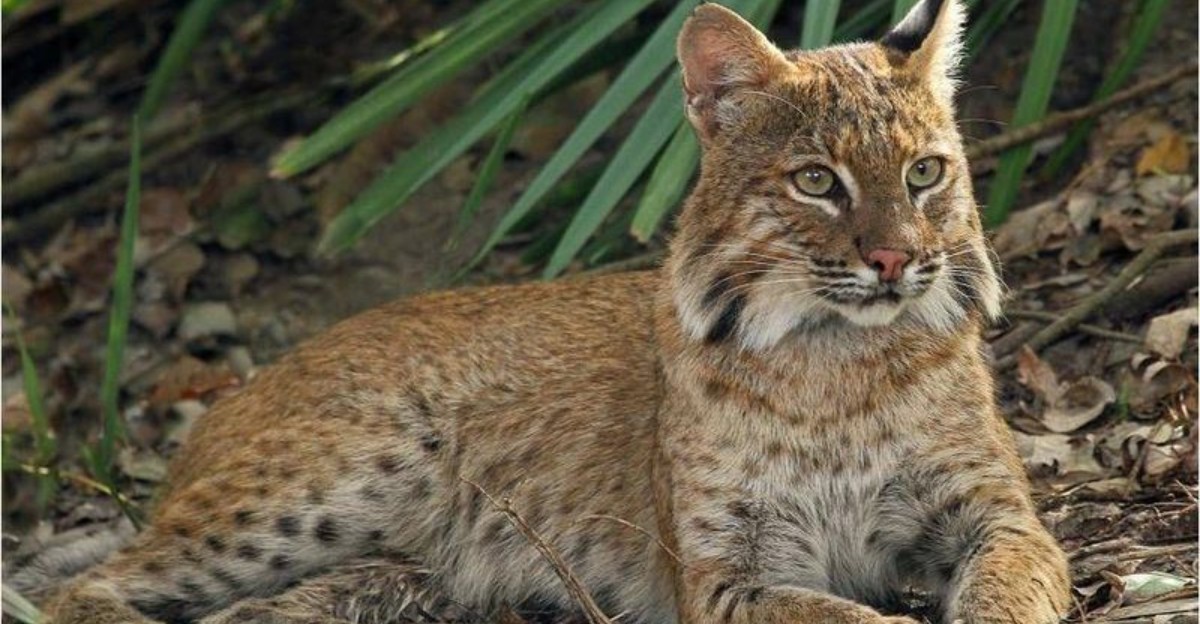
Caught it on the doorbell camera at 2 a.m. A shape moving low and fast across the yard, gone before the clip even finished loading.
Rewind it, zoom in, and there’s no mistaking what just walked past the swing set while everyone was asleep.
Florida yards back up to more wild space than people think, and bobcats use that space more than most homeowners ever realize. A yard sitting in a bobcat’s path usually isn’t random.
It means something about that yard, food source, cover, a shortcut between two better patches of habitat, checked enough boxes to be worth crossing.
One appearance on camera doesn’t mean much by itself. A pattern of them tells a very different story, and that difference decides what actually needs to happen next.
1. Your Yard May Be A Shortcut, Not A Destination
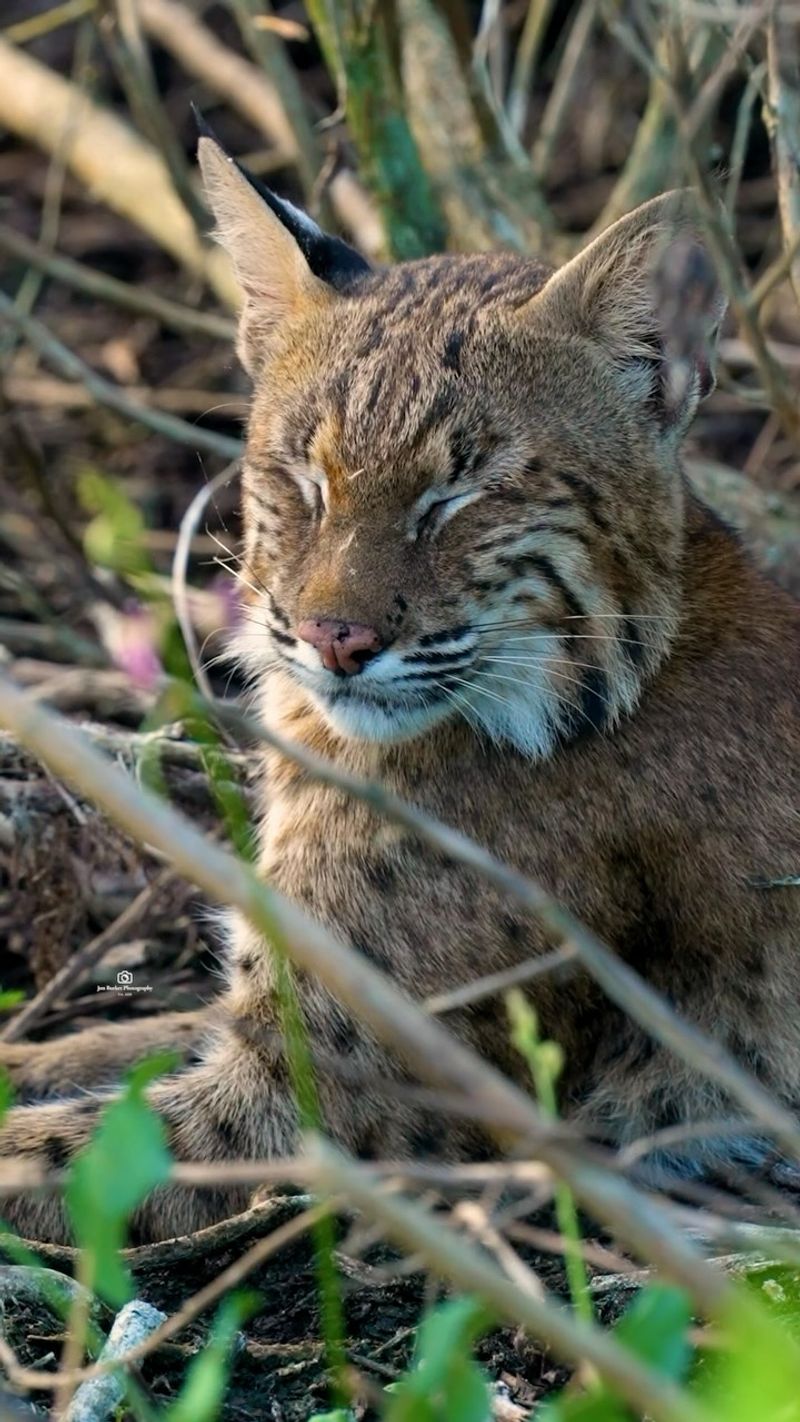
Picture a commuter cutting through a parking lot to save two minutes. That is roughly what your lawn looks like to a bobcat with somewhere to be.
Bobcats spend much of their time moving through their home ranges, checking familiar routes and searching for prey. A cat crossing your yard may simply be traveling between better hunting or resting areas.
Stopping in one spot for long is not really their style.
Bobcats can use surprisingly large home ranges, although the size varies with sex, habitat, food availability, and development.
In suburban Florida, a neighborhood can easily fall within the home range of a cat that spends much of its time moving between patches of suitable habitat.
The practical takeaway is comforting. A cat crossing your grass at a steady walk, ears forward, not pausing to sniff around your patio, is almost certainly just passing through on the way to better hunting ground.
Watch the body language instead of panicking. A relaxed, purposeful stride signals travel, while slow circling near a shed or coop signals interest in something on your property.
Most homeowners who report a sighting see the same animal once or twice a season, then nothing for months. Your yard was a hallway, not a hotel room.
2. A Bobcat Sighting Can Reveal A Hidden Wildlife Highway
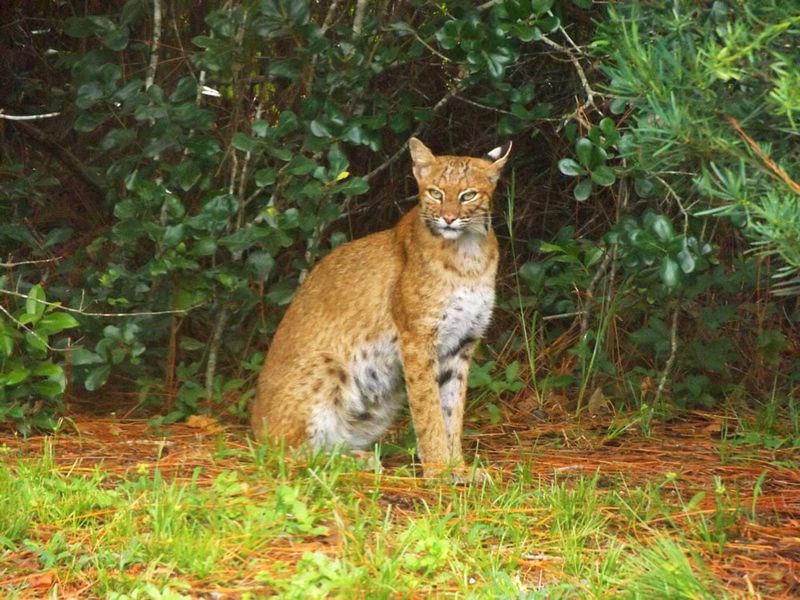
Every neighborhood has invisible roads, and animals learned them long before the subdivision showed up. A bobcat stepping into view is basically a map pin dropped on one of those routes.
Drainage canals, retention ponds, powerline easements, greenbelts, and strips of woods behind fences all stitch together into corridors.
Bobcats are capable climbers and swimmers, so canals, fences, and other neighborhood barriers do not necessarily stop them from moving between patches of habitat.
They also leave signposts for each other. Scratch marks on tree trunks, scent marks, and scat placed on trail edges tell other cats who has been through recently and when.
Once you know the corridor exists, you start noticing the rest of the traffic. Raccoons, opossums, armadillos, and rabbits usually share the same shaded edges, because cover is safety for everybody.
Homeowners who install a simple trail camera along a back fence are often amazed. The parade that passes between midnight and sunrise can include half a dozen species most neighbors have no idea are there.
Your Florida Garden Changes Every Week. Your Plan Should Too.
Gardening in Florida changes quickly throughout the season. Every Friday you’ll receive a simple weekly plan showing exactly what to plant, prune, fertilize, harvest, and protect so you never miss the right timing.
Rather than viewing it as a problem, treat the corridor as a sign your area still has functioning green space. Then adjust the small stuff, like where you store feed and when the dog goes out, so your household and the highway do not overlap at awkward moments.
3. Rabbits, Rats, And Squirrels Can Put Your Yard On The Route
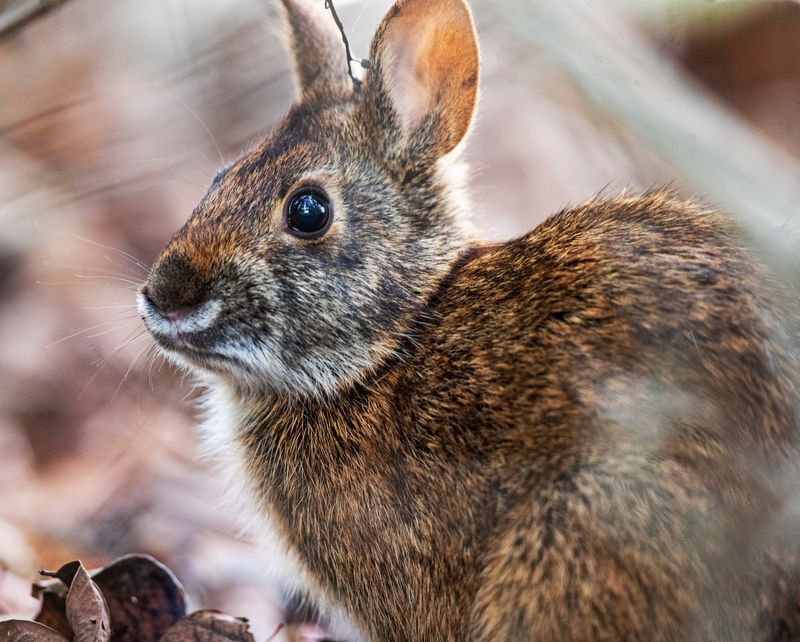
Follow the food and you will understand the visit. Bobcats are opportunistic hunters, and their Florida prey can include rabbits, rodents, squirrels, birds, and other small animals.
In cooler months they add ground-feeding birds such as robins, catbirds, and towhees. That seasonal shift explains why sightings sometimes cluster in winter, when flocks are scratching around under shrubs.
Here is the part homeowners often miss. You may not be feeding the cat, but you might be feeding its groceries.
Spilled birdseed under a feeder draws rodents by the dozen. Fallen citrus, unsecured compost, uncovered trash, and pet bowls left on the lanai do the same job.
A yard with a reliable rodent buffet becomes a reliable stop on the patrol route.
Cleaning up the bottom of the food chain is the most effective adjustment you can make. Use seed catch trays, sweep beneath feeders weekly, pick up dropped fruit, and store birdseed and pet food in containers with locking lids.
There is an upside worth appreciating too. Bobcats are natural predators, and their presence is one small part of the food web that helps keep populations of rabbits, rodents, and other prey animals in check.
That does not make a bobcat a substitute for pest control, but it is one reason a passing cat is not automatically a problem.
4. Thick Shrubs Can Give A Passing Bobcat The Cover It Likes
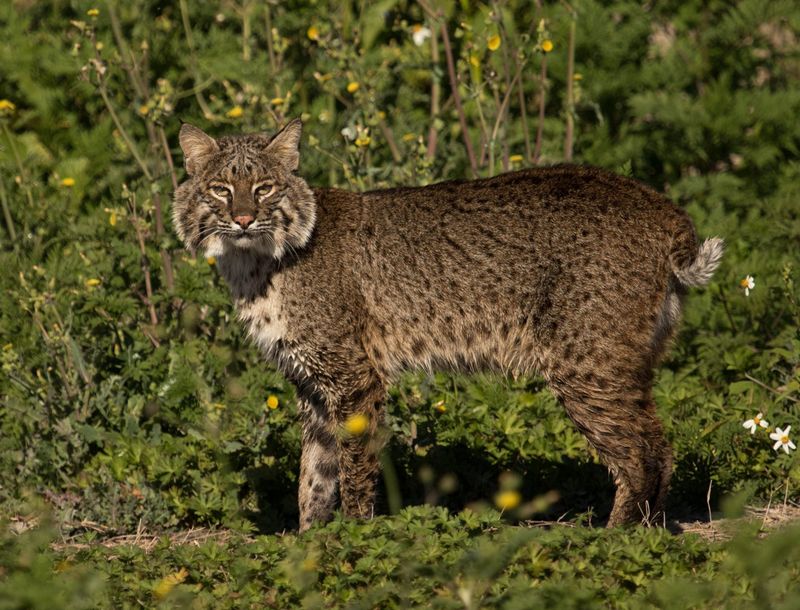
Bobcats often use cover when moving through a landscape. Dense vegetation, brush piles, fallen logs, and the edges of wooded areas can give them places to travel or rest without being exposed.
Across Florida, dense saw palmetto patches, thick shrub thickets, hollow logs, and brush piles serve as resting and denning spots.
In a neighborhood, the equivalent is an overgrown hedge, a stack of firewood, a forgotten pile of yard debris, or the crawl space under a raised deck.
None of that means you must strip your landscaping bare. Native plants matter, and shade is precious in the Florida heat.
Aim for visibility rather than emptiness. Trim the lower branches of hedges so you can see through the bottom 12 to 18 inches, break up long unbroken thickets, and keep a clear sightline between your back door and the fence.
Stack firewood off the ground on a rack instead of directly on soil. Haul away palm frond piles after storm season rather than letting them settle into a cozy shelter.
Screen off the gaps beneath sheds, decks, and mobile home skirting with sturdy hardware cloth buried a few inches down. Do the check in daylight, and knock first, because raccoons and armadillos love those same pockets.
Open, tidy edges tell a traveling cat to keep walking instead of settling in.
5. A Daytime Visit Is Not Automatically A Red Flag
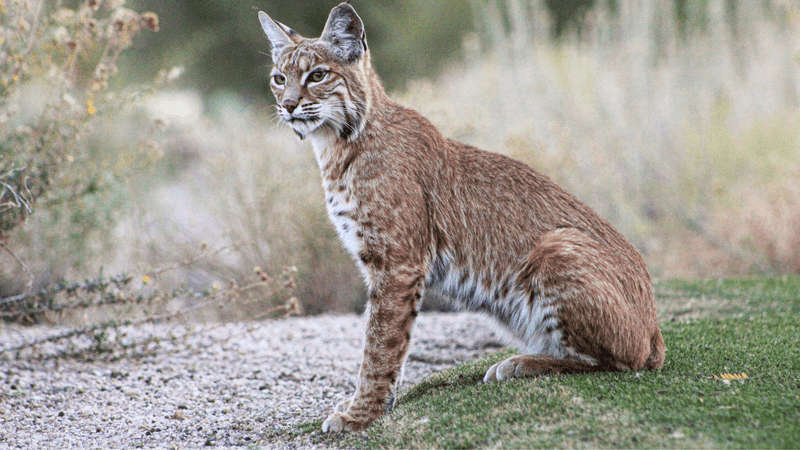
Somewhere along the way, people picked up the idea that a wild animal out in daylight must be unwell. With bobcats, that rule of thumb simply does not hold.
Bobcats are active at different times of day, and daytime sightings are not automatically a sign that something is wrong. Their activity can shift with prey availability, weather, season, and human activity around them.
Prey drives the clock as much as the sun does. If squirrels are busy at noon, or a cold snap has rabbits feeding at odd hours, a bobcat will happily work the day shift.
What actually deserves attention is behavior, not timing.
Staggering, circling aimlessly, obvious disorientation, heavy drooling, or a total lack of concern when you clap and shout are the signals worth reporting to the Florida Fish and Wildlife Conservation Commission.
A healthy cat looks crisp and aware. It notices you, holds a moment, then leaves without a fuss.
Females raising kittens also hunt more during daylight, because hungry youngsters do not care about schedules. Spring and early summer sightings often trace back to a busy mother, not a sick animal.
So enjoy the rare look, snap a photo from behind glass, and let the cat handle its own errands.
6. Dawn And Dusk Bring Bobcat Traffic Closer To Home
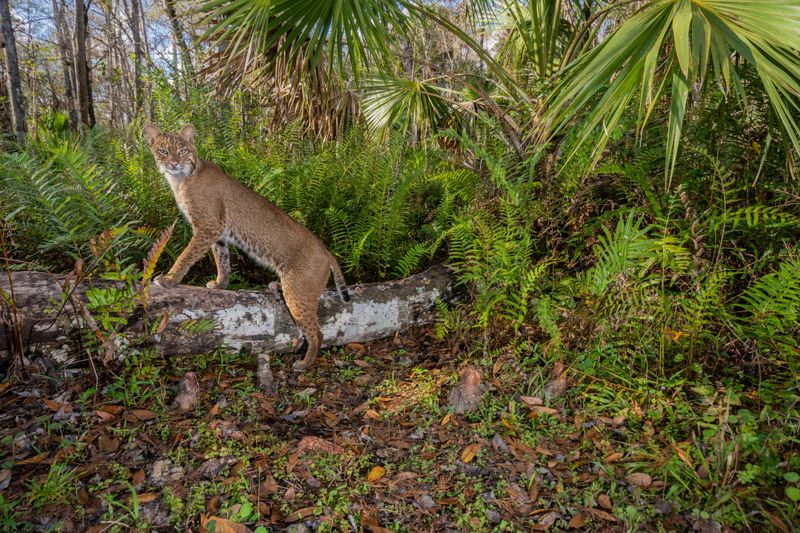
Ask anyone who has spotted one and the story usually starts the same way: early morning, or that soft hour right before the porch lights flick on.
Bobcats are often most active around dawn and dusk, although they can move and hunt at any hour. In neighborhoods, their activity may also shift toward nighttime when human activity and traffic are highest during the day.
Low light gives them an edge. Their eyes gather far more of it than ours do, and prey animals are moving between shelter and feeding areas at exactly those moments.
City living shifts the schedule a bit. In busier neighborhoods, cats often push their travel later into the night to sidestep traffic, dogs, and people.
Use that rhythm to your advantage. Bring small pets inside before sunset, wait until full daylight for the first backyard trip, and keep a leash on during early walks near canals or wooded lots.
Motion-sensor lights near doorways and coops are a cheap, quiet upgrade. Sudden brightness rarely harms anything but reliably encourages a cautious animal to reroute.
A flashlight sweep of the yard before letting the dog out takes ten seconds. That small habit prevents nearly every awkward face-to-face meeting people worry about.
7. Backyard Chickens And Small Pets Can Change The Stakes
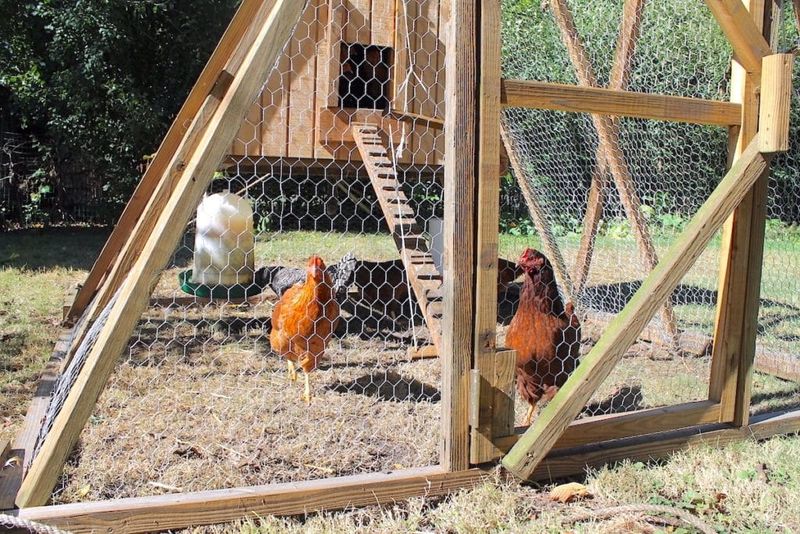
Chickens change the math. A quiet flock in an open-topped run is essentially a dinner bell for anything with claws.
Research suggests pets are not a regular part of the bobcat diet, but unprotected small animals are a different story. Rabbits in outdoor hutches, backyard hens, kittens, and toy-breed dogs left alone in the yard all carry real risk, especially during twilight hours.
The fix is structural rather than complicated. Coops and hutches need a solid roof, since a fence with an open top is barely an obstacle for a cat that climbs like a pro.
Swap chicken wire for hardware cloth with quarter-inch or half-inch mesh, and bury an apron of it 12 inches out along the base. Latches should be the kind raccoons cannot flip, because raccoons will test them nightly.
Lock birds inside the coop before dusk, every evening, without exceptions for busy days. Most losses happen on the one night someone forgot.
For dogs and cats, supervision beats fencing. A cat patio, a leash, or simply standing outside with your terrier handles the situation better than any barrier.
Feed pets indoors as well. A bowl of kibble on the lanai invites the whole neighborhood, and the cat follows the crowd.
8. One Visit Does Not Mean A Bobcat Has Moved In
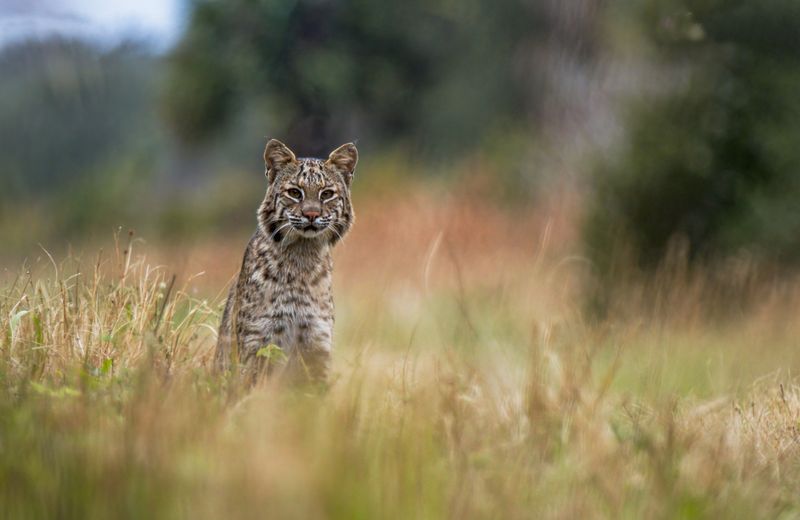
Panic usually arrives before perspective. Neighbors post the photo, someone mentions traps, and suddenly a single sighting becomes a crisis.
Slow down. Bobcats are solitary and territorial, and they rarely settle into one spot for long, resting only two or three hours at a site before moving along.
A cat in your yard likely holds a territory nearby, which it has probably occupied for a while without anyone noticing. Females tend to keep exclusive ranges, while males overlap with several.
Territory ownership is actually good news for you. An established resident keeps other cats out, and it already knows to avoid the loud house with the barking dog.
Removing one bobcat does not necessarily eliminate the conditions that attracted it in the first place. If food, cover, and connected habitat remain available, another bobcat may eventually pass through the same area.
You end up with an unfamiliar cat that has not yet learned your neighborhood’s boundaries.
Keep a simple log instead. Note the date, time, direction of travel, and behavior, and after a month you will see a pattern rather than a threat.
A bobcat can pass through the same neighborhood repeatedly without most residents ever noticing. Keeping a simple record of sightings can reveal whether you are seeing an occasional traveler or a cat that regularly uses the area.
9. Remove Easy Attractions And Give The Bobcat Space To Move Along
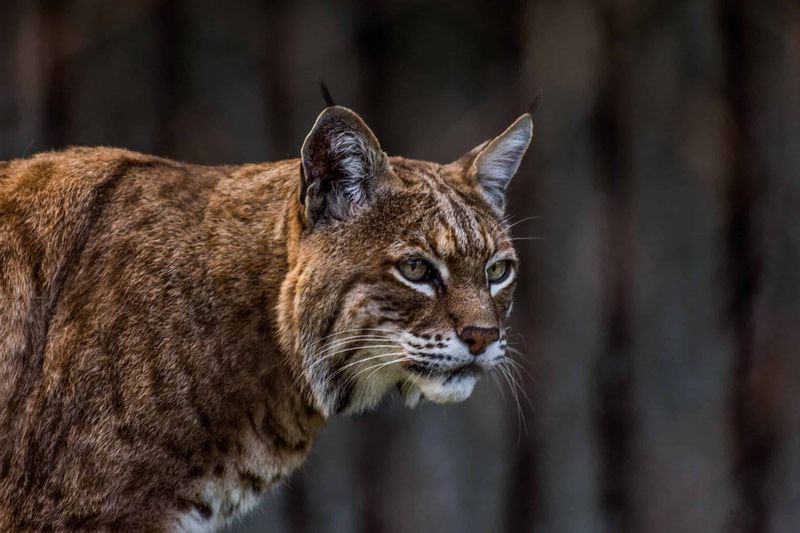
Making your yard boring is the whole strategy. Boring yards get skipped.
Start with food. Secure garbage in bins with tight-fitting lids, store pet food and birdseed in sealed containers, clear fallen fruit, and skip the habit of leaving scraps outdoors for wildlife.
Feeding a bobcat, even indirectly, can create problems. Animals that begin associating people or homes with food may become less wary of people, increasing the chance of repeated encounters and conflict.
Next, handle shelter. Clear brush piles, thin overgrown corners, and block access under decks and sheds so there is no comfortable place to tuck in for a nap.
Add a little unpredictability. Motion-activated lights, sprinklers that trigger on movement, wind chimes, and a radio on the porch all disturb the quiet routine a cautious cat prefers.
If a bobcat is standing in your yard, you can encourage it to leave by hazing it from a safe distance. Clap, shout firmly, bang a pot, wave your arms, or use a garden hose, then let it leave along an open escape route.
Never corner an animal or approach for a photo. Give it a clear exit and it will take it.
Report injured or unusually bold cats to the Florida Fish and Wildlife Conservation Commission rather than handling the situation yourself.