Hummingbird Predators And Pests To Keep Away From Michigan Feeders
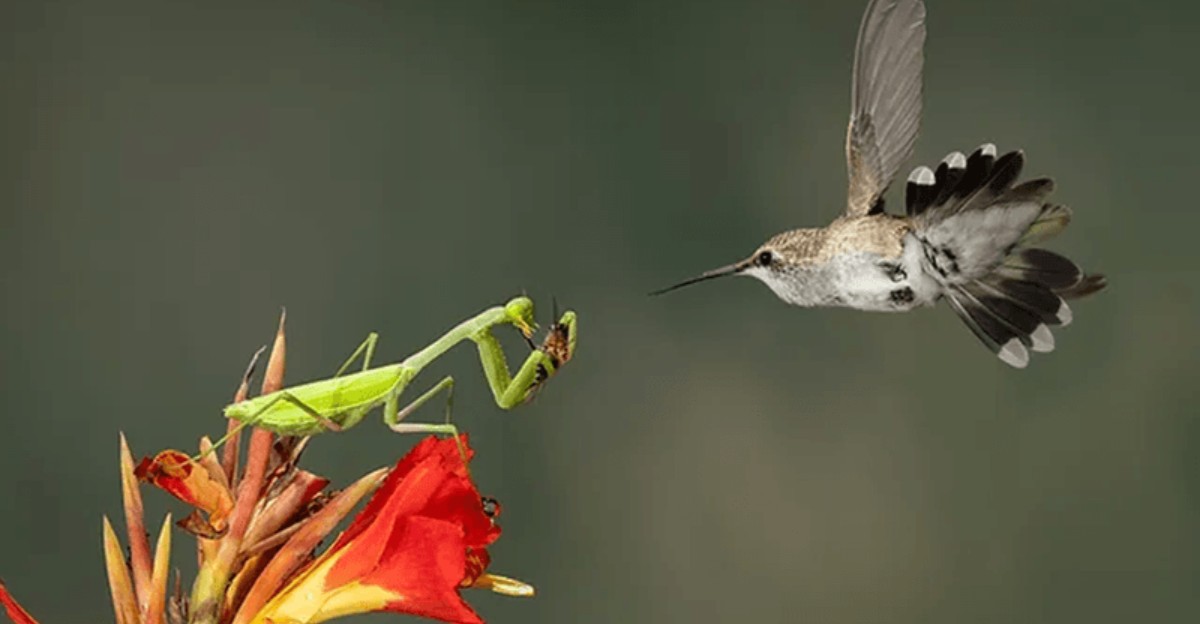
Hummingbirds face more threats around a Michigan feeder than most people expect, and several common yard visitors pose a real risk to these small, fast-moving birds.
Outdoor cats are one of the most significant dangers, often able to catch hummingbirds off guard while they’re feeding or perched nearby.
Spiders building webs close to feeders can also trap hummingbirds, while certain insects competing aggressively for nectar can discourage birds from returning to a feeding spot altogether.
Positioning feeders thoughtfully, away from dense cover where predators can hide, along with regular cleaning to discourage unwanted insects, goes a long way toward keeping hummingbirds safe.
A little awareness of these common threats helps Michigan yards remain a welcoming, low-risk stop for hummingbirds passing through.
1. Keep Outdoor Cats Away From Feeders
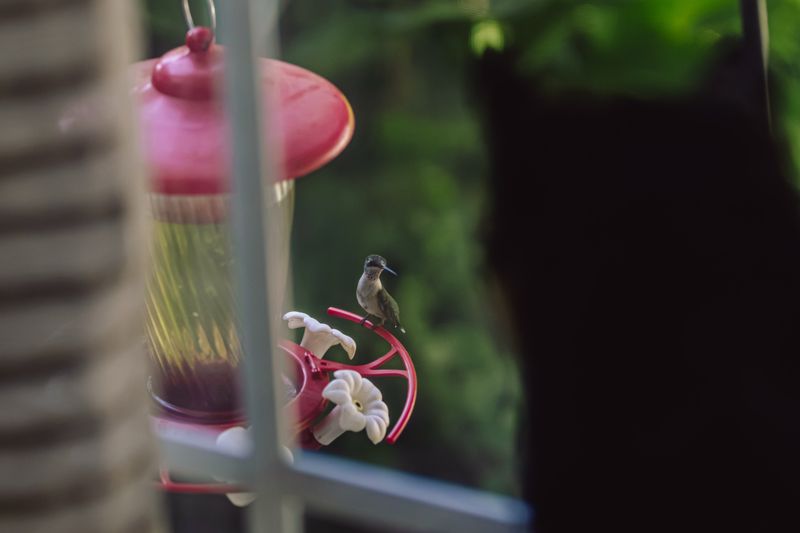
Few backyard visitors cause more trouble for hummingbirds than free-roaming cats. Even a well-fed house cat has a natural urge to hunt, and a hovering hummingbird makes a tempting target.
Cats are patient hunters. They love to crouch behind bushes, flower pots, or fences, waiting silently until a bird drops its guard.
Because hummingbirds often hover in one spot while feeding, they can be surprisingly easy for a hidden cat to grab.
The best defense is smart feeder placement. Hang your feeder out in the open, away from low walls, dense shrubs, or anything a cat could use as a launch point.
A good rule is to keep feeders at least five feet off the ground and several feet from spots where a cat could hide and pounce.
You can also make your yard less friendly to roaming cats. Clearing away tall grass and clutter near the feeder removes their cover.
Some gardeners add motion-activated sprinklers that give surprise splashes to any prowling visitor.
If you own a cat, keeping it indoors during peak feeding hours in early morning and evening protects the birds and your pet at the same time. Indoor cats also live longer, healthier lives.
Talking with neighbors about their pets can help too, since many cats wander far from home. A little planning goes a long way toward giving your hummingbirds a calm, worry-free place to sip.
With open placement and fewer hiding spots, your feathered guests can feed without constant fear lurking nearby.
2. Watch For Praying Mantises
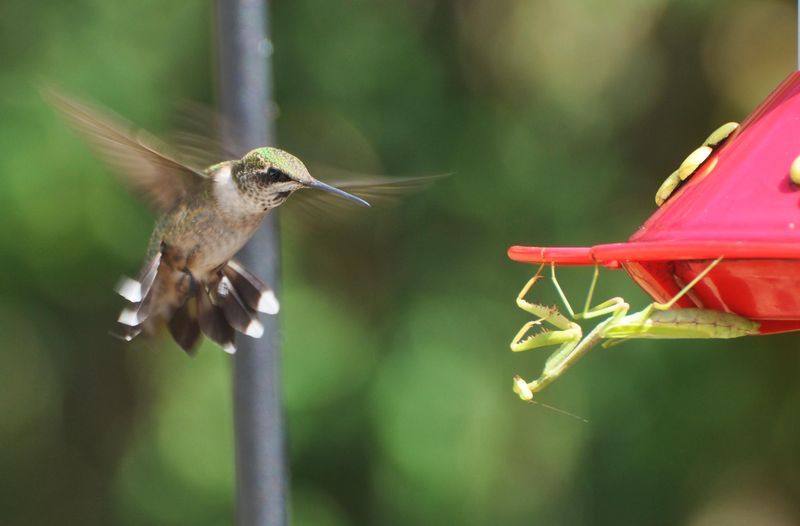
It sounds hard to believe, but a large praying mantis can actually ambush a hummingbird. These insects grow surprisingly big by late summer, and their strong front legs are built for grabbing prey.
Mantises are masters of disguise. They blend into leaves and stems, staying perfectly still until something small comes close.
A feeder port is a favorite lookout, since it draws birds and other insects right within reach.
In Michigan, you’re most likely to spot these hunters in August and September, when they reach full size. A mantis will sometimes perch right on top of a feeder or cling to the wire holding it up, waiting for its next meal to arrive.
Checking your feeder each day makes a real difference. If you notice a mantis camped nearby, gently move it to another part of the garden where it can hunt insects instead of visiting birds.
Your Michigan Garden Changes Every Week. Your Plan Should Too.
Gardening in Michigan changes quickly throughout the season. Every Friday you’ll receive a simple weekly plan showing exactly what to plant, prune, fertilize, harvest, and protect so you never miss the right timing.
Wear gloves if you’d rather not touch it, or use a stick to coax it onto a leaf. Trimming back plants that touch or hang over the feeder removes the perches mantises love. Open space around the feeding station makes it harder for them to sneak up.
Mantises are helpful for controlling garden pests, so there’s no need to remove them from your yard entirely. Simply relocating the ones that linger near feeders keeps everyone happy.
With a quick daily glance, you can enjoy both your beneficial bugs and your buzzing hummingbird guests without conflict.
3. Keep Ants Out Of The Nectar
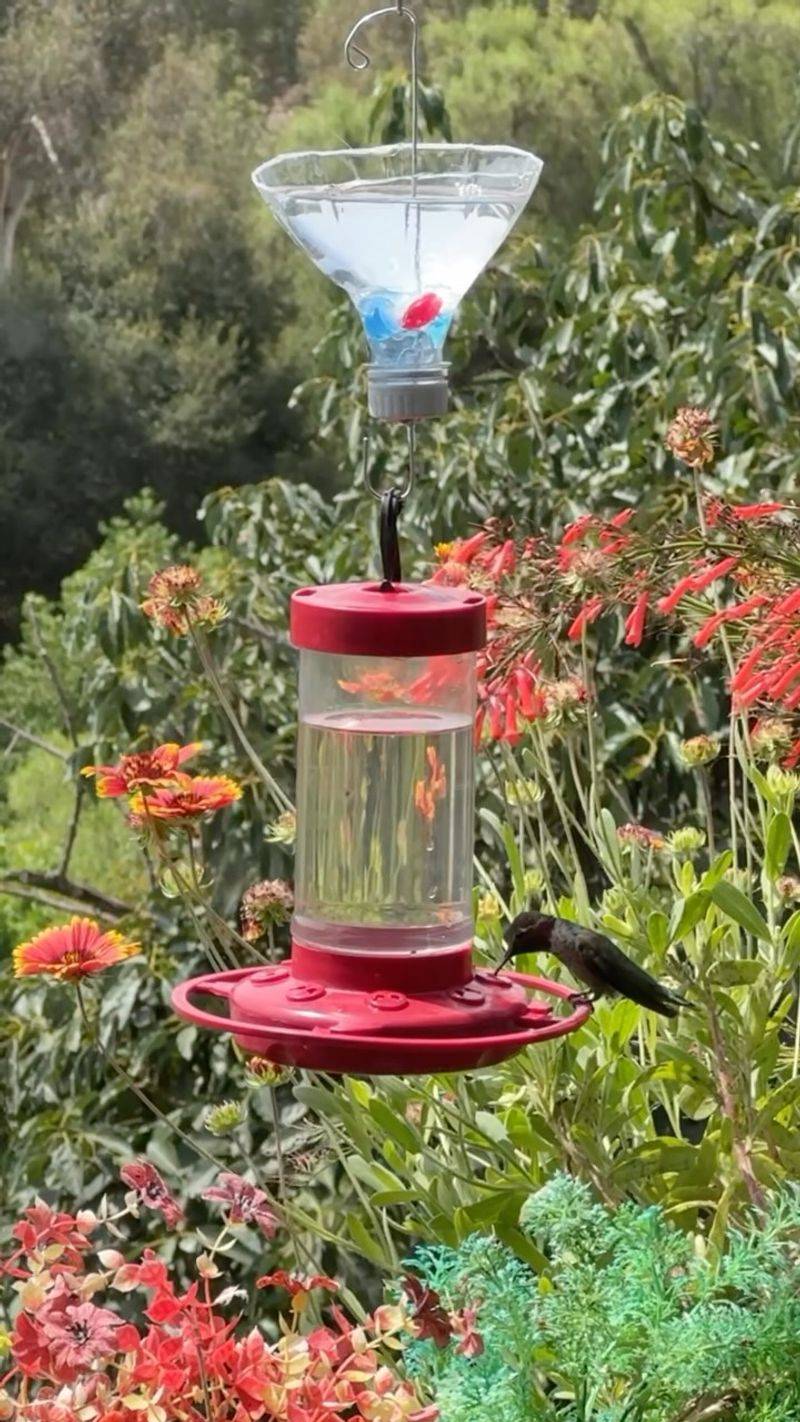
Ants have a serious sweet tooth, and your hummingbird feeder is basically a giant candy dish to them. Once one scout finds the sugary nectar, it leaves a scent trail, and soon a whole marching line follows.
The trouble goes beyond a few crawling bugs. Ants that fall into the nectar spoil it fast, leaving floating specks that hummingbirds find gross.
Birds often avoid a feeder that’s crawling with insects, no matter how fresh the sugar water is.
An ant moat is your best friend here. This simple cup sits above the feeder and holds a small amount of water.
Since ants can’t swim across, the water blocks them from reaching the nectar below. Many feeders come with a built-in moat, but you can buy or make one easily.
Keep the moat filled, especially during warm stretches when water evaporates quickly. Refilling it every day or two keeps the barrier working.
Where you hang the feeder matters too. Ants often climb down from tree branches or along fences, so a feeder swinging from an open pole gives them fewer paths to follow.
Wiping up spilled nectar helps as well. Drips down the sides act like an invitation, so a quick clean whenever you refill keeps the crowd away.
Avoid using sticky sprays or oils on the feeder, since these can harm hummingbirds if they touch the coated parts. A water moat is safe, cheap, and effective, making it the smartest way to keep ants out of the sweet stuff.
4. Watch For Wasps And Hornets
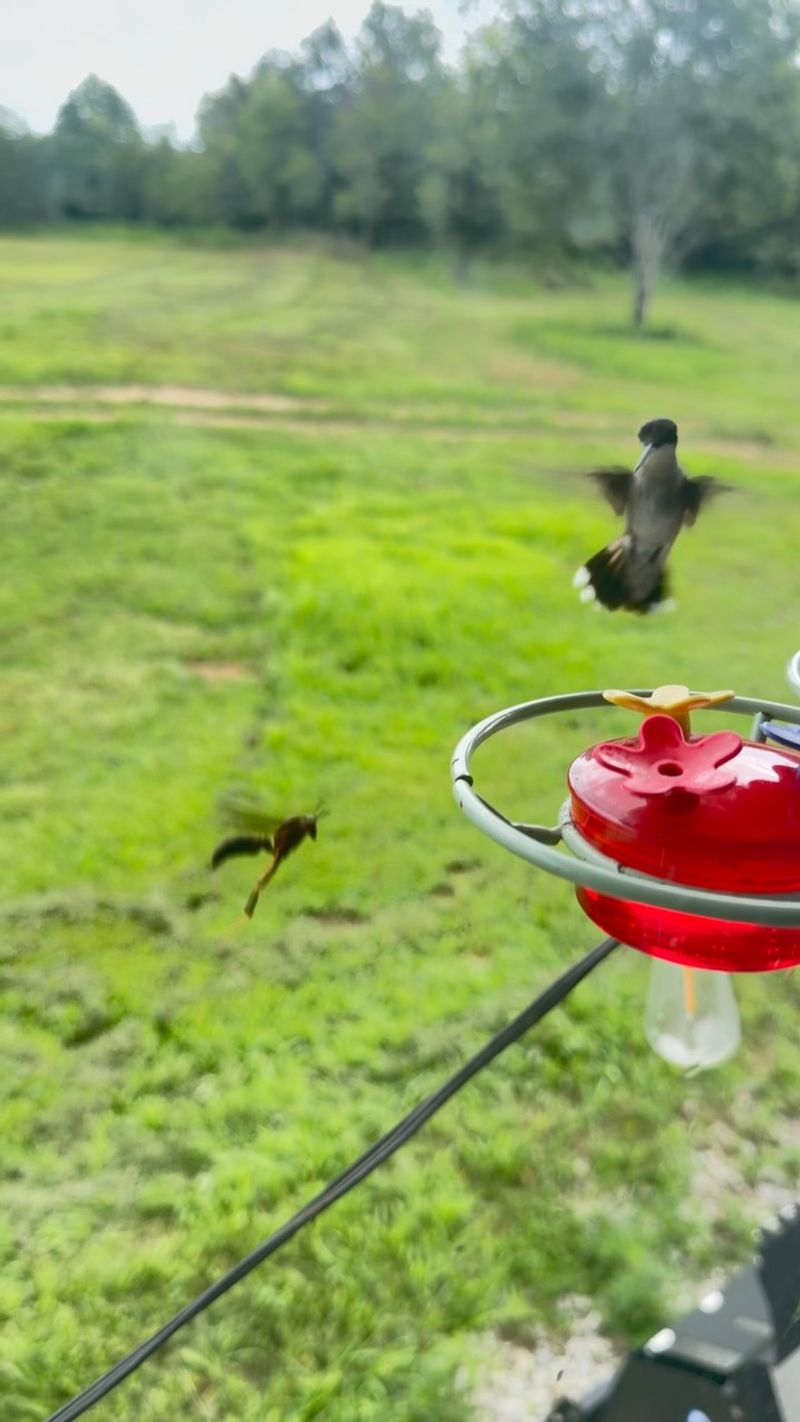
Sugary nectar smells just as tasty to wasps and hornets as it does to hummingbirds. When these stinging insects discover a feeder, they can swarm the ports and bully the birds away.
Hummingbirds are brave, but they’ll usually back off from a buzzing crowd. If wasps take over a feeder, your birds may stop visiting altogether and search for a calmer meal elsewhere.
One easy trick is choosing feeders with built-in bee guards. These little screens cover the ports and let a hummingbird’s long tongue reach the nectar while blocking the shorter mouthparts of wasps.
Feeders without yellow parts also help, since yellow tends to attract stinging insects.
Placement plays a big role too. Wasps often return to the same spot, so moving your feeder just a few feet can throw them off the trail.
Sometimes shifting it to a shadier location makes it less appealing to them.
Keeping the feeder clean and free of drips cuts down on the smell that draws wasps in the first place. Wiping the outside after each refill removes the sticky residue they follow.
Avoid swatting or spraying near the feeder, since that can stress your hummingbirds and put you at risk of stings. Patience and small adjustments work far better.
Avoid adding additional sugar-water sources, which can attract and concentrate wasps. Give the insects their own spot, and your hummingbirds can enjoy their meal in peace once again.
5. Keep Bees From Taking Over The Feeder
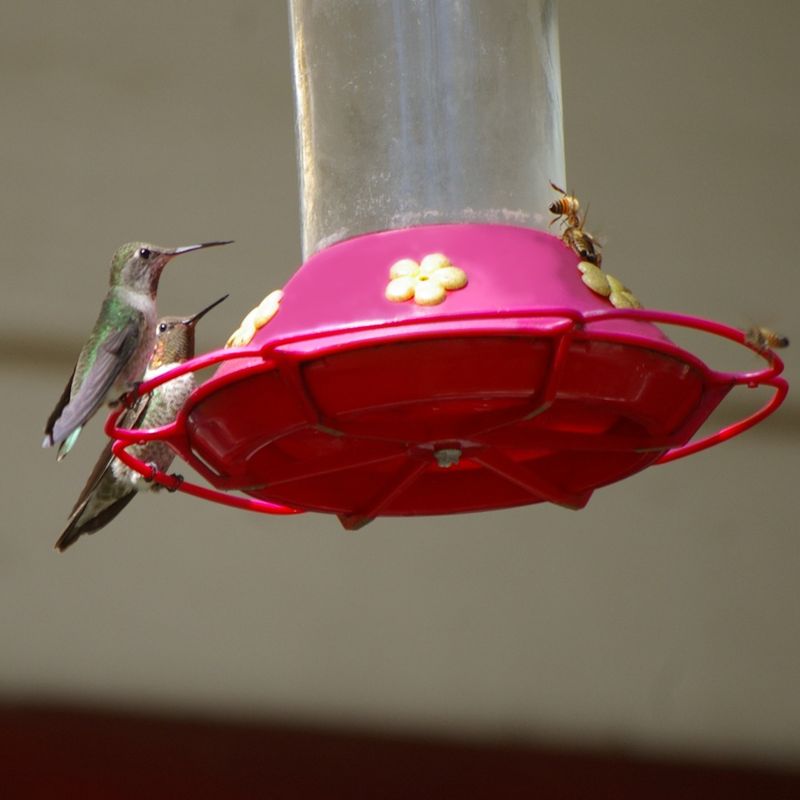
Bees mean well, but they can still crowd out your hummingbirds. Drawn by the sweet nectar, they gather around the ports and make it hard for birds to get a turn.
Unlike some pests, bees aren’t trying to cause harm. They’re simply searching for food, especially during dry spells when flowers are scarce. Understanding this makes it easier to solve the problem kindly.
Planting plenty of flowers is one of the best solutions. When your garden overflows with blooms like bee balm, salvia, and clover, bees have their own natural buffet and feel less need to crowd the feeder.
Everybody wins when there’s enough food to go around. Bee guards on the feeder ports help too. They let hummingbird tongues slip through while keeping bees from reaching the nectar.
Red feeders without yellow accents also attract fewer bees, since bees love bright yellow. Use the standard four-to-one water-to-sugar ratio for hummingbird nectar. Hummingbirds still enjoy it, while bees may find it less tempting than richer mixes.
Positioning matters as well. A feeder placed in partial shade often draws fewer bees, since they prefer warm, sunny spots.
Keep the outside of the feeder wiped clean, because sticky drips call bees in from far away. A quick rinse during each refill makes a real difference.
By offering flowers, adding guards, and keeping things tidy, you can share your yard with helpful pollinators while still giving hummingbirds the room they need to feed comfortably.
6. Place Feeders Where Birds Can See Danger
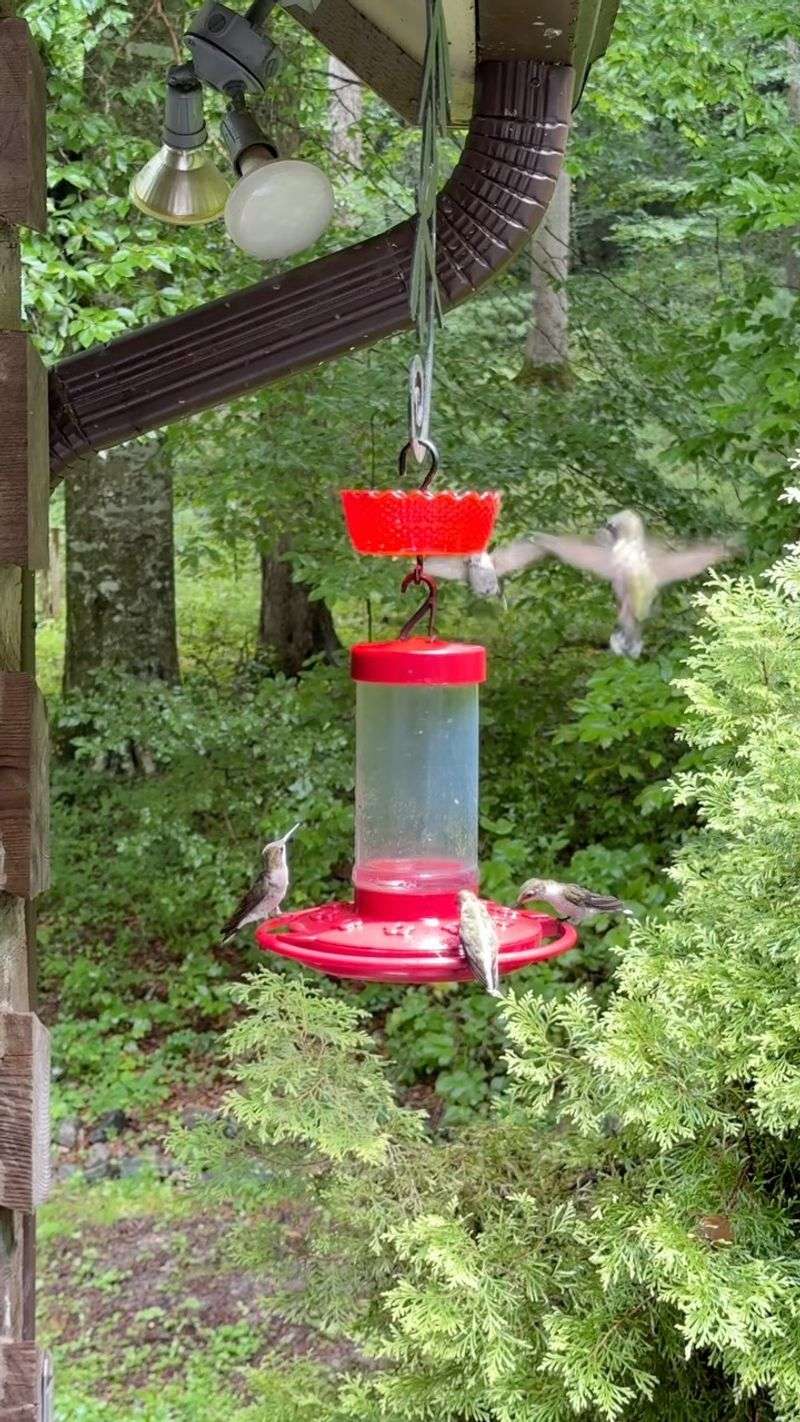
Where you hang a feeder can be the difference between a safe meal and a scary surprise. Hummingbirds rely on quick reflexes and a clear view to stay out of trouble.
Tucking a feeder deep inside thick bushes might seem cozy, but it actually creates hiding spots for cats, larger birds, and other hunters. A hummingbird can’t watch for danger if leaves and branches block its view in every direction.
The smarter choice is an open spot with a clear line of sight. When birds can spot movement from far away, they have time to zip off before anything gets close. Open placement gives them the freedom to feed with confidence.
At the same time, hummingbirds like having a safe perch nearby. A shrub or small tree placed about ten to twelve feet from the feeder gives them a quick landing spot to rest and watch.
This mix of open feeding and nearby cover works beautifully. Height helps as well. Hanging the feeder around five feet off the ground keeps it above the reach of ground-based hunters while staying easy for you to refill.
Avoid placing feeders right against walls or fences where predators can climb and wait. A little breathing room in every direction keeps things fair for the birds.
Think of it like setting up a table with good views and easy exits. When hummingbirds feel secure, they visit more often and stay longer. A thoughtful spot turns your yard into a favorite, worry-free dining destination.
7. Clean Feeders To Prevent Pest Problems
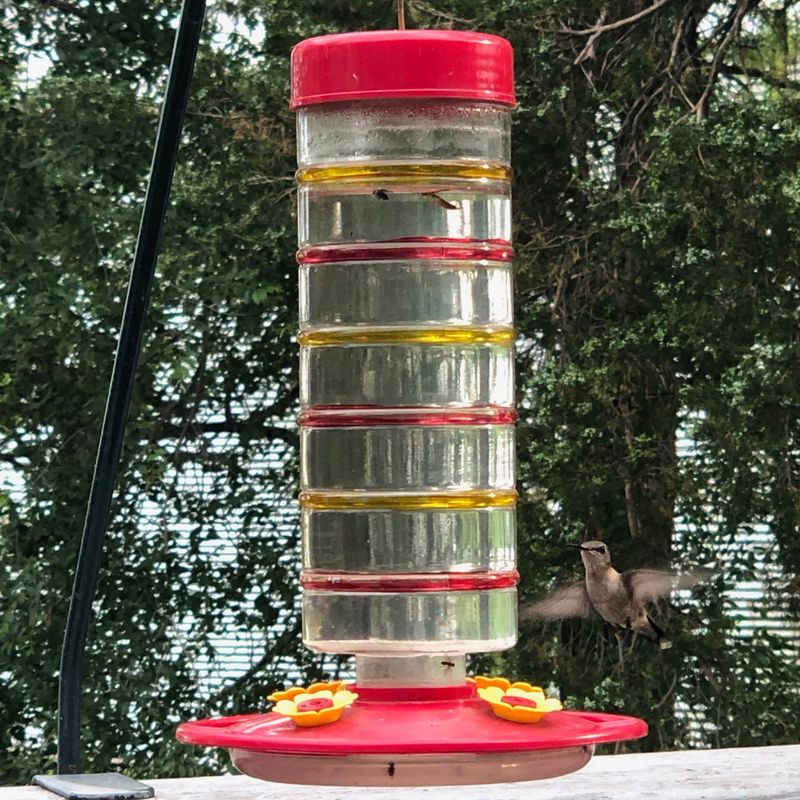
A dirty feeder is basically an open invitation for trouble. Old nectar turns cloudy, grows mold, and starts to ferment, especially when Michigan summers heat up.
Warm weather speeds everything along. On hot days, sugar water can spoil in as little as two days, and spoiled nectar attracts ants, wasps, and other insects that crowd out your birds.
Worse, moldy nectar can make hummingbirds sick. Regular cleaning keeps the whole setup healthy. Empty and rinse your feeder every few days, and give it a good scrub at least once a week.
Use hot water and a bottle brush to reach into the ports where gunk likes to hide. Skip the soap if you can, since residue can bother the birds. Instead, a mix of water and a little white vinegar cuts through mold safely.
Rinse well so no vinegar smell lingers. Fresh nectar makes a big difference too. Mixing your own with four parts water and one part plain white sugar keeps things simple and safe.
Avoid honey, dyes, or brown sugar, which can cause problems. During heat waves, change the nectar more often and consider hanging feeders in the shade to slow spoiling. Cooler nectar stays fresh longer and draws fewer pests.
Keeping a spare feeder handy makes cleaning easier. You can swap in the clean one while the other dries, so your birds never go without a meal.
A few minutes of upkeep protects your visitors and keeps pests from ever getting comfortable. Clean feeders simply mean happier, healthier hummingbirds all season long.
8. Avoid Pesticides Around Hummingbird Habitat
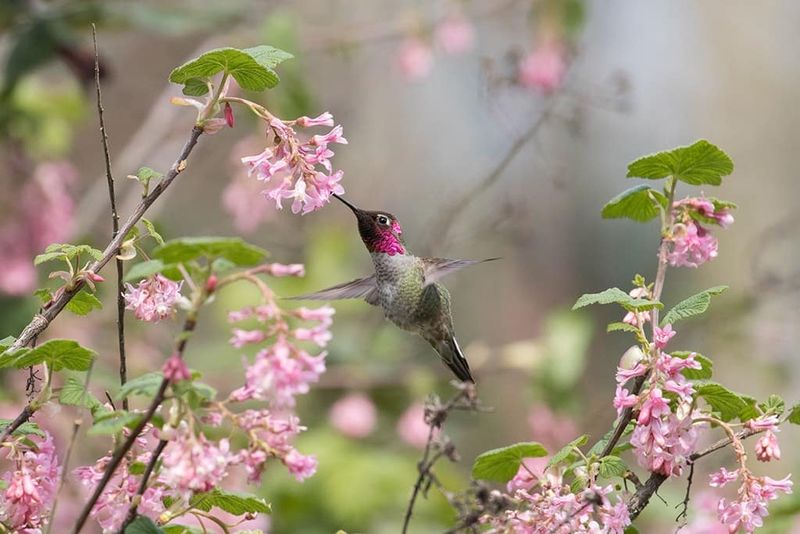
Reaching for bug spray might feel like a quick fix, but it can quietly harm the very birds you love. Broad pesticides do far more than remove pests from your garden.
Here’s the surprising part: hummingbirds don’t just drink nectar. They also gobble up tiny insects like gnats, spiders, and fruit flies for protein.
When strong chemicals wipe out those bugs, birds lose an important part of their diet.
Pesticides can also cling to flowers and feeders. A hummingbird brushing against treated blooms may pick up chemicals on its feathers or take them in while feeding. That exposure can leave birds weak and unwell.
The good news is that gardens can thrive without heavy sprays. Targeted methods work well and keep wildlife safe.
Hand-picking pests, spraying plants with plain water, or welcoming helpful bugs like ladybugs handles most problems naturally.
If you must treat a plant, choose spot treatments instead of blanketing the whole yard. Apply anything only in the evening when hummingbirds aren’t active, and keep it far from feeders and flowering plants they visit.
Building a healthy garden also helps. Native Michigan plants attract good insects that keep pests in balance on their own, so you rarely need chemicals at all.
Leaving a few insects around actually feeds your birds. What looks like a small pest problem might be a free snack bar for hungry hummingbirds.
By skipping harsh sprays and choosing gentle, targeted care, you protect the whole chain of life in your yard and keep your colorful visitors coming back season after season.