Something Is Hanging On Your Missouri Evergreens, And It Isn’t A Cone
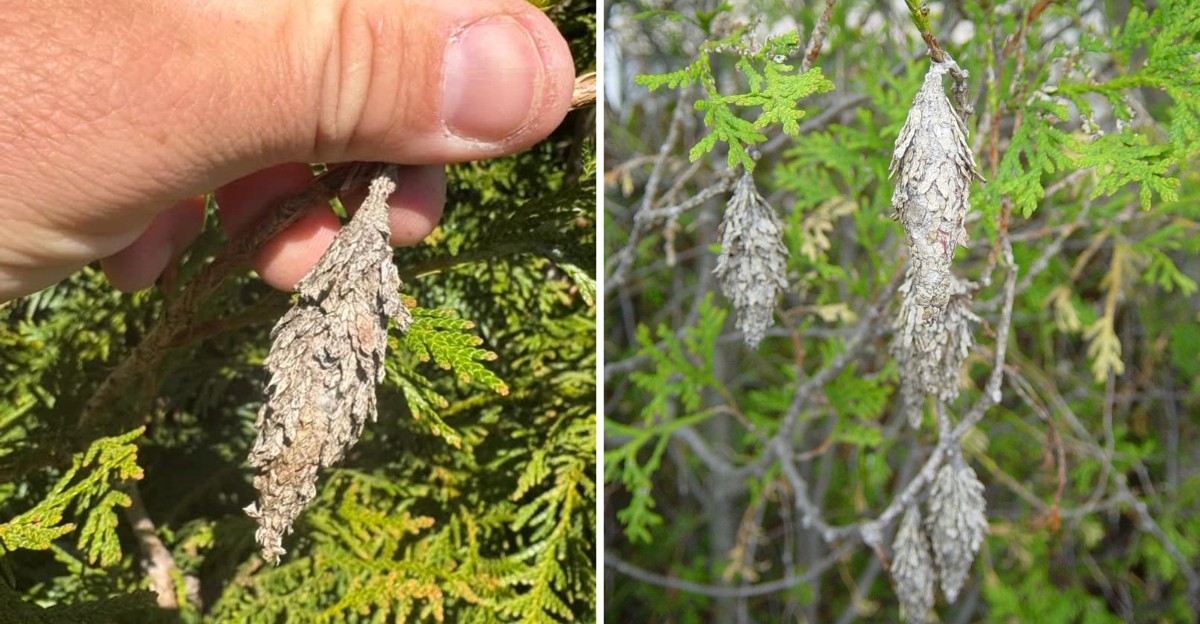
Something small and brown has been swinging from the branches out near the driveway for weeks. From the front porch it blends in perfectly, looking like a normal part of the tree.
Plenty of Missouri homeowners walk past the same brown shapes without a second thought. Then one calm afternoon you step close enough to see they are hanging by thin silk threads.
Nature is good at disguises, and this one fools most people who walk past it. What passes for ordinary autumn decoration turns out to be busy with something much stranger.
Give one a gentle tug some morning and the whole illusion comes apart right there in your hand. The yard suddenly looks a lot less tidy than it did five minutes ago.
Silk Bags Built By A Hungry Caterpillar
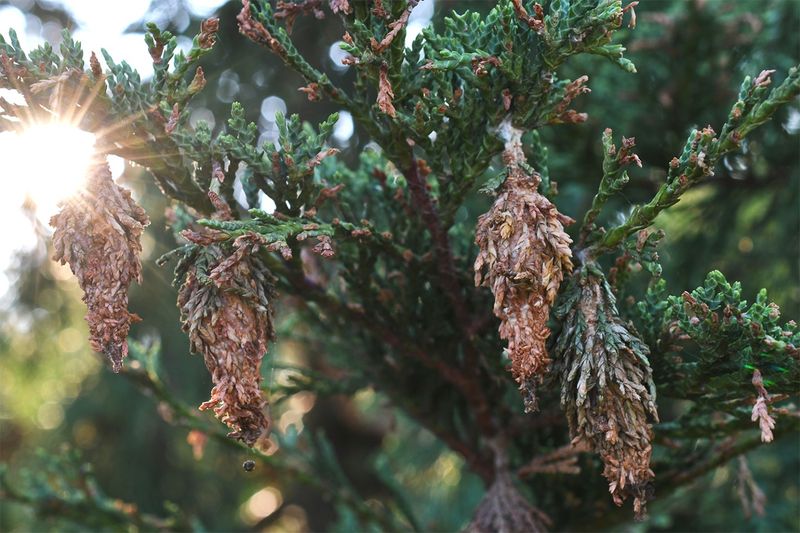
Walk up close and give one a gentle tug, and the surprise arrives fast. That little brown ornament is stitched shut with silk, not grown from a branch.
Inside sits a bagworm caterpillar, a common insect across Missouri lawns and windbreaks. It glues bits of needles and twigs to its case, so the disguise looks homegrown.
Homeowners often mistake the bags for seed cones on junipers, spruce, and arborvitae. Real cones attach firmly at the stem, while bags hang from a tough silk thread.
Size offers another clue, since most bags run one to two inches long. They swing freely in the wind, twisting on their threads like tiny brown lanterns.
Arborvitae and eastern red cedar rarely carry cones that look so uniform and dark. Spotting a dozen matching brown teardrops usually points to insects, not seeds.
Pull one open in summer and you may find a fat green caterpillar inside. Open one in winter and you might find hundreds of pale eggs instead.
Male moths eventually leave their bags and fly off as small dark-bodied, clear-winged moths. Females stay put for life, which is one reason the bags keep showing up.
Neighbors sometimes argue about it over the fence, and the branch itself gives the answer. Squeeze a bag gently, and you will feel soft packing instead of woody scales.
Knowing the difference matters because cones are harmless while bags mean feeding damage ahead. A quick tug test in your own yard settles the question in seconds.
Hatch Timing Across Missouri Yards And Windbreaks
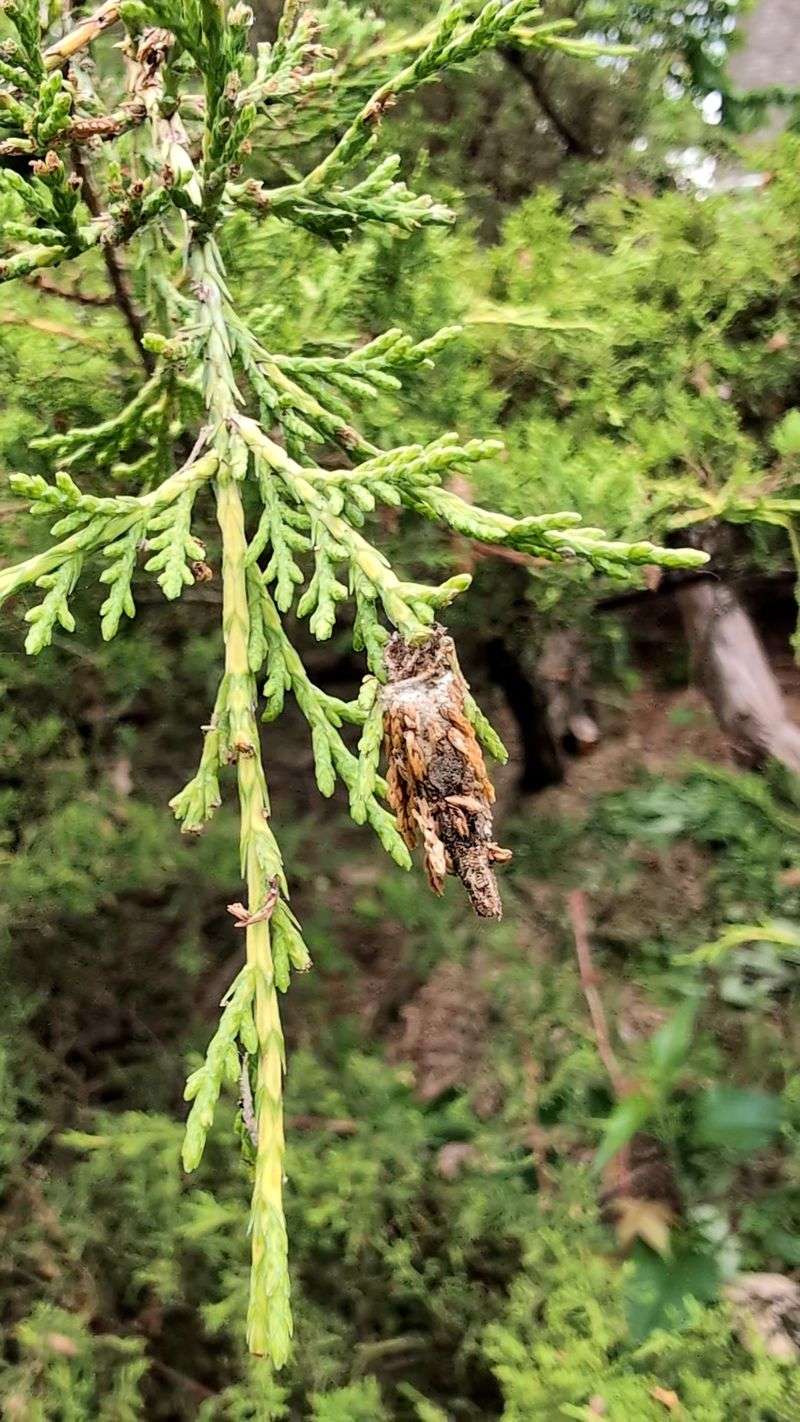
Spring in Missouri runs on a schedule, and these insects follow it closely. Eggs wait inside old bags through winter, then hatch once warm weather settles in.
Most hatching happens from mid May through mid June across the state. Northern counties usually run a week or so behind the Bootheel and southern hills.
Newly hatched caterpillars are smaller than a grain of rice and easy to miss. Each one spins a thread of silk and rides the breeze to a new branch.
Within hours they build tiny cone shaped cases and start grazing on fresh needles. The bags grow all summer as the caterpillars grow, reaching full size by August.
Late August brings a big change, since feeding stops and each bag gets anchored tight. Sealed inside, the caterpillars change into moths during early fall.
Your Missouri Garden Changes Every Week. Your Plan Should Too.
Gardening in Missouri changes quickly throughout the season. Every Friday you’ll receive a simple weekly plan showing exactly what to plant, prune, fertilize, harvest, and protect so you never miss the right timing.
September belongs to the males, who flutter around at dusk hunting for mates. Females stay inside their bags and release scent to call the males over.
One female can leave five hundred to a thousand eggs packed in her old case. That single bag you ignored in October becomes a crowd next June.
Timing your response to the hatch matters more than the amount of effort you spend. Young caterpillars are soft and exposed, while older ones hide behind thick silk.
Mark late May on the calendar and check your junipers every few days. Ten minutes of looking beats a whole weekend of cleanup later.
The Costly Habit Of Waiting Until Fall
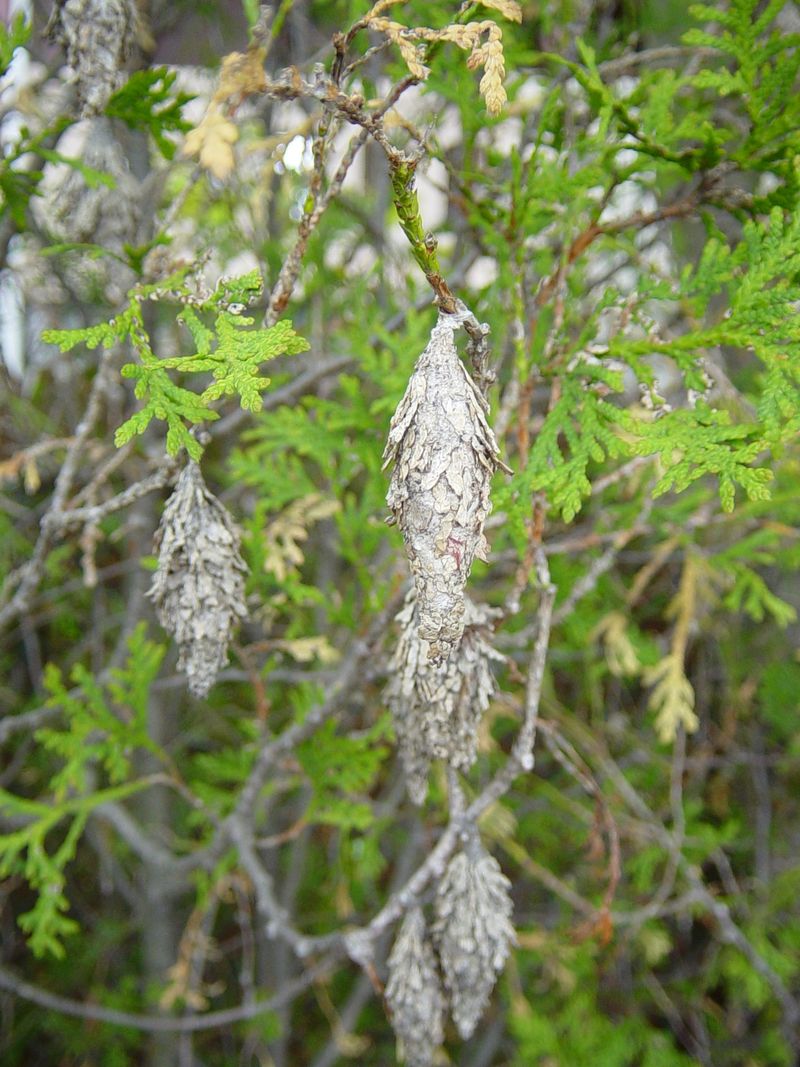
Here is the trap that catches plenty of Missouri gardeners each year. Bags stand out most in autumn, right when sprays stop being useful.
By October each bag is sealed shut with tough silk and packed with eggs. Insecticide cannot reach through that wall, so the spray mostly wets the branch.
Another common slip is reaching for a spray in late July out of frustration. Large caterpillars shrug off most products and keep chewing until they seal up.
Some folks grab pruning shears and cut whole limbs off an infested juniper. Junipers and spruce rarely push new growth from bare wood, leaving permanent holes.
Tossing picked bags on the ground under the tree is another quiet mistake. Eggs hatch fine down there, and the caterpillars simply climb back up.
Plenty of people also assume one clean season means the problem is finished. Moths drift in from a neighbor’s cedar row and start the cycle again.
Another myth says winter cold handles the eggs for you. Missouri winters get plenty sharp, yet the silk case shelters eggs just fine.
Ignoring a light infestation is tempting when the tree still looks green overall. Numbers climb fast, though, and a few dozen bags become several hundred.
Fall and winter still have value, just not with a sprayer in hand. Cold months are perfect for picking bags off by hand while the tree is quiet.
Treat the calendar as your main tool and the sprayer as a backup. That switch alone saves money, time, and a lot of grumbling.
Hand Removal And Spray Choices That Work
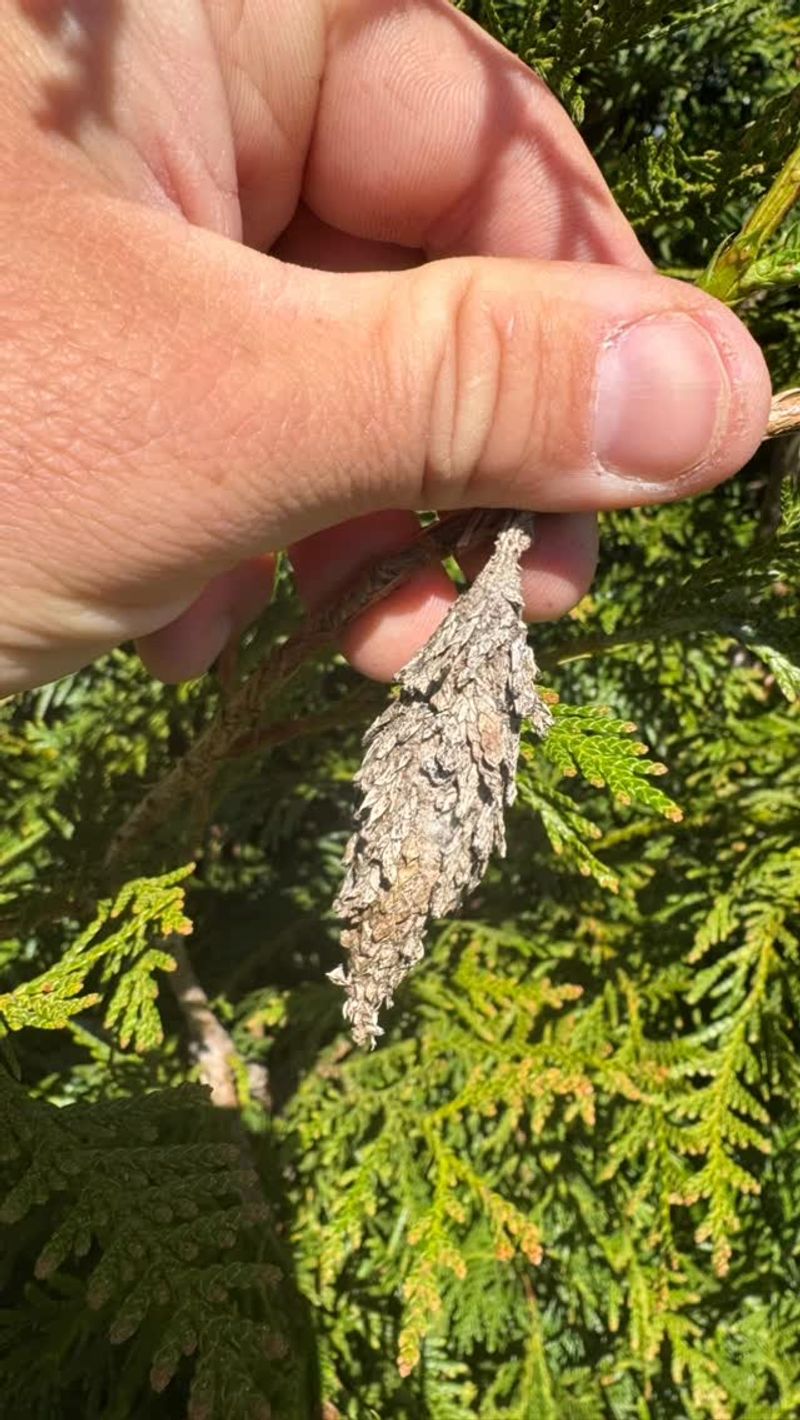
The cheapest fix costs nothing but a cold morning and a pair of gloves. Every bag pulled in winter erases up to a thousand eggs.
Snip the silk thread with hand pruners instead of yanking the bag loose. Tearing can strip bark from thin twigs and leave small wounds behind.
Drop everything into a sealed trash bag rather than a compost pile. Burning or bagging keeps the eggs out of your landscape for good.
For heavier infestations, a spray of Bacillus thuringiensis works well on young caterpillars. Sold as Bt, it is a natural bacteria that spares bees and birds.
Timing makes Bt shine, so apply it in mid June when larvae are tiny. A second round about ten days later catches stragglers that hatched late.
Spinosad is another gentle option that handles slightly larger caterpillars in early July. Coverage matters more than product choice, so soak the inner branches too.
Tall spruce and cedar over twenty feet call for a professional with real equipment. Hose end sprayers rarely push mist to the top of a mature tree.
Check the label for evergreen listings and follow the mixing rate exactly. Doubling the dose does not double results, though it can scorch foliage.
Neighbors sharing a fence line do better when they clean their trees the same winter. Insects do not respect property boundaries, and drifting silk threads prove it.
Combining a winter cleanup with a June spray gives the strongest results. Most yards need only one thorough year to turn things around.
Damage Left Behind On Junipers, Spruce, And Arborvitae
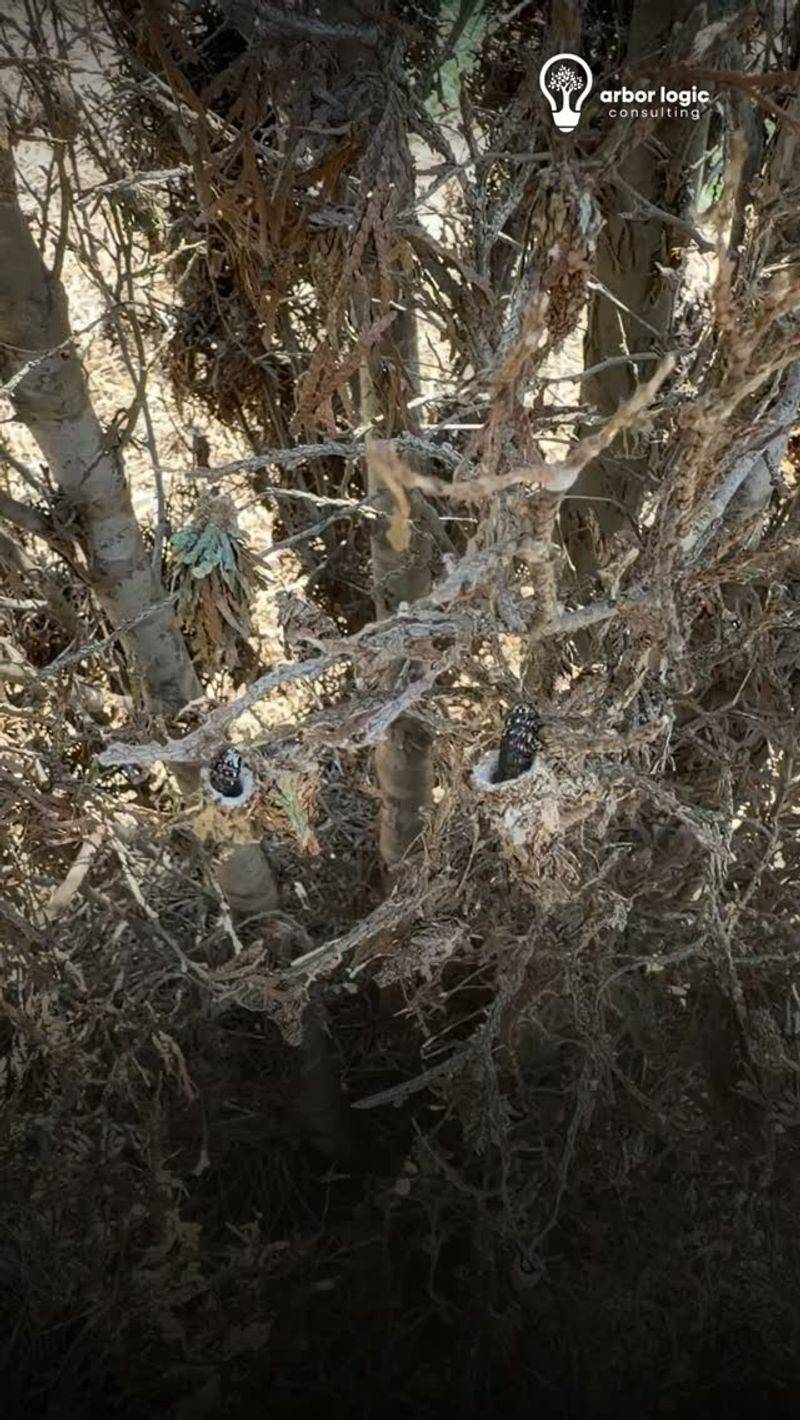
Brown patches on a red cedar tell a story that starts small. A single caterpillar eats little, but two hundred of them strip a branch bare.
Young larvae scrape the surface of needles, leaving a faint brown haze on the foliage. Bigger ones chew whole needles and small twigs down to stubs.
Here is the part that stings for evergreen owners in Missouri. Junipers, spruce, and arborvitae rarely refill bare wood with new needles.
A stripped section stays thin for years, even after the insects are gone. Privacy screens and windbreaks end up with gaps that stay open.
Heavy feeding two seasons in a row can push a young tree past recovery. Older trees hang on longer, yet they fade in looks and vigor.
Shade trees get visits too, including honeylocust, maple, sycamore, and river birch. Those trees leaf out again next spring, which makes the damage far less serious.
Stress from feeding also opens the door to canker fungi and boring beetles. A weakened cedar becomes a magnet for problems it once handled easily.
Landscape value takes a hit as well, since replacing a mature evergreen is costly. A fifteen foot spruce represents decades of growth and real money.
Walk your fence line each July and look for thinning near the top. Feeding usually starts high, where the breeze drops the smallest caterpillars first.
Catching trouble during the first summer keeps damage to a few thin spots. Waiting through a second season changes the whole look of the tree.
Long Term Prevention For Missouri Evergreen Landscapes
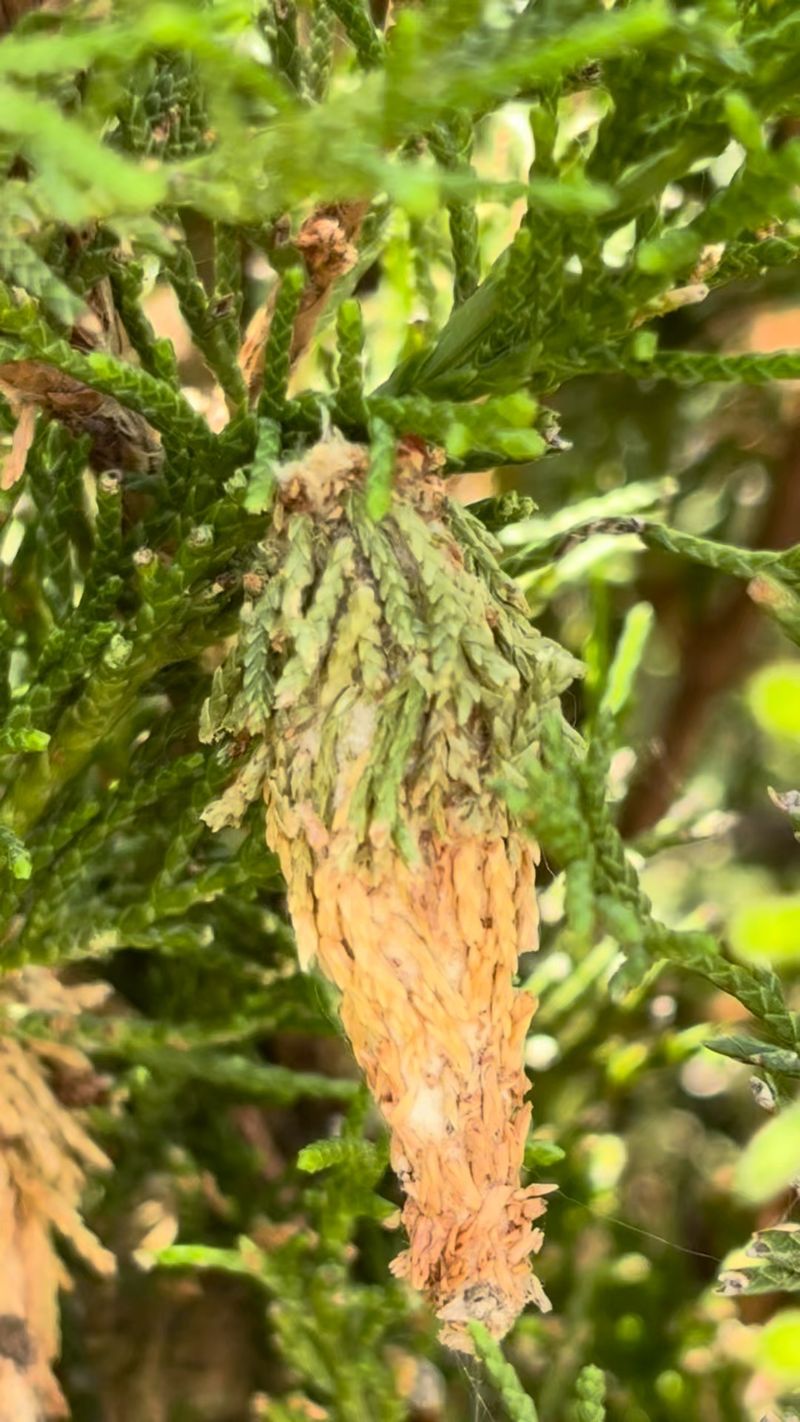
Prevention here looks less like a chore and more like a yearly habit. Ten minutes each winter keeps most Missouri yards clear of trouble.
Walk the evergreens every January with a bucket and a pair of clippers. Bare winter light makes the brown bags easy to spot from a distance.
Mixed plantings beat long rows of the same evergreen along a property line. Variety slows the spread, because the caterpillars cannot hop from favorite to favorite.
Birds do quiet work all year, especially sparrows, chickadees, and woodpeckers. A feeder and a water source near the hedge pay off in surprising ways.
Tiny parasitic wasps also patrol Missouri landscapes and target these caterpillars naturally. Broad insecticides wipe out those helpers, which often makes the next year worse.
Inspect nursery stock before it rides home in the back of the truck. One overlooked bag on a new shrub can seed an entire landscape.
Cut Christmas trees deserve a quick glance too, especially ones from local farms. A shake and a slow look around the trunk usually settle it.
Healthy trees handle a light infestation far better than stressed ones. Water during Missouri droughts and mulch the root zone a few inches deep.
Talk to the folks next door if their cedars are loaded with bags. One shared Saturday of picking protects both yards for several seasons.
Keep a note on the calendar for both January picking and June scouting. Two reminders a year handle a pest that thrives on being overlooked.