Why California Plumeria Leaves Droop In Early Fall And What It Means
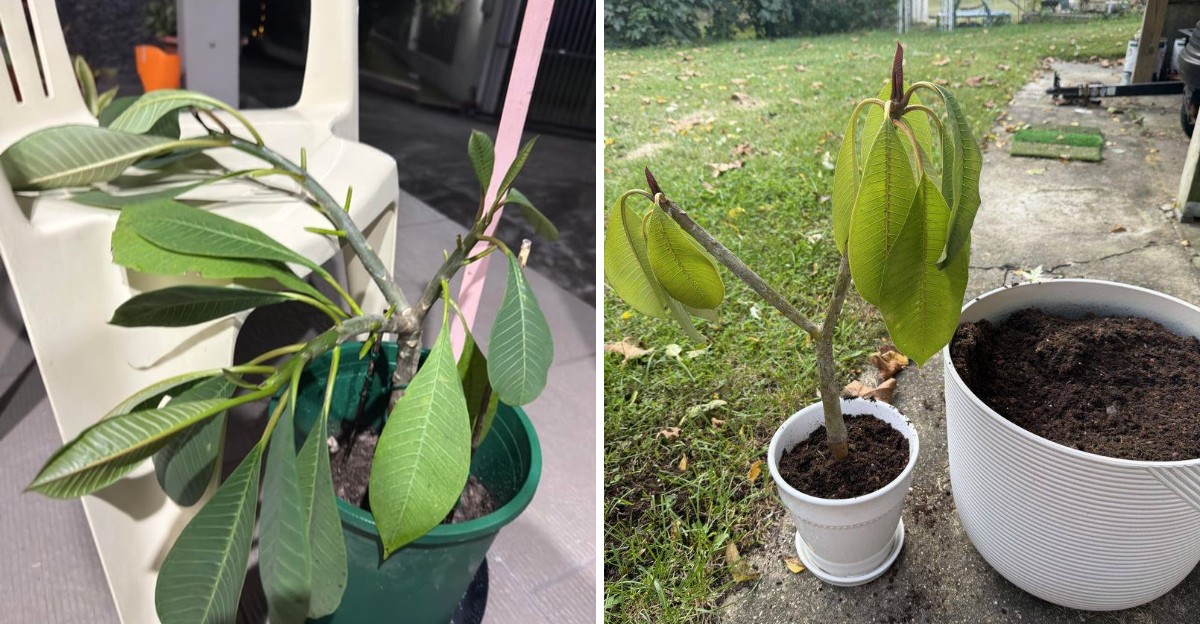
It is the first week of September in a California backyard, and the plumeria that looked spectacular in August suddenly has leaves hanging like wet laundry off the branches.
The owner stands there with a hose in hand, wondering whether the plant is struggling, thirsty, or just doing what plumerias do this time of year without any real problem at all.
The answer usually comes down to timing, soil moisture, and a few clues hiding in plain sight if you know where to look.
Most gardeners reach straight for the hose the moment they see droop, assuming more water always fixes a sad-looking plant.
That instinct backfires more often than people expect with this particular species.
Learning to read those clues saves you from drowning a perfectly healthy plant that is simply getting ready for its winter nap.
1. Natural Dry Season Dormancy Is Starting
Plumeria grew up in seasonally dry tropical places, and that history still runs the show in a California backyard decades later.
As days shorten in September and into October, the plant reads the shift in light and cooler air as a signal to slow down considerably.
Leaves soften, tilt downward, and lose their glossy stiffness as the process gets underway.
UC ANR guidance describes plumeria as a plant with a natural dormant period, dropping its leaves and resting until warm weather returns the following year.
Coastal and inland California gardens usually see this begin sometime in September, depending on how much heat the neighborhood holds through the month.
What that means practically is this. A droop that develops slowly over two or three weeks, spreads evenly across the whole plant, and comes with fading green color is almost always the calendar talking, not a crisis.
Helpful habit worth adopting: write down the date you first notice drooping. A quick phone photo each week helps too, giving you something concrete to compare against later.
Watering should taper off during this window rather than increase. A dormant plumeria uses very little moisture, and soaking it out of worry is exactly how healthy plants get into real trouble.
2. Overwatering Can Mimic The Same Droop
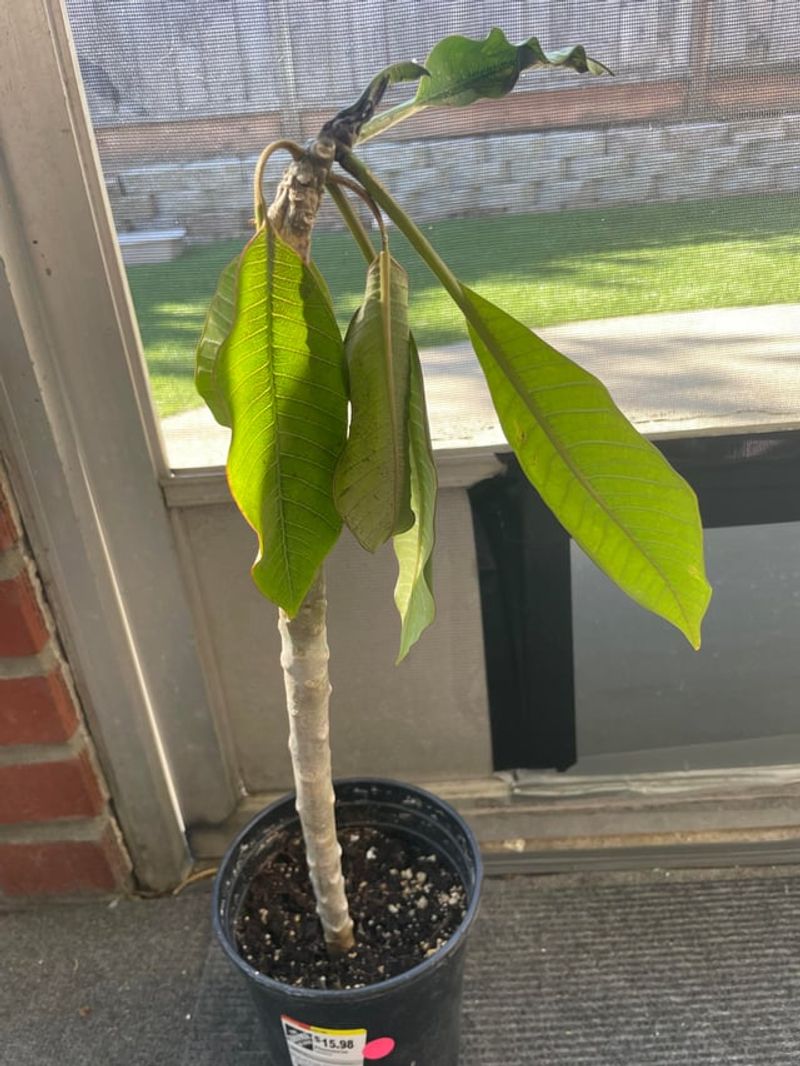
Here is the frustrating part about early fall drooping: a plumeria sitting in soggy soil looks a lot like one easing into dormancy from the outside.
Both show limp, downturned leaves and a sad overall posture. The cause, though, is completely opposite, and so is the fix required.
Roots need air pockets in the soil to function properly. When water fills those spaces for days, root tissue suffocates, turns mushy, and stops moving moisture upward through the plant.
The leaves wilt because they are thirsty even while standing in water, which confuses most gardeners at first glance.
Three checks separate the two situations clearly. Push a finger or a wooden chopstick two inches into the mix and feel for dampness, since dormancy droop usually comes with soil that dries normally.
Squeeze the base of a branch or the trunk too, because soft, spongy, or slightly smelly tissue points toward rot rather than rest.
Your California Garden Changes Every Week. Your Plan Should Too.
Gardening in California changes quickly throughout the season. Every Friday you’ll receive a simple weekly plan showing exactly what to plant, prune, fertilize, harvest, and protect so you never miss the right timing.
Look at the drainage holes for standing water or a saucer that never empties as well. Overwatered plants often show drooping that arrives fast, sometimes within days.
Response matters here quite a bit. Stop watering immediately, move the container somewhere warm with good airflow, and dump any tray underneath right away.
California’s early fall rains sneak up on people too, so unplug automatic drip lines before the first storm arrives.
3. Cooling Nights Slow Water Uptake
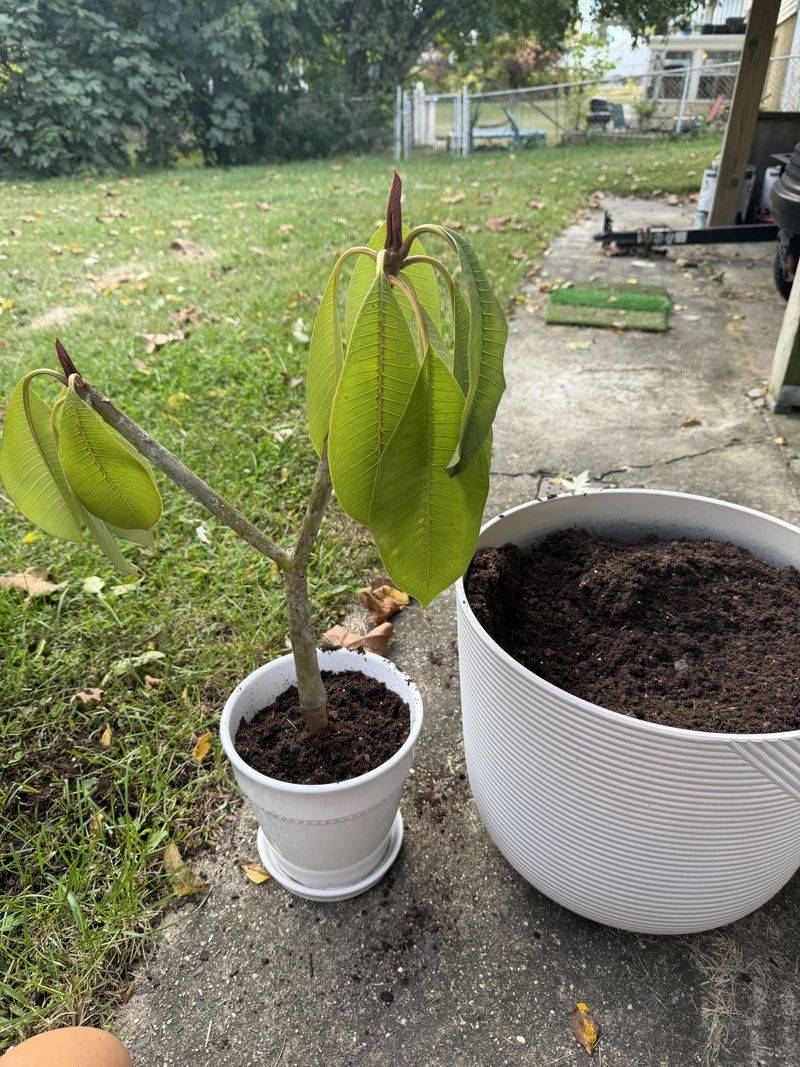
Temperature does more to a plumeria than most gardeners expect going into fall. Root activity depends heavily on warmth, and once nighttime lows settle into the fifties, water moves through the plant far more slowly than it did in August.
Think of the root system as a pump that runs on heat essentially. Warm soil means a fast pump. Cool soil means a sluggish pump, and leaves that cannot keep their cells firm enough to stand up straight.
Inland valleys like Sacramento and the Inland Empire swing hard between hot afternoons and chilly nights by September, which is why plumerias there often droop earlier than coastal ones in San Diego or Santa Barbara.
A practical consequence follows from this. The same watering schedule that kept your plant happy in July now leaves soil wet for days on end.
Cool soil plus a regular hose habit is a fast track to root problems, so stretch the gaps between waterings and check moisture before you pour anything.
Container plants against a south-facing wall stay warmer overall, and moving pots to a sunny, sheltered spot can keep leaves upright a few weeks longer.
Once lows dip toward the low forties regularly later in fall, leaf loss speeds up no matter what you do. That is expected behavior, not neglect, and the plant is simply banking energy in its thick branches for spring.
4. Root Bound Plants Struggle Earliest
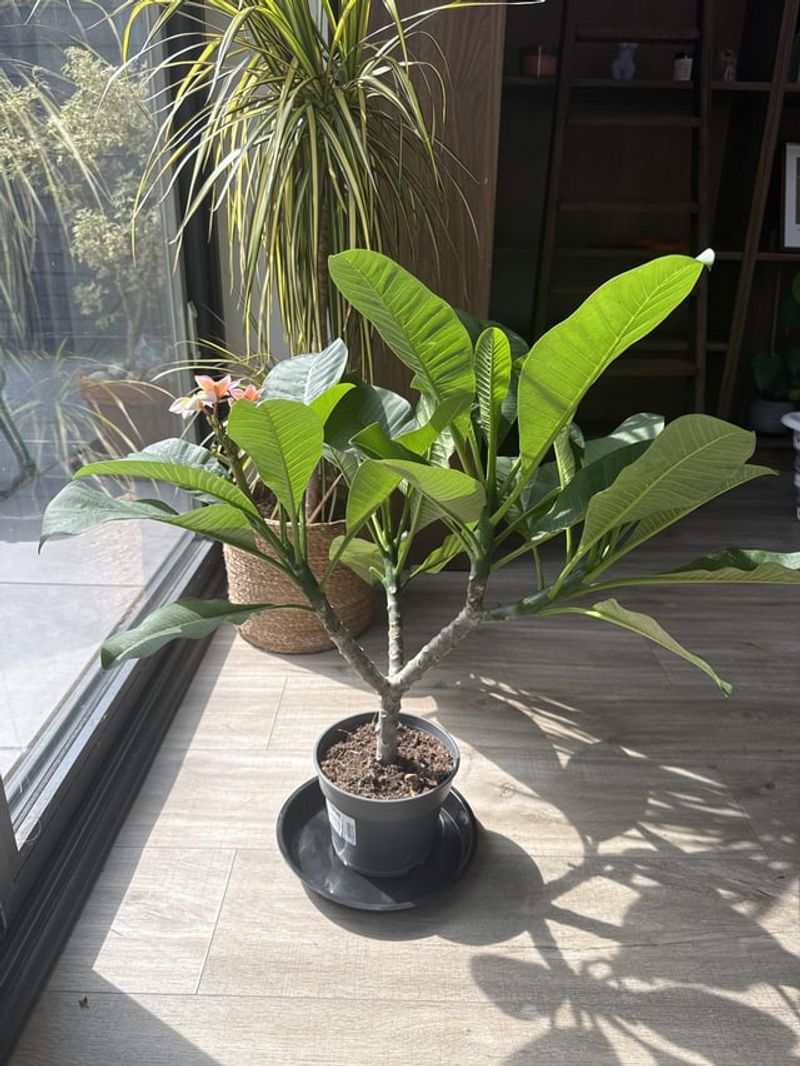
Ever notice one plumeria in a row of pots wilting weeks before its neighbors do? Nine times out of ten, that plant has outgrown its container.
Roots circling the inside of a pot leave almost no soil left to hold water, so the plant runs dry between waterings and shows stress early on.
Signs are easy to spot once you know them. Water races straight through and out the bottom seconds after you pour it in. Roots poke out of drainage holes or push the plant slightly upward over time.
The pot feels weirdly light too, and the whole thing tips over in wind more easily than it should.
Drooping from crowded roots tends to look uneven, worse at the branch tips, and it often improves briefly right after watering before sagging again the next day.
Timing the fix takes patience. Repotting during early fall adds stress on top of stress, so unless roots have rotted, most California growers wait until late winter or early spring instead.
Choose a container two to four inches wider, not enormous, and use a chunky, fast-draining blend for the new mix.
Meanwhile, deep but less frequent watering, plus afternoon shade on hot September days, keeps a cramped plant reasonably comfortable through the transition.
5. Yellowing First Is A Normal Pattern
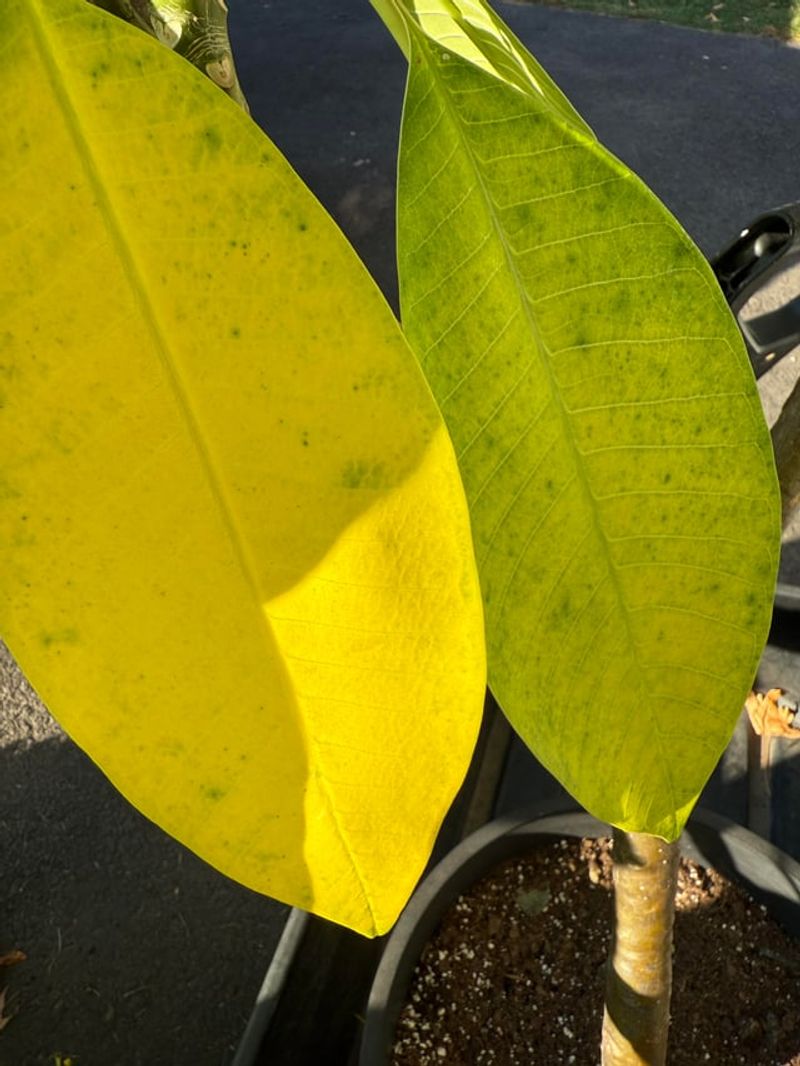
Order of events tells you almost everything about what is really happening. A plumeria heading into dormancy usually follows a predictable script worth learning.
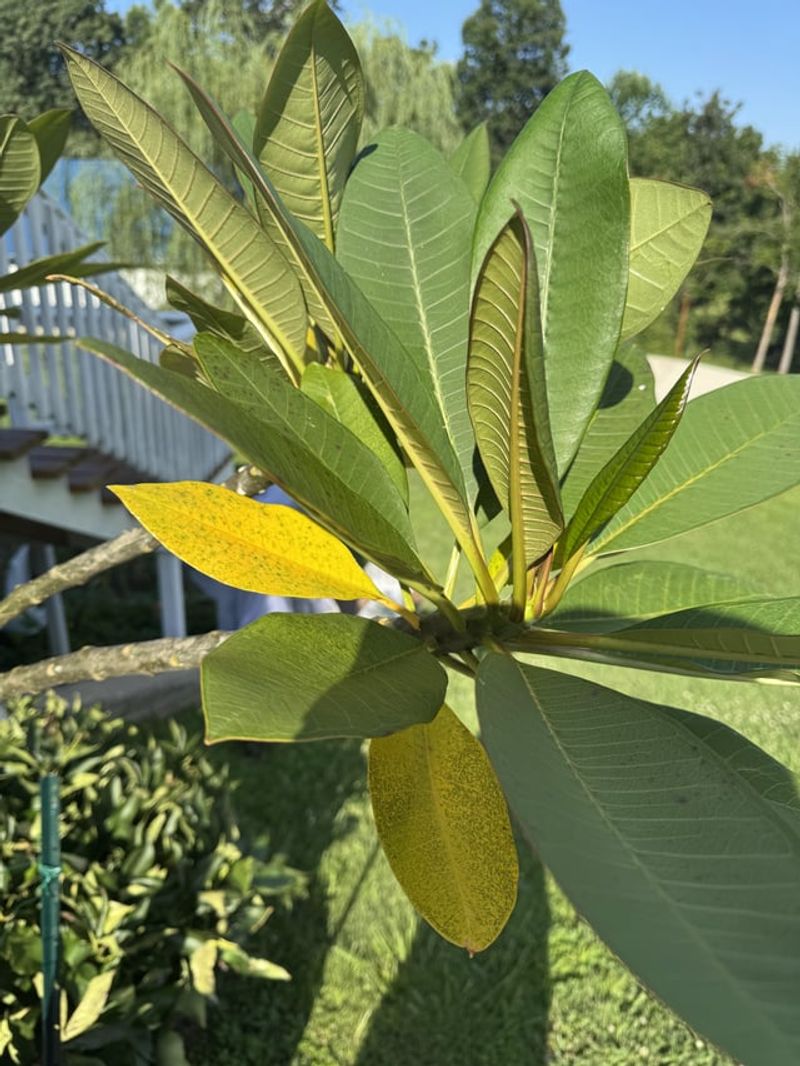
Lower and older leaves fade to yellow first, sometimes with rusty brown spots, then they droop, then they fall, working slowly from the bottom of each branch toward the tips.
Chlorophyll breaks down as the plant pulls nutrients out of leaves it plans to discard anyway. That salvage operation is why the green drains away before the leaf gives up entirely.
Stress, by contrast, jumbles the script completely. Leaves that droop while still deep green, collapse all at once, or turn black and slimy point toward water problems, root damage, or cold shock instead of a tidy seasonal shutdown.
Rust fungus, common in California by late summer, adds orange powdery spots on leaf undersides and can speed yellowing along further.
No fertilizer during this stretch, please. Feeding a plant that is trying to shut down pushes weak growth that frost will ruin later, and UC guidance generally points toward stopping nutrients as growth slows.
Leaf drop can stretch across six to ten weeks in mild coastal areas, which surprises people expecting a single dramatic week of shedding.
Bare branches with plump, firm tips are exactly where a healthy plumeria should be by December. Squeeze a tip, and if it feels solid, your plant is resting comfortably.
6. Stress From A Recent Move Adds Up
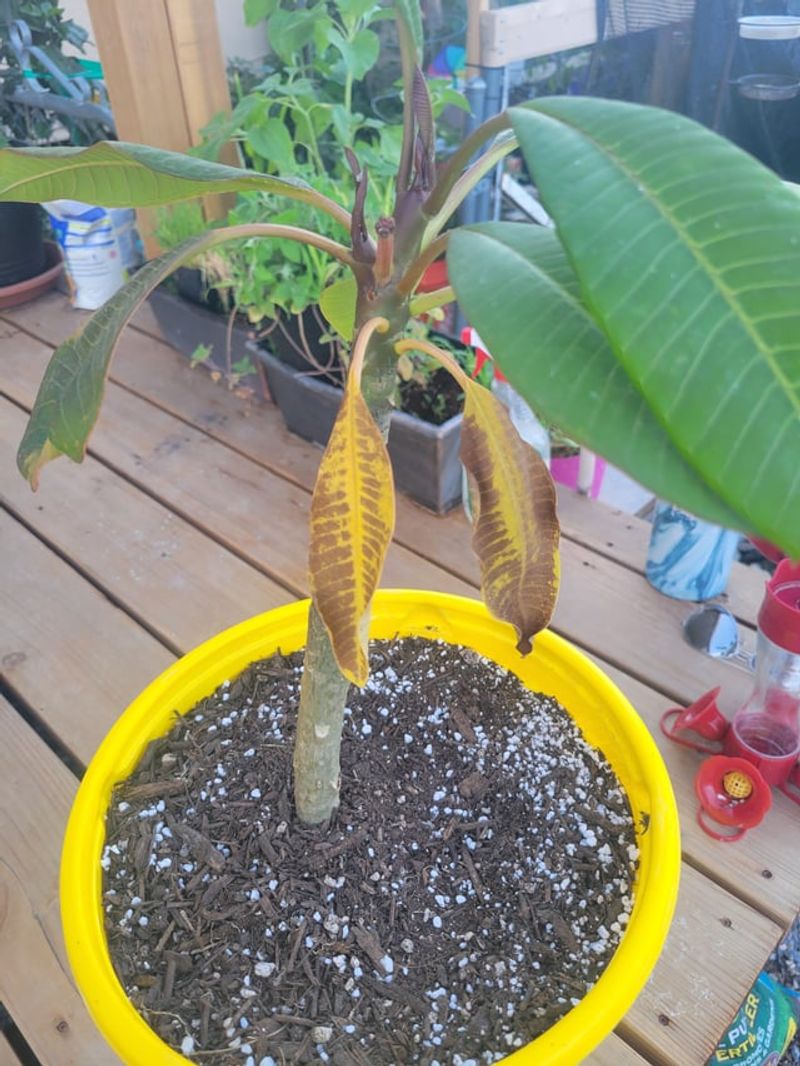
Say you repotted in July, or hauled your plumeria from a blazing driveway to a shady patio in August without much thought. Add the natural fall slowdown starting in September on top, and the droop that follows can look alarming.
Two ordinary stresses are simply stacking on top of each other at that point.
Transplanting snips and disturbs fine feeder roots, the ones that actually absorb water for the plant. For a few weeks afterward, the plant cannot supply its leaves properly, so they sag regardless of how carefully you water.
Relocation changes light too, which matters a great deal. A plant used to six hours of direct sun suddenly getting three will shed leaves it can no longer afford to support.
Best move after a recent change is simple. Leave the plant alone entirely. Steady placement, modest water, no fertilizer, no pruning, and a little patience beat any rescue product on the shelf.
Reassuring news is that most early fall drooping in California resolves without help of any kind. Leaves yellow, fall, and the plant naps through winter on stored energy in its trunk and branches.
Worry only if branches feel soft or squishy, smell sour, or the trunk darkens near the soil line. Those signs call for inspecting roots and improving drainage right away.
Everything else simply calls for patience. Sweep up the leaves, cut back the hose, and enjoy the break until June flowers return once again.
7. Wind And Sun Exposure Speed Up The Process
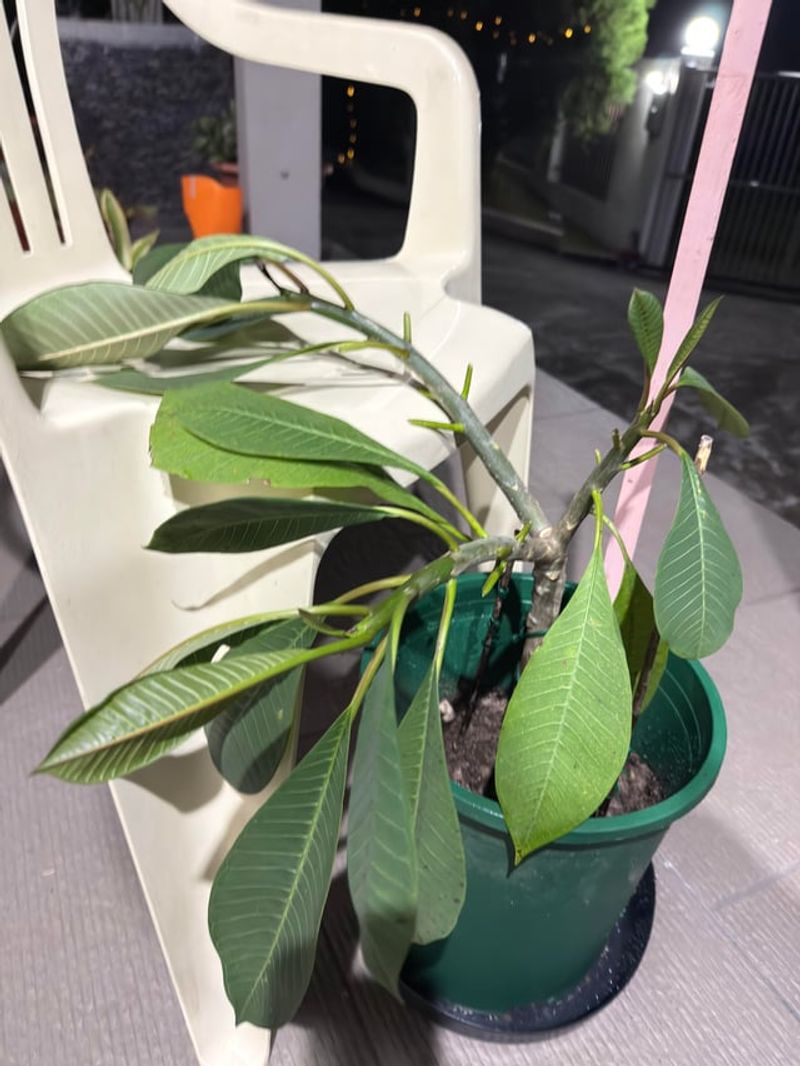
A plumeria sitting in an exposed corner of the yard, catching afternoon wind off a nearby hill or open fence line, often starts drooping noticeably earlier than a sheltered sibling planted just a few feet away.
Wind pulls moisture out of leaf tissue faster than still air does, adding a layer of stress right on top of the natural seasonal slowdown already underway by September.
Full, unbroken afternoon sun compounds the effect too. Leaves already softening for dormancy have less capacity to regulate their own temperature, so intense late-summer sun can scorch edges right before the leaf was going to drop anyway.
None of this means a windy or sunny spot is wrong for plumeria during the growing season. It simply means the fall transition arrives a bit sooner and looks a bit rougher in that particular location compared to a calmer one nearby.
Gardeners who notice one plant consistently drooping first every year, in the same exposed spot, are usually seeing a site effect rather than a plant health problem worth treating.
A simple windbreak, even a temporary burlap screen staked nearby, can soften that effect for a plant you want to keep looking presentable a few weeks longer into September.
Container growers have it easier here. Sliding a pot to a more sheltered spot against a wall for the transition weeks often delays the droop noticeably, buying a little more time before the seasonal shutdown really takes hold.
None of this changes the eventual outcome. The plant still goes dormant either way. It just changes how gently that process unfolds and how long the leaves hang on before finally letting go.
8. Variety Differences Change The Timeline
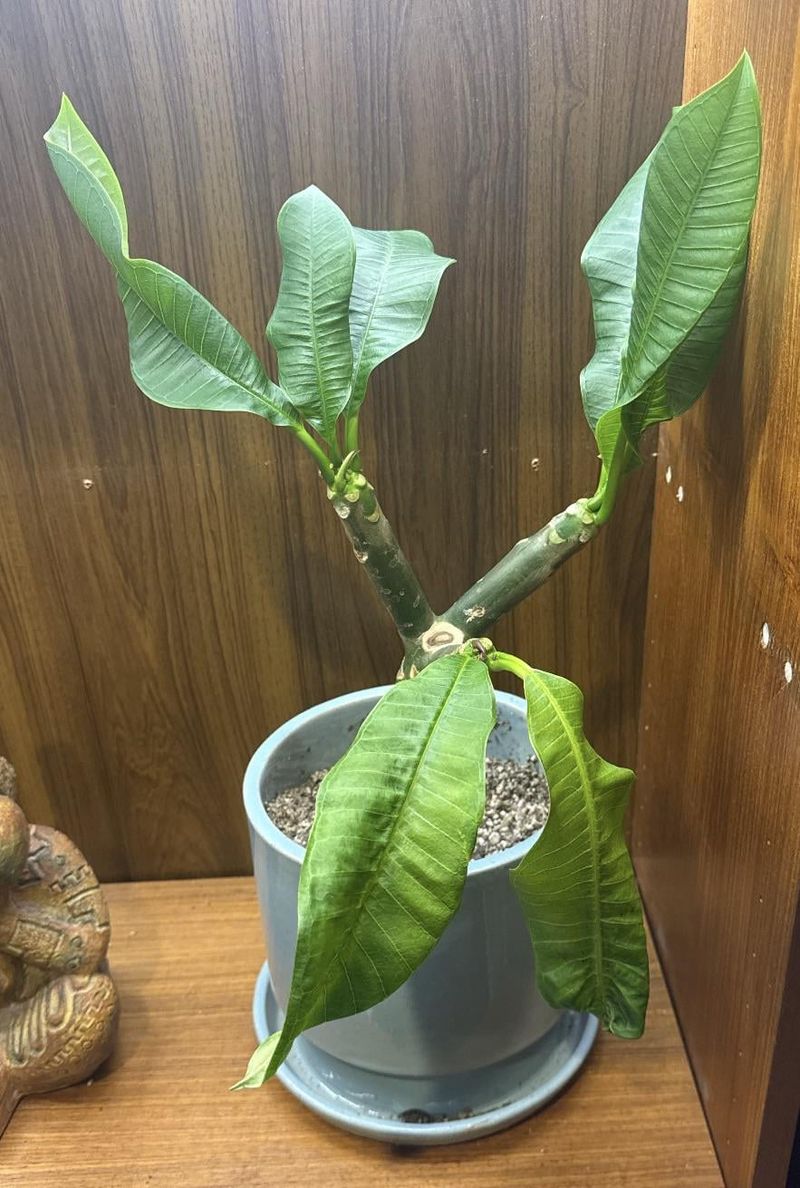
Not every plumeria drops its leaves on the same schedule, even sitting side by side in the same yard under identical conditions. Some cultivars simply carry a longer or shorter dormancy trigger built into their genetics.
Certain hybrids bred for extended bloom seasons tend to hold their leaves later into fall, sometimes staying green and upright well past when older, more traditional varieties have already begun dropping foliage.
Other types, particularly some of the older Hawaiian and Mexican varieties commonly grown in California gardens, tend to respond to shortening days a bit more abruptly, moving through the yellowing and drooping stages faster once September arrives.
None of this variation signals a problem with either plant. It simply reflects different genetic responses to the same environmental cues of light and temperature that every plumeria reads to some degree.
Gardeners with a mixed collection sometimes worry when one plant looks fine while another two rows over is already dropping leaves steadily. Comparing plants against their own history, rather than against each other, gives a much more accurate read.
Keeping a simple record of which varieties you grow, and roughly when each one tends to begin its fall transition, builds useful knowledge over just a couple of seasons of observation.
That knowledge pays off quickly. A gardener who knows a particular cultivar always starts dropping leaves in early September will not panic when it happens right on schedule, while still watching closely for anything that breaks from that plant’s own established pattern.