Iowa Gardeners Are Opening A Narrow Fall Window To Get Garlic Cloves In The Ground
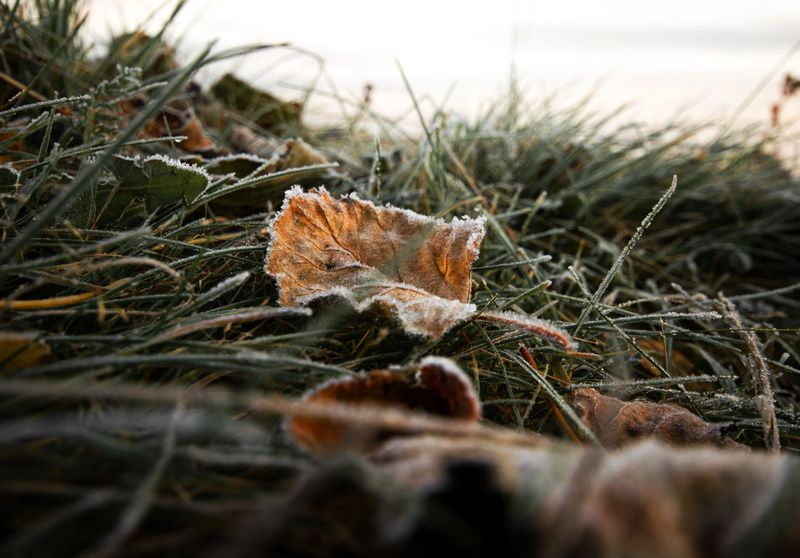
Frost creeps over Iowa and sets a firm cutoff for you. Garlic in your garden wants attention before the soil hardens. Bulbs you plant now reward you with fatter heads later.
Miss this stretch and you wait a whole year again. Iowa growers guard their timing because you can’t fake it later. Soil holds warmth, giving your cloves room to root fast.
Compost gives you an edge cold ground can’t provide alone. Timing matters more than luck when you plant this deep. Varieties differ sharply, and choosing wrong costs you real flavor.
Neighbors swap bulbs because they know what works near you. Mulch protects your cloves through sharp winter swings ahead. Skip mulching and you risk an uneven spring instead.
Your hands, a trowel, and patience decide what you harvest. Local growers watch the forecast the way you should too. Get this wrong, and you lose the whole season ahead.
Timing The Window Between First Frost And Frozen Ground
Ask five Iowa gardeners when to plant garlic and you will hear five answers, but they all circle the same few weeks. The sweet spot runs from early October in the northern counties to early November down along the Missouri border.
The goal is simple. Cloves need enough warm soil to push out roots, but not so much warmth that green shoots shoot up and get battered by winter wind.
A handy rule of thumb is to plant about four to six weeks before the ground freezes solid, which for most of Iowa falls close to the first frost. Soil temperature at four inches deep should sit somewhere around 50 degrees Fahrenheit.
If you are the measuring type, a cheap soil thermometer takes the guesswork out. Push it in around mid morning for a reading that reflects the real average.
Planting too early is the more common slip. Shoots that emerge in warm October sun burn energy the bulb would rather save for spring.
Planting late is forgiving up to a point. As long as you can still work the soil with a spade, cloves will settle in and root slowly under the blanket of winter.
Watch the long range forecast during the last week of October. A stretch of mild days followed by a cold snap is close to ideal for getting cloves settled.
Keep a note in your garden journal about the date you planted and how the crop turned out. After two or three seasons, you will know your own yard better than any chart can tell you.
Choosing Hardneck Varieties That Withstand Iowa Winters
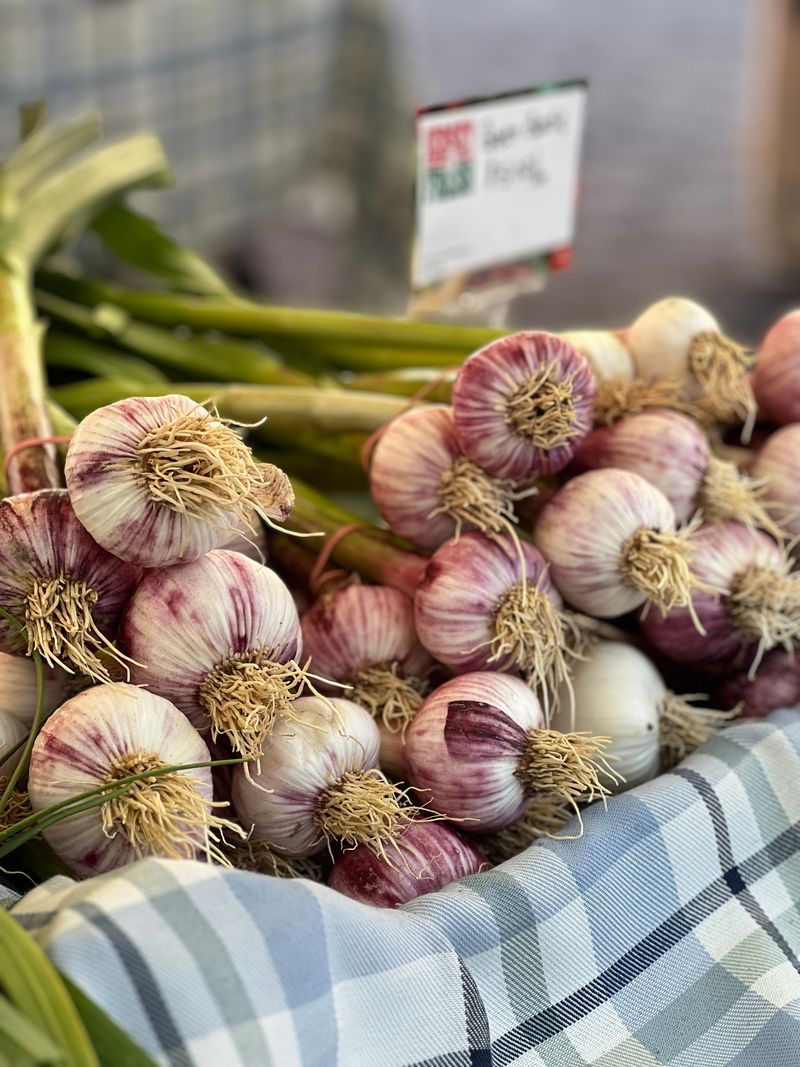
Hardneck garlic earned its place in the upper Midwest the hard way, by surviving winters that make softneck types sulk. The stiff central stalk gives the group its name, and it also produces those curly scapes worth harvesting in June.
Music is the variety Iowa growers mention first, and for good reason. It forms fat, easy-to-peel cloves and handles cold clay soils with little fuss.
Your Iowa Garden Changes Every Week. Your Plan Should Too.
Gardening in Iowa changes quickly throughout the season. Every Friday you’ll receive a simple weekly plan showing exactly what to plant, prune, fertilize, harvest, and protect so you never miss the right timing.
German Extra Hardy is another dependable pick. The flavor leans warm and rich rather than sharp, and the bulbs store into late winter without much shriveling.
Purple Stripe types like Chesnok Red bring color to the cutting board and roast into something almost sweet. Gardeners who cook a lot tend to grow a row of these purely for flavor.
Softneck garlic, the kind braided and hung in kitchens, can work in the southern third of the state. Farther north it often struggles, so treat it as an experiment rather than your main crop.
Buy seed garlic from a regional grower or a seed company rather than the grocery store. Supermarket bulbs are sometimes treated to slow sprouting and may carry issues you would rather leave out of your beds.
Depending on the variety, one bulb typically yields around eight to twelve plantable cloves. A pound of seed garlic fills roughly ten to fifteen feet of row, which helps when you are doing math over a catalog.
Fun bit of history: many farm families once hung garlic braids in cellars as a winter staple, long before it became fashionable.
Preparing Beds That Drain Well In Heavy Iowa Clay
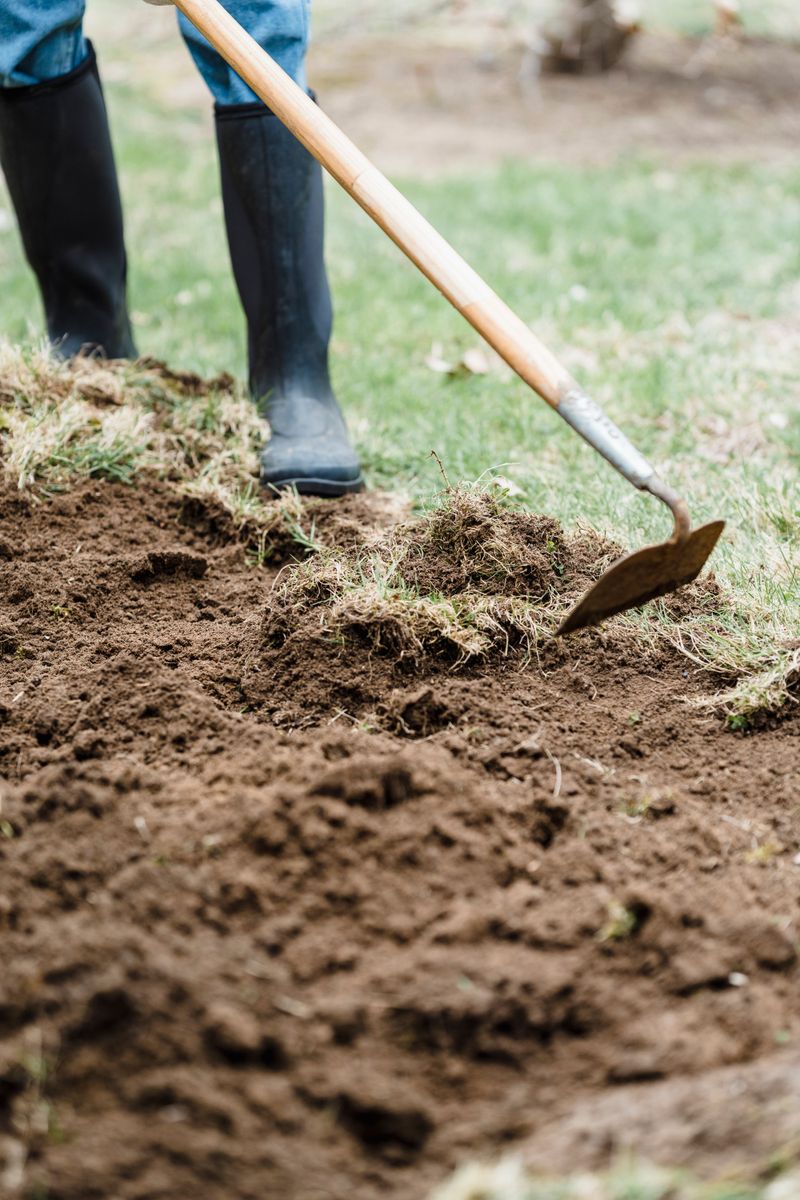
Clay is a common challenge in Iowa gardens, holding water heavily and hardening significantly by July. Garlic has opinions about that, and the main one is that soggy roots lead to soft bulbs.
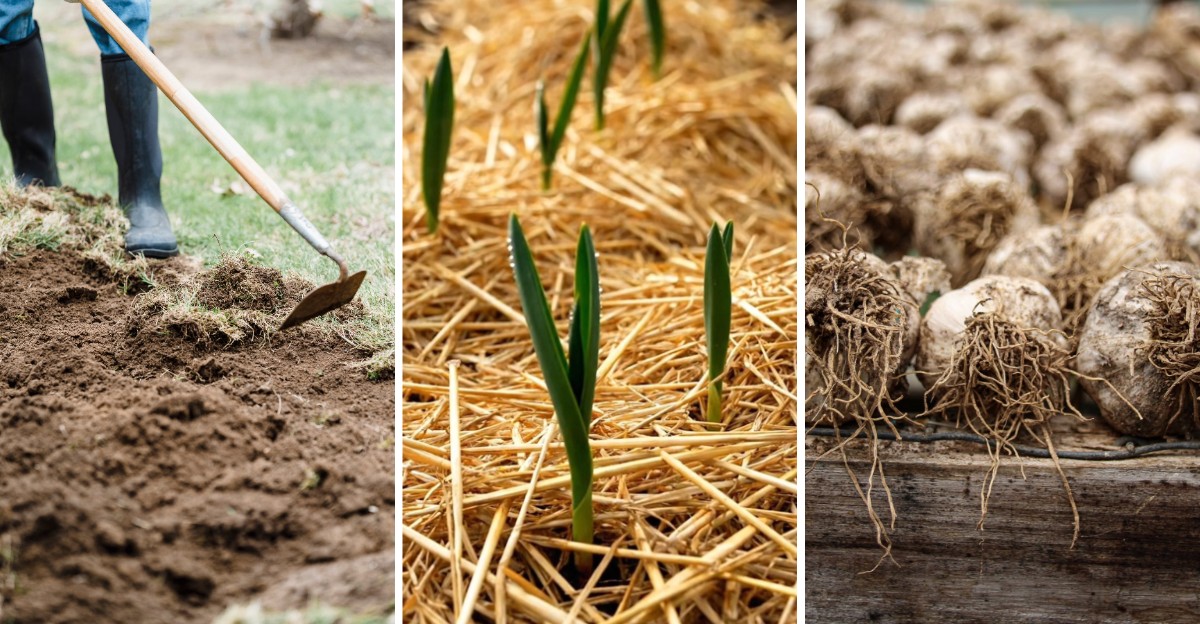
Loosening the top eight to ten inches makes the biggest difference. A digging fork works fine, and you do not need to flip the soil upside down to get results.
Compost is the workhorse amendment here. Two to three inches worked into the bed improves drainage, feeds the soil, and gives roots something to grab.
Raised beds solve the drainage puzzle in one move. Even a low mound six inches high keeps cloves above standing water during a wet March thaw.
Garlic prefers a soil pH somewhere between 6.0 and 7.0. A soil test through your county extension office costs very little and takes the mystery out of fertilizing.
Mix in a balanced organic fertilizer or a scattering of bone meal before planting. Roots will find those nutrients through fall and again when growth restarts in March.
Skip beds where onions, leeks, or shallots grew during the past couple of seasons. Rotating helps keep soil-borne troubles from building up.
Rake the surface smooth before you plant so you can space cloves evenly. A tidy bed in October makes weeding far less annoying in May.
One last touch worth the effort: pull out chunky root pieces and rocks as you go. Garlic bulbs grow rounder when they meet no obstacles.
Breaking Bulbs Apart And Planting Cloves The Right Way Up
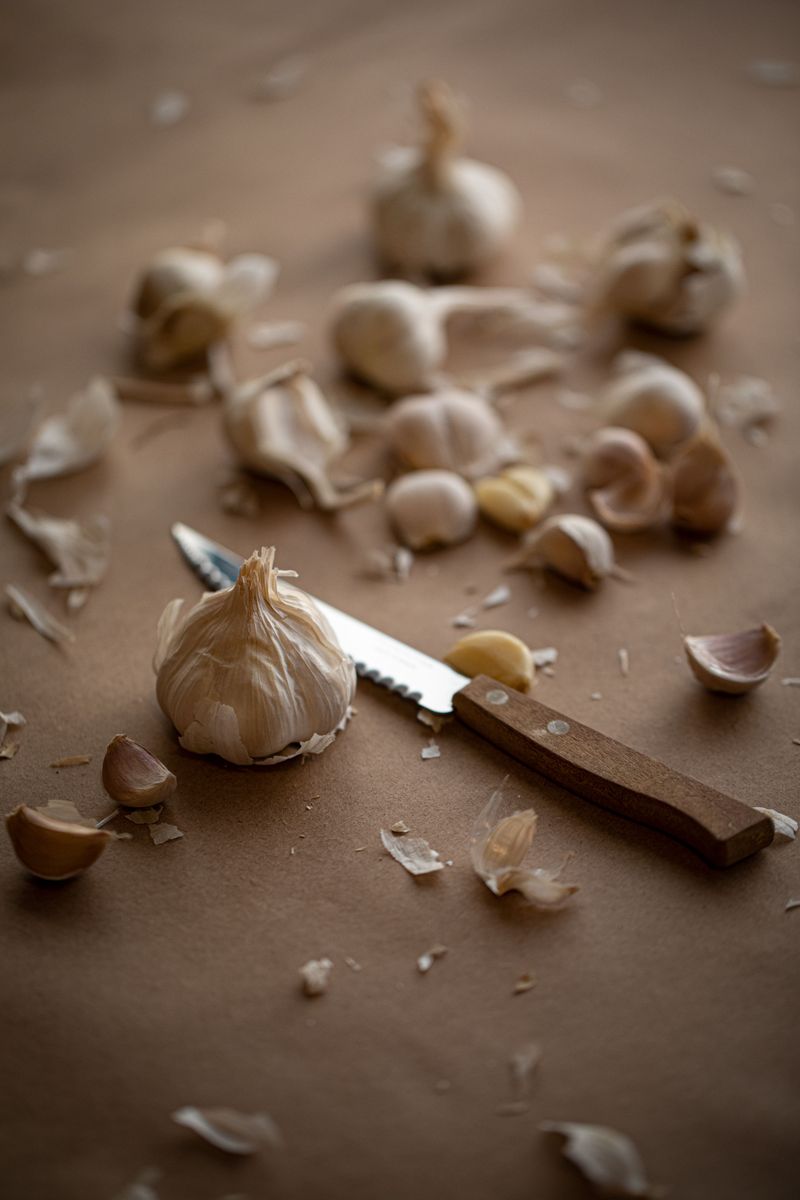
Cracking a bulb open is oddly satisfying, like opening a paper puzzle. Do it within a day or two of planting so the cloves do not dry out on the counter.
Leave the papery wrapper on each clove. That thin skin is armor against soil fungi and moisture swings.
Size matters more than people expect. Plant the biggest outer cloves and save the tiny inner ones for the kitchen, since small cloves grow small bulbs.
Orientation is the part beginners get backward. The flat, scuffed end goes down and the pointed tip aims at the sky.
Depth for Iowa winters should be about two to three inches, measured from the tip of the clove to the soil surface. Going a bit deeper in the northern counties buys extra insulation.
Space cloves four to six inches apart with rows about twelve inches wide. Crowded garlic produces marble-sized bulbs, resulting in a disappointing harvest after a long growing season.
Press each clove in firmly rather than dropping it into a loose hole. Good soil contact encourages roots to get moving before the ground cools.
Cover, tamp gently, and water once unless rain is already on the way. That single watering settles the soil around each clove.
Mark your rows with stakes or labels. By April, when green shoots appear, you will want to know which variety is which.
Quick tip from longtime growers: plant a few extra cloves at the row ends as backups for any gaps that show up in spring.
Tucking Rows Under Straw Before The Deep Cold Arrives
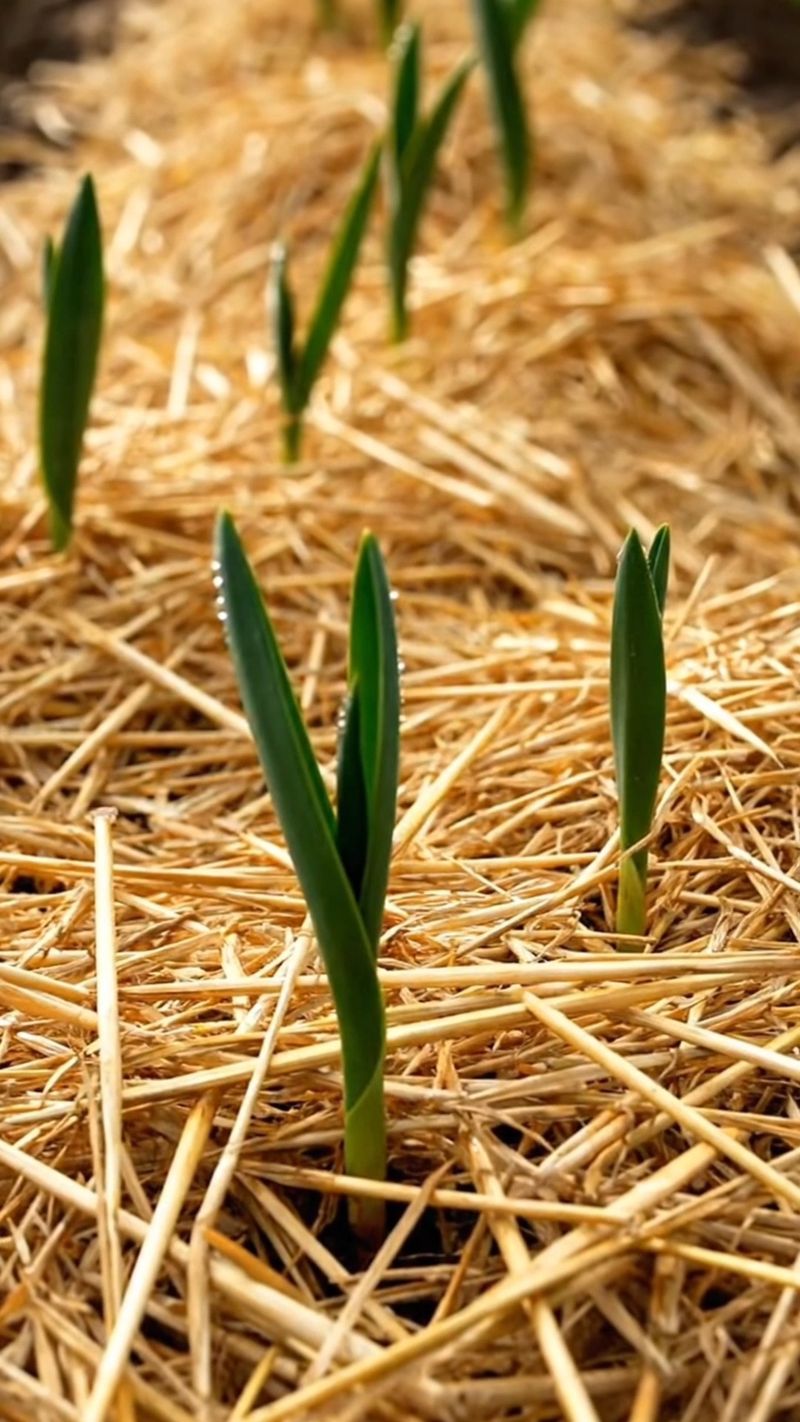
Mulch is a key factor in successful Iowa garlic growing. Without it, freeze and thaw cycles heave cloves right up out of the soil like corks.
Clean wheat or oat straw is the classic choice. Four to six inches spread loosely over the bed does the job without smothering anything.
Shredded leaves work beautifully and cost nothing if you own a rake. Run the mower over them first so they do not mat into a soggy sheet.
Hold off on mulching until the soil surface has chilled, usually a week or two after planting. Laying it down too soon can keep beds warm and invite rodents to move in for the winter.
Avoid hay unless you enjoy weeding. Hay carries seeds, and spring will deliver a surprise lawn right where your garlic lives.
Mulch also holds moisture through those dry, windy February stretches Iowa is known for. Steady soil moisture keeps roots from drying out under frozen ground.
Come April, pull the mulch back partway once shoots are pushing through. Many gardeners leave a thin layer in place to block weeds and cool the soil into early summer.
Wood chips are fine along pathways but a bit heavy directly over cloves. Save them for the walkways between beds.
If wind tends to sweep your garden bare, lay a few branches or bird netting across the straw. It looks a little scruffy, though it keeps the blanket exactly where you put it.
What To Expect From Spring Shoots Through July Harvest
March brings the payoff for October effort. Green tips poke through the straw when the rest of the garden still looks dormant, which many gardeners look forward to each year.
Give the bed a nitrogen boost around early April. Blood meal, fish emulsion, or composted manure supports the leafy growth that later becomes bulb size.
Water steadily through May and early June, aiming for about an inch a week including rainfall. Dry spells during bulb formation shrink your harvest noticeably.
Hardneck types send up scapes in June, those curling flower stalks that loop like question marks. Snip them off and the plant redirects energy into the bulb underground.
Do not toss the scapes. Chopped into stir fries or blended into pesto, they taste mild and green, and they are a treat you cannot buy easily at a store.
Stop watering roughly two weeks before harvest so the wrappers firm up. Wet soil at the end can lead to bulbs that store poorly.
Harvest arrives in mid to late July for much of Iowa. The signal is when the lower three or four leaves have browned while the upper leaves remain green.
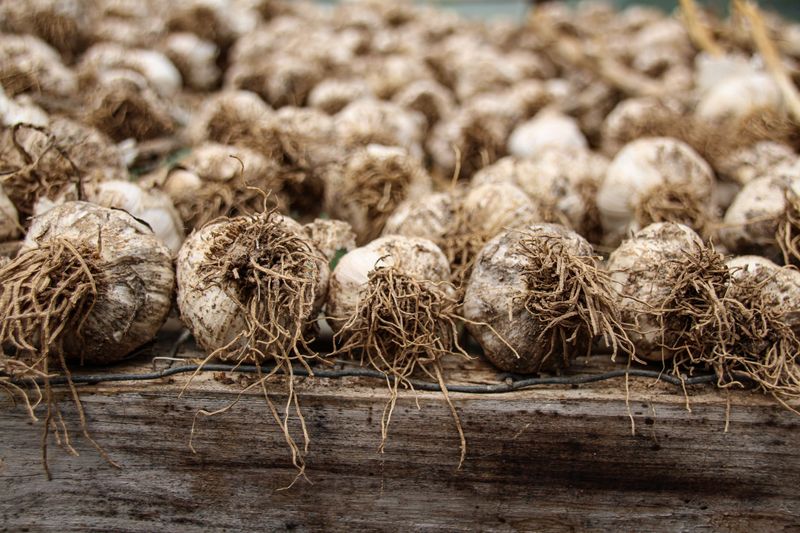
Loosen bulbs with a fork rather than yanking the stalks. Brush off soil, skip the hose, and hang bundles in a shady, airy spot for two to three weeks.
Save your finest bulbs for replanting in October. Year after year, that homegrown seed stock adapts to your particular patch of Iowa ground.