The Real Reason Your North Carolina Geraniums Are Turning Yellow
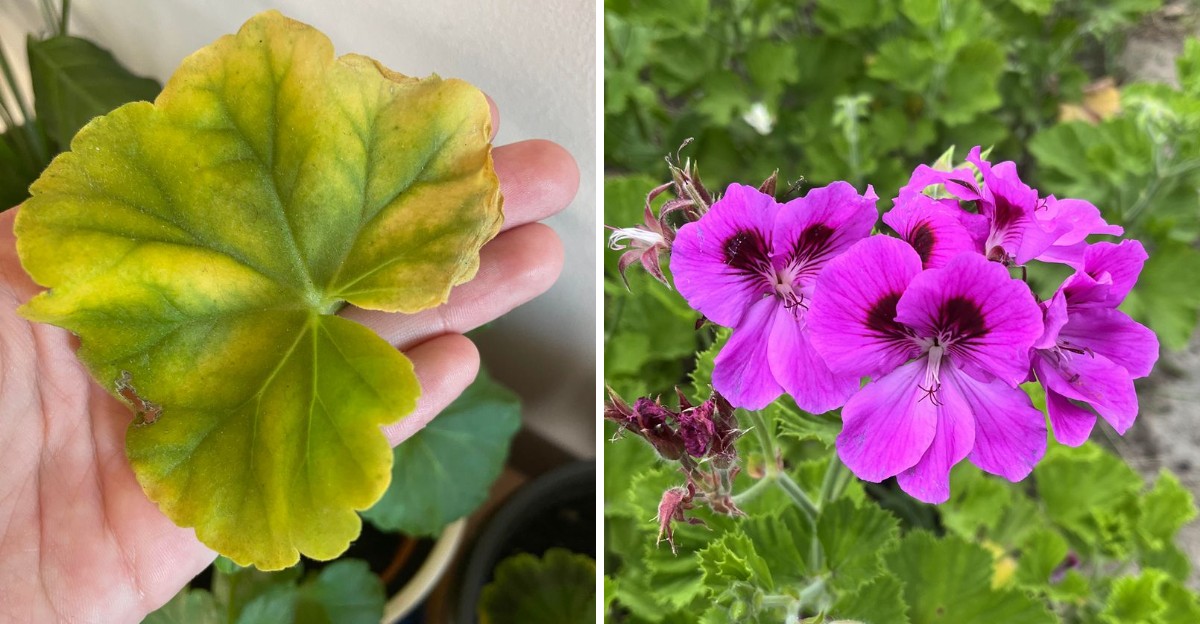
It usually starts the same way. A gardener walks out to the patio in July, sees yellow leaves creeping up the bottom of a favorite geranium, and heads straight for the bag of fertilizer sitting in the garage.
That instinct feels right, certain the plant is simply hungry and needs a boost to bounce back.
In North Carolina, that instinct is often the wrong fix entirely, and it can even make things worse than before.
According to NC State Extension guidance, too much water and stressed roots cause far more yellow geranium leaves than any missing nutrient ever does.
Most gardeners never think to check the soil moisture first, reaching for a product before ruling out the real culprit hiding right underneath the plant.
That single assumption changes everything about how you should actually respond to yellowing leaves.
Overwatering Is The Usual Culprit
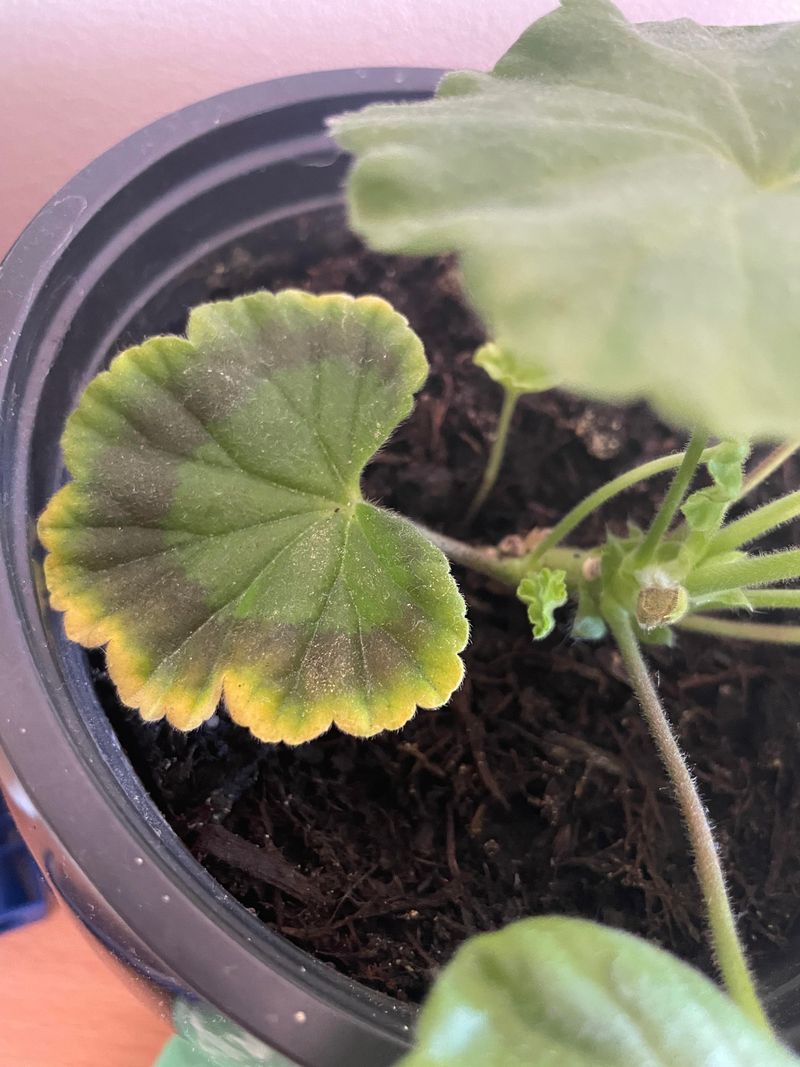
Picture a gardener in Raleigh standing over a pot of fading geraniums with a bag of fertilizer in hand, ready to fix what looks like a hungry plant.
Nine times out of ten, that bag is the wrong tool for the job. Too much water, not too little food, is the more frequent reason geranium leaves lose their green in North Carolina yards and containers.
NC State Extension points to excess moisture and root stress as leading triggers for yellow foliage on geraniums, especially during our humid, storm-heavy summers.
Rain shows up, the sprinkler runs anyway, and the soil never gets a chance to breathe between waterings. Roots sitting in constant wetness begin to suffocate, and the leaves show that damage long before anything looks wrong underground.
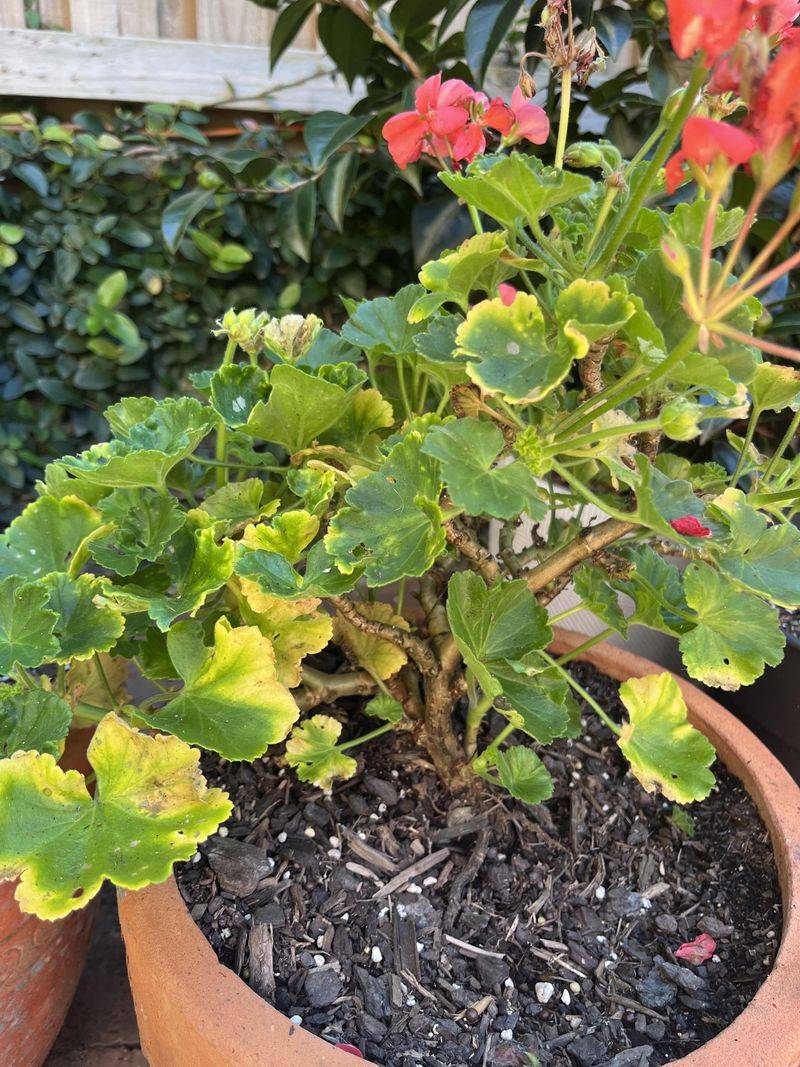
The confusing part is the timing here. Yellowing creeps in slowly, starting with older leaves near the base, which looks exactly like a hungry plant to most gardeners.
Fertilizer then gets poured into soil that is already saturated, adding stress instead of relief to an already struggling root system.
One small habit change helps more than any product on the shelf. Push a finger two inches into the soil before watering, and if it feels damp, walk away and check again tomorrow instead.
Soggy Roots Cannot Take Up Nutrients
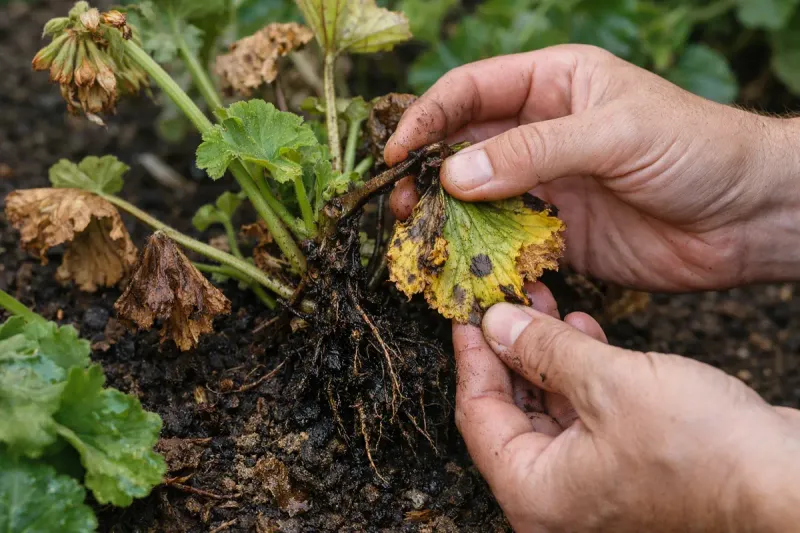
A waterlogged geranium can go hungry while sitting in perfectly good soil, which sounds impossible until you look at how roots actually function.
Roots need air pockets between soil particles to work properly. Water fills those pockets, pushes out the oxygen, and the fine root hairs that pull in nitrogen, magnesium, and iron simply quit working entirely.
The nutrients sit right there, inches away, but the plant cannot move them up into its leaves at all.
That is why the symptoms mimic hunger so convincingly to the untrained eye. Nitrogen travels easily inside a plant, so a stressed geranium pulls it out of older bottom leaves and ships it to the new growth at the tips.
Those bottom leaves fade to pale green, then to a soft butter yellow, matching the pictures in every feeding chart out there.
Your North Carolina Garden Changes Every Week. Your Plan Should Too.
Gardening in North Carolina changes quickly throughout the season. Every Friday you’ll receive a simple weekly plan showing exactly what to plant, prune, fertilize, harvest, and protect so you never miss the right timing.
Long stretches of wetness also invite root rot organisms such as Pythium, which NC State Extension notes thrive in saturated growing media. Once roots turn brown and mushy, uptake drops further.
One clue helps separate the two problems clearly. True soil hunger usually develops evenly over many weeks, while drowning roots often produce blotchy yellowing along with limp leaves that stay droopy even when the soil feels wet.
Poor Drainage Makes It Worse Fast
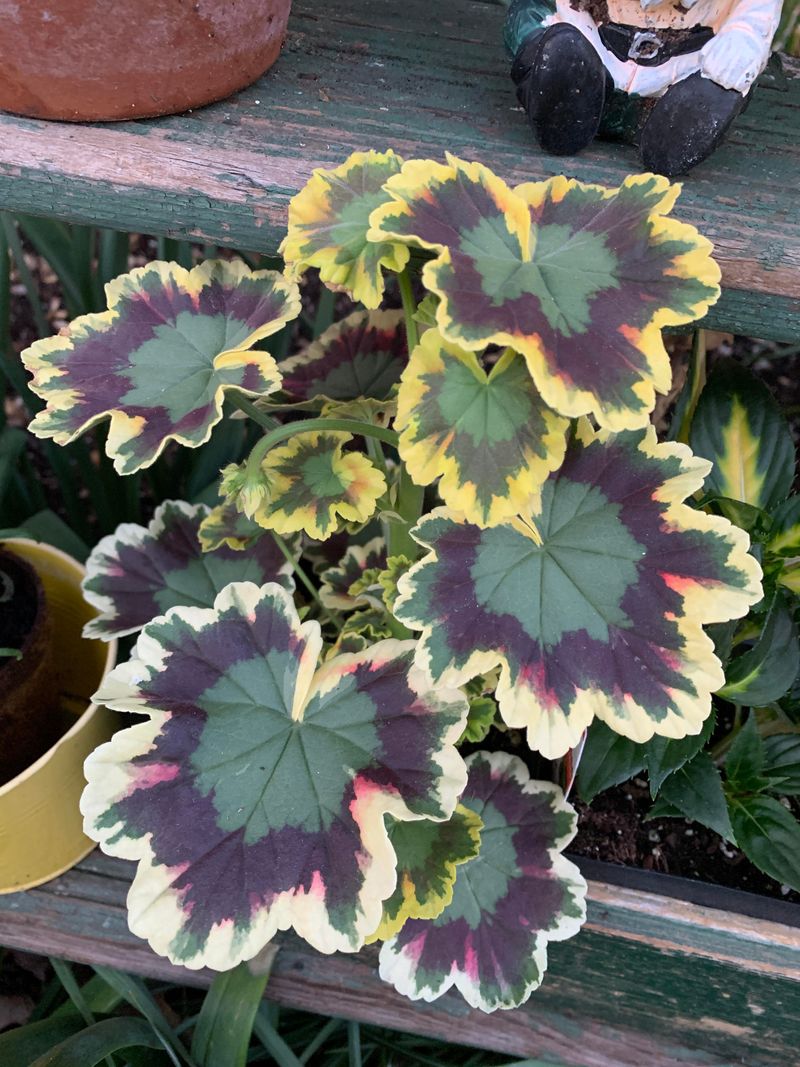
Piedmont clay has broken more gardeners’ hearts than any late frost ever could. Dig a hole in Greensboro or Durham red clay, drop in a geranium, and you have basically built a bowl that holds water after every thunderstorm.
Drainage decides how long roots stay wet, and across much of North Carolina the native soil moves water slowly. Pair that with a summer pattern of heavy afternoon downpours, and the root zone can stay soaked for days at a time.
Containers repeat the same mistake in miniature. Decorative pots without holes, saucers left full after storms, and dense garden soil shoveled into planters all trap moisture at the bottom, right where most of the roots live.
The fixes cost very little to implement. Use a light potting mix with pine bark fines or perlite, confirm every pot has open drainage holes, and tip out saucers after rain passes through.
In beds, raise the planting area four to six inches and work compost into the clay to loosen it up over time.
Coastal gardeners near Wilmington face the flip side with sandy soil that drains quickly, yet yellowing still shows up there when heavy irrigation sits above a compacted layer.
A simple field test tells you where you stand. Fill a hole with water, let it drain, refill it, then time how fast the level drops afterward.
Natural Lower Leaf Aging Plays A Role Too
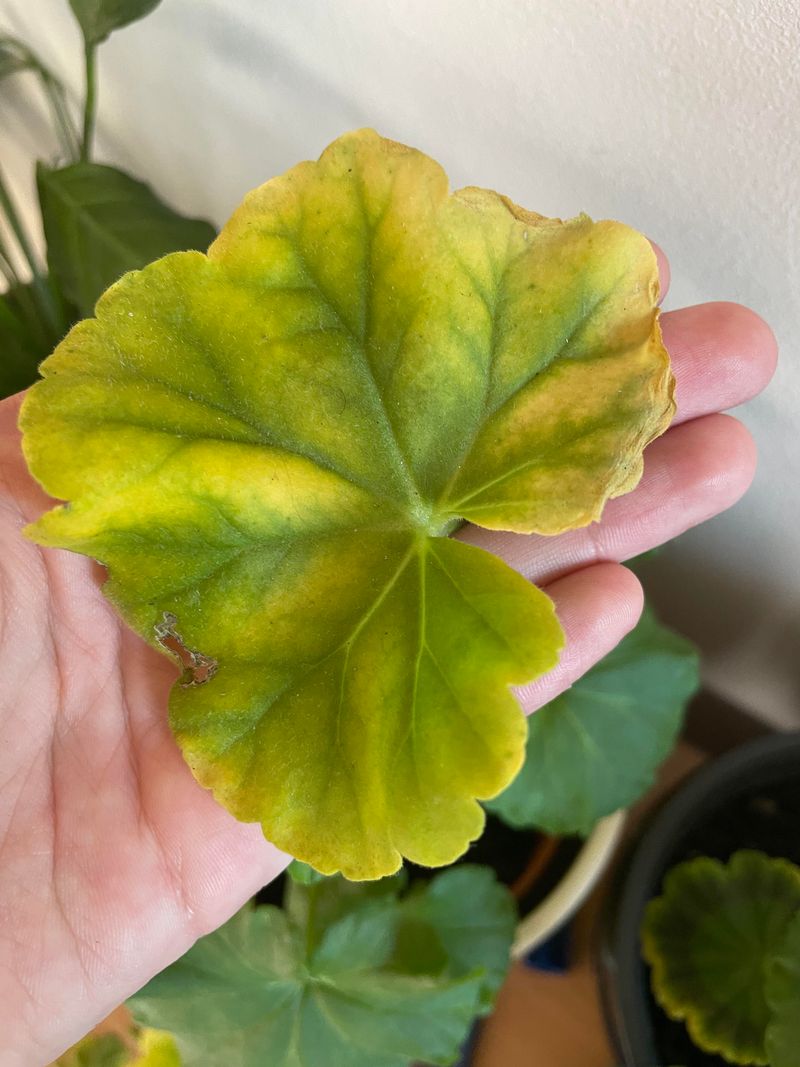
Not every yellow leaf is bad news worth panicking over. Geraniums shed their oldest foliage the way a growing kid outgrows sneakers, and those bottom leaves fade on schedule.
Plant scientists call the process senescence. The lowest leaves get shaded by new growth above them, photosynthesis slows to a crawl, and the plant recycles nitrogen out of them before letting them drop naturally.
Scale tells you whether to worry here. One or two yellow leaves at the very base each week on an otherwise bushy, blooming plant counts as routine housekeeping, nothing more.
A dozen leaves fading at once, including leaves higher up the stems, points right back toward water and root trouble instead.
Aging leaves also yellow evenly and pop off with a light tug, while stress-related yellowing often brings brown edges, spots, or leaves that hang on stubbornly.
Keeping up with cleanup matters more than most people expect too. In our muggy Carolina summers, dying foliage left sitting in a pot stays damp and invites gray mold, a disease NC State Extension lists among the common problems on geraniums.
A tidy geranium carrying a couple of yellow leaves down low is simply a healthy plant tending to its own business, nothing to fix or worry about.
Nutrient Deficiency Is Less Common Than Assumed
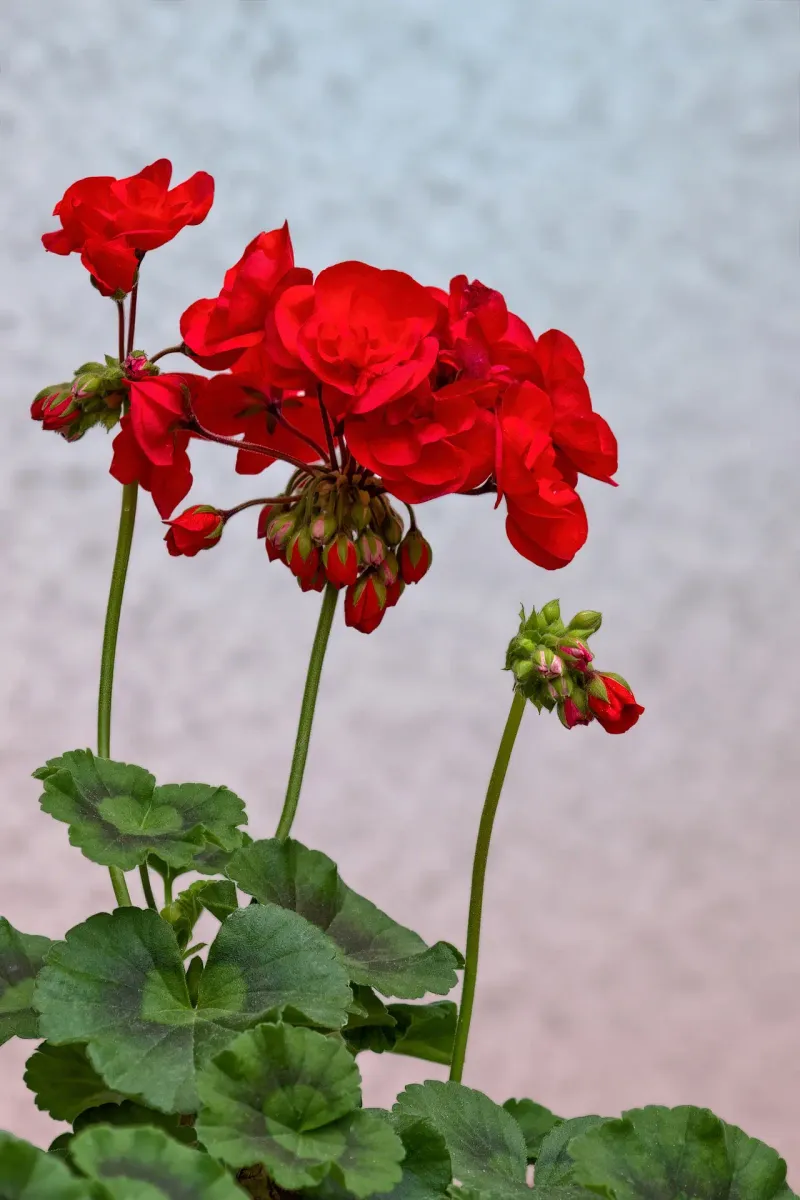
Fertilizer is the first suspect and the least likely offender in most cases. Most bagged potting mixes carry a starter charge that feeds a geranium for several weeks on its own.
Real deficiencies do occur, just not as often as garden center chatter suggests, and they look genuinely different from watering issues. Iron or magnesium shortages typically show yellow between green veins, often on newer leaves toward the top.
General nitrogen hunger fades the whole plant to an even pale green with weak, stunted growth instead of the patchy pattern seen with root stress.
Here is a detail worth filing away for later. Cool, soggy soil can lock up nutrients that are already present, which is why a spring geranium in a rainy week can look starved for no clear reason.
Warmth and drier soil solve that problem, not another dose of plant food poured on top.
Overfeeding carries its own penalty too. Extra fertilizer salts build up in containers, burn tender root tips, and cause yellowing with scorched leaf edges that gets misread as yet another deficiency.
For anything beyond a guess, send a soil sample to the NCDA and CS Agronomic Division lab through your county Extension office for a real answer.
Letting Soil Dry Between Waterings Helps
Ask a greenhouse grower how they keep geraniums thriving, and you will hear the same short answer every time. Water thoroughly, then wait before watering again.
Geraniums evolved in dry, rocky South African habitats, so their thick stems store moisture and they handle a dry spell far better than a swamp ever could.
Soaking the soil until water runs from the drainage holes, then letting the top inch or two dry before the next drink, gives roots the oxygen they need between waterings.
Timing beats routine here every time. Skip the fixed Tuesday and Friday schedule and test the soil instead, either with a finger or by lifting the pot to feel its weight.
A light pot needs water. A heavy one does not need anything yet.
Morning is the best window in North Carolina for watering. Early watering lets foliage dry before evening, which cuts down on the leaf spot and mold problems our humidity encourages all summer.
A few extra moves pay off during storm season too. Slide containers under an eave or porch roof when several rainy days line up in the forecast, and turn off automatic irrigation after a soaking rain passes through.
Choosing The Right Container Makes A Real Difference
Not every pot treats a geranium the same way, and the material a container is made from quietly shapes how often that soil stays wet or dries out.
Glazed ceramic and plastic pots hold moisture far longer than terra cotta, since the porous clay in unglazed terra cotta actually wicks water out through its own walls, helping soil dry faster between waterings.
That difference matters most in North Carolina’s humid summers, where a plastic pot sitting through a week of afternoon storms can stay soggy for days longer than a terra cotta version planted with the same geranium.
Pot size plays a role too. An oversized container filled with more soil than the roots can actually use holds excess moisture in the areas roots are not reaching, creating exactly the soggy, low-oxygen pocket that leads to yellowing.
Matching pot size closely to the current root ball, then moving up gradually as the plant grows, keeps soil volume in proportion to what the roots can actually process between waterings.
Drainage holes matter just as much as material and size combined. A single small hole in the bottom of a large pot often cannot drain fast enough during a heavy downpour, so multiple holes or a wider opening make a real difference during storm season.
Elevating pots slightly with pot feet or a few small rocks underneath lets water escape freely rather than pooling at the base, where it can sit against the drainage holes and slow drainage even further.
Switching a struggling geranium from a glazed or plastic pot into terra cotta, or simply drilling a few extra holes into an existing container, often solves lingering yellowing faster than any change in watering schedule alone.