The Arborvitae Mistake Ohio Homeowners Make Right Before Winter
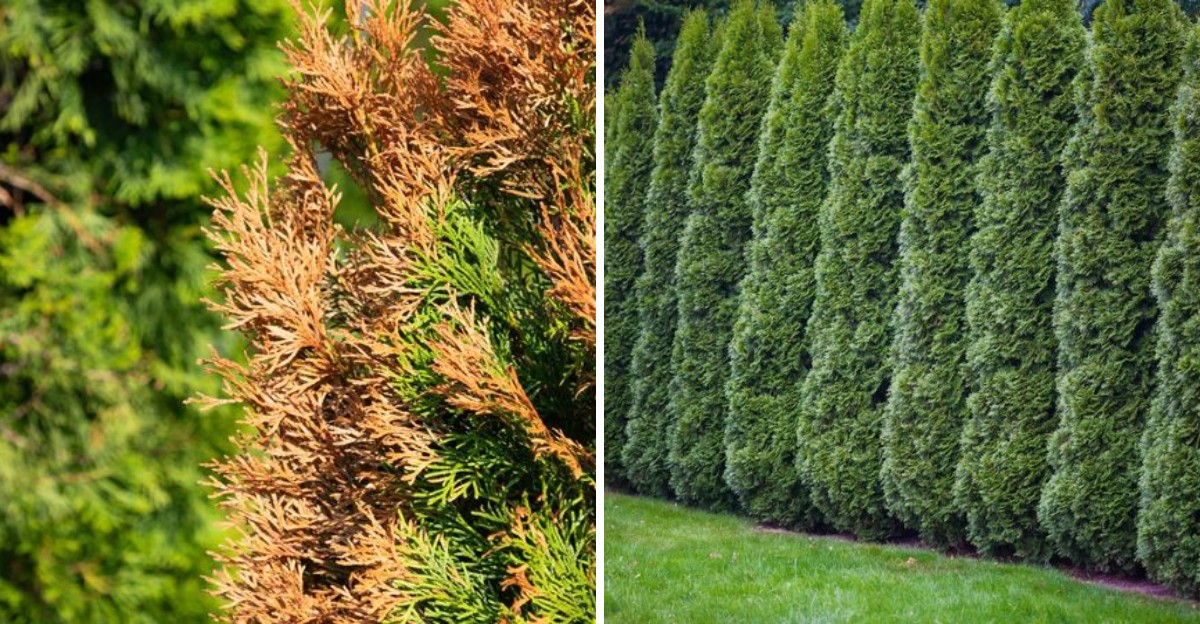
Your arborvitae looks tough as nails, but one common habit right now could leave it brown and bare by spring.
Ohio homeowners rush to wrap their arborvitae in burlap or spray on anti-desiccant, yet the real trouble starts underground, not on the branches.
Roots need a deep drink before the ground locks up for winter, and most people skip this step once temperatures drop, assuming rain will handle it.
It won’t. A shrub that enters the cold season thirsty struggles to protect its needles from harsh wind and sun, and the damage doesn’t show up until months later when it’s too late to fix.
Fertilizer timing trips people up too. Feed it at the wrong moment and you push out tender new growth that stands no chance against a hard frost.
Check your watering schedule before the first freeze hits. This one oversight separates a lush green hedge from a row of sad, scorched shrubs.
1. Pruning Too Late Before Winter Arrives
Nothing feels more satisfying than a crisp, freshly shaped hedge right before the holidays. Unfortunately, that tidy haircut in November can backfire in ways you will not notice until spring.
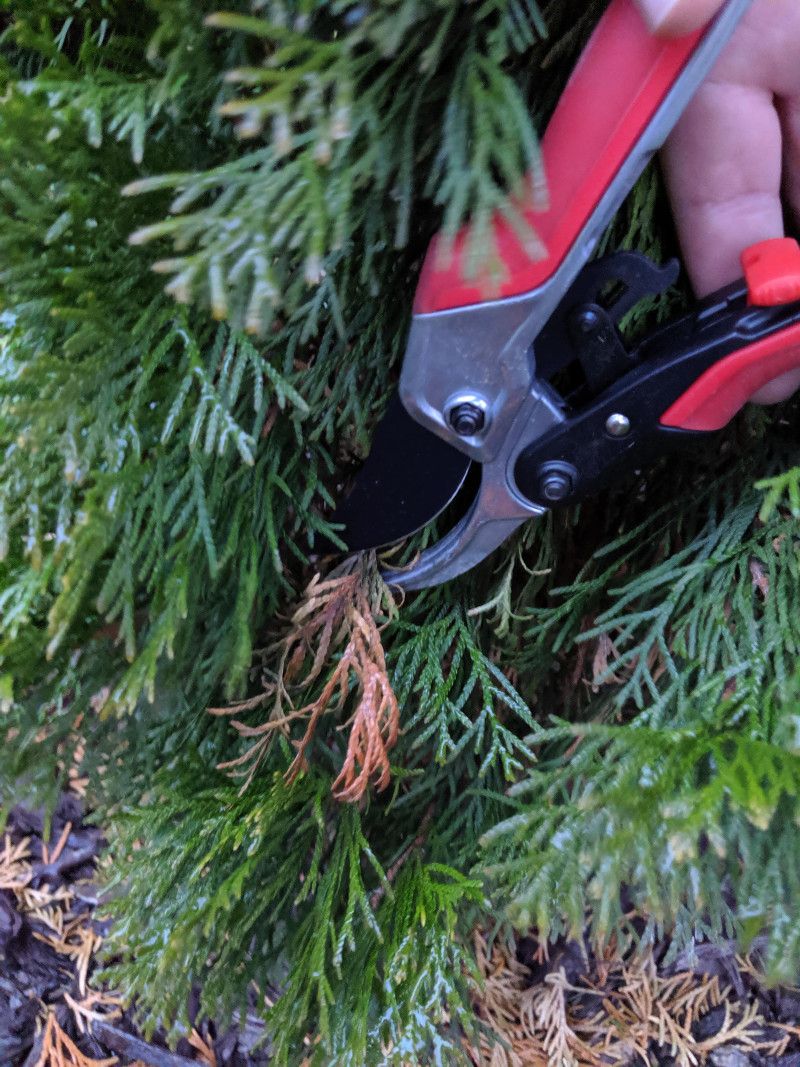
When you trim an evergreen late in the season, the plant responds by pushing out soft new shoots. Those tender tips have no time to toughen up before freezing air arrives, so they brown out and look ragged.
Timing matters more than technique here. Save serious shaping for late spring, and keep fall work limited to snipping a stray branch or two.
Many Ohio growers prefer late winter or very early spring, right before fresh growth begins, because the plant heals quickly once it wakes up.
There is one more rule that trips people up. Arborvitae only regrow foliage from the green, newer portions of a branch.
Cut back into the bare brown interior wood and that spot may stay empty for years, leaving a hole in your privacy screen.
A smart approach is to step back, walk around the hedge, and prune only what clearly sticks out. Light hands win with these plants.
Fun bit of history: arborvitae earned the nickname tree of life from early French explorers who used its foliage as a vitamin C remedy.
2. Skipping Deep Watering During Dry Fall Weeks
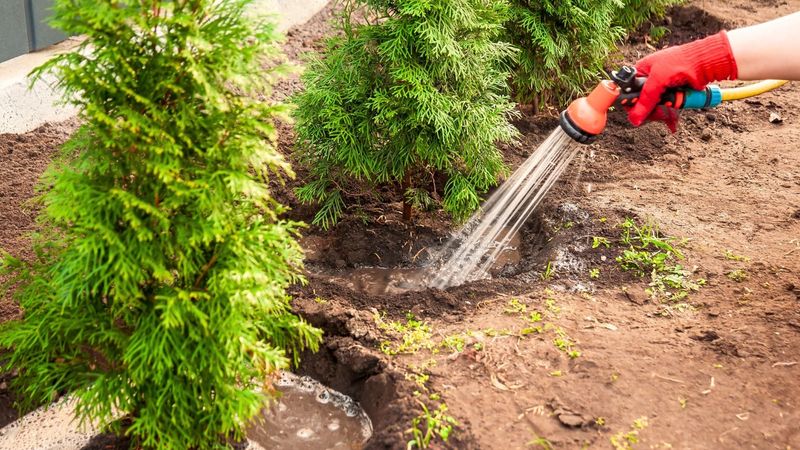
Here is a fact that surprises a lot of folks: evergreens keep losing moisture through their needles all winter long, even when the thermometer sits below freezing. Their roots, meanwhile, cannot pull water from frozen ground.
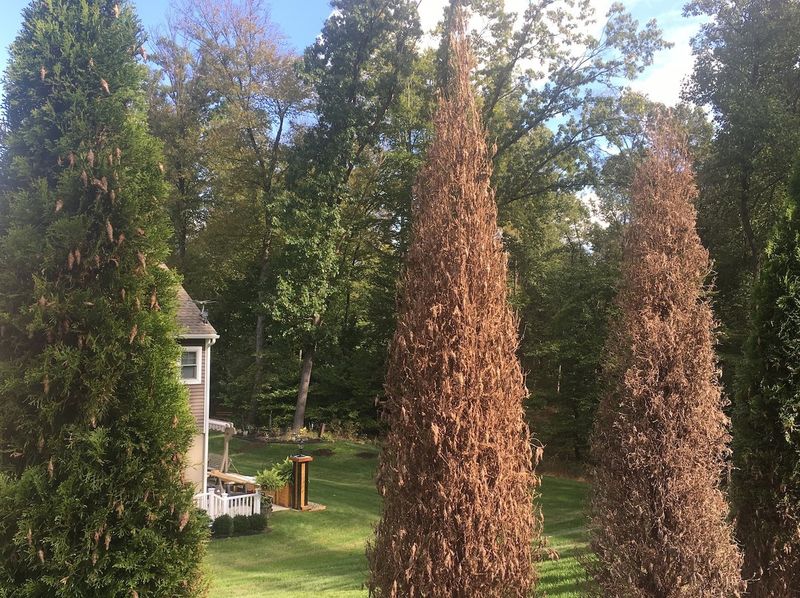
That mismatch is exactly why arborvitae turn that sad rusty brown by March. Gardeners call it winter burn, and it usually traces back to a dry autumn rather than the cold itself.
Ohio falls can swing from soggy to bone dry in a matter of weeks. When the rain stops, the hose needs to come back out, even if the air feels chilly and the lawn has gone dormant.
Give established plants a slow, deep soaking about once a week whenever the top few inches of soil feel dry. Newly planted ones are thirstier and may need more frequent watering during warm, dry stretches until their roots establish.
Your Ohio Garden Changes Every Week. Your Plan Should Too.
Gardening in Ohio changes quickly throughout the season. Every Friday you’ll receive a simple weekly plan showing exactly what to plant, prune, fertilize, harvest, and protect so you never miss the right timing.
The last watering of the season is the most valuable one. Soak the root zone thoroughly just before the ground freezes solid, usually sometime in late November or early December here.
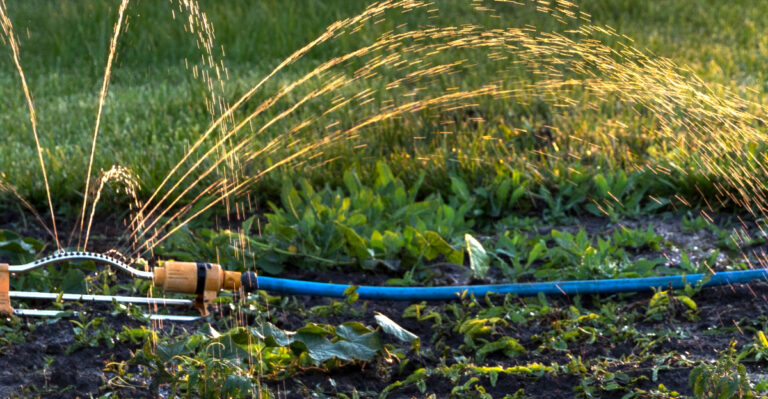
A soaker hose laid along the hedge line makes the whole job effortless. Set a timer, let it run low and slow, and let the water sink deep instead of running off.
3. Leaving Roots Exposed To Temperature Swings
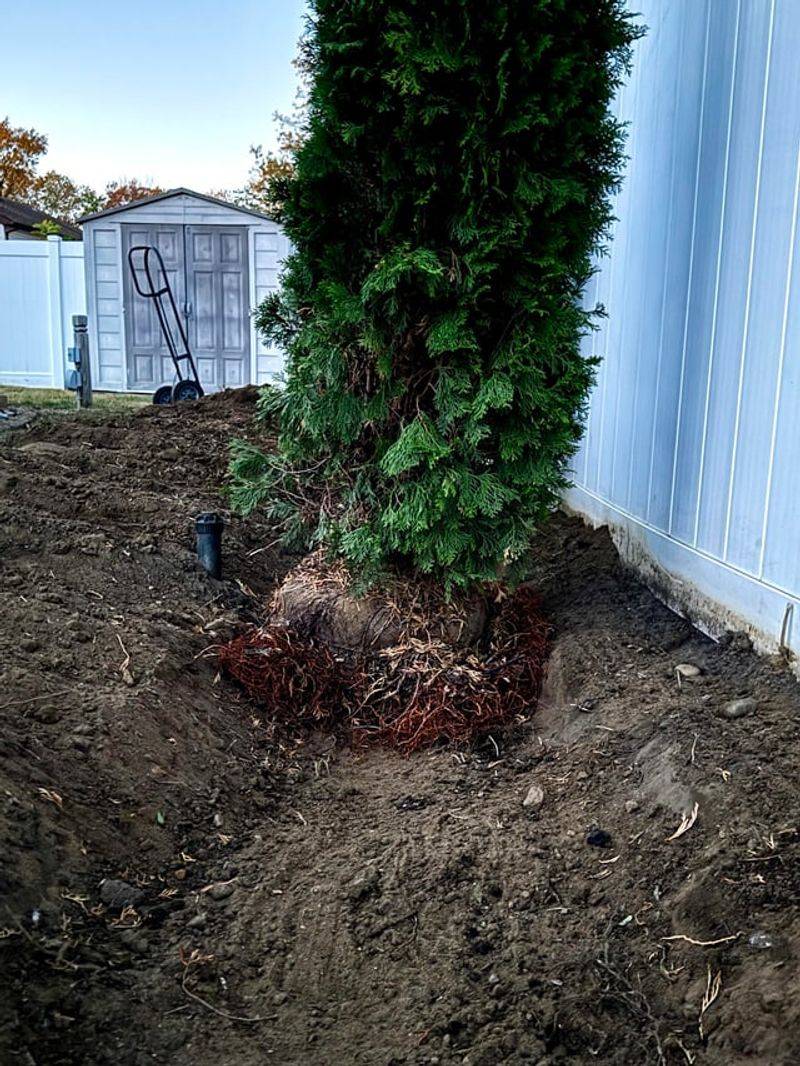
Ohio winters have a talent for whiplash. A 55 degree Tuesday followed by a 12 degree Thursday is just another week in Columbus or Cleveland.
Roots feel every bit of that swing. Soil freezes, thaws, and heaves, which can loosen young plants and tear fine feeder roots without anyone noticing above ground.
A two to three inch blanket of mulch smooths out those temperature spikes. Shredded bark, wood chips, or pine needles all work, holding moisture in and keeping the soil closer to one steady reading.
Snow helps too, oddly enough. A consistent snow cover can insulate the root zone and reduce temperature swings, although exposed sites can still experience winter stress.
Container plants face the toughest situation because their roots sit above ground on all sides. Slip the pot into a larger bag that still drains, then pack the gap with packed pine needles or extra mulch for a buffer.
Newly planted hedges deserve the same courtesy. Their root balls have not spread into surrounding soil yet, so they chill faster than an established plant with a wide network underground.
Spread the mulch out to the drip line rather than in a tight little donut. Wider coverage protects more of the roots that actually matter.
4. Ignoring Winter Wind On Open Landscapes
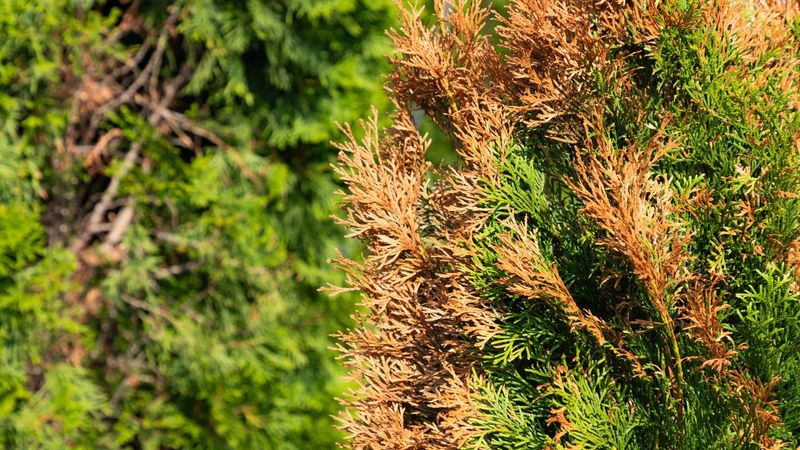
Stand in an open Ohio yard in January and you will understand what your hedge is dealing with. That wind does not just feel cold, it pulls moisture straight out of every needle it touches.
Arborvitae planted along property lines, near cornfields, or beside open driveways catch the worst of it. Foliage on the windward side often browns while the sheltered side stays green, which is an obvious giveaway about the cause.
A burlap screen is the classic fix, and it costs very little. Drive three or four stakes on the windy side, staple burlap across them, and leave a gap between the fabric and the branches so air can still move.
Notice the screen does not have to wrap the whole plant. Blocking the prevailing northwest wind handles most of the trouble in this part of the state.
Anti-desiccant sprays offer another layer of help. Applied in late fall on a mild day, they coat the foliage with a thin waxy film that slows moisture loss.
Some products may require reapplication according to the label, especially after weather conditions reduce the coating’s effectiveness.
Roadside plantings get a bonus problem from salt spray. Burlap pulls double duty there, catching slush thrown by passing plows.
5. Wrapping Too Tightly Around Evergreen Branches
Picture a tree bundled up like a mummy, twine cinched so tight the branches squeak. Plenty of Ohio yards feature one every December, and the plant rarely thanks anyone for it.
Support is good. Strangulation is not.
When ties pinch too hard, air stops moving through the interior and moisture gets trapped against the foliage. Constant dampness plus warm spells invites fungal trouble and leaves compression marks on branches.
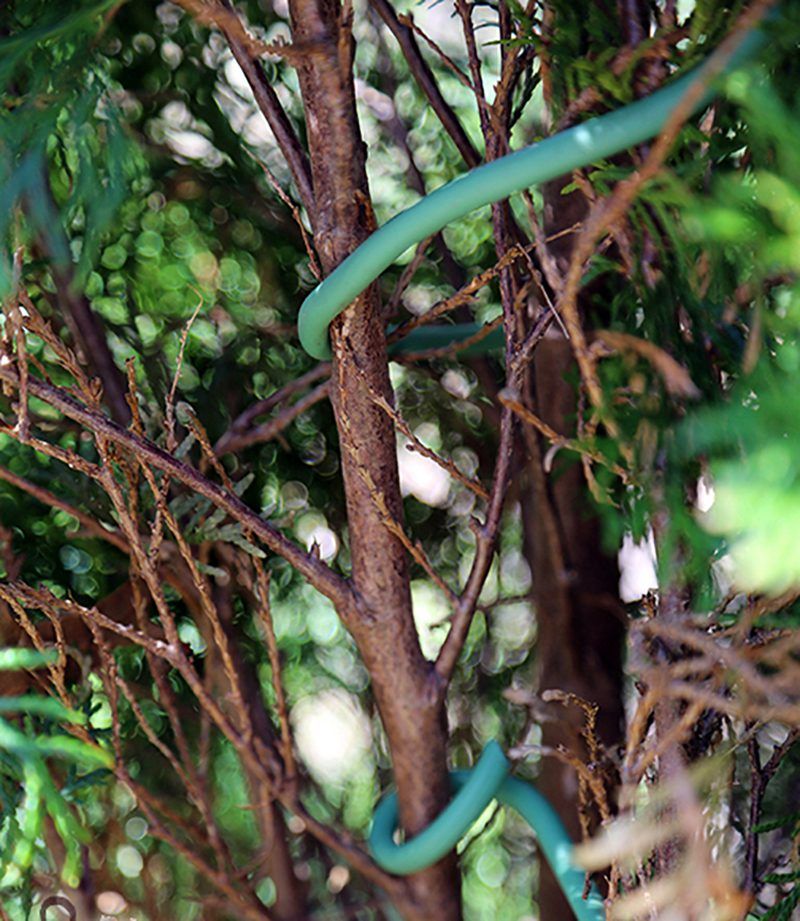
The better method uses soft twine or coated wire wound in a loose criss-cross pattern from the bottom up. Snug enough to keep branches from splaying under snow, loose enough to slide a couple fingers underneath.
Some gardeners swear by foam-covered wire. It bends into shape easily, spreads pressure across a wider surface, and gives a little as the plant grows.
Work from the base toward the tip, checking as you go that the natural cone shape stays intact. Squeezing a wide plant into a pencil shape stresses branches at their attachment points.
Calendars matter here too. Once heavy snow risk fades in early spring, take everything off, because forgotten twine can bite into growing wood by summer.
Mark your phone with a reminder for late March. Future you will appreciate the nudge.
6. Adding Mulch Without Crowding The Trunk
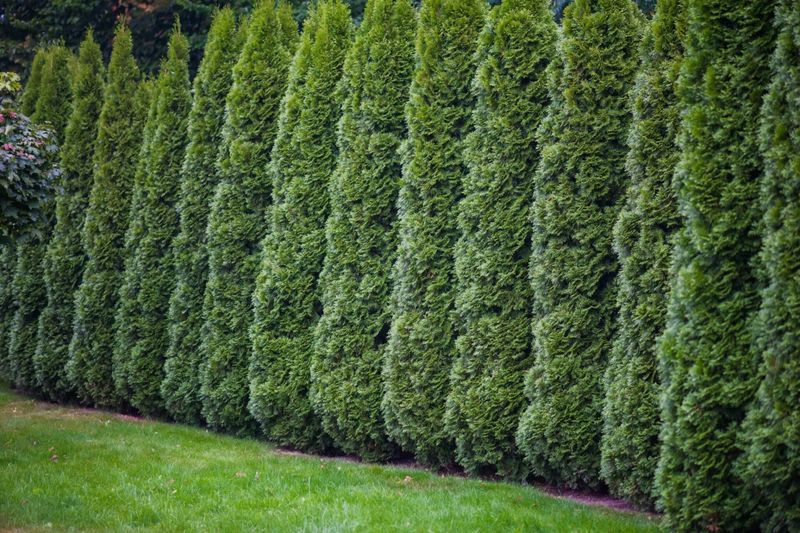
Landscapers have a nickname for the tall cone of mulch piled against a trunk: the mulch volcano. It looks neat from the street and causes quiet trouble underneath.
Bark and wood chips hold water, which is wonderful over roots and unhelpful against a trunk. Constant moisture softens bark, invites rot, and gives rodents a cozy tunnel to chew in during winter.
The correct shape is more like a doughnut than a mountain. Spread two to three inches evenly and pull everything back at least six inches from the trunk so the base can breathe.
Extend the ring outward toward the drip line, the spot where the outermost branches end. That is where the hungry feeder roots live, and they benefit most from the insulation.
Shredded bark, wood chips, and pine needles all do the job nicely in Ohio soils. Skip thick layers of whole leaves, which mat down into a soggy sheet that water cannot pass through.
One more tip worth remembering: refresh mulch rather than stacking new on old. Rake and fluff the existing layer first, then top it up only if the depth has dropped below two inches.
Do that each fall and your hedge gets steady protection without a smothered base.
7. Planting Too Late For Strong Root Growth
Garden centers love a November clearance sale, and those discounted arborvitae are genuinely tempting. The catch is what happens underground after you get them home.
Roots need warm soil and a few unhurried weeks to push out into their new surroundings. Plant too close to freeze-up and the tree heads into winter with almost nothing anchoring or feeding it.
Early fall or early spring gives far better results across Ohio. September planting, in particular, takes advantage of warm soil and cooling air, a combination roots adore.
Late fall planting can still work if the ground has not hardened, though the plant will need extra babysitting. Water deeply right up until freeze-up and mulch generously.
Heavy clay is the other local hurdle, and much of the state has plenty of it. Set the root ball an inch or two above grade so water drains away instead of pooling around the crown.
Then mound soil gently up the sides and mulch over the top, keeping the material off the trunk itself.
Newcomers stay thirsty for two full growing seasons. Regular deep soaks during that stretch build the sturdy root system that carries them through every winter afterward.
8. Forgetting Snow Damage On Narrow Hedges
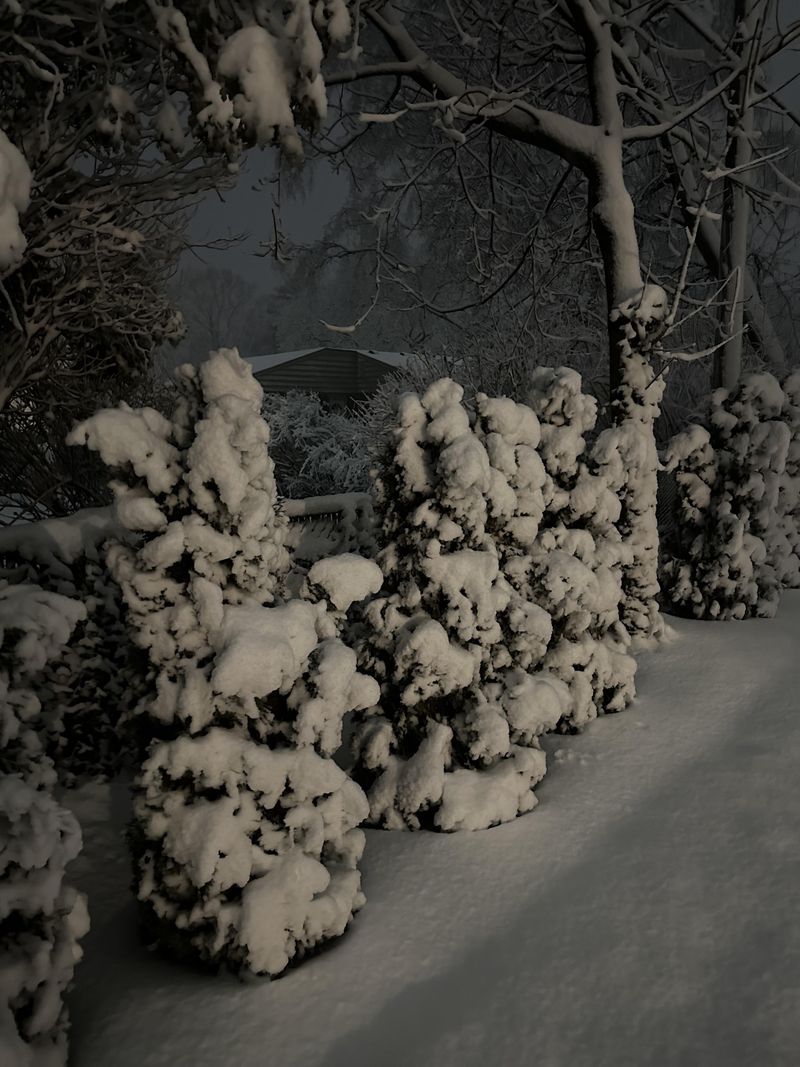
Slim, upright varieties like Emerald Green and Degroot’s Spire look sharp along a fence line. Their narrow frames also catch and hold heavy, wet snow like a funnel.
Weight builds, branches splay outward, and by February the hedge resembles an open umbrella that will not close. Some branches split at the base and stay that way.
Preventing the problem beats fixing it. Before the first big storm, tie the branches loosely together with twine or flexible cord in a spiral, creating a tighter cone that sheds snow instead of catching it.
After a snowfall, head out with a broom and brush upward from underneath the branches. Sweeping downward adds force in the direction the snow is already pulling.
Timing helps as well. Clearing snow while it is still fluffy is far easier than chipping at a crust that has refrozen overnight.
Shovel placement deserves a mention too. Dumping driveway snow onto a hedge piles hundreds of pounds against plants already carrying a load, so aim the pile elsewhere.
Roadside rows near plow routes take a double hit from weight and salt. Burlap on that side softens both problems.
Remove ties in early spring so branches can relax into their natural spread again.
9. Starting Spring Repairs Too Early
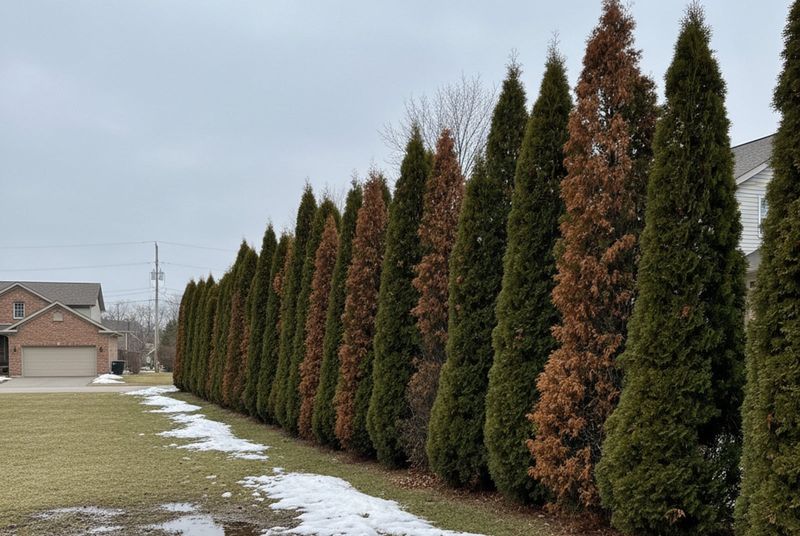
March arrives, the snow slumps, and suddenly your hedge looks battered. The urge to grab the pruners right then is powerful, and it is worth resisting.
Brown foliage in early spring is often just temporary stress, not a permanent loss. Some foliage that looks stressed early in spring may improve once temperatures rise and roots become active again, while truly damaged sections may remain brown.
Wait until snow and ice have melted fully before judging anything. Prying frozen branches apart or knocking ice loose with a rake causes more breakage than the storm did.
Once the last frost passes, take a close look. Scratch a twig lightly with a thumbnail, and if you find green underneath, that branch still has plans for the season.
Trim only what clearly failed, cutting back to healthy green growth rather than into bare interior wood. Remember, arborvitae will not refill those brown zones.
Branches still leaning oddly by early summer can be coaxed back with broad, soft straps tied to stakes. Wide material spreads the pressure so nothing gets creased.
Pull off all winter wraps, ties, and burlap as soon as heavy snow risk ends. Leaving them on through warm weather traps heat and moisture.
Then water, mulch, and give the plant a season to recover.