The Georgia Native That Fills Shady Garden Spots With Blue Fall Blooms
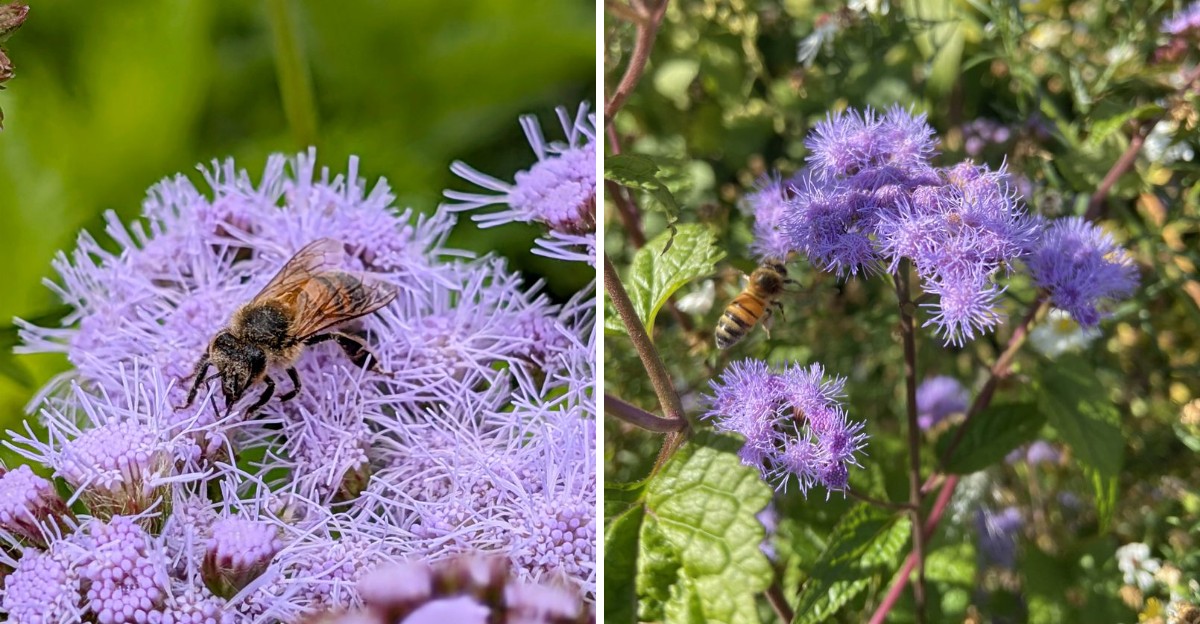
There is a damp, shady strip behind the garage in plenty of Georgia yards, the kind of forgotten corner where grass thins out and weeds take over year after year.
Then late summer arrives, and suddenly that neglected spot is covered in soft, fuzzy clusters of periwinkle blue just as the rest of the garden starts winding down.
The plant behind that surprise is blue mistflower, a tough native perennial that actually prefers filtered light over blazing sun.
Most gardeners write off shady corners entirely, assuming nothing worth looking at will ever grow there without full sun.
Understanding how it grows, blooms, and spreads makes it one of the smartest picks for shady problem areas across the state.
Meet Blue Mistflower, The Shade Loving Native
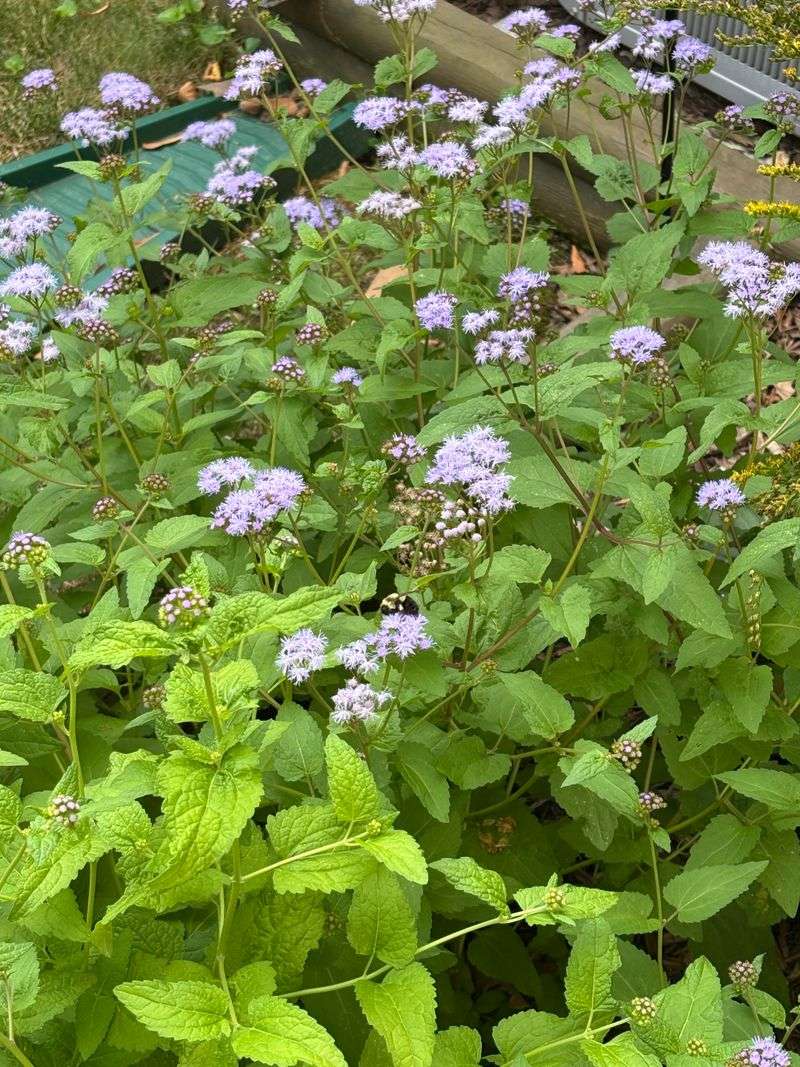
Tucked along creek banks, roadside ditches, and shaded woodland edges across Georgia, blue mistflower spends most of the summer looking like ordinary green filler nobody notices.
Botanists call it Conoclinium coelestinum, though gardeners often know it as wild ageratum instead.
The species is native to much of the eastern and central United States, including every region of Georgia, from the mountains down through the coastal plain.
University of Georgia Extension includes it among native perennials suited to moist, partly shaded sites throughout the state.
Plants reach roughly one to three feet tall, with soft, triangular leaves that have scalloped edges and slightly wrinkled surfaces. Stems often carry a purple tinge near the base.
What sets it apart from other fall bloomers is its comfort in lower light. Asters, goldenrods, and ironweed usually demand sun, while mistflower tolerates the dappled shade beneath tall pines and hardwoods.
Because it grows wild here, it handles humid summers, sudden downpours, and heavy clay without much fuss at all.
Gardeners who inherit a damp, shady strip along a fence or drainage swale often find this plant the simplest answer available to them.
Deer tend to leave the fuzzy foliage alone too, which is welcome news in neighborhoods where hungry herds treat flower beds like a salad bar.
Fuzzy Blue Blooms Arrive Right On Cue
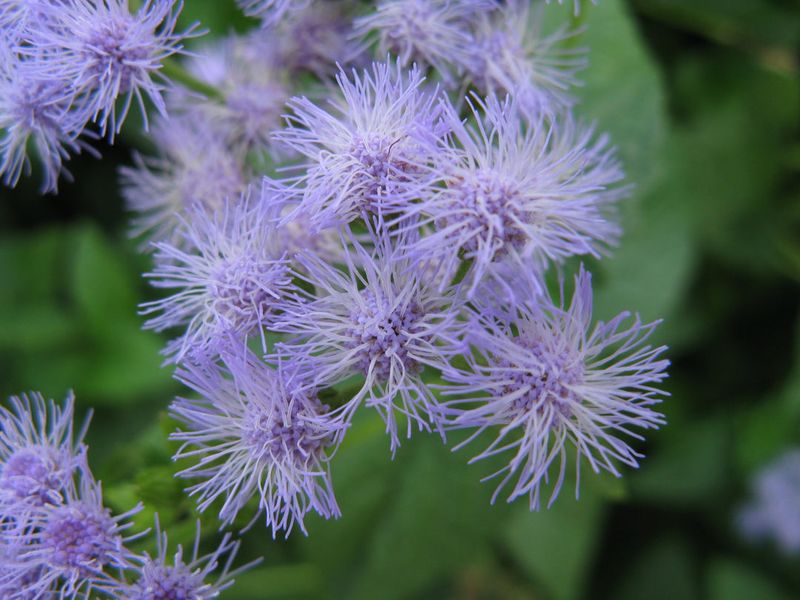
Late August rolls in, and flat clusters of thread-like flowers open in a shade somewhere between periwinkle and lavender-blue across the whole patch.
Each cluster holds dozens of tiny disk flowers, and every flower pushes out slender threads called styles. That fringe gives the bloom head a fuzzy, slightly blurry look.
Bloom season generally runs from late summer into October across Georgia, often continuing until the first hard frost knocks the stems back.
True blue is rare in the plant world, so the timing feels like a gift. Most of the autumn palette leans gold, rust, and burgundy, which makes a drift of cool blue stand out sharply.
Flowers sit at stem tips in loose, rounded clusters two to four inches across. From a distance, a colony reads as a hazy blue cloud rather than separate blossoms.
Color intensity shifts with the weather, appearing deeper during cool, cloudy stretches and slightly paler under hot, bright afternoons.
Your Georgia Garden Changes Every Week. Your Plan Should Too.
Gardening in Georgia changes quickly throughout the season. Every Friday you’ll receive a simple weekly plan showing exactly what to plant, prune, fertilize, harvest, and protect so you never miss the right timing.
Cut a few stems for a jar on the kitchen table, and they pair beautifully with goldenrod or a sprig of beautyberry.
Once flowering finishes, fluffy seed heads follow, drifting on the breeze like miniature dandelion puffs scattered across the yard.
Pollinators Flock To It Before Frost
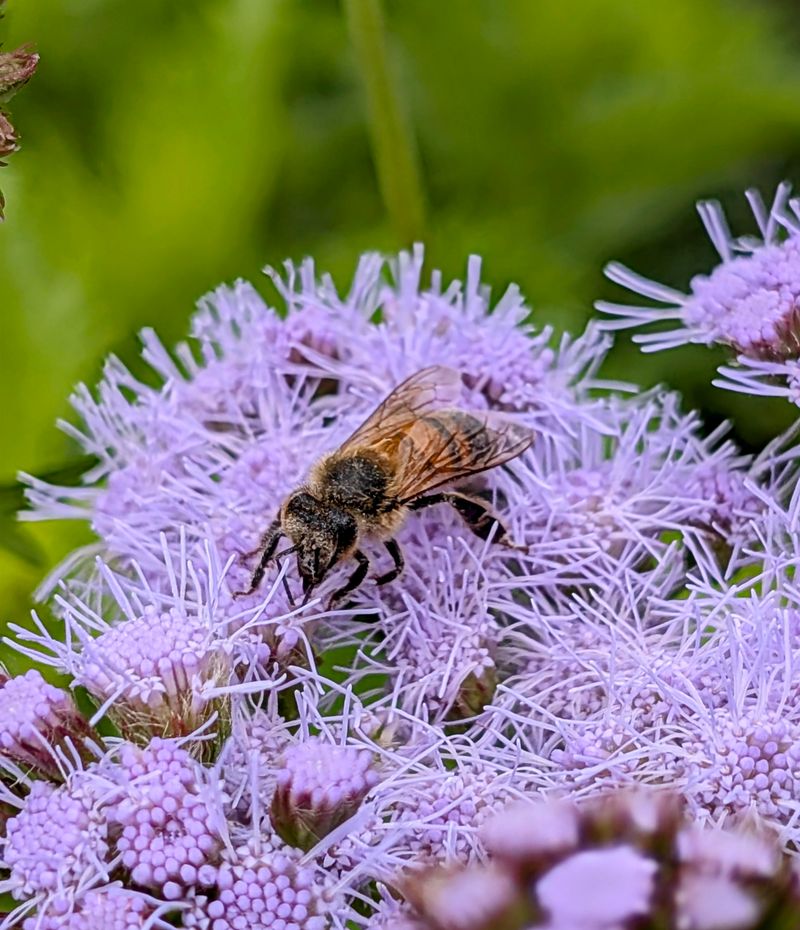
Stand beside a blooming patch on a warm October afternoon, and the noise gives it away immediately. Bees, wasps, flies, and butterflies work the flowers so steadily that the whole colony seems to hum.
Timing explains the crowd here. By early fall, many nectar sources have dried up, yet monarchs are still traveling south and native bees are stocking up before cold weather settles in.
Small butterflies seem especially fond of the blooms. Skippers, hairstreaks, painted ladies, and buckeyes all show up, and the flat clusters double as easy landing pads.
Butterfly references also report that male queen butterflies gather chemical compounds from Conoclinium for courtship, a claim worth flagging since queens are uncommon in most of Georgia.
Planting a patch near a vegetable garden helps too, since the same bees visiting mistflower will stop by late squash and bean flowers on the way.
Skip the insecticides here entirely. A plant that draws this much traffic only works as a pollinator stop if the nectar stays safe for visiting insects.
Leaving stems standing through winter offers shelter as well, because hollow stalks and fallen leaves give overwintering insects a place to hide.
Part Shade Suits It Better Than Sun
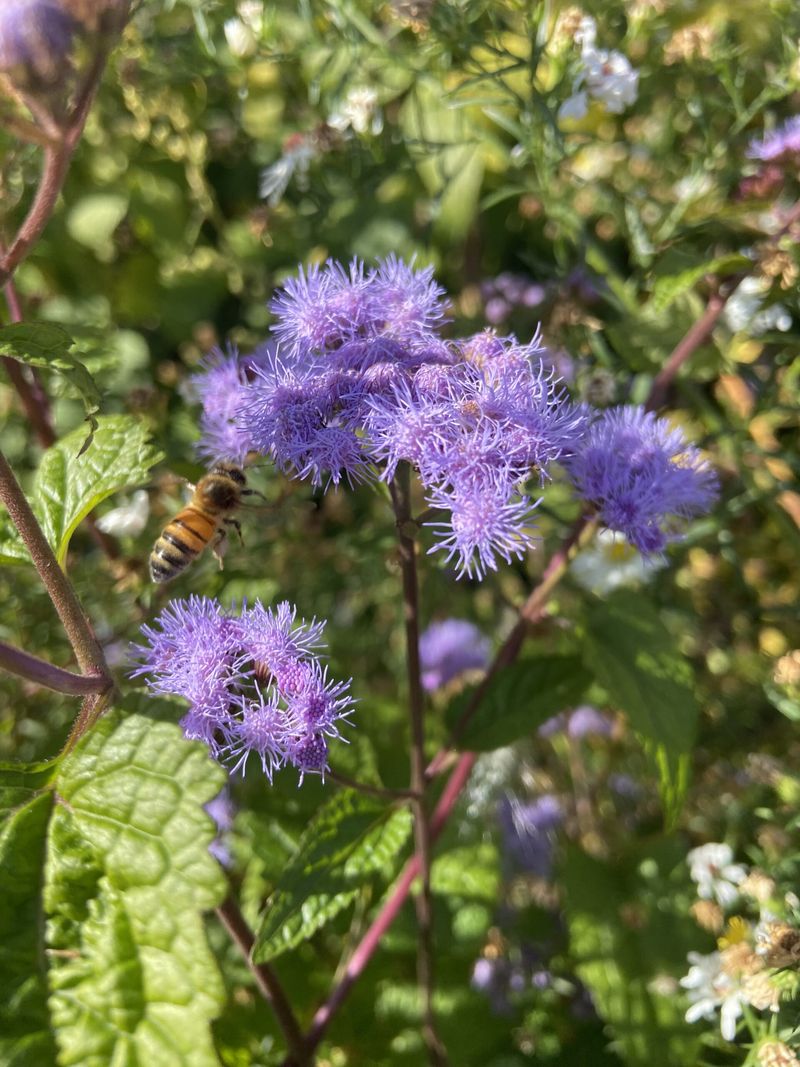
Ask most gardeners for a native fall bloomer, and you will hear goldenrod or aster, both of which sulk without full sun. Mistflower plays by different rules entirely.
UGA Extension lists it for sun to partial shade, and Georgia gardeners usually get the best results with a few hours of morning light followed by afternoon protection.
Heat is the reason behind that preference. Summers here can be brutal, and plants baking in full afternoon sun wilt fast unless the soil stays constantly damp.
In dappled light beneath pines, oaks, or a high maple canopy, the leaves hold a deeper green and the stems stay noticeably sturdier throughout the season.
Deep shade is a different story though. Under a dense evergreen where almost no light filters through, plants stretch, flop, and bloom poorly.
A practical test worth trying: if hostas and ferns thrive in a spot, mistflower will probably bloom there too. If moss is the only thing growing, look for a brighter corner instead.
Grouping three or five together helps them support one another and makes the blue read as a sweep instead of scattered dots across the bed.
Spreading Habit Fills Bare Garden Corners
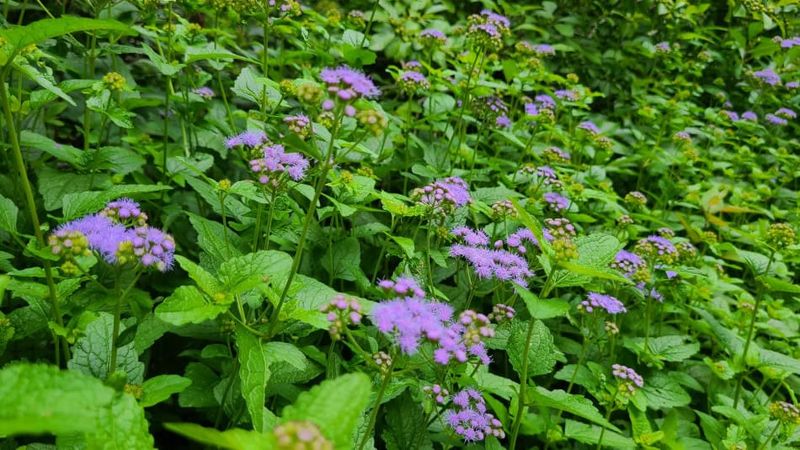
Here is the honest truth about this plant. It moves. Underground stems called rhizomes creep outward, sending up new shoots several inches or even a foot from the original clump.
In damp, rich soil with decent light, one plant can knit together a broad patch within two or three growing seasons without much help.
For a bare, shaded strip where nothing else takes hold, that energy counts as a feature rather than a flaw. Erosion slows, mud gets covered, and weeds lose their opening.
Slopes behind a house, the soggy end of a yard, and the ground beside a downspout all suit it nicely for this exact reason.
Seeds add to the spread too. Those fluffy seed heads travel on wind and water, so volunteers may appear in lawns, gravel, or a neighbor’s bed.
Pair it with plants that hold their own, such as river oats, established ferns, oakleaf hydrangea, or switchgrass. Delicate, slow-growing perennials simply get swallowed.
Gardeners who want the look without the sprawl sometimes sink a bottomless nursery pot into the ground to contain the spread.
Moist Soil Keeps It Blooming Longer
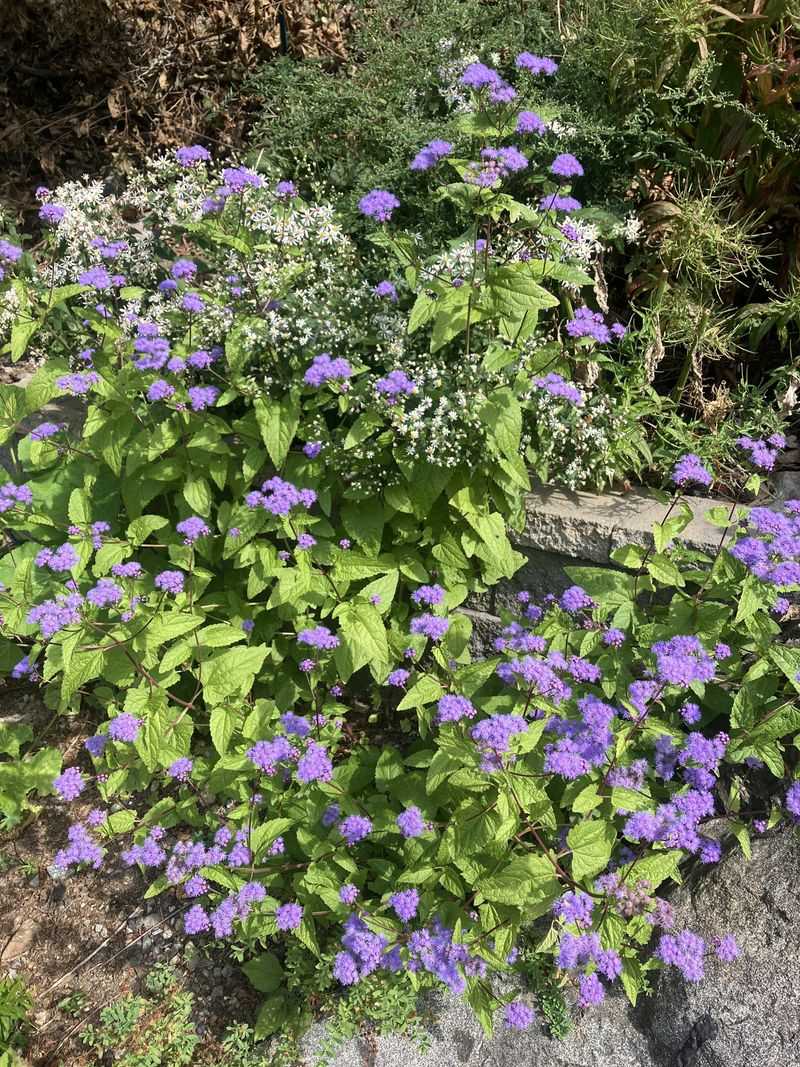
Native populations tell the story clearly. Look for wild colonies, and you will find them in floodplains, low meadows, ditch bottoms, and stream banks where the ground rarely dries out completely.
Consistent moisture is the single biggest factor in how long and how heavily the plant blooms each season.
During a September dry spell, thirsty plants drop their lower leaves, shrink their flower clusters, and quit early. A good soaking once or twice a week keeps the show running into October.
Clay soils, common across the Georgia Piedmont, actually work in its favor because they hold water far longer than sand ever could.
A two-inch blanket of shredded leaves or pine straw over the root zone slows evaporation and keeps soil temperatures cooler through the hottest stretches.
Rain gardens are a natural fit for this plant. So are low spots that puddle after a storm, places where lavender or coneflower would quickly rot.
Skip the heavy fertilizer here. Rich, damp soil already encourages fast growth, and extra nitrogen mostly produces floppy stems that need staking.
One more clue worth watching for: dull, curling leaves in the afternoon signal thirst, and a deep drink usually perks them up by evening.
Give It Room Or Divide It Often
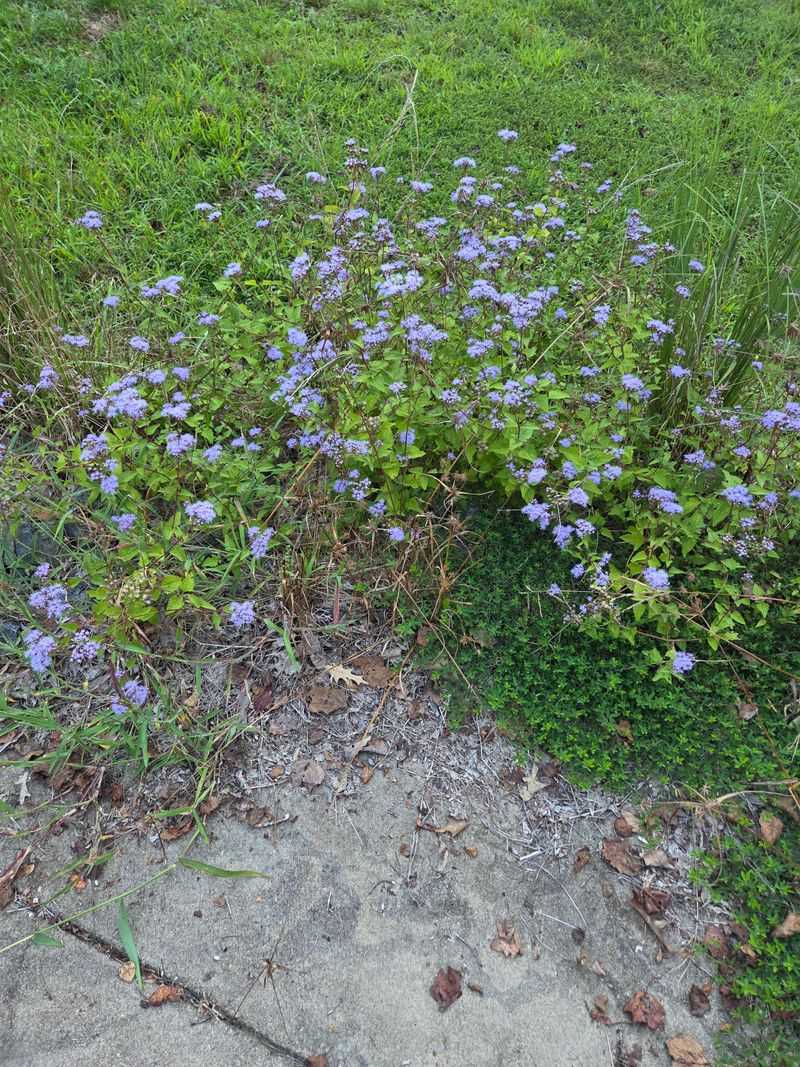
Managing this plant is less about fighting it and more about deciding where the boundary sits in your particular garden.
Early spring is the best moment to act. New shoots are just appearing, the soil is soft, and rhizomes lift easily with a garden fork.
Slice off the outer third of the patch, shake the soil loose, then compost the pieces or share them with a friend who has a damp shady spot of their own.
Dividing every two or three years keeps clumps vigorous and stops the center from thinning out over time.
In mixed beds, an annual edging pass with a sharp spade works well too. Cut straight down along the border and remove anything that has crossed the line.
Trimming plants back by about a third in early summer produces shorter, bushier growth and fewer flopping stems come September.
Trimming before seed heads open reduces volunteer seedlings considerably, though a few strays come with the territory for any spreading native like this one.
Give it a bed of its own where possible, bordered by lawn, a path, or a wall, and the spreading stops feeling like a chore to manage.