What It Means When A Gila Woodpecker Keeps Showing Up In Your Arizona Yard – It Isn’t Random
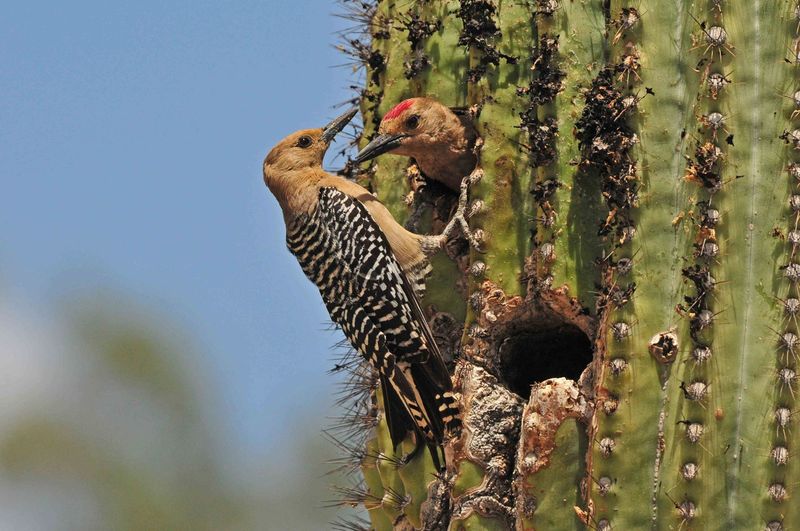
If a Gila Woodpecker keeps landing in your yard, there is almost certainly a practical reason behind it. These bold, black-and-white barred birds are year-round residents of the Sonoran Desert, and they do not waste energy visiting places that offer nothing useful.
Understanding what draws them back can tell you a lot about what your yard provides, and how you might support or manage that relationship going forward.
Repeated visits usually point to useful habitat
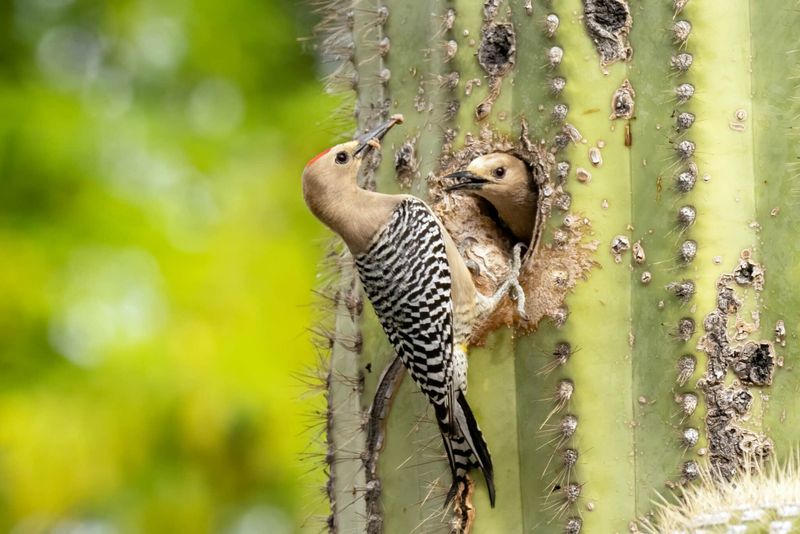
When a Gila Woodpecker shows up in your yard again and again, the most likely explanation is straightforward: your yard, or the neighborhood around it, offers something the bird finds dependable.
Gila Woodpeckers are year-round desert residents. Unlike migratory songbirds that pass through seasonally, these birds stay put across Phoenix and Tucson metro areas, tolerating suburban development as long as foraging and nesting habitat remains within reach.
A yard with mature trees, cacti, or reliable water can easily fall inside a bird’s regular territory.
That said, repeated appearances do not hand you a precise diagnosis. The bird may be responding to one strong resource, a combination of several, or simply moving through territory that includes your property.
Presence alone does not confirm that your yard is exceptionally healthy, that a specific tree is infested, or that a particular feature attracted the visit. What it does suggest is that something nearby is working for the bird, and that is a useful starting point for paying closer attention.
Watch the behavior before you interpret it
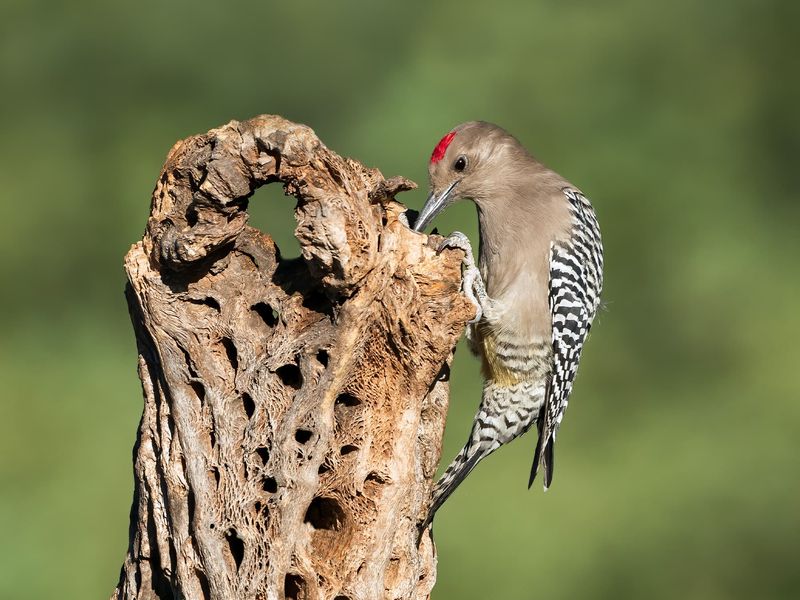
Not all woodpecker activity means the same thing, and the difference matters before you draw any conclusions. A bird quietly working its beak along a branch or cactus, moving slowly and probing for insects, looks very different from one hammering loudly on a metal gutter or roof vent at sunrise.
Both behaviors can bring a Gila Woodpecker to your yard repeatedly, but they point toward different explanations.
Quiet, sporadic pecking on bark, dead branches, shrubs, or cacti is consistent with foraging. The bird is gleaning or extracting insects from the surface or just beneath it.
Loud, rapid, resonant drumming on gutters, vents, metal flashing, or wood siding is a different story. Timing and location add more context.
Early-morning drumming that picks up in late winter or early spring often lines up with territory establishment or mate attraction. Foraging visits tend to spread across the day and shift location as the bird works different parts of its range.
Watching where the bird lands, what it pecks, and how it sounds gives you far more useful information than simply noting that it keeps coming back.
Food and water can make a yard worth revisiting
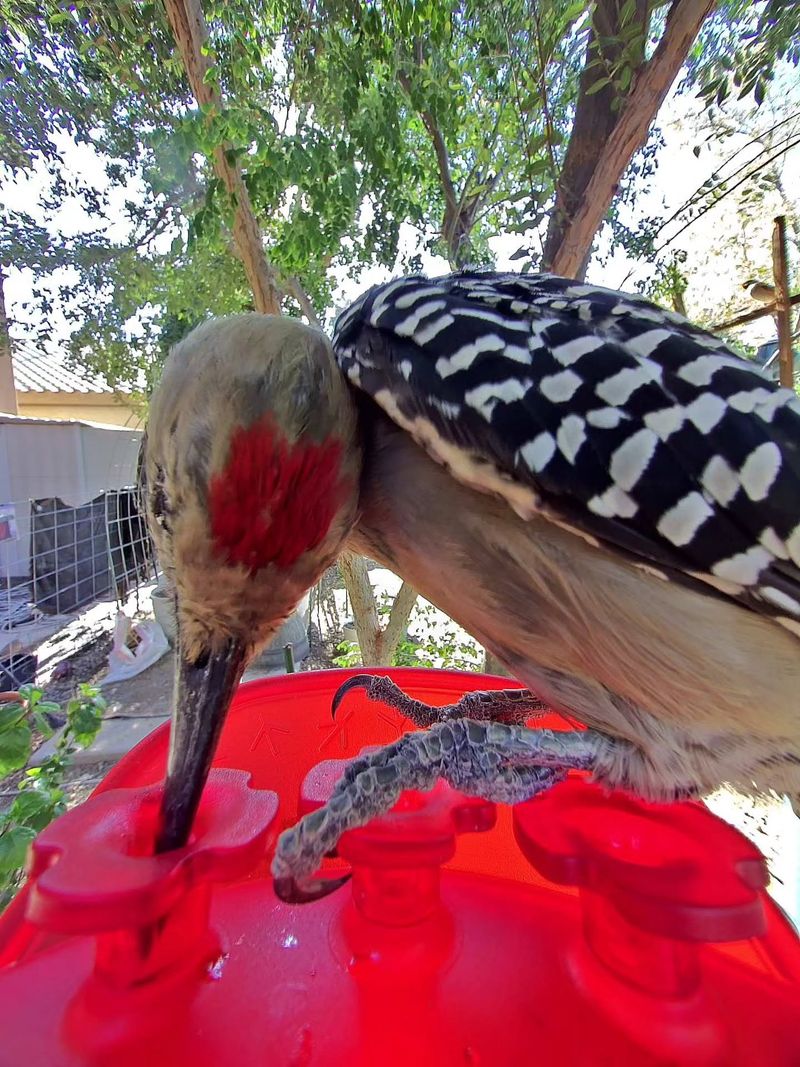
Gila Woodpeckers eat a wide range of foods, and a yard that delivers several of them reliably is worth a bird’s repeated attention. Their diet includes insects, ants, beetles, aphids, scale insects, grasshoppers, termites, fruit, cactus fruit, berries, nectar, and seeds.
A mature palo verde full of bark beetles or a prickly pear loaded with ripe fruit can become a regular stop on a bird’s daily route.
Your Arizona Garden Changes Every Week. Your Plan Should Too.
Gardening in Arizona changes quickly throughout the season. Every Friday you’ll receive a simple weekly plan showing exactly what to plant, prune, fertilize, harvest, and protect so you never miss the right timing.
Water draws them in too. Arizona Game and Fish lists birdbaths, fountains, ponds, and even pet water dishes as possible attractants for woodpeckers.
In the Phoenix and Tucson summer heat, a yard with clean, accessible water stands out in a landscape where natural water sources are scarce.
A few important qualifications apply here. Seeing a Gila Woodpecker forage in your yard does not mean it is eliminating scorpions, mosquitoes, or ticks.
The bird may consume some insects, but reliable control of specific household pests is not something its presence guarantees. Water features also carry a responsibility: a neglected birdbath can become a disease and mosquito risk.
University of Arizona Cooperative Extension recommends dumping and refreshing birdbath water daily and scrubbing containers regularly to reduce stagnation and disease transmission risks. A water feature that goes unattended creates new problems rather than solving old ones.
Cavities and mature desert plants may support the territory
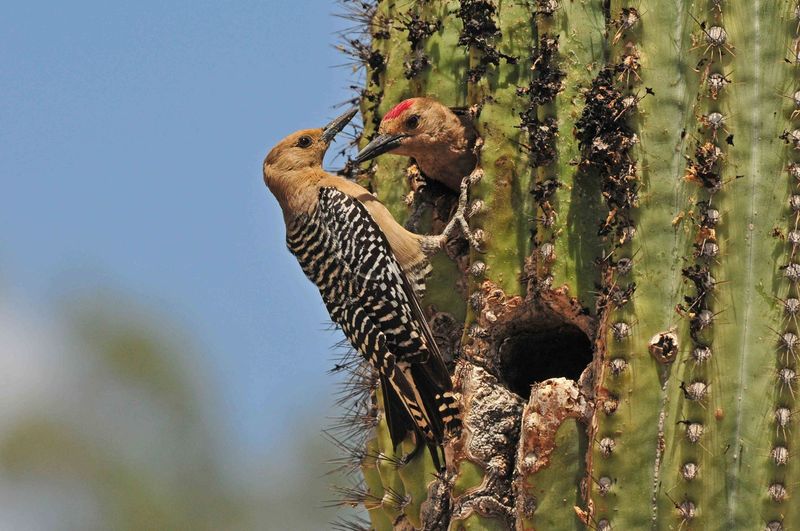
Mature desert vegetation does more than feed a Gila Woodpecker. It can also provide the nesting and territorial infrastructure the bird needs to stay in an area long-term.
Gila Woodpeckers excavate cavities primarily in saguaro cacti, but they also use mesquite, palo verde, cottonwood, willow, and palm trees when saguaros are not available or not large enough.
Nesting territory gets established in midwinter, well before most homeowners notice any activity. The species can produce multiple broods in a season, so a pair that finds a suitable cavity in your neighborhood may return across several months.
That extended presence can look like a lot of repeat visits, but much of it may be tied to a single nesting site nearby rather than to anything specific about your landscaping.
Cavities also carry ecological value beyond the woodpeckers that create them. Once Gila Woodpeckers move on from a cavity, other species often move in.
Elf owls, pygmy-owls, flycatchers, American kestrels, and cactus wrens all use abandoned woodpecker holes. Removing a cavity or cutting a dead limb solely because it looks untidy can quietly eliminate nesting habitat that benefits multiple birds.
Before clearing a snag or patching a hole, consider what that structure might be providing to the broader community of desert wildlife already living in your yard.
Pecking can prompt a tree inspection, not a diagnosis
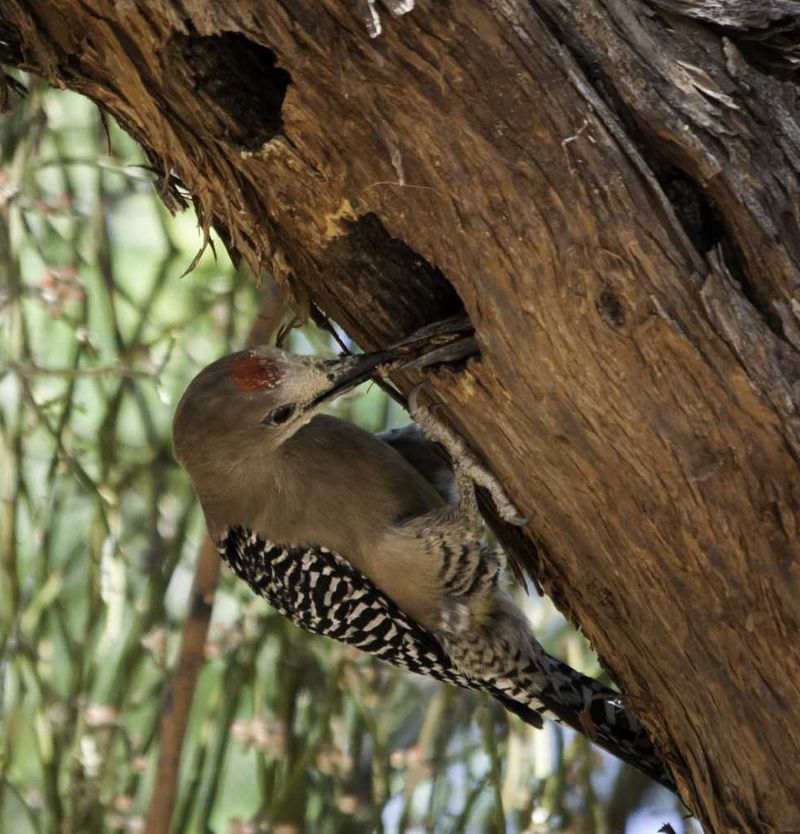
Spotting a Gila Woodpecker working the bark of a tree in your yard is worth paying attention to, but the bird’s activity alone does not tell you whether the tree has a problem. Foraging woodpeckers probe and pry at bark in search of insects, and they may concentrate on areas where insect activity is higher.
That behavior can overlap with infested trees, but it can also reflect perfectly ordinary foraging on a healthy tree.
University of Arizona Cooperative Extension guidance on bark beetles notes that woodpecker activity can occur around infested trees but does not always occur, and its absence does not clear a tree either. If you notice a woodpecker spending unusual time on one spot, look for additional signs before assuming an infestation: boring dust or frass at the base of the tree, pitch tubes or resin on the bark, visible galleries under loose bark, declining foliage, dead or dying branches, or significant bark loss across a section of trunk.
A single hole in a tree does not mean the tree is dying. Some holes are old feeding sites, some are nest cavities, and some are natural features of aging bark.
A tree showing woodpecker activity plus several of the physical signs above is worth a closer look from a certified arborist. Woodpecker activity alone is a prompt to observe more carefully, not a verdict on the tree’s condition.
Build habitat without promising a guaranteed visitor
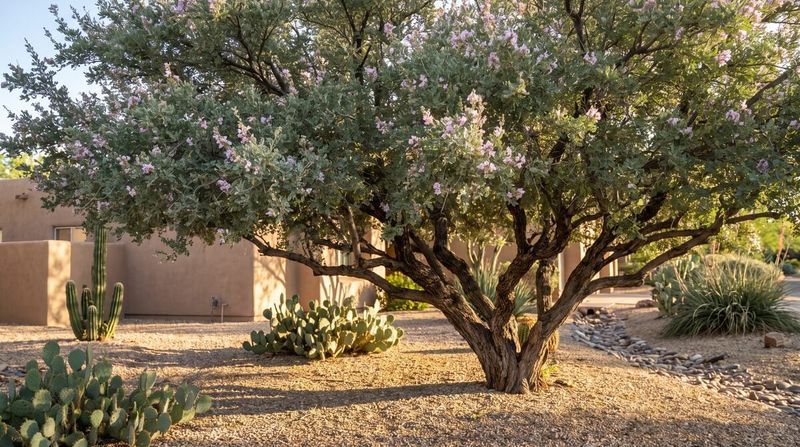
A yard that supports Gila Woodpeckers is generally one that mirrors the layered structure of Sonoran Desert habitat: trees with textured bark, shrubs that produce fruit or attract insects, cacti, and some dead wood or snags for perching and probing. Adding or retaining those elements can increase the habitat value of your property for birds broadly, though no single planting guarantees that a Gila Woodpecker will show up or stay.
University of Arizona Cooperative Extension identifies mesquite and palo verde as important wildlife-habitat trees for low-desert landscapes, providing insects, shelter, and structure. Ironwood, prickly pear, desert hackberry, chuparosa, and fairy duster round out a planting palette that offers combinations of food, cover, and nesting support across seasons.
One note on mesquite: native mesquites can require more water than palo verde or ironwood in some landscape situations, so treat it as a strong habitat plant rather than the lowest-water option by default.
Water is an optional but meaningful addition. Keep any birdbath shallow, no deeper than two inches, and commit to dumping and refreshing the water daily.
Scrub the basin regularly to prevent algae and bacterial buildup. A clean, shallow basin in a shaded spot is far more useful than a deep, neglected one baking in full sun.
These choices support birds generally and make your yard a more functional piece of the desert landscape, with or without a woodpecker as a regular guest.
Manage house damage with nonlethal exclusion
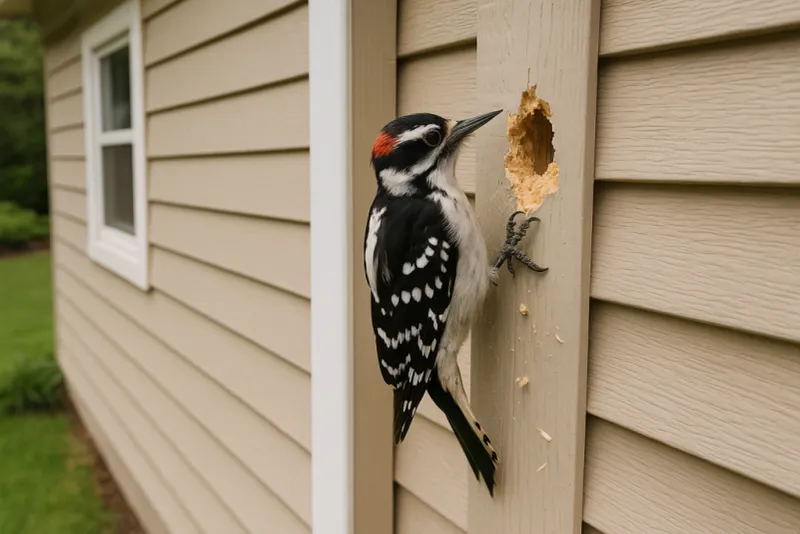
When a Gila Woodpecker starts hammering on your siding, eaves, stucco, or roof vent, the first step is figuring out what it is actually doing. Drumming on a resonant metal or wood surface for territory or courtship calls for a different response than a bird excavating a nest hole in your fascia board or probing for insects behind loose siding.
The management approach that works for one situation may do nothing for another.
For drumming on hard surfaces, the goal is to make that surface less useful as a sound amplifier. Arizona Game and Fish recommends padding over the drumming spot, hanging reflective tape, or using motion-activated deterrents nearby to interrupt the behavior early in the season before it becomes a habit.
For nest excavation attempts on the house itself, hardware cloth or bird netting installed over the affected area can block access without harming the bird.
Harming, capturing, or possessing a Gila Woodpecker is not a legal option. The Migratory Bird Treaty Act restricts unauthorized taking or possession of protected migratory birds, and Arizona Game and Fish similarly advises against killing or capturing woodpeckers without the required permit.
That does not mean every incidental disturbance is a federal violation, but it does mean that nonlethal exclusion and deterrence are both the practical and the legally sound path forward. Starting with observation, then applying targeted deterrents, resolves most house-damage situations without escalating the conflict.
Read the pattern as a habitat clue, not a verdict
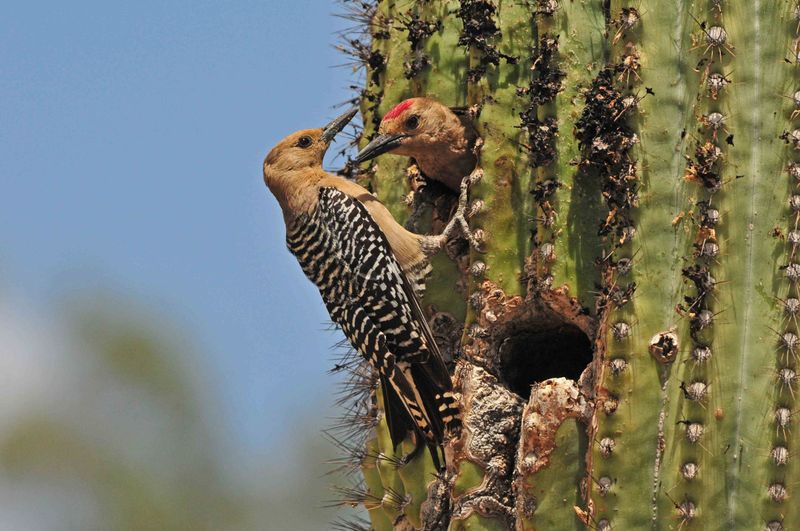
A Gila Woodpecker that keeps returning to your yard is almost certainly responding to something real: a food source, a water feature, a nesting cavity, a territorial boundary, or some combination of those. That pattern is useful information, but it is not a report card on your yard’s overall health, a pest-control guarantee, or a signal that something is wrong with a specific tree.
The most productive way to use those repeat visits is as a prompt to observe more carefully. A simple checklist helps: Where does the bird land most often?
Is it probing bark quietly or drumming loudly on a hard surface? Does it show up at the same time each day, suggesting a feeding route, or irregularly, suggesting territorial patrol?
What food, water, vegetation, or cavities are closest to its favorite spots?
Answers to those questions let you respond thoughtfully rather than reactively. You might decide to add a shallow birdbath, leave a dead mesquite limb in place, or simply watch a little longer before touching anything.
A Gila Woodpecker is one of the Sonoran Desert’s most adaptable and ecologically connected birds, and a yard that earns its regular attention is, at minimum, doing something right for the desert it sits in.