The Native Ohio Shrub That Turns Fiery Orange And Feeds The Birds
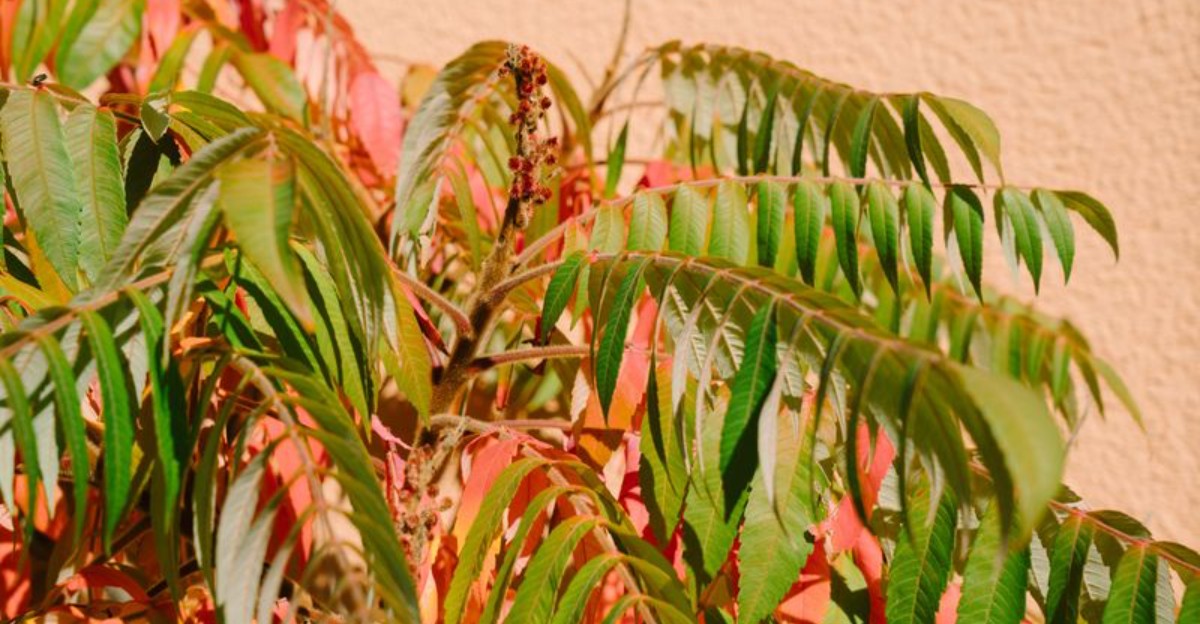
Something along the tree line turns a shade of orange so bright it looks almost artificial against everything still green nearby. It’s easy to assume a shrub showing off like that must be some ornamental variety planted on purpose.
It’s actually been growing wild in Ohio the whole time, mostly ignored until this exact week every year.
That color isn’t the only thing it’s doing. Dense clusters of dark red seed heads sit right at the top, holding on through fall and often well into winter, long after most other food sources have run out for the birds relying on them.
Few native plants pull double duty this well, turning heads with color while quietly feeding wildlife through the leanest stretch of the year.
It spreads fast, thrives in the kind of poor soil most other plants avoid, and still gets pulled or ignored by people who have no idea what they’re removing.
1. Meet Staghorn Sumac, Ohio’s Fiery Fall Native
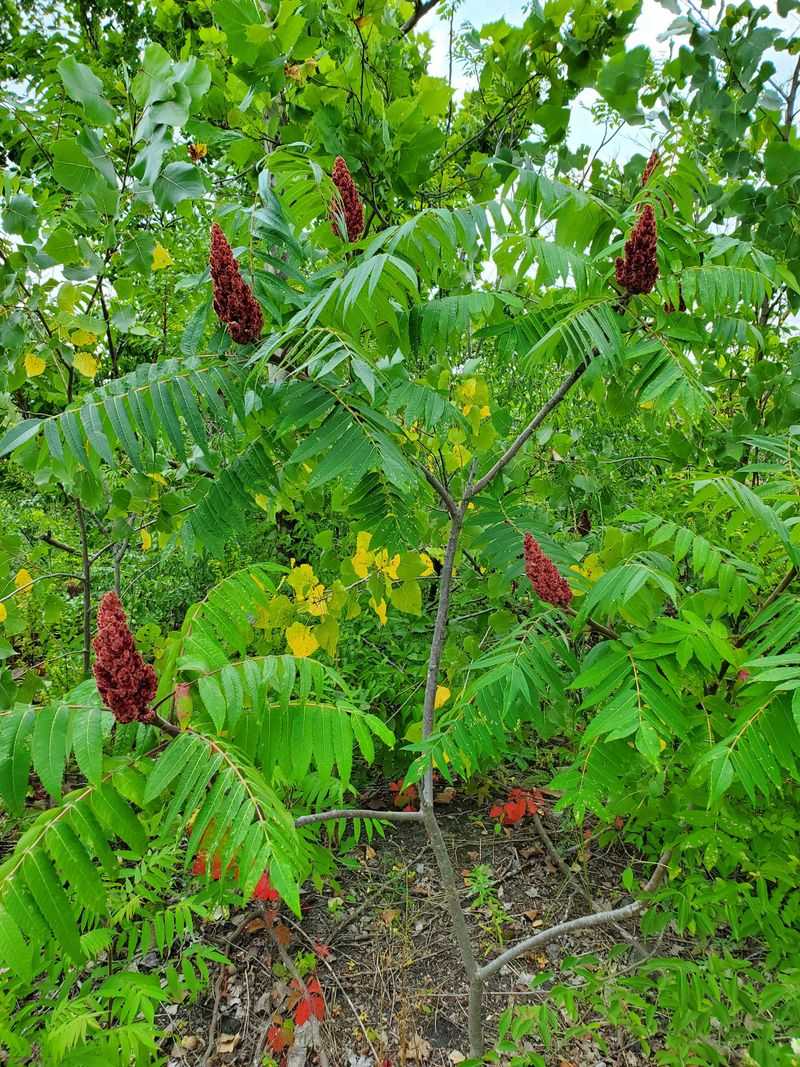
Run your hand along a young branch of staghorn sumac and you will feel something unexpected: soft fuzz, almost like suede. That velvet is exactly how the plant earned its name, since the branching stems resemble the antlers of a stag while they are still in velvet.
Known scientifically as Rhus typhina, it also answers to velvet sumac and hairy sumac. Botanists classify it as a large deciduous shrub or small tree, and it can stretch anywhere from 15 to 30 feet tall.
Ohio sits comfortably inside its home range, which covers most of the eastern United States. You can find it across much of the state, especially in open areas, woodland edges, and disturbed sites.
Look for it where land has been disturbed: old fencerows, highway embankments, abandoned pastures, and woodland edges. Sumac moves into those spots quickly and holds the ground while other plants catch up.
Gardeners prize it mostly for autumn drama, but the plant offers more than a single season of interest. Flowers feed pollinators in summer, fruit feeds birds in winter, and the antler-like silhouette looks sculptural once leaves drop.
Getting to know sumac means seeing past its reputation as a roadside weed. Treated with a little planning, it becomes one of the hardest-working natives in an Ohio landscape.
2. Watch Green Leaves Turn Orange And Scarlet
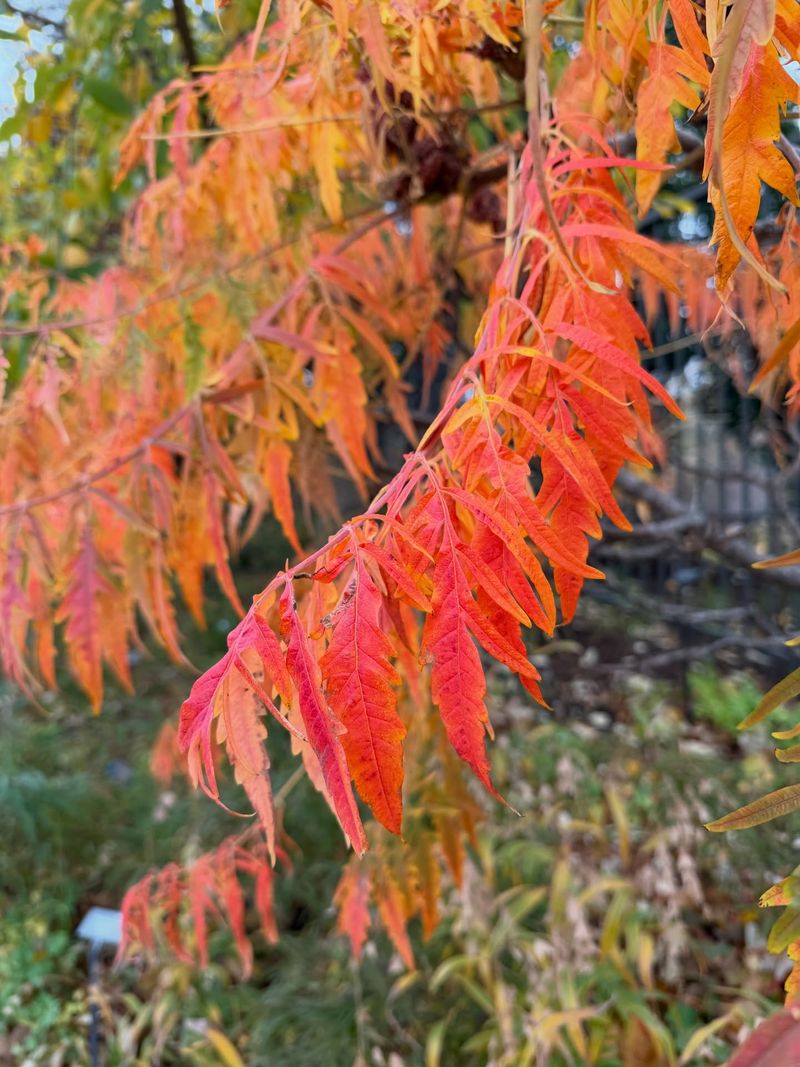
Few native plants announce autumn as loudly as this one. While maples are still thinking about it, sumac leaves in central Ohio have often already flipped to orange.
Each leaf is compound, meaning a single leaf carries a long row of narrow leaflets arranged on both sides of a central stem. Through spring and summer those leaflets stay bright green, giving the shrub a feathery, almost tropical look.
Then the show begins. Cooler nights push the foliage into yellow, then orange, then deep scarlet, and some plants throw in purple tones for good measure.
Because the leaves are so long, the color effect reads as sheets of flame rather than individual spots. A colony catching late afternoon sun can stop traffic, which is one reason photographers hunt for sumac stands along Ohio back roads each October.
Your Ohio Garden Changes Every Week. Your Plan Should Too.
Gardening in Ohio changes quickly throughout the season. Every Friday you’ll receive a simple weekly plan showing exactly what to plant, prune, fertilize, harvest, and protect so you never miss the right timing.
Color intensity varies plant to plant, so if you want a specific shade, shop at a nursery in fall when you can see what you are buying. Seedlings from the same colony often differ noticeably.
Leaf drop happens fairly early compared to oaks, clearing the way for the fruit and branch structure to take over the view. That handoff from foliage to fruit is part of what makes the shrub interesting across multiple months instead of just two weeks.
3. Leave Red Fruit Clusters For Hungry Birds
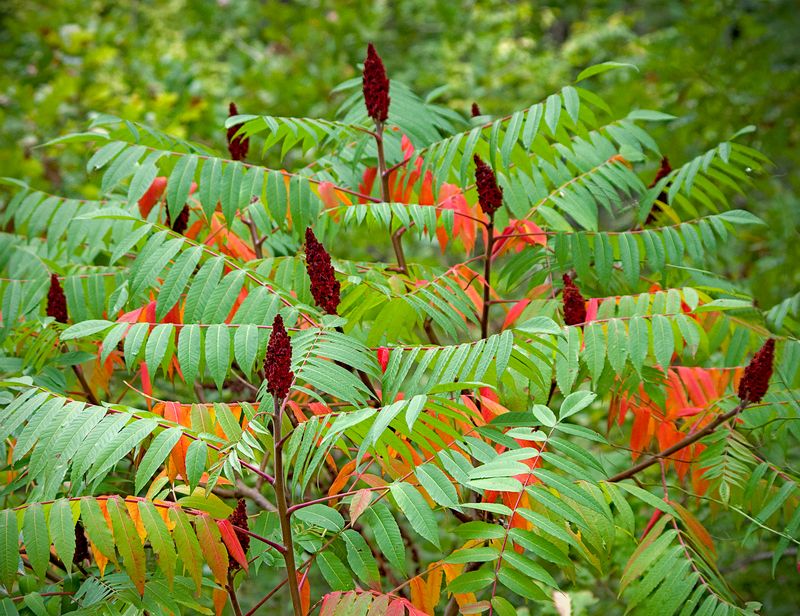
Picture a fuzzy red ice cream cone standing upright at the tip of a branch, and you have the fruit cluster of a female staghorn sumac. Botanists call the individual fruits drupes, and they crowd together into dense, pointed heads.
Ripening usually happens between August and September. The clusters start out bright red, then darken to a deeper brick shade as the season moves along.
A wide range of songbirds and gamebirds eat sumac fruit, including robins, bluebirds, catbirds, cardinals, and chickadees.
The fruit is not especially high in fat, so birds tend to ignore it while richer berries are available. Once the buffet thins out in midwinter, those leftover cones become genuinely valuable.
Each tiny drupe wears a coat of fine hairs that are thought to help hold moisture and shield the seed inside. Those same hairs carry a tart, lemony flavor that people have long used to brew a pink beverage sometimes called sumac lemonade.
Resist the urge to prune the clusters off for tidiness. Leaving them standing costs you nothing and turns your shrub into a reliable stop on the neighborhood bird circuit.
4. Give Sumac Plenty Of Sun For Bold Color
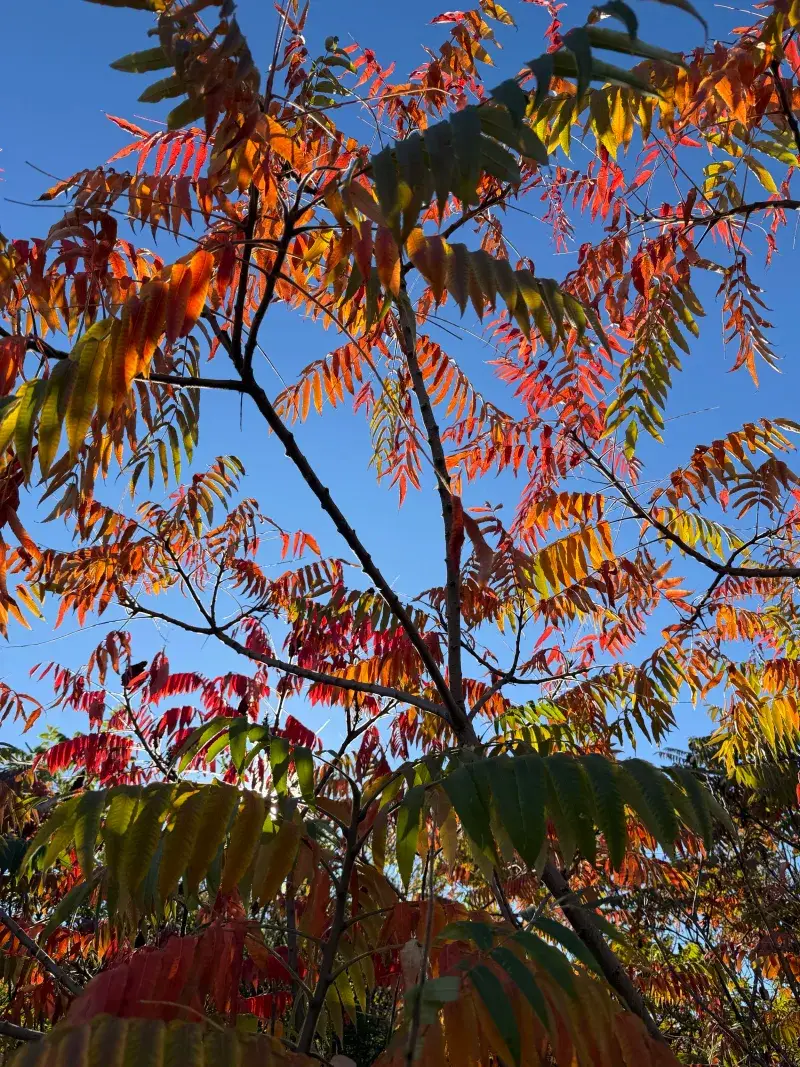
Sunlight is the fuel behind that famous fall glow. Plants sitting in wide-open sun reliably produce richer orange and scarlet tones than the same species tucked into shade.
Aim for at least six hours of direct sun each day. More is fine, since sumac evolved on exposed edges, old fields, and rocky openings where nothing shades it.
Partial shade will not harm the shrub, but it changes the personality. Growth turns leggy as stems stretch toward light, the canopy thins out, and autumn color often lands somewhere closer to dull yellow than fire.
Fruit production follows the same pattern. Female plants in brighter spots typically set heavier, fuller clusters, which matters if your goal is feeding birds through winter.
When siting a new plant, watch the area across a full day before digging. A spot that looks sunny at noon might sit in building shade by three o’clock, and that afternoon light is worth a lot in October.
South- and west-facing slopes are natural candidates. They collect heat, drain well, and usually have the open exposure sumac prefers.
One bonus of full sun placement: better air movement around the leaves, which keeps foliage looking clean. Crowded, shady conditions tend to invite leaf spotting that dulls the display you planted the shrub for in the first place.
5. Use It Where Poor Soil Challenges Other Shrubs
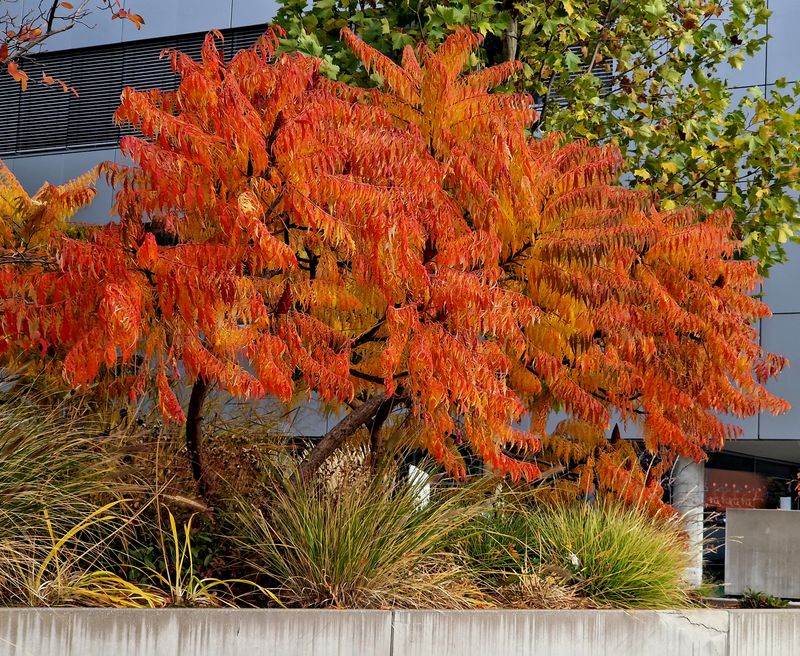
Got a corner of the yard where nothing seems happy? Sumac may be the answer, because it settles into ground that frustrates fussier shrubs.
Dry soil, rocky soil, gravelly fill left behind by construction, slightly acidic patches: all of it works. The plant handles urban conditions too, shrugging off compaction, reflected heat, and stretches without rain.
Erosion control is where it really earns its keep. On a raw bank or eroding slope, the spreading roots knit the soil together and the leafy canopy softens pounding rain before it hits bare ground.
There is one real limit worth respecting. Soggy, poorly drained sites do not suit sumac, and a plant stuck in standing water will sulk and decline rather than thrive.
Before planting, dig a test hole and fill it with water. If the water sits there for many hours, choose a different species like buttonbush or silky dogwood and save the sumac for higher ground.
Skip the rich compost amendments and heavy fertilizer. Pampering encourages fast, floppy growth, while lean conditions produce sturdier stems and often better color.
Drought tolerance kicks in once roots are established, usually after the first full growing season. Water a new plant through its first summer, then step back and let it handle Ohio weather on its own terms.
6. Give Its Spreading Roots Room To Roam
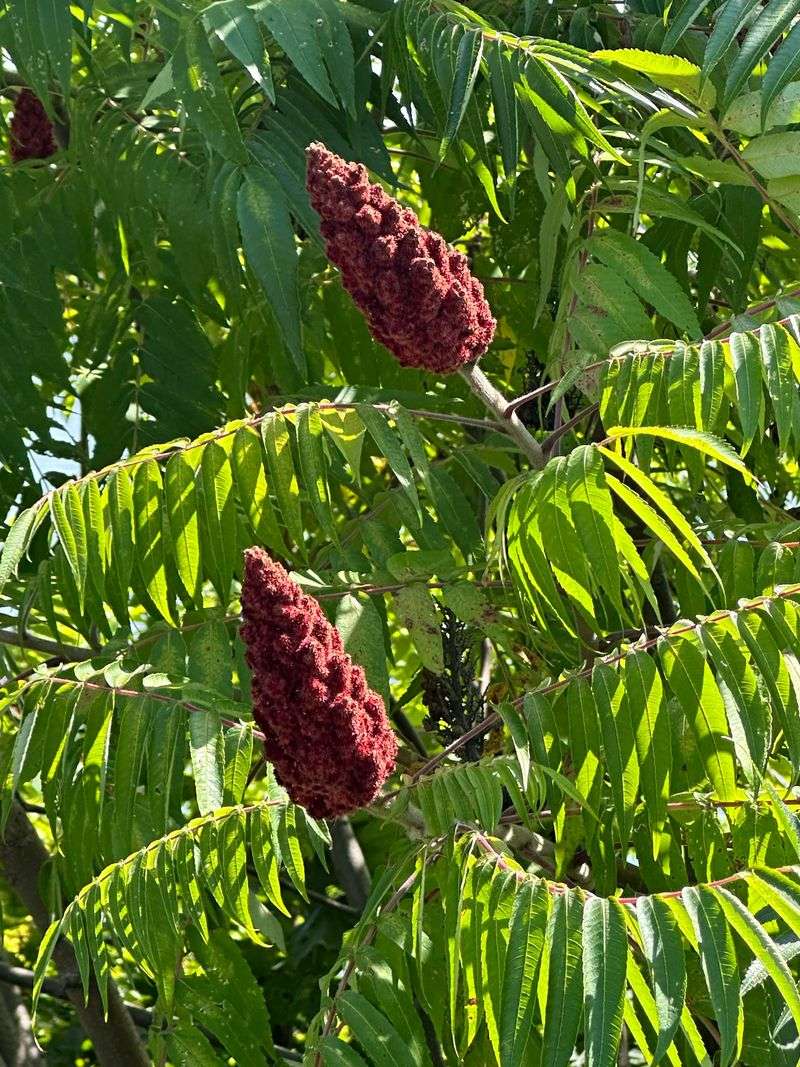
Ask anyone who has planted sumac near a manicured bed and you will hear the same story: it does not stay put. Underground stems called rhizomes send up new shoots, called suckers, at a steady clip.
The root system stays relatively shallow, but underground stems can spread outward and send up new shoots well beyond the original plant.
Over time a single plant becomes a colony, with tall older stems in the middle and shorter young ones fanning out at the edges. In the wild, that thicket habit is a feature, since it creates cover and stabilizes soil.
In a small yard, it needs a plan. Root barriers sunk about a foot deep help, and mowing around the outside of the patch knocks back stray suckers before they get established.
One quirk to know: cutting stems or fire injury often triggers more sprouting rather than less. A single hard chop can produce a ring of eager new shoots, so consistent follow-up beats one dramatic pruning session.
Sidewalks, driveways, and building foundations act as natural fences, so use them to your advantage. Place sumac where hard edges already define the boundaries and the maintenance work drops dramatically.
7. Expect Female Plants To Produce The Fruit
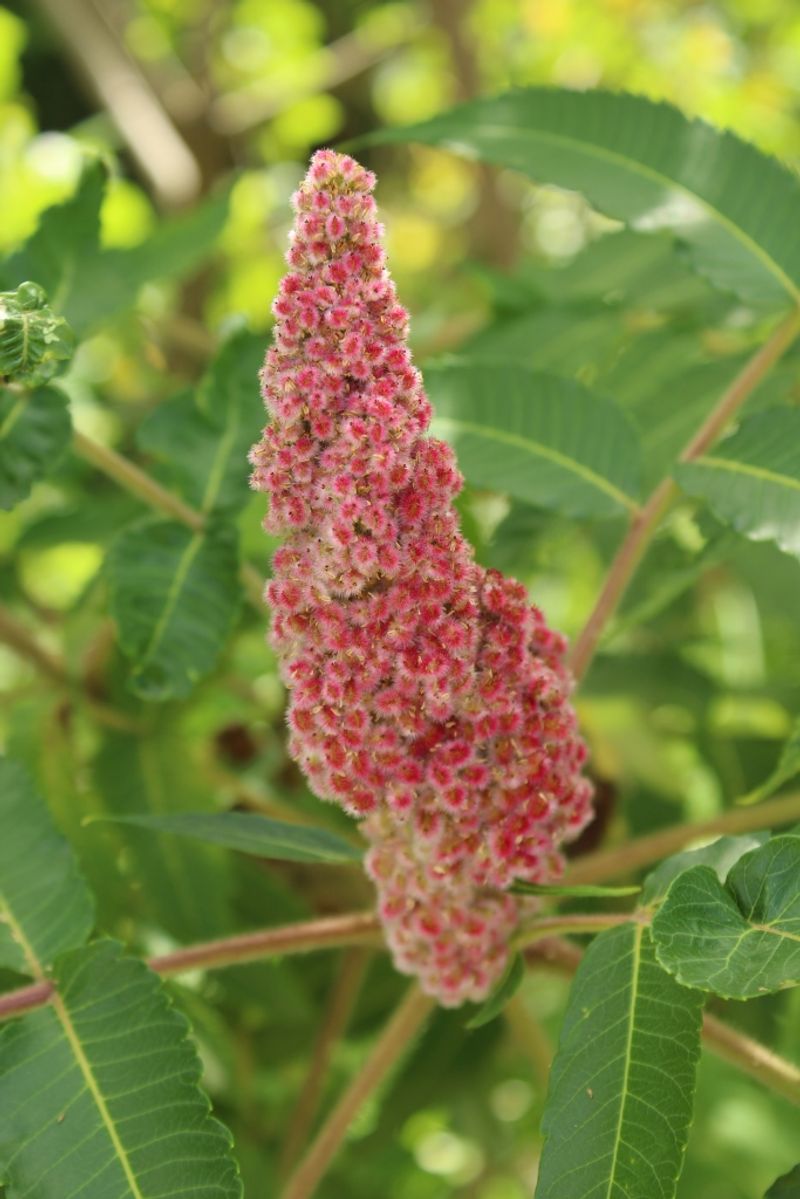
Here is a detail that catches new sumac owners off guard. The species is dioecious, a term meaning male flowers and female flowers grow on separate individual plants.
Only females make those famous red cones. A male plant produces looser, greenish-yellow flower clusters in early summer, does its job as a pollen source, and then goes fruitless for the rest of the year.
Fertilization requires pollen traveling from a male to a nearby female, usually with help from bees and other insects. If you want dependable fruit, having at least one male somewhere in the neighborhood matters.
Patience is part of the deal too. Young plants generally wait until they are three or four years old before setting their first crop.
Since seedlings give no clue about their sex until they bloom, buying a named, nursery-grown female is the shortcut for gardeners focused on wildlife value. Ask the nursery staff directly, because labels do not always say.
Wild colonies often solve the problem themselves. Because suckers are clones of the parent, a patch may be all one sex, which explains why some roadside stands are loaded with fruit while others nearby have none.
Knowing this saves a lot of confusion later. A fruitless sumac is usually not struggling, it is simply male.
8. Let Winter Fruit Extend The Wildlife Value
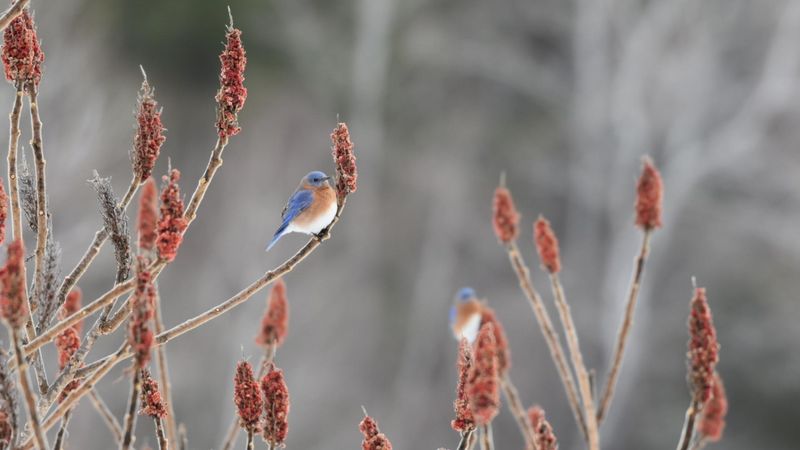
Snow makes those red cones look even better. Long after the leaves have gone, the fruit clusters stay attached, poking above drifts like rusty torches.
That staying power is the whole point from a bird’s perspective. February is a lean month in Ohio, and the sumac patch becomes an emergency pantry when insects are gone and richer berries have been picked clean.
Robins that overwinter here rely on fruit rather than worms, and a good sumac stand can hold a flock for days. Bluebirds, mockingbirds, and starlings join in, often stripping clusters in a noisy group effort.
Food is only half the benefit. The dense tangle of stems in an established colony blocks wind, hides rabbits and small mammals, and gives birds protected spots to build nests come spring.
Aesthetically, the plant carries the winter garden. Bare velvet branches curve upward in shapes that look deliberate, and photographers love the contrast of dark red fruit against white snow.
If you enjoy arrangements, clip a cone or two for an indoor vase. Leave the rest outdoors, since what looks like extra is exactly what a hungry flock will need in eight weeks.
Hold off on winter cleanup here and the wildlife payoff keeps building year after year.
9. Use Sumac In Naturalized Parts Of The Yard
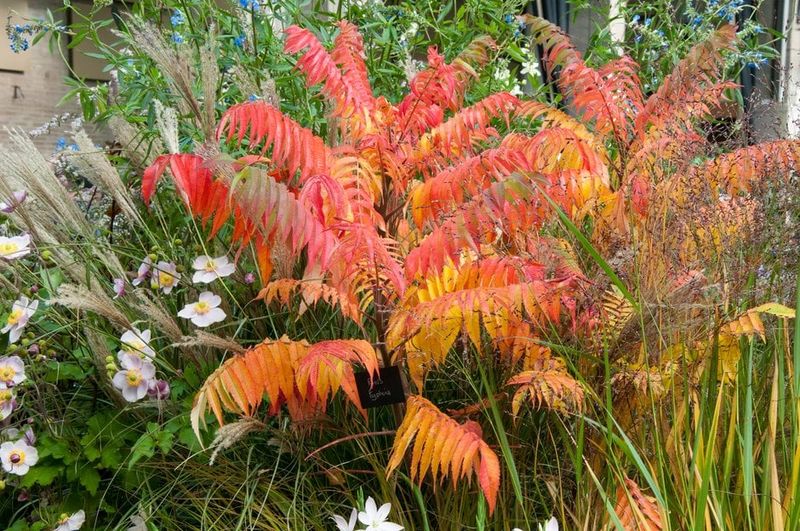
Formal foundation beds and staghorn sumac make an awkward pair. Turn it loose in a wilder corner, though, and the whole relationship improves.
Woodland margins suit it perfectly, since sumac naturally occupies that transition zone between open field and forest. Pair it with little bluestem, goldenrod, and asters for a meadow edge that changes character every month.
Back property lines and unmowed slopes are other strong candidates. Anywhere you would rather not drag a mower is a spot where a spreading colony becomes an asset instead of a chore.
Erosion-prone ground deserves special mention. Roadside banks, ditch edges, and eroding hillsides all benefit from roots that hold and a canopy that cushions rainfall.
Pollinators show up in early summer when the flowers open. Bees, wasps, and butterflies work the greenish panicles, and some Ohio beekeepers report a distinctive sumac honey.
For smaller spaces, look at the cutleaf variety sometimes sold as Tiger Eyes, which stays more compact and offers chartreuse foliage that shifts to orange. It still suckers, just less aggressively.
Think of sumac as a plant with a job rather than a decoration. Give it the rough edges of your property, let it fill in, and enjoy the October fireworks and the winter bird traffic that follow.