The New York Trees Spotted Lanternflies Target First
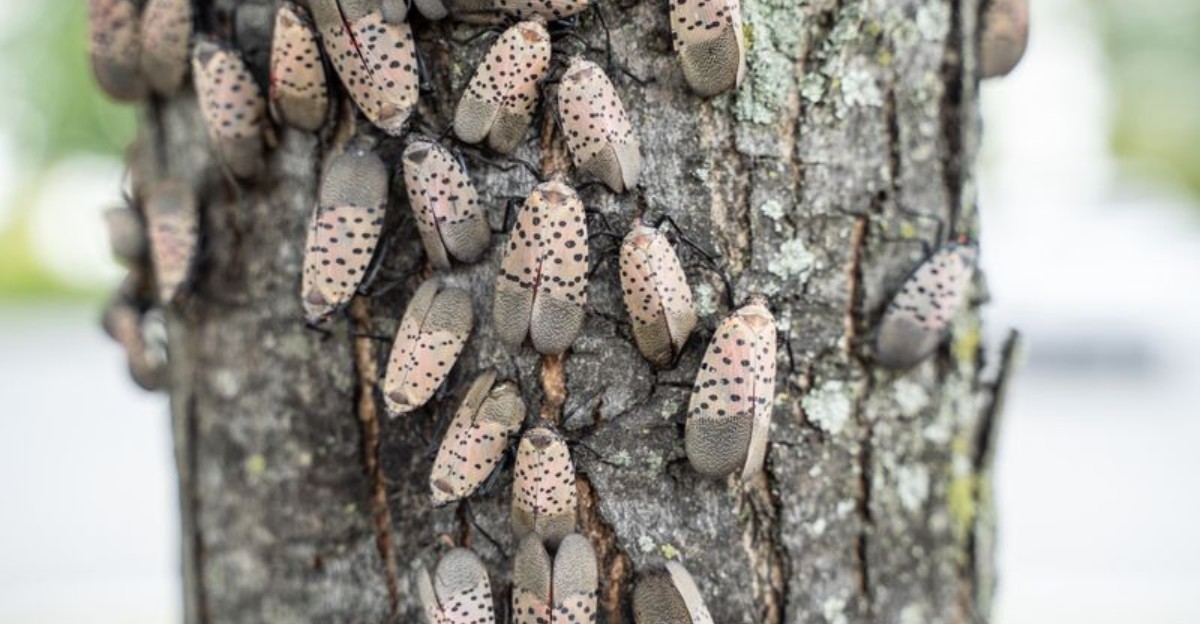
Walk beneath a street tree in late summer, and you may hear a strange little patter. Look closer, and you might spot the cause: spotted lanternflies.
These invasive insects arrived in New York several years ago and have continued spreading across the state. They pack along the bark, leaving sticky honeydew behind on leaves, cars, and sidewalks.
Spotted lanternflies feed by piercing plants with straw-like mouthparts and drinking sap. Heavy feeding can stress trees and lead to black sooty mold growing on honeydew-covered surfaces.
They have favorite trees and vines that attract much more activity than others. Once you know what to check, you can catch signs earlier and keep a closer eye on your yard.
1. Tree Of Heaven Draws The Biggest Lanternfly Crowds
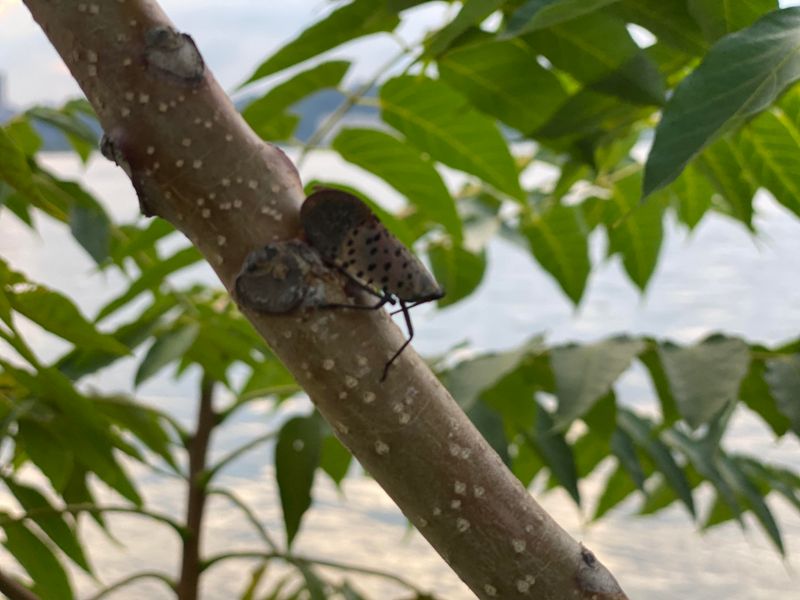
If lanternflies had a favorite restaurant, tree-of-heaven would be the corner booth they refuse to give up. Ailanthus altissima is itself an invader, and it shows up in alleys, vacant lots, and highway edges all over New York.
Adults swarm it hardest from late summer into early fall. Trunks can look almost shingled with insects, all of them feeding at once.
Why the loyalty? Researchers point to compounds in the sap that the insects seem to seek out, especially during their late nymph and early adult stages.
You can identify the tree by its long compound leaves, each with 11 to 41 leaflets, and small notched bumps near the base of every leaflet. Crush a leaf, and you get a smell people often compare to burnt peanut butter.
Removing tree-of-heaven from your property is one of the most effective steps homeowners can take. Cutting alone often triggers vigorous resprouting, so long-term control usually requires a carefully timed herbicide treatment or professional removal.
Some researchers and land managers have tested trap-tree approaches using treated tree-of-heaven, but this is not a recommended backyard control method.
Fun bit of history: the species was brought to America in the 1780s as an ornamental shade tree. Two centuries later it is quietly rolling out the welcome mat for one of the state’s peskiest pests.
2. Black Walnut Becomes A Preferred Feeding Tree
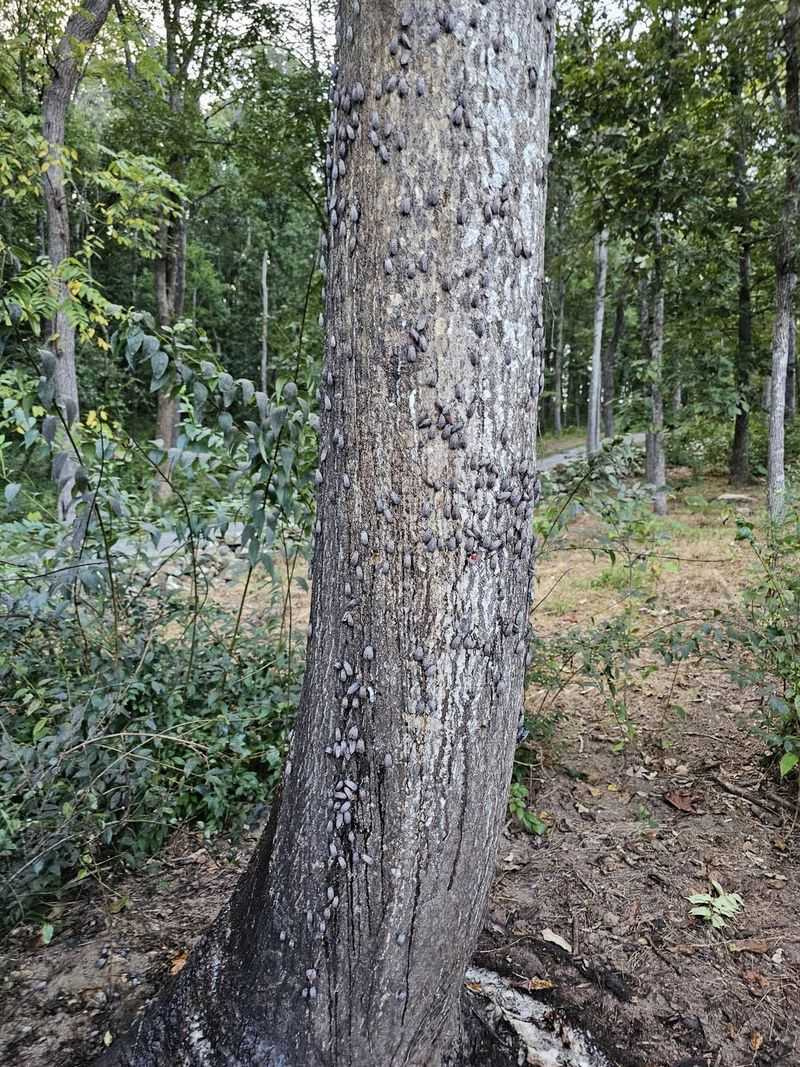
Black walnut carries a tough-guy reputation, thanks to the juglone it releases to discourage neighboring plants. Lanternflies, unfortunately, are not impressed by that chemistry.
Feeding shows up most often on saplings and young stems. Thin bark makes an easy target for mouthparts built to reach the sap-carrying tissue underneath.
Heavy feeding can stress young or already weakened walnuts, though healthy mature trees usually tolerate lanternfly feeding.
Mature walnuts handle the visitors better, but they still collect honeydew. Look for shiny, sticky patches on lower branches, then black sooty mold spreading over the same spots a week or two later.
Practical tip: check the trunk from the ground up to about eye level in early July, when red-stage nymphs gather. A quick sweep with a soapy water jar knocks them off effectively and costs almost nothing.
Nut growers in the Hudson Valley have another reason to pay attention. Stressed trees put less energy into nut production, so a bad feeding year can show up in a thin harvest.
Your New York Garden Changes Every Week. Your Plan Should Too.
Gardening in New York changes quickly throughout the season. Every Friday you’ll receive a simple weekly plan showing exactly what to plant, prune, fertilize, harvest, and protect so you never miss the right timing.
Skip the sticky band traps unless you wrap them in wire mesh. Birds, squirrels, and beneficial insects get caught otherwise, and circle traps with a collection bag work far better for walnut trunks.
3. Silver Maple Attracts Late Season Lanternfly Activity
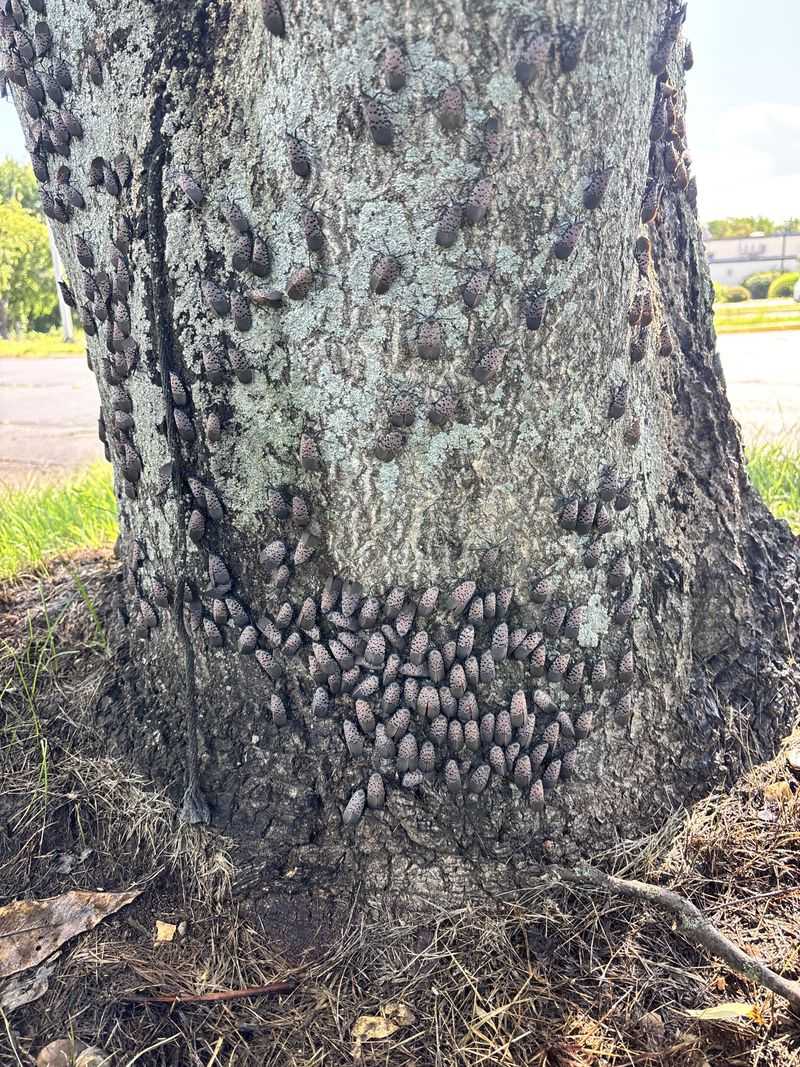
Ask any arborist which tree hides the most egg masses, and silver maple comes up fast. The furrowed, flaky bark gives females exactly the rough surface they like.
Feeding picks up through August, and by late September the story shifts to egg laying. Each mass holds roughly 30 to 50 eggs under a coating that looks like dried mud or a smear of gray putty.
Silver maples grow quickly and huge, which means a single tree can hold an enormous number of hidden masses. Scanning the lower trunk in October and November pays off.
Scraping is simple work. Slide an old credit card or a plastic putty knife under the mass, push it into a bag or container with rubbing alcohol or hand sanitizer, and seal it up.
Wear gloves and check the underside of low limbs too. Egg masses hide where you would not think to look, including behind bark flaps and on nearby fence rails.
One thing that surprises people: the tree usually survives the feeding just fine. The bigger problem is honeydew raining onto patios, cars, and garden beds, then turning into a black sooty film.
Hosing off patio furniture weekly during peak season keeps the mess manageable. A little dish soap in the water helps cut the stickiness faster.
4. Red Maple Can See Lanternfly Feeding Pressure
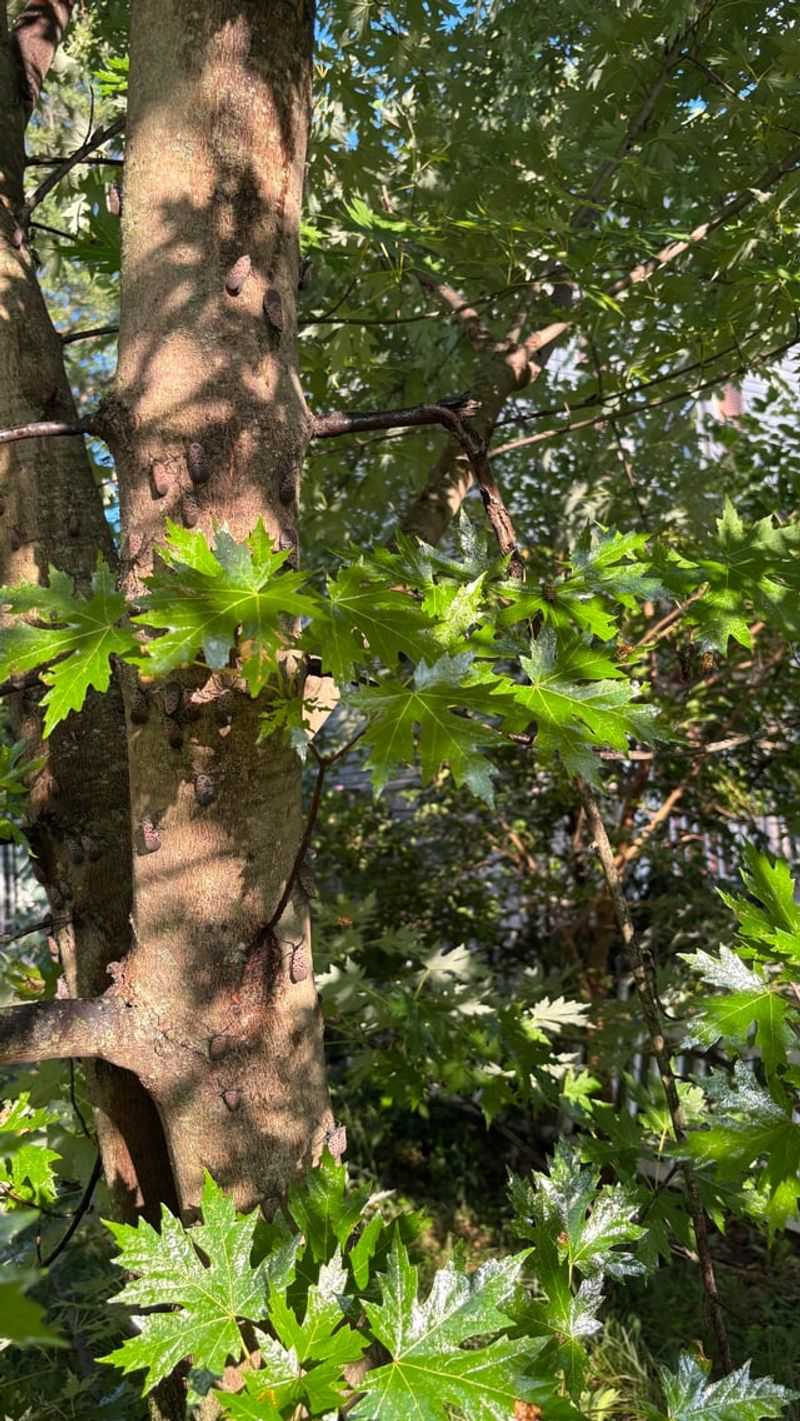
Red maple is one of the most planted street and yard trees in New York, which puts it right in the path of this insect. Popularity has a downside.
Feeding by nymphs and adults draws sap from twigs and small branches. Over several seasons, that steady drain can wear on a tree’s energy reserves.
Females may lay egg masses on red maple and many other nearby surfaces in the fall. That combination of feeding and nesting makes it a tree worth watching twice a year.
Signs to look for include weeping sap streaks on the trunk, wasps and ants gathering at those wet spots, and a dark crust of sooty mold forming near the base.
Keeping the tree healthy is the most useful defense you have. Deep watering during dry July stretches, a ring of mulch kept off the trunk, and no unnecessary pruning in midsummer all help.
If numbers get heavy, a licensed applicator can use systemic treatments. Homeowner sprays often miss the mark and can harm pollinators visiting nearby flowers.
A small detail worth knowing: red maple leafs out early and holds leaves late, giving lanternflies a longer feeding window than many neighbors. Start your trunk checks in June rather than waiting for August.
5. Willow Trees Become Late Season Gathering Spots
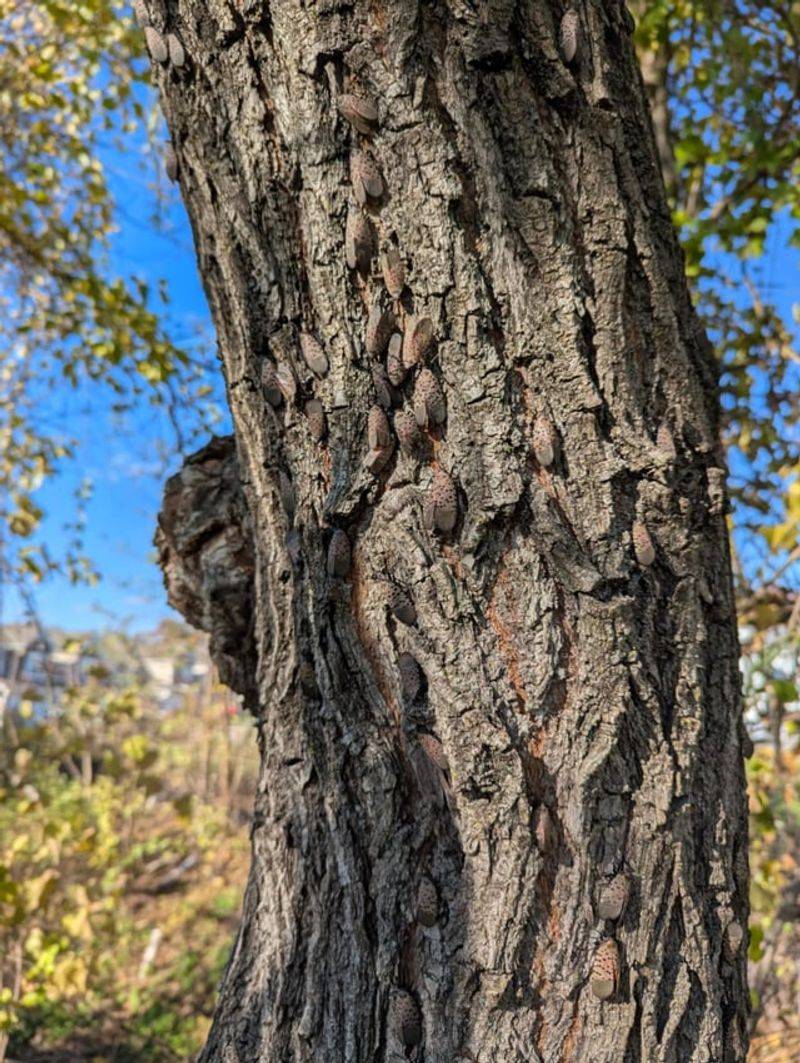
Willows lean over ponds and stream banks, and lanternflies have noticed. Soft bark and juicy stems make for easy drinking.
Nymphs turn up on willow shoots early in the season, hopping away the moment your shadow crosses them. Those tiny black-and-white specks in May are the first stage.
By fall the crowd changes character. Adult females settle in to lay egg masses, joining red and silver maples as the trio they seem to trust most for the job.
Waterside locations complicate control. Insecticides near ponds and creeks can drift into water and harm fish and amphibians, so scraping and physical removal are the safer choices there.
Bring a flashlight when you inspect a weeping willow. The drooping curtain of branches creates shaded pockets where masses blend into the bark.
Willows already deal with borers, cankers, and storm damage, so added feeding stress is not welcome. Prune out broken limbs promptly and keep the root zone moist during droughts.
A curious note from the field: lanternflies often line up along a limb in neat rows, heads pointed the same direction. Nobody is entirely sure why, though sap flow probably explains part of it.
Report large gatherings to the New York State Department of Agriculture and Markets. Sightings help track the spread.
6. River Birch May Host Feeding Lanternflies
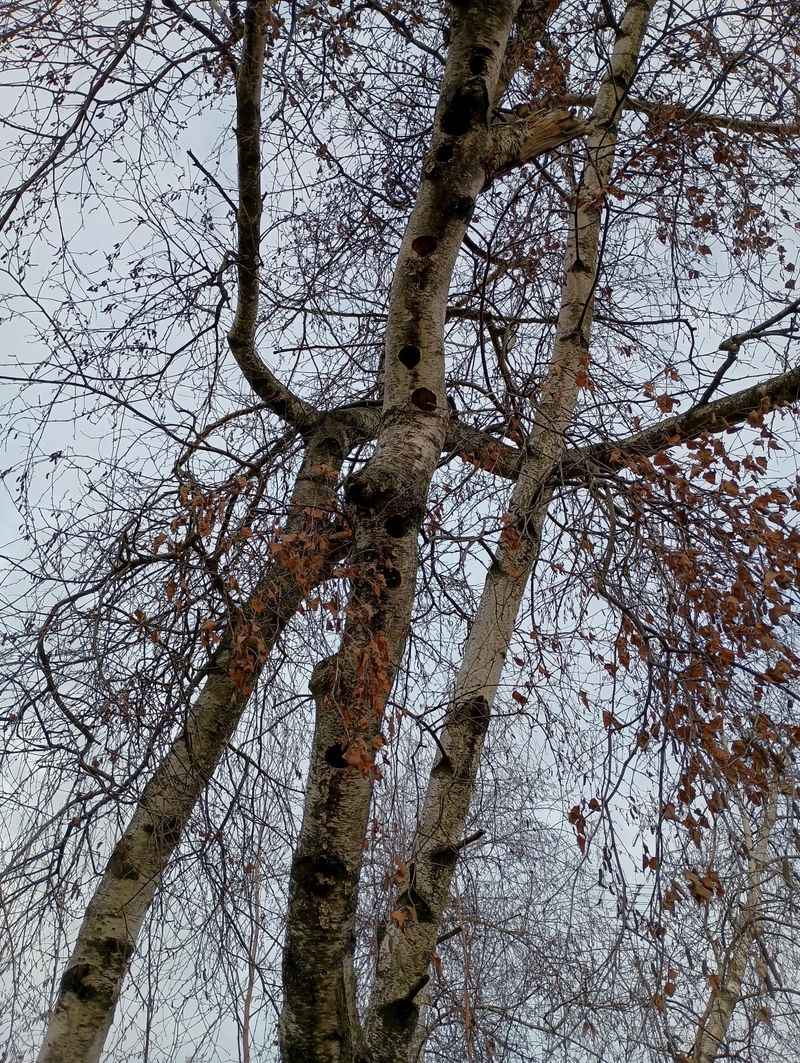
River birch is the tree that makes scouting genuinely hard. Its curling, cinnamon-tan bark peels in papery sheets, and egg masses tucked behind those flaps practically vanish.
Feeding happens too, mostly on smaller twigs where the bark stays thin. Ornamental birches in tight yard settings tend to show the effects sooner than trees in open woods.
Give yourself better odds by inspecting on a bright day with the sun at an angle. Side lighting throws shadows that reveal the slightly raised texture of a mass.
Gently lift loose bark flaps with a gloved finger rather than ripping them away. The peeling layer is part of the tree’s normal look and does not need removing.
Birches prefer consistent moisture, so a stressed, thirsty tree handles insect pressure poorly. A three-inch mulch layer and steady summer watering go a long way.
Here is a helpful habit: photograph anything suspicious before scraping. New York extension offices and the state’s reporting tool accept photos, and your picture might help confirm a new location.
Multi-stem clumps need extra attention since each trunk offers its own hiding places.
7. Grapevines Bring Heavy Lanternfly Activity
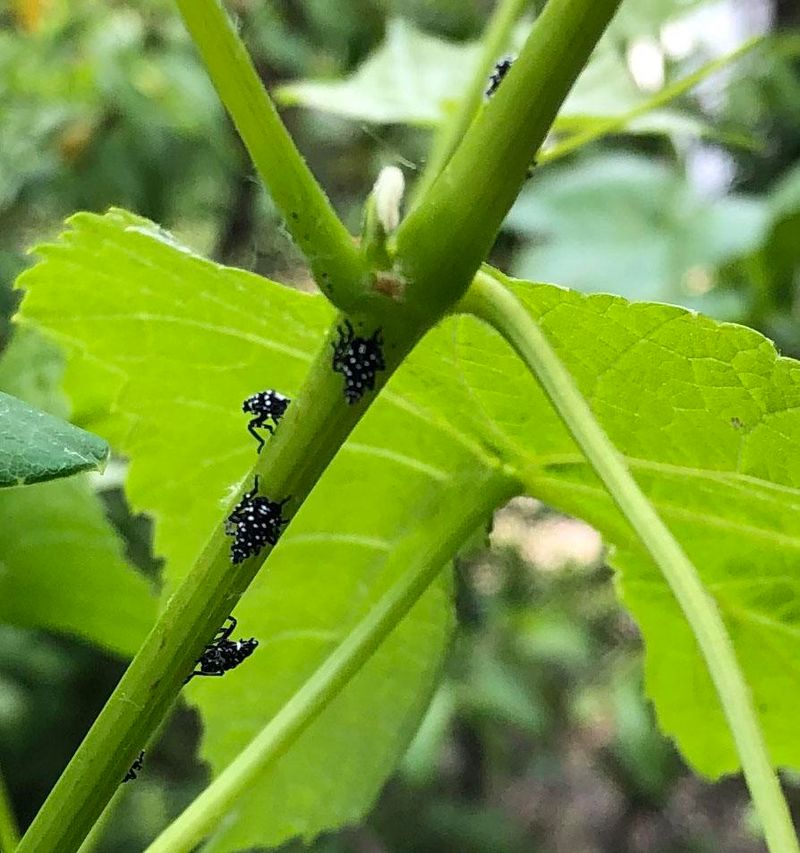
For grape growers, this insect is not a nuisance. It is a genuine threat to a livelihood.
Grapevines rank among the most preferred hosts, and both nymphs and adults pile onto canes and cordons in startling numbers. They drink enormous volumes of sap.
The damage shows up in ways that hurt a harvest. Vines lose stored reserves, sugar levels in the fruit drop, ripening drags late, and the plants head into winter poorly prepared for cold.
Pennsylvania growers hit hardest have had to replant entire blocks after vines gave out. That history explains why the Finger Lakes, Long Island, and Hudson Valley wine regions watch so closely.
Backyard grape arbors matter too. A small vine can act as a stepping stone, feeding a population that later moves to commercial acreage nearby.
Scout vine trunks weekly from July through October and knock insects into soapy water. Clear tree-of-heaven from fence lines and woods edges near the vineyard, since that species often feeds the invasion.
Commercial growers should follow current Cornell Cooperative Extension spray guidance rather than improvising. Timing and product choice change as research advances.
New York’s grape and wine industry supports thousands of jobs, so a homeowner scraping egg masses is genuinely helping neighbors down the road.
8. Black Cherry Can Show Lanternfly Feeding Signs
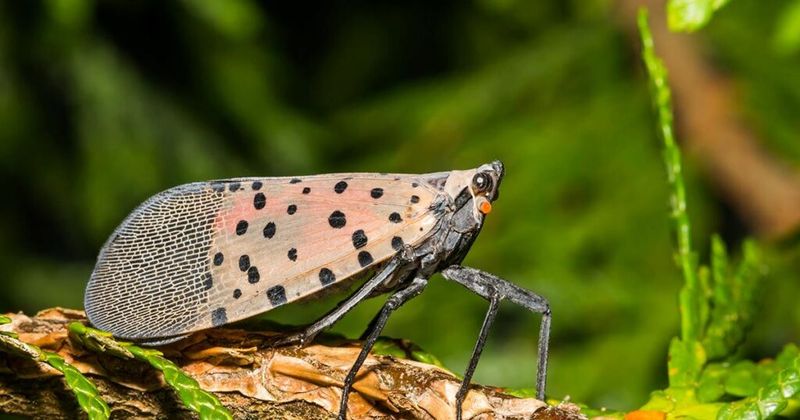
Black cherry lines woodland edges and old fields, and its dark, flaky bark is easy to recognize once you know the look. People often describe it as burnt cornflakes.
Nymphs are the main visitors here. Young lanternflies feed readily on fruit trees, and cherry sits high on their early-season menu.
Watch tender new shoots in June. The red-stage nymphs, spotted with black and white, cluster on green growth before adults arrive later in summer.
Home orchards deserve the same attention. Sweet and sour cherries, plums, peaches, and apples all belong to families this insect samples, so a backyard fruit planting can collect a crowd.
Honeydew is the giveaway on fruit trees. Sticky fruit attracts wasps and ants, and sooty mold on the skin makes an otherwise fine cherry unappetizing.
Hand removal works well on small trees. A shop vacuum with a long hose is surprisingly satisfying for clearing a cluster in seconds.
Bird lovers should care too. Black cherry fruit feeds robins, catbirds, and thrushes, so protecting these trees supports more than shade.
Before hauling firewood or moving nursery stock, give it a careful look. Egg masses hitchhike on almost anything, and stopping that ride keeps new neighborhoods lanternfly-free a while longer.