Why Virginia Gardeners Are Ditching Emerald Green Arborvitae For Better Privacy Plants
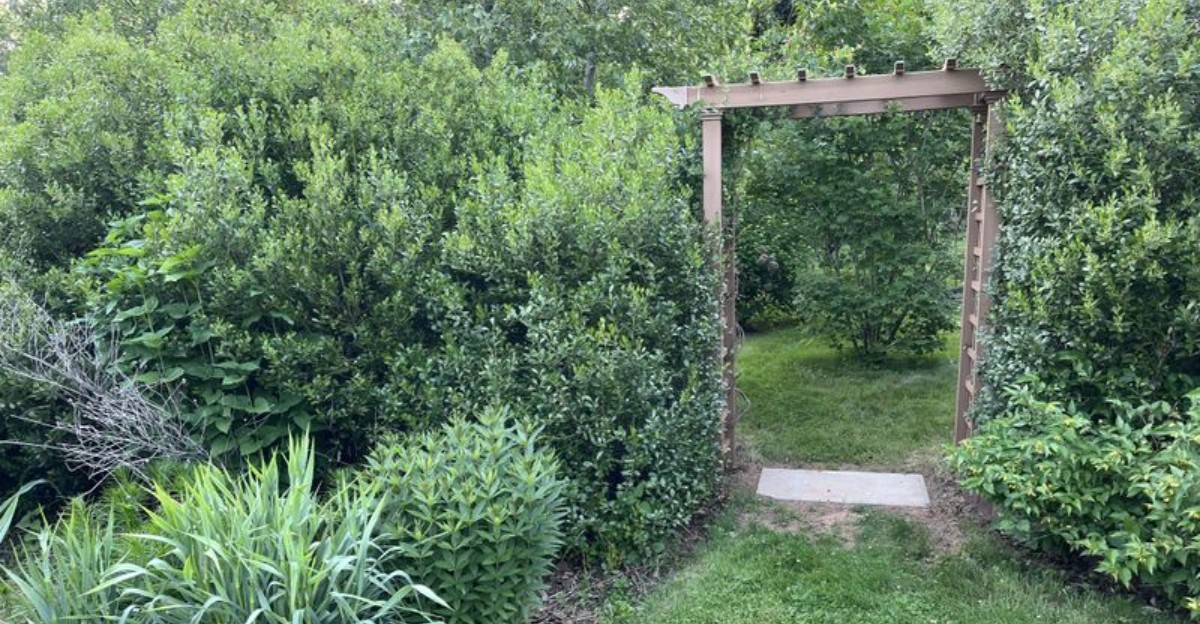
Picture a fresh row of Emerald Green Arborvitae lining a driveway. It looks perfect at first, but one tough winter can reveal the weak spots.
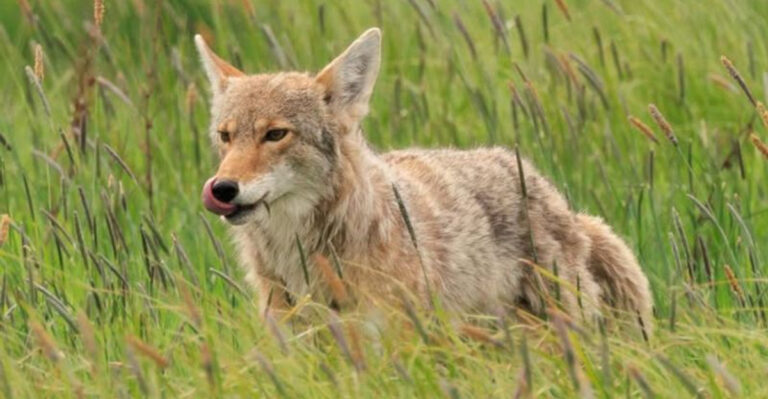
Deer often browse these shrubs when food is harder to find. Winter burn, bagworms, mites, and soggy soils can add even more stress.
The biggest issue is that arborvitae do not easily fill back in from bare wood. Once sections thin out, that damage can linger for years.
That is why many Virginia homeowners are looking beyond the usual privacy hedge. Native cedars, hollies, myrtles, and pines can handle local conditions while still creating a strong screen.
The right privacy plant depends on your yard, soil, and the challenges you face. A few smart choices can give you a greener, more reliable fence line without constant repairs.
1. Eastern Red Cedar Handles Dry Sites And Deer Pressure
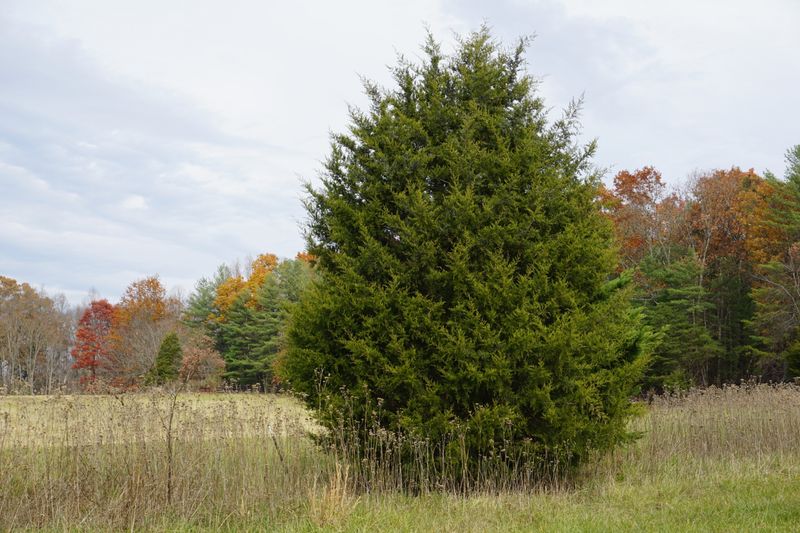
Walk any old fence line in rural Virginia and you will spot them: scrappy, upright evergreens that nobody planted on purpose. Eastern Red Cedar (Juniperus virginiana) is the state’s toughest native screening tree, and it asks for almost nothing.
Dry ground, rocky slopes, clay, wind, road salt – none of it bothers this juniper much. It is one of the most drought-tolerant conifers native to the eastern United States, which is handy during a hot August with no rain.
Deer browsing is the big selling point here. They are often less preferred by deer than many other evergreens, so your lower branches stay full instead of stripped bare by February.
Size-wise, most trees settle in around 25 to 35 feet tall in places like the Shenandoah Valley, though a happy specimen can push much higher. Plant them roughly 6 to 8 feet apart for a natural, layered screen rather than a stiff green wall.
A couple of honest warnings before you order twenty of them. Red cedar serves as an alternate host for cedar-apple rust, so skip it if you grow apples or crabapples nearby.
Some folks also notice a sharp odor from the foliage on warm days.
Birds adore the powdery blue berries, which means seedlings may pop up in unmowed corners of your yard. Full sun gives you the densest growth, and once established, watering becomes an afterthought.
2. Wax Myrtle Brings Evergreen Screening To Yards
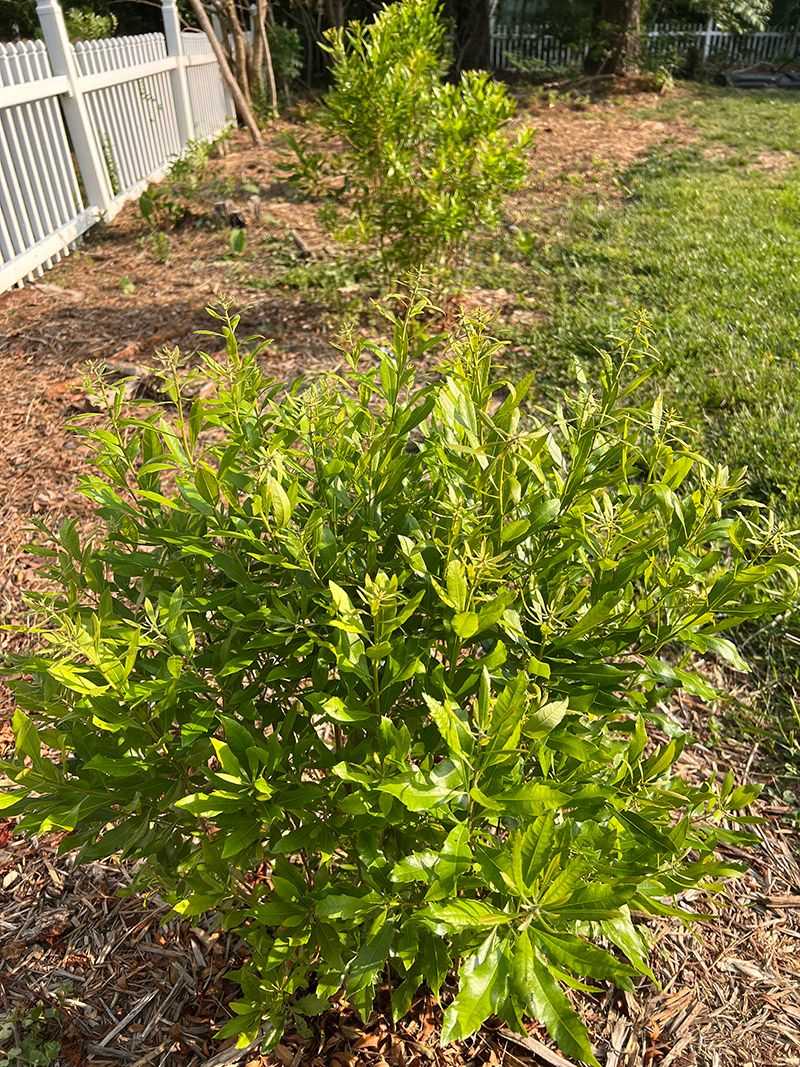
Crush a Wax Myrtle leaf between your fingers and you get a spicy, bayberry scent that sticks with you. Morella cerifera is the shrub you plant when you want privacy soon, not eventually.
Mature plants can reach about 15 to 20 feet tall in favorable conditions, though size varies by location and cultivar. The narrow olive-green leaves stay on through winter, creating a soft, feathery curtain rather than a rigid hedge.
Adaptability is where it really shines. Sandy soil, heavy clay, damp low spots, salt spray off the Chesapeake – Wax Myrtle takes it in stride, which explains its popularity in coastal Virginia and Hampton Roads.
Once roots settle in, watering becomes occasional and pests rarely cause trouble. Full sun brings the thickest screening, though it tolerates partial shade without looking thin.
Your Virginia Garden Changes Every Week. Your Plan Should Too.
Gardening in Virginia changes quickly throughout the season. Every Friday you’ll receive a simple weekly plan showing exactly what to plant, prune, fertilize, harvest, and protect so you never miss the right timing.
The waxy blue-gray berries feed songbirds through fall and winter, so expect visitors. Early colonists boiled those same berries to make fragrant candle wax, which is how the plant earned its name.
Plant it native to the eastern half of the state, and gardeners in central Virginia report good performance too. Space plants about 6 feet apart for a solid informal screen.
One tip: prune lightly in early spring to encourage branching near the base. Left alone, older shrubs sometimes open up at the bottom and look leggy.
3. American Holly Creates Dense Year Round Coverage
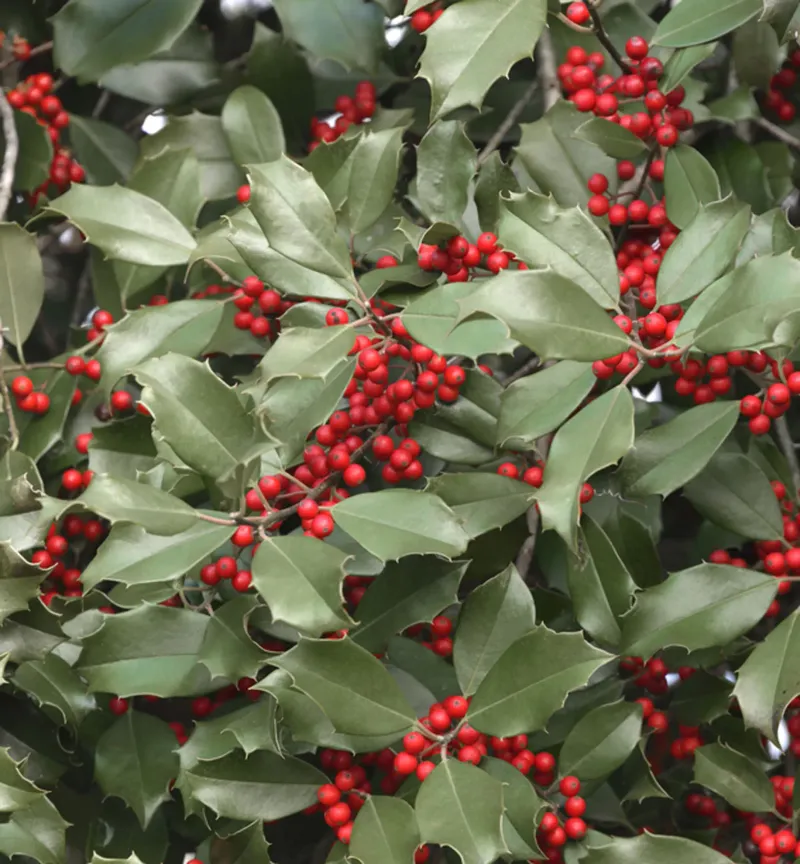
There is something old-fashioned and welcoming about a holly hedge in December, red berries glowing against glossy leaves. American Holly (Ilex opaca) delivers that look while quietly doing serious privacy work.
The natural shape is pyramidal and thick from the ground up, so you get coverage at eye level without constant shearing. Growth runs slow and steady, which many gardeners appreciate since the screen holds its form for decades.
Those stiff, spiny leaves do double duty. Those stiff, spiny leaves can make it less appealing to deer and rabbits, giving you a hedge that stays full even in neighborhoods where browsing pressure is heavy.
Plan for real size over time. Left unpruned, trees can stretch 40 to 60 feet tall and 20 feet or more across, so give them elbow room away from the house foundation.
Moist, well-drained, acidic soil suits it best, which describes much of the wooded ground. Full sun to partial shade both work, though sunnier spots produce denser branching and more berries.
Only female plants set fruit, so include a male holly somewhere within pollinating distance if berries matter to you. Birds will strip them eventually, but usually not before the holidays.
Serious insect and disease problems are uncommon, making this a low-fuss choice. Mulch the root zone and skip deep cultivation nearby, since the surface roots dislike disturbance.
4. Inkberry Holly Fits Compact Privacy Borders
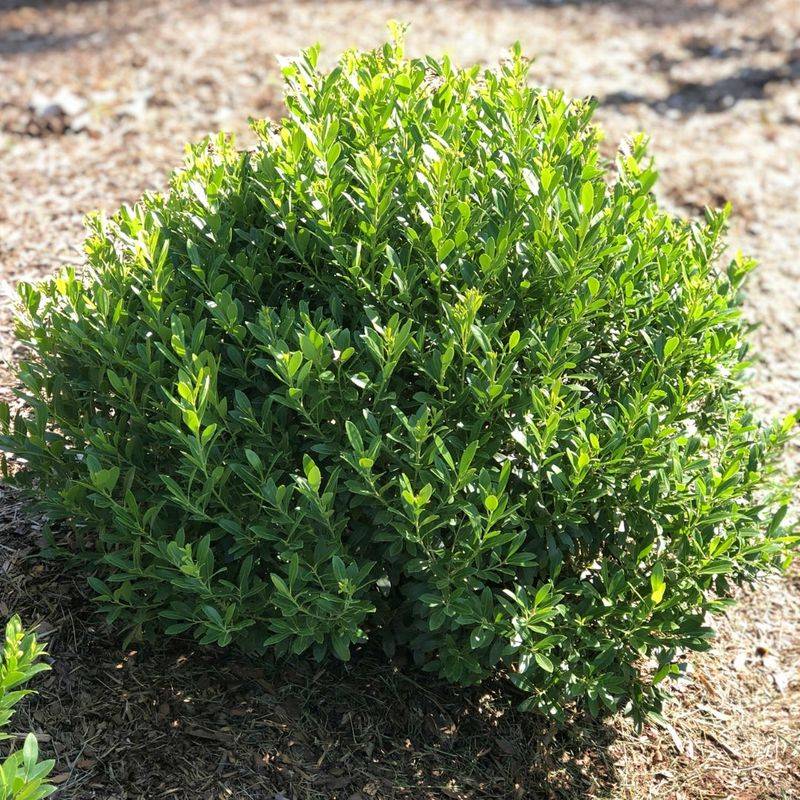
Not every privacy problem needs a 40-foot tree. Sometimes you just want to block the view of a patio or soften a fence, and Inkberry Holly (Ilex glabra) handles that job beautifully.
Expect a rounded, billowy shrub that tops out around 5 to 8 feet tall and wide, growing slowly the whole way. The small, spineless leaves feel smooth to the touch, giving a softer look than clipped boxwood.
Wet ground is no obstacle. Inkberry tolerates consistently moist soils and occasional wet conditions when drainage is still reasonable.
Full sun keeps growth tight, while partial shade produces a looser, more open shrub. Rich acidic soil is the real requirement, since alkaline conditions turn the leaves a sickly yellow.
Gardeners like that serious pests and diseases are rare. Glossy black berries appear in fall and hang on into winter, feeding birds when pickings get slim.
The plant suckers gently at the base, gradually thickening into a fuller border rather than leaving gaps. If you prefer a neater edge, snip wandering shoots once a year in spring.
Worth knowing: it grows wild on the state’s coastal plain but is not native to the Piedmont. Even so, it performs well statewide when soil stays acidic and moisture holds steady.
5. Southern Magnolia Adds Large Scale Evergreen Screening
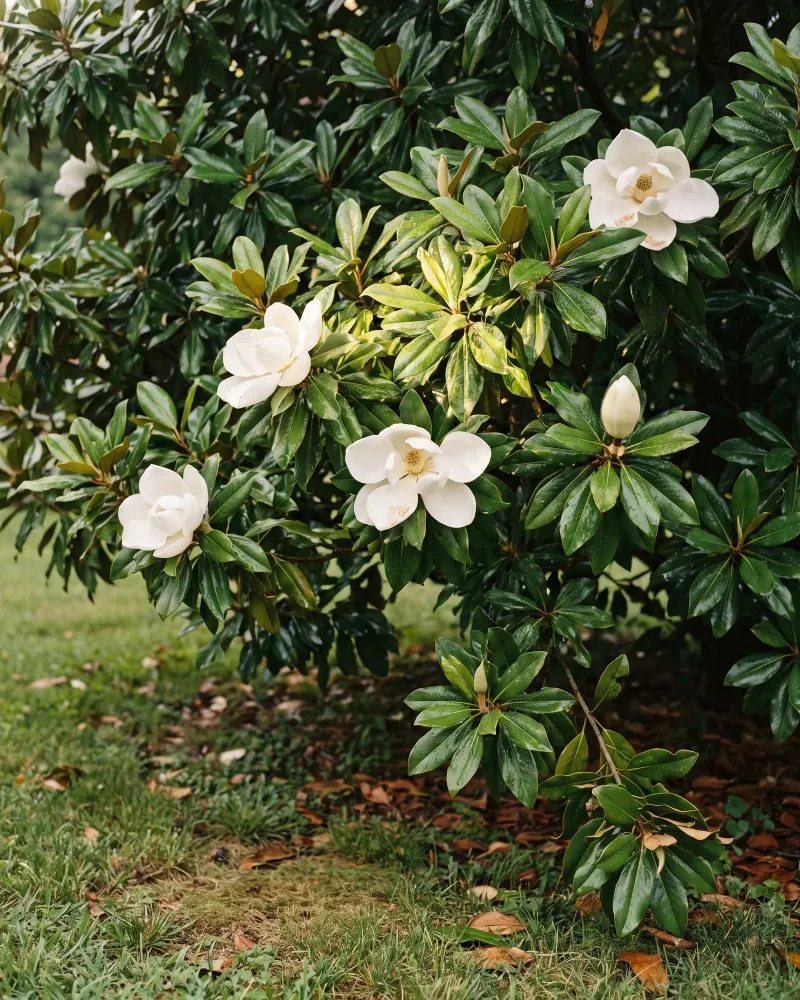
Few trees announce themselves like a Southern Magnolia in June, when saucer-sized white blossoms perfume the whole yard. Magnolia grandiflora screens on a grand scale, and it looks expensive doing it.
Mature trees commonly reach 60 to 80 feet tall and 20 to 40 feet wide, with thick, leathery leaves that stay glossy year round. Branches often sweep to the ground, which is exactly what you want for blocking a view.
Deer often show less interest in magnolias than in many other landscape plants, a welcome change if arborvitae has been on their winter menu. Significant insect and disease issues are also uncommon, so maintenance stays light.
Evenly moist, well-drained, acidic soil brings the best results, and full sun to partial shade both suit it. A wind-protected site keeps those big leaves from tearing during winter storms across northern Virginia.
Be honest with yourself about tidiness. Magnolias drop leathery leaves, seed cones, and spent petals all season, and the litter does not compost quickly.
Short on space? Cultivars like Little Gem stay closer to 20 feet tall with a narrow shape, which fits smaller suburban lots far better.
Give a full-size tree at least 20 feet from the house and 15 to 20 feet between plants in a row. Water deeply the first two summers, then step back and let it grow into the landmark it wants to be.
6. Eastern Hemlock Offers Shade Friendly Privacy
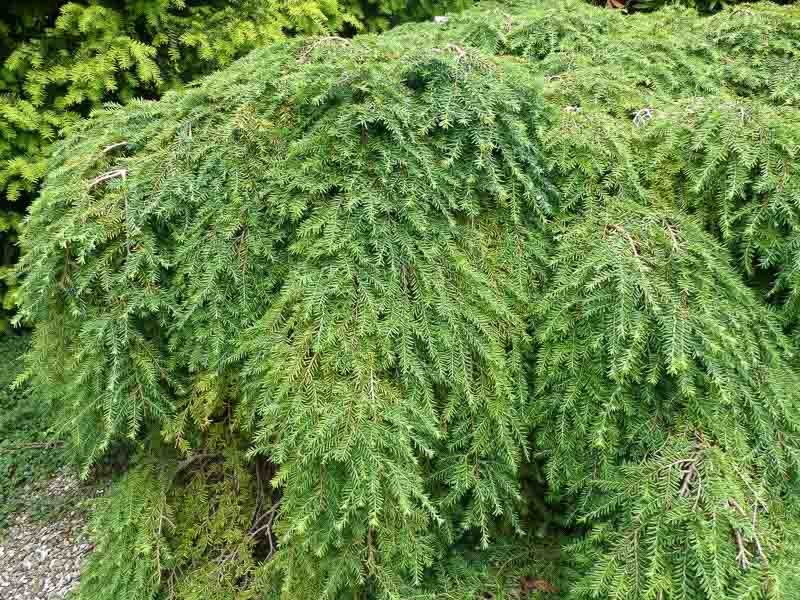
Shady property lines frustrate most privacy plans, since sun-loving evergreens thin out and sulk. Eastern Hemlock (Tsuga canadensis) solves that puzzle by actually thriving under a canopy.
The needles are short and soft, and branch tips droop in a way that looks almost feathery. Layered together, they build a dense screen that feels calm rather than boxy.
Growth runs slow to moderate, roughly 12 to 24 inches a year, so patience pays off here. Plant them about 8 feet apart along a north-facing fence and let the branches knit together over time.
Cool, consistently moist, acidic, well-drained soil is the recipe. Hemlock grows wild in the ravines and stream valleys of Virginia’s Appalachian region, which tells you plenty about what it wants.
Compacted soil, strong wind, and drought all cause trouble, so a hot exposed street front is the wrong home. A generous mulch layer and steady summer water keep roots comfortable.
The one serious concern is hemlock woolly adelgid, an invasive insect that has hit native stands hard. Check needle undersides each spring for small white cottony spots, and talk with a local arborist about treatment options if you find them.
Despite that risk, hemlock remains hard to beat for shaded seclusion. Birds nest inside the dense growth, and the shelter it provides in winter is genuinely valuable.
7. Virginia Pine Creates A Tall Native Screen
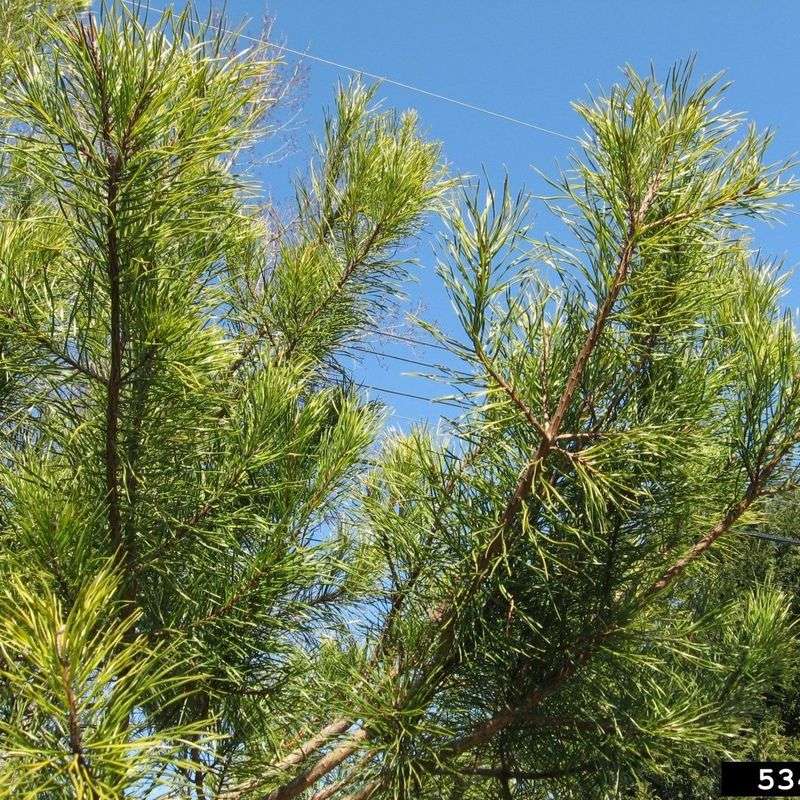
Named for the state itself, Virginia Pine (Pinus virginiana) is the plant equivalent of a hard worker who never complains. Poor, dry, gravelly ground where other pines sputter?
That is its comfort zone.
Mature height often reaches 30 to 40 feet, with a spread of 10 to 20 feet. Needles hang on the branches for up to three years, keeping the screen reasonably thick season after season.
Establishment happens fast, which makes it useful when you need a barrier on a rocky slope or a bare infertile bank. Clay and sandy soils both work as long as drainage is decent.
Full sun is non-negotiable for dense growth, so avoid tucking it behind tall shade trees. Stagger plants in two loose rows about 10 feet apart for a fuller, more natural look.
With age, branches grow gnarled and irregular, giving the tree a rugged character that suits larger properties and rural lots. Formal gardeners may find it too casual, and that is fair.
Wildlife benefits are real. Seeds feed birds and small mammals, and the foliage supports Imperial Moth larvae, so your screen doubles as habitat.
For the best results, plant small container stock rather than large balled trees. Young pines establish roots quickly and catch up to bigger nursery specimens within a few growing seasons.
8. Leyland Cypress Provides Fast Evergreen Coverage
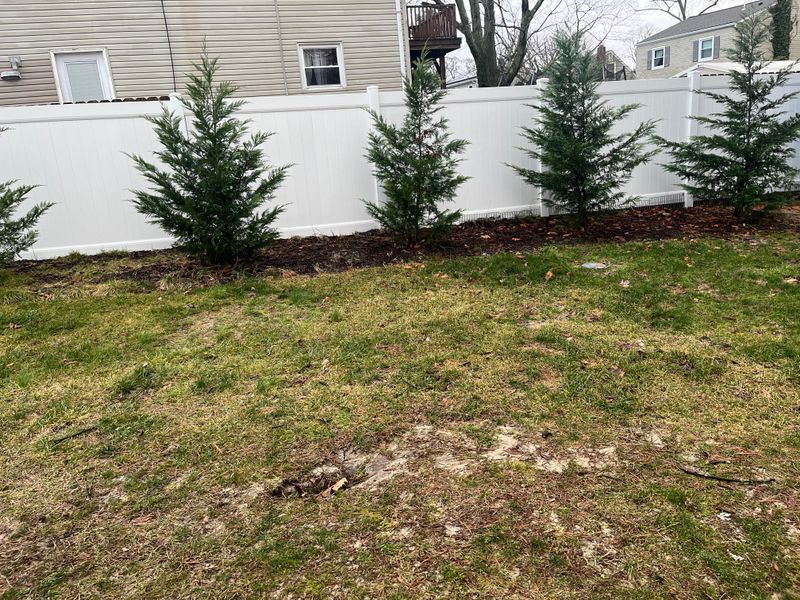
Speed is the whole pitch with Leyland Cypress (Cupressus x leylandii), and it delivers. Under good conditions, Leyland cypress can grow several feet per year and quickly create a privacy screen.
The foliage is soft and feathery, dark green with a faint blue cast, and it blocks views completely from ground to top. Mature trees can hit 40 to 60 feet tall and 15 to 20 feet wide, which surprises a lot of homeowners.
Once roots are established, the tree handles heat and dry spells well and needs little attention. Deer show less interest in it than in arborvitae, which is a meaningful upgrade.
Here is the catch. Leyland Cypress has been planted everywhere in suburban region, and overuse plus heavy wet clay invites fungal cankers, needle blight, and root rot.
Spacing makes a huge difference. Allow 8 to 10 feet between trees for a traditional hedge, or 6 to 8 feet for a quicker informal screen, and resist the urge to crowd them closer.
Choose a site with real drainage, skip the soggy bottom of the yard, and water at the base instead of overhead. Tall specimens can lean or topple in severe storms, so keep them away from the roofline.
Treated thoughtfully, it remains a solid workhorse for fast coverage.