Golden-Coloured Eggs Are Hiding In Plain Sight In Iowa Gardens
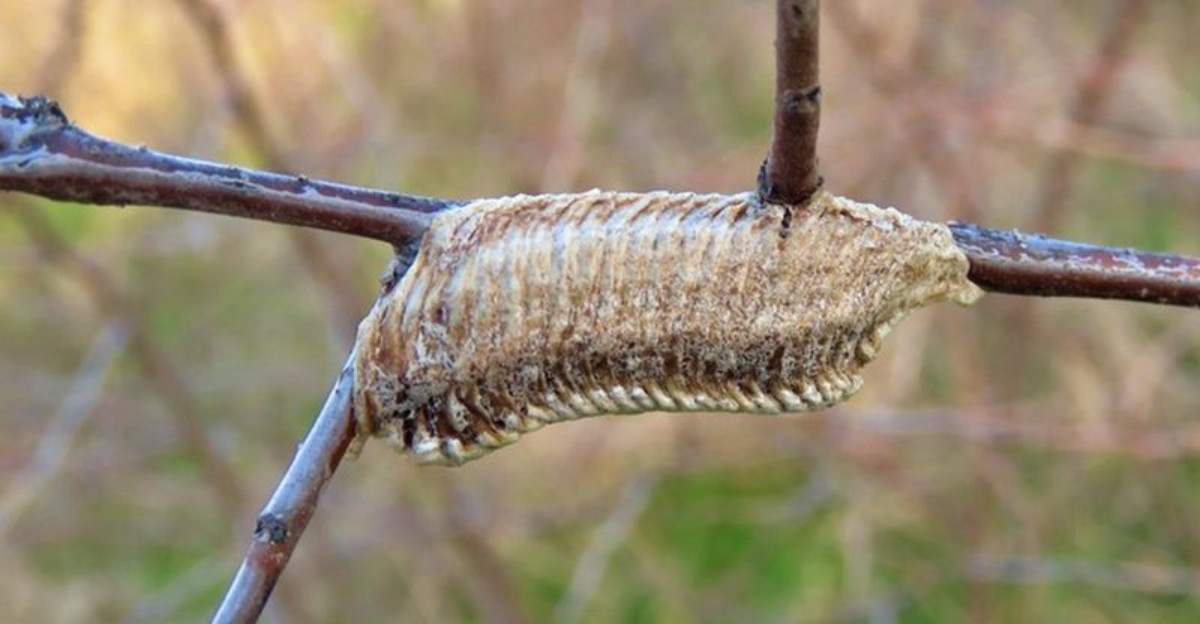
A strange tan lump clings quietly to your raspberry cane right now. Iowa gardeners like you walk past it often. Caramel colored and stubborn, it quietly endures your harsh Iowa winters.
Bags of yard waste swallow your treasure by accident. Underneath that tough shell, you’ll find countless eggs waiting for warmth. Spring turns them loose as your garden’s tiny, secret working army.
Aphids and mites become your garden’s fast, easy meal. Praying mantises build these cases so you benefit later. Winters test them hard, yet you’ll still find them fully intact.
Snip too quickly and you lose valuable pest control. Shear carelessly and you toss away hidden garden allies fast. Sharp eyes now save your garden real trouble later.
Look closely before you bag this golden, fragile find outside. Ignore it and you simply give up free seasonal protection. Discover what that tan lump means before you clear another bed.
The Foamy Golden Blob On Your Stems
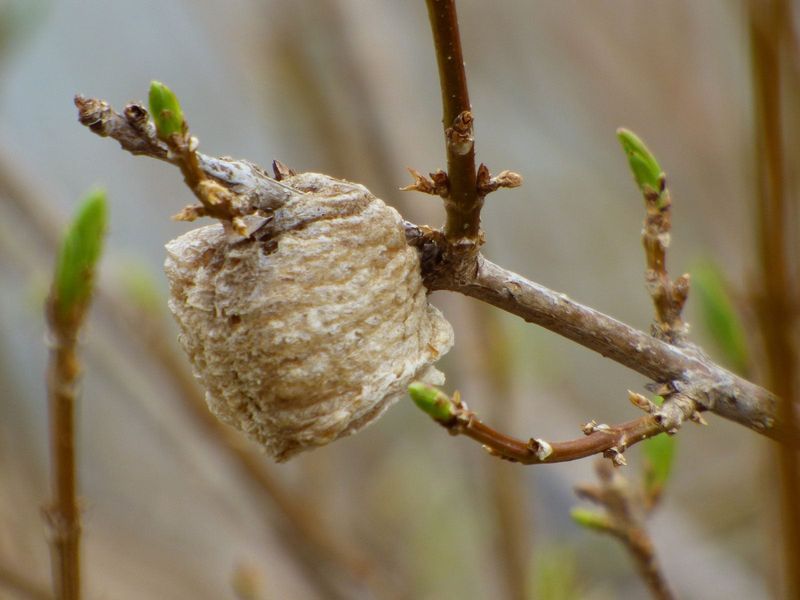
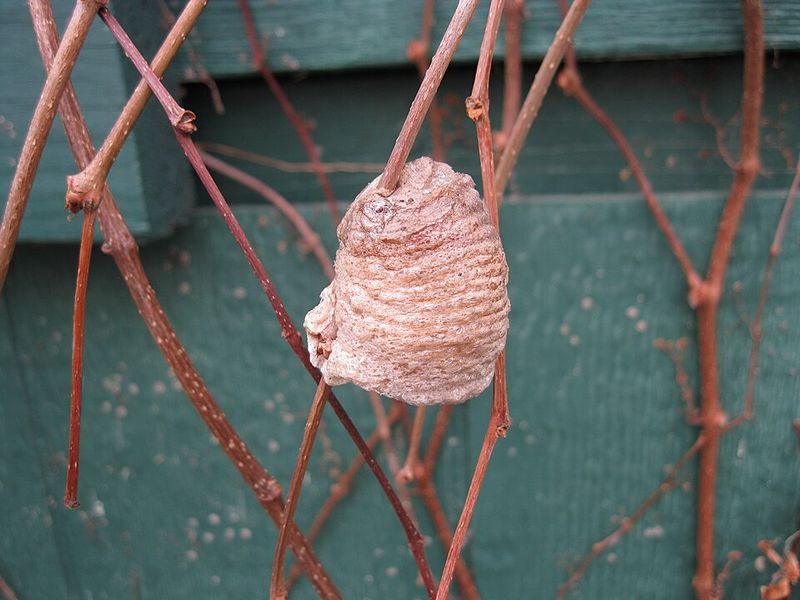
Picture a marshmallow that got squeezed onto a twig and then hardened in the sun. That odd lump is a praying mantis egg case, and scientists call it an ootheca.
The female mantis produces a frothy liquid from her abdomen, whipping it into a foam with her body. As the foam meets the air, it stiffens into a tough, papery shell that shrugs off rain and cold.
Colours range from pale straw to a rich butterscotch, sometimes darkening to brown with age. Sizes vary too, though many Iowa finds are about the length of a thumb and shaped like a small walnut or a flattened ridge.
Look for a faint seam running along one side, almost like a zipper. That ridge is where the babies will squeeze out when spring arrives.
Texture is a helpful clue. Run a finger near it and you will notice a firm, styrofoam-like surface rather than the squishy feel of a fungus or a gall.
Beginners often confuse them with old wasp nests or cocoon clusters. Wasp nests have visible cells and a grey papery look, while mantis cases are smooth, solid, and neatly layered.
Once you spot your first one, your eyes adjust and you begin finding them at a surprising rate. Shrub borders, fence lines, and untidy corners tend to hold the best surprises.
Fun detail worth sharing at the dinner table: a single case can hold anywhere from 50 to well over 200 eggs, depending on the species.
Why September Is Peak Laying Time
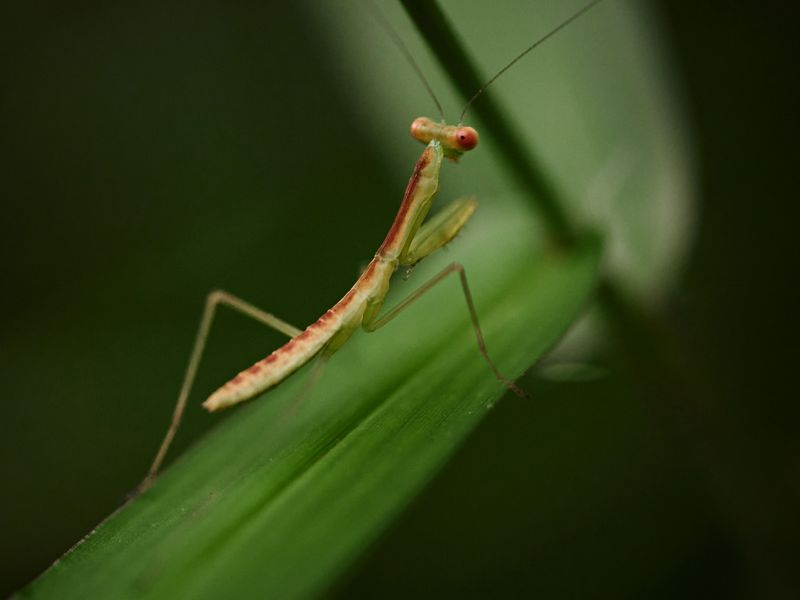
Late summer is the mantis version of a countdown. Females that spent the season fattening up on grasshoppers and flies now have one job left, and cooling nights push them to get it done.
Across much of the Midwest, egg laying usually ramps up from late August through October, with September typically the busiest stretch.
A female may produce several cases over a few weeks, spacing them out on different plants. Spreading them around is smart insurance, since a hungry bird or a curious squirrel might find one but rarely finds all of them.
Your Iowa Garden Changes Every Week. Your Plan Should Too.
Gardening in Iowa changes quickly throughout the season. Every Friday you’ll receive a simple weekly plan showing exactly what to plant, prune, fertilize, harvest, and protect so you never miss the right timing.
The process itself takes a couple of hours. She hangs head down, releases the foam, and slowly moves her abdomen back and forth in a rhythm that shapes the case.
Watching it happen is one of those quiet garden moments people remember for years. If you find a female mid-task, step back and let her finish without bumping the stem.
After the frost settles in, the adults fade from the landscape and the eggs carry the family forward. That handoff is exactly why your autumn cleanup choices matter so much.
Timing also explains something puzzling. People wonder why mantises seem to disappear in November, then reappear as tiny specks in May, and the answer is sitting right there on a stiff brown stalk.
Mark your calendar for a slow September walk with a cup of coffee. Scouting season and laying season overlap perfectly.
Favourite Hiding Spots Around Iowa Yards
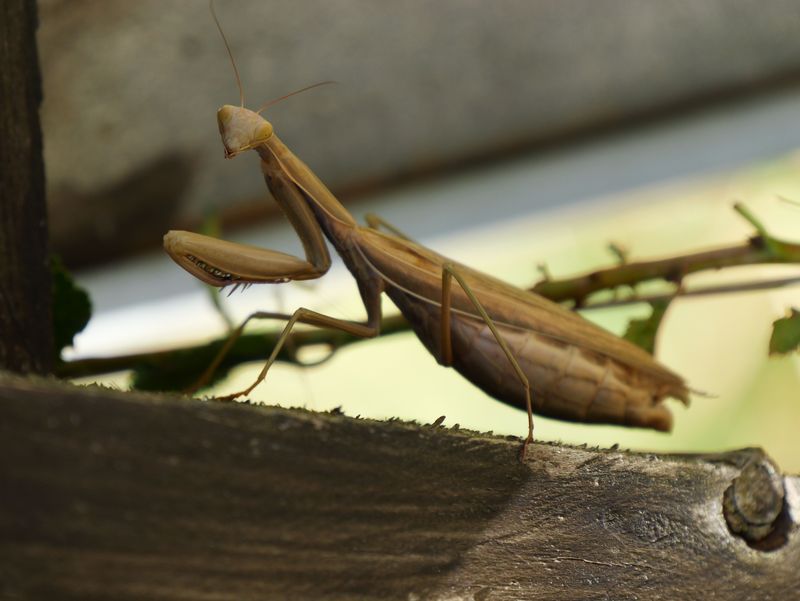
Mantis mothers are picky in a practical way. They want something sturdy, roughly the thickness of a pencil, sitting about a foot or two off the ground.
Raspberry and blackberry canes are reliable spots. So are goldenrod stalks, aster stems, coneflower skeletons, and the woody bases of ornamental grasses.
Shrubs earn plenty of attention too. Check lilac, ninebark, viburnum, hydrangea, and the lower branches of young trees along a sunny edge.
Built structures count as habitat. Fence rails, deck railings, tomato cages, trellises, the underside of a mailbox, and the frame of a raised bed all qualify.
Warmth matters, so south-facing and west-facing spots tend to be favourites. A wall that soaks up afternoon sun often hides a case or two near the base of nearby plants.
Tall grass and weedy fence lines are worth a peek before you run the string trimmer. Many gardeners find their first case while clearing an area they had been avoiding all summer.
Bring a small flashlight if the light is low. A beam held at an angle makes the pale case pop against dark bark.
Keep a list or take photos with your phone as you go. Knowing where cases sit means you can flag those stems and work around them in spring.
One more tip from experience: check garden tools and stored stakes leaning against the shed. Anything that sat still through September might be carrying a passenger.
Cleanup Habits That Protect The Cases
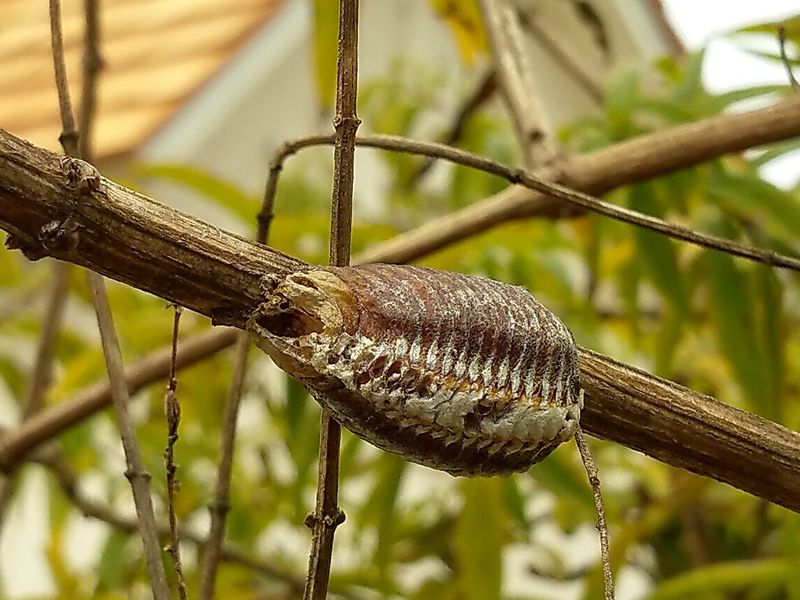
Here is something worth knowing about tidy gardens. A yard scraped bare in October loses a lot of the helpers that would have patrolled it in June.
The simplest fix is to leave standing stems through winter. Perennial stalks, grass clumps, and old flower heads give mantis cases a safe place to ride out the cold.
If you must cut, cut high. Leaving 12 to 18 inches of stem keeps many cases in place while still making the beds look intentional.
Scout before you shear. A five-minute scan of canes and shrub bases can spare several hundred future mantises from the compost pile.
Found a case on something you truly need to remove? Snip the twig a few inches on either side and wedge it into a shrub or a brush pile in a sheltered corner of the yard.
Height helps. Setting the twig about knee level or higher keeps the case away from standing water and from ground-level foragers.
Skip the indoor storage idea. A warm house tricks the eggs into hatching in February, and hundreds of nymphs hatching in your living room won’t survive long indoors.
Save heavy pruning of berry canes and shrubs for late winter or early spring, once you have marked the cases with a strip of flagging tape. Your future self will thank you.
Leaf litter deserves a mention as well. A loose layer under shrubs shelters other beneficial insects that share the same neighbourhood.
Which Mantis Species You Are Likely Finding
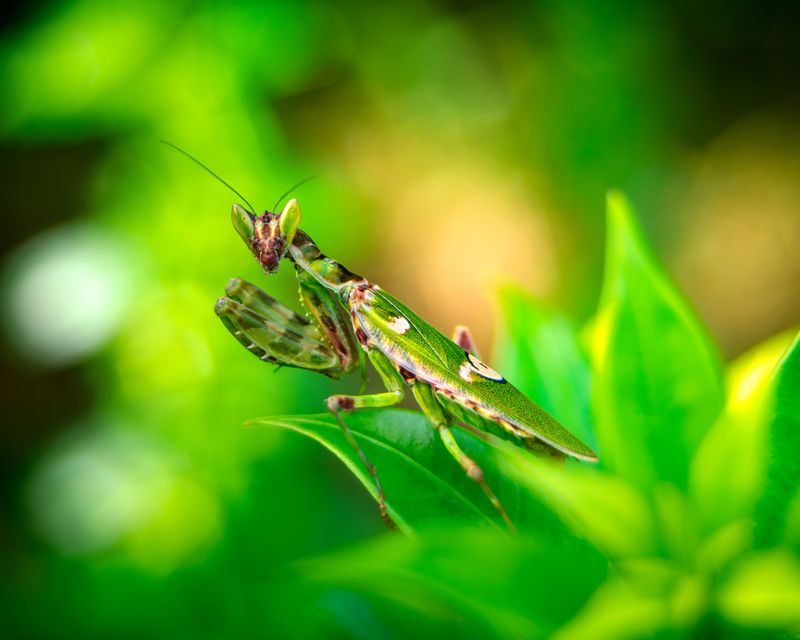
Iowa gardens host a small cast of characters. The Chinese mantis is the giant of the group, sometimes stretching four inches, and it lays a rounded case about the size of a walnut.
European mantises are a bit smaller and often green, with a distinctive dark spot ringed with white under the front legs. Their cases look longer and more elongated, sort of like a stretched teardrop.
Both species arrived from overseas more than a century ago, riding along with nursery stock and gaining a foothold across the Midwest. Gardeners have been buying and moving their egg cases ever since.
There is also the Carolina mantis, a slimmer native more common farther south, though sightings occasionally reach the Midwest.
Telling them apart is a fun puzzle, though the practical advice stays the same for all three. Leave the case where it is and let nature handle the rest.
One honest note about mantises in general. They are not picky hunters, so they take caterpillars and pollinators along with the grasshoppers and beetles you would rather be rid of.
That mixed diet is a good argument against dumping purchased cases into your beds by the dozen. Supporting the mantises that already chose your garden is the balanced approach.
Snap a clear photo of any case you find. Local extension folks and online naturalist groups enjoy helping with identification.
What Spring Brings After The Wait
Roughly eight months of stillness, then a sudden burst of activity. Sometime in May or early June, once temperatures settle into a steady warmth, the case seam splits open.
Nymphs emerge looking like pale specks on threads, no bigger than a mosquito. Within minutes they shed a thin skin, darken up, and scatter across the nearest leaves.
Only a small share of them reach adulthood, which is exactly how the system works. Birds, spiders, and their own siblings thin the crowd fast.
The survivors start hunting aphids and tiny flies right away, growing through several moults over the summer. By August you might spot a full-size adult swivelling its triangular head at you from a sunflower.
If you want a front-row seat, note the location of a case in autumn and check it every few days in late spring. Early morning tends to be the best window.
Resist the urge to handle the newly hatched nymphs. They are fragile at that stage, and a puff of breath is enough to knock them off a leaf.
Providing a little help goes a long way. Flowering herbs, a shallow water dish with pebbles, and fewer broad sprays give nymphs a better shot.
There is something satisfying about the whole cycle. A gardener who leaves a few scruffy stems in September gets paid back with insect patrols the following summer, no receipt required. Keep notes year to year and you will see patterns emerge in your own yard.