New Jersey Surfaces Are Being Marked With A Strange Grey Coating
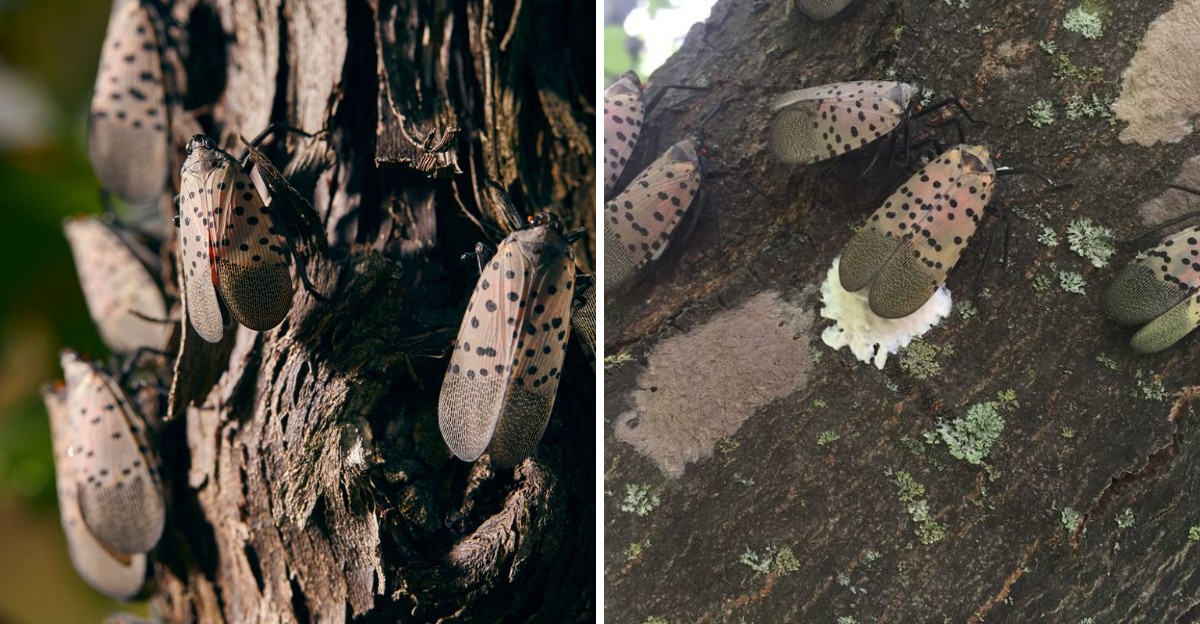
That chalky smear on your fence post looks harmless. It hides something far more calculated than dirt. You brush past it without a passing glance. New Jersey yards are hosting these patches right now.
September marks the start of this quiet spread. Homeowners across New Jersey find them on porches and firewood. Cars parked in driveways carry these smudges on their wheels.
Patio furniture and fences make easy landing spots too. Spotted lanternflies chose camouflage instead of hiding underground. Your eyes slide right past the chalky texture instantly.
Scientists call it an egg mass hiding real danger. Each patch holds eggs that matter. Texture reveals what color conceals almost immediately. Chalky patches crack like dried mud in places.
Weather does little to break down this coating. Time only helps it survive through the cold. Spring hatches waiting nymphs eager to spread fast. Ignoring it now means missing what comes next.
The Grey Smudge Hiding On New Jersey Trees
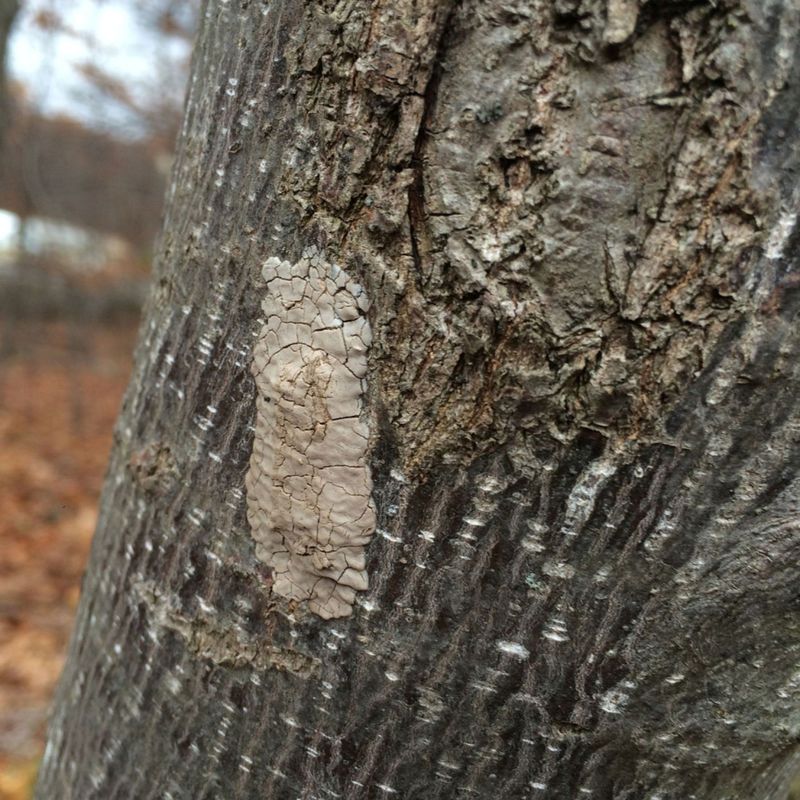
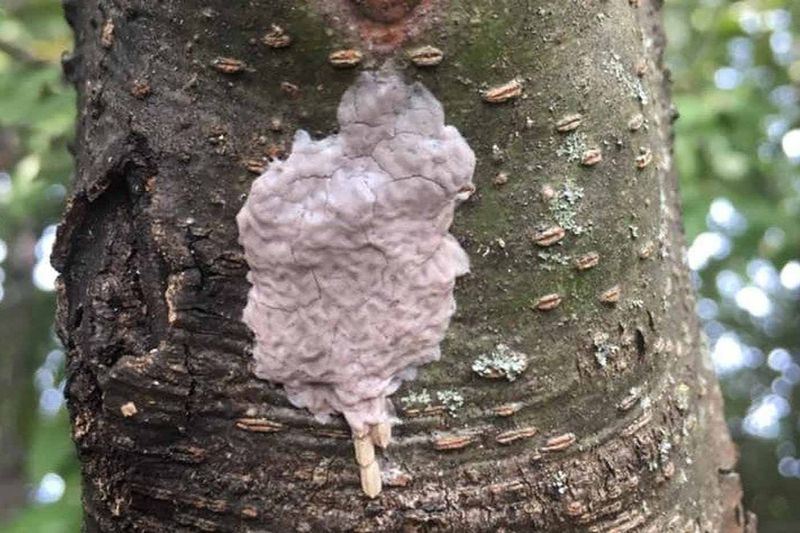
Picture a smear of grey window putty pressed flat against tree bark, roughly one to one and a half inches long and about half an inch wide. That is the calling card of the spotted lanternfly, an invasive planthopper that reached New Jersey back in 2018.
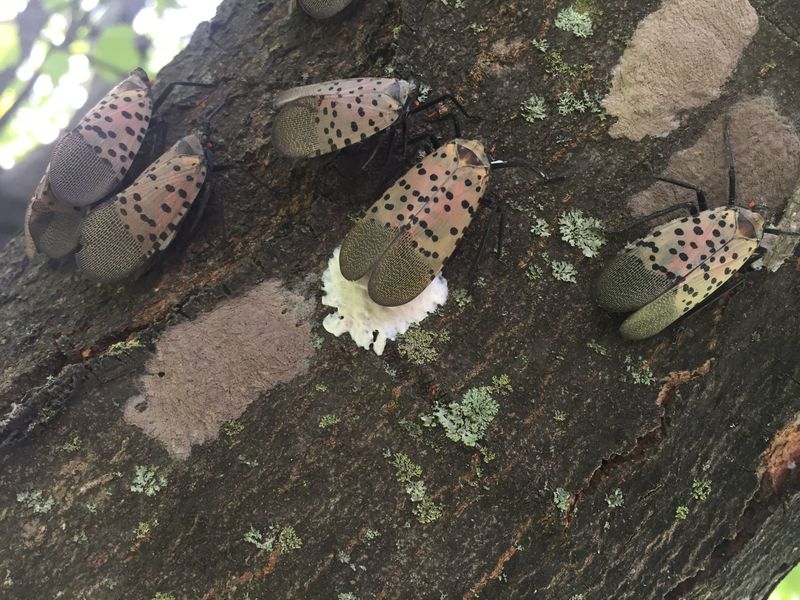
Female lanternflies lay rows of tiny eggs, usually 30 to 50 at a time, then cover them with a waxy secretion. Fresh coverings look shiny and putty grey. Older ones dry out, crack, and start resembling flaky mud or a patch of lichen.
The camouflage works remarkably well. On a maple or an ailanthus tree, the coating blends into the bark texture so smoothly that people lean against it without noticing.
September is when females begin laying, and the process continues through late fall. A single female can produce one or two masses, which means a handful of insects in your yard can turn into hundreds by spring.
Knowing what you are looking at matters because these eggs survive winter just fine. Freezing temperatures barely bother them, and they hatch in late April or May as tiny black nymphs with white spots.
New Jersey residents often confuse the coating with mud dauber nests or fungal growth. The difference is texture: lanternfly masses sit flat against the surface rather than bulging outward.
Grab a flashlight and angle it sideways across the bark. The shadow makes the raised, slightly bumpy outline pop out immediately, and once you spot one, you will start seeing them everywhere.
Where The Coating Shows Up Around Your Property
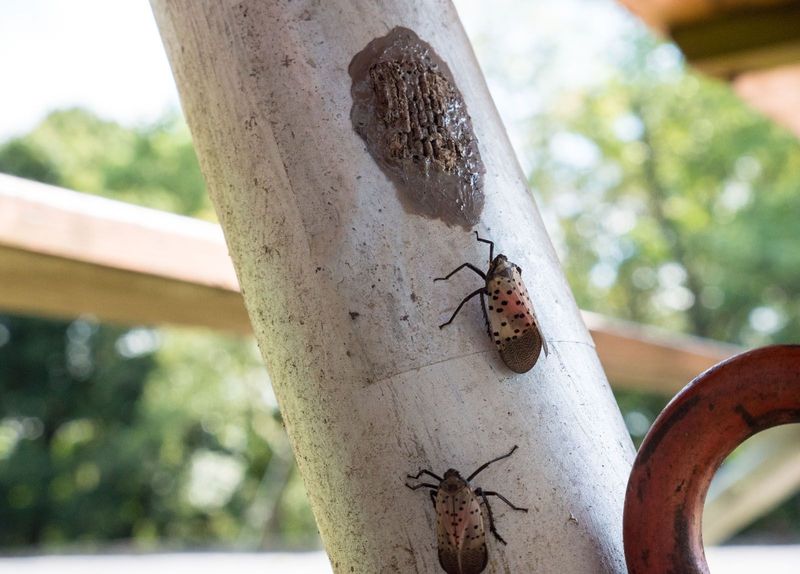
Tree bark is the obvious spot, but honestly, lanternflies are not picky landlords. They will plaster their egg coverings onto almost any flat, sheltered surface they can find.
Check the underside of patio tables, the back of grill covers, and the rims of plastic planters. Stone walls, brick foundations, and concrete steps all host them too.
Firewood stacks deserve special attention. Split logs sitting under a tarp give females exactly the kind of protected, rough surface they favor, and hauling that wood elsewhere spreads the problem fast.
Your New Jersey Garden Changes Every Week. Your Plan Should Too.
Gardening in New Jersey changes quickly throughout the season. Every Friday you’ll receive a simple weekly plan showing exactly what to plant, prune, fertilize, harvest, and protect so you never miss the right timing.
Vehicles are a huge factor in how this insect moved across New Jersey so quickly. Egg masses turn up in wheel wells, behind bumpers, on trailer hitches, and inside truck beds.
Outdoor equipment rounds out the list. Lawn mowers, bicycles, boat hulls, kayaks, and camping gear stored in the yard all make appealing real estate.
Metal surfaces surprise people the most. Fence rails, light poles, mailbox posts, and even the flat side of an air conditioning unit can end up marked.
Here is a helpful habit for September and October: walk your property once a week with a flashlight, checking anything that has been sitting still. Look low, look high, and look underneath.
Pay extra attention to the shady side of objects. Females tend to choose spots shielded from direct sun and heavy rain, which means the north-facing surfaces often hold the biggest clusters.
Why This Insect Concerns New Jersey Farmers
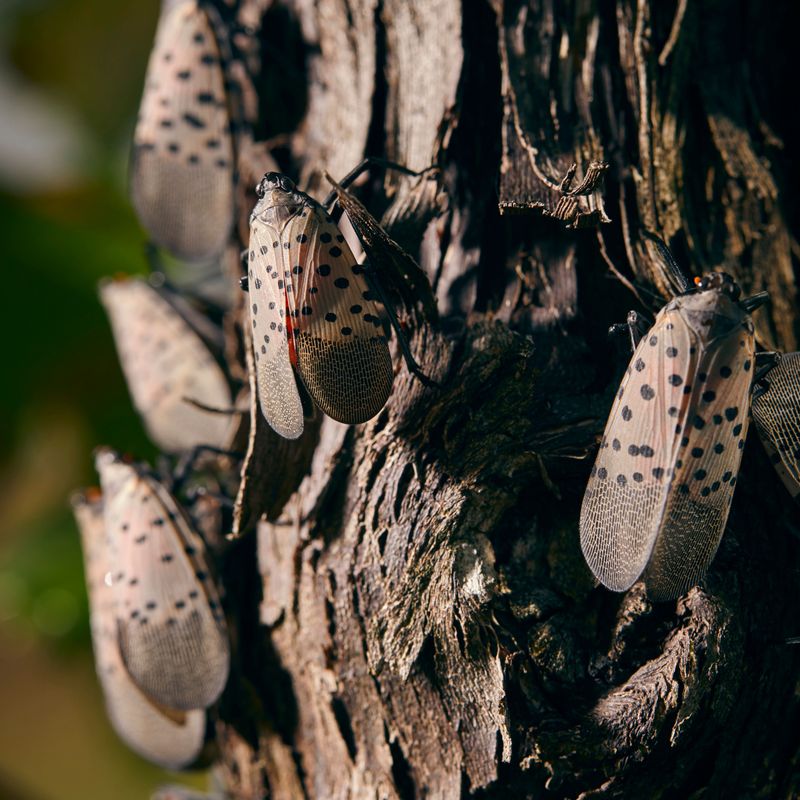
Grapes are the primary concern. Spotted lanternflies feed in dense swarms on grapevines, draining sap until the plants struggle to store energy for winter.
Agricultural extension researchers have flagged this as a growing concern for vineyard yields in affected regions.
Hops, apples, peaches, and hardwood timber also land on the menu. The state has a real stake here, since agriculture and orchard tourism are meaningful parts of the local economy.
Feeding is only half the trouble. As lanternflies drink sap, they excrete a sugary waste called honeydew that coats leaves, sidewalks, cars, and lawn furniture below.
Honeydew attracts wasps, ants, and flies. It also feeds sooty mold, a black fungus that blankets surfaces and blocks sunlight from reaching plant leaves.
Homeowners notice the sticky mess before they notice the insects. Decks get tacky, outdoor cushions get stained, and the smell turns slightly fermented on warm days.
That is why scraping egg masses in autumn carries real weight. Each coating you remove in September or October is 30 to 50 insects that will not get the chance to hatch and spread next spring.
Researchers at Rutgers have been tracking spread patterns and testing control methods, and they lean heavily on public reporting. Ordinary residents scouting their own yards provide data that field crews simply cannot gather alone.
Think of it as neighborhood teamwork. One yard cleared helps, but a whole street doing the same in the same season makes a measurable dent in local numbers.
Scraping The Egg Masses The Right Way
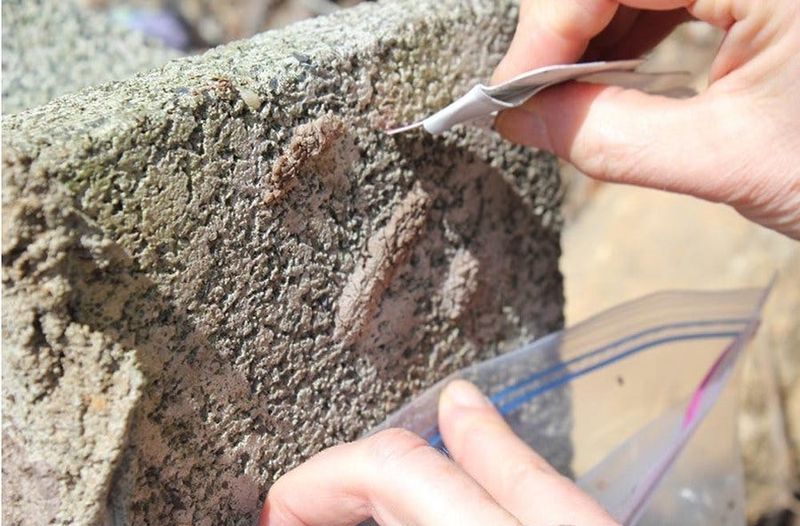
Old gift cards and plastic putty knives make the best tools for this job. Hold a zip-top bag or a small container of hand sanitizer directly beneath the mass before you start.
Press firmly and scrape downward so the whole coating peels off the surface in one motion. Getting the eggs loose matters more than getting them tidy.
Let the scrapings fall into rubbing alcohol or hand sanitizer. Soaking them for a few minutes stops the eggs from developing, and then the sealed bag goes straight into the trash.
Simply knocking a mass onto the ground does not finish the job. Eggs that land in leaf litter can still hatch in spring, so containment is the part people skip most often.
Wear gloves if the texture bothers you, though the eggs are harmless to humans and pets. There is no bite, no sting, and no venom involved.
Use a step stool for masses within safe reach, but skip the risky ladder work high in a tree. Reaching a few dozen low masses safely is a better trade-off than risking a fall for one mass high in a tree.
Rough bark makes scraping tricky because eggs settle into crevices. Go over the same patch twice and check with a flashlight afterward to catch leftover bits.
Autumn through early spring is the window for this work. Cold weather does not harm the eggs, so a January scraping session counts just as much as a September one.
Telling Real Egg Masses From Harmless Look-Alikes
Plenty of well-meaning people scrape lichen off their maples every fall thinking they have found the enemy. Lichen is a flat, greenish-grey growth that clings tightly and feels papery or leafy rather than chalky.
Mud dauber nests fool folks too. Those are built from actual mud, they bulge outward noticeably, and they often show long tube shapes rather than a flat rectangle.
Gypsy moth egg masses look fuzzy and tan, almost like a scrap of felt stuck to bark. Lanternfly masses have no hair or fuzz at all.
Here is the reliable test: a genuine lanternfly covering sits flat, measures about one to one and a half inches long, and shows faint vertical rows underneath the coating.
Older masses crack into a pattern resembling dried clay, revealing seed-shaped eggs lined up in neat columns. Color runs from putty grey to light tan, sometimes darkening with age. Fresh ones from September often look slightly glossy.
When you are genuinely unsure, snap a clear photo and report it through the New Jersey Department of Agriculture website. Experts confirm sightings and the data helps map where populations are shifting.
Scraping something harmless by accident is not a disaster, though lichen actually indicates decent air quality and does no damage to trees. Leaving it alone is the kinder choice.
Practice helps enormously. After examining three or four confirmed masses, your eye gets sharp enough to pick them out from across a yard.
Keeping The Coating From Hitching A Ride Elsewhere
Ask an entomologist how spotted lanternflies spread across so much ground so fast and the answer involves highways, not wings. These insects are mediocre fliers but outstanding stowaways.
A mass laid on a trailer in Hunterdon County can hatch in another state months later. That is one of the main ways the population spread from a single Pennsylvania township to counties across more than a dozen states.
Before any road trip this fall, give your vehicle a two minute once-over. Check wheel wells, the grille, mirror housings, bumpers, roof racks, and the undersides of mud flaps.
Camping gear needs the same treatment. Tents, coolers, folding chairs, and bike racks all offer flat surfaces that appeal to a female searching for a laying spot.
Firewood is the big one worth repeating. Buy and burn wood locally instead of transporting it, since a single tarped stack can carry dozens of hidden masses.
Landscapers, movers, and delivery drivers have extra responsibility here because their equipment travels daily. A quick inspection between stops protects places that have not seen this insect yet.
Boat owners heading to storage should scan hulls, trailers, and covers. Marina lots and storage yards tend to sit near tree lines, which makes them attractive laying grounds.
Small habits add up in a big way. Five minutes of checking before you drive off stops a whole generation of insects from setting up shop somewhere new next spring.