A Bright Red Headed Caterpillar Nicknamed The Labor Day Worm Is Stripping Alabama Azaleas
Bare patches are appearing across your favorite azaleas. You probably blame the weather for the sudden change. Alabama hides a fast-moving insect in your garden now. Caterpillars line up beneath a single leaf in your beds.
Touch that branch near you and heads lift together. Tails curl upward too, waving like a warning to you. Gardeners across Alabama gave your shrubs a seasonal nickname.
Labor Day weekend signals when your shrubs start thinning. Leaves across your whole yard thinned fast since late August. Days pass quickly once these insects settle into your yard.
Skipping a closer look now costs your shrubs later. Waiting a few days can lead to more visible damage. Right now, your yard is sending you a clear signal.
The longer they feed, the more leaves are lost. Waiting too long can leave your shrubs noticeably bare. Your next move decides how your shrubs fare.
Spotting The Red Headed Culprit Behind Disappearing Leaves
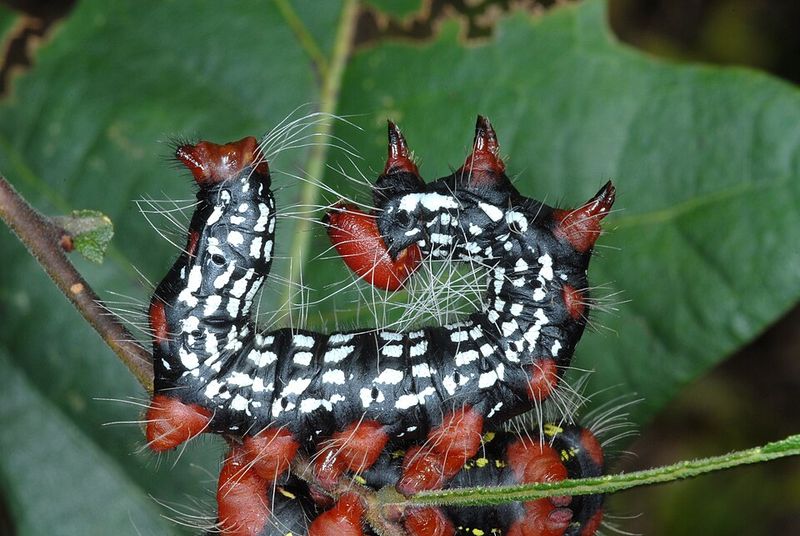
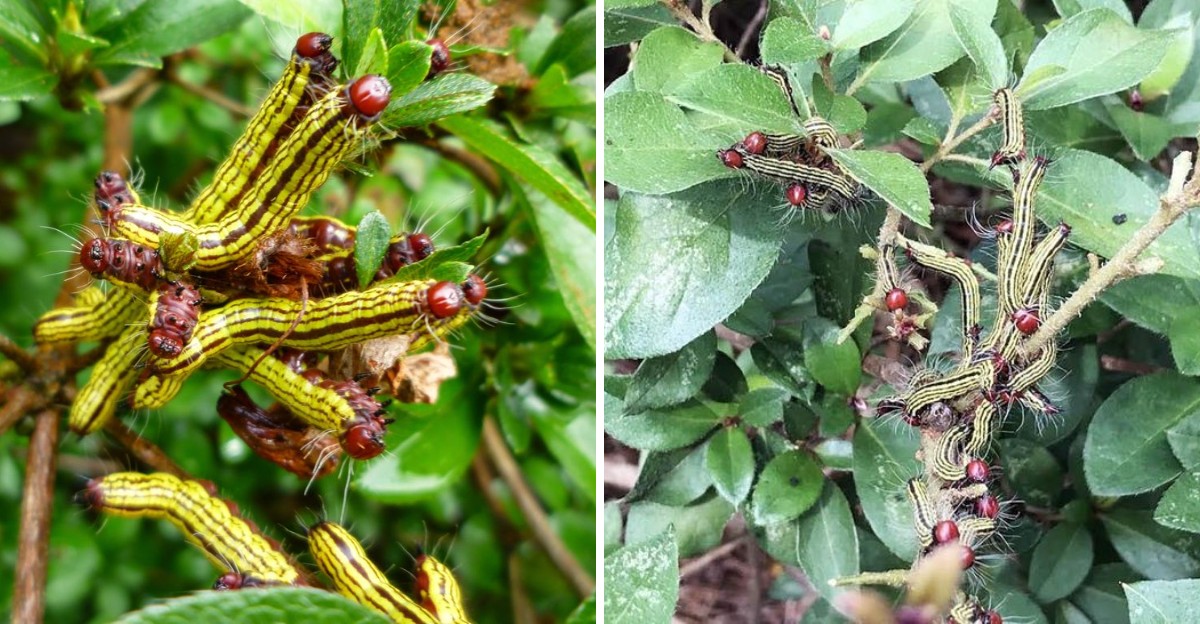
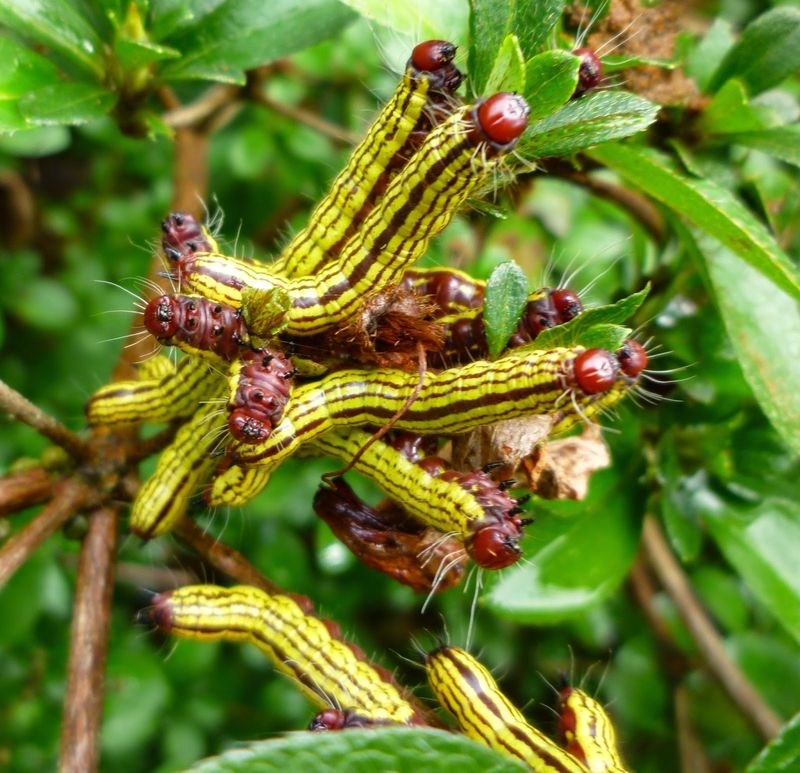
Walk out to your shrubs one September morning and you might notice something new clinging to a bare twig. A cluster of black and yellow striped bodies, each topped with a glossy reddish orange head, all lifting their tails at once when you lean in.
The azalea caterpillar starts life tiny and pale green, barely bigger than a grain of rice. As it grows, it takes on bold lengthwise stripes of black and creamy yellow, plus that bright mahogany red head Alabama gardeners recognize right away.
Full grown, they stretch about two inches long. Their defensive pose is a distinctive display, as they arch both ends upward when a shadow passes over them.
Young ones feed shoulder to shoulder in tight groups under the leaves, scraping the green tissue and leaving a lacy shell behind. Older ones spread along the branches and chew whole leaves down to the stem.
The adult is a moth with rusty brown wings spanning close to two inches. She glues rows of white eggs to the leaf undersides, often a hundred or more in one batch, which explains why damage seems to appear out of nowhere.
Good news for squeamish folks, those bristles are not stinging hairs. Handling them does not cause the burning welts some other showy caterpillars deliver, though gardeners with sensitive skin still like to wear gloves.
Look for them on native flame azaleas and hybrid varieties alike, since they are not fussy about which type they pick. Blueberry leaves tempt them too.
Why The Labor Day Worm Shows Up Right On Schedule
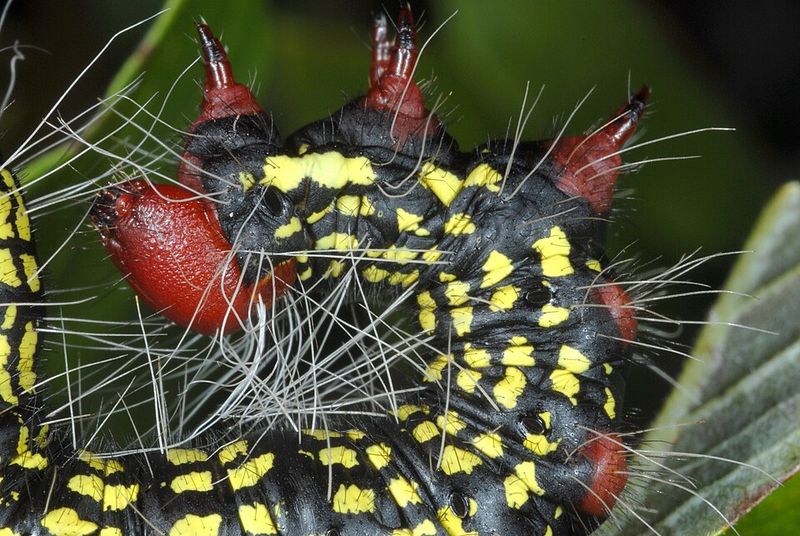
Many Alabama gardeners refer to it as the Labor Day worm. Egg laying happens in midsummer, and the biggest, hungriest stage lines up with the first weekend of September.
In warmer parts of the state, especially along the Gulf Coast, a second round of egg laying can occur, so gardeners there may see fresh groups well into October. That means gardeners along the Gulf Coast can see fresh groups well into October.
Your Alabama Garden Changes Every Week. Your Plan Should Too.
Gardening in Alabama changes quickly throughout the season. Every Friday you’ll receive a simple weekly plan showing exactly what to plant, prune, fertilize, harvest, and protect so you never miss the right timing.
Timing explains why the shrubs look untouched in August and skeletal a few weeks later. Tiny caterpillars eat very little, then their appetite climbs sharply during the last two stages of growth.
Most of the leaf loss happens in the final week of feeding. Catching them early in the season saves you a lot of scrambling later.
Mark your garden calendar for a weekly leaf check starting in late July. Flip a few leaves on the lower branches, where the moth tends to place her eggs.
Shrubs planted in shade often show trouble first, since the moths favor sheltered spots. Heat and drought stress also make plants slower to bounce back from a September feeding spree.
A single warm autumn can shift the schedule by a week or two in either direction. Weather watching beats calendar watching, so keep your eyes on the plants themselves.
Mature caterpillars eventually drop to the soil and settle in for the winter as pupae. Come the following July, the cycle starts over with a fresh flight of rusty brown moths.
The Telltale Damage That Appears Almost Overnight
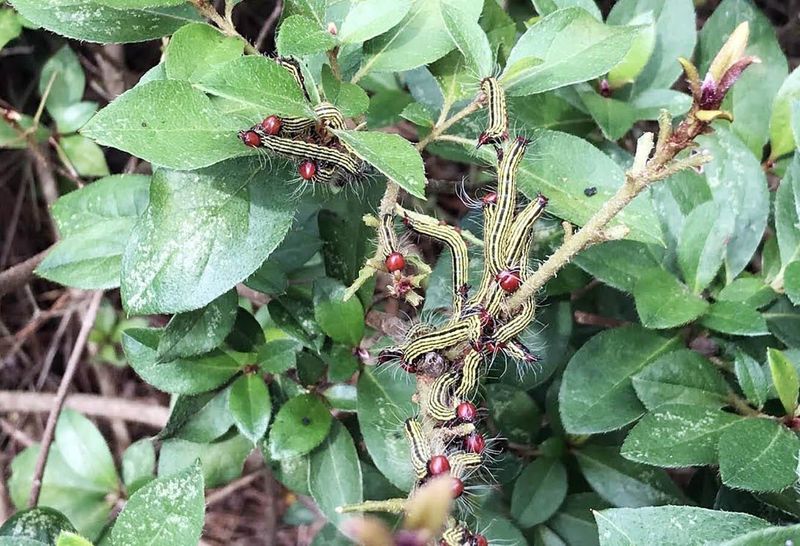
Bare twigs with a few tired leaves at the tips are the classic clue. Whole branches can be cleared while the shrub two feet away looks perfectly fine.
Early feeding leaves a lacy, see-through pattern because the young ones scrape only the soft tissue. Within days that lace turns into ragged gaps, and then into naked stems.
Dark green pellets scattered across the mulch below are another giveaway. Plenty of gardeners spot the droppings on a patio or walkway before they ever notice the caterpillars.
Damage usually begins at the top of the plant or on one side. Since the group feeds together, the loss looks lopsided rather than spread evenly over the shrub.
A heavy year can clear the leaves from large sections of a mature evergreen variety. The plant generally pulls through, though it may bloom a little thinner the following spring.
Repeat stripping two or three seasons in a row is what really wears a shrub down. Roots draw on stored energy each time, and that savings account gets thin.
Check the underside of leaves for neat rows of white eggs during your walk through the beds. Rubbing them off with a thumb takes seconds and spares you the cleanup later.
Snap a photo of the damage and note the date, so next year you know exactly when to start looking. Simple records like that turn guesswork into an easy routine.
Hand Picking, The Simplest Fix For Backyard Shrubs
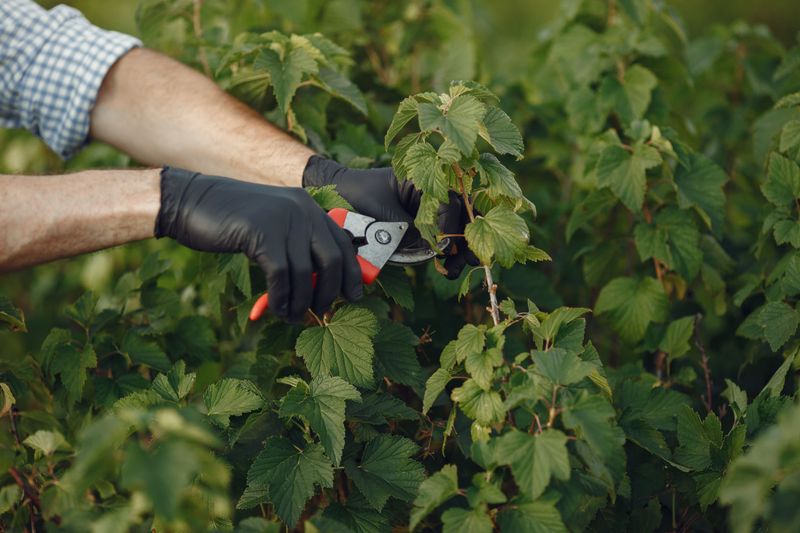
Nothing beats a bucket of soapy water and five quiet minutes of your evening. Because the group clumps together, you can often clear an entire colony by clipping one leaf.
Snip the leaf or small twig they are sitting on and drop the whole thing in the bucket. The soap film sinks them fast, and the job wraps up without any spray at all.
Gloves are optional, since those bristles do not sting, though some folks prefer them anyway. Kids usually find the tail waving display fascinating, which makes this an easy chore to share.
Work in the morning while the groups are still bunched and simple to see. Once they scatter along the branches, picking takes longer and a few will slip past you.
A flashlight helps if you garden after work, and it makes the striped bodies pop against dark leaves. Check the shady interior of the shrub too, not just the outer growth.
For tall plants, a pole pruner or a firm shake over a tarp does the trick. Fold the tarp, carry it well away from the bed, and the problem travels with it.
One thorough round in early September often settles the matter for the season. Follow up about a week later in case another batch hatched close by.
Hand picking also spares the ladybugs, lacewings, and wasps already patrolling your yard. Those helpers stay on the job and tidy up any stragglers you happened to miss.
Gentle Sprays And Garden Helpers That Keep Numbers Low
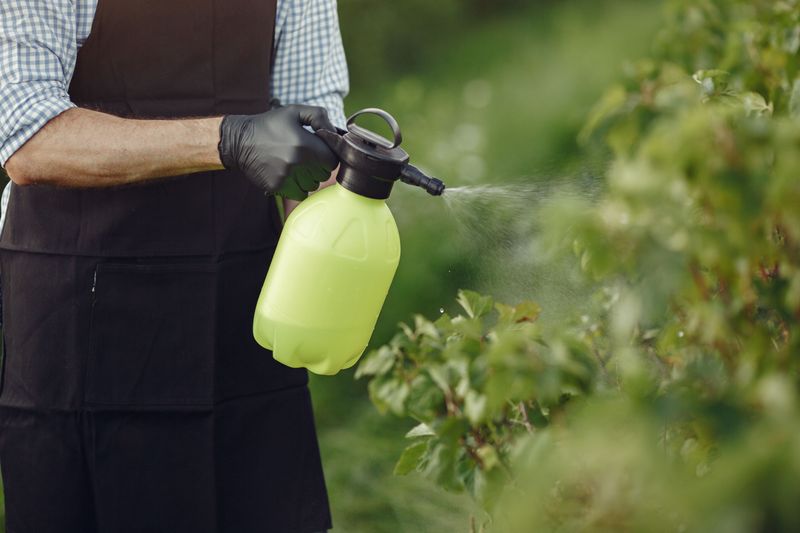
If hand picking is not practical, a few gentle products handle the job nicely. Bacillus thuringiensis, sold as Bt, targets young caterpillars and leaves bees and beetles alone.
Bt works best on the small ones, so timing matters more than strength. Coat the underside of the leaves, because that is exactly where the feeding happens.
Insecticidal soap and horticultural oil also work on tiny caterpillars and fresh eggs. Both need direct contact, which means careful coverage beats a quick pass with a hose end sprayer.
Spinosad is another softer choice that handles larger caterpillars once the Bt window has passed. Apply it in the evening so the spray dries before pollinators show up in the morning.
Skip broad spectrum products when you can, since they knock back the helpers along with the pest. Paper wasps, for instance, patrol azaleas all summer and carry caterpillars off to their nests.
Chickadees, cardinals, and wrens raise their young on soft caterpillars just like these. A shallow birdbath and a few native shrubs nearby keep that free patrol on duty.
Tiny parasitic wasps and predatory stink bugs claim a share of each batch as well. Give them room to work and you may find mild years sort themselves out.
Read the label for rates and any waiting period before rain arrives. A calm, cloudy evening gives you the best coverage and the least drift onto neighboring plants.
Helping Your Shrubs Bounce Back After September Feeding
So the leaves are gone and your shrub looks like a cluster of bare stems. Take a breath, because azaleas are tougher than they appear in September.
Flower buds for next spring form during summer, and they hold tight to the stems even after a feeding spree. Hold off on pruning, or you will trim away the show you are waiting for.
Water deeply once a week during dry autumn spells, aiming at the root zone instead of the leaves. An inch of water applied slowly does far more than a daily sprinkle.
Freshen the mulch to two or three inches, keeping it pulled back from the trunk. Steady soil moisture helps roots rebuild the energy they spent replacing lost foliage.
Skip fertilizer this late in the year, since tender growth pushed in October struggles with cold snaps. Wait until after bloom in spring, then use a product made for acid loving shrubs.
A soil test through your county Extension office shows whether the pH sits in the happy range near 5.5. Guessing with lime or sulfur can cause more trouble than the caterpillars did.
Many shrubs leaf out normally the next spring, sometimes with a slightly thinner canopy. Keep notes, check for white eggs next July, and you will stay a step ahead.
Give a stressed plant afternoon shade if you can, or plan a move during the dormant season. Happier roots mean a quicker comeback after any setback.