9 Desert Natives Arizona Gardeners Plant This Fall To Cut Next Summer’s Water Bill In Half
Watering a yard through an Arizona summer can feel like pouring money straight into the dirt. The good news is that fall, roughly October through November, is the perfect time to plant desert natives that build strong roots before the heat returns.
When these tough plants take hold, they need far less water, shrug off 100-degree days, and even help keep scorpions and mosquitoes at a distance. Here are nine plants worth adding to your yard this season.
1. Palo Verde (Arizona’s State Tree)
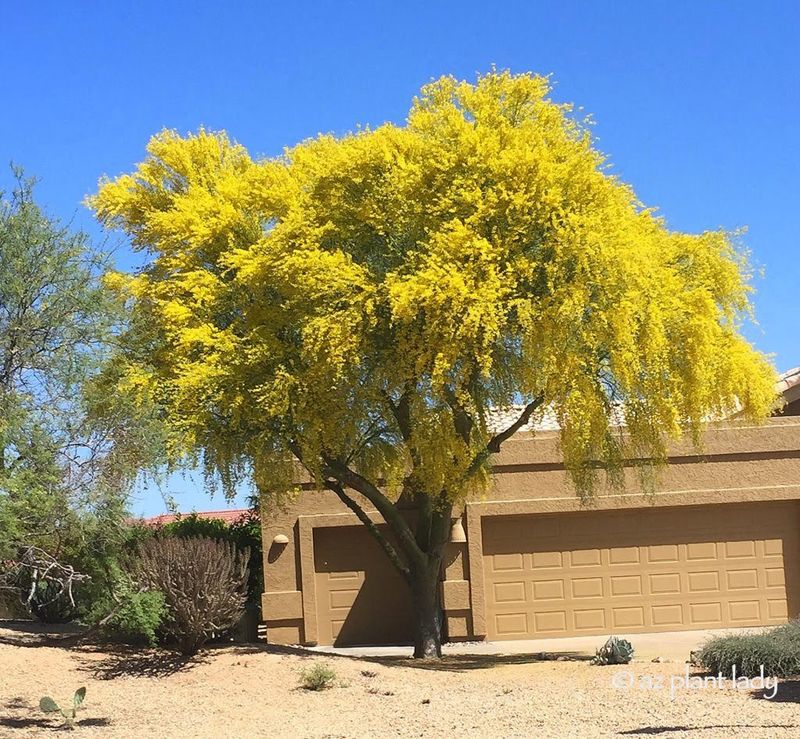
Meet the plant Arizona loved enough to name its state tree. The Palo Verde grows fast and throws a dazzling show of yellow blossoms every spring, but its real magic is quieter than that.
Its green bark actually photosynthesizes, so the tree keeps making energy even when it drops its tiny leaves during dry stretches. That trick lets it thrive on very little water once the roots settle in, which is exactly why fall planting pays off.
The dappled shade it tosses across a patio or west-facing wall can lower how hard your air conditioner works all summer long. Less cooling, less watering, and a smaller bill on both fronts.
There is a pest bonus too. Because a Palo Verde sips water and does not form dense, damp thickets at ground level, it gives scorpions fewer cool hiding spots to settle into near your home.
Plant it in October or November in full sun, water it deeply while it establishes, then step back. Few trees give Arizona yards this much payoff for so little fuss.
2. Desert Willow (Chilopsis linearis)
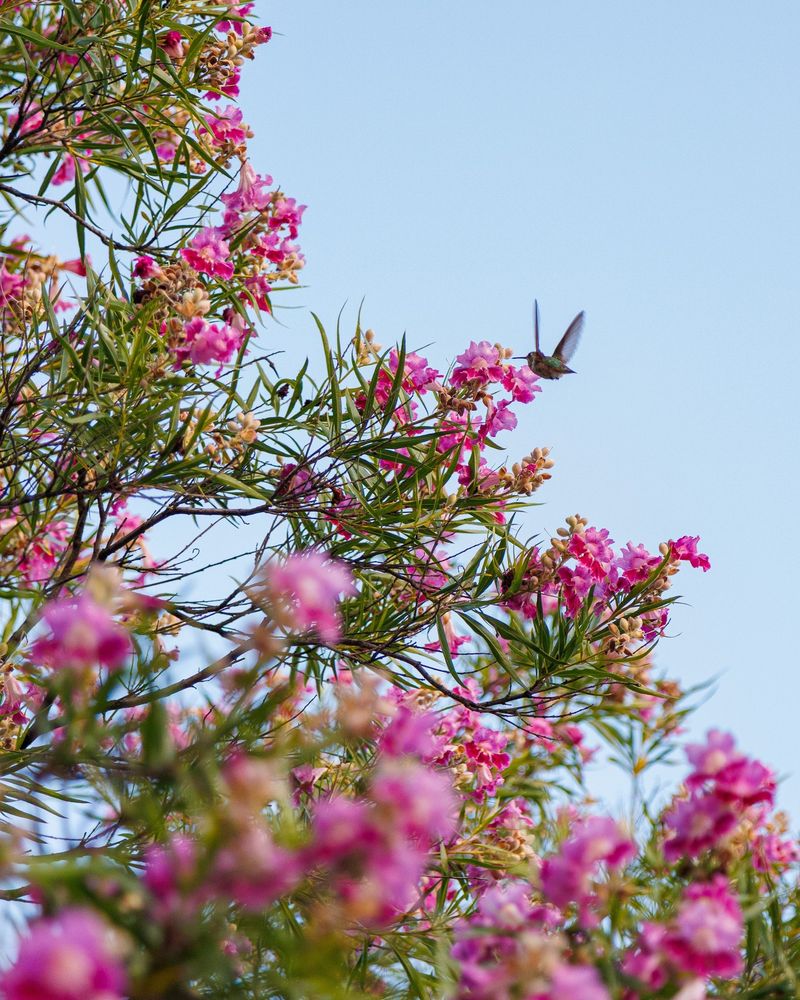
If you want hummingbirds buzzing through your yard, few plants roll out the welcome mat like the Desert Willow. All warm season long it drips with trumpet-shaped flowers in shades of pink, burgundy, and creamy white.
Despite the name, it is not a true willow at all, and it certainly does not drink like one. Once established, this fast-growing tree gets by on very little supplemental water, making it a smart swap for thirsty ornamentals.
Come winter it drops its leaves and reveals a twisting, sculptural branch structure that adds interest when the rest of the garden goes quiet. So you get a tree that changes character with the seasons instead of just sitting there.
The flowers feed hummingbirds and native bees, turning a low-water tree into a busy little pollinator stop. That habitat value is part of why so many Arizona homeowners tuck one near a window.
Set it out in fall, give it full sun and room to spread, and water deeply but infrequently while roots dig in. By next summer it should be nearly self-sufficient.
3. Agave (Agave spp.)
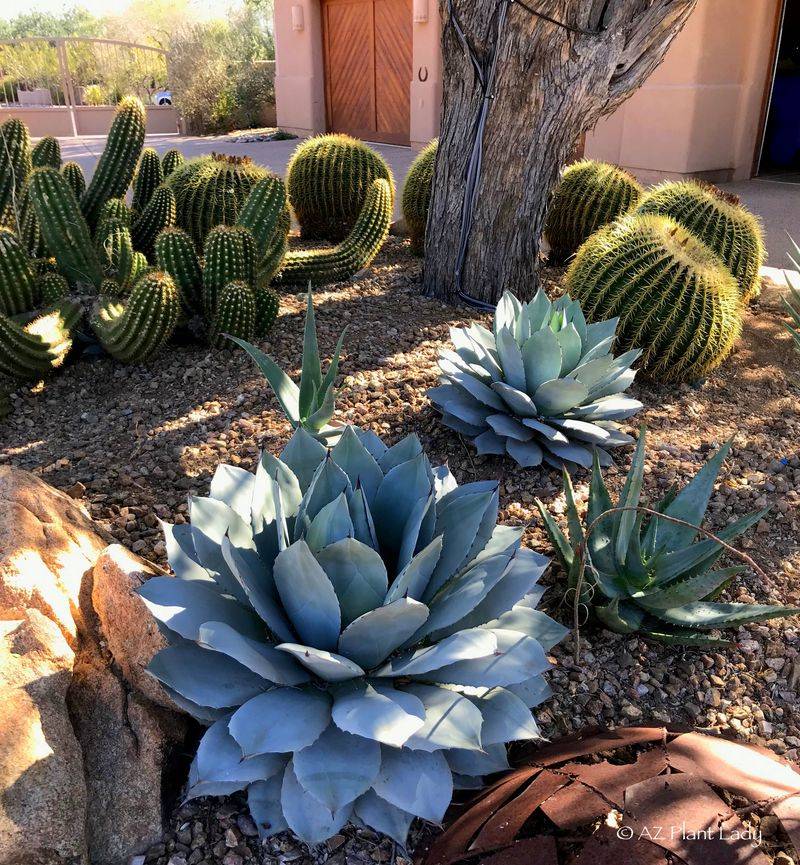
Think of agave as the strong, silent type of the desert garden. These bold succulents store water right inside their thick leaves, so they can coast through brutal heat and long dry spells without a single complaint.
Their sculptural, symmetrical shape brings instant structure to a yard, no pruning or fussing required. Heat, cold, and stubborn caliche soil barely faze them.
Your Arizona Garden Changes Every Week. Your Plan Should Too.
Gardening in Arizona changes quickly throughout the season. Every Friday you’ll receive a simple weekly plan showing exactly what to plant, prune, fertilize, harvest, and protect so you never miss the right timing.
Here is a fun bit of desert magic: many agave species send up towering flower stalks that draw nectar-feeding bats after dark. Those bats are important Sonoran Desert pollinators, and they happen to snack on insects while they visit.
Fall is prime planting time because the still-warm soil helps agave root in quickly, meaning you water even less during the establishment stretch. Give it a spot with sharp drainage and plenty of sun.
One caution worth mentioning: many agaves carry sharp tips, so plant them away from walkways and play areas. Placed with a little thought, an agave becomes a nearly indestructible anchor for your low-water landscape and a rare treat for the bats overhead.
4. Brittlebush (Encelia farinosa)
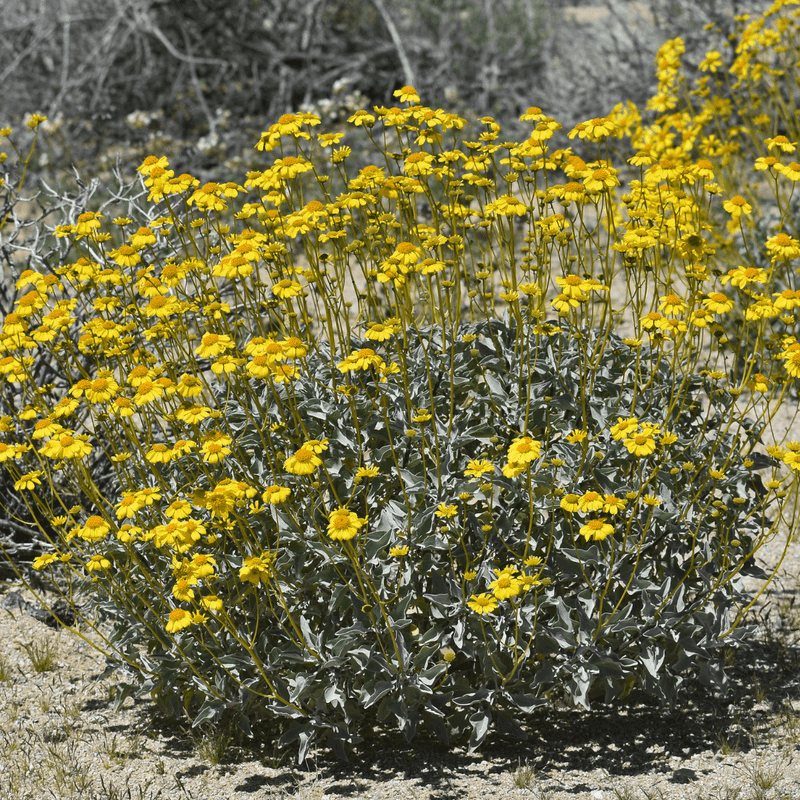
Come spring, hillsides across the Sonoran Desert light up with brittlebush, and you can borrow that wildflower glow for your own yard. This mounding shrub blankets itself in cheerful yellow blooms in both spring and fall.
What makes it a water-bill hero is its almost stubborn refusal to need extra irrigation. Silvery, fuzzy leaves reflect harsh sunlight and cut moisture loss, so the plant stays happy on rainfall alone once it is settled.
Bees and butterflies flock to those sunny flowers, turning a fuss-free shrub into a genuine pollinator magnet. It earns its keep while asking for almost nothing.
Its loose, airy growth habit is a quiet win for pest control too. Because it does not pile up into a dense, damp mat at the base, it gives scorpions fewer cool, hidden pockets to move into near your home.
Drop it into a sunny spot with good drainage this fall and let the winter rains do the watering. Trim it back lightly after bloom to keep it tidy, and it will reward you with color season after season on a shoestring water budget.
5. Texas Ranger (Leucophyllum frutescens)
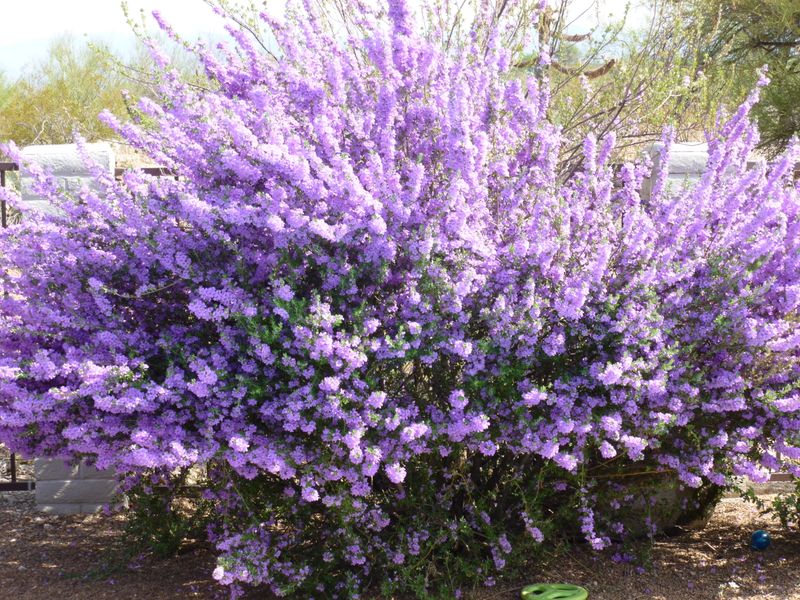
Locals call it the barometer bush, and once you own one you will understand why. Texas Ranger seems to sense moisture in the air and bursts into clouds of purple flowers right after monsoon rains sweep through.
Between those flushes, its soft silver-green foliage keeps the plant looking full and tidy all year, since it stays evergreen even through the coldest desert nights. That reliability is hard to beat.
Water use is where it really shines. Give it full sun and soil that drains well, and this shrub asks for very little beyond what the sky provides once it is established.
Its dense, rounded form makes a handsome informal hedge or privacy screen without the constant trimming thirstier hedges demand. You get structure and seasonal surprise in one low-maintenance package.
Pollinators appreciate those purple blooms, adding a little extra life to the yard when it flowers. Plant Texas Ranger in fall so the roots can settle before summer, resist the urge to overwater it, and enjoy a shrub that turns every monsoon storm into a free floral display.
6. Autumn Sage (Salvia greggii)
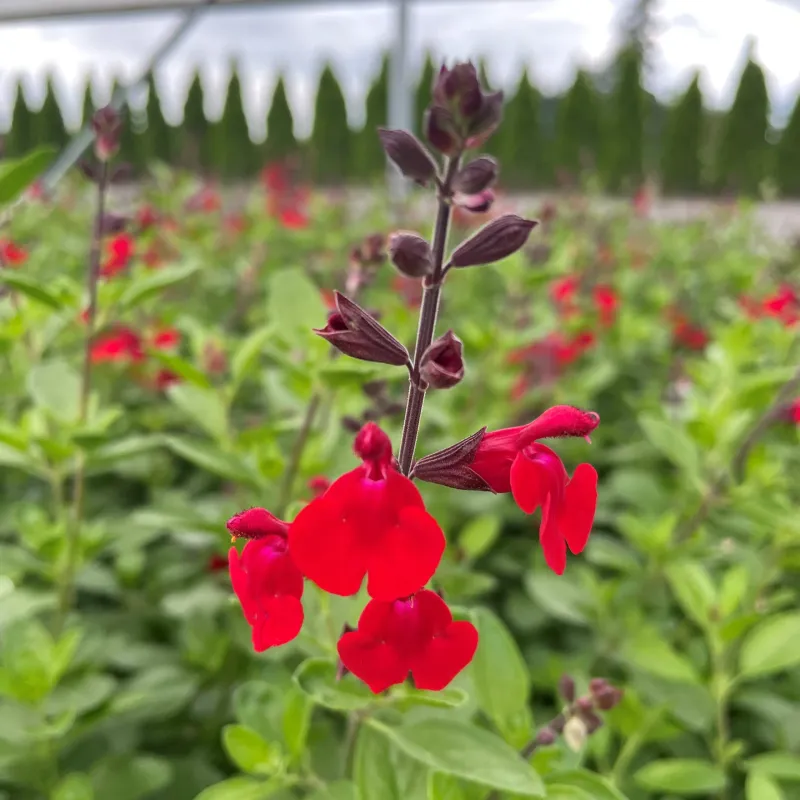
For a plant that keeps the color coming when others quit, Autumn Sage is tough to top. It pushes out red tubular flowers from spring clear through fall, giving your yard a long, dependable stretch of bloom.
Hummingbirds treat it like a personal cafe, zipping in again and again for the nectar those slender flowers hold. Butterflies and native bees join the party too.
Because it flowers across so many months, it becomes a backbone of a diverse pollinator garden, feeding wildlife during gaps when little else is open for business. That steady food supply is genuinely valuable in the desert.
On the water front, it stays modest. Once its roots take hold, Autumn Sage handles heat and dry soil with ease, needing only occasional deep watering to keep blooming strong.
It also comes in shades beyond red, including coral, pink, and white, so you can mix a few for a livelier bed. Plant it this fall in a sunny, well-drained spot, shear it back lightly when it gets leggy, and you will have a hardworking pollinator plant that sips water while it shows off.
7. Red Yucca (Hesperaloe parviflora)
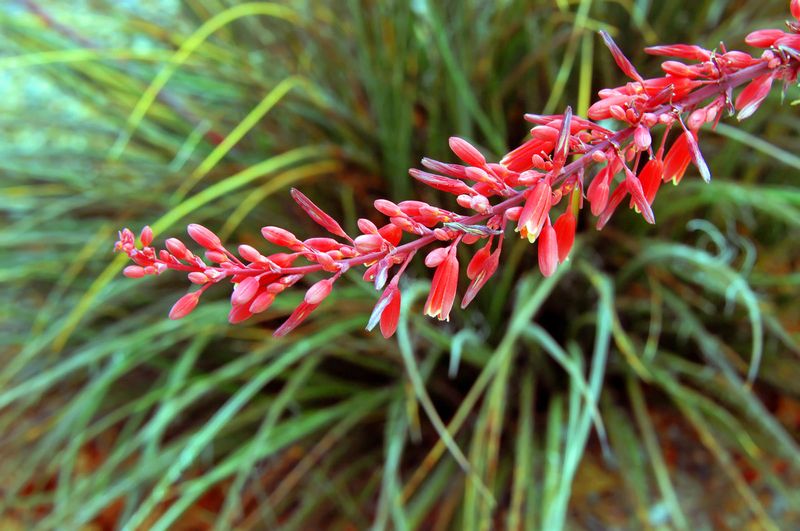
Do not let the name fool you, because Red Yucca is not actually a yucca at all. It is a succulent-like perennial that sends up tall, waving spikes of coral-red flowers hummingbirds simply cannot resist.
Below those dramatic spikes sits a fountain of narrow, grass-like leaves that holds its shape and interest all year long. The result is a plant that reads as sculpture even when it is not in bloom.
Water demand ranks among the lowest on this list. Once established, it thrives on minimal irrigation, handling scorching sun and reflected heat from walls and driveways without missing a beat.
That toughness makes it a favorite for those hard, hot spots where nothing else seems to survive. Line a few along a walkway or driveway edge and watch them shrug off conditions that would fry other plants.
The long bloom season keeps hummingbirds returning for months, adding motion and life to the landscape. Set Red Yucca out in fall, give it sharp drainage and full sun, and enjoy years of bold structure and vivid color on a tiny water budget.
8. Blackfoot Daisy (Melampodium leucanthum)
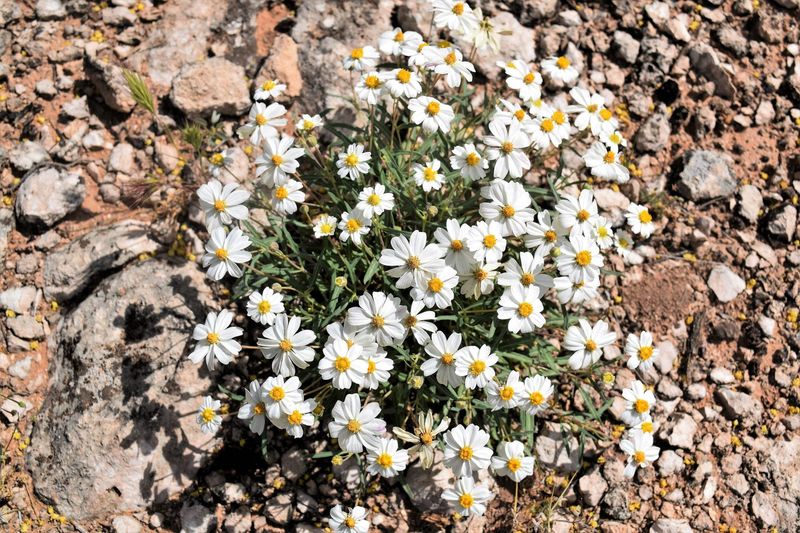
Small but mighty, the Blackfoot Daisy proves you do not need a big plant to make a big difference. This low, mounding perennial covers itself in crisp white, daisy-like flowers with sunny yellow centers.
In Arizona’s warm climate it barely takes a break, blooming nearly year-round and keeping color at ground level when taller plants fade. Bees and butterflies drop by constantly for the steady nectar.
Drought tolerance is its calling card. It handles heat and dry soil with ease and asks for only occasional water once its roots are down, making it a champion for water-conscious yards.
Here is a handy trait: it reseeds itself gently, so over time it fills gaps and edges with fresh plants at no extra cost. That means more coverage and color without more spending.
Use it to soften the front of a bed, tuck between larger natives, or line a path where its tidy mounds can spread. Plant it this fall in full sun with good drainage, and this cheerful little workhorse will reward you with months of bloom on almost no water.
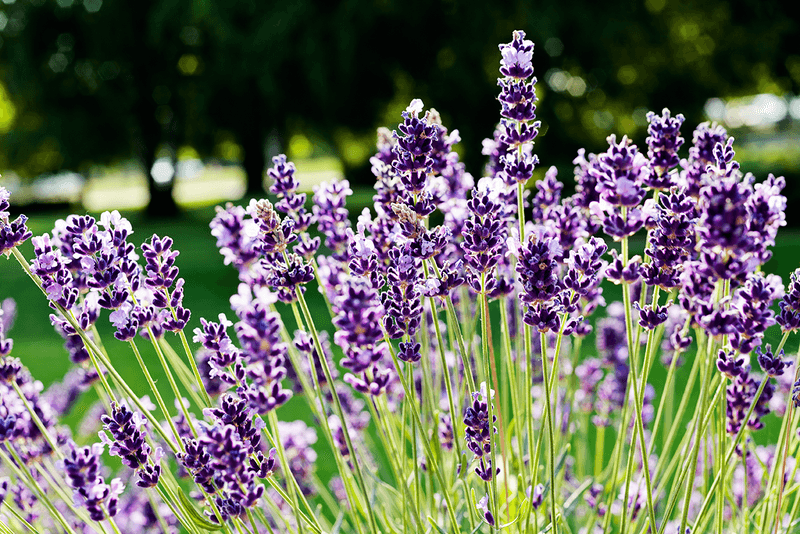
9. Lavender (Lavandula spp.)
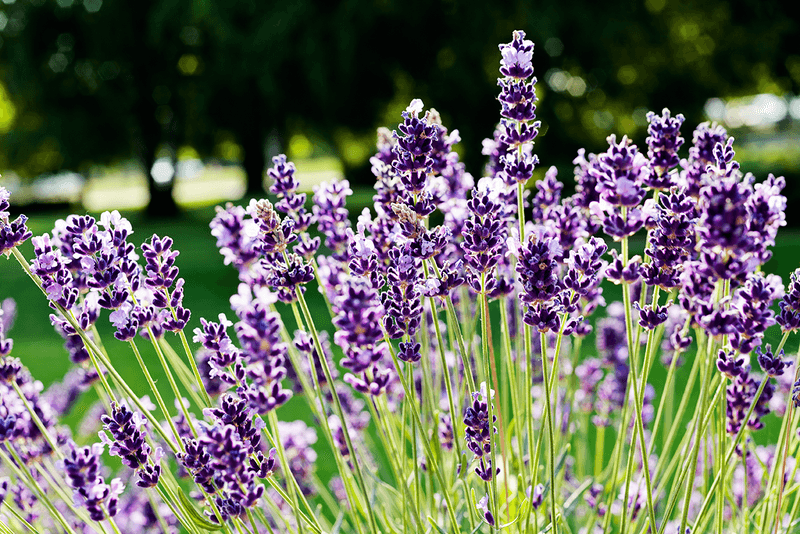
Not a strict Arizona native, but lavender has earned its place in desert yards for one very practical reason. Its powerful fragrance, so pleasant to us, is exactly what many pests want to get away from.
Scorpions, mosquitoes, and ticks tend to steer clear of that strong aroma, so a few plants near patios and doorways can help make the area around your home feel less inviting to them. It is a gentle, chemical-free layer of natural defense.
On top of the pest angle, lavender is genuinely drought-tolerant and loves the same baking sun the desert dishes out all summer. Once established it wants very little water, which fits right into a water-wise plan.
The purple flower spikes also draw bees and butterflies, so your natural pest barrier doubles as a pollinator stop. That combination of function and beauty is hard to beat.
Plant it in fall in a hot, sunny spot with excellent drainage, since soggy roots are its biggest enemy here. Keep the soil on the lean side, water sparingly, and let this aromatic shrub work quietly around the edges of your home.