The 8 Warblers New York Gardens Welcome Every September
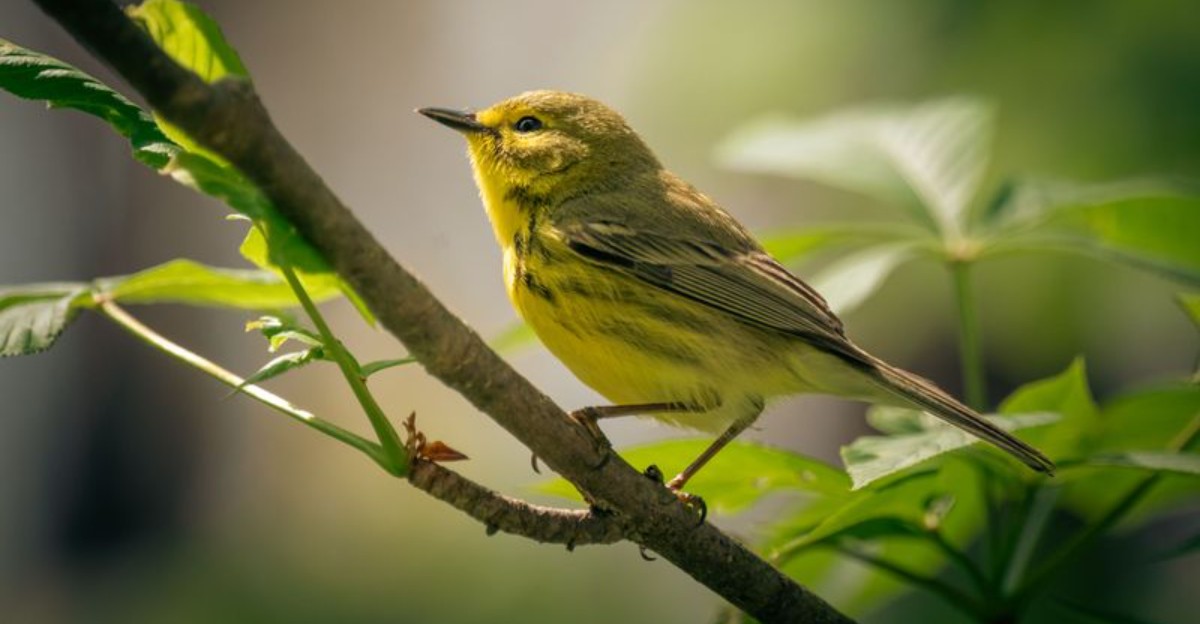
September mornings bring a quiet surprise to backyard gardens. Look closely, and you may spot tiny flashes of yellow, green, and blue moving through the trees.
Warblers are passing through on their fall migration. These small songbirds follow the Atlantic Flyway and stop in yards, parks, and hedgerows to rest.
You do not need a famous birding spot to see them. A few shrubs, berries, or a bird bath can turn your yard into a migration stop.
Mid-September is a great time to watch the branches. These warblers are some of the visitors New York gardeners may spot before they move on.
1. Yellow Warblers Bring Bright Color During Migration
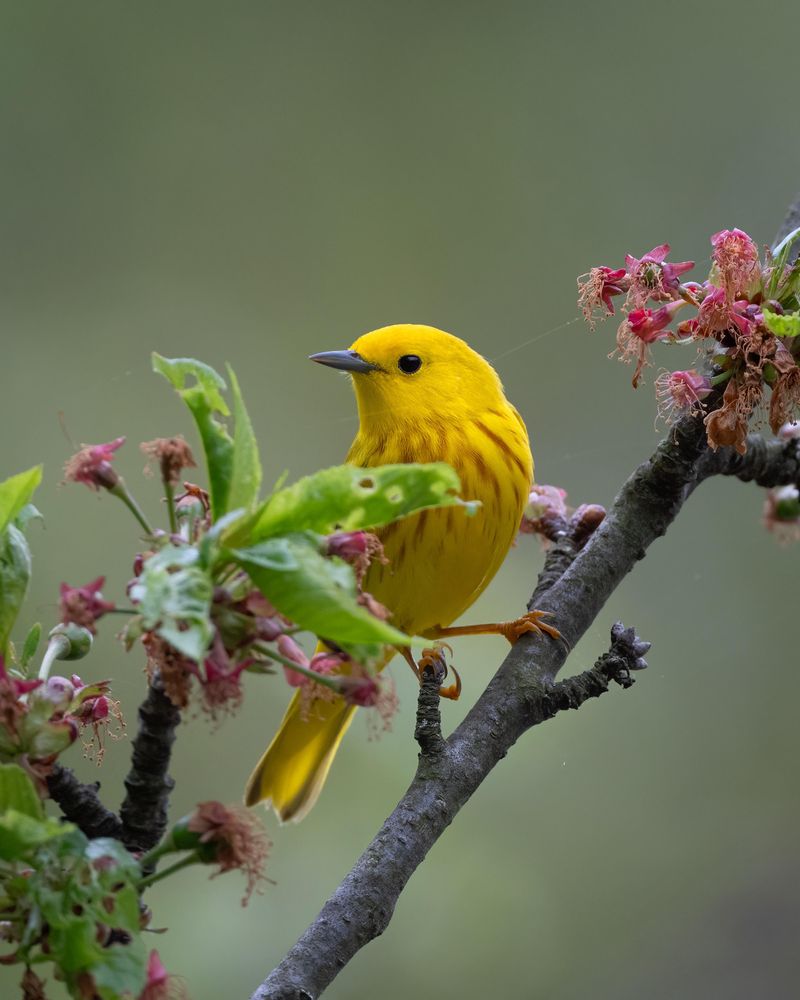
Picture a lemon with wings hopping through your hedge, and you have pretty much met the Yellow Warbler. Few backyard birds glow quite like this one on a sunny September morning.
Yellow Warblers get an early start on fall travel, with some birds moving south as early as late July. Their numbers build through August and stay steady into September.
Males show bright yellow bodies, dark eyes, and heavy reddish streaks running down the chest. Females wear softer yellow tones and usually skip those rusty streaks entirely.
First-year birds can throw you off, since many look drab olive or brownish with barely a hint of gold. When in doubt, look at the plain face and big black eye standing out against the yellow.
Water is your secret weapon here. Yellow Warblers visit bird baths often during migration, especially shallow ones with a dripper or gentle bubbler nearby.
Damp, brushy spots also draw them in, so a willow, a patch of dogwood, or a soggy corner of the yard can earn regular stopovers. Skip the pesticides, because caterpillars and small insects fuel the whole trip.
Eastern birds face a serious stretch ahead, with many crossing the Gulf of Mexico without landing, while others take the longer overland route. Wintering grounds sit in Central America and northern South America.
Knowing that helps explain the urgency you see in their feeding. Every bug snatched from a New York garden leaf becomes flight fuel for the miles still to come.
2. Black And White Warblers Search Tree Bark For Food
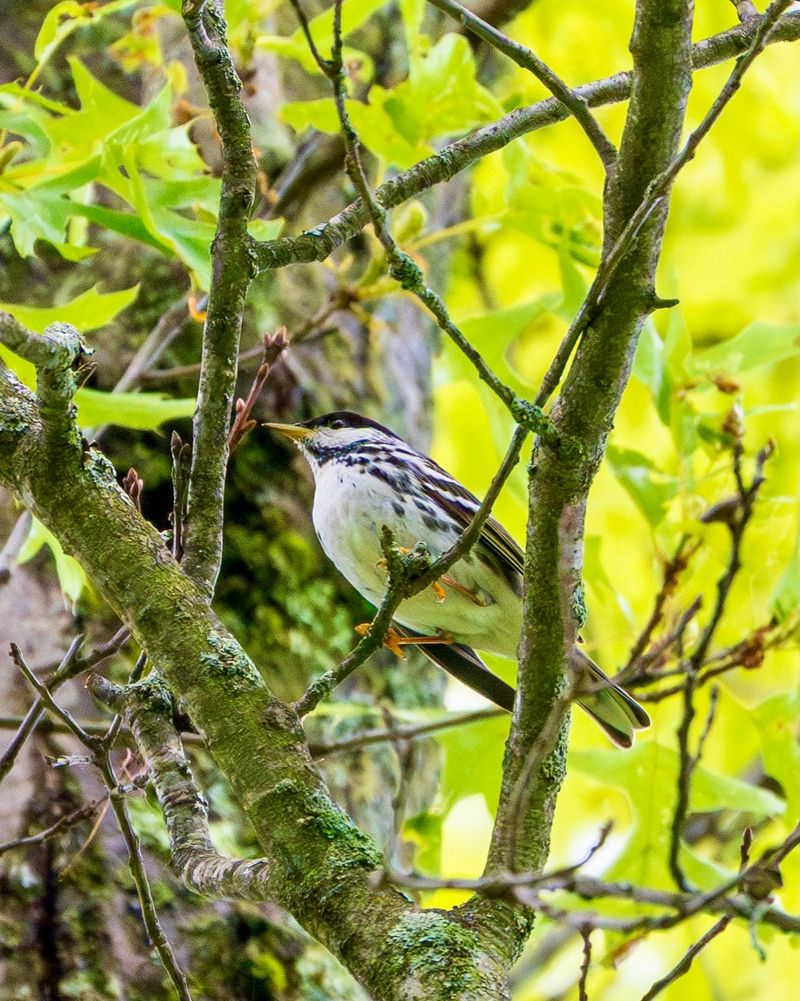
Some warblers act like tiny nuthatches, and the Black-and-white Warbler is the champion. Watch one work a tree trunk headfirst, and you might think a zebra learned to climb.
Among North American wood-warblers, this species is especially known for regularly foraging along bark. It creeps along trunks and thick branches, poking into crevices for hidden snacks.
The striped pattern makes identification easy, even for beginners. Bold black and white lines cover the body, with a white stripe down the center of the crown and dark streaks along the back and sides.
Adult males sport a black throat and cheeks, giving them a sooty look around the face. Females and young birds show pale or whitish throats instead.
Meals lean heavily on insects and other small creatures, including caterpillars, beetles, ants, flies, leafhoppers, aphids, spiders, and daddy longlegs. Moth and butterfly larvae make up a big share during migration.
Your New York Garden Changes Every Week. Your Plan Should Too.
Gardening in New York changes quickly throughout the season. Every Friday you’ll receive a simple weekly plan showing exactly what to plant, prune, fertilize, harvest, and protect so you never miss the right timing.
Mature trees with rough, furrowed bark are the main attraction, so oaks and maples pull these birds in reliably. Leaving a few faded limbs in place, where safe, adds even more feeding surface.
Migration happens at night, which explains why a tree can look empty at dusk and busy at dawn. Birders in Central Park and the New York Botanical Garden log them steadily in spring and fall.
Look low first, since these birds often work the bottom ten feet of a trunk. Patience usually pays off within a few minutes.
3. Magnolia Warblers Pass Through With Bold Markings
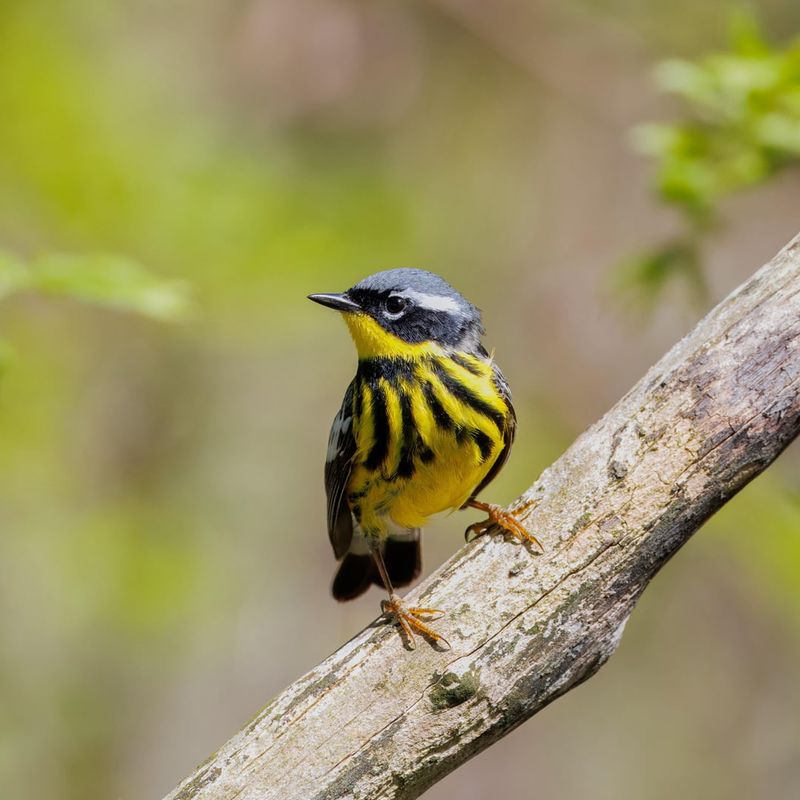
Bold is the right word for a Magnolia Warbler in spring, and even the fall birds keep plenty of style. Many birders call this one of the friendliest warblers to identify.
Breeding males wear bright yellow and black, with a heavy black necklace across the chest and a dark mask through the face. A large white wing patch, gray crown, and small yellow rump patch finish the look.
Females and young birds tone everything down. Expect a fainter face pattern, less black on the back, light streaking on yellow underparts, a gray head, a white eye ring, and narrow white wingbars.
Here is a helpful clue across many plumages. Check the tail pattern when the bird fans it open, especially from below.
Feeding usually happens low, which is great news for gardeners. Magnolia Warblers pluck insects from the undersides of leaves in shrubs and small trees, though they climb into the canopy during migration.
Plant layers help enormously. A mix of viburnum, spicebush, or serviceberry under taller trees gives these birds the mid-level cover they prefer.
Breeding birds from places like the Adirondack Mountains head south in September or October. Flights happen after dark, so morning is prime viewing time.
Central Park records them regularly during both migrations. If you spot one flicking that patterned tail near your porch, take the win.
4. Cape May Warblers Visit Flowering Trees And Shrubs
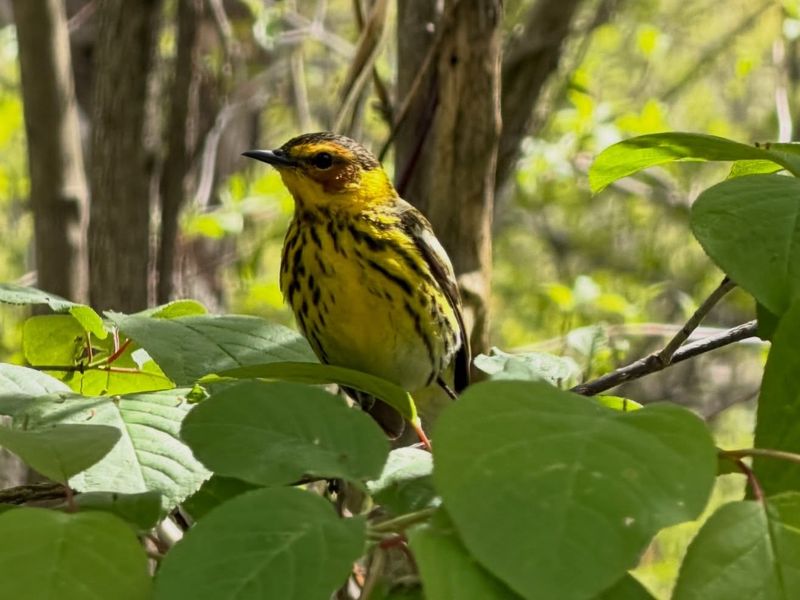
Nicknamed the tiger warbler, the Cape May earns that title with fine black streaks across a yellow chest. Breeding males add a rich chestnut cheek patch and a yellow neck spot for extra flair.
Females look plainer and usually lack the chestnut ear patch. Fall birds of both sexes can appear washed out, so focus on the streaky chest and short, sharp bill.
Diet sets this species apart from most warblers. Summer meals are insect-based, but during migration and winter these birds sip nectar from flowers and pierce fruit to drink the juice.
That habit makes flowering and fruiting plants a real magnet. Late-blooming shrubs, trumpet vine, grapes, and berry-heavy natives can hold a Cape May Warbler for hours.
Conifers rank high on their list too, so a spruce or pine adds serious appeal. They also forage in deciduous trees and dense thickets while passing through.
Timing is fairly predictable. Local fall movement generally runs from September 1 through October 15, sometimes stretching a bit longer on either end.
Breeding grounds sit in the boreal forests of Canada, the northern United States, and the Adirondack Mountains. Winter finds them across the Caribbean, where they switch to feeding in palm crowns.
Keep an eye on the tips of branches, since nectar seekers often work blossom clusters out in the open. A slow scan of your flowering shrubs beats chasing movement in the canopy.
5. Common Yellowthroats Hide Near Dense Garden Edges
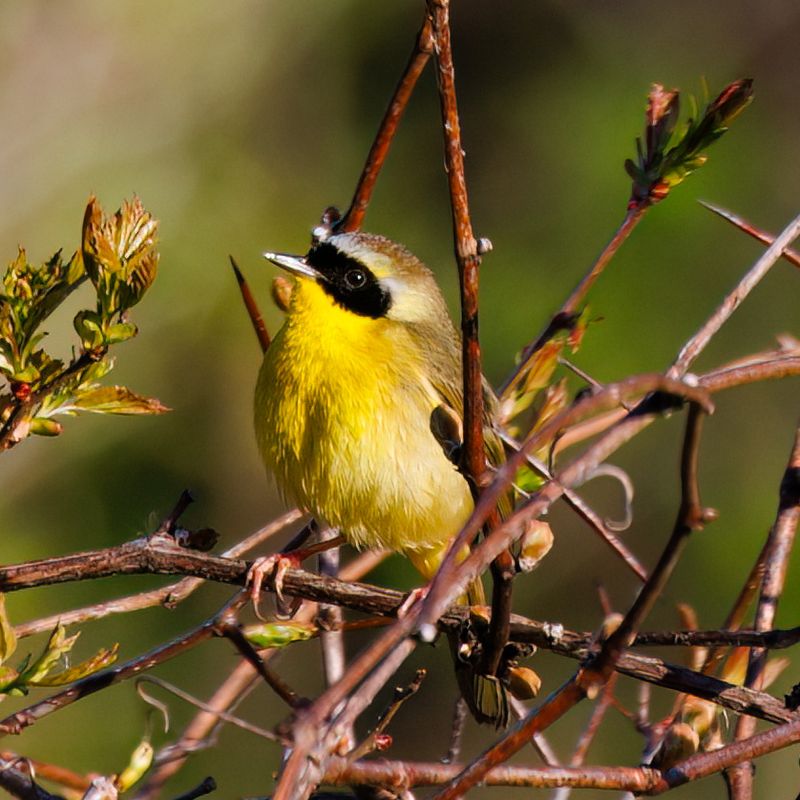
A raspy chip note from the brambles, then a flash of yellow behind a leaf. Common Yellowthroats love keeping you guessing.
Males wear a black bandit mask bordered in white, set against a glowing yellow throat and chest with a solid olive back. Once seen, that face is hard to forget.
Females skip the mask and look plainer, with olive-brown upperparts and yellow on the throat and under the tail. Both sexes often cock their short tails upward like wrens.
Skulking is their specialty. These birds spend most of their time low to the ground inside thick undergrowth, popping up briefly before vanishing again.
Late August through October offers the best chance to catch them heading south. Yards with varied, messy vegetation draw them in far more than tidy lawns.
Raspberry and blackberry patches are especially productive, along with weedy borders, tall grasses, and any tangle you have been meaning to clean up. Leaving one rough corner wild does wonders in a garden.
Marshes, wetland edges, and brushy fields are their usual haunts, but migrants widen their tastes to include backyards and woodlots. Gardens near a creek or drainage ditch often score the most sightings.
Try standing still for five minutes near a thicket instead of walking around it. Curiosity usually brings a yellowthroat up to eye level for a quick look at you.
Short, patient visits beat long noisy ones with this bird.
6. Palm Warblers Wander Through Open Yard Spaces
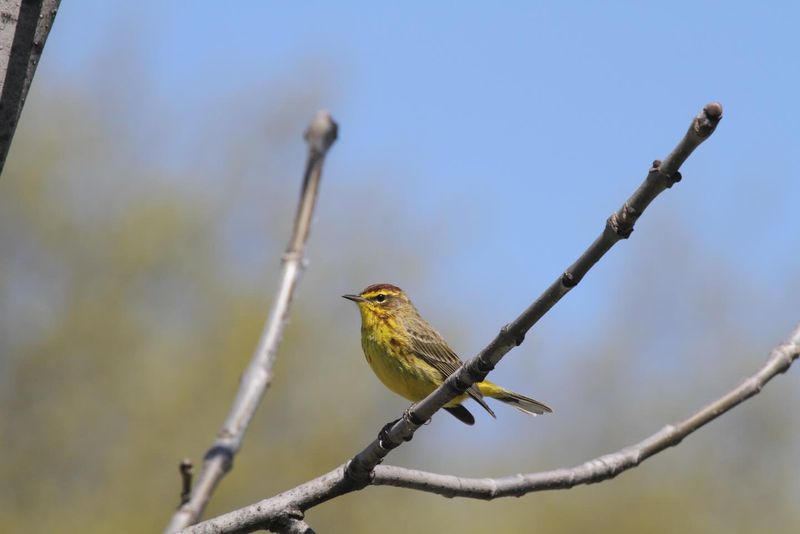
Most warblers stay in the branches, but the Palm Warbler prefers the ground floor. Watch one stroll across a lawn and you may mistake it for a sparrow with a nervous habit.
That habit is tail-bobbing, and it runs almost nonstop. The frequent pumping motion is a helpful field mark when you get a good look.
Walking and running come naturally to them, rather than the hopping most warblers do. Open spaces such as big lawns, pastures, sod farms, beaches, and shrubby edges suit them best.
September and October bring them through New York in good numbers. Birders in Central Park regularly find them feeding along grass strips and wood chip paths.
Plumage runs dull brownish-olive above, with yellow on the throat and under the tail. The eastern form, sometimes called the Yellow Palm Warbler, shows brighter yellow underparts, reddish-brown chest streaks, and a bold yellow eyebrow.
Fall and winter birds look muted, with olive and cream tones, brown streaking, and a dull brown crown. One detail holds steady no matter the season, and that is the bright yellow patch beneath the base of the tail.
Gardeners can help simply by mowing a little less aggressively. A lawn edge with low insect-friendly plants gives these ground feeders something to hunt.
Scan open paths and driveway borders in early morning. Palm Warblers often forage in small loose groups, so one bird usually means more nearby.
7. Nashville Warblers Pause In Shrub Cover
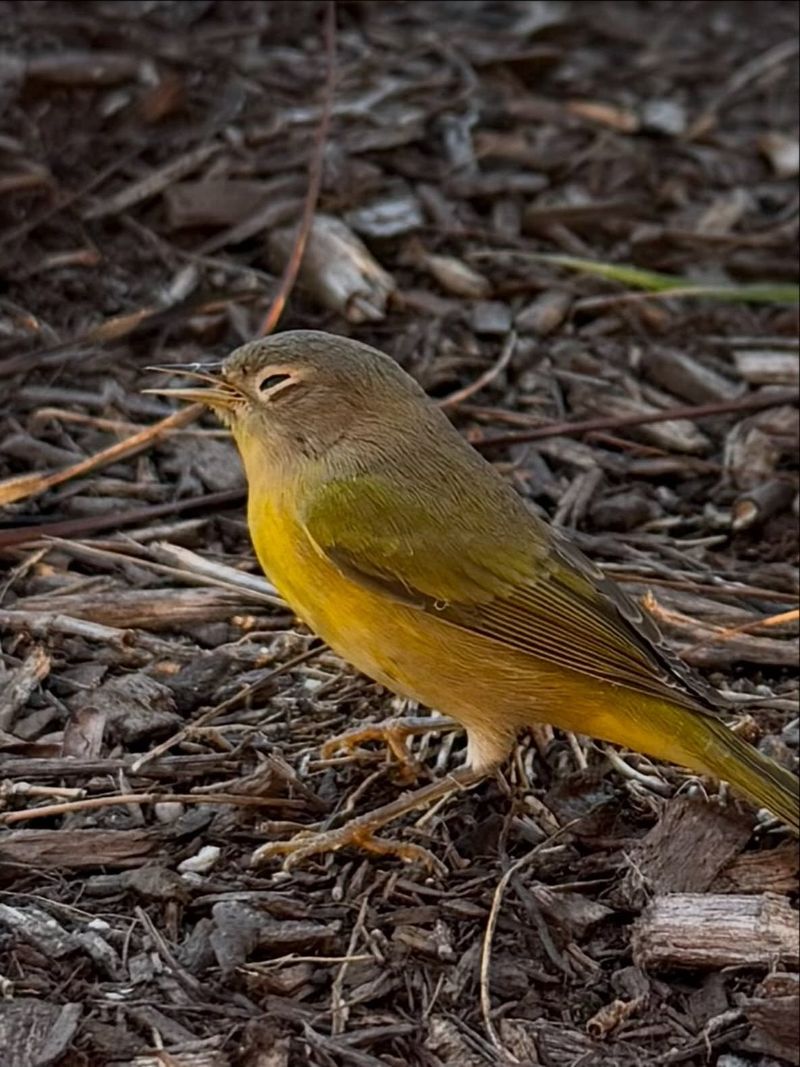
Here is a fun bit of bird trivia. Nashville Warblers do not nest in Nashville, Tennessee, and were simply named after a migrant spotted passing through town.
Fall travel starts late for this species compared with many relatives. Movement picks up in very late August and runs through September across New York.
A clean white eye ring on a gray head is the giveaway. Pair that with an olive-green back and a bright yellow throat, and you have a solid identification.
Adult males carry a reddish-chestnut crown patch, though it stays hidden most of the time. Females usually look a shade paler overall.
Shrubby tangles are where these birds feel safest. During migration they work thickets, young trees, and regrowing woodland edges, often flicking their short tails as they move.
Their preferred breeding spots include bog and marsh edges, swampy borders, high-elevation forest openings, and early successional woods. Anything young, dense, and brushy checks the right boxes.
Gardeners can imitate that structure without much effort. A cluster of native shrubs planted close together, left unpruned at the base, creates the thicket feel a garden often lacks.
Once fall ends, many head south to wintering areas in Mexico and parts of Central America. That is a long haul for a bird weighing less than a handful of coins.
Listen for soft, sharp chip notes coming from inside the shrubs. Sightings often start with sound, then a small gray head peeking out.
8. Chestnut Sided Warblers Add Fall Migration Color
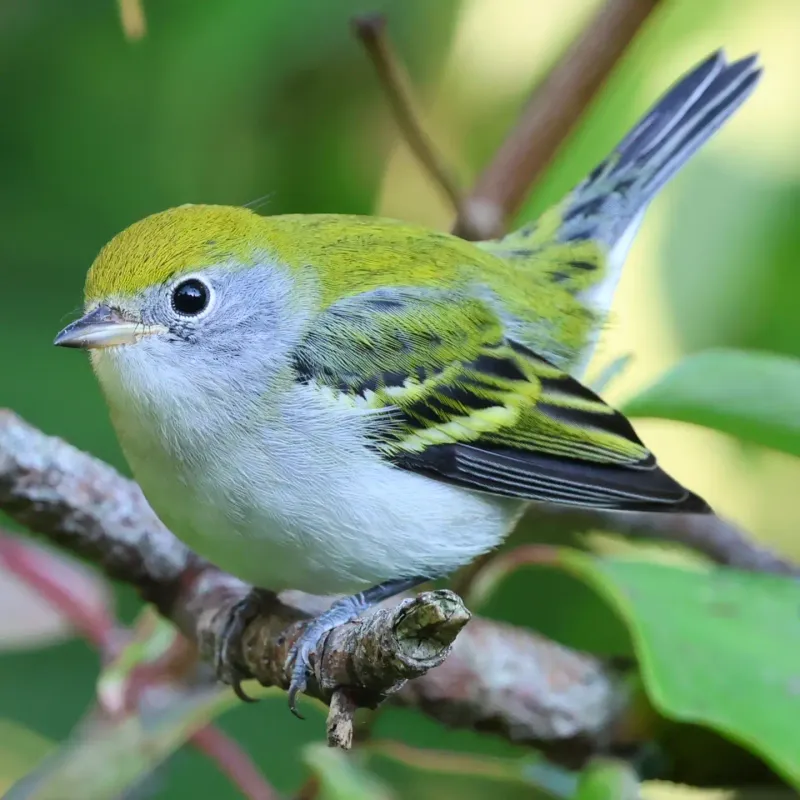
Talk about a costume change. The Chestnut-sided Warbler swaps its flashy spring outfit for a soft lime-green and grayish-white look before heading south.
Breeding birds show a bright yellow cap, a black face stripe framing white cheeks, and a ragged chestnut stripe down the sides. Fall birds keep almost none of that.
Instead, look for that fresh lime-green back and a clean white eye ring on a plain gray face. Two yellow wing bars help seal the identification.
Immature birds in autumn look dullest of all. Chestnut on the flanks may be faint or missing entirely, leaving grayish cheeks and pale underparts.
One behavior stays consistent all year long. These warblers hold the tail cocked upward, which gives them a jaunty posture in the shrubs.
Peak sightings in New York often land in September, though numbers are strongest in early to mid-August and taper as the month goes on. Central Park reports have noted good showings from late August into early September.
Young second-growth woods and brushy clearings are their favorite habitat. Shrub borders, hedgerows, and small trees offer similar structure during a quick stopover.
Leaf-level foraging is the norm, so scan shrub interiors rather than treetops. Movement is usually quick and busy, with frequent short hops between branches.
Spotting a fall bird takes a second look, since it hardly resembles the spring version. Learning that lime-green stage feels like unlocking a bonus level in birding.