What It Means When Your Georgia Squash Plants Wilt Every Afternoon
Your squash plants look perfect at 8 in the morning, standing tall with big green leaves reaching for the sun without a hint of trouble in sight.
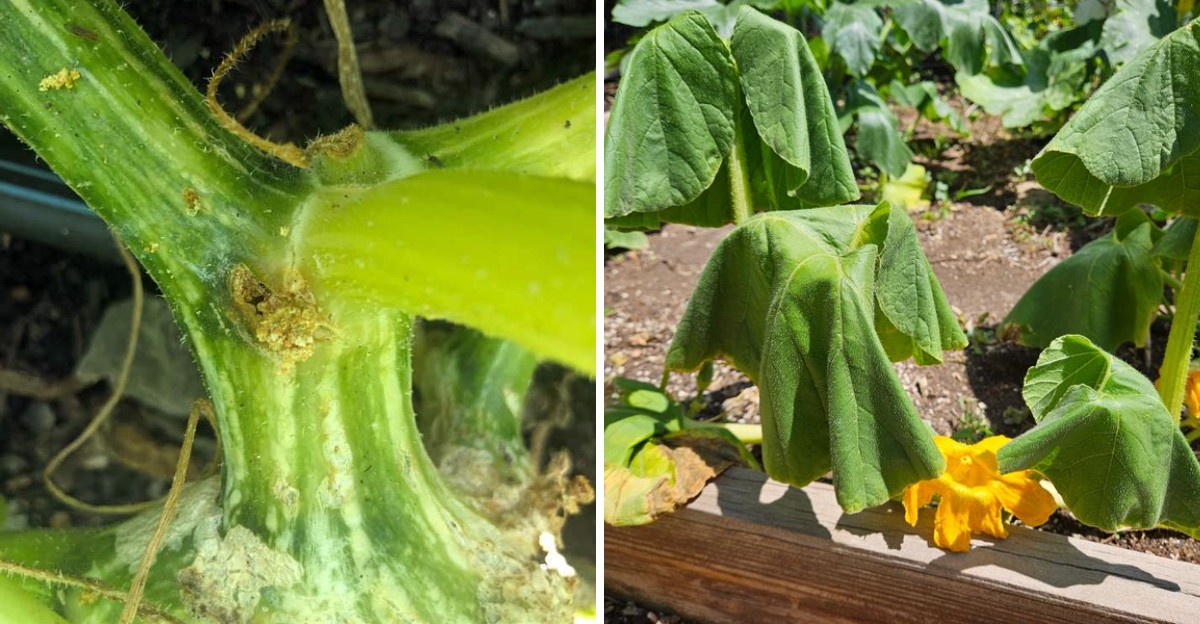
By 3 in the afternoon, they are flopped over like someone let the air right out of them, sagging low against the mulch below.
In Georgia, that daily droop can mean three very different things entirely, and one of them is nothing to worry about at all.
Most gardeners jump straight to panic mode the moment they see it, assuming the worst before checking anything else first.
Learning to tell plain heat stress from squash vine borers or bacterial wilt can save your harvest, or at least save you from worrying over a plant that is perfectly fine.
1. Heat Alone Can Cause Temporary Wilting
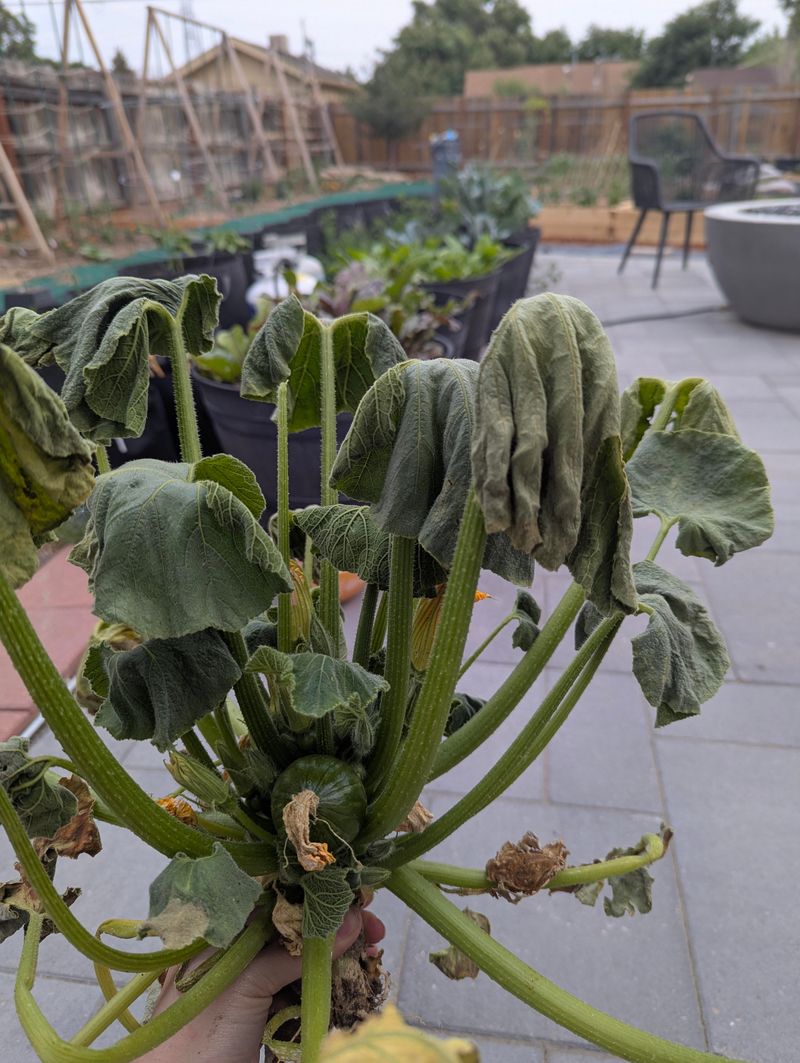
Picture a steamy July afternoon in Macon, with the thermometer stuck near 95 degrees and barely a breeze moving through the garden bed.
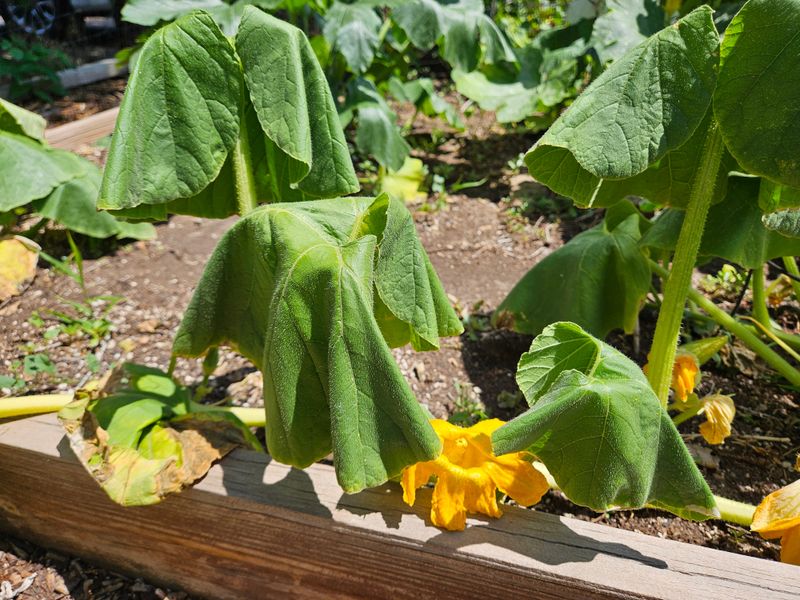
Those broad squash leaves lose water through tiny pores faster than the roots can replace it, so the plant lets them sag on purpose as a defense mechanism.
Wilting is actually a survival trick here, not a sign of failure. By folding and drooping, the leaves reduce the surface facing the sun and slow down water loss considerably during the hottest hours.
Once the sun slides lower and the air cools off, the plant puffs back up on its own without any help needed from you.
Georgia summers make this a daily routine, especially in sandy soil or raised beds that dry quickly under direct sun. Squash roots sit fairly shallow, and a hot, breezy day can pull moisture out of the top few inches within hours.
Container-grown squash wilt even faster than garden-grown plants, because pots heat up and dry out sooner than soil sitting in the ground.
Deep watering helps far more than frequent light sprinkles ever could. Aim for roughly an inch of water per week, delivered slowly at the base of the plant, and add more during dry stretches.
Mulch made of straw or pine needles keeps soil temperatures steadier and slows evaporation throughout the hottest part of summer.
Morning watering beats evening watering here too, since wet leaves sitting overnight invite fungal trouble down the road. Drip lines or soaker hoses put water right where roots can actually grab it.
If your plants droop at two o’clock and stand tall again by dusk, you likely have nothing more than a thirsty plant reacting normally to Georgia heat.
2. Squash Vine Borers Cut Off Water Flow
The culprit here is a daytime moth that most gardeners never notice, even though it looks like a wasp dressed in orange and black markings.
Female squash vine borers lay small, flat, reddish-brown eggs on the lower stem, usually starting in late spring across much of Georgia. The larvae hatch and chew straight into the vine soon after.
They then spend weeks tunneling through the inside of the stem, doing damage nobody can see from the outside.
Your Georgia Garden Changes Every Week. Your Plan Should Too.
Gardening in Georgia changes quickly throughout the season. Every Friday you’ll receive a simple weekly plan showing exactly what to plant, prune, fertilize, harvest, and protect so you never miss the right timing.
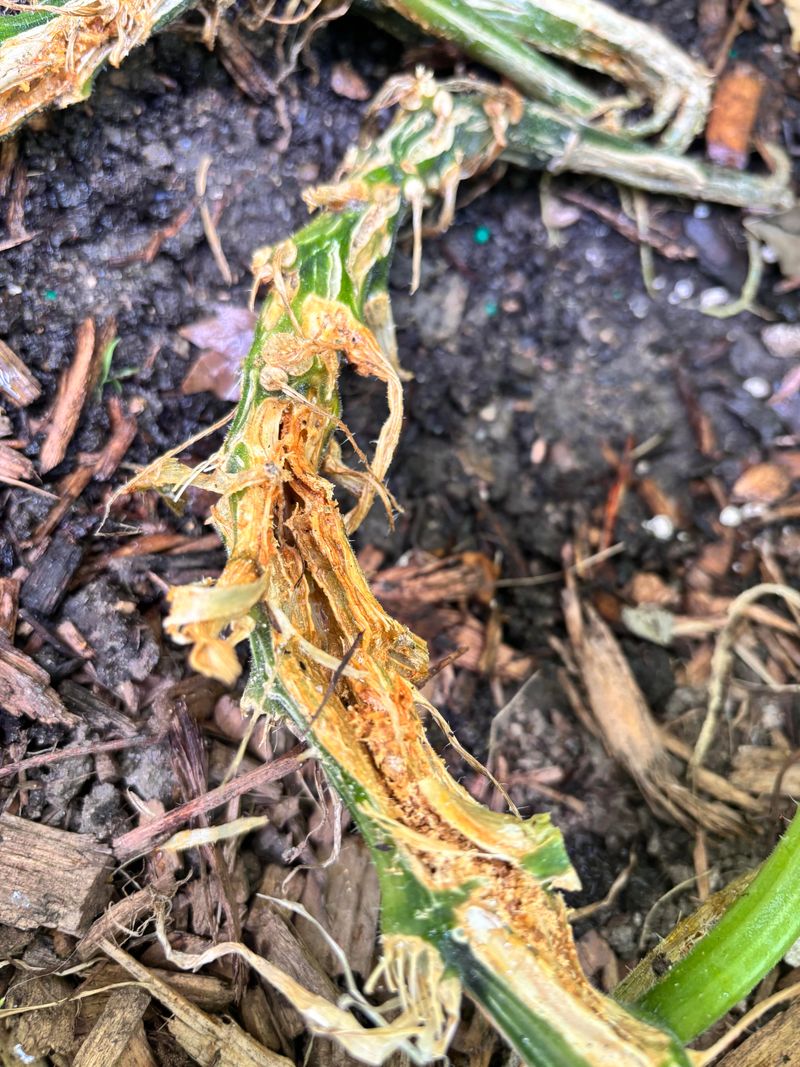
Inside that stem sit the plumbing tubes that carry water from the roots up to the leaves above. When a fat, cream-colored grub hollows them out, water simply cannot get through anymore.
The result looks different from heat wilt in one important way worth noting. A heat-stressed plant perks back up overnight, while a borer-damaged vine stays limp in the cool morning air and worsens each day until it finally collapses.
Yellow summer squash and zucchini get hit hardest by this pest. Butternut types, which belong to a different species with tougher, more solid stems, usually shrug the pest off entirely without much trouble.
UGA Extension lists the borer among the most damaging squash pests in the state, and for good reason given the damage it causes.
Floating row covers over young plants keep moths from laying eggs in the first place, though covers must come off once female flowers appear so bees can visit and pollinate.
Scouting weekly during early summer gives you the best shot at catching damage while the vine can still be saved before it is too late.
3. Bacterial Wilt Spreads Through Cucumber Beetles
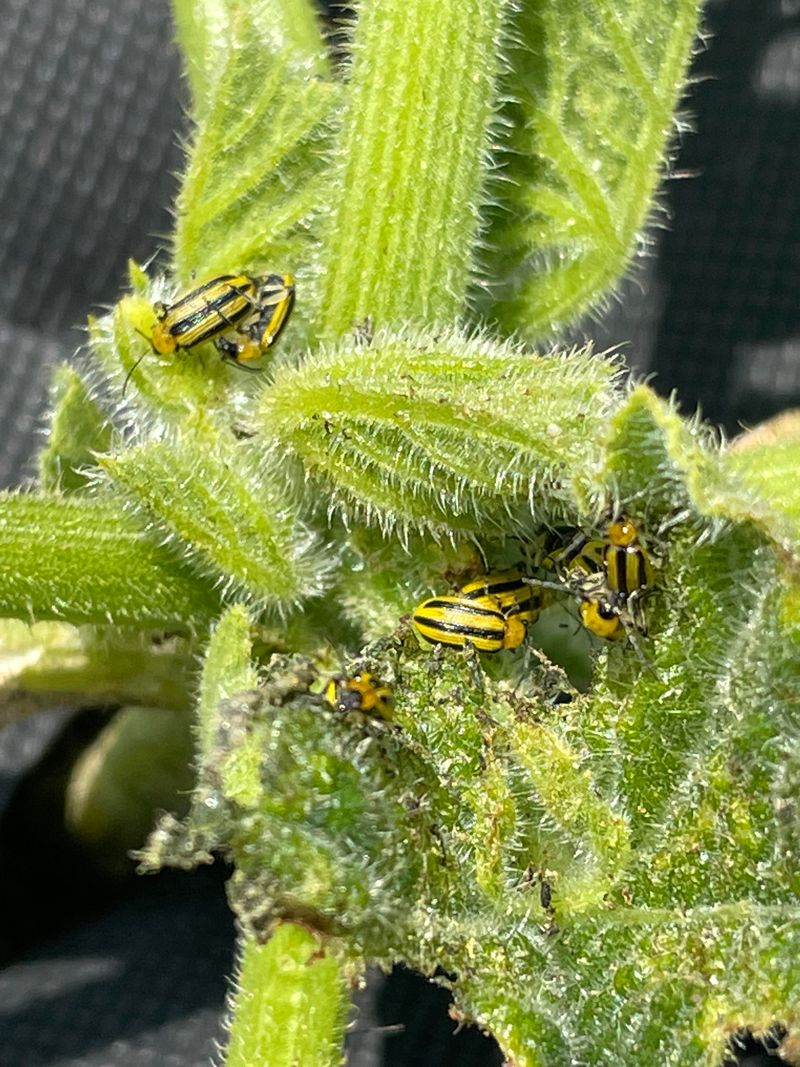
Blame the striped and spotted cucumber beetles chewing tiny holes in your leaves throughout the growing season.
Bacterial wilt is caused by a bacterium named Erwinia tracheiphila, and it survives the winter inside the guts of those same beetles year after year. When a beetle feeds on a squash plant, bacteria from its droppings slip into the fresh wounds left behind.
Once inside, the germs multiply in the water-carrying tubes and gum them up with thick, sticky slime that blocks flow completely.
Leaves start wilting one at a time, often a single leaf or one runner at first, then the whole plant follows within a week or two of that initial symptom.
Nothing you spray will cure an infected plant once this sets in. Fungicides do not touch bacteria at all, and no home remedy clears the clogged tubes once they are gummed up.
Control focuses on the beetles instead of the disease itself. Knocking populations down early, while seedlings are small and most vulnerable, lowers the chance of infection considerably before it starts.
Row covers, yellow sticky traps, and labeled insecticides applied in the evening when bees are less active all help manage beetle numbers effectively.
Worth knowing here: cucumbers and muskmelons suffer far more from this disease than squash and pumpkins typically do, so wilting squash in Georgia more often points to borers or plain heat instead.
Fall cleanup of crop debris and rotating where you plant cucurbits both reduce beetle numbers the following spring considerably.
4. Check If Plants Recover By Evening
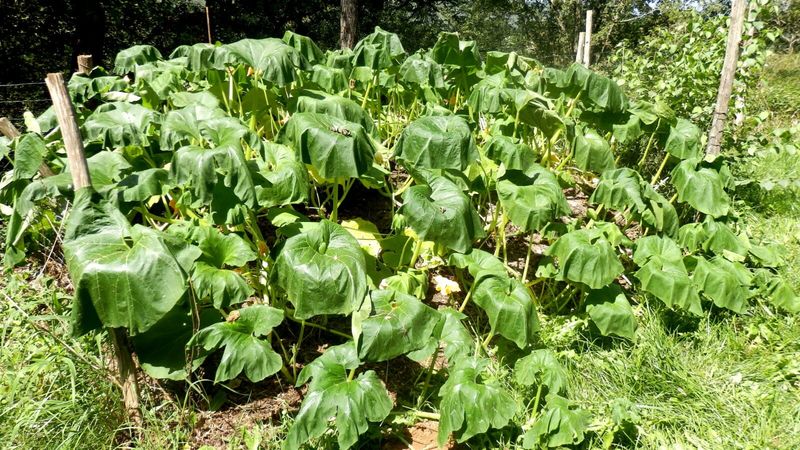
Here is the cheapest diagnostic tool in gardening available to anyone: your own eyes at sunset, checked against the same plants the following morning.
Walk out around 8 p.m., after the sun drops behind the trees, and look at the same plants that were flopped over at 3 p.m. earlier that day. Then look again the next morning before the heat builds back up.
Plants suffering from nothing worse than Georgia heat will stand up straight again on their own. Their leaves feel firm to the touch, the color looks normal, and the cycle repeats harmlessly day after day all summer.
A vine still droopy at dawn, with moist soil already sitting around the roots, has a genuine problem in its plumbing somewhere. That usually means a borer in the stem or a bacterial infection taking hold.
Check the soil before jumping to conclusions about what is wrong. Push a finger two or three inches down near the root zone, and if it comes out dusty, the plant is simply thirsty and needs a deep soak instead.
Watering the night before the test removes drought from the list of suspects entirely, narrowing things down considerably.
Keep a short log on your phone, noting the date, the time of day, which leaves wilted, and whether they bounced back afterward. Patterns show up fast once written down like this.
Bacterial wilt often starts with one leaf or one runner drooping while the rest of the plant looks completely fine otherwise. Borer damage usually takes down an entire main stem at once instead.
5. Inspect The Stem Base For Clues
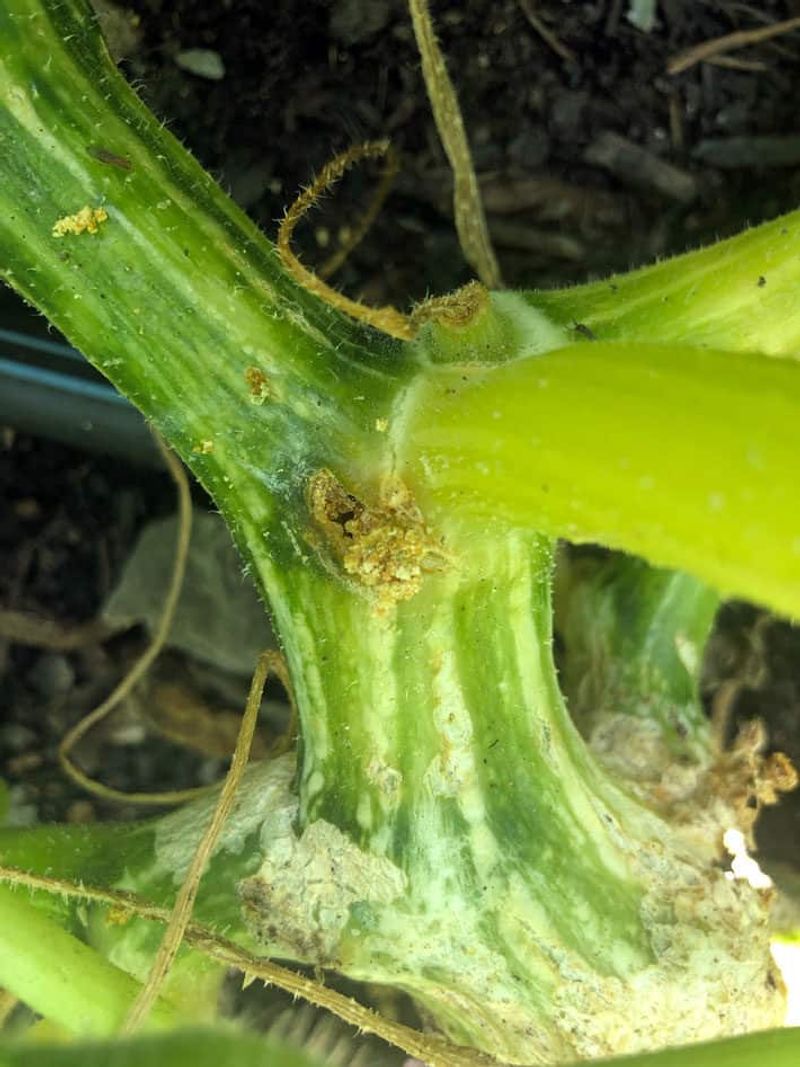
Get down on your knees and brush back the mulch around the base of the plant carefully. The bottom six inches of the main stem hold most of the evidence you need.
Vine borers leave behind frass, a polite word for insect waste, that looks like damp sawdust or greenish-orange crumbs scattered nearby. You will often see it piled at a small hole right where the stem meets the soil.
The stem itself may feel soft, split open, or look water-soaked and mushy near that hole once you look closely. Rain and irrigation sometimes wash the crumbs away, so check after a dry stretch if you can manage it.
Eggs are worth hunting for too while you are down there. They are tiny, flat, reddish-brown dots stuck to the lower stem and leaf stalks, and scraping them off with a fingernail prevents the whole problem from developing further.
If you find an entry hole, careful surgery sometimes rescues the plant entirely. Slit the stem lengthwise with a thin, sharp blade, pull out the cream-colored grub with tweezers or a wire, then mound moist soil over the wound afterward.
Buried stem sections often grow fresh roots and keep the vine producing fruit despite the earlier damage. Look for a second larva too, since several can share one plant at once.
Bacterial wilt leaves no frass and no holes anywhere on the stem, which makes the stem base a handy sorting tool for figuring out which problem you are actually dealing with.
6. A Simple Stem Test Reveals The Cause
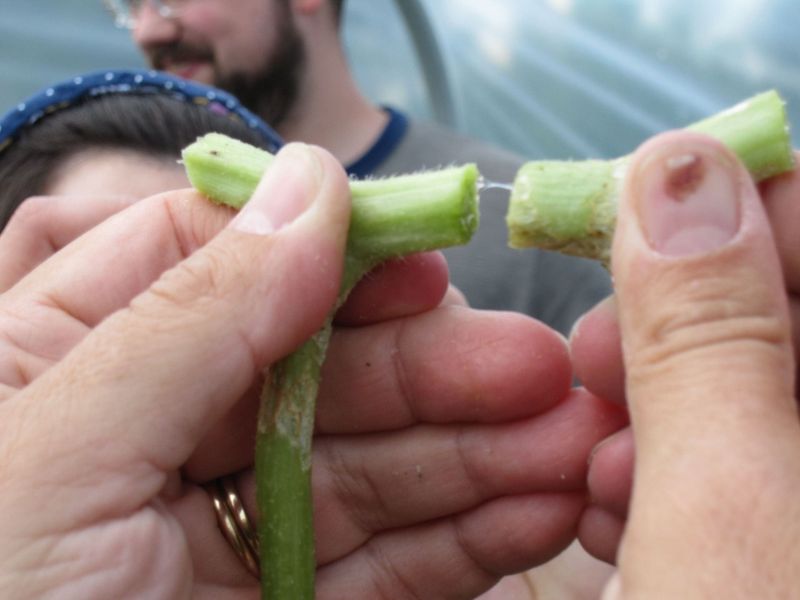
Snip and stretch. Those three words describe a field test plant doctors have used for decades to sort out this exact problem quickly.
Cut a wilted stem near the base with clean pruners, then press the two cut surfaces together for about ten seconds firmly. Pull them apart slowly afterward and watch closely.
If fine, sticky threads stretch between the pieces like thin strands of glue, bacterial wilt is almost certainly present in that plant. Healthy sap will not string out that way at all.
Another version of this test uses a clear glass of water instead. Hold a freshly cut piece of wilting stem just under the surface and watch for milky white streams drifting from the cut end.
Use tissue that is actively wilting for this test, not a stem that has already dried out completely. Fully dried material gives unreliable results either way.
A negative test does not automatically clear the plant of suspicion, since the ooze can be hard to spot in bright sun or on thick stems sometimes. Try again on a different runner, or shade the sample with your hand while checking.
Compare what you find with the borer signs discussed earlier. A tunneled stem is hollow, packed with soggy frass, and often smells sour, while a bacteria-clogged stem looks solid but slimy inside instead.
Wash your pruners with soapy water or rubbing alcohol between plants each time. Bacteria ride happily on dirty blades and can travel from a sick plant to a healthy one during your investigation otherwise.
7. Some Causes Have No Real Fix
Honesty time here. Once bacterial wilt takes hold in a plant, that plant is finished for good, no matter what you try afterward.
No spray, fertilizer, or amount of watering brings it back to health. The kindest move is pulling the vine and hauling it out of the garden entirely, away from other healthy plants.
Leaving it in place just feeds beetles that carry the bacteria to the next plant nearby, spreading the problem further across the bed.
Vine borers offer better odds when caught early in the process. Stem surgery plus mounded soil saves plenty of plants each season, and covers over young transplants prevent the egg-laying that starts the whole mess in the first place.
Heat wilt is the easiest of the three problems to manage overall. Mulch, deep morning watering, and a bit of afternoon shade during brutal stretches usually handle it without much fuss.
Planning ahead beats reacting after the fact every time. Butternut and other Cucurbita moschata types resist borers better than yellow squash and zucchini do, and a second sowing in midsummer often produces a healthy fall crop regardless.
Rotating cucurbits to a new bed, clearing old vines in fall, and scouting weekly all stack the deck in your favor for next season’s garden.
Losing a squash plant stings in the moment, but squash grow fast and forgive a restart easily enough. Many Georgia gardeners plant a few extra hills purely as insurance against exactly this kind of loss.