17 Arizona Native Groundcovers That Blanket A Bare Slope And Choke Out Weeds On No Water
A bare, weedy slope in the Arizona desert can feel like a losing battle, especially when summer heat bakes the ground and water bills climb. The good news is that native groundcovers evolved right here, so they spread out, hold soil in place, and crowd out weeds without begging for a drink.
Many also feed pollinators, invite birds, and create tidier yards that give scorpions fewer dark hiding spots. Here are 17 tough, desert-adapted plants that do the heavy lifting on almost no water once they settle in.
1. Damianita (Chrysactinia mexicana)
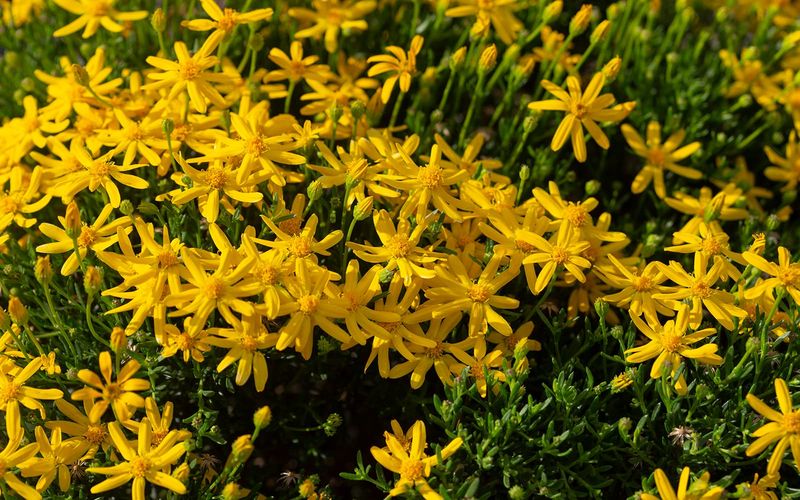
Picture a low cushion of fine, dark-green foliage that suddenly bursts into a golden carpet of daisies, and you have Damianita in full swing. Crush a leaf and you get a sharp, resinous scent that hints at just how tough this little plant really is.
Native to the rocky limestone country of the Southwest, it laughs at reflected heat and shrugs off winter cold with equal ease. Once its roots take hold, it wants almost nothing from you beyond full sun and sharp drainage.
Those tight aromatic mounds knit together to armor a bare slope, gripping loose soil and blocking sunlight that weeds need to sprout. It stays compact, so you never have to fight it back the way you would a sprawling plant.
Bees and small butterflies work the blooms in spring and again after monsoon rains. Plant it in fall so the roots settle before summer, space clumps close for faster coverage, and skip the fertilizer.
Overwatering is the fastest way to kill it, which makes it a dream for anyone chasing a no-fuss, water-wise hillside.
2. Trailing Dalea (Dalea greggii)
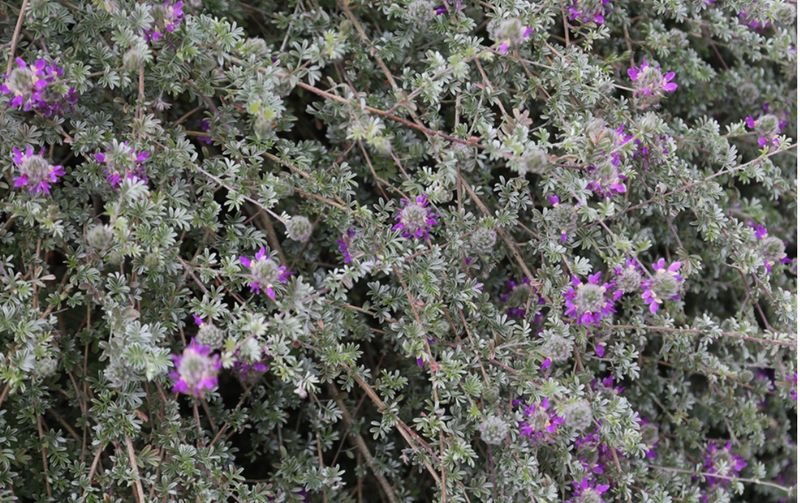
If you need to cover a lot of ground fast, Trailing Dalea is the sprawler that gets it done. A single plant can fan out six feet wide while staying barely a foot tall, draping over rocks and slopes like a soft silver blanket.
The fuzzy gray-green leaves reflect harsh sun, and small purple flowers pop up to keep native bees busy. Hailing from the Chihuahuan Desert, it takes reflected heat off walls and driveways without flinching.
What makes it a slope superstar is the way its trailing stems root as they wander, stitching the soil together and smothering weed seedlings before they get a foothold. That living mat is far more forgiving than bare dirt during a summer downpour.
Drought tolerance here is genuinely impressive once established, so many gardeners water only during the driest stretches. Set plants in fall roughly four to five feet apart, give them a full-sun spot, and let them run.
Trim lightly in late winter if you want a tidier look. Otherwise, sit back and watch a problem hillside disappear under a wash of soft foliage.
3. Gooding’s Verbena (Glandularia gooddingii)
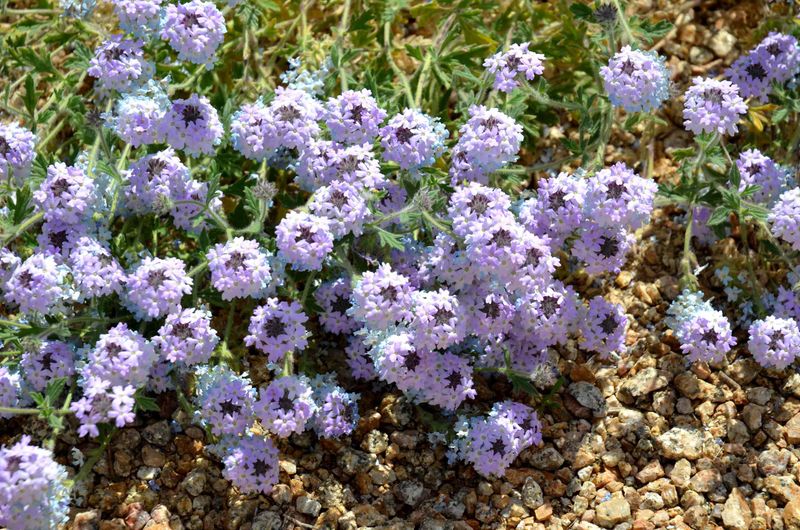
Few natives throw a color party like Gooding’s Verbena, which drapes bare ground in clusters of soft lavender and pink blooms. Butterflies treat it like a buffet, drifting from flower to flower through the cooler months of the year.
Your Arizona Garden Changes Every Week. Your Plan Should Too.
Gardening in Arizona changes quickly throughout the season. Every Friday you’ll receive a simple weekly plan showing exactly what to plant, prune, fertilize, harvest, and protect so you never miss the right timing.
Also called southwestern mock vervain, it settles happily into poor, rocky soils that would stump fussier plants. That toughness makes it a natural pick for slopes where the topsoil has long since washed away.
The real magic is its self-seeding habit. Give it a season or two and it quietly fills gaps on its own, thickening into a mat that shades out weed sprouts and steadies loose ground.
Water is only needed to help young plants root; mature stands coast through drought on very little. Plant in fall or very early spring so the roots establish before the heat arrives, and choose a full-sun location for the heaviest bloom.
A light shearing after a flush of flowers coaxes out fresh growth and more color. For a slope that looks intentional yet cares for itself, this cheerful spreader earns its spot.
4. Desert Zinnia (Zinnia acerosa)
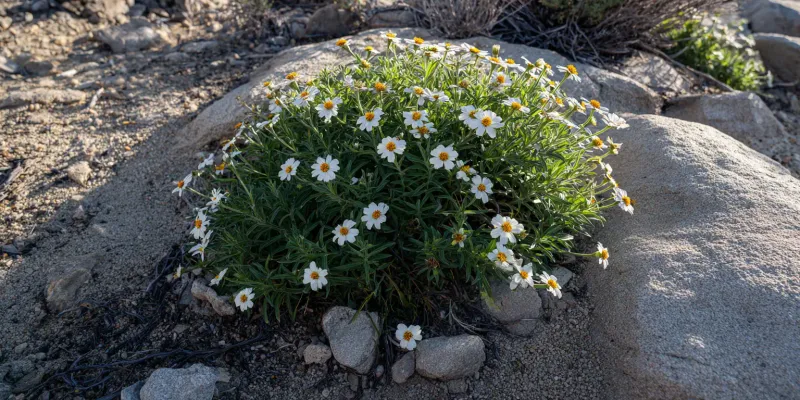
Small but mighty describes Desert Zinnia perfectly. Standing only six to ten inches tall, this native mini-shrub hunkers down against the ground and covers dry, sunny patches with creamy white to pale yellow daisies.
Its narrow, needle-fine leaves lose little moisture, a clever trick that lets it sail through blistering low-desert summers on next to no water. That built-in efficiency is exactly why it thrives where lawns and thirsty plants give up.
On a slope, its neat, tight growth forms a low patchwork that shades the soil surface and leaves weeds little room to establish. Group several together and they merge into a soft, textured carpet.
Blooms show up in the warm season and often linger after monsoon rains freshen things up. Pollinators appreciate the steady flowers even when little else is going.
Plant in fall on a well-drained site, and resist the urge to pamper it with extra irrigation, which invites rot. A quick trim keeps the mounds compact and full.
For gardeners who want polish in a tiny package, this understated native quietly overdelivers on a rocky hillside.
5. Blackfoot Daisy (Melampodium leucanthum)
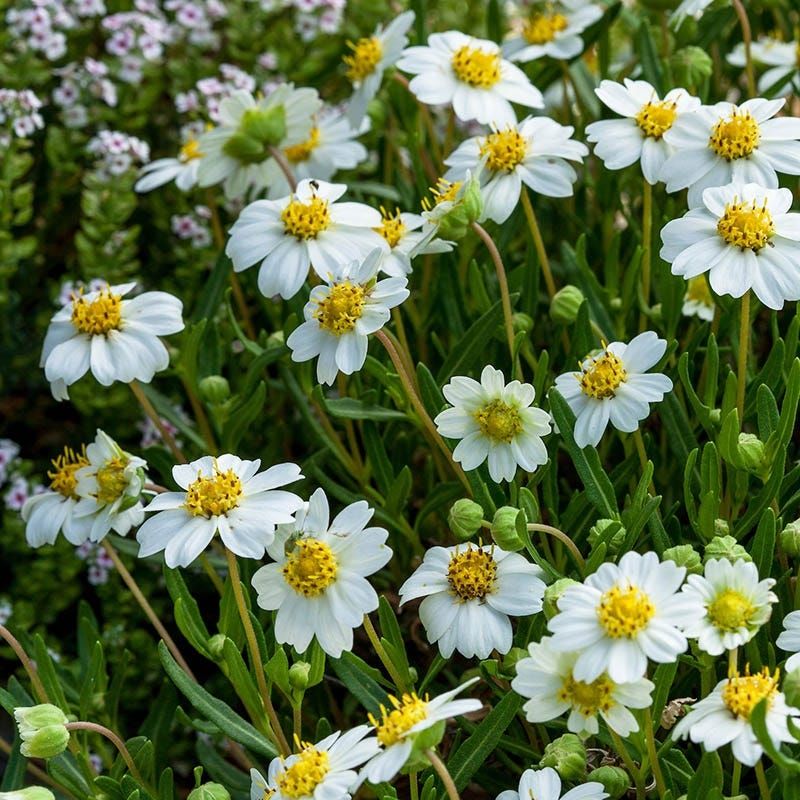
There is something almost delicate about Blackfoot Daisy, yet do not let the dainty white blooms fool you. Beneath those honey-scented flowers with their sunny gold centers lives one of the toughest little natives around.
It handles searing heat and surprising cold, holding its rounded green mounds together through weather that flattens weaker plants. Spring and fall bring the heaviest flushes of bloom in low-desert yards, with scattered flowers in between.
The tidy, dome-shaped habit is what makes it slope-friendly. Planted in a drift, the mounds knit into a soft ground layer that hides bare dirt and gives weeds fewer openings to sneak through.
Bees and butterflies flock to the long-running blooms, adding life to a hillside that once sat empty. Water needs stay very low once the plant is settled.
Give it full sun and gritty, fast-draining soil, and plant in fall for the smoothest start. A light shearing after heavy bloom keeps it dense and encourages another round of daisies.
Charming to look at, effortless to keep, and honey-sweet on a warm afternoon, it is a slope planting you will actually enjoy.
6. Globemallow (Sphaeralcea ambigua)
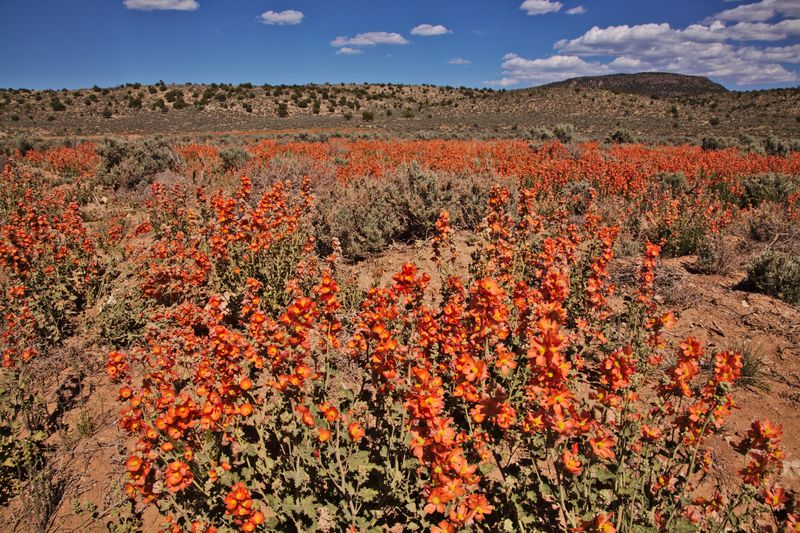
Drive any Arizona backroad in spring and those glowing orange blooms lighting up the shoulders are often Globemallow. This easygoing native pairs silvery, fuzzy foliage with cup-shaped flowers in warm orange, apricot, and sometimes red.
Hummingbirds and butterflies zero in on the blossoms, turning a plain slope into a busy pit stop for desert wildlife. That functional payoff is a big reason it belongs in a working, water-wise yard.
Used across a hillside, Globemallow acts like living mulch. Its leafy sprawl shades the soil, holds moisture where roots can use it, and blocks the light weed seedlings crave.
Few plants match it for sheer drought grit; once rooted, it thrives on rainfall alone in many spots. Overwatering just makes it floppy and short-lived.
Plant in fall in full sun with excellent drainage, and expect fast establishment. When it gets leggy after a big bloom, cut it back hard and it rebounds with fresh silver growth and more flowers.
Cheerful, tough, and genuinely useful, this native earns its keep by covering ground, feeding pollinators, and asking for almost nothing in return.
7. Desert Marigold (Baileya multiradiata)
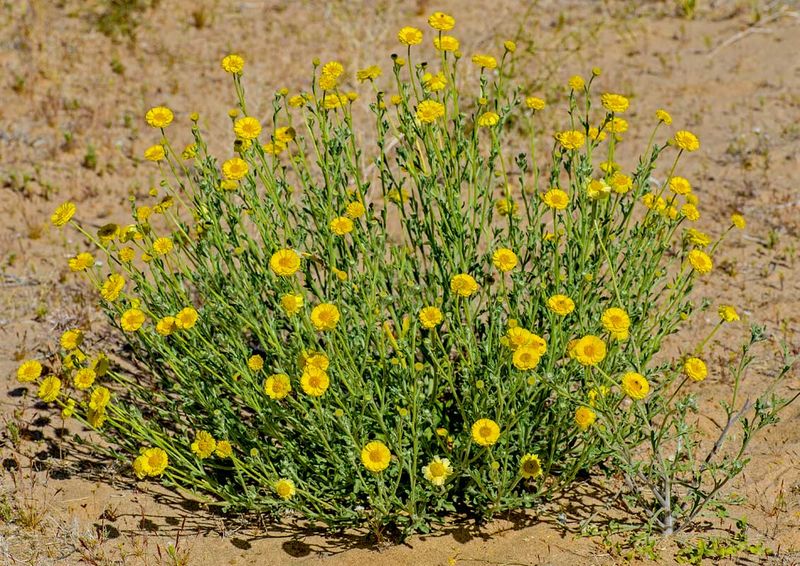
Almost stubborn in its cheerfulness, Desert Marigold keeps pumping out bright yellow daisies nearly year-round in the low desert. On long, wiry stems above woolly gray foliage, the flowers seem to glow against the heat.
Intense sun and scorching ground are no problem for this scrappy native. It sets up on tough, gravelly slopes where other plants sulk, then rewards you with steady color for little effort.
Its mounded, spreading form makes it a solid ground layer, softening bare dirt and keeping weeds from taking over open patches. Because it self-seeds so readily, one season of planting often turns into a self-renewing colony.
Bees and butterflies visit constantly, and a tidier, well-covered slope also means fewer of the dark, cluttered gaps where scorpions like to lurk. That is a nice bonus for a plant this pretty.
Sow or plant in fall, give it full sun and sharp drainage, and hold back on water once established. Snip off spent flower stalks if you want a neater look.
For nonstop sunshine on a slope that fends for itself, this native is hard to beat.
8. Angelita Daisy (Tetraneuris acaulis)
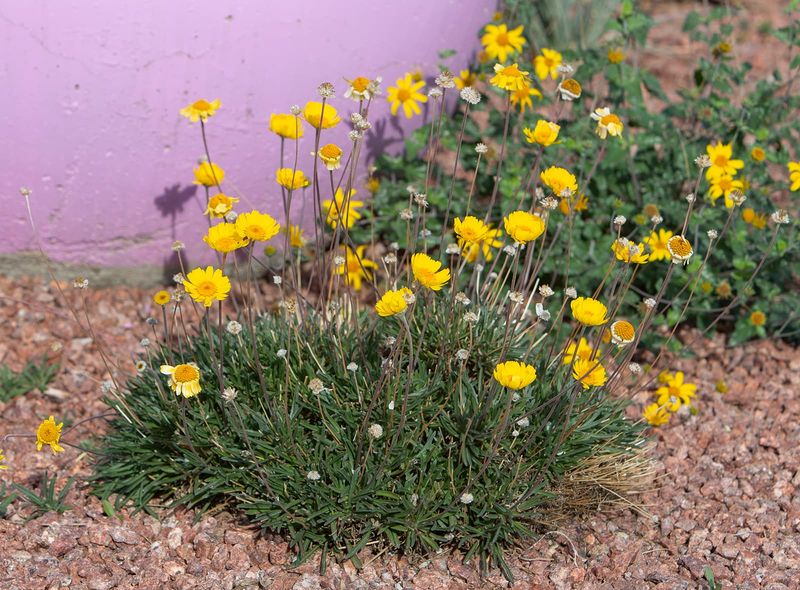
Tireless is the word longtime desert gardeners reach for with Angelita Daisy. In mild winters it barely stops blooming, and in the low desert it can flower practically all year, dotting a slope with small yellow suns.
Native across much of the western United States, it shrugs off both hard cold and brutal heat, a rare combination that makes it wildly dependable. The tidy tufts of grassy green foliage stay low and neat.
Massed together, these little clumps knit into a natural groundcover that fills space and keeps weeds boxed out. It also self-seeds gently, quietly patching any gaps that open up over time.
Pollinators appreciate the near-constant blooms during stretches when other plants have shut down. That steady food source adds real value to a wildlife-minded yard.
Set plants in fall in full sun with good drainage, spacing them close for quicker coverage. Water needs stay low once roots are down, and a quick shear of old flower stems keeps the planting fresh.
Reliable, compact, and forgiving, this daisy is the workhorse many slopes have been waiting for.
9. Flattop Buckwheat (Eriogonum fasciculatum var. polifolium)
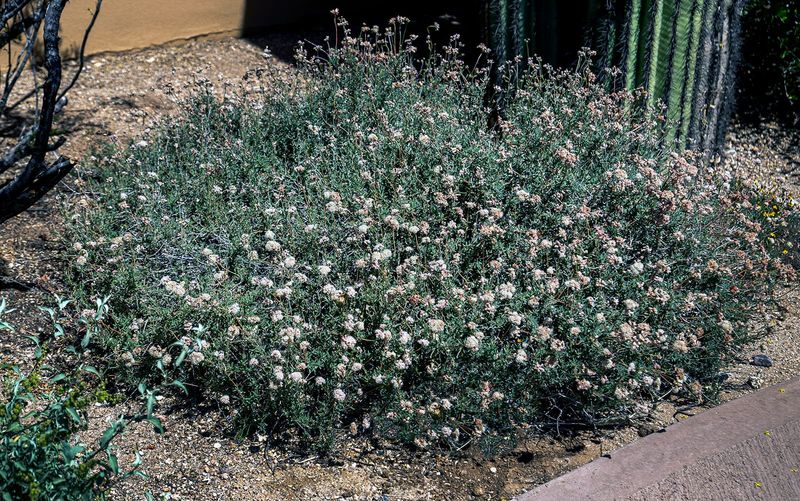
Buckwheat may sound like a farm crop, but this native version is a slope-stabilizing gem. Flattop Buckwheat forms low, rounded cushions of fine gray-green leaves, then lifts flat clusters of pale pink to creamy white flowers in spring.
Those blooms are a magnet for bees, small butterflies, and seed-hunting birds, making it a genuine wildlife draw. As the flowers fade to rusty tones, they add texture and keep feeding the birds well into summer.
Fast growth is part of its appeal. It fills in quickly to cover open ground, and its spreading habit helps lock soil in place on a slope where erosion is a threat.
Drought tolerance runs deep here, so established plants need very little supplemental water in the low desert. It also fits smaller spaces where a giant shrub would crowd everything out.
Plant in fall in full sun with excellent drainage, and avoid rich, soggy soil, which it dislikes. A light trim after flowering keeps the mounds compact.
For a functional, pollinator-friendly cover that grips a hillside and asks little in return, this understated native quietly punches above its weight.
10. Desert Senna (Senna covesii)
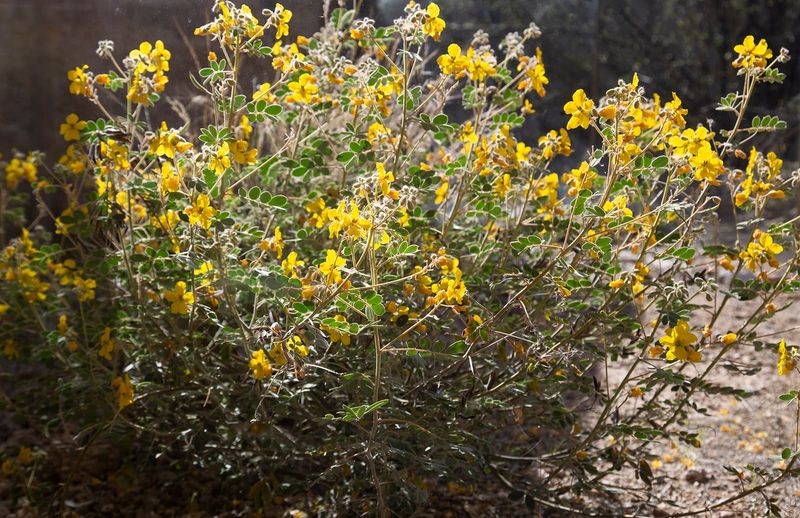
Golden and generous, Desert Senna keeps the color coming from spring straight through fall. This low, shrubby native scatters bright yellow flowers across soft gray-green foliage, an easy dose of warmth on an otherwise plain slope.
Bees and butterflies make regular rounds of the blooms, and certain butterfly larvae rely on senna foliage, so it doubles as a quiet host plant. That kind of dual role fits a yard meant to work as habitat.
Its spreading, low form gives decent coverage on dry ground, softening bare patches and helping shade out opportunistic weeds. It settles comfortably into hot, rocky spots that fry more delicate plants.
Drought is no obstacle once it is established, and the plant genuinely prefers lean, fast-draining soil over anything rich. Overwatering does it no favors.
Tuck it in during fall, choose a full-sun location, and let the monsoon rains do much of the work. If it looks tired late in the season, a trim tidies it and encourages a fresh flush.
Long-blooming, wildlife-friendly, and thoroughly desert-proof, this senna brings dependable sunshine to a low-water hillside.
11. Pineleaf Milkweed (Asclepias linaria)
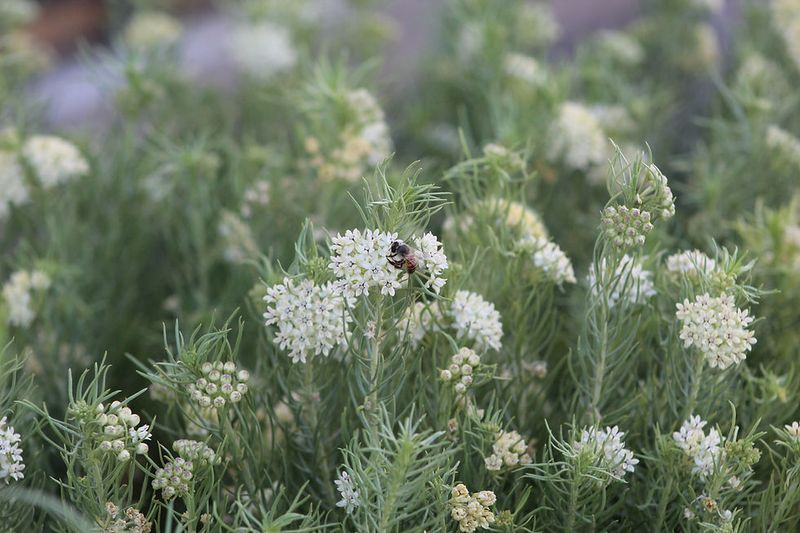
Look at Pineleaf Milkweed from a distance and you might mistake it for a soft green shrublet dressed in pine needles. Those fine, feathery leaves give it a texture unlike anything else on this list.
What sets it apart is its role in the monarch story. As a native milkweed, it offers food and a place for monarch caterpillars, plus nectar that draws a parade of other pollinators.
The plant grows as a low, tidy subshrub, so it holds a spot on a slope without sprawling out of bounds. Grouped in a drift, its dense foliage covers ground and shades out weed sprouts.
Drought toughness is real here, and once established it coasts through the hottest months on very little water. It thrives in the same lean, gritty soils that stump thirsty imports.
Plant it in fall in full sun, give it sharp drainage, and be patient while roots build strength underground. Skip heavy watering, which milkweeds resent.
For anyone who wants a slope that pulls double duty as pollinator habitat, this fine-leaved native turns bare dirt into a small but meaningful piece of the desert food web.
12. Rush Milkweed (Asclepias subulata)
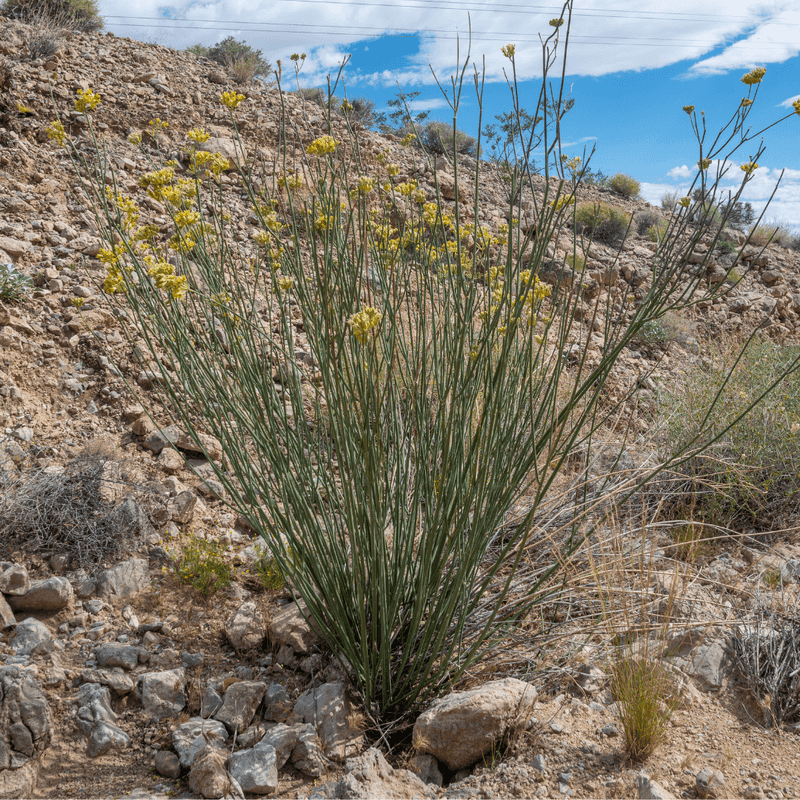
Rush Milkweed practically dares the desert to do its worst. With sparse, rush-like stems and almost no leaves, it looks like a bundle of pale green wands rising straight from the gravel.
That stripped-down design is a survival trick. Fewer leaves mean less water lost, so this native sails through blistering, dry conditions that would wilt most plants by noon.
Pollinators love it, and like other milkweeds it supports monarchs and a whole cast of nectar seekers. Watching the flower clusters buzz with activity is half the fun of growing it.
On a slope, its clumping stems anchor loose soil and create a distinctive vertical texture among lower groundcovers. Plant several together and they add structure while still keeping ground coverage in mind.
It genuinely wants hot, dry, sun-drenched spots, so a baking hillside is an asset rather than a problem. Overwatering and heavy soils are its main enemies.
Set it out in fall, give it full sun and fast drainage, and then mostly leave it alone. For a functional, wildlife-supporting plant built for the harshest corners of the yard, this milkweed thrives where pampered plants fail.
13. Fairy Duster (Calliandra eriophylla)
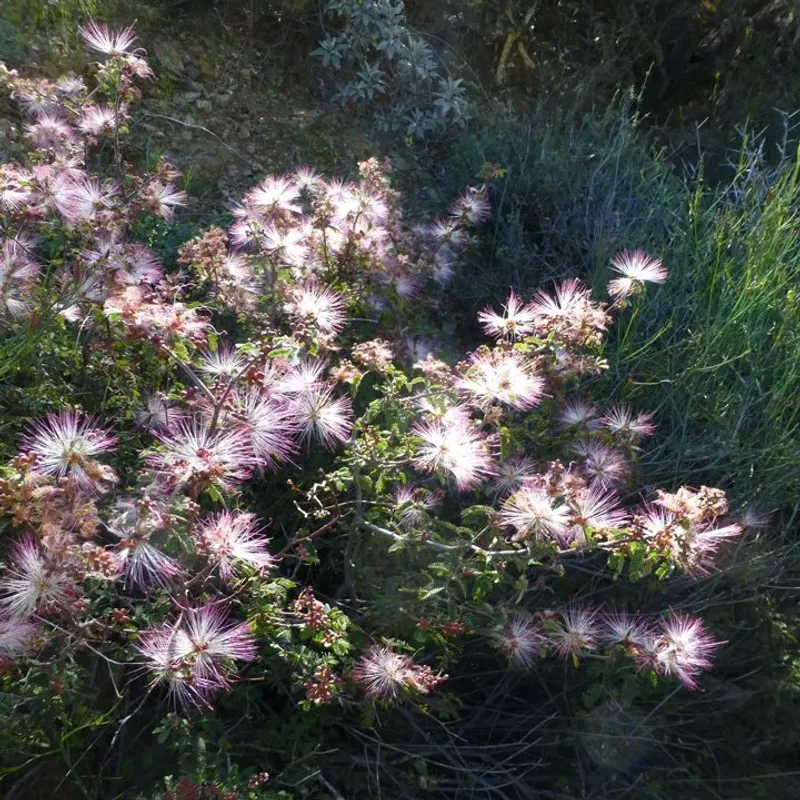
The name says it all: Fairy Duster produces powder-puff flowers in soft pink and rosy red that look like tiny feather dusters scattered across the branches. Hummingbirds cannot resist them, zipping in for a sip whenever they bloom.
This low, spreading native shrub or subshrub is a slope hero when it comes to erosion. Its branching form and root system grip the ground, holding soil steady through wind and monsoon runoff alike.
Ferny, fine-textured foliage gives it a delicate look, but the plant is genuinely tough and thrives in full sun and heat. Drought is no trouble once its roots reach down into the soil.
Used along a hillside, its spreading habit shades bare ground and reduces the open space weeds would otherwise claim. As a legume, it also quietly enriches lean desert soil over time.
Plant in fall, pick a sunny, well-drained site, and water only to get it going. A light shaping in late winter keeps it dense and encourages spring puffballs.
Pretty enough to charm visitors and rugged enough to hold a slope together, this native blends beauty and hard work with ease.
14. Red Yucca (Hesperaloe parviflora)
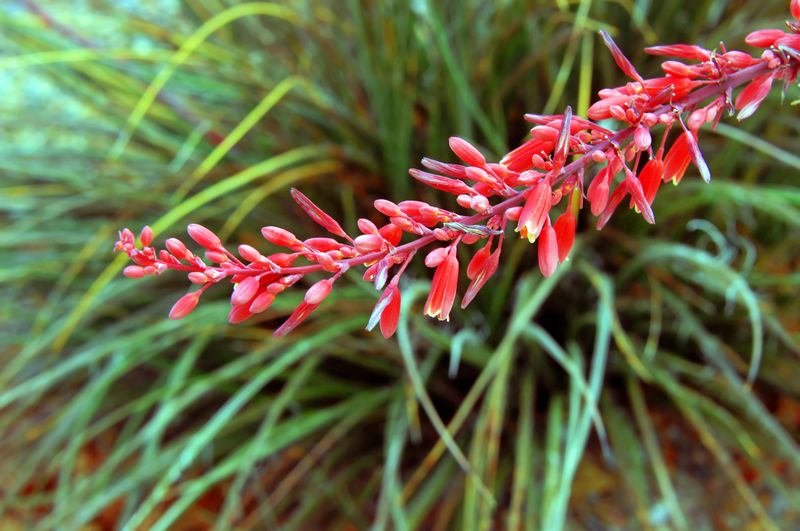
Despite the name, Red Yucca is not a true yucca at all, which is a fun bit of desert trivia to share. What it lacks in accurate naming it makes up for in sheer toughness and hummingbird appeal.
Clumps of slender, grass-like foliage send up tall spikes lined with coral-red or pink tubular flowers. Hummingbirds treat those spikes like their own personal fuel stations for months on end.
Coming from the Chihuahuan Desert, it thrives in rocky, dry, alkaline soils that defeat softer plants. Extreme drought tolerance makes it a reliable backbone for a water-wise hillside.
For slopes, mass plantings work beautifully. The fibrous root systems and dense clumps stabilize soil, while the arching leaves shade the ground between plants and limit weed growth.
Plant in fall in full sun, space clumps so they can fill in, and water sparingly once rooted. It needs almost no grooming beyond snipping spent bloom stalks.
Evergreen, architectural, and endlessly forgiving, this native adds vertical drama and a hummingbird show to a slope that used to be nothing but dirt. Few plants deliver this much with this little effort.
15. Blue Grama (Bouteloua gracilis)
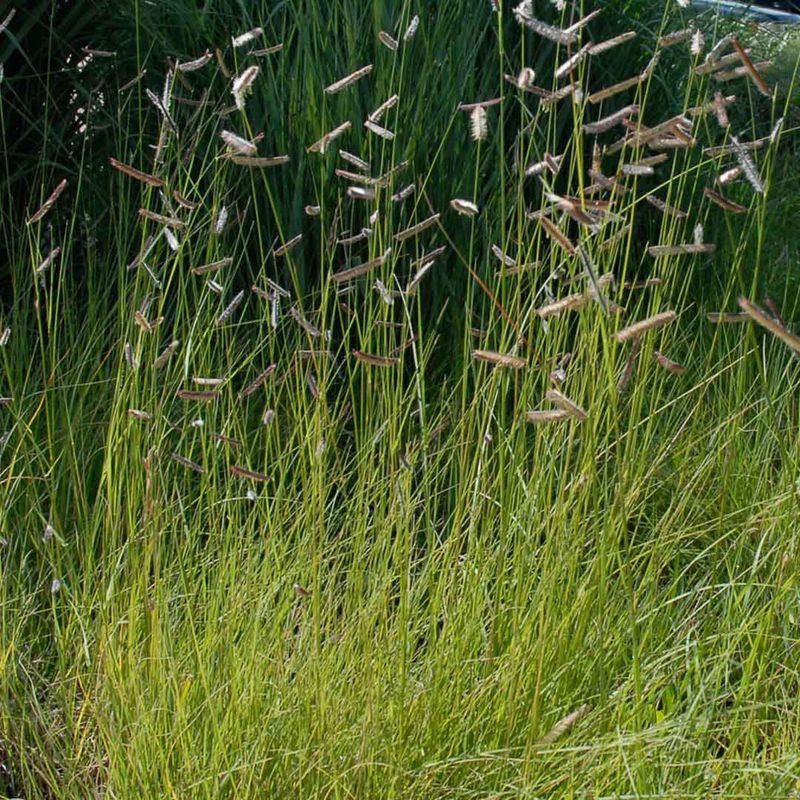
Grasses often get overlooked for slopes, but Blue Grama makes a strong case with its fine, wispy texture and quirky seed heads shaped like little eyebrows. There is real charm in watching a whole hillside of it sway in a warm breeze.
The secret weapon here is underground. Its dense, fibrous root system reaches deep and wide, gripping soil like a net and making it one of the best natives for holding a slope against erosion.
Once established, it copes with drought impressively, greening up with rainfall and going quietly dormant during the driest stretches. That flexibility keeps it alive where thirsty turf would fail.
Planted thickly, it forms a soft, fine-textured cover that fills space and competes with weeds for light and root room. It also offers a low-water alternative to conventional lawn on gentle grades.
Sow or plant in fall so roots build before summer heat, choose full sun, and avoid overwatering. A single cut in late winter clears old growth for fresh spring blades.
Understated yet incredibly effective, this native grass turns a crumbling slope into a stable, living carpet.
16. Black Grama (Bouteloua eriopoda)
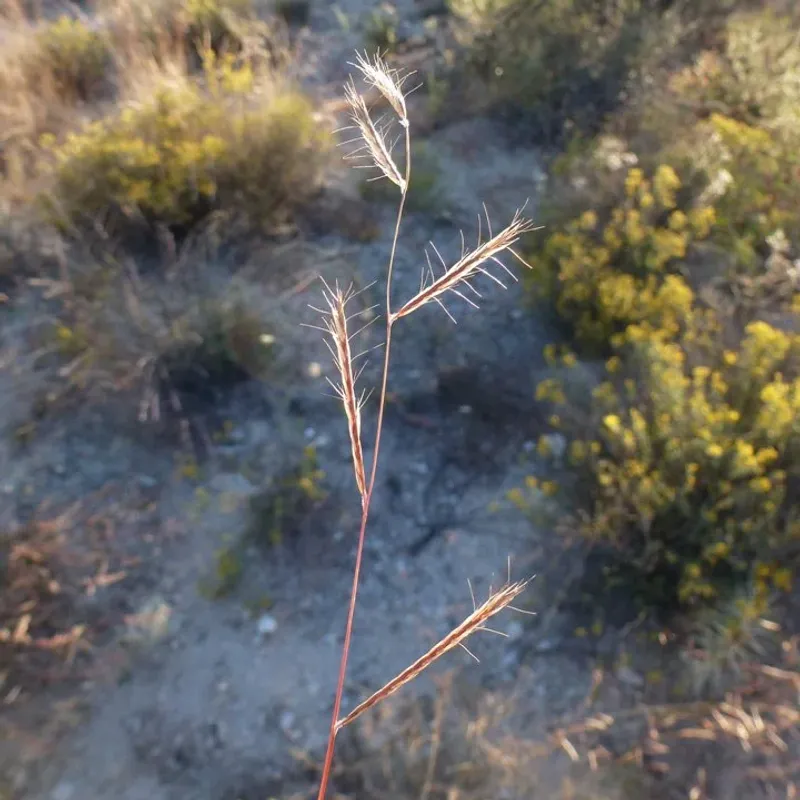
Ranchers have long prized Black Grama as one of the desert’s most dependable range grasses, and that reputation carries straight into the home landscape. Where conditions turn truly harsh, this native grass keeps hanging on.
Its wiry stems and tough root system make it a champion at stabilizing bare, arid slopes. The roots dig in and hold loose ground together, resisting the kind of erosion that scars untended hillsides after storms.
Extreme drought is no deal-breaker. Once established, it survives on very little water, riding out dry spells and reviving when rain finally arrives.
On a slope, planting it in a broad stand creates a low, textured cover that fills the ground and leaves fewer openings for weeds to invade. It pairs naturally with wildflowers for a meadow-like feel.
Sow or plant in fall to give roots time before the heat, and pick a full-sun spot with fast drainage. It needs little care beyond an occasional late-winter cutback.
Rugged, patient, and built for the toughest ground, this grass proves that stabilizing a slope on almost no water is entirely possible with the right native.
17. Native Muhly Grasses (Muhlenbergia spp.)
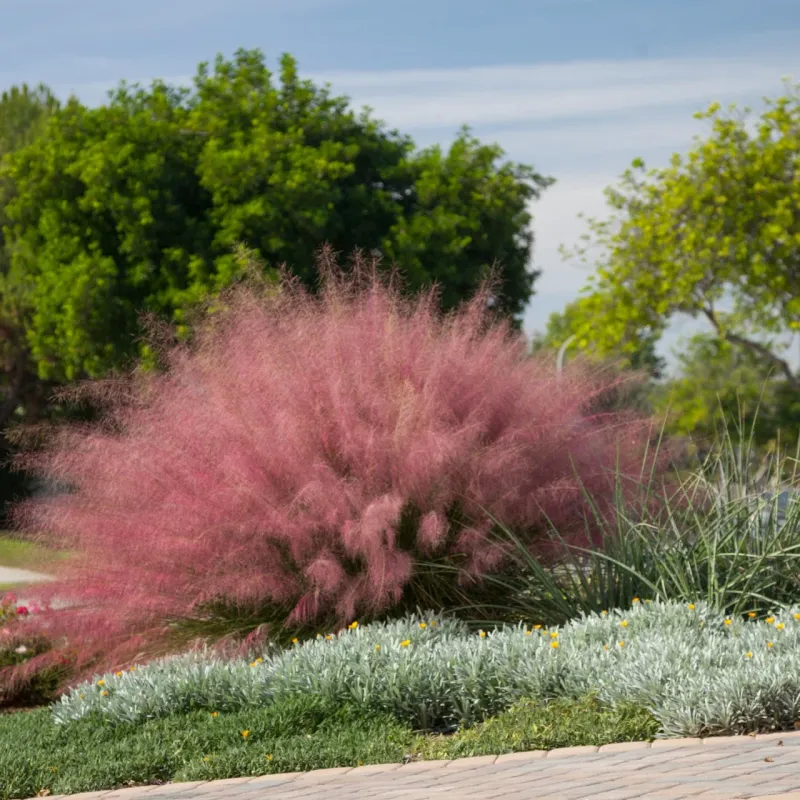
For sheer beauty on a slope, few natives compete with the Muhly grasses. Pink Muhly lights up fall with a haze of rosy plumes, while Deer Grass forms bold, arching fountains of green that anchor a hillside with style.
Both types share the traits that matter most here. Deep, fibrous roots grab loose soil and hold it in place, making these grasses excellent tools against erosion on a bare grade.
Wildlife gets plenty out of them too. The clumps offer seeds, cover, and nesting material, turning a functional planting into a small refuge for birds and other creatures.
Drought tolerance is strong once the plants settle in, so they cruise through hot, dry stretches with minimal watering. Their graceful shapes add movement and texture that flat groundcovers cannot match.
Plant in fall in full sun, space clumps to let them mature, and cut them back in late winter to refresh the foliage. Beyond that, they mostly take care of themselves.
Combining looks, habitat value, and slope-holding muscle, these grasses are a fitting finale for a water-wise Arizona hillside.