Plant One Rosemary Bush In Your Arizona Yard And It Only Gets Stronger When The Heat Turns Brutal
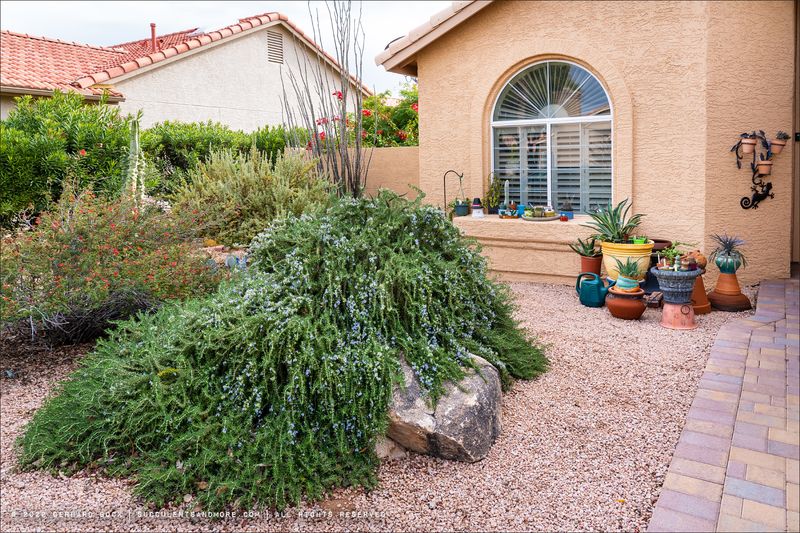
Rosemary is one of the few herbs you can plant in a Phoenix or Tucson yard and actually expect to see thriving years later. It handles blistering summers, alkaline soil, and minimal rainfall better than most plants you could choose.
That track record comes with real conditions attached, though, and understanding them is what separates a rosemary bush that lasts from one that quietly dies in its first July.
Rosemary fits the low-desert yard for a specific reason
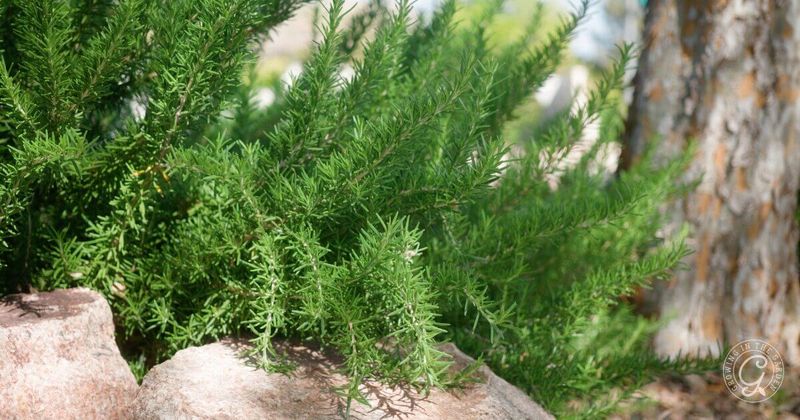
Rosemary earns its reputation in the low desert because of where it comes from. Native to the Mediterranean region, not Arizona, it evolved in rocky, dry hillsides with intense sun, poor soil, and long dry seasons.
That background translates directly to Phoenix and Tucson conditions, and University of Arizona Cooperative Extension rosemary guidance describes it as hardy, long-lived, drought tolerant, and suitable for Arizona landscapes as either an upright shrub or a trailing groundcover.
The title of this article needs a correction before anything else. Extreme heat does not make rosemary stronger.
What the research actually supports is narrower and more useful: an established rosemary bush can tolerate Arizona heat and low-water conditions unusually well when it is planted in a sunny spot with excellent drainage and given adequate irrigation during establishment. Prolonged extreme heat, drought, wind, poor drainage, or root damage can weaken or kill even a well-adapted plant.
This guidance is written for low-desert homeowners in the Phoenix and Tucson metro areas. Rosemary’s performance changes significantly at higher elevations across Arizona, where frost exposure, shorter growing seasons, and different climate zones require separate consideration.
If you garden in Prescott, Flagstaff, or a mountain community, local microclimate and cold hardiness matter just as much as heat tolerance.
The planting site matters more than the plant tag
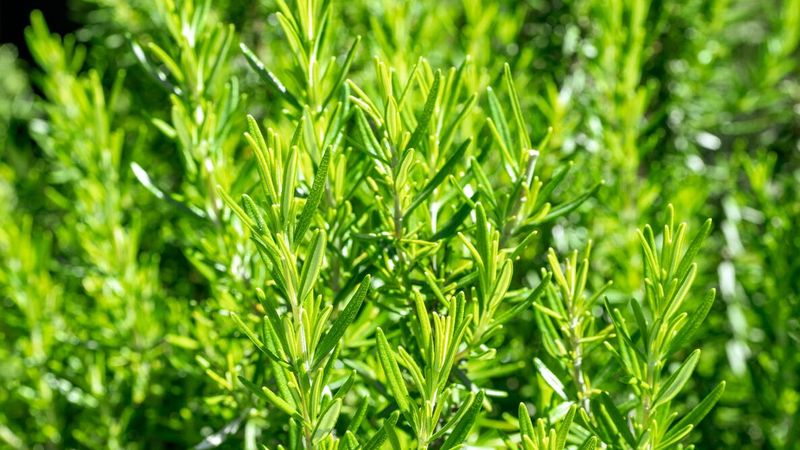
A plant tag that says “full sun” was written for the nursery conditions where the plant was grown, not for a west-facing Arizona wall in late June. Rosemary genuinely needs sun, but the quality and intensity of that sun in the low desert is a different thing entirely from what the tag assumes.
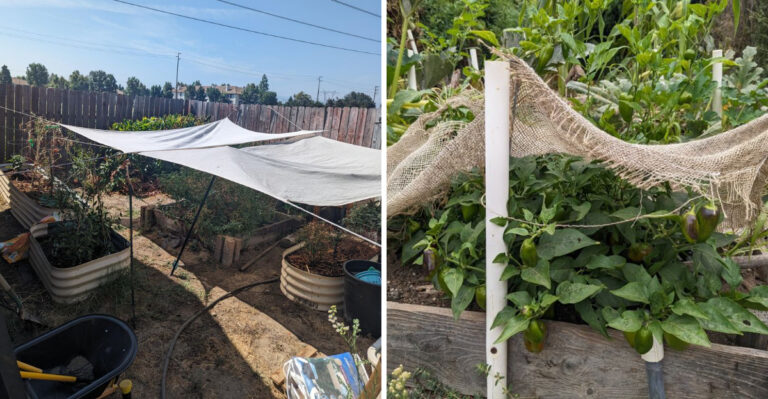
Tucson herb-growing guidance from UA Extension notes that summer desert sunlight can be unusually intense, and recommends an eastern exposure, afternoon protection, or temporary 30 to 40 percent shade cloth for newly planted or stressed rosemary. A south- or west-facing wall adds reflected heat on top of direct sun, which raises the heat load on the plant well beyond what air temperature alone suggests.
Morning sun with some afternoon relief is often a smarter starting position for a new plant than the sunniest corner of the yard. Once the root system is established and the plant has demonstrated it is handling the exposure well, you can reassess.
A favorable site improves the odds of establishment, but it does not replace consistent irrigation and monitoring during the first growing season.
Check the soil before you put rosemary in the ground
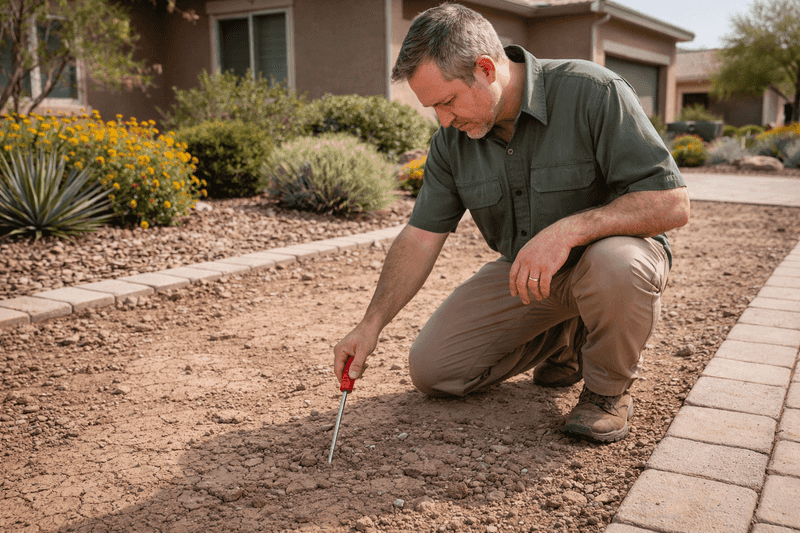
Rosemary can handle light, rocky, or nutrient-poor soil without much complaint. What it cannot handle is sitting in water, and that distinction matters enormously in Arizona yards where the surface looks dry and fast-draining but the soil underneath tells a different story.
Your Arizona Garden Changes Every Week. Your Plan Should Too.
Gardening in Arizona changes quickly throughout the season. Every Friday you’ll receive a simple weekly plan showing exactly what to plant, prune, fertilize, harvest, and protect so you never miss the right timing.
Caliche, the calcium carbonate layer common across low-desert Arizona, can restrict roots, hold water against the root zone, increase salt accumulation, and contribute to iron unavailability. Gravel or decorative rock on the surface does nothing to fix a restrictive layer two feet down.
Before planting, dig the actual hole you plan to use and fill it with water. According to UA Extension caliche guidance, water should drop at least 4 inches within four hours.
That test tells you about that specific hole, not the whole yard.
If the water barely moves or results vary between spots a few feet apart, investigate further. A slow result usually means a restrictive layer is present.
The fix is to break through or remove the caliche and replace it with a compatible soil mix, not to add rocks on top and hope for the best. Skipping this step is one of the most common reasons rosemary fails in yards where every other condition looks right.
Fall planting creates a favorable establishment window
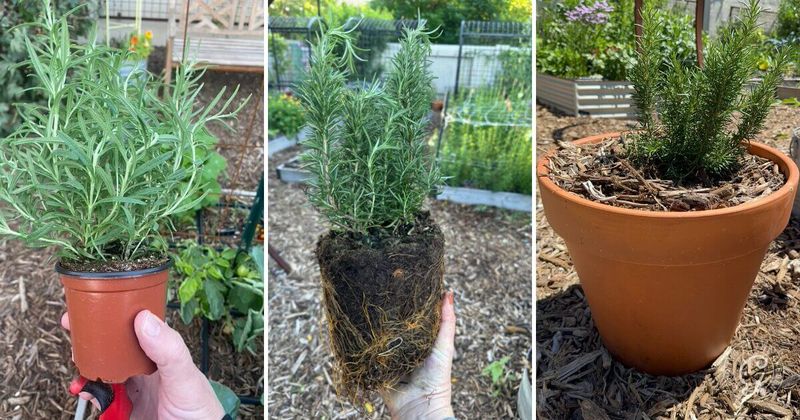
Timing the planting correctly gives rosemary its best chance to build a root system before summer arrives. Fall is the generally preferred window for low-desert Arizona, roughly October through early November, because cooler temperatures and lower evaporation rates reduce stress on a new plant while roots develop.
Spring can also work, but a spring planting faces rising heat and drying winds sooner, which compresses the establishment period and demands closer attention to irrigation.
Fall planting is not a guarantee. Success still depends on adequate irrigation, appropriate exposure, and whatever weather that particular season delivers.
The advantage is opportunity, not certainty.
New rosemary needs regular water while roots are getting established. UA Extension rosemary guidance recommends watering every 3 to 5 days during the establishment period, then gradually extending the interval as the root system develops.
May and June are identified as especially important months to maintain irrigation, because heat ramps up quickly and a plant that has not yet developed a deep root system has little buffer against drying out. The goal during establishment is to keep moisture consistently available at root depth, not to keep the surface wet.
Confusing drought tolerance with immediate water independence is one of the fastest ways to lose a new planting.
Once established, rosemary wants deep watering—not daily attention
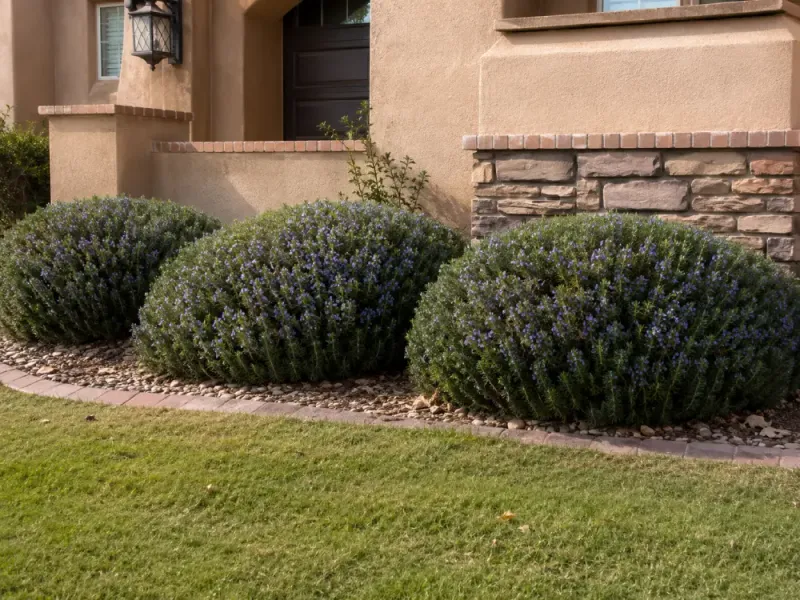
After the root system is established, the watering approach should shift. Frequent shallow irrigation keeps moisture near the surface and can actually encourage shallow rooting, which leaves the plant more vulnerable during extreme heat.
Deep, infrequent watering pushes moisture down to where the roots are and trains the plant to reach for it.
Drought tolerant does not mean drought proof. During unusually prolonged hot and dry stretches, even an established rosemary bush benefits from supplemental water.
The signal to watch for is wilting or gray-green foliage that does not recover overnight. Connecting the watering interval to what the soil and plant are actually showing is more reliable than following a rigid schedule.
Containers, windy exposures, and sites with significant reflected heat all require closer monitoring regardless of how established the plant is. A potted rosemary in full western sun on a concrete patio can dry out in a single afternoon during summer.
The same plant in the ground with good drainage and an eastern exposure might go two weeks or more between deep waterings once established. UA Extension guidance on drought and extreme heat responses reinforces that even heat-adapted plants can suffer irreversible damage during prolonged dry periods, so water savings are real but relative.
Choose the form that matches the job
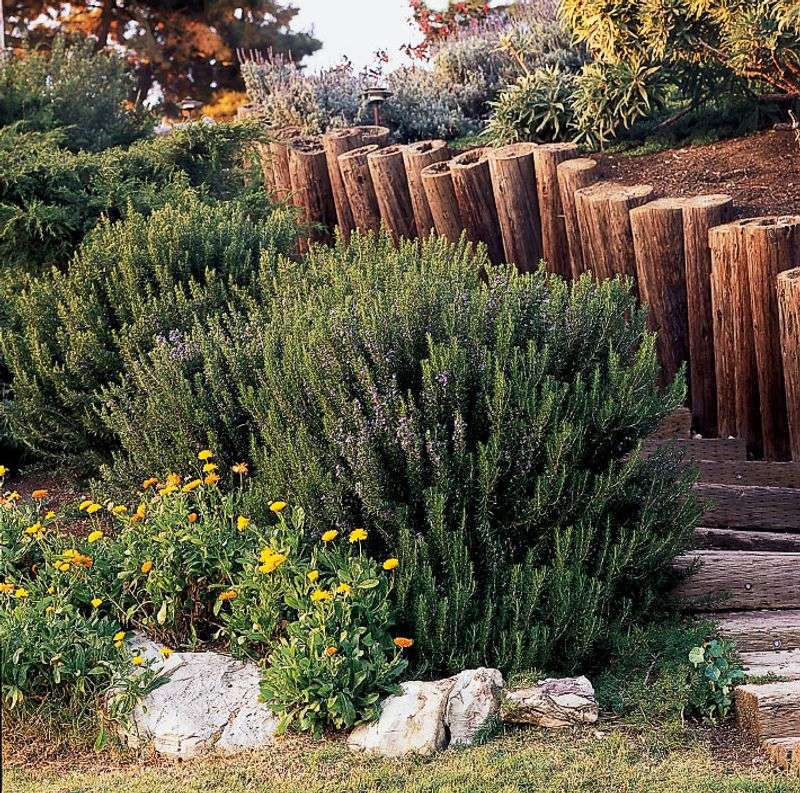
Not all rosemary plants look or behave the same way, and choosing the wrong form for the space creates unnecessary work. Upright varieties like Tuscan Blue can reach roughly 3 to 6 feet tall and wide over time, making them useful as informal hedges, anchor shrubs, or structural elements in a desert landscape.
They hold their shape reasonably well without constant trimming and produce the dense, fragrant growth most people picture when they think of culinary rosemary.
Trailing or prostrate types grow low and wide, spreading horizontally rather than building height. They work well cascading over retaining walls, covering slopes where foot traffic is minimal, filling rock gardens, or softening the edges of containers.
The growth habit is genuinely different, so matching the form to the intended location before purchasing saves a lot of correction later.
Containers deserve a specific note. Pots heat up and dry out far faster than in-ground beds, particularly on patios or decks that absorb and radiate heat.
Potted rosemary needs more frequent watering than an in-ground plant, and during the most intense summer weeks it may need to be moved to a shadier or cooler spot to avoid heat stress at the root zone. The plant itself may look fine while the roots are cooking in a pot that has been sitting in full sun for hours.
Light pruning keeps the bush useful without exposing old wood
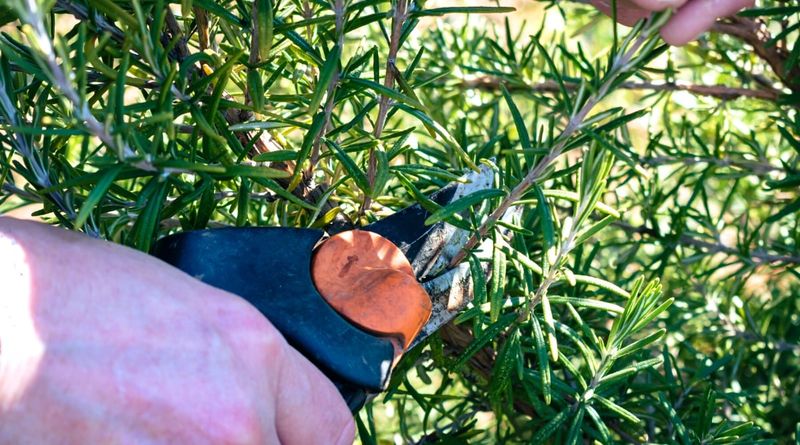
Rosemary responds well to light, selective pruning and poorly to aggressive shearing. The key distinction is where the cut lands.
Pruning into green, leafy growth encourages the plant to branch and fill in. Cutting back into bare, woody stems is a different matter entirely.
Arizona shrub-pruning guidance is direct on this point: rosemary may not regrow from cuts into old wood that has lost its leaves. A severe shearing that removes most of the green growth can leave a mature bush permanently disfigured or dead in sections.
The safer approach is to remove no more than a third of the plant at a time, always cutting above a visible set of leaves, and to shape gradually over multiple seasons rather than trying to fix years of growth in a single session.
Fertilizer is generally unnecessary for rosemary growing in native Arizona soil. The plant is adapted to low-nutrient conditions, and pushing it with excess fertilizer can produce weak, overly fast growth that is more susceptible to damage.
Excess irrigation creates similar problems. Restraint with both inputs keeps the plant compact, fragrant, and manageable without adding maintenance work.
Its flowers can help pollinators, but rosemary is not scorpion control
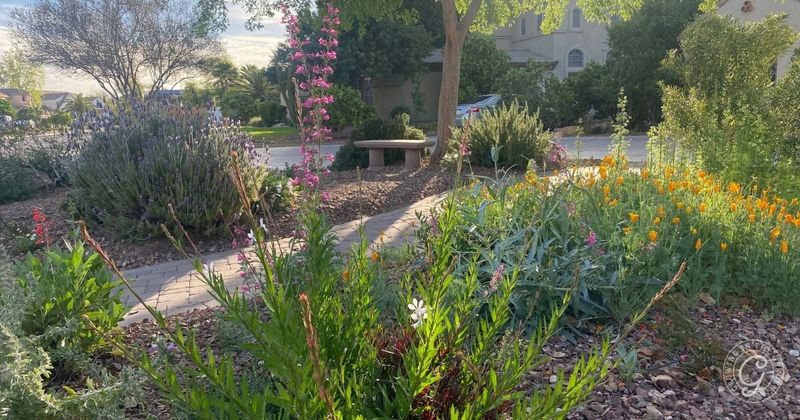
Rosemary does offer something real to the yard beyond culinary use. Its small flowers, typically blue or pale purple, can provide nectar for bees, butterflies, and other beneficial insects.
The NC Extension plant profile for Salvia rosmarinus confirms this pollinator value. A rosemary bush in bloom is a reasonable addition to a yard that supports beneficial insects, though one herb is not a substitute for a diverse low-desert pollinator planting with multiple species and bloom times.
Where the claims go wrong is in pest control. Rosemary does not create a reliable barrier against scorpions.
Arizona scorpion management is based on exclusion, reducing harborage like wood piles and debris, eliminating prey insects, and sealing entry points into buildings. Planting rosemary nearby does not address any of those factors.
Mosquito and tick repellency claims are similarly unsupported for a living plant. Rosemary essential oil has shown variable results in laboratory settings, but that does not translate to a garden shrub protecting a yard or the people in it.
CDC guidance notes that natural-repellent claims are difficult to interpret, and both CDC and EPA recommend EPA-registered repellents for personal protection against mosquitoes and ticks. Homemade rosemary oil applied to skin, children, or pets is not a substitute for registered products, and the safety of unregulated botanical preparations varies widely.
The payoff is a tougher, lower-water herb—not an invincible one
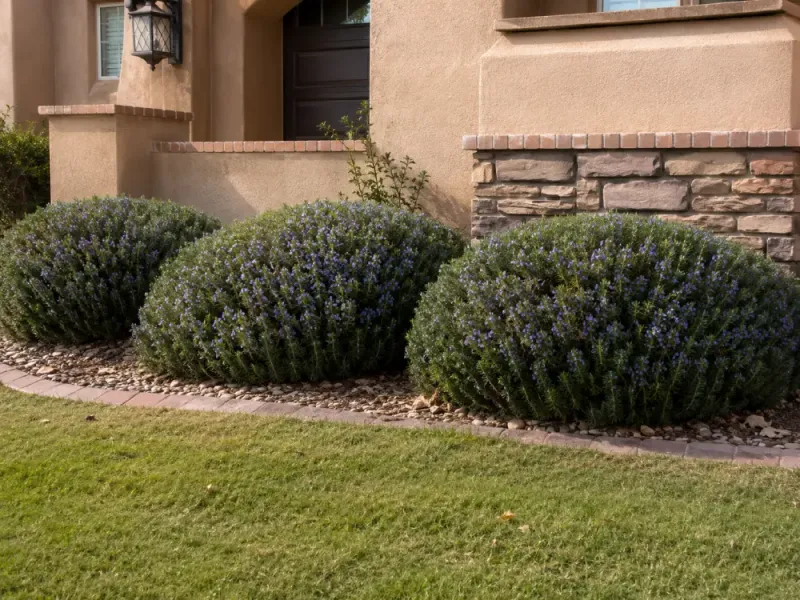
Rosemary earns a place in a low-desert Arizona yard because it genuinely handles conditions that defeat most herbs: alkaline soil, intense sun, low rainfall, and summer temperatures that push well past 100 degrees. With proper drainage, a sensible exposure, consistent establishment irrigation, and restrained long-term care, it can thrive for years with far less input than most landscape plants.
The corrected headline is this: an established rosemary bush can handle Arizona’s punishing conditions unusually well, but its success comes from matching the site and care to the climate. Extreme heat does not make it stronger.
Getting the site right from the start does.