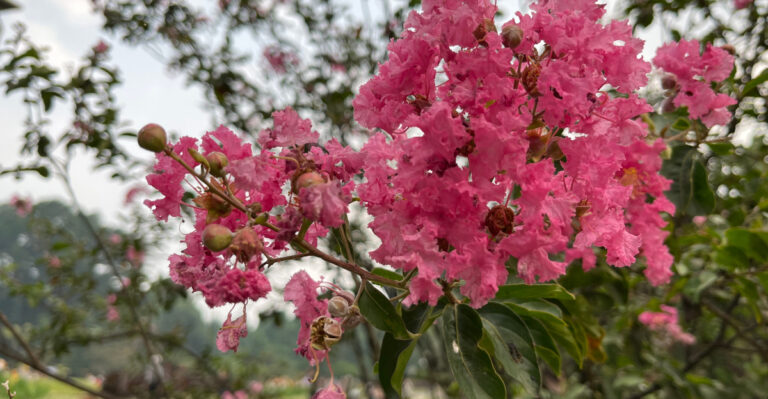
The Early Crape Myrtle Bark Scale Sign Florida Homeowners Should Watch For This September
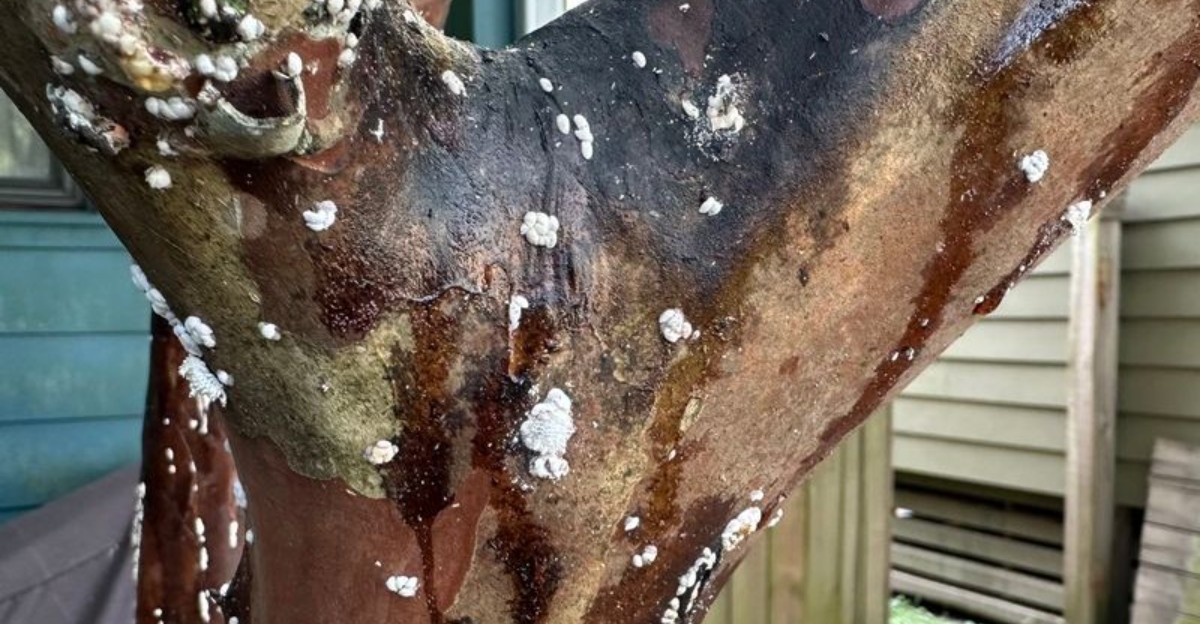
That white, waxy coating creeping along your crape myrtle bark isn’t mold, and Florida homeowners are running out of time to catch it early.
Crape myrtle bark scale has been spreading through the state, and by the time the black sooty mold shows up, the infestation already has weeks on you. The real giveaway comes earlier, in a subtle texture change most people mistake for dirt and walk right past.
This pest doesn’t stay put either. It moves tree to tree fast, turning one overlooked trunk into a neighborhood problem within a season.
Run your hand along the bark this week instead of just eyeing it from a distance. What you feel might tell you more than what you see.
1. Spot Black Sooty Mold Before The Scale Becomes Obvious
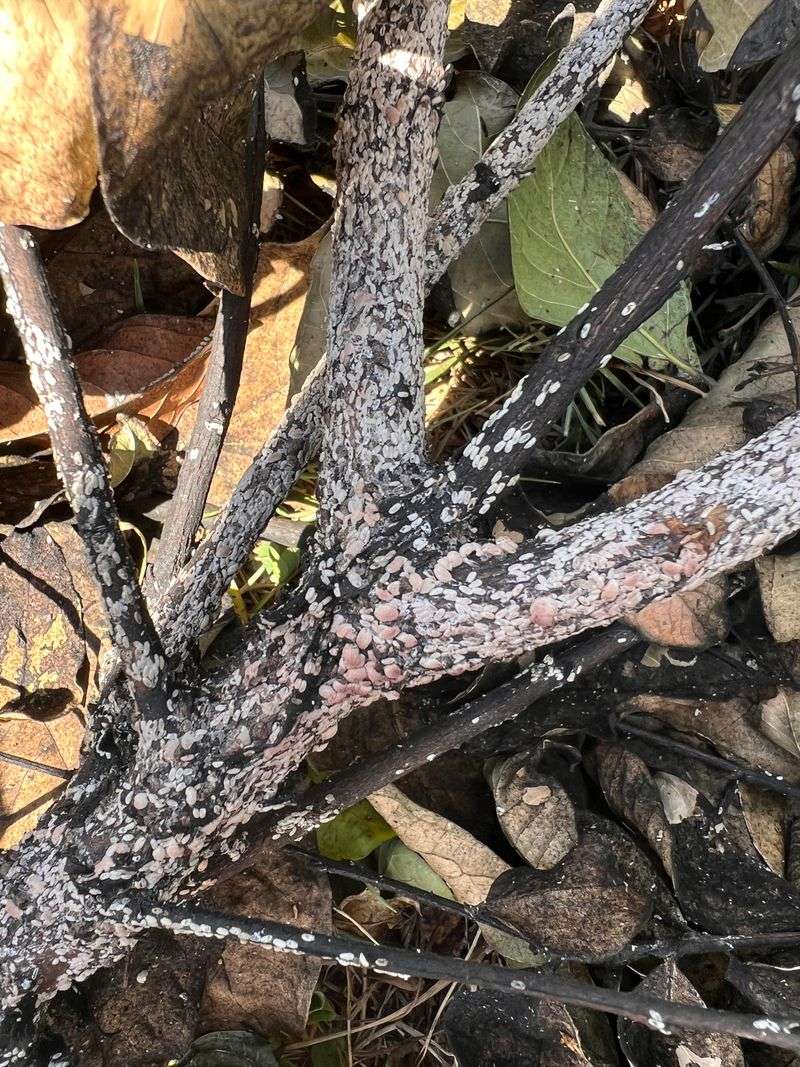
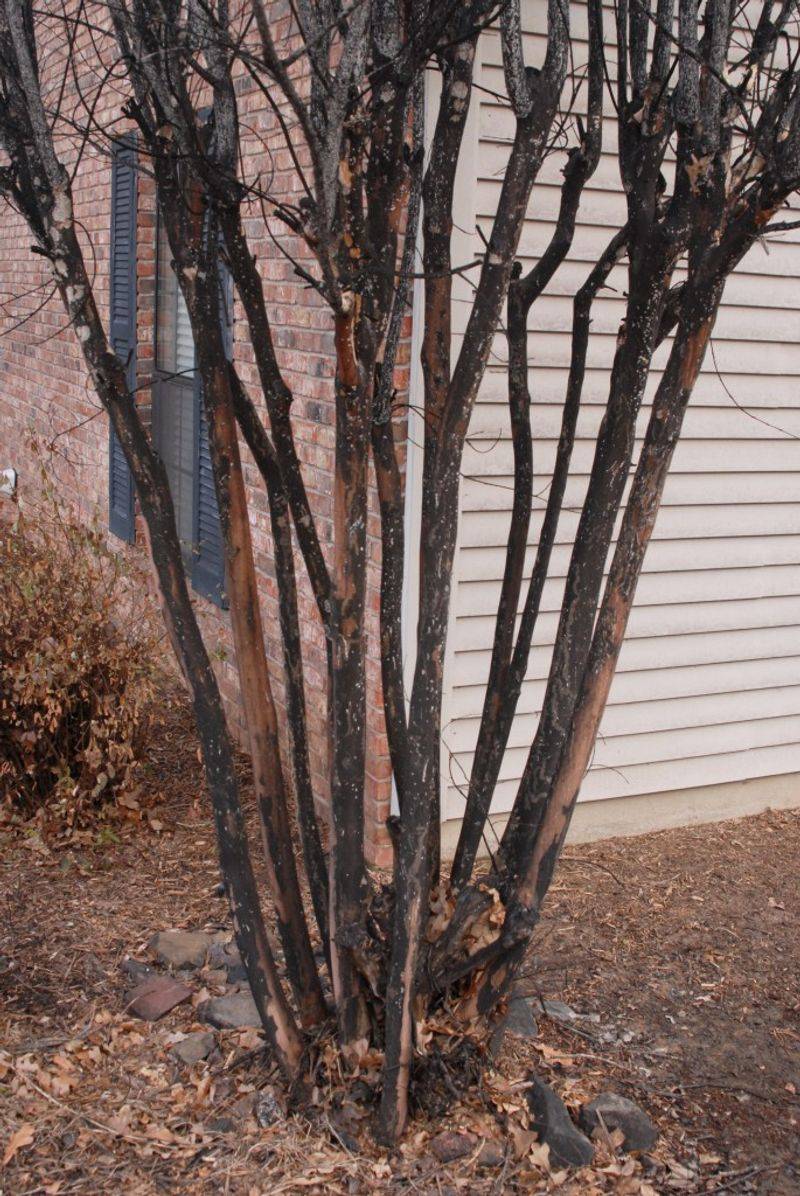
Most homeowners notice the black before they notice the bug. Trunks and branches look smudged with soot, and leaves take on a dull, grimy film.
That dark coating is sooty mold, a harmless-looking fungus that grows on honeydew. Honeydew is the sticky, sugary waste that sap-feeding insects leave behind as they drink from the tree.
The mold itself is not feeding on your crape myrtle. It is simply growing on the sweet mess dripping down the bark, which means the real issue is the insect above it.
Run a finger along a blackened branch in September. If it feels tacky rather than dusty, honeydew is fresh and something is actively feeding.
Also glance at what sits below the tree. Sidewalks, patio furniture, parked cars, and even nearby shrubs often wear the same dark glaze because honeydew rains straight down.
Flowers and leaves can look faded when the coating gets heavy, since sunlight struggles to reach the leaf surface. Blooms may seem thinner or shorter-lived than the show you remember from past summers.
Take a photo of the darkest section for comparison later. Tracking whether that smudge spreads over a few weeks tells you a lot about how fast the population is growing.
Finding sooty mold early gives you room to inspect, identify, and plan before the bark disappears under it.
2. Check White Crusty Patches Hiding In Branch Crotches
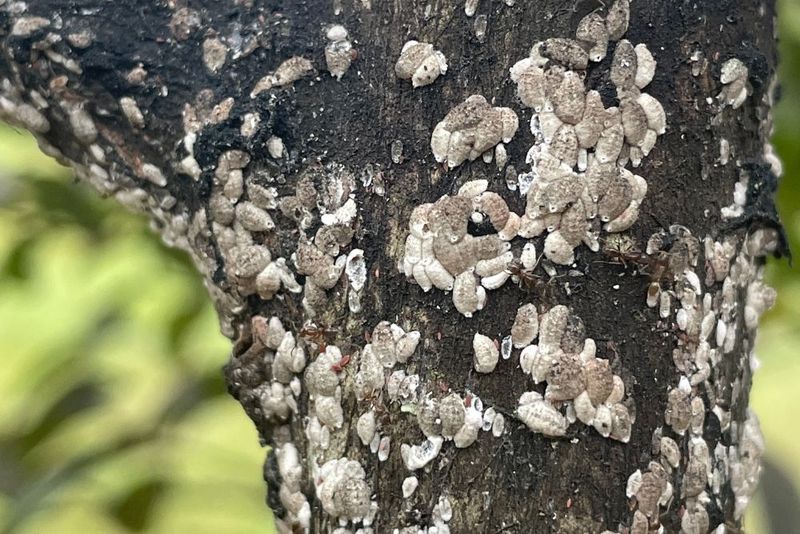
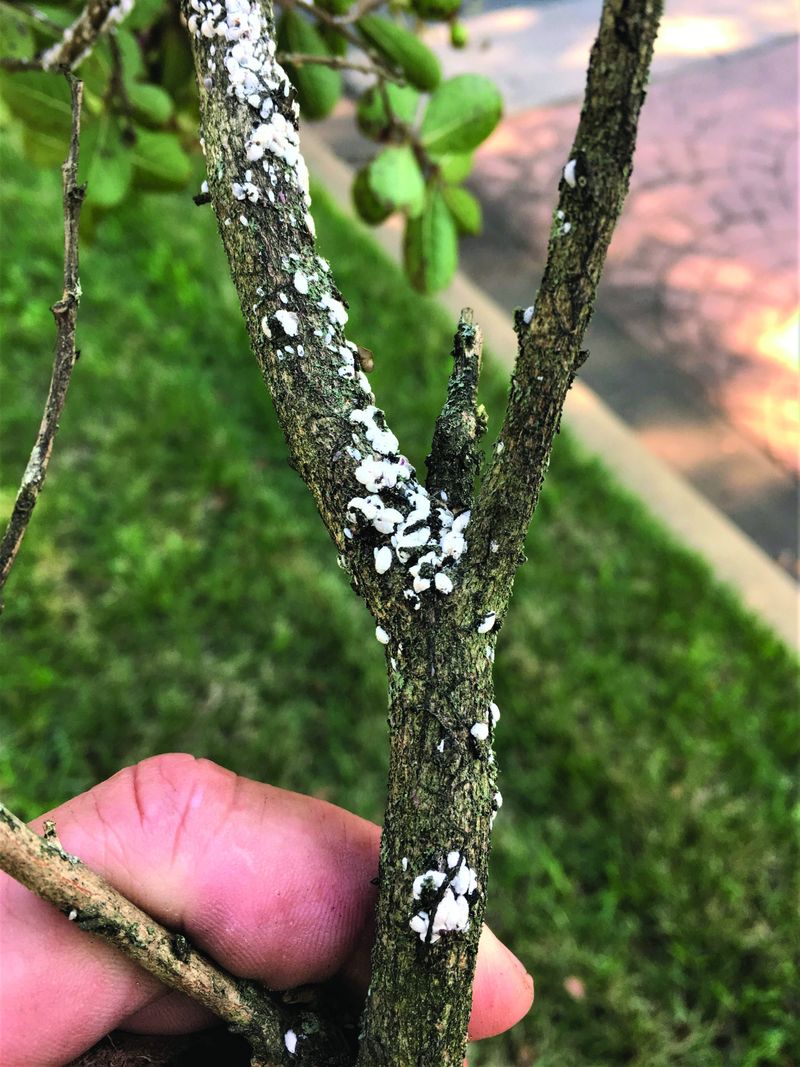
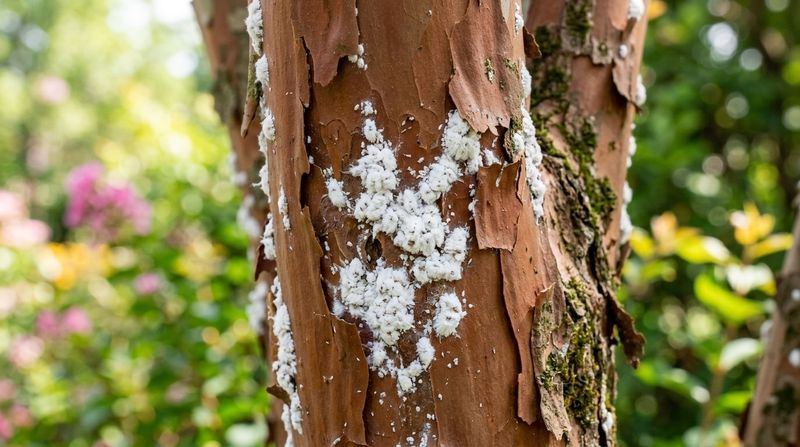
Here is the signature look: small white to gray bumps that feel like felt or old candle wax. Adult females build those crusty coverings and stay put underneath.
Where they gather matters. Branch crotches, the tight Y-shaped junctions where limbs split, collect the heaviest clusters because the spots stay shaded and sheltered.
Early on you may only find a dozen scattered specks. Left alone, those specks merge into a crusty gray band that runs along whole branches and can hide the smooth cinnamon bark Florida gardeners love.
Bring a flashlight even in daylight. Angled light makes the raised white texture pop against bark far better than a quick glance in shade.
Run your thumb across a suspicious patch. Scale coverings sit firm and slightly bumpy, unlike lichen, which looks flat, papery, and often greenish or silvery.
Lichen shows up evenly across trunks and does not come with sticky residue. Bark scale clumps in pockets and usually brings honeydew and sooty mold along for the ride.
Your Florida Garden Changes Every Week. Your Plan Should Too.
Gardening in Florida changes quickly throughout the season. Every Friday you’ll receive a simple weekly plan showing exactly what to plant, prune, fertilize, harvest, and protect so you never miss the right timing.
Check three or four crotches on each main stem rather than just one. Populations often start unevenly, so one clean junction does not mean the whole tree is clear.
Mark any patch you find with a loose ribbon so you can watch whether it expands through fall.
3. Look Under Branches For The First Signs Of Trouble
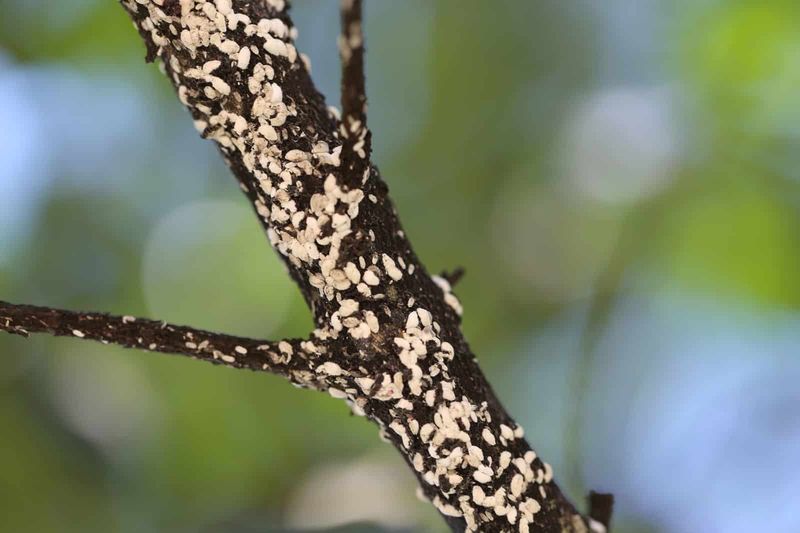
Scale insects are not fans of harsh Florida sun. Given a choice, they settle on shaded, protected surfaces where heat and rain cannot reach them easily.
That preference makes the undersides of horizontal branches prime real estate. Walking past a tree, you see the sunny top of each limb and miss the crowded side entirely.
Get low and look up. Kneeling or crouching under the canopy changes your whole view and often reveals clusters you would swear were not there a minute ago.
A small mirror helps on limbs you cannot easily duck beneath. Hold it under the branch and tilt it until the shaded surface comes into view.
Phone cameras work too. Slide the phone under a limb, snap a photo, then zoom in on the screen to study the texture up close.
Pay extra attention to limbs that lean over a driveway or lawn. Those lower, outstretched branches are worth checking closely because protected surfaces can provide favorable hiding places.
Multi-trunk crape myrtles need a stem-by-stem check, since one trunk can carry scale while a neighboring trunk still looks spotless.
Doing this walk-around once in early September and once in late September gives you a useful before-and-after picture. Small changes over two weeks are your best early warning system.
4. Watch For Pink When You Crush A Suspect Scale
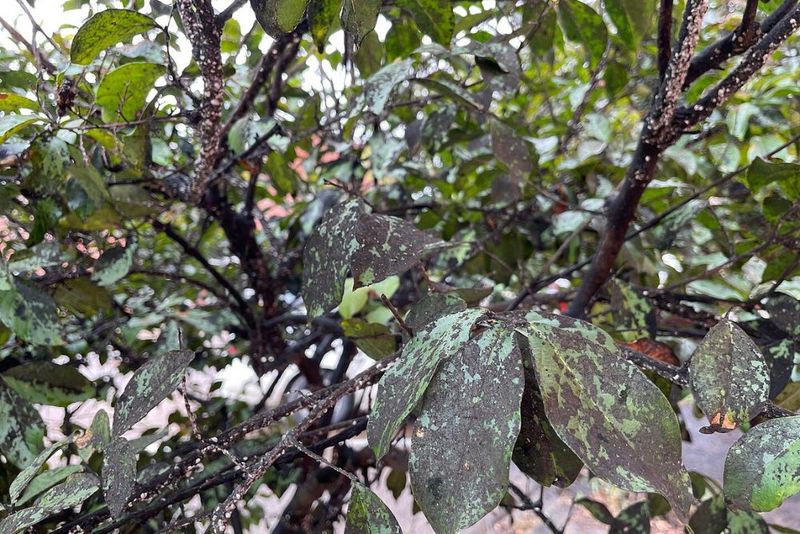
The pink test is the quickest home check there is, and it takes about five seconds. Press a white bump with a thumbnail and watch what appears.
Crape myrtle bark scale shows pink to reddish fluid when squashed. Females, their eggs, and the tiny crawlers that hatch from them all carry that rosy color.
A clear or watery smear points to something else, maybe debris, lichen, or an old covering with nothing active inside. A pink or reddish smear is a strong clue that you may be looking at crape myrtle bark scale.
Wear a thin glove or use a plastic knife if you would rather not touch the bark directly. The stain can transfer to fingers and fabric.
Test two or three bumps from different spots. One sample can mislead you, especially on a tree with mixed old and new coverings.
Snap a close photo of the pink smear while it is fresh. That single image can save time when an extension agent asks what you found.
Those tiny crawlers are the mobile stage and can be moved between plants, including by people, tools, or other contact. Catching them during September inspections explains how a single infested tree spreads down a whole street.
After testing, clean your tools before moving to another plant.
5. Follow Ant Trails Up The Trunk For Another Clue
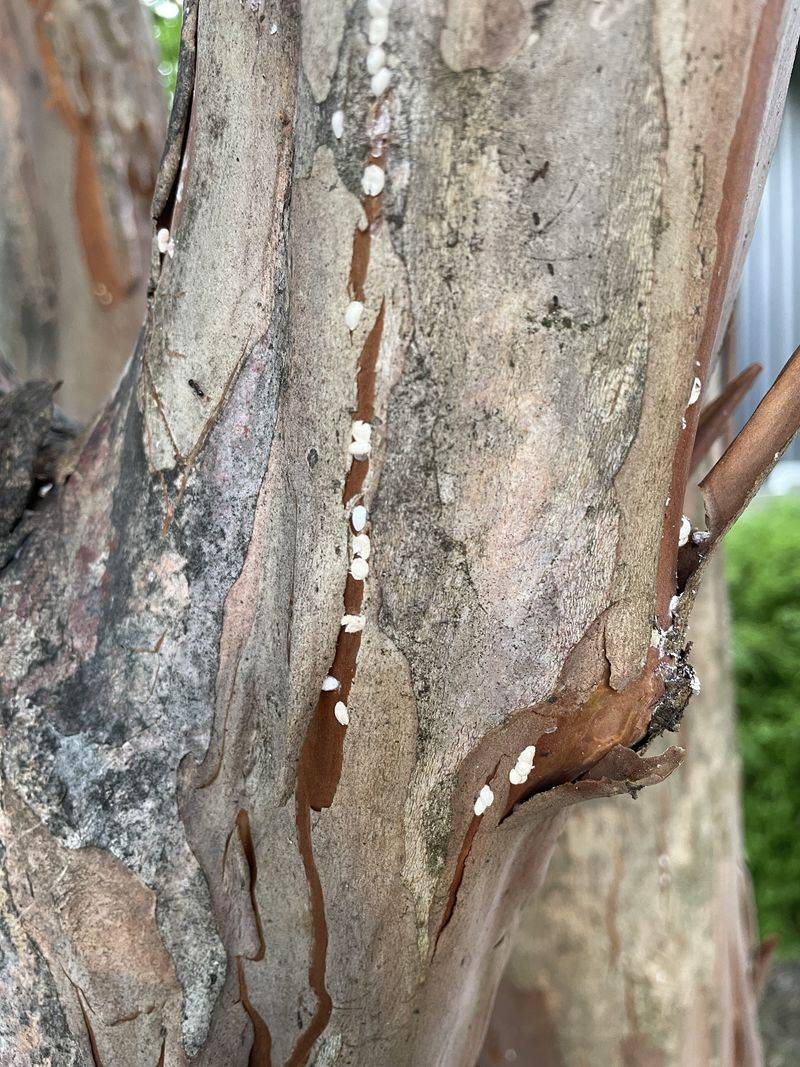
Ants are terrible at keeping secrets. A steady two-way line of them climbing a crape myrtle trunk usually means there is something sweet waiting in the canopy.
They are after honeydew, the sugary liquid sap-feeders leave behind. Free syrup on a tree is a reliable ant magnet, and the trail leads you straight to the source.
Follow the line with your eyes instead of guessing. Where the ants slow down and spread out is often exactly where scale insects are clustered.
The relationship goes further than snacking. Ants sometimes shield sap-feeders from ladybugs and other helpful predators, and they can carry young crawlers to fresh branches.
That protection can let a small population grow faster than it otherwise would. Reducing ant access is part of why some management plans include a sticky trunk band or careful bait placement.
Check the base of the trunk for ant nests in mulch or turf. A colony living right at the roots makes the highway short and busy.
Keep in mind ants also visit crape myrtles for aphid honeydew, so their presence is a clue rather than a verdict.
Use the trail as a starting point, then confirm with the white patches and pink test before deciding what you are dealing with.
6. Inspect Pruning Wounds Where Scale Can Gather
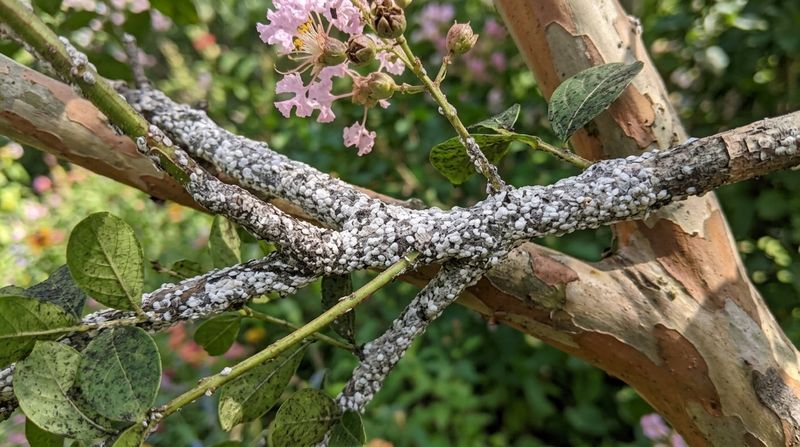
Old pruning cuts are like alleyways on a tree. Rough edges, callus ridges, and splits give small insects exactly the kind of tucked-away spot they prefer.
Trees that have been topped heavily, a habit sometimes nicknamed crape murder, end up with knuckly stubs full of crevices. Those knobs deserve a careful look every fall.
Bark fissures count too. Anywhere the smooth surface cracks or peels, scale can settle in and stay hidden from casual glances.
Bring reading glasses or use your phone zoom. The insects are roughly the size of a pinhead when they first arrive, and shadows inside a wound hide them well.
Poke gently at flaking bark with a wooden stick. Loose pieces sometimes conceal a small colony sitting right underneath.
Timing your future pruning helps. Making cuts during the dormant season and keeping them clean and appropriately sized gives the tree faster healing and fewer rough pockets.
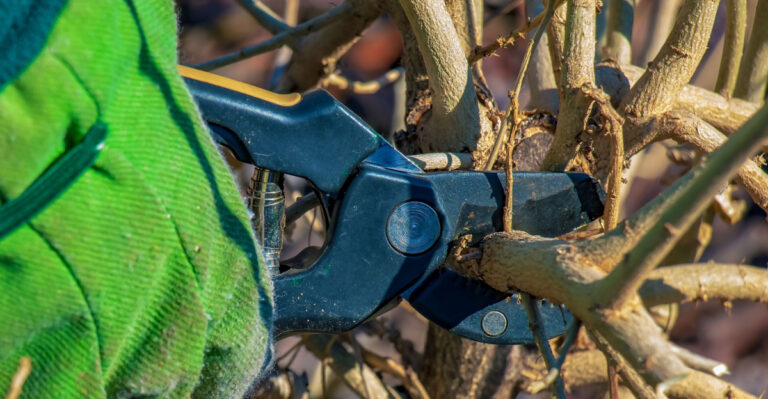
Sanitize pruners between trees with rubbing alcohol. Crawlers hitchhike on blades, gloves, and even shirt sleeves, which is one common way infestations travel between yards.
Bag and dispose of trimmings from a suspect tree rather than tossing them on a brush pile near other crape myrtles. Small habits like that slow the spread more than people expect.
7. Check Upper Branches Instead Of Only The Trunk
Plenty of folks give the trunk a glance, see clean bark, and walk away satisfied. On tall, mature crape myrtles, that check can miss the action entirely.
Newer infestations often start high, on the upper limbs and slender twigs. Crawlers arrive on wind or on birds, and they settle wherever they land first.
Binoculars turn a guess into real information. From ten feet away you can scan the top of the canopy for white speckling or dark sooty streaks.
A pole pruner lets you bring one sample twig down to eye level. Holding a piece in your hand beats squinting at the sky every time.
Look for leaves in the upper canopy that seem shinier or darker than the rest. Honeydew and mold tend to show up there first when the feeding is overhead.
Also watch for wasps, flies, and bees hovering high in the tree. Sweet honeydew draws all kinds of visitors, and their interest is a hint worth following.
Walk a full circle around the tree while looking up, since one side may be affected and another clear.
Covering trunk, mid branches, and canopy in a single September inspection takes maybe ten minutes and gives you a much more honest picture of the tree’s health.
8. Do Not Mistake Crapemyrtle Aphids For Bark Scale
Two different insects, one sticky mess. Crapemyrtle aphids also produce honeydew, so sooty mold alone does not name your culprit.
Location settles most cases. Aphids hang out on leaves and soft green shoots, while bark scale sticks to woody stems and is rarely found on foliage.
Shape helps too. Aphids look pear-shaped and pale yellow with visible legs, and bark scale reads as white to gray felted crust glued to the bark.
Flip a few leaves over before deciding. A colony of pale, soft-bodied insects on the underside points squarely at aphids.
There is one more look-alike that trips people up. Fuzzy white things crawling on the trunk are often ladybug larvae, which look a bit like tiny white alligators and happen to be scale predators.
Squashing those helpers works against you. If the white specks move on their own, leave them alone and let them work.
Getting the identification right shapes everything that follows, because treatments and timing differ between a leaf feeder and a bark dweller.
When you are unsure, collect a small twig sample in a sealed bag and photograph both the bark and the leaves. Clear pictures of each part of the plant make a specialist’s job far easier and your next step much clearer.
9. Report A Suspected Florida Find Before Moving The Plant
Florida’s first confirmed report came from Santa Rosa County in 2021, and the pest is treated as invasive here. Early reports genuinely help slow how far it travels.
Before you haul a suspect plant to a friend’s yard or a brush pile, make a call. Your county extension office can identify the insect, and the Florida Department of Agriculture and Consumer Services Division of Plant Industry handles official confirmations.
Bring good evidence. Clear photos of the white patches, a shot of the pink smear, and the location of the tree speed everything along.
Movement of infested nursery stock is a main way the scale spreads. Tiny crawlers also travel short distances on their own, on tools, and on clothing.
That makes shopping day an inspection day. Look over the trunk, branch crotches, and lower limbs of any new crape myrtle before it goes in your landscape.
If you’re concerned about a new purchase, keep it separated from established crape myrtles while you inspect it and confirm that it is healthy.
Talk to neighbors too, since crape myrtles often line whole streets in our neighborhoods. A quick heads-up helps everyone check their own trees.
Reporting early keeps management options open and protects the blooms you look forward to each summer.