Fuzzy Brown And Black Caterpillars Are Turning Up On Indiana Driveways This Month
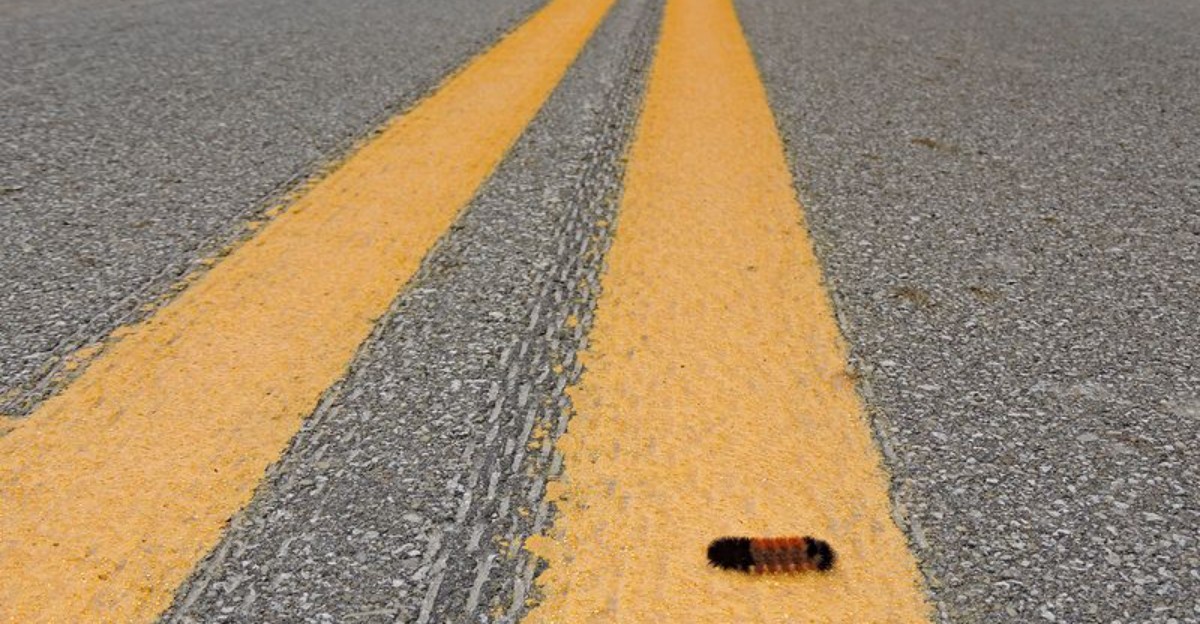
October in Indiana smells like wet leaves, cold coffee, and pavement that still holds a little afternoon warmth. Step outside for the mail and you might meet a tiny fuzzy traveler crossing your driveway.
It hustles along like a windup toy, all bristles and purpose, aiming for the far curb. Kids usually spot them first, then announce the discovery loudly enough to alarm the entire neighborhood.
Hoosier folklore insists these little wanderers can predict a brutal or merciful winter. Scientists politely shrug, yet grandparents swear by the method, and the friendly argument refuses to settle.
Your driveway has quietly turned into a rest stop along one of autumn’s busiest tiny highways. The concrete was not consulted about this arrangement, though it seems fine with the extra company.
Indiana’s Famous Banded Woolly Bear

That bristly little hiker rolling into a ball on your driveway has a proper name. Hoosiers call it the woolly bear, though scientists file it under Pyrrharctia isabella.
Its coat looks like a tiny chimney brush dipped in rust at the middle. Black bristles cover both ends, while a coppery brown band sits between them.
Those bristles are called setae, and they feel stiff rather than soft under a fingertip. They do not sting, though very sensitive skin can react with mild itching.
A full grown crawler stretches about two inches long, roughly the length of a paperclip. Thirteen body segments make up that striped little body, which is easier counted than you would think.
Look closely and you will spot stubby prolegs gripping concrete like tiny rubber suction cups. The grip helps it cross gravel, mulch, sidewalks, and the occasional flip flop.
Lookalikes wander Indiana too, including the solid black giant leopard moth caterpillar. Hickory tussock caterpillars wear white fuzz with black tufts, and those can irritate skin badly.
Woolly bears eat low plants such as dandelion, plantain, clover, grasses, and assorted weeds. Garden vegetables rarely interest them, so your kale patch is safe from serious damage.
Most Hoosiers meet one every fall without realizing they are greeting a future moth. The fuzzy phase is just the awkward teenage chapter of a much prettier story.
Northern Indiana sightings peak slightly later than southern ones, depending on frost timing. Either way, October driveways become unofficial parade routes across the entire state.
Autumn Travel Across Warm Pavement
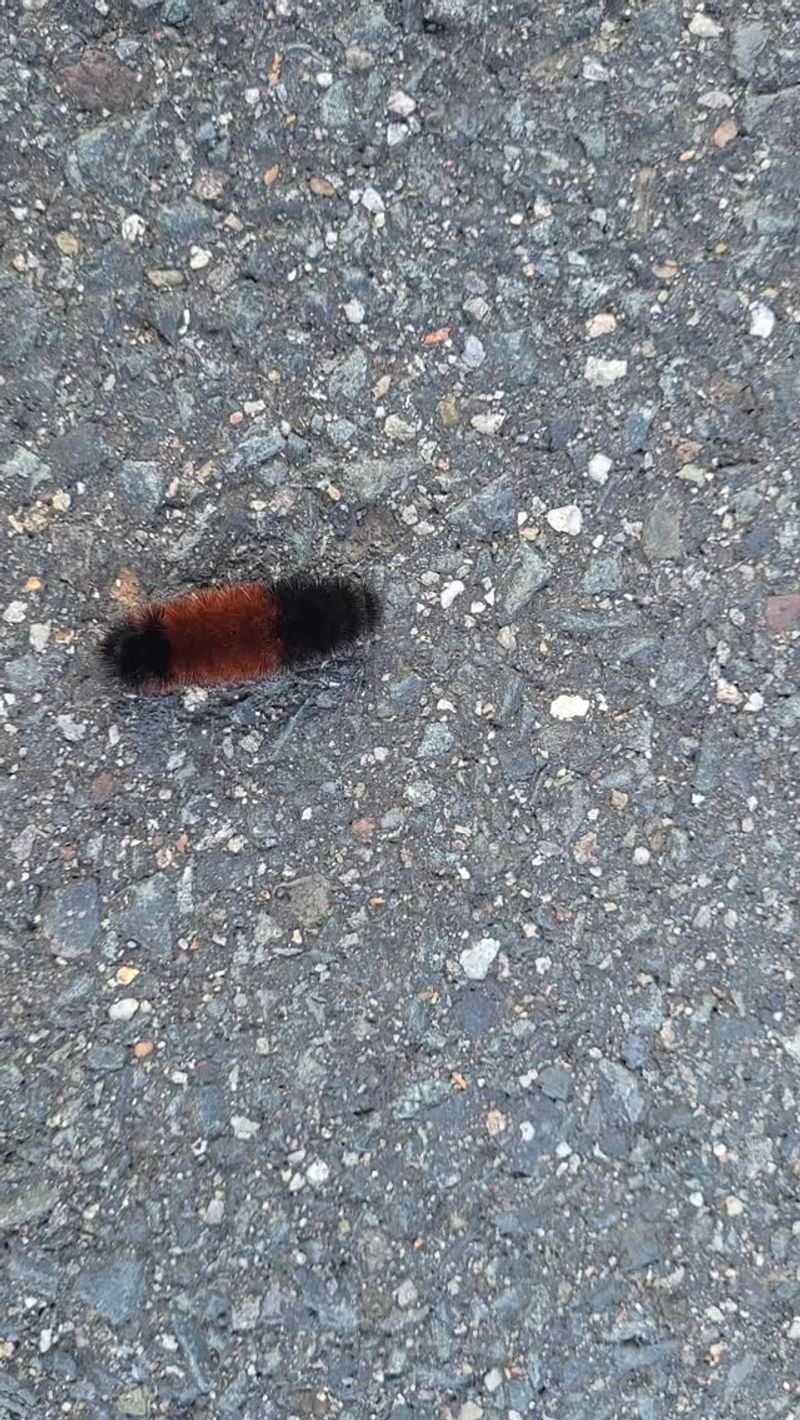
Pavement acts like a solar battery, soaking up daytime sun then releasing it slowly. Cold blooded crawlers notice that warmth immediately and treat your driveway like a heated sidewalk.
September’s first chilly nights flip a switch inside these caterpillars. Feeding slows down, wandering speeds up, and the search for winter shelter begins in earnest.
They leave weedy fields, ditches, roadsides, and lawn edges where they spent summer eating. Somewhere sheltered waits, and getting there means crossing whatever humans have paved in between.
Peak driveway traffic in Indiana usually runs from late September through early November. Warm afternoons following cool mornings produce the busiest crossings, often between noon and dusk.
Your Indiana Garden Changes Every Week. Your Plan Should Too.
Gardening in Indiana changes quickly throughout the season. Every Friday you’ll receive a simple weekly plan showing exactly what to plant, prune, fertilize, harvest, and protect so you never miss the right timing.
A single caterpillar can travel dozens of yards in one day of steady crawling. That distance sounds small until you remember it weighs less than a paperclip.
Rainy stretches push them onto hard surfaces because soaked leaf litter feels cold and heavy. Dry pavement offers traction, warmth, and a clear view of where they are headed.
Sadly, driveways and roads also expose them to tires, boots, birds, and curious dogs. Slowing down in your own driveway costs nothing and spares plenty of small travelers.
If one is crossing, nudge it toward leaf litter, brush piles, or an unmowed border. Moving it a few feet beats moving it a few blocks from familiar ground.
Neighbors often report the same week of heavy sightings across several counties at once. Weather, not coincidence, is quietly coordinating the whole fuzzy commute.
Winter Forecasts Hidden In Brown Bands
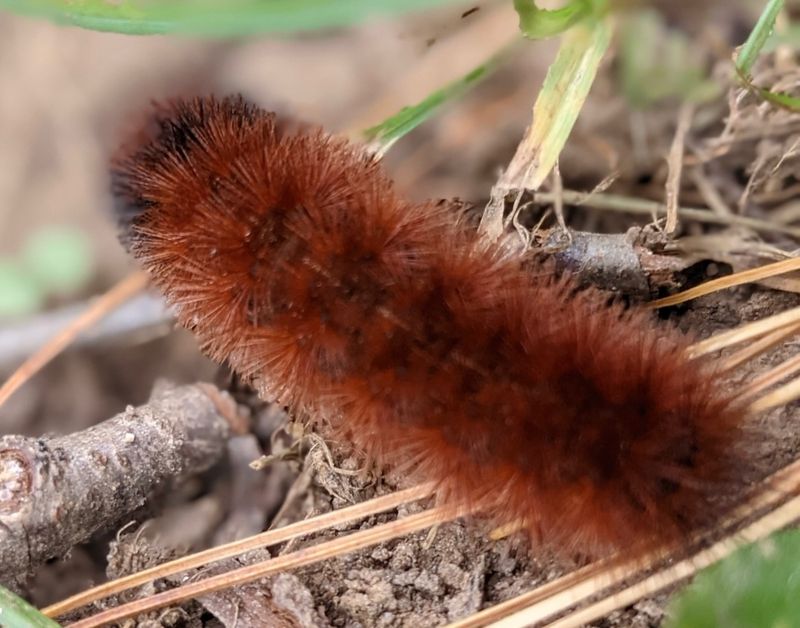
Folk wisdom says a wide rusty band means a mild winter ahead. A narrow band supposedly warns of blizzards, ice storms, and heating bills that hurt.
The legend got serious attention in 1948 thanks to Dr. C. H. Curran. He was an entomologist at the American Museum of Natural History in New York.
Curran collected caterpillars near Bear Mountain each autumn, measured their bands, then compared winters. Newspapers loved the story, and the folklore spread faster than his small sample deserved.
Modern researchers found the band width tells you about the past, not the future. It reflects how long the caterpillar has been growing before cold weather arrived.
Older larvae molt more times, and each molt adds brown segments to the middle. So a wide band often just means an early hatch or a long warm autumn.
Moisture matters too, since damp growing seasons tend to produce narrower rusty sections. Food quality and individual genetics nudge the coloring around as well.
Accuracy studies put the forecast near a coin flip, which is charmingly unimpressive. Still, Hoosier families keep checking bands every October because tradition beats meteorology for fun.
Treat the stripes as a conversation starter rather than a reason to buy snow tires. The National Weather Service has better data, though considerably less personality.
Try measuring a few this fall with your kids, then record the results somewhere. Next spring you can settle the argument with actual numbers, which rarely happens in folklore.
Safe Handling Of Bristly Backyard Visitors
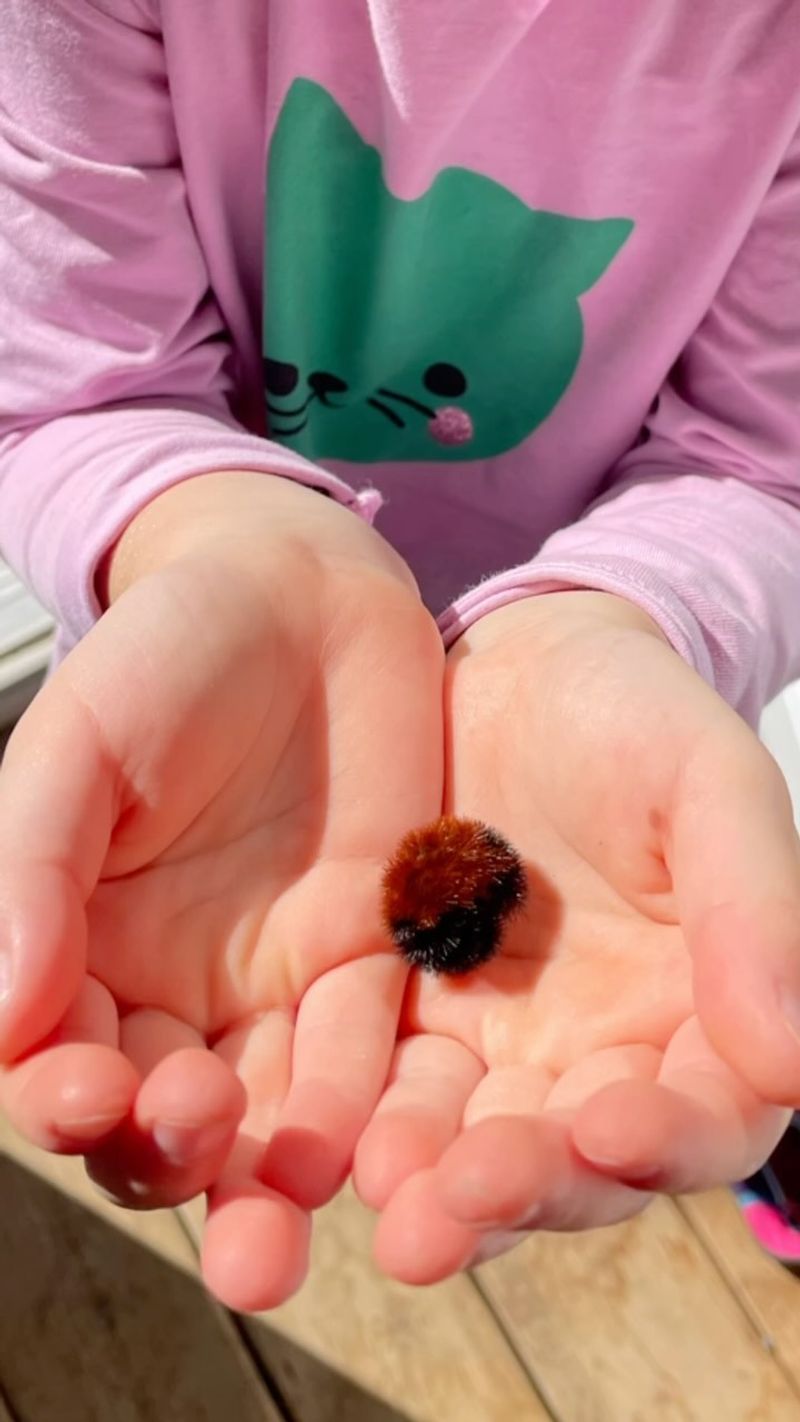
Curiosity usually wins, and somebody in the family will want to hold one. The banded woolly bear ranks among Indiana’s most handleable caterpillars.
Scoop it onto a leaf or a flat palm instead of pinching the body. Those segments are soft inside, and squeezing causes injury you cannot undo.
When startled, it curls into a tight bristly ball and plays possum for a while. Give it a minute of stillness and it will unroll and start marching again.
The setae are not venomous, but they can prickle sensitive skin like fiberglass fibers. Wash hands afterward, especially before rubbing eyes or grabbing an after school snack.
Some Indiana caterpillars deserve a strict hands off rule, including saddleback and io moth larvae. Spiny green bodies with bright markings usually signal stinging hairs worth respecting.
Hickory tussock caterpillars look tempting in white fuzz yet cause rashes on many kids. Teach the difference early, since a rust colored band is easy for children to memorize.
Dogs sometimes mouth caterpillars, which leads to drooling, pawing, and one confused pet. Rinse the mouth with water, then call your veterinarian if irritation continues.
Keeping one in a jar for a day is fine with air holes, leaves, and moisture. Release it in the same yard afterward, because relocation across town helps nobody.
Photos beat collections anyway, and your phone will not need feeding by Thursday. Snap the picture, set the crawler down, then let autumn handle the rest.
Frozen Survival Beneath Indiana Leaf Litter
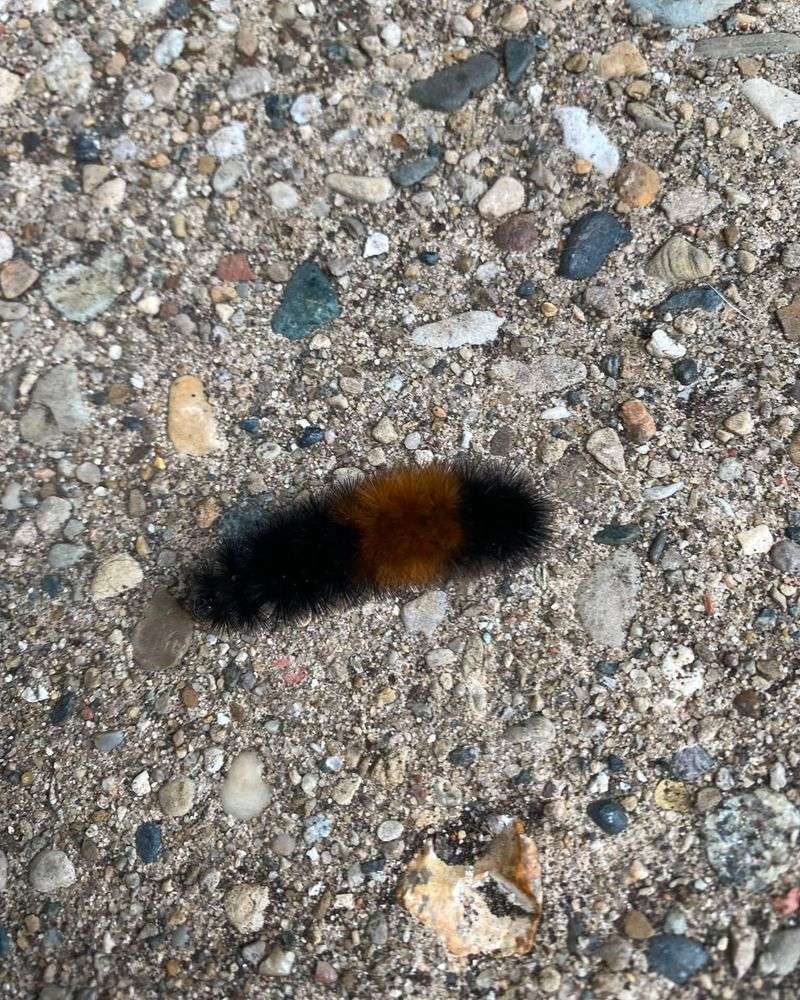
Under a pile of damp leaves, something remarkable happens every Indiana winter. The caterpillar freezes almost solid, then wakes up in spring like nothing happened.
Its body produces glycerol, a natural antifreeze that protects cells from ice damage. Water outside the cells can freeze while the important machinery inside stays intact.
Shelter matters more than temperature, so log piles, leaf litter, and wood stacks get chosen. Bare mulch beds and sealed garages offer far less protection from wind.
Arctic relatives of this group survive years of freezing before finally maturing. Indiana winters feel gentle by comparison, though February still tests the strategy.
Spring thaw brings a short feeding period on fresh dandelion greens and young weeds. After that snack, the caterpillar spins a cocoon using silk mixed with its own bristles.
Roughly two weeks later, an Isabella tiger moth crawls out with pale yellow wings. Small black dots speckle those wings, with a soft orange blush near the body.
The adult moth lives about two weeks, with finding a mate as its whole job. It does not feed, which explains the rush during warm June nights.
Eggs hatch into a summer generation that matures quickly before autumn arrives again. That second batch becomes the fuzzy wanderers crossing your driveway this month.
Knowing the full cycle changes how a leaf pile looks in November. What resembles yard mess is actually a fully booked winter hotel.
Raking everything to the curb evicts guests you did not know you had. A single unraked corner keeps the whole story running through spring.
Yard Habits That Welcome Isabella Tiger Moths
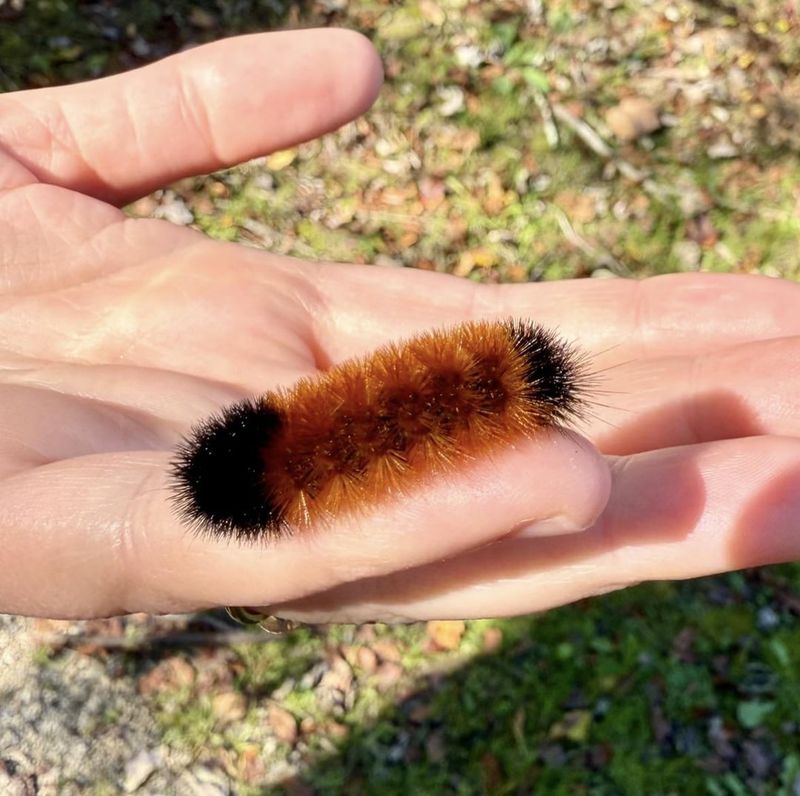
Helping these crawlers costs less effort than the average Saturday yard chore. Mostly it involves doing slightly less work, which is a rare kind of advice.
Leave a corner of leaves under shrubs rather than bagging every last one. Six inches of loose litter shelters caterpillars, fireflies, and native bees through winter.
Hold off on heavy spring cleanup until daytime temperatures stay near fifty degrees. Early raking pulls sleeping insects out before they are ready to move.
Broad spectrum insecticides and yard fogging treatments hit caterpillars alongside the intended targets. Spot treating problem areas protects the harmless wanderers using your lawn edges.
Mowing at three inches or higher leaves dandelions, clover, and plantain available as food. Those so called weeds feed more wildlife than most ornamental plantings ever will.
A brush pile tucked behind the garage becomes prime winter real estate. Stack a few branches, forget about them, then enjoy the moths next June.
Outdoor lights pull adult moths away from mating and toward exhausting circles. Warm bulbs on motion sensors reduce that pull without leaving your porch dark.
Native plants like asters, goldenrod, and violets support the whole neighborhood food web. Birds raising chicks in your maple depend on caterpillars far more than seed feeders.
Small choices stack up across a street of ordinary Hoosier yards. Enough unraked corners, and October driveways stay busy for generations of curious kids.
None of this requires a certificate, a budget, or a weekend of labor. It mainly requires permission to be slightly lazy, which most of us can manage.