Why Frogfruit Is Showing Up In More Florida Lawns And Pollinator Gardens
A low, spreading plant is quietly taking over spots in Florida yards where grass keeps giving up, and it’s not by accident.
Homeowners tired of babying picky turf keep landing on this one, and pollinators noticed long before people did. Bees and butterflies flock to it in numbers regular grass never pulls in.
It shrugs off foot traffic, coasts through drought stretches, and fills bare patches without asking for constant attention.
Even landscapers have caught on, swapping it into spots where traditional grass keeps failing no matter what gets thrown at it.
Look twice at those low, flowering patches popping up in more yards this year. What used to pass as a weed might be exactly what your lawn’s been missing.
1. Meet Frogfruit, The Tiny Native Taking Over Bare Lawn Spots
Ask a Florida gardener what filled in that stubborn bald patch by the driveway, and there is a good chance the answer is frogfruit. Botanists call it Phyla nodiflora, but you may also hear turkey tangle fogfruit, matchweed, or capeweed tossed around at plant sales.
Height is where it surprises people. The leafy mat usually sits around 2 to 3 inches tall, with slim flower stalks poking up to roughly 6 inches when it is blooming happily.
Spreading happens through stolons, which are long stems that run sideways and put down roots at each node. That habit lets one modest plant knit itself into a thick green carpet rather than a clump.
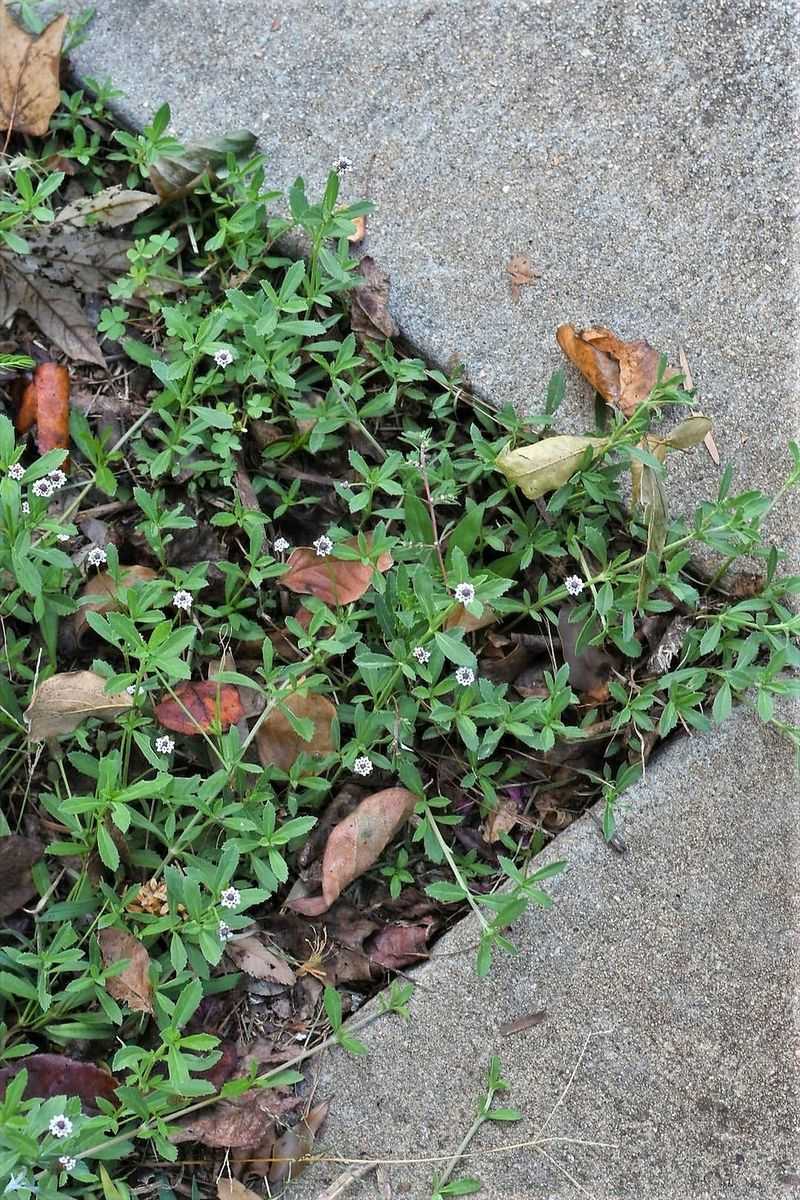
Because the mat hugs the ground, it slides into spots where turfgrass gave up: along sidewalk edges, under a thinning oak, or in that low corner where the hose always drips.
Leaves are small, slightly toothed, and a soft gray-green that looks pleasant even between bloom cycles. Up close, the flowers resemble miniature lantanas, which makes sense since they belong to the same plant family.
Here is a fun bit of trivia: the odd name likely comes from its love of damp, froggy ground near ponds and ditches. Once you spot it, you start noticing it everywhere across the state.
2. Let Summer Rain Wake Up This Fast-Spreading Groundcover
June arrives, the afternoon storms roll in on schedule, and suddenly that quiet little mat doubles in size. Frogfruit is a warm-season grower, and steady rain plus heat is exactly the combination it waits for.
Across USDA zones 8a through 11, which covers pretty much the whole state, it settles in without fuss. Moist ground is its favorite, though established plants shrug off dry stretches better than most people expect.
Soil snobbery is not part of its personality. Sandy, poor, compacted, acidic, alkaline, even somewhat salty ground near the coast all work fine.
Light needs are flexible too. Full sun produces the thickest mats and heaviest bloom, while partial shade still supports decent coverage with a slightly looser look.
During a cool winter or a long drought, the patch may thin out and go quiet. Warmth and moisture usually bring it right back, greener than before, without any replanting on your part.
Your Florida Garden Changes Every Week. Your Plan Should Too.
Gardening in Florida changes quickly throughout the season. Every Friday you’ll receive a simple weekly plan showing exactly what to plant, prune, fertilize, harvest, and protect so you never miss the right timing.
Speed is the headline feature. Once established, frogfruit can spread quickly during warm, rainy weather, gradually filling open ground.
If you are starting from plugs, space them about a foot apart in spring and water them through the first few weeks. After that, the weather does most of the work while you watch it stitch itself together.
3. Those Tiny Flowers Are Feeding Florida Pollinators
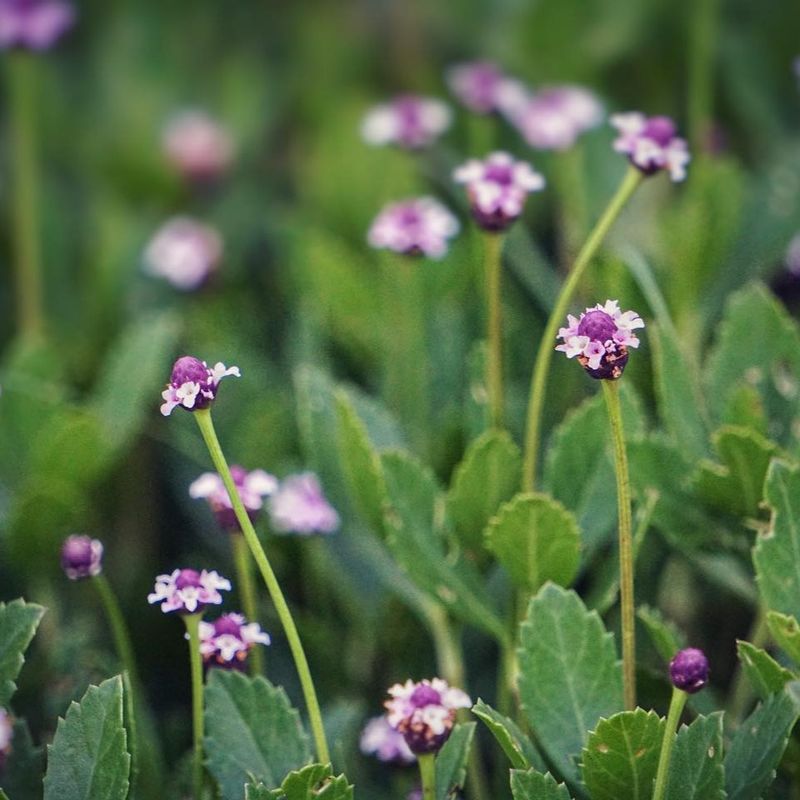
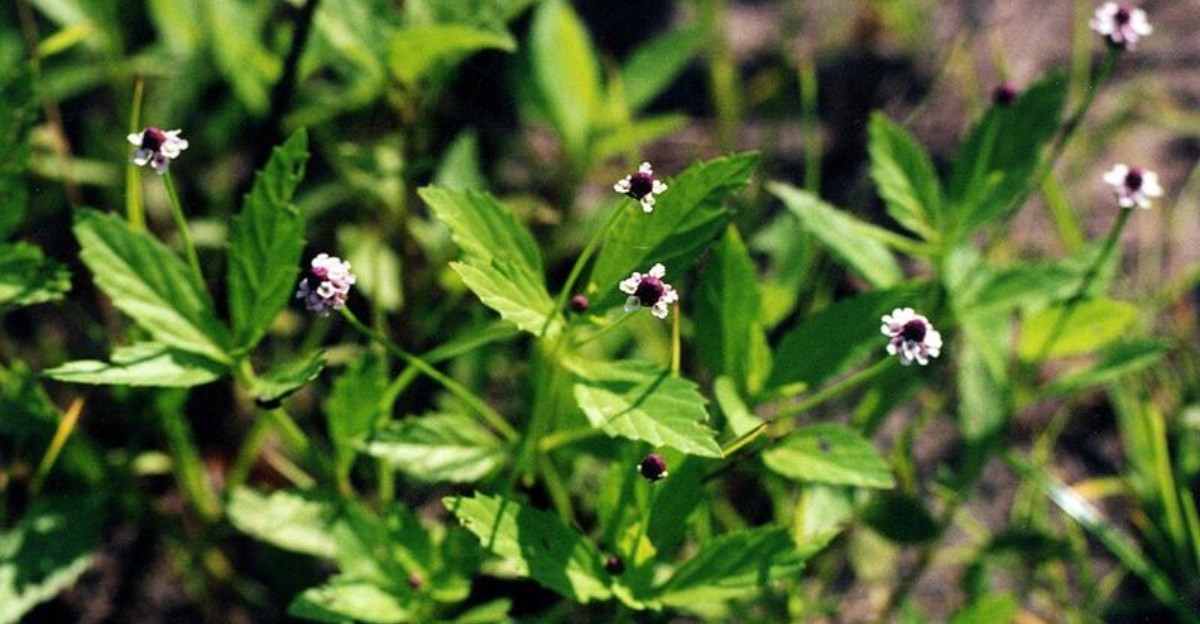
Sit beside a blooming patch for five minutes and you will lose count of the visitors. The flowers look like little matchsticks topped with a ring of white petals and a purple center, and they provide an accessible source of nectar for a wide range of insects.
Bloom season typically runs May through October. In warmer parts of the state, frogfruit keeps flowering nearly year-round, which gives insects a steady snack bar when other plants have finished.
Guest list is impressively long. Native bees, honeybees, skippers, hairstreaks, moths, tiny wasps, and even hummingbirds stop by for a drink.
Size is part of the appeal for smaller insects. Many petite native bees cannot reach into big showy blossoms, so a shallow, easy-access bloom like this one suits them perfectly.
Gardeners notice the difference fast. A lawn corner that used to sit silent starts buzzing softly on warm mornings, and kids love crouching down to watch the traffic.
Want more flowers? Stretch the time between mowings and let the stalks rise, since each cut removes a round of blooms.
Pairing it with taller nectar plants such as blanketflower or salvia builds layers of food at different heights. The ground level belongs to frogfruit, and the pollinators clearly appreciate having a basement floor stocked with refreshments.
4. Frogfruit Spreads Where Stressed Turf Leaves Room
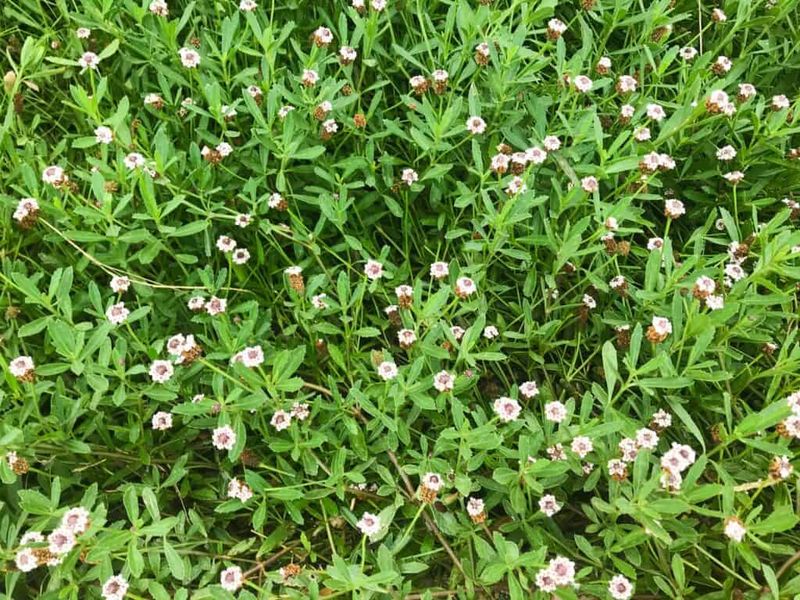
Nature has a habit of filling empty space, and a struggling lawn offers plenty of it. Where grass thins from shade, foot traffic, compaction, soggy soil, or nematode pressure, frogfruit quietly moves in and claims the opening.
Those rooting stolons give it an advantage. Each node that touches soil anchors down, so the plant advances steadily instead of depending on seed alone.
Dense mats are the result, and that density does something useful. Once established, the carpet shades the ground and helps hold back many common weeds that would otherwise colonize the same bare dirt.
You will often find it growing shoulder to shoulder with grasses in disturbed sites, roadside edges, pasture margins, and natural areas. It does not demand a blank slate to succeed.
Homeowners sometimes read its arrival as a problem. A more useful reading treats it as a report card on the lawn itself.
Persistent thin spots usually point to a mismatch between the grass and the conditions. Too much shade, too little drainage, or heavy traffic will keep causing trouble no matter how much fertilizer you spread.
Letting a tough native handle those rough zones saves money and weekends. The turf keeps the areas it likes, and frogfruit covers the rest with green instead of bare sand.
5. Look For Butterflies Using Frogfruit As A Nursery
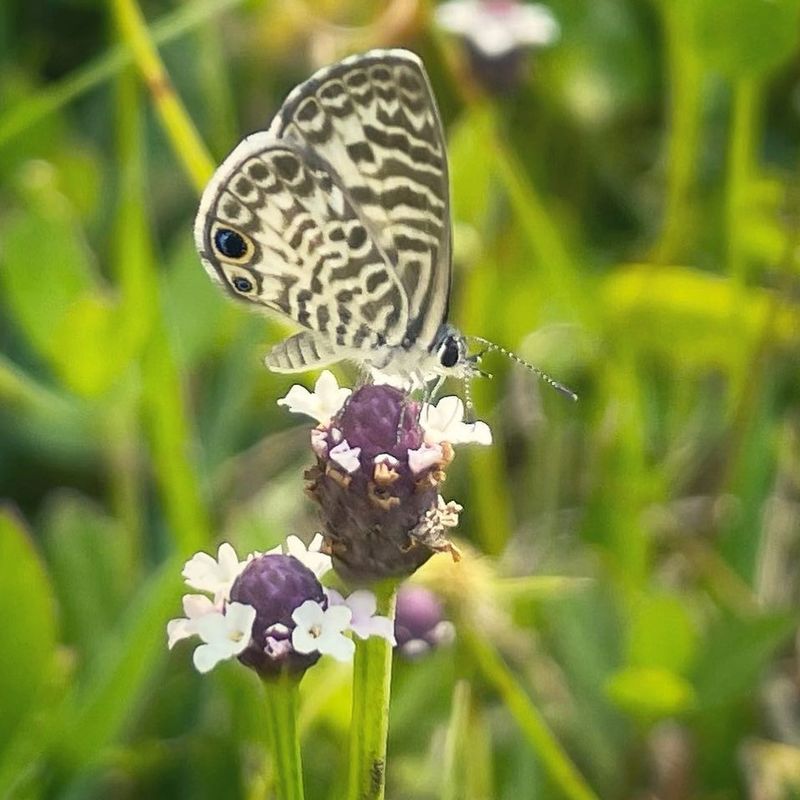
Nectar is only half the story. Frogfruit also works as a larval host plant, meaning certain butterflies lay eggs on it and their caterpillars eat the leaves.
Several butterfly species use frogfruit as a larval host plant in Florida, including the White Peacock, Common Buckeye, and Phaon Crescent.
Watch a patch in late summer and you may spot a female fluttering low, touching down briefly again and again. She is testing leaves and depositing eggs, one careful stop at a time.
Chewed leaves are a sign of success rather than trouble. A few nibbled spots mean caterpillars are growing, and the mat regrows quickly enough that you rarely notice damage from a distance.
Host plants matter more than most gardeners realize. Butterflies can visit any flowery yard for a drink, but they can only multiply where their specific host plants grow.
The White Peacock is especially fun to watch, with pale wings edged in orange that flash as it patrols damp ground.
If you want the full show, leave at least one section of the patch unmowed through late summer and fall. Tall, untouched growth gives caterpillars the cover and food they need to reach the winged stage.
6. Keep It Mowed Without Sending It Out Of Control
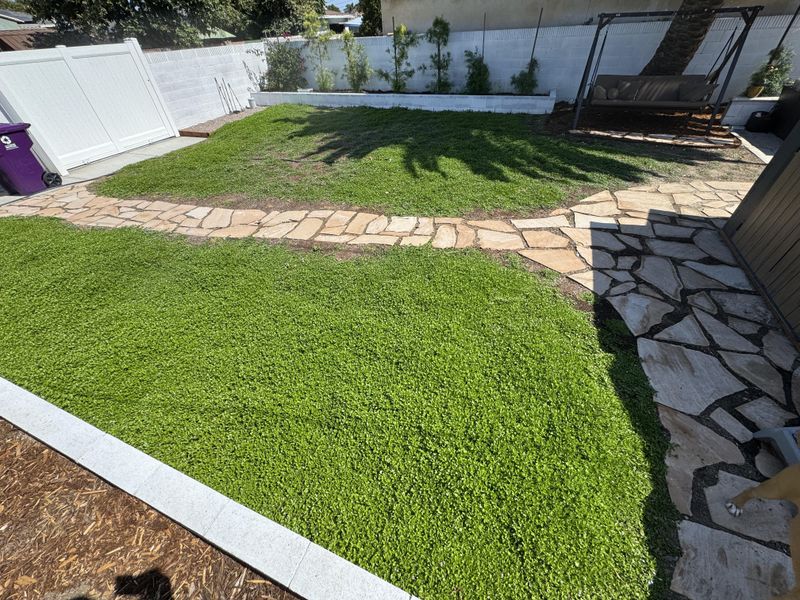
Worried that a spreading plant means surrendering your mower? Good news: frogfruit handles cutting well and actually responds to it by growing denser.
Height is the main lever you control. Mowing at 4 inches or higher keeps things tidy while leaving enough leaf surface for the plant to stay vigorous.
University of Florida Extension notes that frogfruit lawns can be mowed at heights similar to regular turfgrass. That means you rarely need special equipment or a different routine.
Frequency changes the look entirely. Mow often and you get a neat, flat green carpet; mow less and the flower stalks rise, turning the same patch into a pollinator buffet.
Many people split the difference by keeping the front yard trimmed and letting a back corner bloom freely. Neighbors stay happy, insects stay fed.
Occasional cutting has a practical side too. Trimming opens up the mat so the lower stems dry out between rains, which supports healthier growth in humid weather.
Light foot traffic is fine, so pathways and play areas usually hold up. Heavy daily wear is better handled by a tougher turf.
Edging along beds and walkways keeps the stolons from wandering where you would rather they did not. A quick pass with a string trimmer every few weeks does the job.
7. Give Frogfruit A Chance In Thin St. Augustine
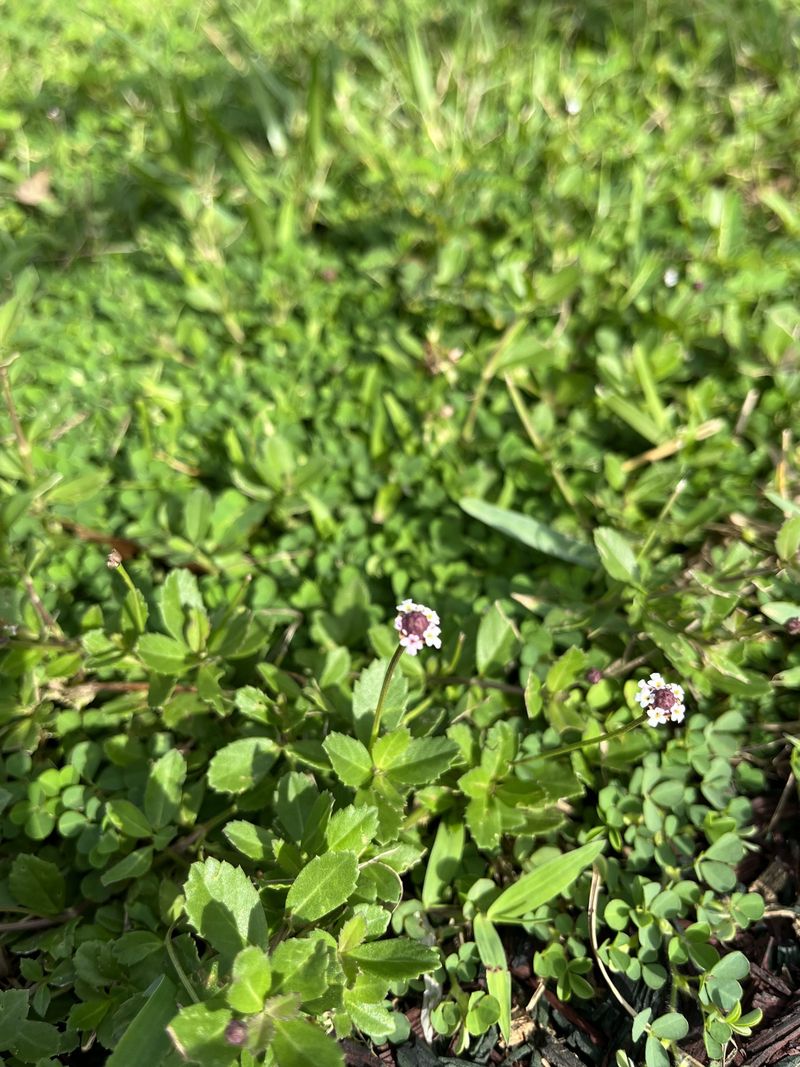
St. Augustine grass rules Florida yards, and it has real weaknesses. Shade, nematodes, chinch bugs, and soggy low spots all leave it patchy, and patchy turf is an open invitation.
Frogfruit often shows up in those lawns on its own, no planting required. Homeowners notice it creeping between runners and assume something went wrong.
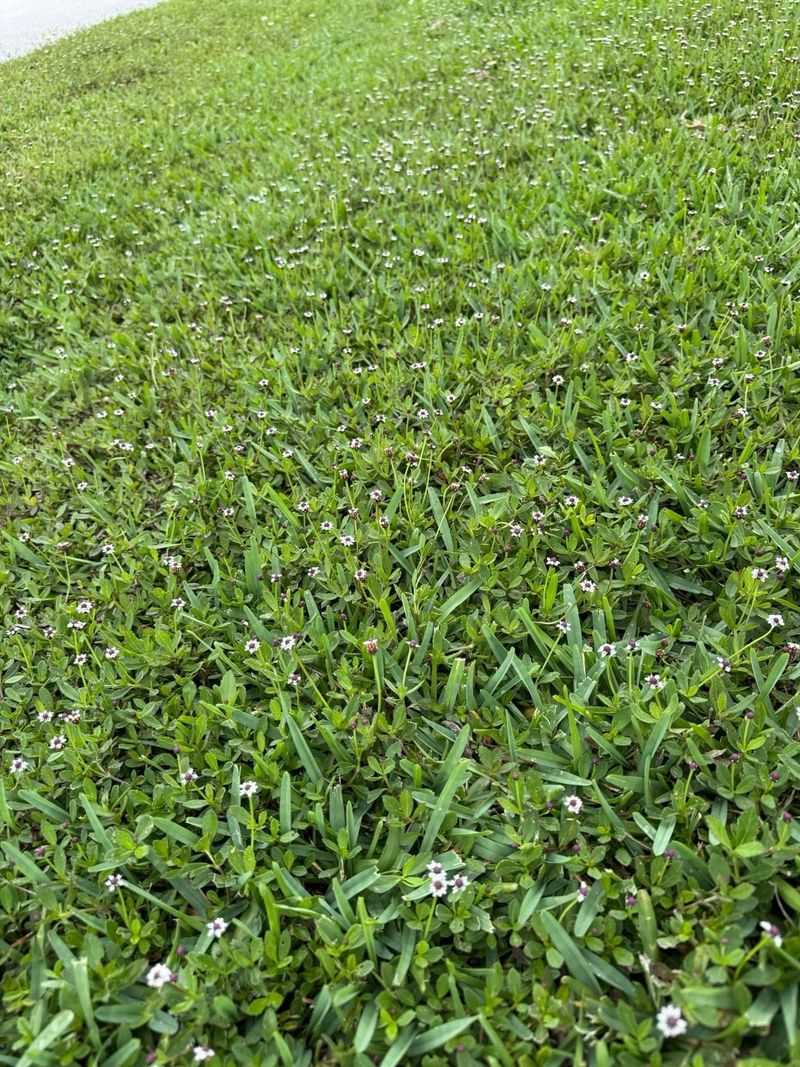
Blended lawns are the practical middle ground. Grass and frogfruit can share the same yard, and from a few steps back the mix simply reads as green.
For a deliberate transition, plug frogfruit into the thin zones during the warm season. Space the plugs about a foot apart, water regularly for a few weeks, and keep mowing as usual.
Over a season or two, the native gradually expands while the struggling grass fades back. The switch happens slowly enough that the yard looks intentional the whole time.
Self-sufficiency is the payoff. Frogfruit needs far less fertilizer and irrigation than St. Augustine expects, especially in poor sandy soil.
Pay attention to texture differences if you want a uniform look. Frogfruit mats feel finer underfoot, so grouping it in defined areas often looks better than scattering it randomly.
Shady side yards and damp back corners make excellent starting points. Those are the spots where grass rarely wins anyway.
8. Skip The Weed Destroyer If Pollinators Are The Goal
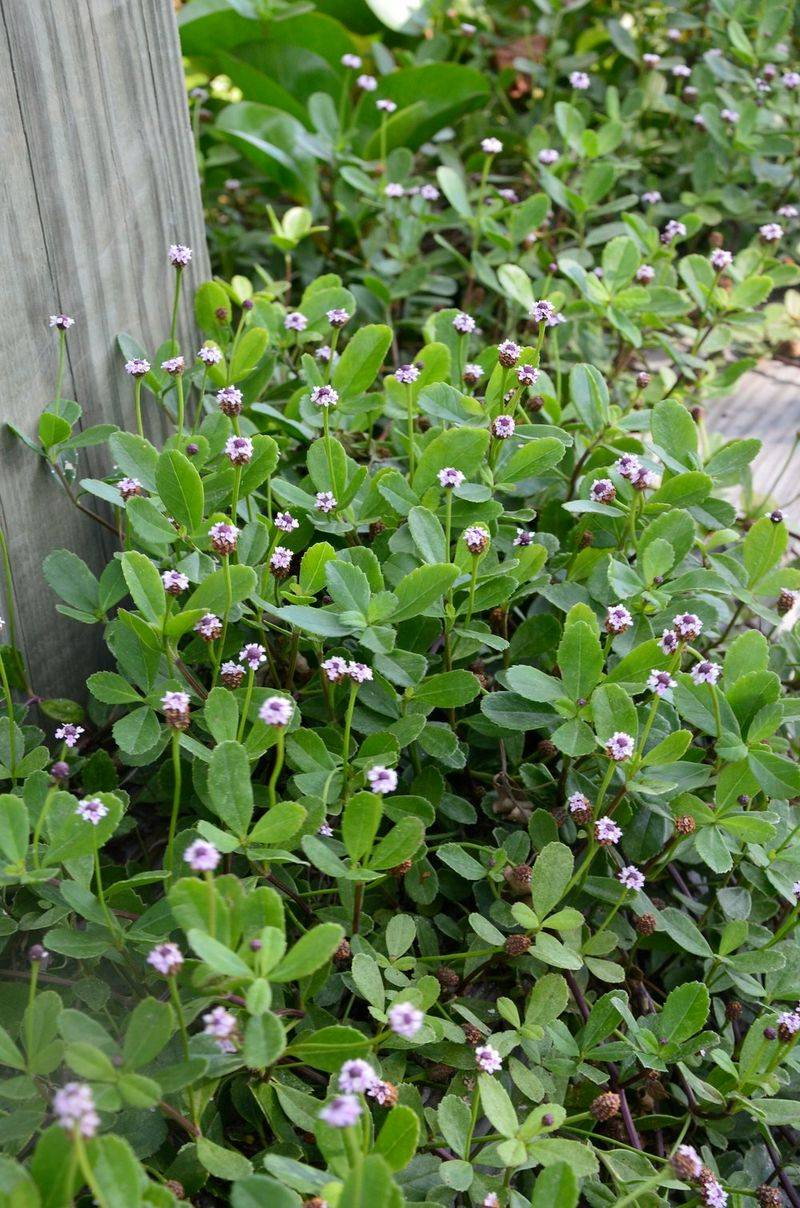
Reaching for the sprayer is the reflex, and it is worth pausing first. Broad-spectrum products like glyphosate take out frogfruit right along with whatever you were targeting.
There is a wider ripple effect too. Tree frogs and other amphibians are remarkably sensitive to herbicides and pesticides, and they share the same damp, low habitat this plant favors.
Pollinators face similar risks. A yard sprayed for broadleaf weeds loses its nectar sources and its caterpillars in one pass.
Researchers at the University of Florida and members of the Native Plant Society have tested grass-specific options for cleaning unwanted grasses out of frogfruit plantings.
In the trials discussed here, sethoxydim and fluazifop showed potential for controlling certain grasses while causing less injury to frogfruit than some alternatives.
Topramezone did not fare as well in those trials. It noticeably reduced frogfruit growth and caused visible bleaching of the foliage.
Always read and follow the label before using any product, since rates and timing matter enormously.
For small areas, honestly, your hands work fine. Pulling grass clumps while the soil is damp after rain takes minutes and costs nothing.
Shifting your mindset helps most of all. Once you see the patch as habitat rather than a blemish, the sprayer stays on the shelf.
9. Turn A Lawn Weed Into A Florida-Friendly Groundcover
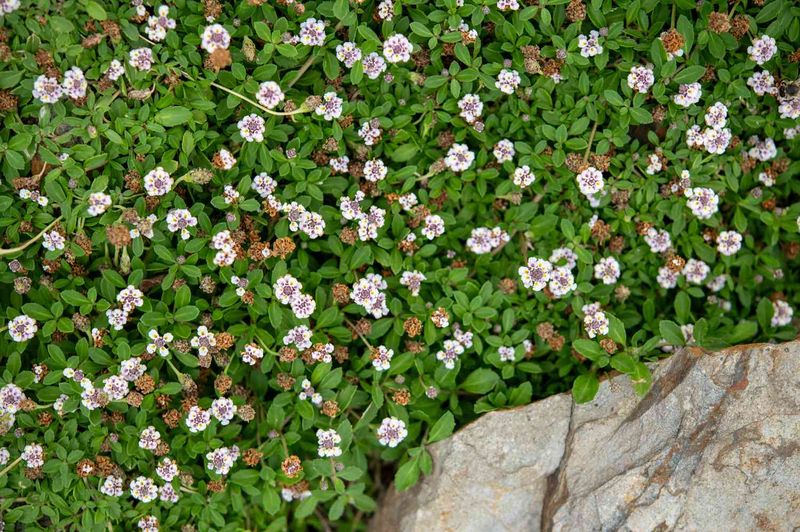
Labels are funny things. The exact same plant can be a weed in one yard and a centerpiece in the next, depending entirely on how the owner sees it.
Frogfruit checks nearly every box on the Florida-Friendly Landscaping list. Less mowing, less irrigation, and far fewer inputs than a high-maintenance turf lawn.
Water savings alone can change a summer utility bill. Once roots are established, this native gets by on rainfall through most of the year.
Erosion control is another quiet benefit. Those interlocking stolons grip sandy slopes, swale edges, and pond banks where loose soil tends to wash away.
Weed suppression comes free with the dense mat. Fewer gaps mean fewer opportunities for unwanted seedlings to take hold.
Wildlife value is the part that surprises people most. One low groundcover feeds bees, hosts three butterfly species, and shelters small beneficial insects all season.
Salt tolerance opens up coastal properties too, where many ornamentals struggle within sight of the water.
Start small if you are unsure. Try it in a side yard, along a walkway, or in that soggy strip near the downspout, then expand once you see how it performs.
Give it a summer, and that so-called weed may become the easiest, liveliest part of your whole landscape.