The California Groundcover That Roots Wherever A Stem Touches Soil
Something quietly took over a bare strip beside a Half Moon Bay driveway last summer, and the gardener barely lifted a finger.
She tucked in six small plants back in spring, then mostly forgot about that patch entirely. By late summer, it had tripled in size, with fresh little rosettes anchored everywhere a runner had reached out and touched down.
No replanting. No dividing. No weekend spent hauling more nursery flats home.
Here’s the part that makes this plant genuinely different from anything else on a garden center shelf. It roots itself, wherever a stem happens to land.
One native groundcover explains this entire trick, and it’s been quietly running the California coastline for longer than any of us have been gardening.
Six things explain exactly how it spreads, what it actually needs, and why the tiny fruit it produces isn’t the point at all. Curious how a single plant becomes a whole colony without any help from you? It starts with a stem you’d almost overlook.
Meet Beach Strawberry, The Self-Rooting Native
Along the fog-washed edges of the Pacific, from the Northern California coast down through parts of Central California, a tough little strawberry relative hugs the sand and bluff soil. Botanists call it Fragaria chiloensis. Most gardeners simply call it beach strawberry.
What sets it apart from an ordinary lawn substitute is how it actually gets around. Instead of relying only on seeds, it pushes out long horizontal stems that settle onto the ground and grow roots of their own.
One plant becomes a colony without any help from you at all.
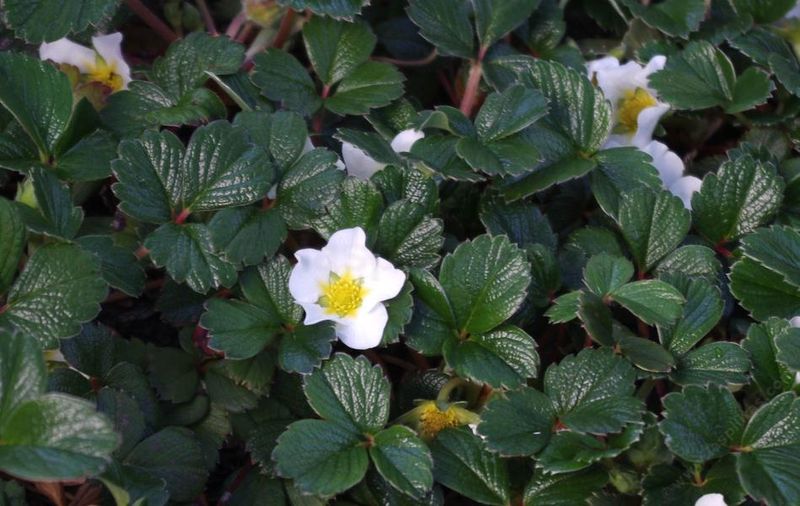
The foliage is worth noticing on its own merits. Leaves come in sets of three leaflets, thick and leathery with a waxy shine that reflects light, and the undersides often look silvery or pale.
That sturdy texture is a coastal adaptation, built to shrug off salty wind and bright sun without complaint.
Height stays modest, usually somewhere around four to eight inches, so it reads as a carpet rather than a shrub. In mild coastal areas, the leaves stay green through winter, though plants inland or in colder spots may look tired until spring returns.
Here’s a fun bit of history worth knowing. This species is one of the two parents behind the garden strawberry grown worldwide today. Plants collected in South America were crossed with an eastern North American species in eighteenth century Europe.
The berries you buy at the store carry beach strawberry genes in every single bite.
Runners Send Down Roots At Every Node
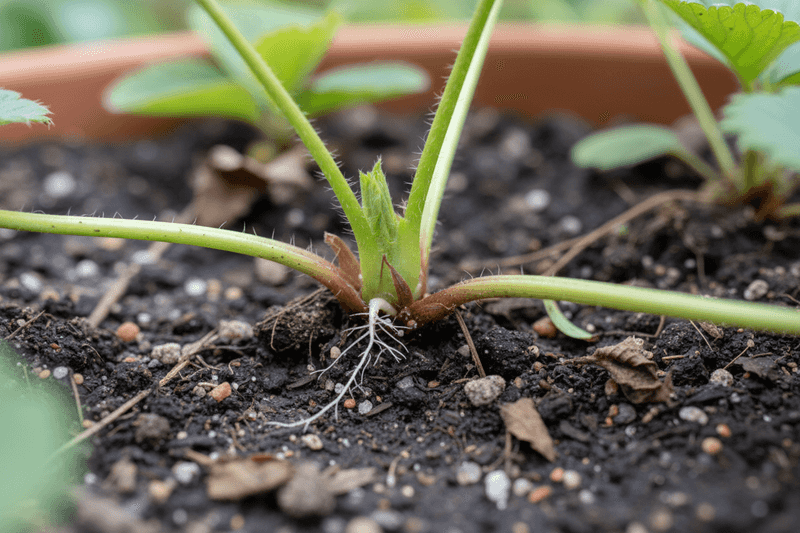
Watch a healthy patch for a few weeks in late spring, and you’ll spot thin reddish stems shooting out sideways from the center of each plant. Those are stolons, better known as runners, and they’re the whole secret behind this plant’s trick.
Each runner carries small bumps along its length called nodes. When a node rests against bare soil and gets a little moisture, it pushes roots downward and a tiny leafy rosette upward.
Your California Garden Changes Every Week. Your Plan Should Too.
Gardening in California changes quickly throughout the season. Every Friday you’ll receive a simple weekly plan showing exactly what to plant, prune, fertilize, harvest, and protect so you never miss the right timing.
That new rosette is a complete plant, genetically identical to its parent.
The connection to the mother plant stays intact for a while, feeding the baby until it can support itself. Later the link withers, and the youngster stands alone.
Meanwhile it starts sending out runners of its own, which is why coverage speeds up rather than slows down over time.
Gardeners can use this to their advantage easily enough. Press a wandering runner gently onto loose soil, hold it with a small rock or a bent piece of wire, and keep it damp for a couple of weeks. Rooting usually follows without much fuss.
Runners that cross concrete, thick bark mulch, or landscape fabric will not root, since there’s nothing for them to grab onto. If you want fast filling, leave patches of exposed soil between plants and keep mulch thin.
Rooted plantlets can also be snipped free and moved elsewhere, giving you free plants for the rest of the yard.
Coastal Origins Suit Sunny Well Drained Spots
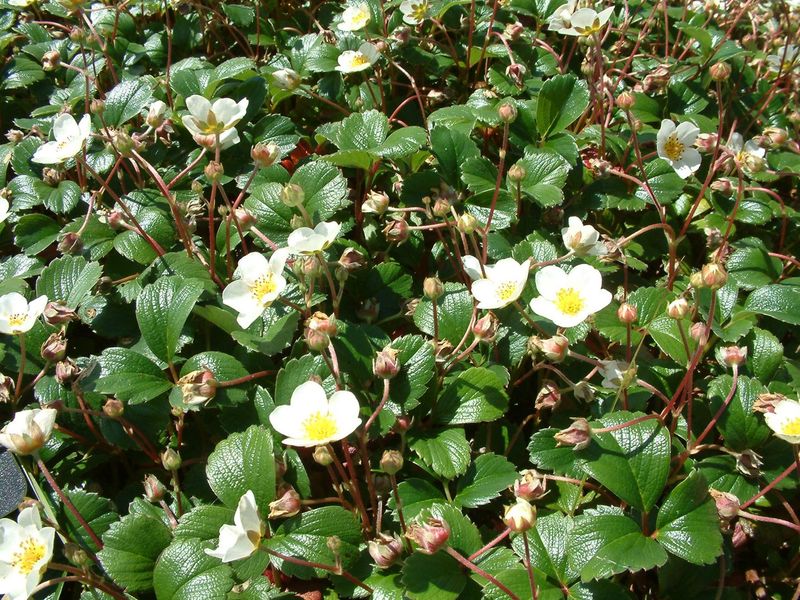
Picture the native habitat for a moment. Sand dunes, coastal bluffs, and gritty slopes within reach of ocean fog. That background explains almost every preference this plant has in a home garden.
Drainage sits at the top of the list here. Sandy or loamy ground that lets water pass through quickly suits it best, while heavy clay that stays soggy invites crown rot and general sulking.
Raised beds, slopes, or soil amended with coarse material solve most of that problem right away.
Sun exposure depends heavily on where you live. Near the coast, where summer air stays cool and damp, full sun is fine and produces the tightest, healthiest mats you’ll see.
Push inland into hotter valleys, and afternoon shade becomes a real kindness, since scorching dry heat isn’t something this species evolved to handle well.
Salt spray barely bothers it, which makes beach strawberry a genuinely useful choice for oceanfront yards where other plants brown out and quit early. Wind is similarly tolerated thanks to that low profile and thick leaf surface.
Water needs stay moderate rather than nonexistent. New plantings appreciate regular irrigation through the first summer while roots establish. After that, occasional deep soakings during dry stretches keep the foliage looking fresh.
Skip heavy fertilizing entirely here. Lean soil produces compact growth, while too much nitrogen creates floppy leaves and fewer flowers overall.
Small White Flowers Precede Modest Fruit
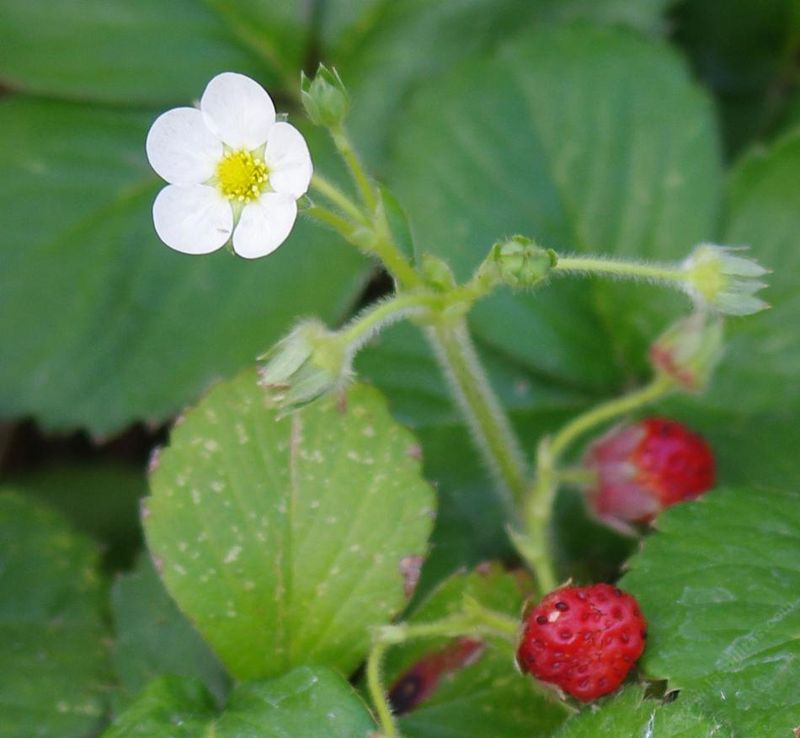
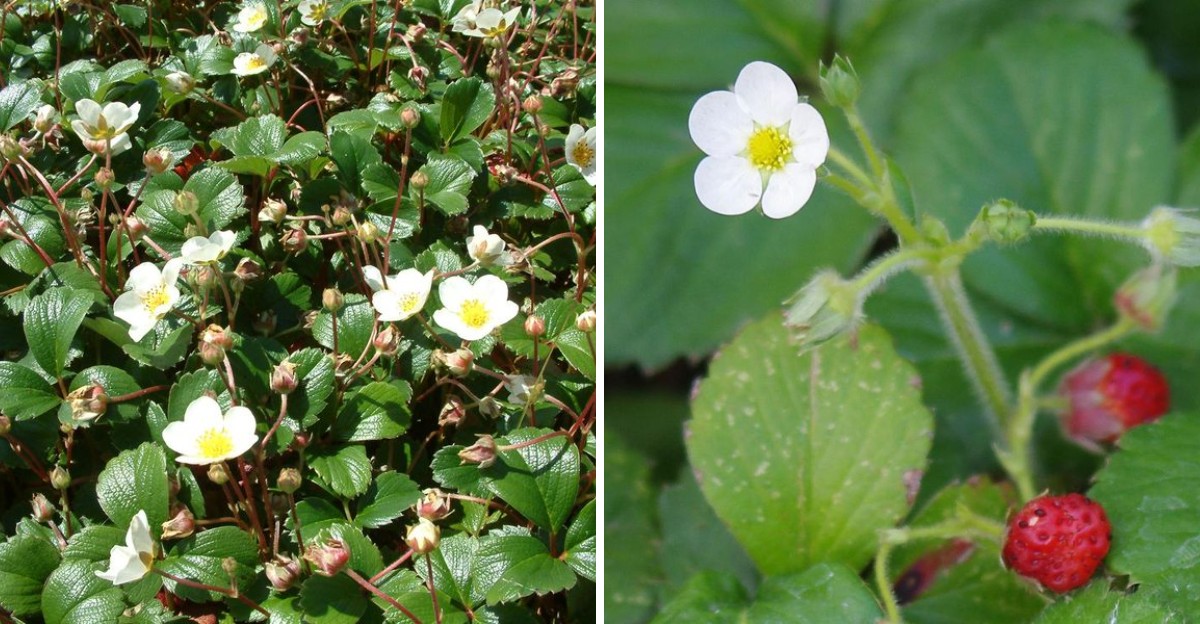
Spring brings a scattering of white blossoms across the mat, each one about an inch wide with five rounded petals surrounding a yellow center. Bloom typically runs through spring and can trickle on into summer along the cool coast.
Pollinators notice immediately once flowers open. Native bees, hoverflies, and other small insects work the flowers steadily, which is one more reason this species earns a spot in habitat-minded gardens.
Now for the honest part about fruit. Berries do form, and they’re edible, but anyone expecting grocery store abundance will be disappointed fast.
The fruit runs noticeably smaller than a cultivated garden strawberry, often only the size of a fingertip, and it appears far less generously than you’d hope.
Flavor varies quite a bit from plant to plant too. Some berries taste pleasantly sweet and aromatic, others land closer to bland. Birds, lizards, and small mammals tend to find them before people do, so treat any harvest as a bonus rather than a crop.
Something else worth knowing here. This species can carry male and female flowers on separate plants, so a solitary specimen may bloom beautifully and set almost nothing at all. Planting several individuals from different sources improves the odds of fruit considerably.
Choose beach strawberry for the evergreen carpet, the pollinator support, and the way it knits soil together on a slope. Consider the little berries a seasonal surprise, and plant a cultivated variety in a separate bed if shortcake is the actual goal.
Dense Mats Crowd Out Competing Weeds
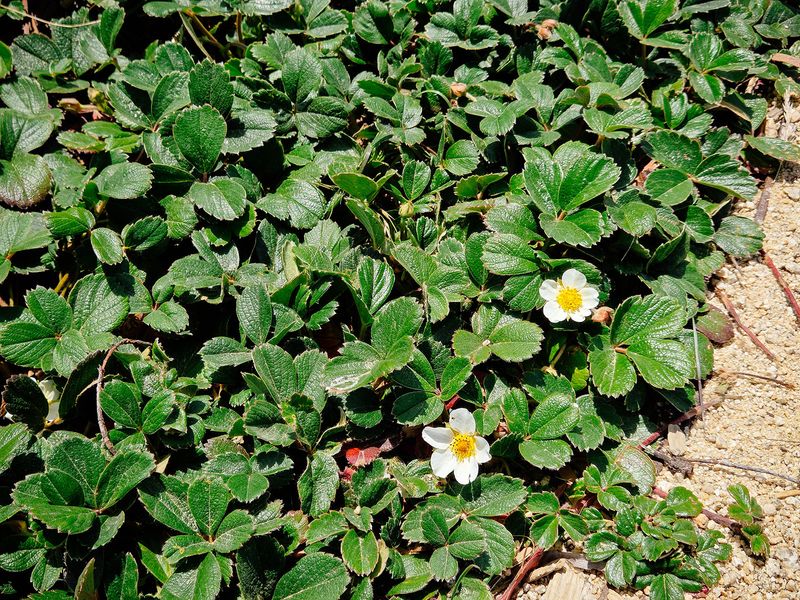
Weeds win by grabbing light and open ground. Take both away, and their whole strategy falls apart, which is exactly what a mature strawberry mat does over time.
As runners root and multiply, the leaves overlap into a continuous layer a few inches thick. Sunlight hitting that canopy never reaches the soil below, so weed seeds sitting there simply do not germinate.
Seeds that blow in from outside land on foliage instead of dirt and rarely get a foothold to work with.
The effect builds gradually rather than appearing overnight. During the first season, expect to pull weeds regularly, because gaps between young plants are wide open invitations for anything windblown.
By the second year, the amount of hand-weeding usually drops off sharply.
A practical tip worth following. Clear the site thoroughly before planting. Perennial weeds with deep roots, like bindweed or bermudagrass, will push right up through a strawberry carpet and are miserable to remove once tangled in the mat.
Spend the extra weekend on prep, and you’ll save years of frustration down the road.
A thin layer of mulch between young plants helps during establishment, but keep it light. Thick bark blocks runners from reaching soil and slows the very process you’re counting on.
Once coverage is complete, occasional spot-checking is enough. Walk the patch every few weeks, pull anything obvious by hand, and let the plant handle the rest of the job itself.
Foot Traffic Is Handled Better Than Most Groundcovers
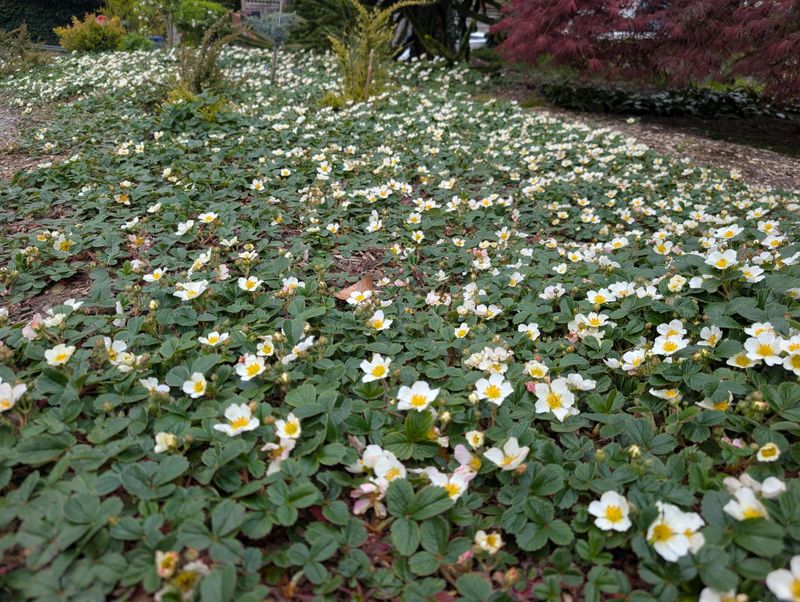
Try walking across a bed of delicate woodland groundcover, and you’ll leave a trail of crushed stems behind you. Beach strawberry puts up with considerably more abuse than that.
Credit the leaf structure for this resilience. Those thick, leathery leaflets flex under pressure instead of snapping, and the low growing crowns sit close enough to the ground that shoes glide over rather than tear through.
Plants that do get damaged recover fast, since replacements are already rooting nearby and ready to take over.
Realistic expectations still matter, though. Light and occasional traffic is the sweet spot here, meaning a shortcut across the yard, a garden chore route, or kids cutting through now and then.
A daily path used by everyone in the house, or a spot where a dog sprints the same line every afternoon, will wear thin and stay thin regardless.
Stepping stones solve this neatly in busy spots. Set flat pavers where feet naturally land and let the strawberry fill the spaces between them. The stones absorb the wear, the greenery handles the rest.
Compacted soil is the hidden enemy in busy areas, since packed ground blocks runners from rooting properly. Loosen the bed before planting and avoid walking on it during soggy winter weather.
For households wanting a lawn alternative that tolerates the occasional barefoot crossing, this native handles the assignment better than most ornamental carpets on the market.