Why Crape Myrtle Bark Scale Is Spreading Through California Yards Faster Than Expected
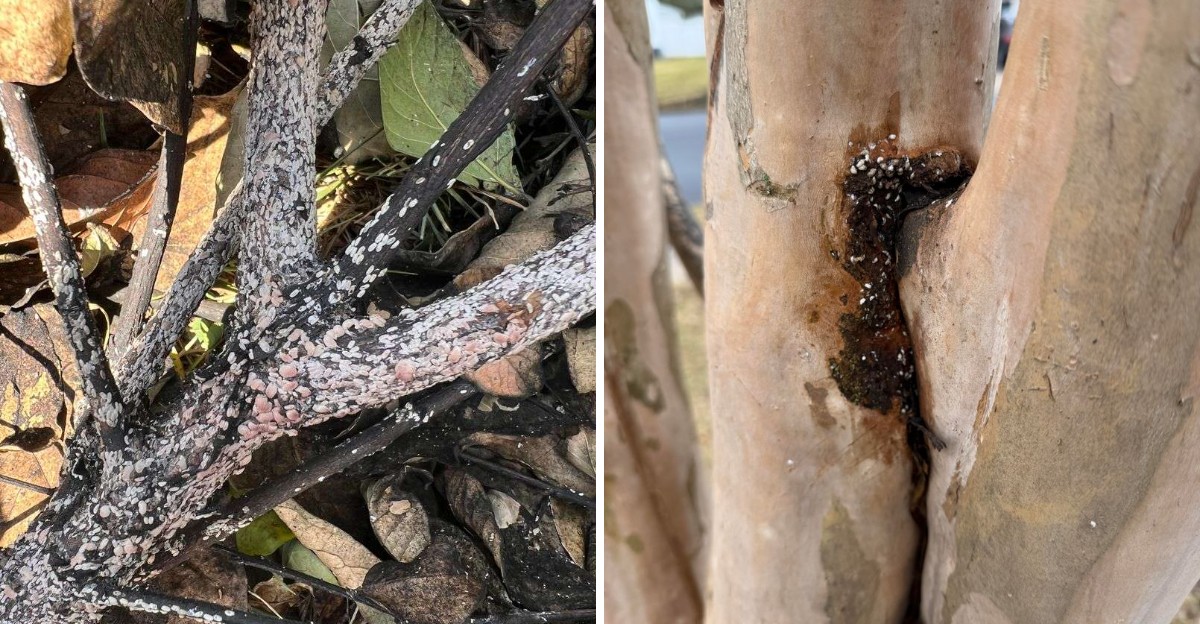
A crape myrtle that used to burst with pink blooms every summer is now coated in black sooty grime across its trunk and branches.
Its owner blames dirt or a fungus, never guessing that a tiny white insect is the real cause.
That insect is crape myrtle bark scale, an exotic pest now confirmed in California, and it keeps turning up in more yards and neighborhoods each season.
Here’s what makes this pest different from most backyard problems. It spreads through nursery stock, pruning debris, and even a friendly cutting shared over the fence.
Seven facts explain exactly why it’s moving so fast, and how to spot it before it hitches a ride to your own street.
Curious what that black grime on a neighbor’s tree is actually hiding underneath? It starts with an insect that never belonged here in the first place.
1. This Scale Arrived From Overseas Originally
Crape myrtle bark scale is an insect native to parts of Asia, including China, Korea, and Japan.
Crape myrtles themselves also come from Asia, so the pest and its favorite host share a homeland.
Somewhere along the way, the insect crossed the ocean, most likely on live plants moved through trade.
Today, the California Department of Food and Agriculture and the UC Statewide IPM Program both confirm it’s present in California.
The exact date and route it took into the state is something to check directly with those agencies, since reports can differ.
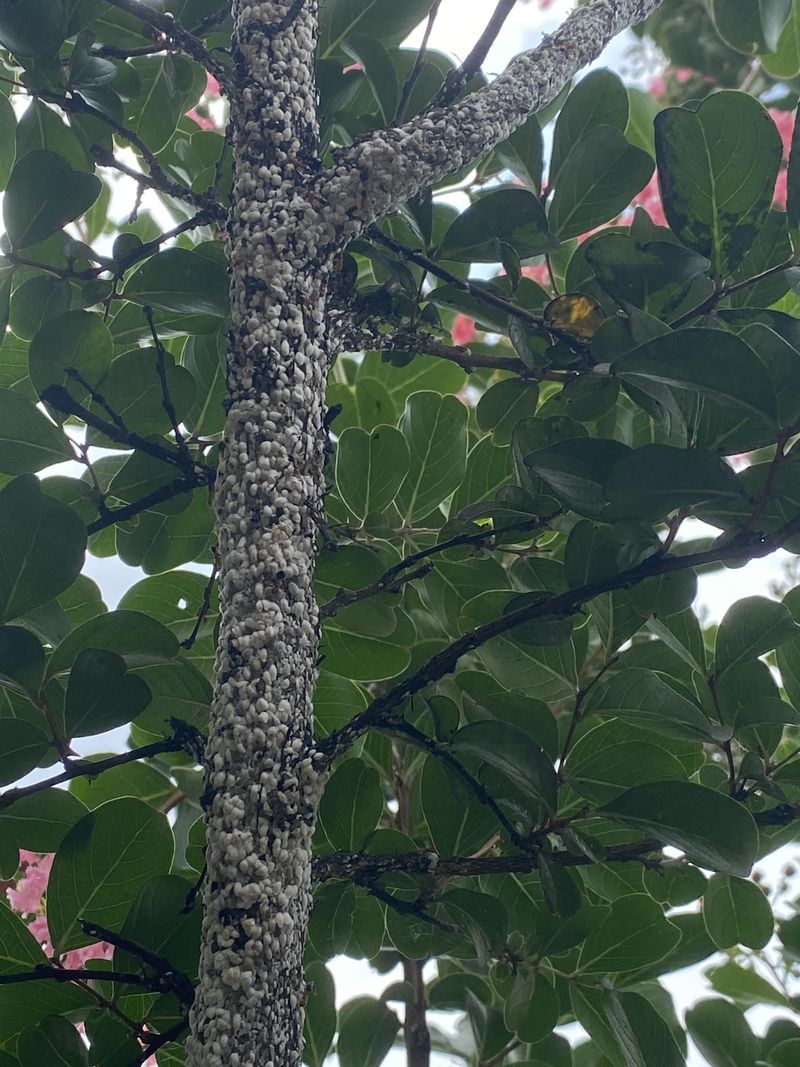
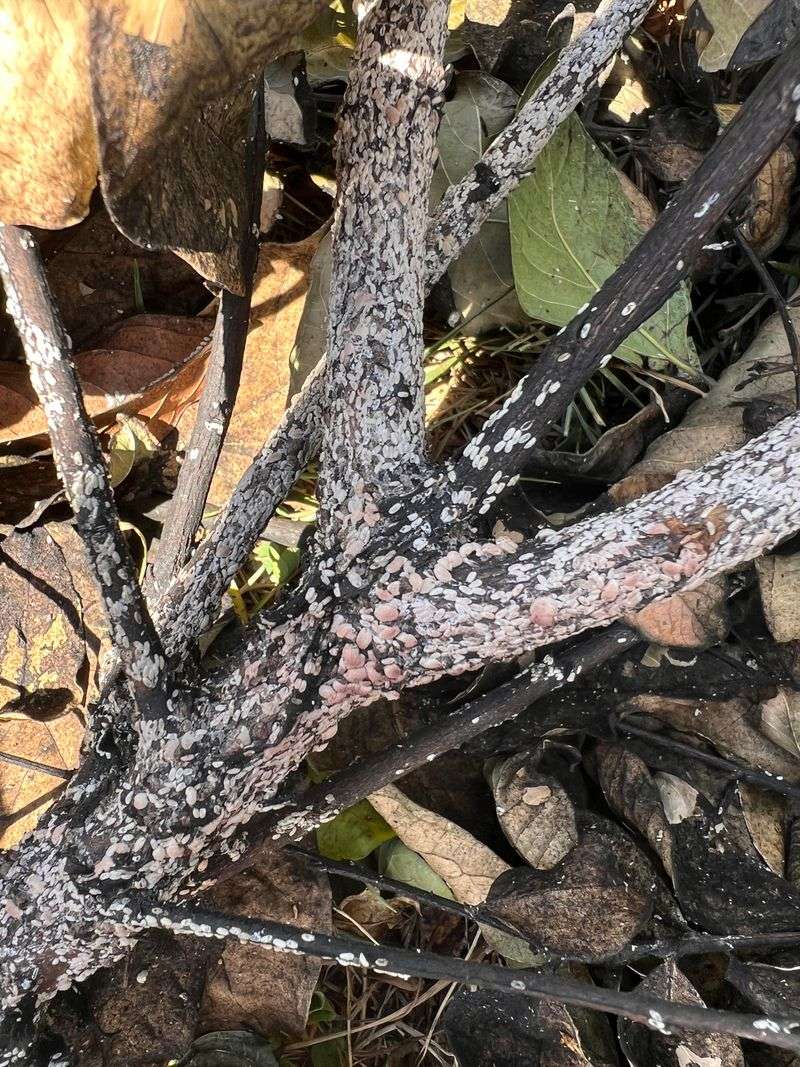
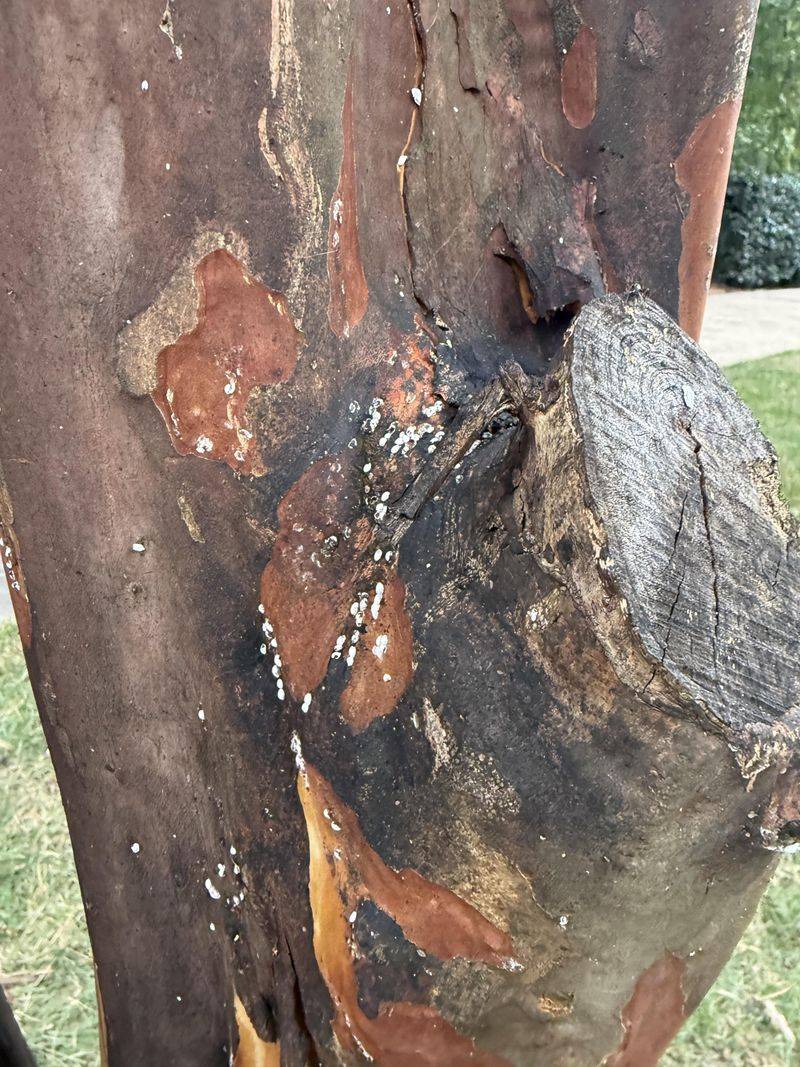
So what does it look like? Adult females are tiny and hide under a white or gray waxy coating, often in branch crotches and pruning wounds.
Crush one and it leaks a pink fluid, which is a handy clue that separates it from other scales.
Here’s a tip worth remembering. If you see white crusty spots on your crape myrtle, press one with a toothpick or fingernail.
Pink goo means you should report or confirm it with your local UC Cooperative Extension office or county agricultural commissioner.
2. Few Natural Predators Exist Here Yet
Consider a party where the snacks never run out and the bouncers never show up. That’s pretty much life for crape myrtle bark scale here.
Back in Asia, a whole team of natural enemies helps keep its numbers in check.
When an insect moves to a new continent, it often leaves those enemies behind.
Scientists call this enemy release, and it helps explain why some invaders explode in number.
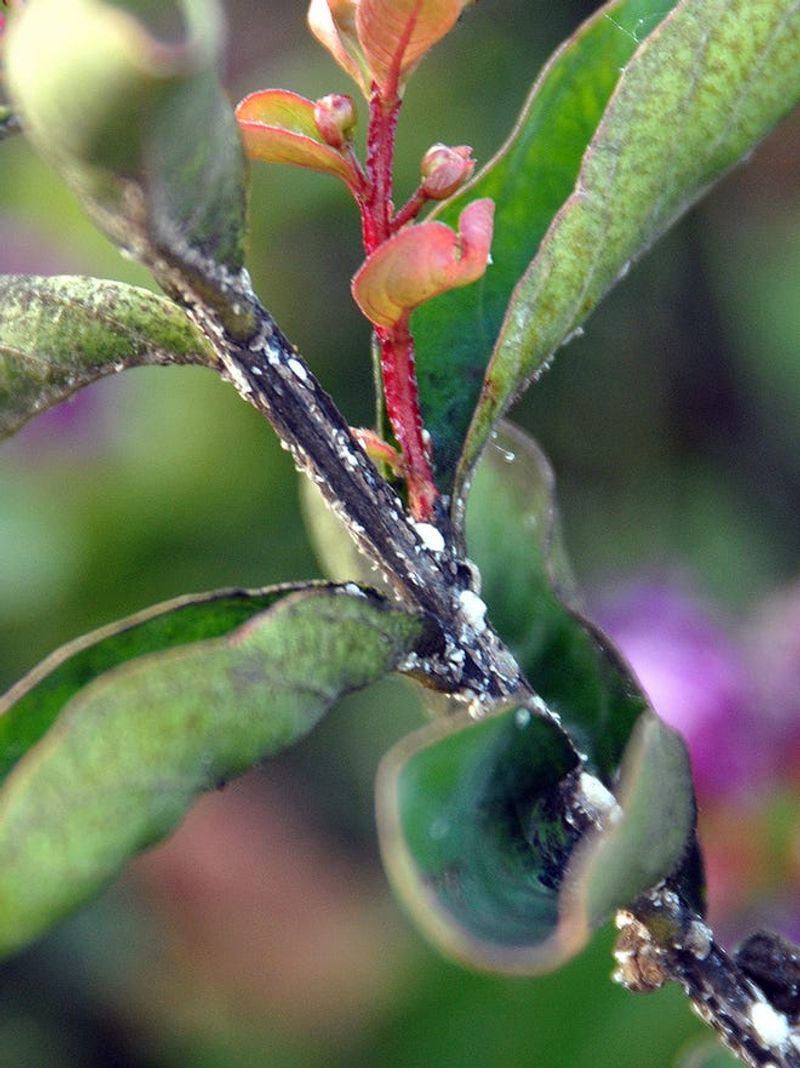
With few specialized predators or parasites here, CMBS colonies can grow thick enough to coat whole branches.
That doesn’t mean nobody is fighting back.
Some lady beetles, including the twice-stabbed lady beetle, will feed on the scale, and other general predators may nibble too.
Still, these helpers usually cannot keep up with heavy infestations on their own, according to extension experts.
You can give the good bugs a boost.
Skip broad-spectrum insecticide sprays whenever possible, since those wipe out beneficial insects along with pests.
Planting a mix of flowering plants nearby can also offer lady beetles food and shelter.
Your California Garden Changes Every Week. Your Plan Should Too.
Gardening in California changes quickly throughout the season. Every Friday you’ll receive a simple weekly plan showing exactly what to plant, prune, fertilize, harvest, and protect so you never miss the right timing.
Another simple step is scrubbing.
Gently washing the trunk and lower branches with a soft brush and a mild soap solution during winter removes many scales and makes any treatment work better.
Keep an eye on the tree afterward, too. New white patches in spring are a sign the colony is rebuilding and needs attention.
3. Honeydew Fuels Thick Black Sooty Mold
Sticky patio furniture is often the first clue.
Crape myrtle bark scale feeds by sucking sap from the tree, and it takes in far more sugar than it can use.
The extra comes out as a sweet, sticky liquid called honeydew.
Honeydew drips onto leaves, bark, cars, sidewalks, and anything else parked below.
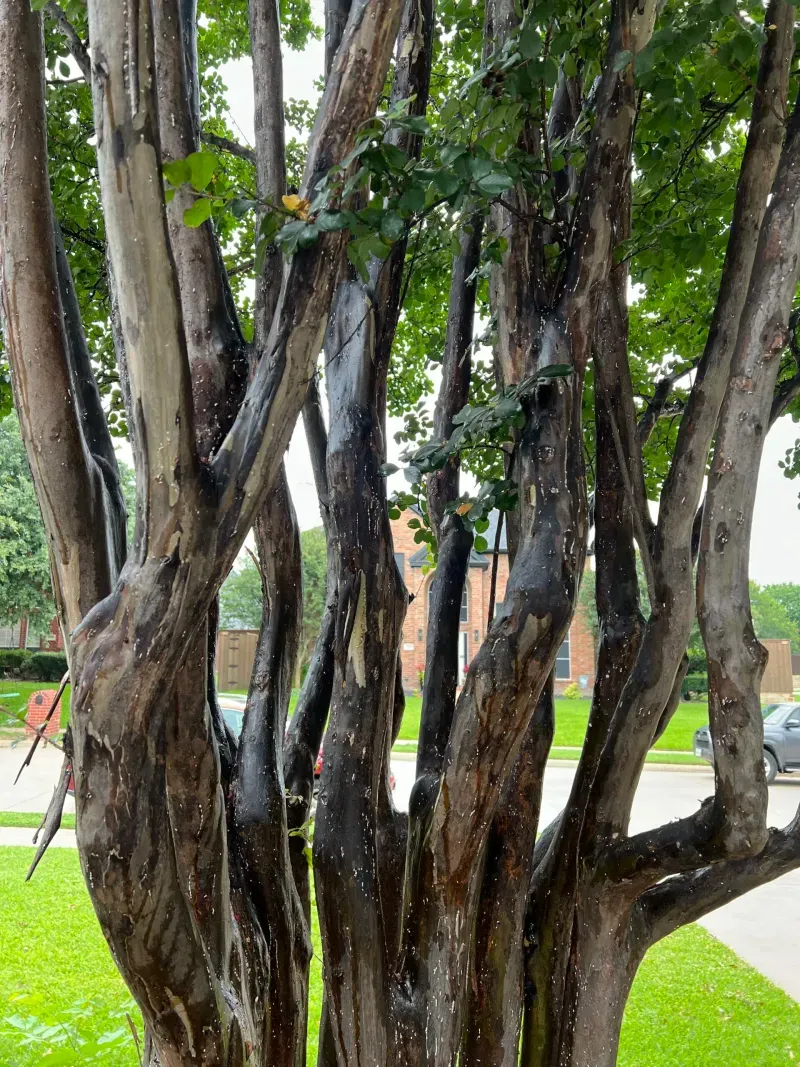
Before long, a group of fungi known as sooty mold moves in and feeds on that sugar.
The result is a black, powdery layer that can make a healthy-looking tree seem scorched or struggling.
Here’s the surprising part. Sooty mold does not infect the tree or eat its wood.
It simply sits on the surface, though a thick coating can block some sunlight from reaching the leaves.
That dark coating is also why the pest seems to be everywhere.
A crape myrtle covered in black grime stands out on any street, so neighbors notice it quickly.
In a way, the mold acts like a warning flag that points right to the problem.
Want to clean things up? Wiping or hosing off sooty mold helps the tree look better, but it will return if the scale stays.
Control the insect first, and the honeydew supply dries up, so the mold slowly weathers away on its own.
One quick test helps too. If you spot black mold but no white crusty scales, check for aphids, which also produce honeydew and can cause a similar mess.
4. Moving Infested Plants Spreads It Fast
Ever brought home a bargain plant from a weekend sale? That little purchase could carry more than you paid for.
Crape myrtle bark scale is tiny, and young colonies tucked into bark cracks are easy to miss.
Adult females cannot fly or travel far on their own.
Its newly hatched young, called crawlers, can walk short distances and may drift on wind or hitch rides on birds, animals, and people.
For long trips, though, the biggest help comes from humans moving infested plants.
Nursery stock, landscape projects, and plant swaps can all move the pest from one area to another in a single day.
A tree loaded onto a truck in one county might be planted in a new yard many miles away.
That kind of jump is how a pest can suddenly appear far from where it was first found.
Before buying any crape myrtle, give it a close inspection.
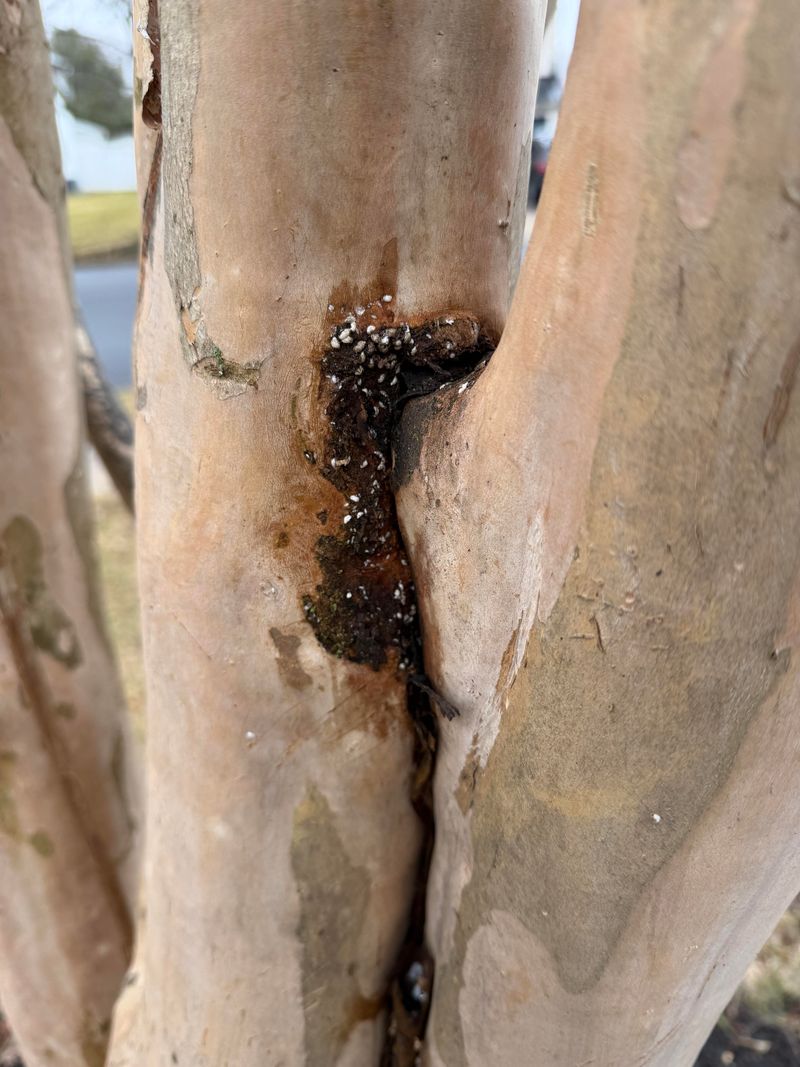
Look at branch crotches, the trunk, and around old pruning cuts for white or gray felt-like spots.
Black sooty mold on leaves or bark is another red flag.
Found something suspicious at a store? Politely let staff know and skip that plant.
You can also contact your county agricultural commissioner, since CDFA works with counties to track exotic pests like this one.
Sharing cuttings with friends? Check those, too. A single overlooked twig can start a whole new colony.
5. Pruning Debris Can Carry It Too
Consider a quiet Saturday morning on a residential street.
One neighbor trims a crape myrtle, piles the branches by the curb, and heads inside for lunch.
By afternoon, a few of those cut limbs have been dragged into another yard or tossed into an open truck bed.
If that tree had crape myrtle bark scale, the branches are still carrying living insects.
Cutting a limb does not stop the scale right away, and eggs already laid under the waxy covering may still hatch.
When the tiny pink crawlers emerge, they wander off looking for a fresh plant to settle on.
Yard waste that sits out for days, gets shared as free firewood, or rides along with landscapers can all move the pest.
Even tools and gloves may pick up crawlers during busy trimming season.
That makes pruning time one of the easiest moments for the scale to spread.
Luckily, a few habits make a big difference.
Bag infested clippings or put them straight into your green waste bin instead of leaving loose piles.
Avoid giving away branches from a tree you know is infested.
Hiring a crew? Ask them to clean their equipment before moving on to the next property.
It’s a small request that protects the whole block.
Timing helps, too. Many experts suggest pruning during the dormant season, when the tree is bare and the white scale patches are easier to see and remove.
6. Mild California Winters Suit It Well
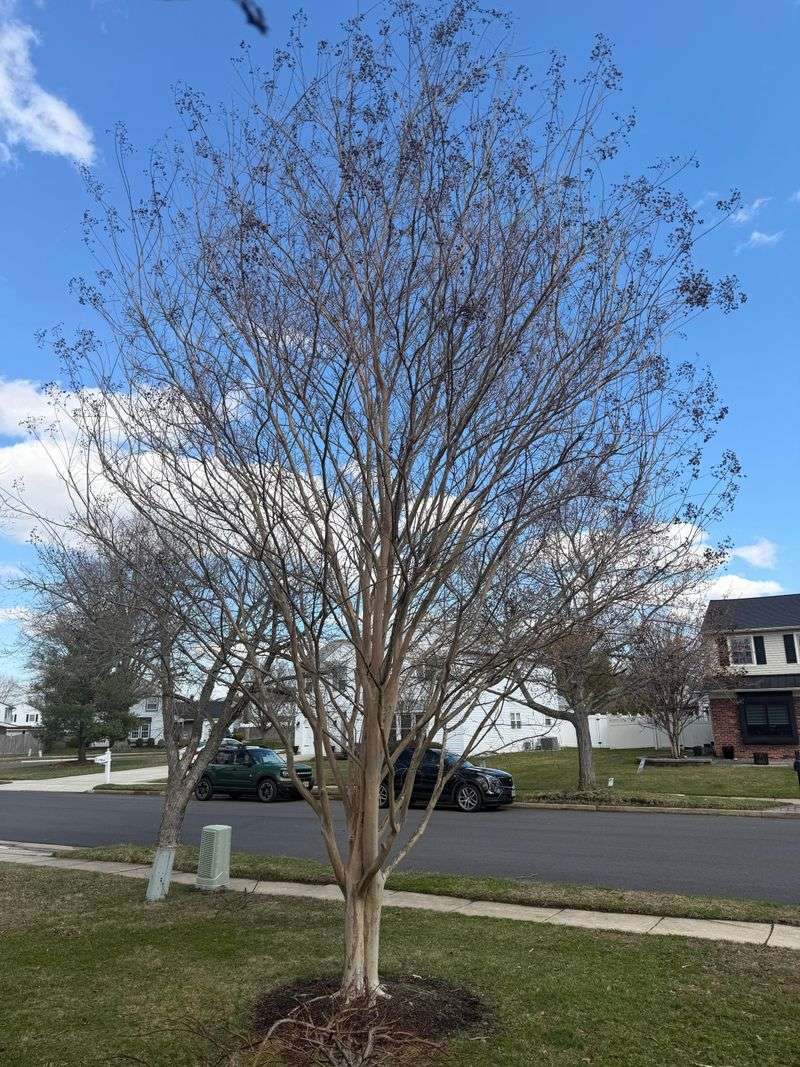
Crape myrtles thrive in hot summers and gentle winters, which is exactly why so many Californians plant them.
Unfortunately, the pest that feeds on them seems to enjoy many of the same conditions.
Where the host tree grows well, the scale has a place to live.
Crape myrtle bark scale survives winter hidden under its waxy covering in bark cracks and branch crotches.
Researchers elsewhere have recorded more than one generation per year, with crawlers appearing in spring and again later in the season.
California’s long growing season likely gives the pest plenty of time to reproduce as well.
Here’s an honest note, though. Exact numbers of generations in different parts of California have not been confirmed in the sources checked for this article, so treat that detail as likely rather than proven.
Your local UC Cooperative Extension office can share what is known for your region.
Cold snaps that might knock back insects elsewhere are rare in much of coastal and Southern California.
That means fewer natural setbacks for a population that’s already short on predators.
So what can you do with this knowledge? Check your trees in late winter and early spring, when branches are bare and white patches stand out.
Watch for pink crawlers on the bark as temperatures warm, since that’s when young scales are most exposed.
A quick monthly look during warm months keeps small problems from quietly growing.
7. It Rarely Threatens The Tree Itself
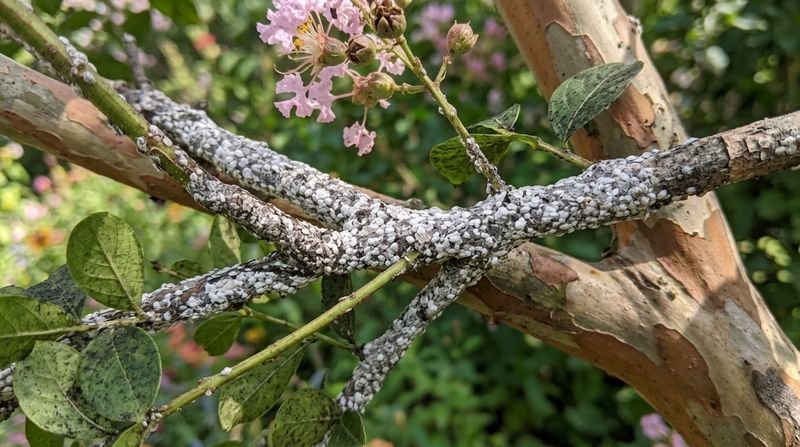
Take a deep breath if your crape myrtle is covered in white crust and black grime.
As ugly as it looks, crape myrtle bark scale rarely harms an established tree in any lasting way.
The damage is mostly about looks and flowering rather than survival.
The biggest loss is usually in the flowers.
Heavy infestations can mean smaller blooms and fewer of them, which is disappointing for a tree grown mainly for its summer color.
Branches may also look weak or produce less new growth when the scale is thick.
Then there’s the sooty mold.
It turns smooth, colorful bark into something that looks scorched, and it can stain patios and cars below.
Still, that damage is cosmetic, and it fades once the scale is controlled.
Knowing this can save you from panic decisions like removing a healthy tree.
Start with the gentle steps: scrub the trunk with soapy water, keep the tree watered during dry spells, and avoid overpruning.
If you consider an insecticide, follow UC IPM guidance closely, since some systemic products can harm bees and other pollinators that visit the blooms.
A certified arborist or your county extension office can help if the problem feels overwhelming.
With patience and early action, most crape myrtles bounce back and bloom beautifully again.
The real goal is keeping this pest from marching to the next yard. Think of it as a nuisance, not a disaster.
8. Reporting New Sightings Helps Slow The Spread
A single homeowner noticing something odd on a crape myrtle can matter more than it seems.
Agricultural agencies rely heavily on public reports to track where a pest like this has actually reached, since they cannot inspect every backyard tree themselves.
County agricultural commissioners and the California Department of Food and Agriculture use these reports to build a clearer picture of how far crape myrtle bark scale has spread.
That picture helps target outreach, research, and control efforts toward the areas that need them most.
Reporting a suspected sighting is usually simple.
Take a few clear photos of the white waxy coating, any pink residue from a crushed sample, and the black sooty mold if present.
Note the tree’s exact location, then contact your county agricultural commissioner’s office or local UC Cooperative Extension.
Many counties also accept reports through online pest-tracking tools designed specifically for this kind of exotic insect monitoring.
Early reports from a new area can prompt a closer look at nearby nurseries and neighboring trees before the problem spreads further.
This matters especially in regions where the scale has not yet been confirmed, since catching the first arrival gives agencies a real chance to respond quickly.
Waiting and assuming someone else will report it is how a localized problem quietly becomes a widespread one.
A five-minute report costs you nothing and gives researchers real data instead of guesswork about where this pest is actually established.
Think of it as a small civic duty that comes with backyard gardening, right alongside watering and weeding.