The California Shrubs That Can Give Your Yard Color After Summer Flowers Fade
September rolls around, and your yard looks tired, crispy stems and faded petals everywhere you turn, the kind of scene that makes you want to skip the garden altogether and wait for spring.
Right next door, though, a neighbor’s garden is still glowing. Purple spikes catch the afternoon light, hummingbirds zoom from plant to plant, and something is clearly still working there while everything on your side of the fence has quietly given up.
The difference has nothing to do with luck, better soil, or some secret watering schedule nobody told you about.
It comes down to a handful of shrubs that do their best, most interesting work only after the rest of the garden has clocked out for the season, plants most people walk straight past at the nursery without a second glance.
Curious which ones actually pull this off, and why so few yards ever use them? The answer starts with a shrub most gardeners have never even heard of.
1. Bush Anemone Blooms Later Than Expected
Many people assume this shrub’s flowering season wraps up entirely by early summer, yet many established plants surprise gardeners with a light second flush of white, papery blooms into early fall.
Carpenteria californica, a California native found naturally in the foothills of the southern Sierra Nevada, produces glossy, dark green leaves year round, which alone gives a bed structure when other plants have gone crispy and brown.
The flowers themselves resemble a wild rose, with a cluster of golden stamens at the center that draws bees steadily whenever blooms appear.
Give it full sun near the coast, and light afternoon shade in hotter inland valleys, since intense heat can scorch the leaves on younger plants.
Drainage matters more than almost anything else here. This shrub resents soggy roots, so a slope or raised bed suits it far better than a low, wet corner of the yard.
Once established, it needs surprisingly little summer water, and overwatering tends to cause more trouble than neglect ever does.
Prune lightly right after the main bloom fades, removing any spent flower stems, and avoid cutting into old wood, which is slow to recover.
Few gardeners grow it, which means a fall or early spring planting gives you something genuinely uncommon rather than the same handful of natives showing up in every yard on the block.
2. Cleveland Sage Holds Color Into Early Fall
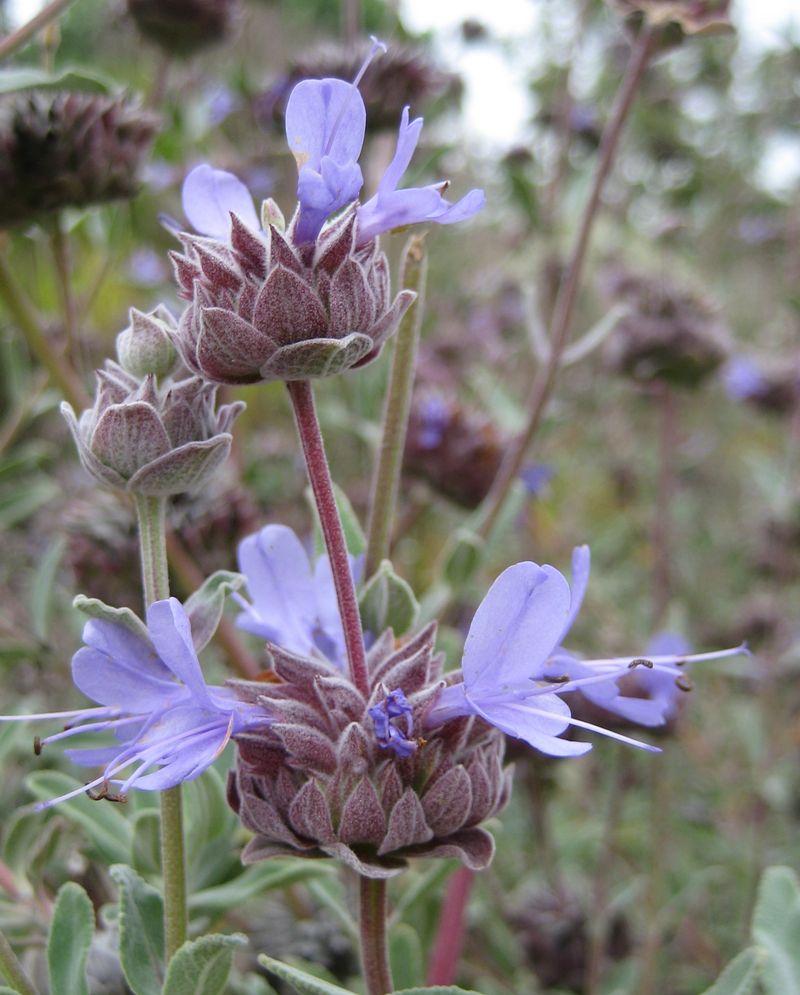
One of the most fragrant blooms in the entire sage family belongs to this shrub, and while its main show peaks in late spring, many plants continue producing scattered whorls of blue-purple flowers well into September.
Salvia clevelandii’s lingering bloom, paired with foliage that stays fragrant and silvery gray all year, keeps it relevant in a bed long after showier spring perennials have finished.
Bees and hummingbirds continue visiting stragglers on the stalk even as the main flush winds down, which extends the pollinator activity in a yard further into the calendar than most gardeners expect.
This sage wants lean, fast-draining soil and full sun, conditions that mimic the rocky coastal slopes where it grows wild across Southern California.
Your California Garden Changes Every Week. Your Plan Should Too.
Gardening in California changes quickly throughout the season. Every Friday you’ll receive a simple weekly plan showing exactly what to plant, prune, fertilize, harvest, and protect so you never miss the right timing.
Rich, amended soil or frequent summer water tends to produce weak, floppy growth and shortens the plant’s life considerably.
Once established, deep occasional watering during the driest stretches is plenty, and many gardeners stop supplemental water entirely after the second year.
Light pruning after bloom keeps the shrub compact, though heavy cutting into bare wood should wait until late winter, since recovery from aggressive pruning happens slowly.
Its intense fragrance, released with the slightest breeze or brush of a hand, makes it a plant worth placing along a path rather than tucked into a back corner where nobody walks close enough to notice.
3. Matilija Poppy Blooms Longer Than Most Realize
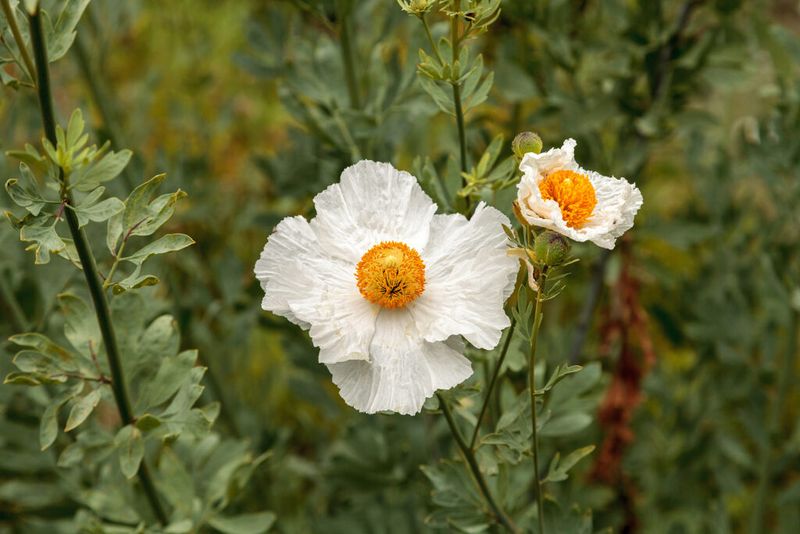
Enormous white flowers with crinkled petals and a golden center have earned this plant the nickname fried egg flower, and while its peak bloom sits in early summer, established colonies frequently keep pushing out scattered blooms into early fall.
That extended flowering season catches many gardeners off guard, since most assume the show ends the moment summer heat arrives in earnest.
Give Romneya coulteri a spot with excellent drainage and full sun, then step back, since this poppy resents rich soil and regular water almost as much as it resents being confined to a tight bed.
Patience matters early on, since the plant can sulk for a season or two after transplanting before it truly settles in and begins spreading by underground rhizomes.
Choose the planting site carefully, since it can be difficult to remove once established, and many gardeners plant it in a spot bordered by pavement or a path to keep the spread contained.
Cut it back hard in late fall or winter after flowering finishes entirely, and it rewards you with fresh growth and another round of spectacular blooms by the following summer.
Few plants offer this much drama for so little ongoing effort once the roots find their footing, and its rarity in most neighborhoods makes it a genuine conversation piece rather than another common native everyone already recognizes.
4. Flannel Bush Extends Its Yellow Show
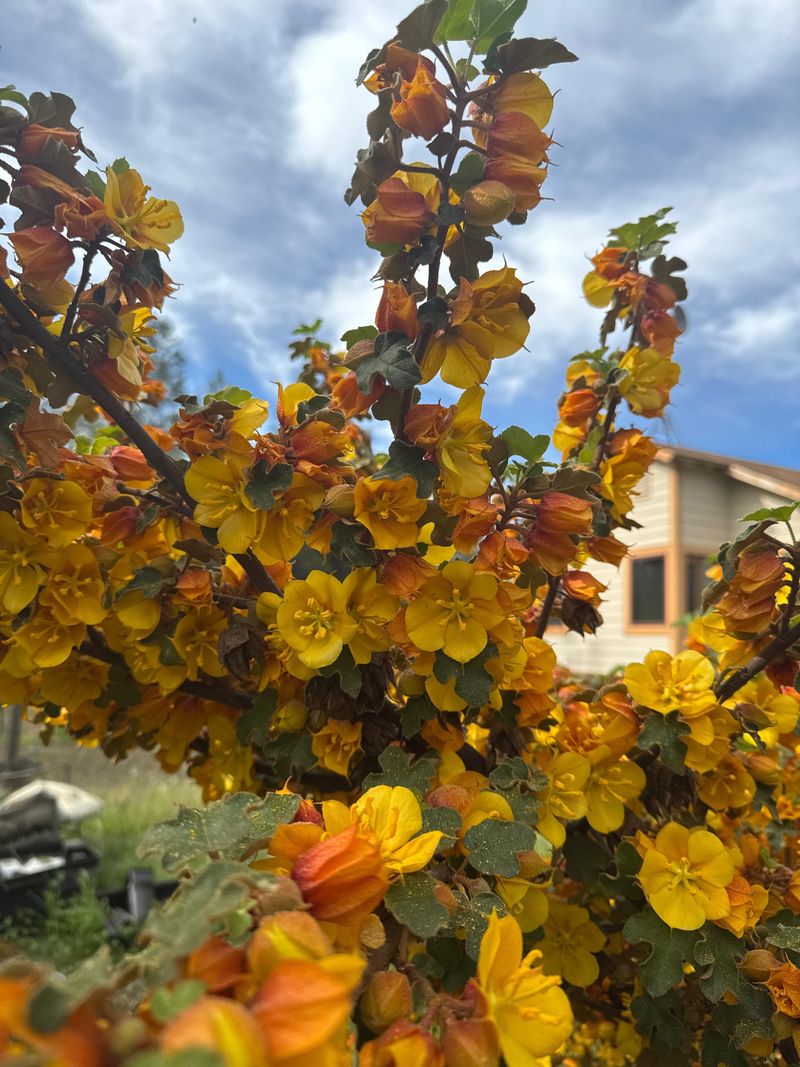
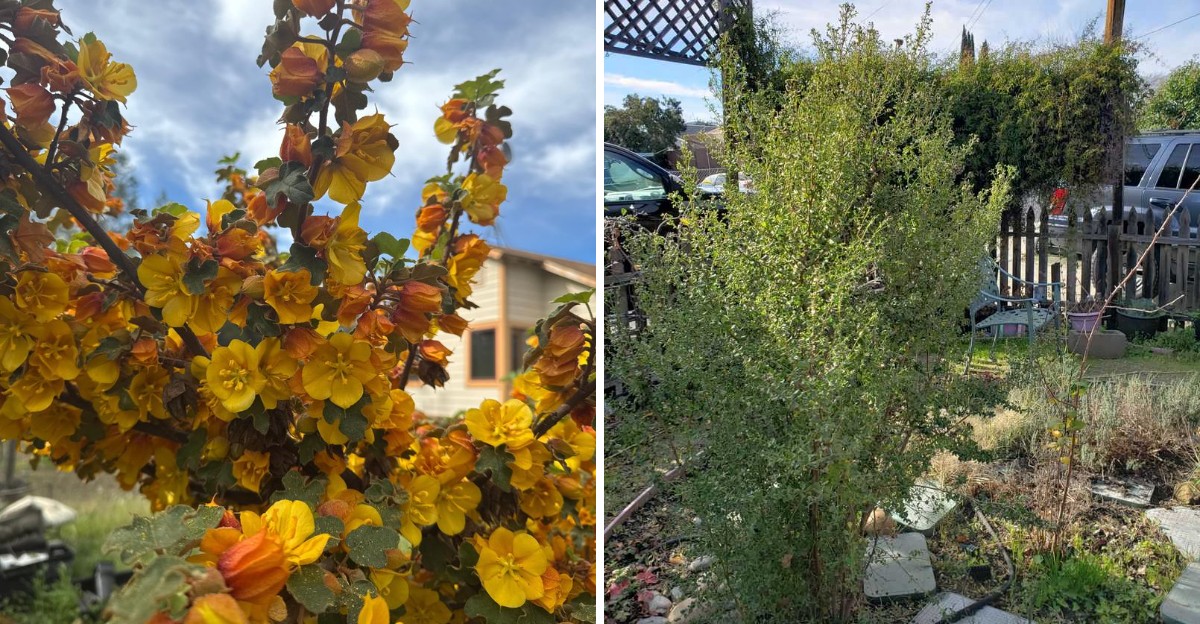
Saucer-sized yellow flowers bright enough to stop traffic on a hillside drive cover this shrub each spring, and many established specimens continue producing scattered blooms well past the main flush into early fall.
Fremontodendron californicum’s secondary color, paired with the plant’s naturally rugged, sculptural branching structure, keeps it visually interesting in a bed long after its neighbors have gone dormant or brown.
Drainage matters more here than almost any other factor. This plant despises wet feet, so a slope or raised bed keeps roots from sitting in soggy ground through any unexpected fall rain.
It actually prefers tough, rocky, nutrient-poor soil over anything rich or amended, so skip the compost entirely and let it settle into conditions most other plants would refuse outright.
Water it in once at planting, then step back almost entirely. Established plants resent regular summer water far more than they mind being ignored for months at a time.
Give it real room to spread, since a mature specimen can reach fifteen to twenty feet tall and nearly as wide over several years.
Place it away from walkways, since the fine hairs on its leaves can irritate skin on contact, a small tradeoff for a plant that delivers color most California yards never see at all.
5. Woolly Blue Curls Reblooms Through Fall
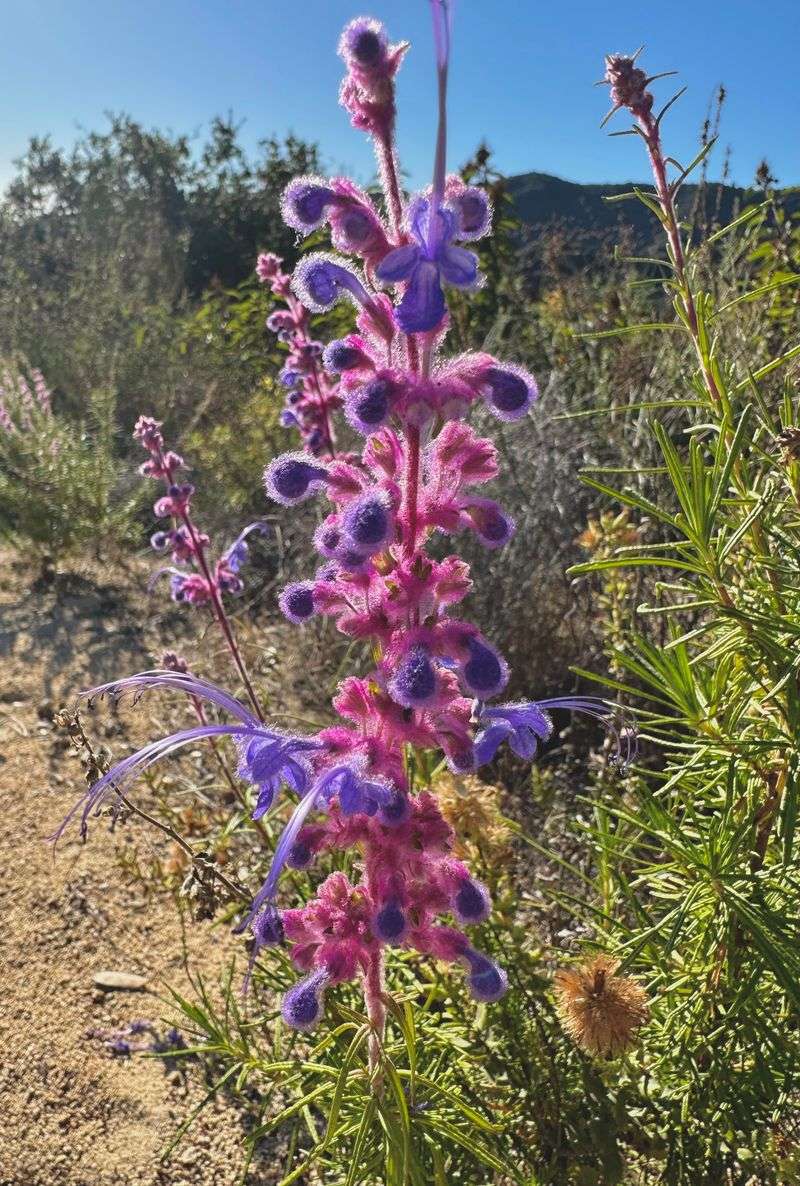
Striking blue and purple flower spikes covered in soft, woolly hairs give this shrub its name, and while spring brings the heaviest bloom, many plants continue flowering in smaller flushes right through early fall in mild coastal gardens.
Trichostema lanatum’s fuzzy flower spikes catch morning light beautifully, giving the plant a slightly otherworldly look that few other California natives can match.
This shrub demands excellent drainage above nearly everything else, since it grows wild on rocky, sandy slopes where water never lingers for long.
A raised bed, slope, or heavily amended fast-draining soil gives it the best chance, since heavy clay or regular irrigation quickly leads to root problems.
Full sun suits it best along the coast, though a bit of afternoon shade helps in hotter inland gardens where the intensity of summer sun can stress younger plants.
Once established, it needs very little supplemental water, and many gardeners find it thrives best when largely left alone after its first year in the ground.
Hummingbirds and native bees visit the flowers steadily throughout its extended bloom period, adding motion and life to a bed that might otherwise look static by late summer.
Because it’s rarely stocked at larger nurseries, finding one often means visiting a native plant sale, which makes the reward of a healthy, blooming specimen feel considerably more earned.
6. Coyote Brush Feeds Pollinators Late In Season
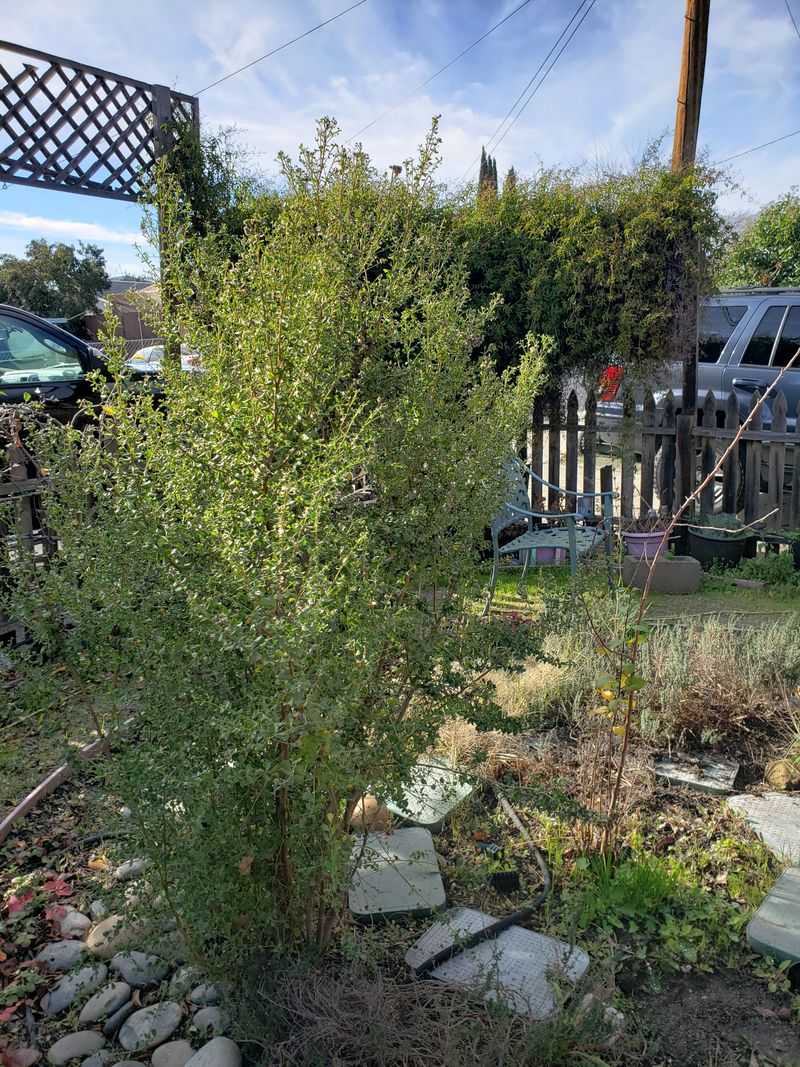
Walk along almost any California coastal trail in fall, and you will brush past this scruffy green shrub. Coyote brush does not look flashy, yet it quietly supports more insect life than many showier plants in the garden.
A quick reality check on color. Baccharis pilularis blooms from late summer into fall and winter, but its flowers are tiny and creamy white, not bold. The real value is what those blooms offer to wildlife at a time when few other natives are still in flower.
Bees, wasps, flies, and butterflies swarm the flowers for nectar and pollen. Many of these helpers go on to control garden pests, so coyote brush can make your whole yard healthier. It works like a late-season snack bar for creatures that keep nature in balance.
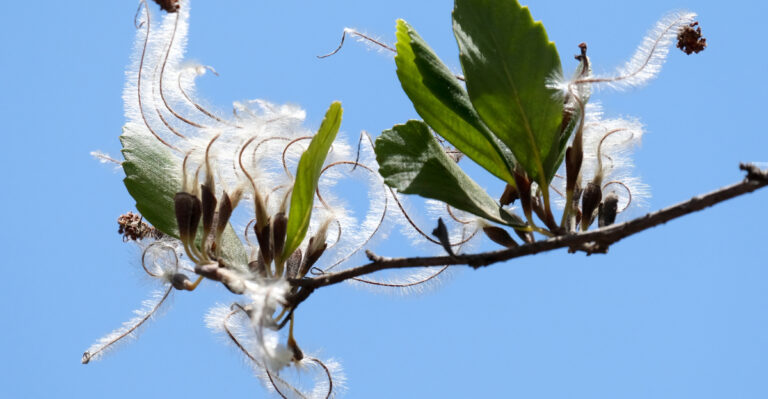
Here is a fun fact. Coyote brush plants are either male or female. Female plants make fluffy white seeds that drift like tiny parachutes, while male plants stay a bit tidier.
You can find upright forms that grow into big shrubs, plus low ground cover types like Pigeon Point and Twin Peaks that spread several feet wide. The ground covers are great for slopes because their roots help hold soil in place.
Plant it in sun, water it until it settles in, and then let it mostly fend for itself. It handles wind, clay, and dry summers with ease. Trim older plants every few years to keep them from getting woody.
7. Bladderpod Keeps Producing Bright Yellow Flowers
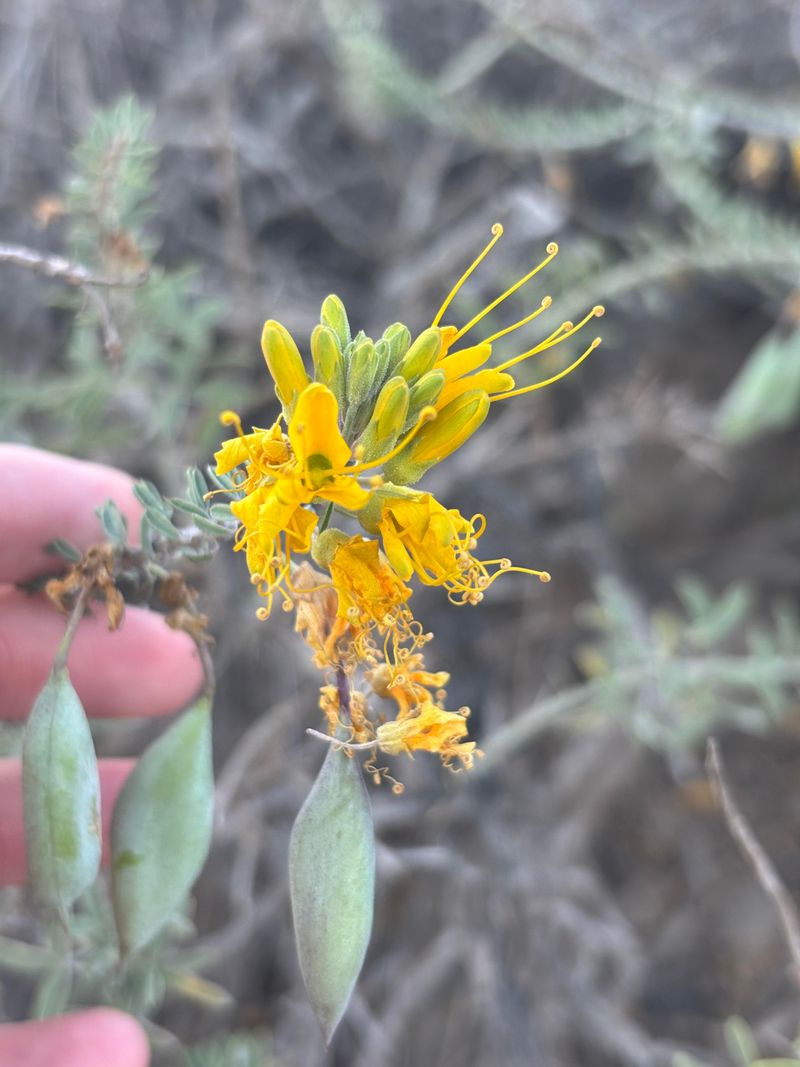
A shrub that seems to bloom on its own schedule entirely, largely ignoring the calendar most other plants follow, keeps small clusters of bright yellow flowers coming through much of the year, including a reliable stretch into fall.
Peritoma arborea, sometimes called California bladderpod, gets its common name from the inflated, papery seed pods that follow each flower, adding an odd, almost decorative texture to the plant even after the blooms themselves have faded.
Those pods rattle faintly in the wind once dry, giving the shrub a bit of sensory interest beyond just visual color, something few other drought-tolerant natives offer.
This plant thrives in genuinely harsh conditions, tolerating poor, rocky, even slightly saline soil that would stunt or defeat many other garden shrubs outright.
Full sun and sharp drainage suit it best, and it handles reflected heat from walls or pavement without the scorching or stress that affects more delicate natives in the same spot.
Once established, it needs almost no supplemental water, making it one of the lowest-maintenance options for a hot, dry corner of the yard that nothing else seems to want.
A slightly pungent odor from the crushed leaves puts off some gardeners, though most find it fades quickly and matters little once the shrub is planted a reasonable distance from windows or seating areas.
Pruning stays minimal and forgiving, with an occasional light shaping in late winter enough to keep the naturally loose, informal habit from becoming too sprawling over time.
Bees visit the flowers steadily, adding another quiet layer of pollinator activity to a bed that might otherwise look forgotten by late summer.
8. Silver Bush Lupine Adds Late Color On Poor Soil
A shrub many gardeners overlook entirely, largely because it looks unassuming until the flower spikes actually open.
Lupinus albifrons, known as silver bush lupine, carries soft, silvery-gray foliage that catches light in a way few other shrubs manage, giving it visual interest even during the stretches between blooms.
That silvery color comes from fine hairs covering each leaflet, an adaptation that helps the plant reflect heat and conserve moisture through California’s driest months.
This lupine actually prefers poor, sandy, or rocky soil over anything rich or well-amended, since overly fertile ground tends to produce short-lived, floppy growth that collapses under its own weight within a season or two.
Full sun and excellent drainage matter enormously here, and a slope or raised area works far better than a flat, low-lying bed where water might linger after a fall rain.
Once established, it survives on rainfall alone in most years, and supplemental summer water often shortens its lifespan rather than helping it thrive.
As a member of the pea family, silver bush lupine fixes nitrogen in the soil through a partnership with root bacteria, quietly improving the ground around it for neighboring plants without any effort from the gardener.
Bees work the flower spikes heavily during bloom, and the seed pods that follow provide a modest food source for birds later in the season.
Because it’s naturally short-lived, typically lasting five to ten years, many gardeners let a few seedlings establish nearby to replace aging plants over time.