The Fall Planting List Every Arizona Gardener Should Finish Before Halloween
Arizona gardening runs on a different calendar than the rest of the country. While folks back east are raking leaves, our real planting season is just getting started, and October is the sweet spot.
Warm soil and cooler nights help new roots grow fast, so plants are ready when the brutal summer heat comes back. Here are nine tough, water-wise plants that can shade your house, feed wildlife, and make your yard less friendly to pests.
1. Velvet Mesquite
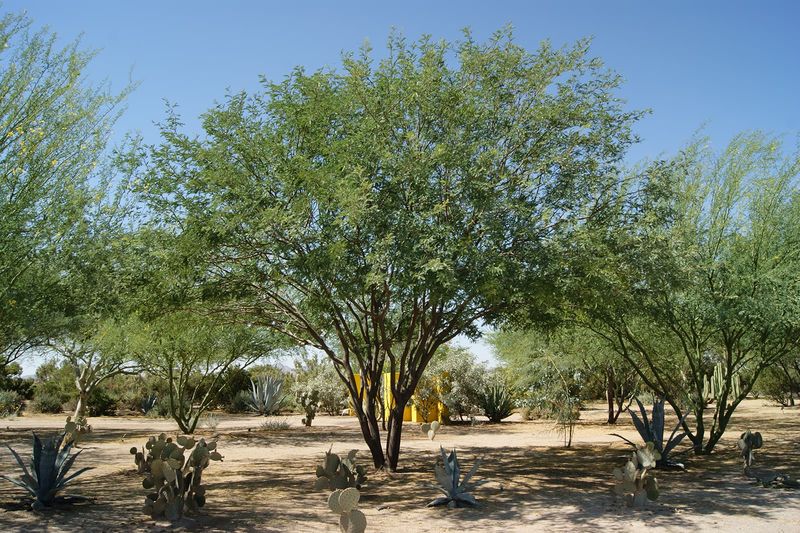
Picture a July afternoon when the thermometer hits 112 and your west wall is baking like a pizza stone. A velvet mesquite planted in October could be the tree that finally changes that story.
Native across the Sonoran Desert, it grows a wide, lacy canopy that drops the temperature underneath by several noticeable degrees.
Fall planting matters here more than almost anywhere. Mesquite roots can reach remarkable depths, and the cool months give them time to push down into the soil before summer returns.
Start with a 15-gallon tree, dig a hole two or three times wider than the root ball, and skip heavy amendments so the roots learn to live in native soil.
Water deeply every week or so through winter, then taper as it settles in. After two or three years, a mature mesquite often gets by on rainfall plus an occasional summer soak.
That is real water savings compared to thirsty non-native shade trees.
Wildlife loves it too. The spring catkins feed native bees, the bean pods feed quail and other birds, and the branches give roadrunners a shady perch while they hunt lizards and insects nearby.
Keep the canopy thinned properly before monsoon season to help it stand strong in wind.
2. Palo Verde
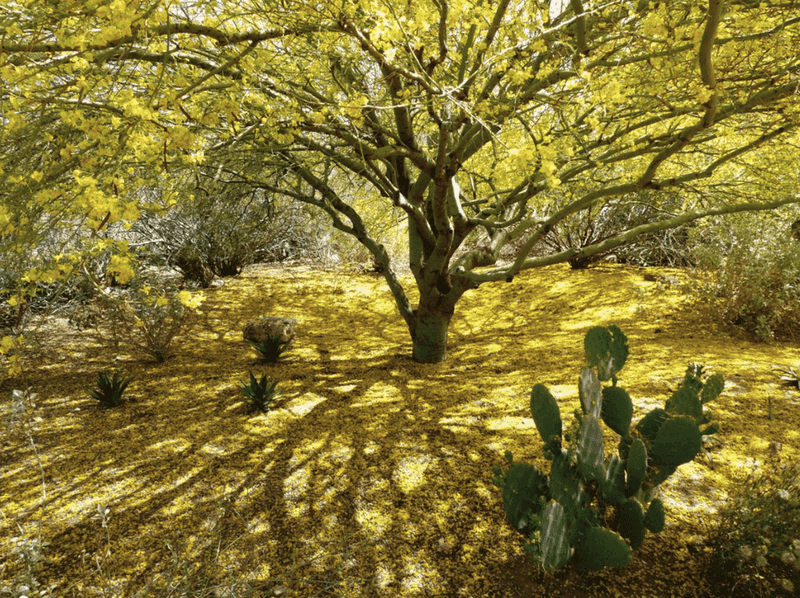
Arizona picked the palo verde as its state tree back in 1954, and one look at that glowing green bark explains why. The name means green stick in Spanish, and the trunk actually photosynthesizes, which lets the tree drop its tiny leaves during drought and keep working anyway.
For homeowners, the payoff is filtered shade that uses very little water once established. Varieties like Desert Museum are thornless, fast-growing, and loaded with yellow blossoms each spring.
Those flowers pull in native bees by the hundreds, turning your yard into a buzzing pollinator stop.
There is a pest-control bonus, too. Palo verde has an open, airy structure rather than a thick tangle at ground level, so it is less inviting to scorpions looking for cool, damp hiding spots.
Pair it with gravel mulch and morning watering, and the area under the canopy tends to stay drier and less appealing to them.
October planting gives the roots a full cool season to spread out. Water deeply every seven to ten days at first, then stretch the schedule as spring warms up.
Give it room, since a mature tree can spread 25 feet wide, and keep it away from pools where falling blossoms create cleanup.
3. Desert Willow
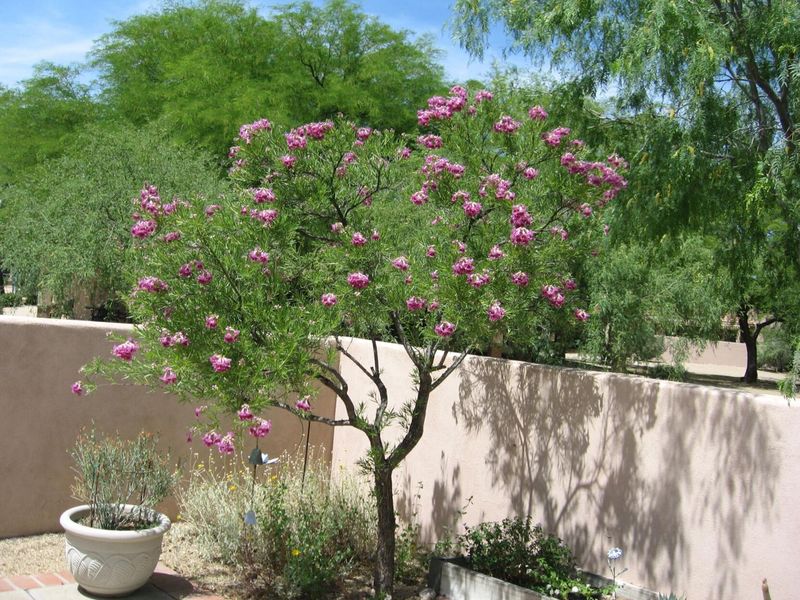
Want a tree that hummingbirds will fight over? Desert willow blooms from late spring into fall with ruffled pink, lavender, or burgundy trumpets that look almost tropical.
Your Arizona Garden Changes Every Week. Your Plan Should Too.
Gardening in Arizona changes quickly throughout the season. Every Friday you’ll receive a simple weekly plan showing exactly what to plant, prune, fertilize, harvest, and protect so you never miss the right timing.
Despite the name, it is not a true willow at all, just a desert native with long, skinny leaves that fooled early settlers.
Its size makes it a smart pick for smaller Phoenix and Tucson lots. Most trees top out between 15 and 25 feet, so it fits beside a patio or in a narrow side yard without crowding the house.
Hummingbirds, carpenter bees, and native bees all visit the flowers, and finches snack on the seeds later.
Gardeners hoping to support fireflies and other night insects can use desert willow as an anchor. Its winter leaf drop creates natural litter, and a lightly shaded, low-light corner under the branches may offer the kind of quiet habitat those insects prefer.
Turn off harsh porch lights nearby to help.
Plant in full sun before Halloween and water deeply twice a week for the first month. After that, weekly soaks through winter are plenty.
Low-seed varieties like Bubba or Timeless Beauty keep the long pods off your patio.
4. Agave
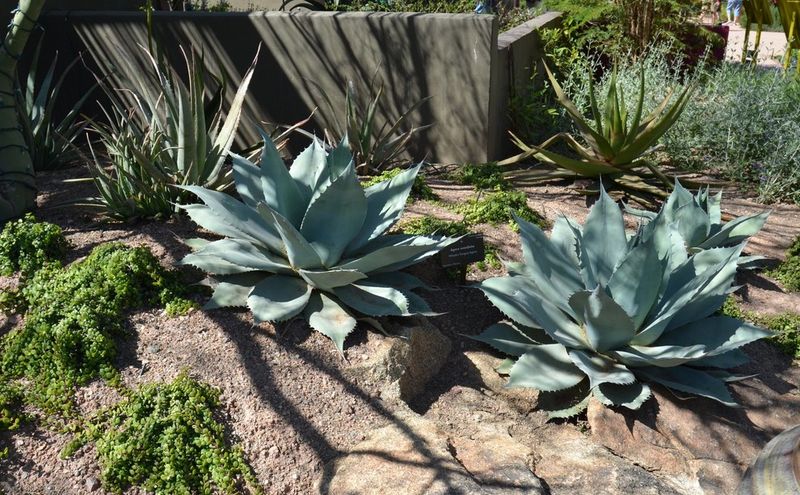
Think of an agave as a slow-motion fireworks show. For years it sits quietly as a sculptural rosette, then one day it shoots up a towering flower stalk that can reach 15 feet or more.
When that happens, the neighborhood nightlife shows up.
Nectar-feeding bats, including the lesser long-nosed bat, rely on agave blooms as a major food source during their migration. The sturdy, nectar-rich flowers are practically built for them.
Other bat species drawn to a wildlife-friendly yard may also help thin out mosquitoes and moths at night.
Fall is prime agave planting time, since cooler soil helps new roots form without stress. Choose a spot with excellent drainage, and plant the rosette slightly high so water runs away from the base.
Species like Agave parryi, Agave americana, and Agave palmeri all handle low-desert heat with very little water.
One honest caution: dense clusters of agave can shelter scorpions. Keep plants spaced generously apart, pull away debris at the base, and avoid placing them right against walls or patios.
That way you get the bat buffet without accidentally creating a cozy scorpion hotel beside your front door.
5. Parry’s Penstemon
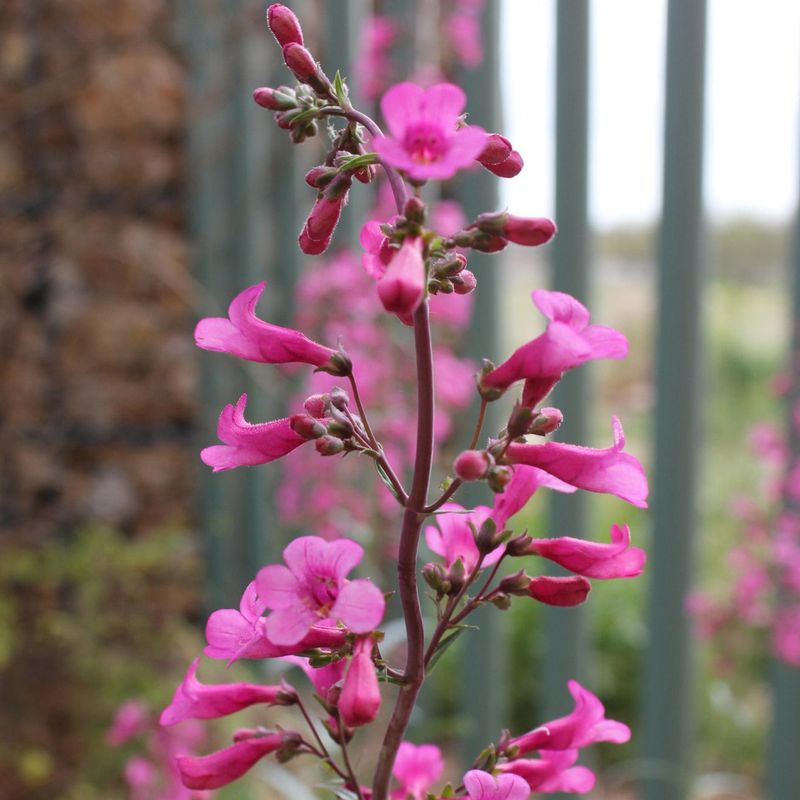
Some gardeners mark the start of spring by the calendar. Desert veterans mark it by the moment Parry’s penstemon sends up its tall spikes of rosy pink blooms, usually in February or March.
Getting that show, though, depends on what you do this fall.
Penstemons are short-lived perennials that build their roots during the cool season. Planting in October gives them months to settle in before they flower.
Seeds scattered now can sprout with winter rain, and established plants often reseed themselves, so one small patch can spread into a colorful drift.
The tubular flowers are shaped perfectly for hummingbird beaks, and native bees crawl right inside for pollen. Later in the season, goldfinches pick at the seed heads.
Leave a few stalks standing after bloom so the birds get their turn.
Care is refreshingly simple. Give them full sun or light afternoon shade, fast-draining soil, and no rich compost, which can actually shorten their life.
Once established, a deep watering every couple of weeks in spring keeps them happy.
Firecracker penstemon, with its bright red blooms, and desert penstemon make fine companions, stretching the hummingbird season even longer.
6. Autumn Sage
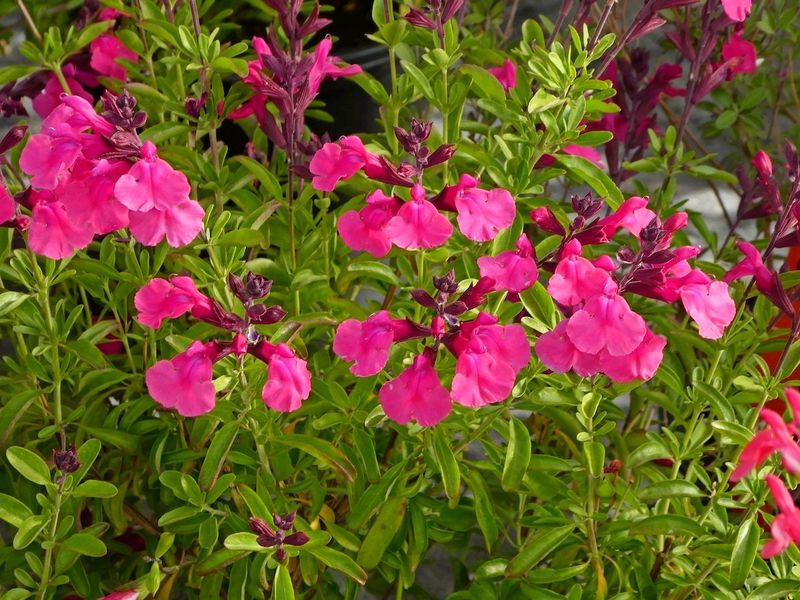
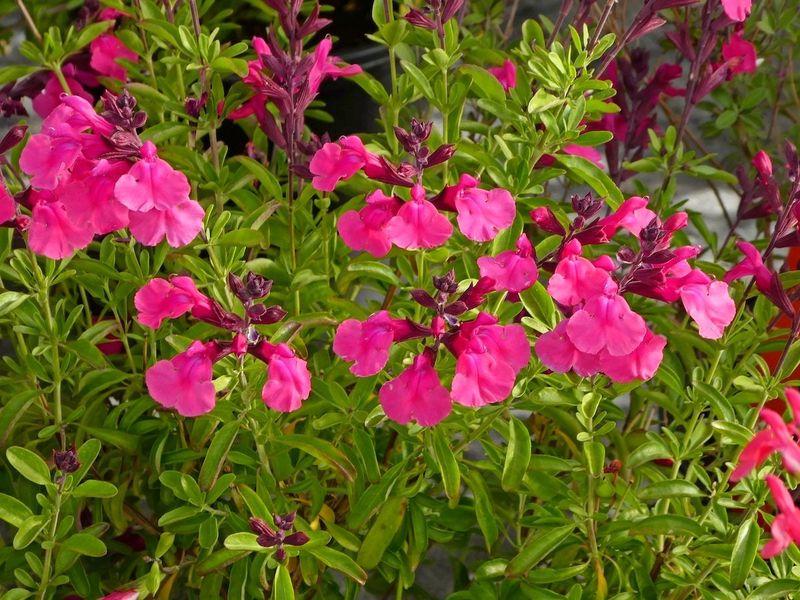
Hummingbirds treat autumn sage like a drive-thru that never closes. The small shrub, Salvia greggii, pumps out tubular flowers in red, coral, pink, or purple for months, with big flushes in spring and fall.
On a mild October morning, you might catch three hummingbirds squabbling over a single plant.
Its toughness is the real selling point. Autumn sage handles reflected heat, full sun, and alkaline soil, and it also tolerates partial shade on the east side of a house.
Once roots are established, deep watering every week or two in summer is usually enough.
Brush past the leaves and you will notice a strong, minty-herbal scent. Aromatic sages like this one may help discourage mosquitoes and some garden pests from lingering, so tucking a few near a patio seating area is a smart move.
Just keep expectations realistic, since scent alone will not clear a yard of bugs.
Planting before Halloween lets the shrub root in before winter, and it handles light frost with ease. Trim it back by about a third in late winter to keep it compact and less inviting as a hiding spot for scorpions.
Deer and rabbits generally leave it alone, too.
7. Desert Milkweed
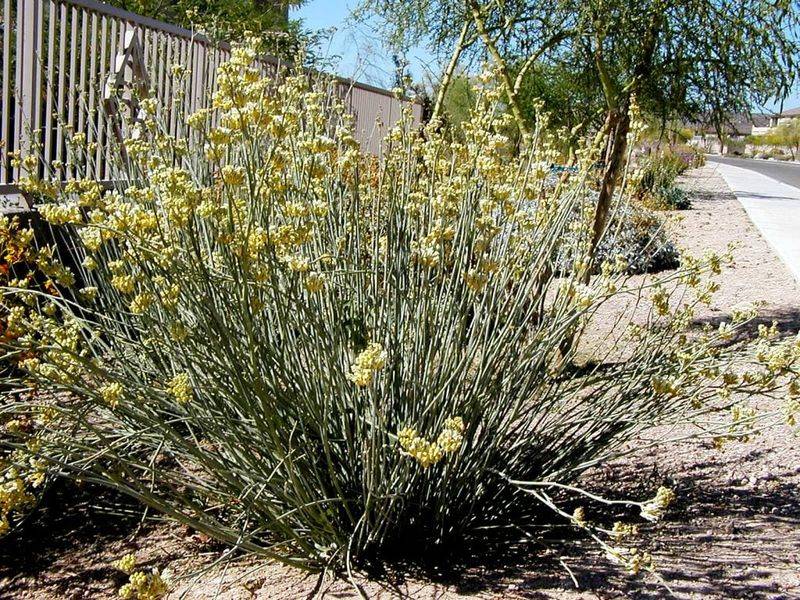
Every monarch butterfly drifting through Arizona is looking for one thing to lay its eggs on: milkweed. Without it, the next generation simply cannot happen.
Planting desert milkweed this fall turns your yard into a genuine nursery for one of North America’s most famous travelers.
Asclepias subulata looks a bit like a bundle of gray-green reeds, with almost no leaves at all. That odd shape is a water-saving trick, letting the plant handle brutal heat on very little irrigation.
Clusters of pale yellow flowers appear in spring and again after summer rains.
Monarchs and queen butterflies are the headliners, but the nectar also feeds native bees, wasps, and other helpful insects that may keep garden pests in check. Seeing striped caterpillars munching away is a sign the plant is doing its job.
Resist the urge to spray.
Give it full sun or light afternoon shade with good drainage. Water every week or two while it establishes over winter, then about every two to three weeks once summer arrives.
Group several plants together, since butterflies find a small cluster much faster than a lone stem.
Keep pets from nibbling, as the sap can upset stomachs.
8. Red Yucca
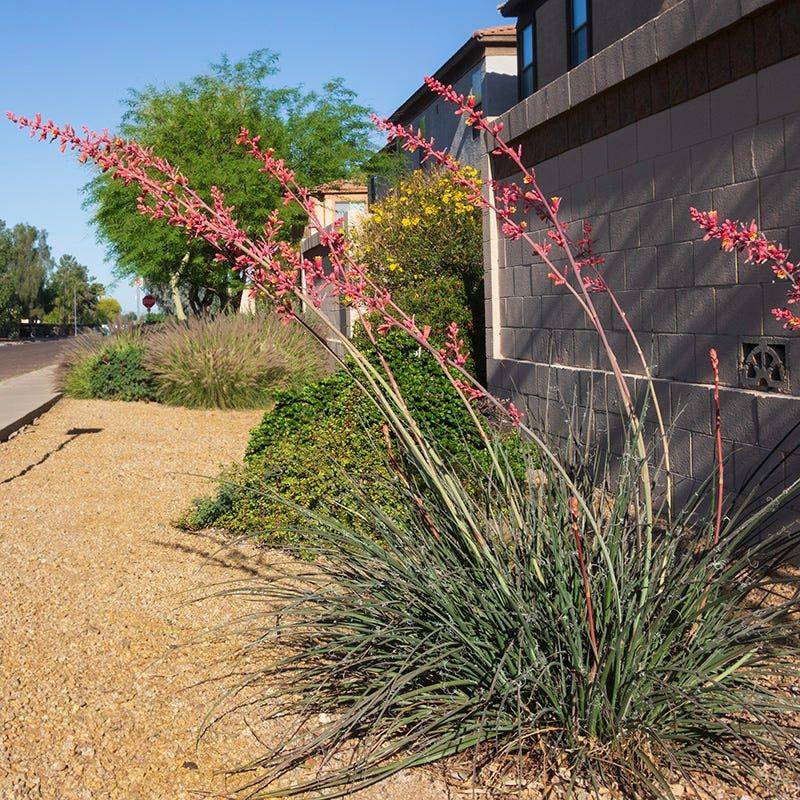
Here is the plant for the spot where everything else gives up. Red yucca, Hesperaloe parviflora, laughs at blazing afternoon sun, reflected heat off block walls, and weeks without rain.
It is not actually a yucca, but nobody at the nursery will hold that against you.
From spring through fall, arching stalks rise four to five feet above the grassy leaves, covered in coral-red or pink tubular flowers. Hummingbirds work those stalks all day, and at dusk, night-flying moths and occasionally bats may stop by for nectar.
Some gardeners leave the seed pods on to give finches a snack.
Water use is about as low as it gets for a flowering plant. After the first year, many established clumps manage on rainfall with a deep soak once or twice a month during the hottest stretch.
The leaves have no sharp spines, so it works beside walkways and play areas.
Plant in October so roots get established during mild weather. Space clumps a few feet apart and clear old leaves from the base now and then, which keeps the plant tidy and less appealing to scorpions seeking shelter.
Pull spent flower stalks in winter if you like a cleaner look.
9. Desert Marigold
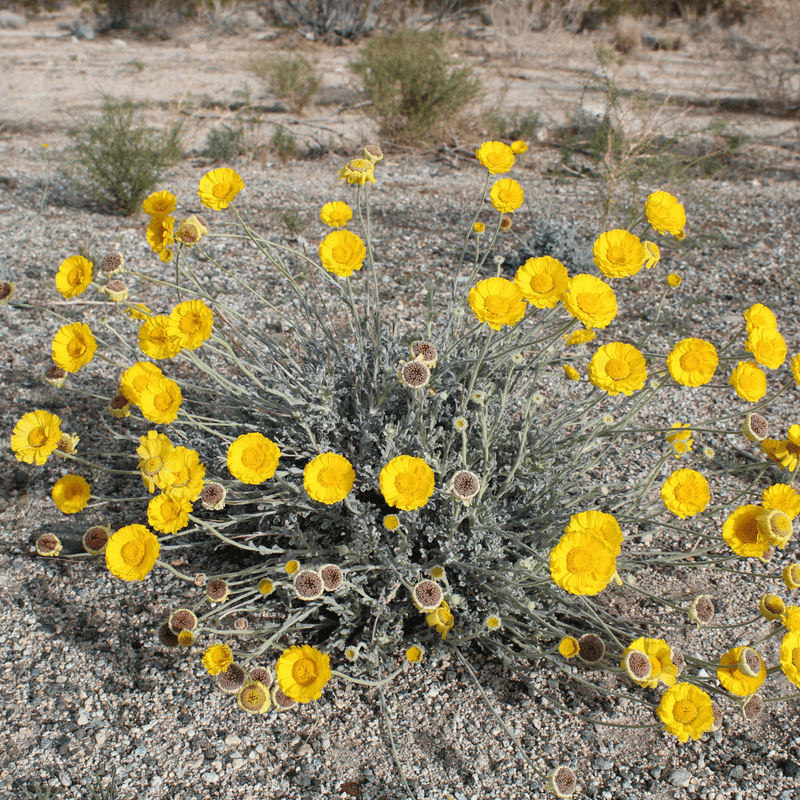
Few plants smile as hard as desert marigold. Its lemon-yellow daisies float above soft, woolly silver leaves nearly all year, and they seem to glow brightest along roadsides where nothing gets watered at all.
That wild toughness is exactly why it belongs in a low-desert yard.
Baileya multiradiata stays low and open, forming loose mounds about a foot tall rather than a dense thicket. That airy habit, combined with its preference for dry soil, makes it a poor fit for scorpions that seek damp, shaded cover.
Plant it near entryways and along foundations with gravel mulch instead of the thick, moisture-holding shrubs that can shelter pests.
Bees and butterflies visit the blooms constantly, and small birds pick at the seeds. Scattering seed in October works beautifully, since winter rains help it sprout.
Nursery transplants settle in quickly too.
Overwatering is the biggest mistake. Once established, desert marigold wants only occasional summer drinks, and too much water or rich soil can make it floppy and short-lived.
Let it reseed, and you will have a self-renewing carpet of gold for years with almost no effort.
Pair it with brittlebush and penstemon for a pollinator strip that barely touches the water bill.