12 Desert Perennials Arizona Gardeners Plant Once That Multiply Every Year Without Help
Most desert gardeners know the feeling of buying the same flowers every spring, only to watch them fry by July. The smarter move is to plant natives that handle 110-degree afternoons and quietly make more of themselves.
The 12 perennials below seed, sprout, or send out pups on their own, filling gaps in your yard while feeding hummingbirds, bees, and birds. Plant them once in fall, water them through their first year, and let the desert do the rest.
1. Chuparosa (Justicia californica)
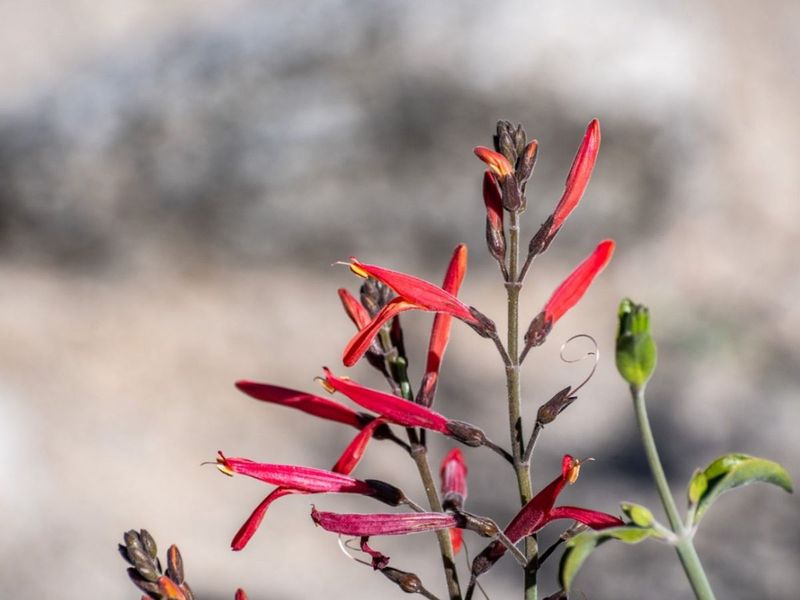
Hummingbirds seem to have a sixth sense for chuparosa. The name even comes from the Spanish word for hummingbird, and in late winter the sprawling green stems light up with red tubular flowers right when migrating hummers need fuel most.
What earns chuparosa a spot on this list is its quiet generosity. Seeds drop near the parent plant, and after a wet winter you will often find small seedlings tucked among the rocks.
Leave a few in place and you will have a loose, natural hedge within a couple of seasons.
The plant is built for Phoenix and Tucson summers. When the heat hits, it may drop its leaves, but the green stems keep making food through photosynthesis, so the shrub carries on while other plants sulk.
It also serves as a host plant for several native butterflies, including the elegant Texan crescent.
Plant in October or November in full sun or light afternoon shade, and do not worry about caliche or rocky ground as long as water drains. Give it a deep soak every week or two the first summer, then back off to occasional watering.
Expect a mound roughly three to four feet tall and wide.
2. Desert Marigold (Baileya multiradiata)
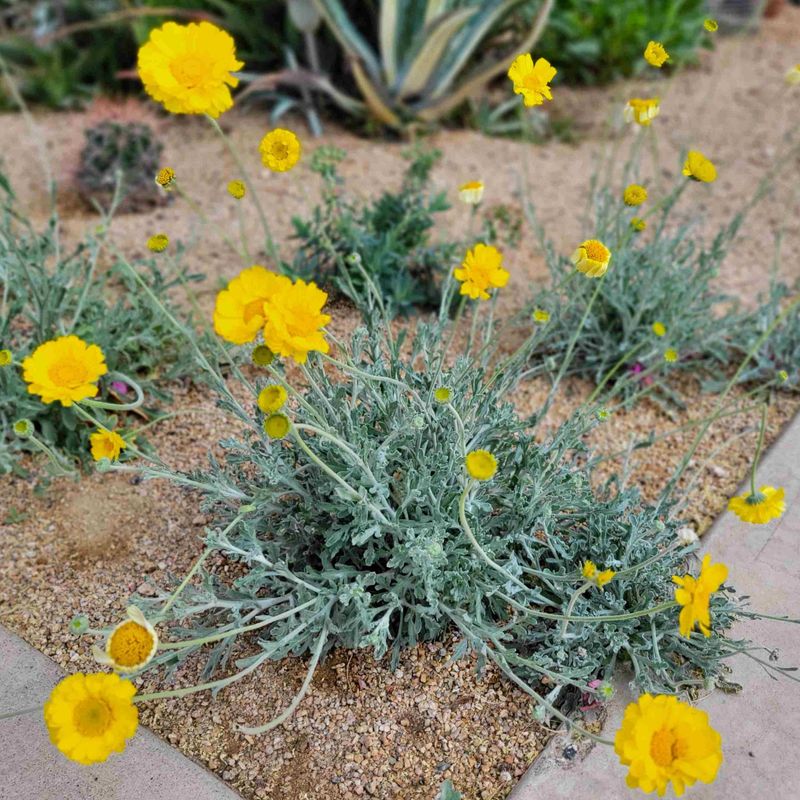
Drive any Arizona highway in April and you will spot bright yellow daisies blooming in the gravel shoulder, where nobody waters anything. That is desert marigold, and it tells you everything about how tough this plant really is.
Each plant forms a soft, silvery-gray mound topped with golden flowers on tall stems. Individual plants may only live two or three years, but that hardly matters.
They reseed so freely that a single plant can become a scattered colony, popping up along paths and between boulders.
For wildlife lovers, desert marigold pulls double duty. Native bees and butterflies work the blooms from spring into fall, and once the flowers fade, the seeds become snacks for finches, sparrows, and quail scratching around the ground.
Here is the secret to success: neglect it. Too much water and rich soil make it floppy and short-lived, so skip the fertilizer and plant it in lean, gravelly ground with full sun.
Scatter seeds or set out transplants in fall, water lightly until they settle in, and then let the rain handle most of the work.
Leave the spent seed heads standing through summer. They look a little scruffy, but they are next year’s garden in waiting.
3. Brittlebush (Encelia farinosa)
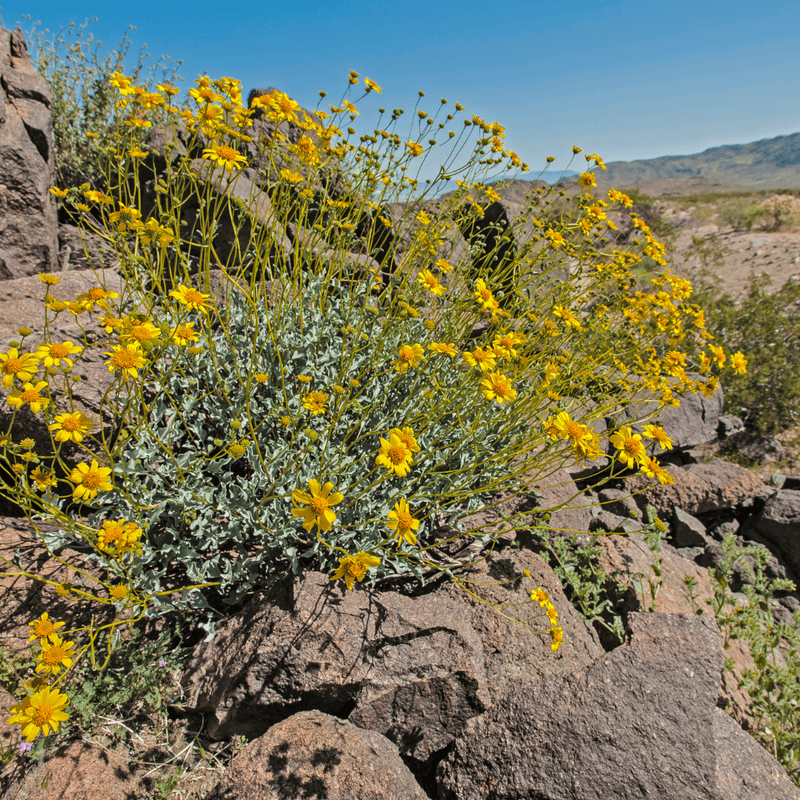
Few sights say Sonoran spring like a hillside glowing gold with brittlebush. Around February, these rounded, silver-leaved shrubs erupt in yellow flowers held high above the foliage, and suddenly the whole desert seems to hum with bees.
Your Arizona Garden Changes Every Week. Your Plan Should Too.
Gardening in Arizona changes quickly throughout the season. Every Friday you’ll receive a simple weekly plan showing exactly what to plant, prune, fertilize, harvest, and protect so you never miss the right timing.
Brittlebush grows fast, which makes it a smart pick for new yards that feel bare and hot. The fuzzy, pale leaves reflect sunlight, a clever trick that helps the plant stay cooler during 110-degree stretches.
In a true drought, it simply drops some leaves and waits for better days.
Multiplying is where brittlebush really shines. Birds and wind scatter its seeds, and new plants show up in open, sunny spots each year.
Extras are easy to pot up and share.
The shrub also offers shelter. Its dense, rounded shape gives lizards, quail, and small birds a shady hiding spot close to the ground, and the seeds feed desert birds after bloom.
Fun fact: early missionaries reportedly burned the sap as incense, and the name comes from its brittle, easily snapped stems.
Plant in fall in full sun and well-drained soil. Water a couple of times a month during the first summer, then almost never.
Trim lightly after flowering if you want a tidier look.
4. Goodding’s Verbena (Glandularia gooddingii)
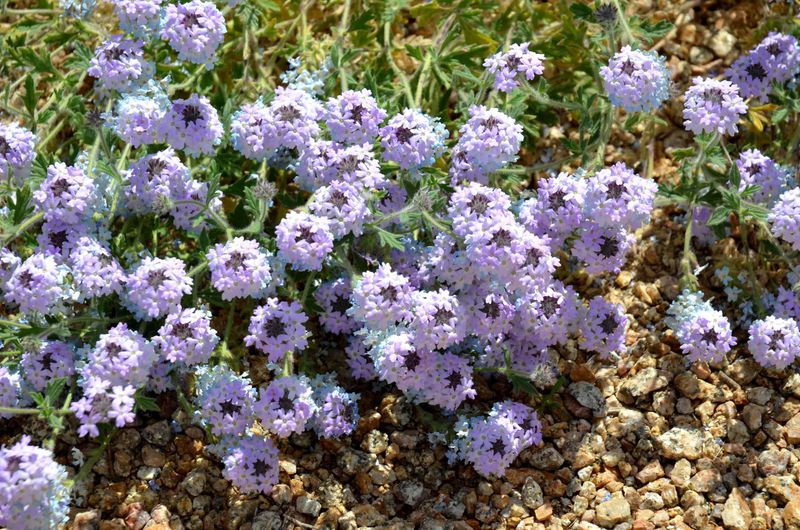
Want a groundcover that acts like it planted itself? Goodding’s verbena forms low, sprawling mats covered in clusters of lavender-pink flowers, and it wanders around your yard as though it has always lived there.
Bloom season starts in late winter and runs through spring. Then, after monsoon storms roll through in July or August, many plants flush with a second round of color.
Butterflies are the biggest fans, especially swallowtails and skippers, though native bees and the occasional hummingbird stop by too.
Goodding’s verbena reseeds generously and can root where stems touch the ground. Over a few years, a handful of plants can fill a rocky slope.
Think of it as a living mulch that shades the soil, cuts down on blowing dust, and crowds out some weeds.
Rocky, fast-draining soil suits it best, and full sun keeps it compact. Soggy ground is its main enemy, so keep it away from lawns or drip lines that run constantly.
Individual plants may fade after a few years, but their seedlings step right in. Plant in fall, water weekly until roots take hold, and then taper off to a deep drink during long dry spells.
A quick trim in early summer tidies things up without slowing the show.
5. Pink Fairy Duster (Calliandra eriophylla)
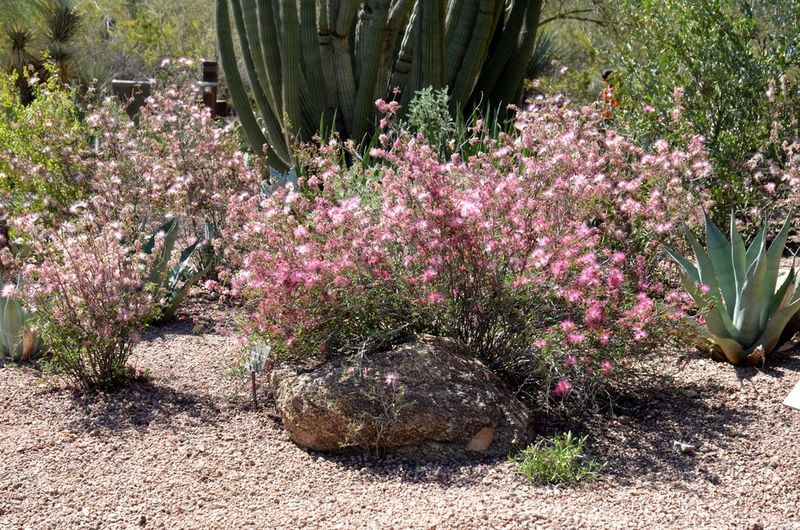
Picture a shrub covered in tiny pink pom-poms, each one made of dozens of silky stamens that look like they belong on a party costume. Pink fairy duster brings that playful look to the desert, and it does it with hardly any water.
Native to Arizona’s rocky slopes, this small shrub usually stays around two to three feet tall. Its feathery, fernlike leaves give a soft texture that contrasts nicely with agaves and cactus.
Flowers appear mostly in late winter and spring, with scattered blooms after monsoon rains.
Hummingbirds treat those puffs like a snack bar, and native bees work them too. Deer and rabbits may nibble the foliage, which reflects how valuable fairy duster is as wildlife food.
Established plants bounce back quickly from browsing.
The multiplying happens through small bean-like pods. When they ripen, they split open with a snap and fling seeds a short distance from the plant.
Given a bit of bare ground and winter rain, some of those seeds sprout into new shrubs nearby.
Plant in fall in full sun or partial shade with good drainage. Water every week or two the first year, and once it settles in, an occasional deep soak in summer keeps it looking fresh.
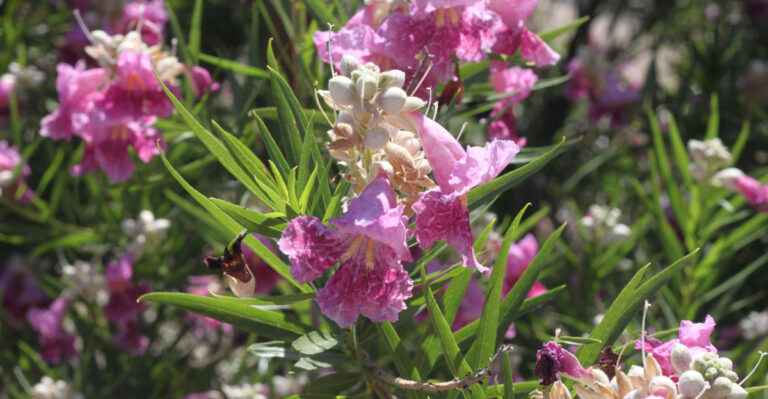
6. Arizona Yellow Bells (Tecoma stans var. angustata)
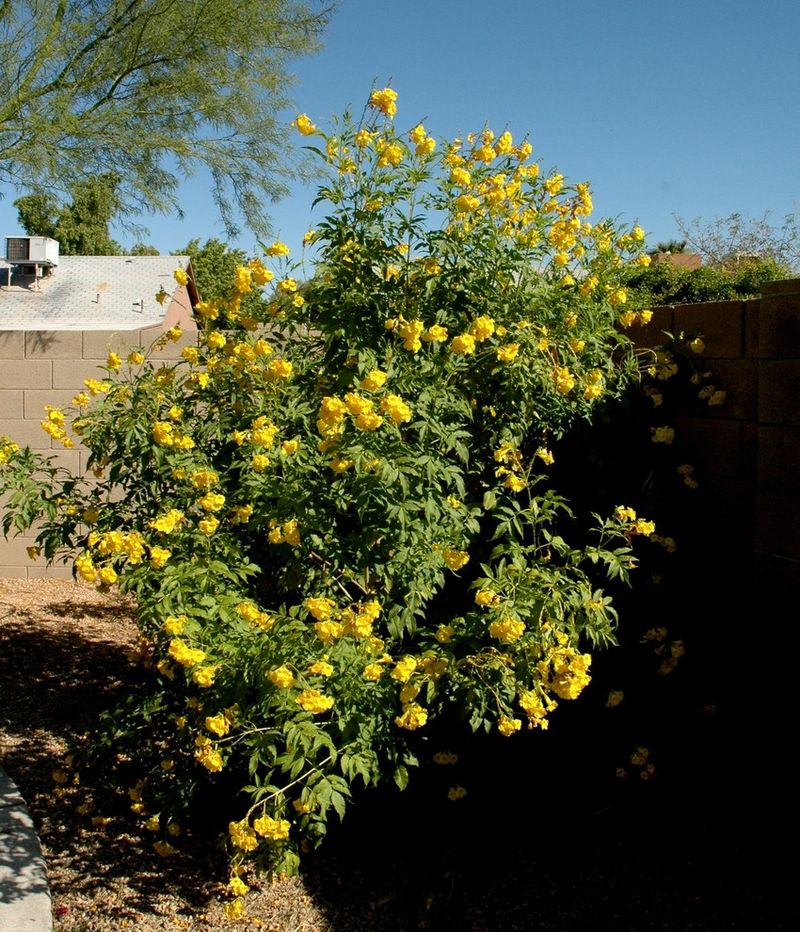
Some plants whisper. Arizona yellow bells shouts, draping itself in clusters of golden trumpet flowers from spring all the way into fall, even in the hottest months.
This variety, Tecoma stans var. angustata, has narrow leaves and is tougher and more cold-hardy than the tropical types sold in big-box stores. It is native to southeastern Arizona, so it already understands alkaline soil, dry winds, and baking sun.
Plants can reach six feet or more, making them useful for screening a block wall.
Hummingbirds zip between the blossoms all day, and bees and butterflies join in. On a July afternoon, a blooming yellow bells may be the busiest spot in the yard.
After flowering, long, skinny seed pods form and split open to release papery, winged seeds that drift on the breeze. If you leave the pods alone, you will likely find seedlings sprouting in gravel and along walls the next year.
Keep the ones you like and pull the rest while they are small.
Plant in spring after frost danger passes or in early fall, giving it full sun and reflected heat. Water deeply every week in summer the first year.
A light freeze may nip the tips, but new growth returns quickly in spring.
7. Parry’s Agave (Agave parryi)
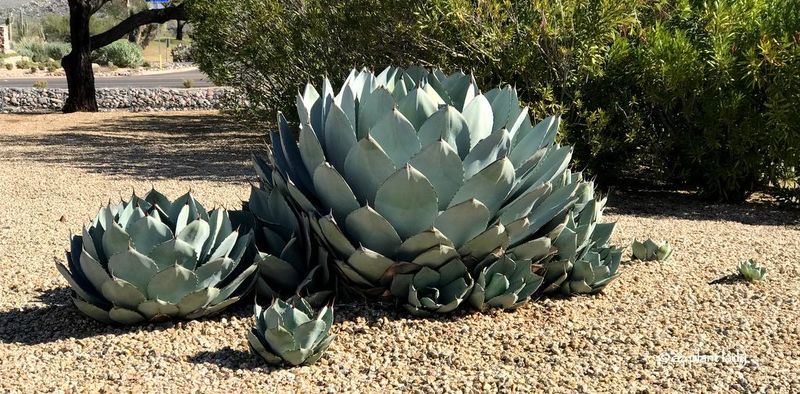
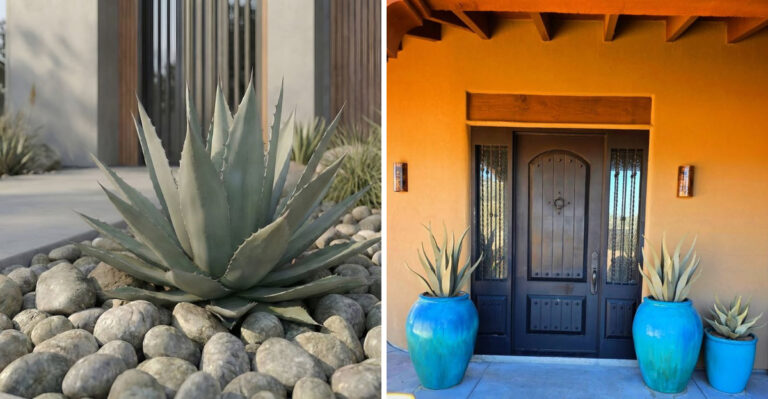
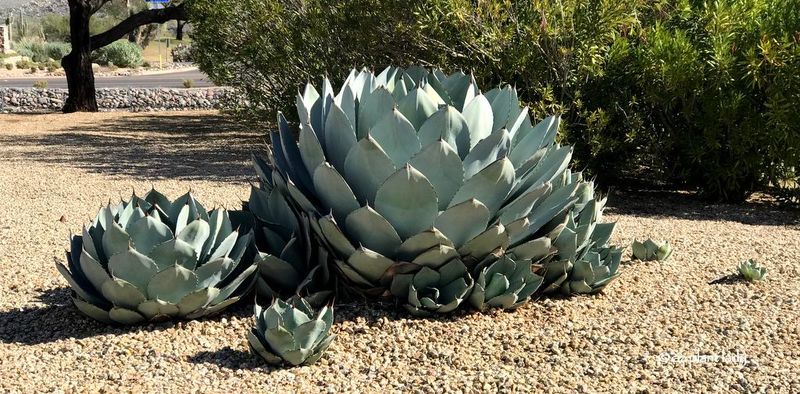
Agaves have a reputation as the ultimate plant-and-forget choice, and Parry’s agave, sometimes called artichoke agave, earns every bit of it. Its tight rosette of blue-gray leaves, each tipped with a dark spine, looks like a sculpture carved for your yard.
Here is where the multiplying comes in. Parry’s agave sends out little offsets called pups from its base, and over time one plant becomes a cluster of rosettes.
You can leave them for a natural colony look or pry them loose with a shovel and replant them elsewhere for free.
After 10 to 25 years, the mother plant sends up a tall flower stalk that can top 15 feet, covered in yellow blooms. Bats, hummingbirds, orioles, and bees flock to the nectar.
The main rosette fades after flowering, but by then its pups are ready to carry on.
Parry’s agave is one of the most cold-hardy agaves around, and it laughs at summer heat. Plant it in fast-draining soil and full sun, ideally in fall or spring.
Water about once a month during summer after the first year, and skip it entirely in winter.
Keep it a few feet from walkways so those spines stay out of reach.
8. Parry’s Penstemon (Penstemon parryi)
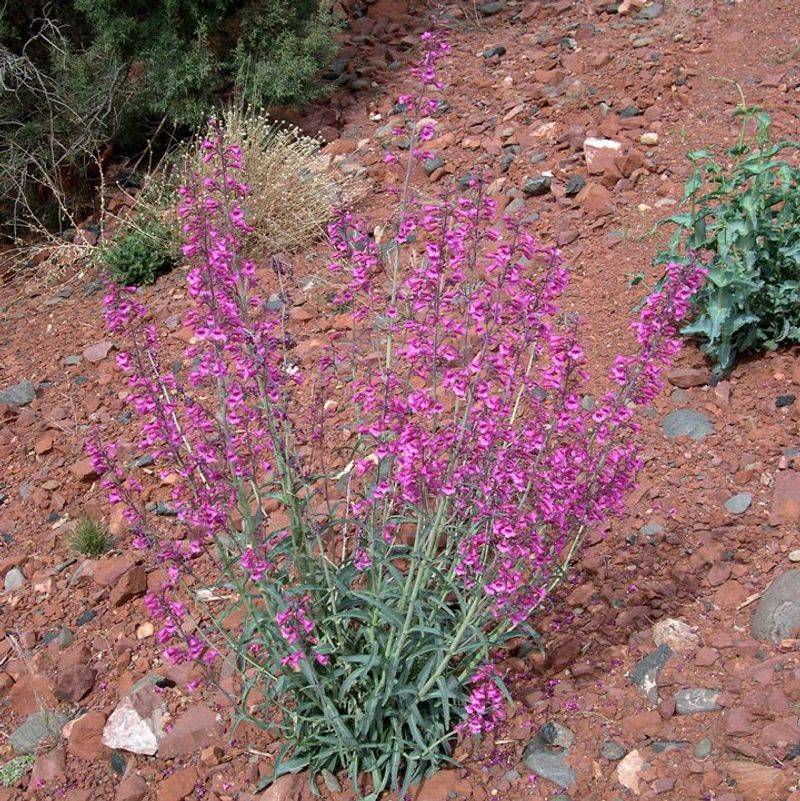
Tall pink spires swaying in a March breeze, with hummingbirds hovering around every stem, is the kind of scene that turns casual gardeners into native plant fans. Parry’s penstemon makes it happen with almost no effort.
Arizona is home to more than 50 penstemon species, but Parry’s is a standout for low-desert yards. It forms a low clump of smooth, gray-green leaves in winter, then shoots up flower stalks two to four feet tall covered in rosy-pink tubular blossoms.
Hummingbirds adore them, and native bees crawl inside for pollen.
Plants usually live only a few years, yet a patch of penstemon can persist for decades. The trick is letting the seed stalks dry on the plant before cutting them back.
Seeds fall, sprout with winter rains, and a fresh generation is blooming by the following spring or the one after.
Plant in fall so roots can grow through the cool months. Penstemon prefers lean, well-drained soil and full sun or light shade.
Rich soil and frequent summer water tend to cut its life short, so tuck it among rocks and let it rough it.
For extra color, mix in firecracker penstemon, which blooms scarlet around the same time, and you will double the hummingbird traffic.
9. Desert Globemallow (Sphaeralcea ambigua)
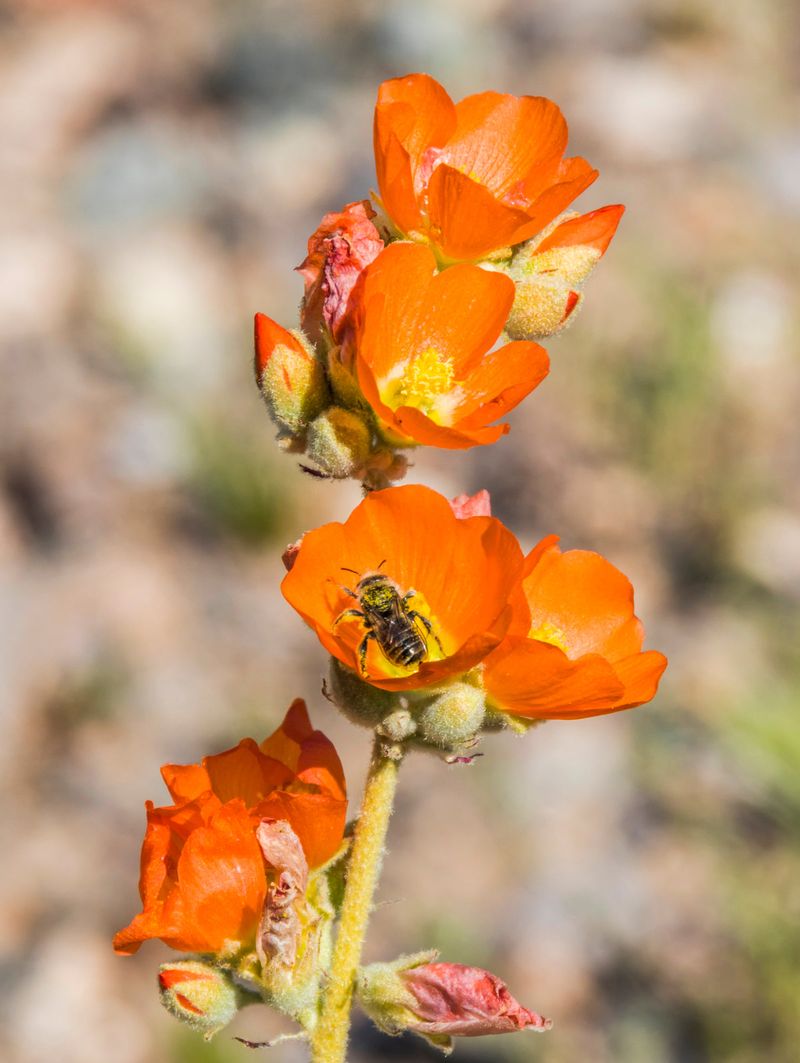
Orange is not a common color in the plant world, which makes desert globemallow such a treat. Its cup-shaped apricot flowers glow against fuzzy gray-green leaves from late winter through spring, with bonus blooms scattered through the year.
Globemallow is basically the definition of plant once, enjoy forever. It reseeds eagerly in disturbed or gravelly soil, and within a couple of years you may find volunteers popping up in unexpected places.
Some gardeners call it a friendly spreader, while others call it a reason to share seedlings with the whole street.
Its biggest wildlife payoff comes from specialist native bees. Several kinds of globe mallow bees depend on its pollen, and you will often find them resting inside the flowers in the morning.
Butterflies and other pollinators visit too, and the foliage feeds caterpillars of several small butterflies.
A word of caution: the tiny hairs on the leaves can irritate skin and eyes, so wear gloves when pruning. Some folks call it sore-eye poppy for that reason.
Plant it in full sun and nearly any soil that drains, including caliche. It handles reflected heat near driveways and walls with ease.
After spring bloom, cut it back by about half to keep it compact and encourage fresh growth before monsoon season.
10. Desert Milkweed (Asclepias subulata)
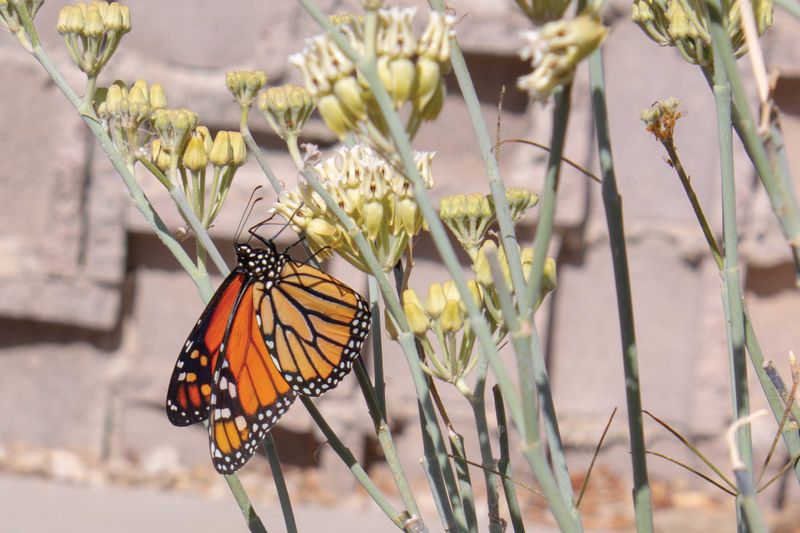
If you have ever wanted to help monarch and queen butterflies, desert milkweed is the plant to start with. Its slender, nearly leafless gray-green stems look like a bundle of reeds, but they are packed with purpose.
Queen butterflies, the monarch’s orange cousin that lives year-round in the low desert, lay eggs on milkweed because it is the only food their caterpillars will eat. Monarchs passing through on migration use it too.
Plant a clump, and you may soon spot striped caterpillars munching on the stems.
Desert milkweed spreads in two ways. Underground roots send up new stems around the original clump, and in fall the pods split to release seeds attached to silky white floss that floats across the yard.
Over time, a single plant can turn into a small stand.
Creamy yellow flowers appear from spring through fall, attracting bees, wasps, and butterflies. The plant needs little care beyond good drainage and full sun.
Expect aphids now and then, especially bright orange ones on new growth. Resist the urge to spray, because ladybugs and lacewings usually show up to handle them, turning the plant into a natural pest control station.
Plant in fall or early spring and water every week or two until established, then monthly in summer.
11. Blackfoot Daisy (Melampodium leucanthum)
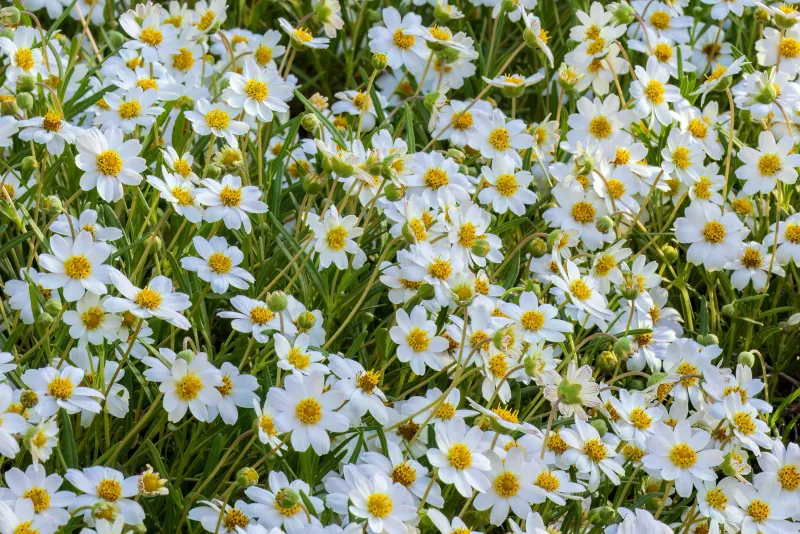
Small but mighty might be the best way to describe blackfoot daisy. It rarely grows taller than a foot, yet it can stay covered in white, honey-scented flowers for most of the year in the low desert.
Its tidy, rounded shape makes it a natural fit for tight spots where bigger shrubs would crowd walkways. Try it along a path or in a rock garden, where the heat bouncing off stone only seems to make it happier.
Blackfoot daisy self-seeds, though it is polite about it. New plants tend to appear a few feet from the parent in gravel mulch, filling gaps without taking over.
Butterflies, small native bees, and hover flies visit the flowers, and hover fly larvae are known for gobbling up aphids.
Water is where most people go wrong. Blackfoot daisy needs sharp drainage and hates wet feet, so overwatering is the fastest way to lose it.
Once established, a deep drink every two to three weeks in summer keeps blooms going.
Plant in fall in full sun. If plants get leggy after a few years, shear them back by a third in late winter, and they will bounce back fresh and compact.
The name comes from the dark bracts beneath each flower.
12. Chocolate Flower (Berlandiera lyrata)
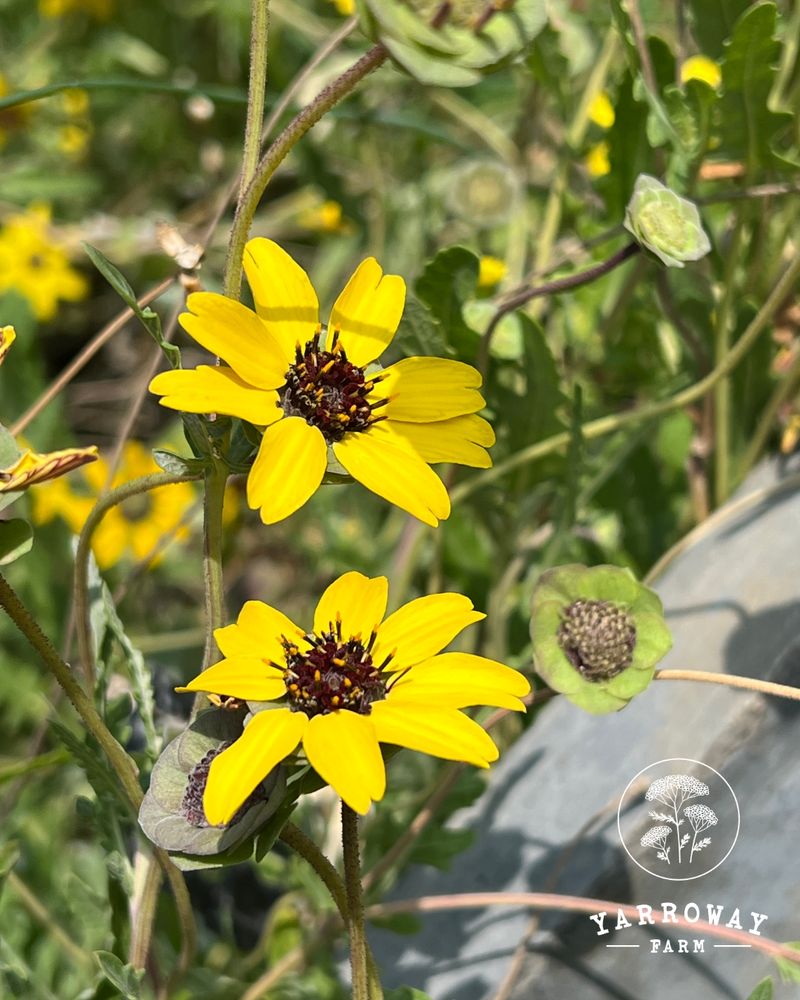
Step outside on a cool morning, lean over a patch of chocolate flower, and breathe in. Yes, it really smells like cocoa, and that sweet scent is strongest in the early hours before the day heats up.
Native to the Southwest, chocolate flower produces yellow daisies with maroon centers and green eyes, blooming from spring into fall. The flowers open in the morning and droop by afternoon.
After the petals drop, the green bracts form a neat little cup that holds the seeds.
That seed cup is the secret to its spreading ways. Seeds fall right around the plant, and it reseeds reliably enough that a single clump can become a fragrant border in a few seasons.
Goldfinches and other seed-eating birds also love picking through the heads.
Pollinators follow the scent too. Native bees and butterflies visit throughout the season, making chocolate flower a sweet addition to any pollinator bed.
Give it full sun and well-drained soil, and keep water on the light side. It forms a deep taproot, which helps it ride out long dry stretches but also means it dislikes being moved, so pick its spot carefully.
In low-desert yards, a little afternoon shade in midsummer keeps it blooming longer.