Desert Marigold by Your Front Steps: What This Arizona Native Can Actually Do
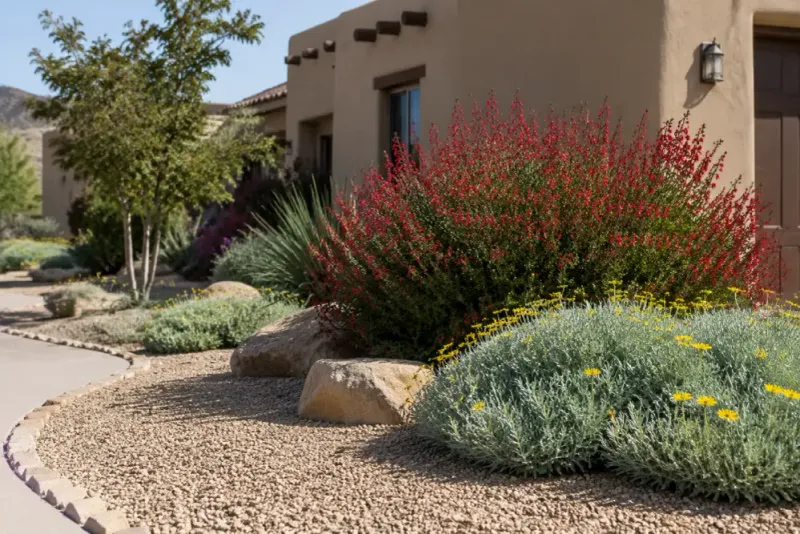
Desert marigold (Baileya multiradiata) is a compact, yellow-flowering native that grows across Arizona and handles heat in ways most garden plants simply cannot. Planted near a sunny, well-drained front entry, it can offer color through much of the year and give native bees and butterflies a place to feed.
Before you grab a shovel, though, it helps to know what this plant actually needs, what it reliably delivers, and where a few common assumptions about it fall short.
The claimed planting trend is not established
Headlines about Arizonans rushing to plant desert marigold by their front steps make for a catchy story, but the research behind that claim is narrower than it sounds. A Phoenix-area study analyzing resident surveys from 2017 and 2021 found that desert-plant additions to residential landscapes had been increasing since the mid-2010s.
That is a meaningful finding, but it covers desert plants broadly across Phoenix-area neighborhoods, not desert marigold specifically, not front-step placement, and not any particular planting season.
Generalizing that study to all Arizona homeowners would also be a stretch. Phoenix metro conditions, lot sizes, and landscaping habits differ from those in Tucson, Flagstaff, or rural communities across the state.
A single urban survey cannot speak for every Arizona resident.
None of that makes desert marigold a poor choice. The plant has real strengths worth examining on their own terms.
The point is simply that the trend framing is not something the available evidence supports, and starting with an accurate picture helps you make a better decision for your own yard.
A sunny, well-drained entry bed may suit this Arizona native
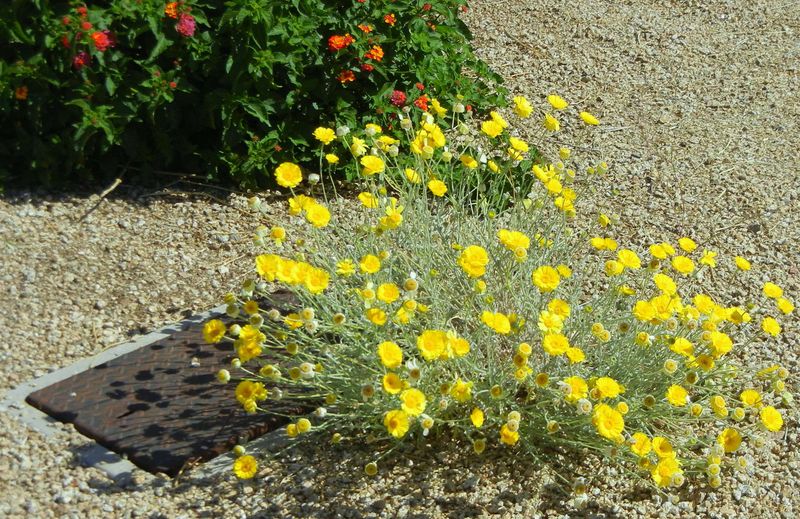
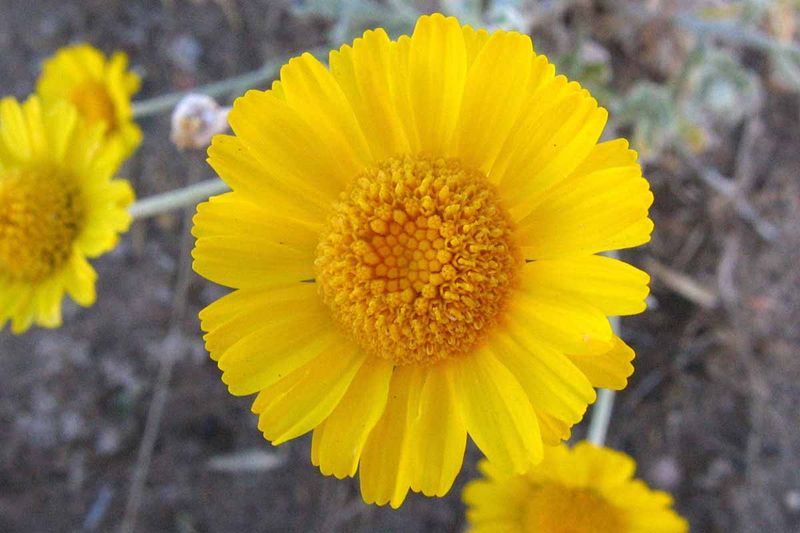
Baileya multiradiata is an Arizona native, not a cultivated stand-in. Low-growing and compact, it produces woolly gray-green foliage and bright yellow daisy-like flowers that look at home in the kind of spare, sun-baked landscape that defines much of the state.
Unlike common garden marigolds (Tagetes), which are warm-season annuals bred for ornamental beds, desert marigold is a distinct species adapted to desert soils and extreme heat. Claims about one should not be applied to the other.
According to the USDA Natural Resources Conservation Service plant guide for Baileya multiradiata, the plant tolerates a range of soils, including caliche, provided drainage is good. It performs best in full sun.
Those two conditions, full sun and good drainage, are requirements to check at your specific entry, not features you can assume every doorstep has.
A north-facing entry or one shaded by an overhang for much of the day is not a strong candidate. Compacted clay that holds water after rain is another poor fit.
Where the bed gets direct sun most of the day and water moves through the soil quickly, desert marigold’s compact size and heat tolerance make it a reasonable native option for a small planting near the front steps.
Flowers and seeds offer potential habitat value
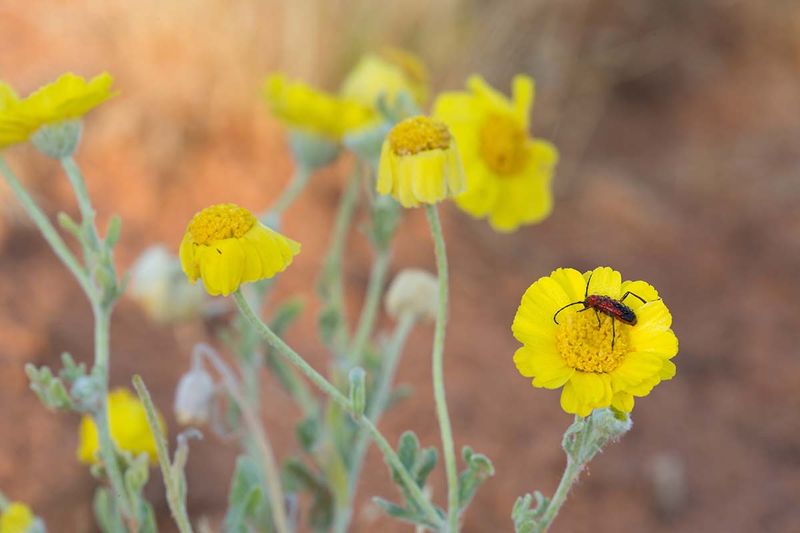
One practical reason to consider desert marigold near a front entry is what its flowers can draw in. Native bees are attracted to the blooms, particularly during monsoon season when foraging activity picks up.
Your Arizona Garden Changes Every Week. Your Plan Should Too.
Gardening in Arizona changes quickly throughout the season. Every Friday you’ll receive a simple weekly plan showing exactly what to plant, prune, fertilize, harvest, and protect so you never miss the right timing.
Nectar-feeding butterflies also visit the flowers, and some wildlife species use the seeds once blooms fade. These are documented tendencies based on the plant’s known traits, not a promise that planting one specimen will transform your entry into a pollinator hotspot.
Habitat value and pest control are different things. Desert marigold is not known to repel scorpions, mosquitoes, ticks, or other unwanted animals.
Framing it as a natural pest deterrent would go beyond what the evidence shows. What it can do is contribute to a yard that supports native pollinators, which has its own value for gardeners who want their outdoor space to function as something more than decoration.
The USDA guide also notes that the plant hosts the desert marigold moth alongside the beneficial visitors. Expect a mix of wildlife interactions rather than a curated guest list.
For a small, sunny bed near a front entry, even modest pollinator activity adds a layer of ecological function that most conventional ornamentals simply do not provide.
Choose planting time around local conditions
Fall is a reasonable time to plant desert marigold in much of Arizona, but the calendar is not the only thing that should guide the decision. The USDA recommends sowing seed from fall to early winter, placing seeds about one-eighth to one-quarter inch deep in a weed-free seedbed.
Fall transplanting is also recommended for container-grown plants. Both approaches take advantage of cooler temperatures and the possibility of winter rains helping young plants get established before summer heat arrives.
Where things get more complicated is elevation and actual weather. Arizona spans a wide range of elevations and climates, and what works in the Phoenix metro in October may not translate directly to a higher-elevation community dealing with early frost or a drier-than-usual fall season.
The Arizona Native Plant Society advises gardeners to respond to real conditions rather than a fixed statewide calendar date, coordinating planting with actual rainfall and local soil moisture rather than the month alone.
A dry monsoon season is one reason to wait for fall rather than planting in summer heat without adequate moisture to support establishment. Watching what the weather is actually doing in your area, and whether the soil has cooled enough to encourage root growth, will serve you better than following a one-size-fits-all schedule.
Prepare the bed and water plants as they establish
Getting desert marigold off to a good start begins with the bed itself. Clear weeds thoroughly before sowing, since competition from other plants can undermine germination in a small entry bed.
Sow seeds at about one-eighth to one-quarter inch deep and press them into good contact with the soil. Do not cover them with organic mulch at the crown; the Arizona-Sonora Desert Museum’s care guidance flags excess moisture at the crown as a contributor to crown rot, which is one of the more common ways this plant fails in residential settings.
Germination can be erratic. Expect seedlings to appear anywhere from 7 to 45 days after sowing, and do not assume a slow start means the seeds have failed.
Patience matters here more than intervention.
New plants need water while their roots are getting established, and that applies even to a drought-tolerant native. Water consistently during the first weeks after planting, then scale back as the plant settles in.
During dry stretches, occasional supplemental watering can help sustain vigorous bloom. The goal is soil that dries out between waterings, not one that stays persistently wet.
A well-drained bed that gets light, infrequent water once the plant is established will support it far better than a spot that collects runoff or receives daily irrigation.
Expect variable bloom and check access by grazing animals
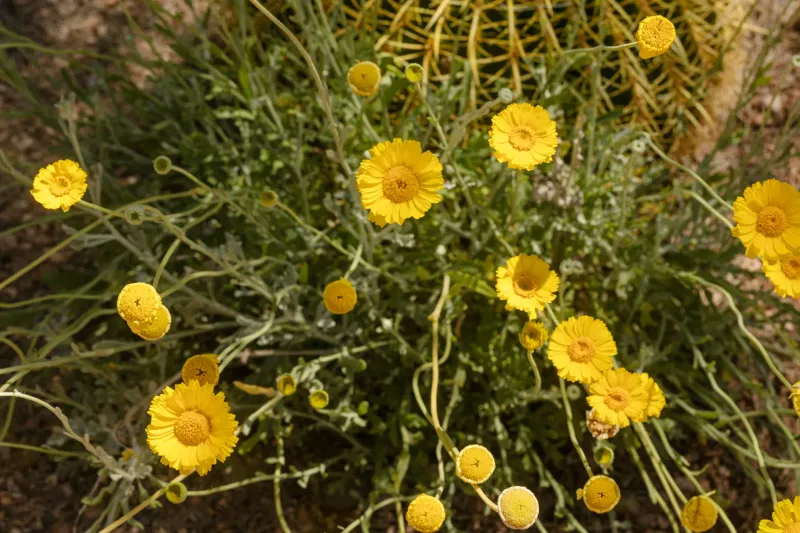
Over time, desert marigold may self-sow in open, gravelly areas near where it is planted. The USDA guide describes this as a natural behavior for the species, but self-sowing does not produce a tidy, uniform display.
Expect scattered seedlings that naturalize across open ground rather than a permanent, evenly spaced planting. Some years will bring more seedlings than others, depending on soil conditions and rainfall.
Bloom itself is variable. The plant can flower from spring through fall, but elevation, rainfall, and growing conditions all influence how long and how heavily it blooms.
Severe drought can stop flowering and foliage production entirely. A summer with limited monsoon activity may mean a quieter display than the previous year, even from a well-established plant.
Supplemental watering during those dry stretches can help, but consistent bloom through every season is not something to count on.
One safety note deserves attention before planting near areas where animals have access. The USDA plant guide reports that sheep and goats can be poisoned by desert marigold, and notes compounds in the plant that can irritate eyes, the nose, and the gastrointestinal tract.
That livestock finding does not translate directly into a definitive statement about risk to household pets, but it is reason to be cautious if you have animals that might chew on plants near the entry. A flower that works well for a pollinator-friendly front bed can still call for a second look depending on who else shares the yard.