Why California Pothos Vines Develop Small Leaves (And How To Fix It)
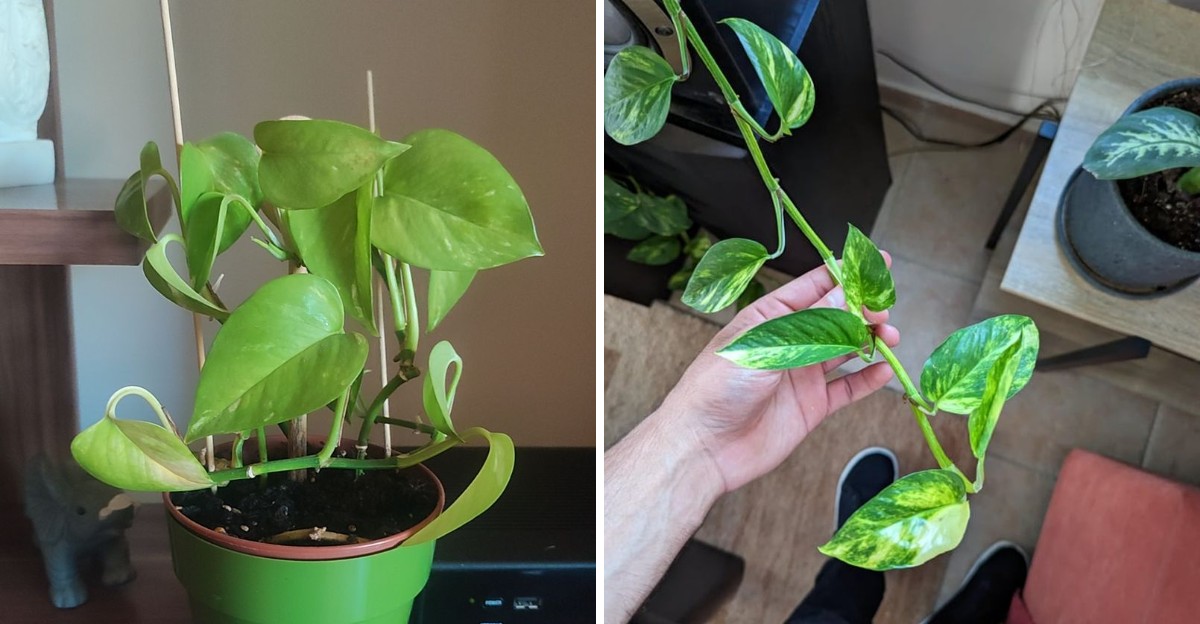
At the nursery, your pothos looked lush, big glossy leaves spilling over the pot in every direction.
A few months after bringing it home, though, the new leaves are coming in smaller and smaller with each round of growth.
Something changed the moment that plant left the greenhouse and moved into your living room, and it has less to do with the pot itself than most people assume.
Curious what’s actually driving those shrinking leaves, and how far back the fix really starts? The answer begins on a bookshelf ten feet from the nearest window.
Low Light Is The Most Common Cause
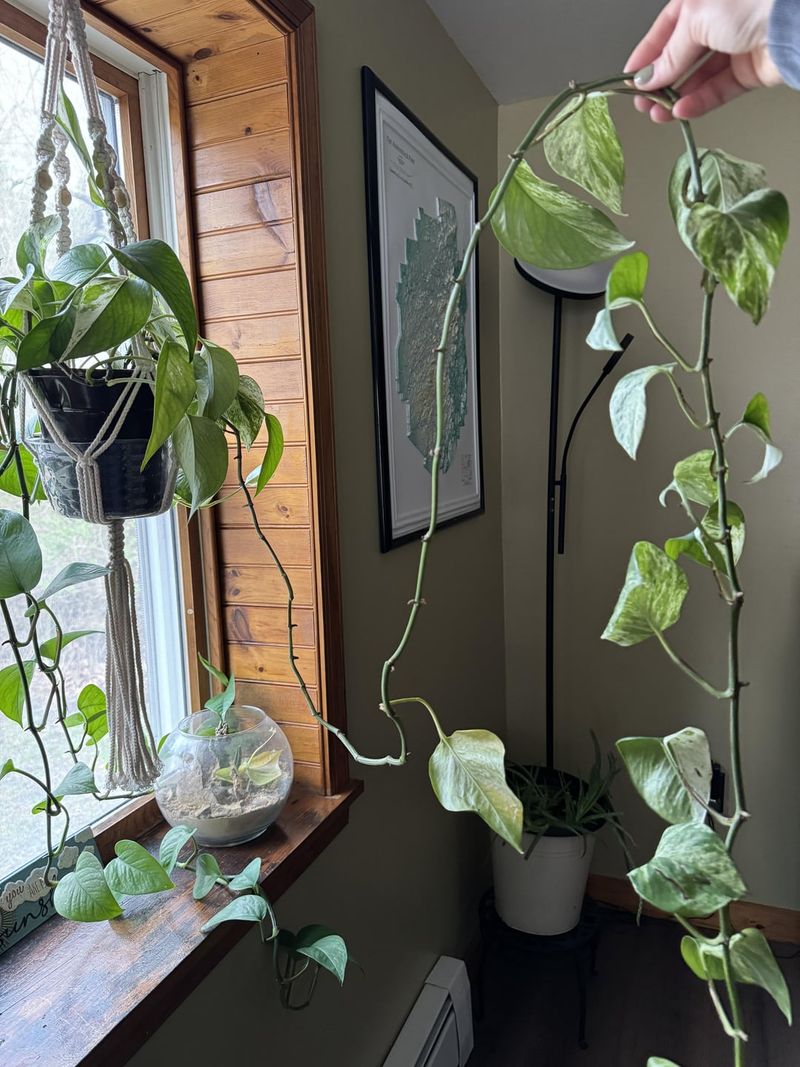
A pothos tucked on a bookshelf ten feet from the nearest window keeps growing, but each new leaf looks a little more like a coin than a heart.
That slow shrinking is the plant telling you something simple. It is not getting enough light.
Pothos, known to scientists as Epipremnum aureum, makes its food through photosynthesis.
Leaves act like solar panels, and every leaf costs the plant energy to build. When light is weak, the vine has less energy to spend, so it builds smaller, thinner leaves to save resources.
Extension houseplant guides list pothos as tolerant of low light, and that’s true.
Tolerant does not mean thriving, though. A pothos can survive in a dim hallway for years, yet it will usually trade size and color for survival.
You may notice other clues along with tiny leaves.
Stems often stretch out with long gaps between leaves, a habit called legginess. Variegated types like Golden or Marble Queen may lose their creamy streaks and turn mostly green, since green tissue captures more light.
Before blaming fertilizer or the pot, check the light first.
Stand where your plant sits and look toward the window. If you cannot see much open sky, or the spot feels dim at noon, light is almost certainly the main problem.
Many California homes have deep roof overhangs and shaded patios that cut indoor light more than people expect. Even a sunny state can hide dim corners.
Brighter Indirect Light Restores Full Sized Leaves
Here’s the good news. This fix usually costs nothing at all.
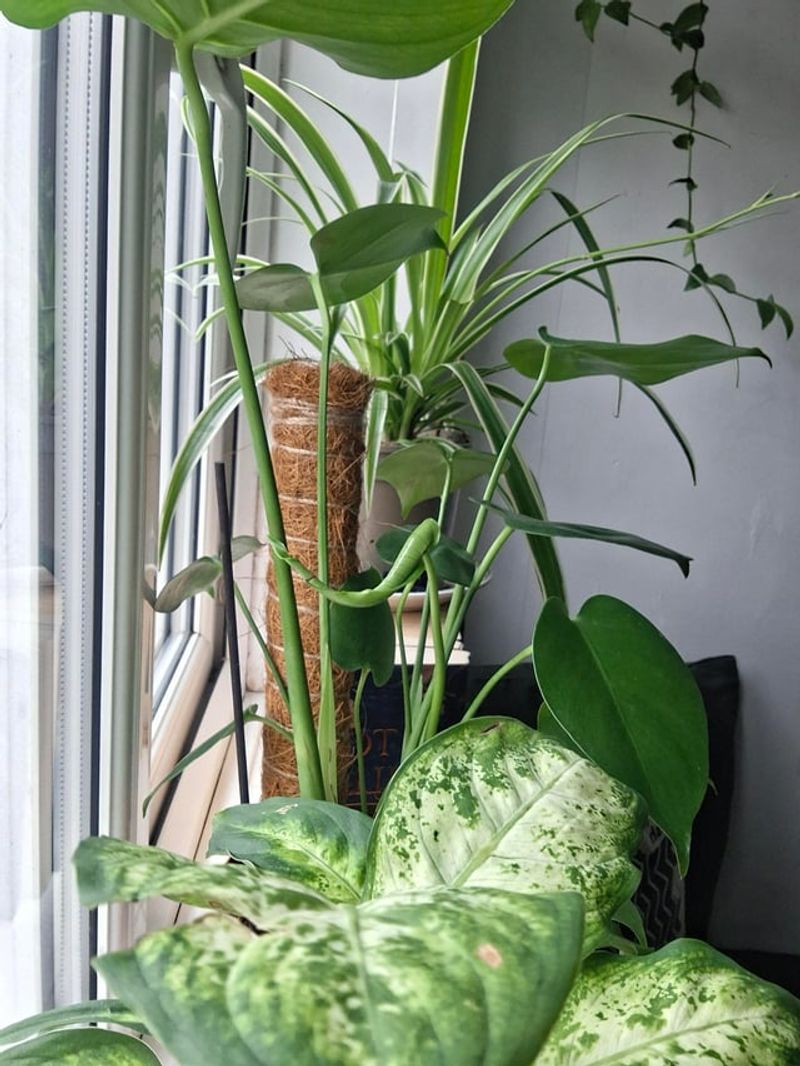
Moving your pothos closer to a window is often the single most helpful change you can make. Brighter, indirect light gives the vine the energy it needs to build bigger leaves again.
So what counts as bright indirect light?
Think of a spot near an east-facing window, or a few feet back from a south or west window. The room should feel bright most of the day, but harsh sun rays should not beam straight onto the leaves for hours.
Direct afternoon sun, especially through a hot west window in summer, can scorch pothos leaves.
Scorched spots look pale, yellow, or crispy brown. A sheer curtain works like sunglasses for your plant, softening strong light while keeping the room bright.
No good window? A grow light can fill the gap.
Simple full-spectrum LED bulbs placed about one to two feet above the plant, running around 10 to 12 hours a day, work well for many indoor growers.
Your California Garden Changes Every Week. Your Plan Should Too.
Gardening in California changes quickly throughout the season. Every Friday you’ll receive a simple weekly plan showing exactly what to plant, prune, fertilize, harvest, and protect so you never miss the right timing.
Try shifting the pot within three to five feet of a bright window this week.
Wipe dust off the leaves with a damp cloth so they soak up more light, and turn the pot a quarter turn every week or two so all sides get a fair share.
Make changes gradually if the plant has lived in deep shade. A sudden jump into strong light can stress it.
Inconsistent Feeding Can Limit New Growth
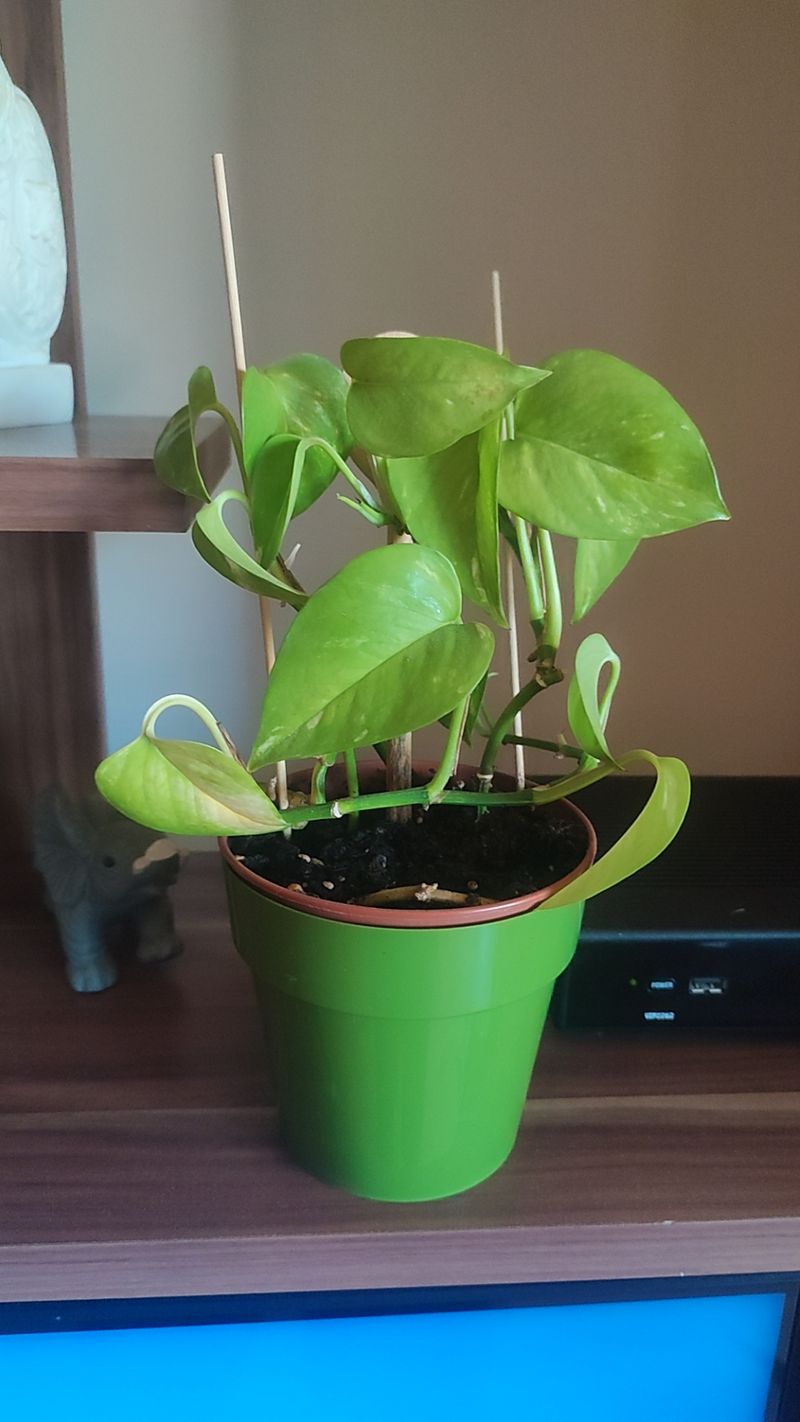
Food matters, but it plays backup to light. A pothos in a bright spot that never gets fertilizer may slowly run low on nutrients like nitrogen, which plants use to build leaves and stems.
When that happens, new growth can come in smaller and paler.
The key word here is consistency.
Feeding heavily once, then forgetting for six months, gives the plant a feast followed by a famine. Steady, light feeding during the growing season works much better.
Most extension guides suggest a balanced liquid houseplant fertilizer about once a month in spring and summer.
Many growers dilute it to half strength to be safe. In fall and winter, when growth slows, you can feed less or stop.
More is not better.
Too much fertilizer builds up salts in the soil, which can burn roots and cause brown leaf tips. If you see a white crust on the soil or pot rim, flush the pot with plenty of plain water and let it drain fully.
Here’s an easy way to remember it.
Light is the engine, and fertilizer is the fuel additive. A pot full of nutrients cannot make up for a plant sitting in a dark corner, because the plant has no energy to use those nutrients.
Set a monthly phone reminder for feeding days. It sounds small, but that simple habit keeps your pothos from running on empty.
Rootbound Pots Slow Leaf Development Too
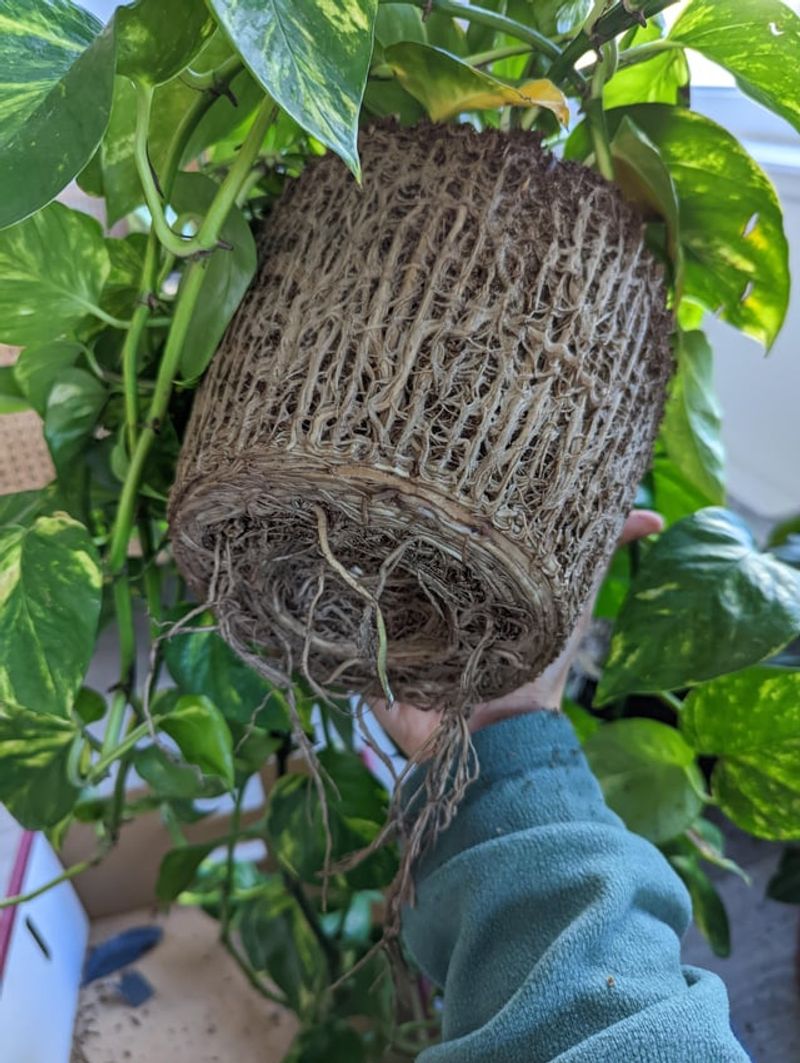
Ever slipped a pothos out of its pot and found a tight coil of roots circling the bottom? That tangled mass is what gardeners call rootbound.
Pothos can handle snug pots for a while, but a badly crowded root system can slow leaf growth.
Roots need room to take up water and nutrients.
When they fill every inch of soil, water rushes through without soaking in, and there’s little soil left to hold food. The plant may respond with smaller leaves and slower growth, even in good light.
Look for these warning signs.
Roots poke out of the drainage holes or creep over the soil surface. The soil dries out just a day or two after watering, or water runs straight out the bottom.
If you spot them, repot in spring or early summer.
Choose a pot only one to two inches wider than the old one, with drainage holes. A much bigger pot holds extra wet soil, which can lead to root rot, a far worse problem than crowding.
Gently loosen circling roots with your fingers before setting the plant in fresh, well-draining potting mix.
Water well and keep it out of harsh sun for about a week while it settles in.
Remember that repotting is a helper, not a cure. If the vine sits in dim light, new roots alone will not bring back big leaves.
Humidity Levels Play A Smaller Supporting Role
Pothos comes from tropical forests in the Solomon Islands area of the South Pacific, where the air feels warm and damp.
Because of that background, many people assume dry air is the reason for small leaves. Humidity does matter a little, but it sits far behind light on the list.
Normal household humidity is fine for most pothos.
The plant is famous for handling average indoor air, which is one reason it’s such a popular beginner plant. Very dry air, though, can cause crispy brown edges and slightly slower growth.
In many parts of California, dry Santa Ana winds in fall and indoor heating in winter can drop humidity quite low.
Air conditioning in summer dries the air too. During those times, a small boost can help your plant feel more comfortable.
Try grouping several houseplants together, since plants release moisture as they breathe.
You can also set the pot on a tray of pebbles with water just below the pot bottom. A small room humidifier is another simple option.
Misting feels helpful, but the effect lasts only minutes.
Most extension resources consider it a weak way to raise humidity. Keep the plant away from heater vents and blasting air conditioners, which dry leaves fast.
Think of humidity as the side dish, not the main course.
Fresh Growth Shows Improvement First
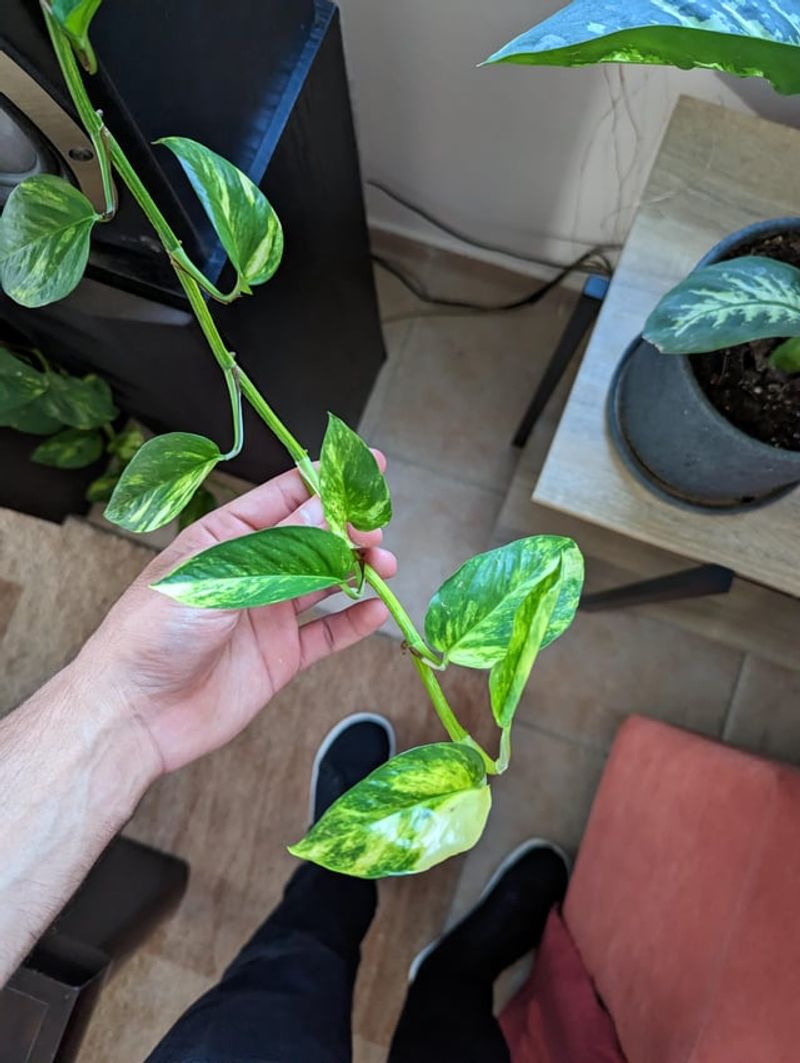
You moved the plant to a brighter window two weeks ago, yet those small leaves look exactly the same. Do not worry, nothing is wrong.
Old pothos leaves do not grow larger once they have fully opened.
A leaf’s size is mostly set while it forms and unrolls.
After that, it stays about the same for the rest of its life. The real improvement shows up in the next leaves the vine produces.
So where should you look?
Watch the tips of each vine, where fresh leaves unfurl. A new pothos leaf often starts as a rolled-up tube tucked against the stem, then slowly opens into its heart shape.
Healthy new growth in better light often looks noticeably different.
Leaves may come in a bit bigger than the ones before, with shorter spaces of stem between them. Variegated types may also show more of their creamy or golden streaks.
Here’s a handy tracking trick.
Tie a small twist tie or piece of yarn on the stem right where the last small leaf grew. Everything past that marker is growth made after the fix, which makes comparing easy.
What about the leggy, tiny-leaved stretches you already have? You can trim them back just above a leaf node, the small bump where a leaf meets the stem.
Patience Reveals Whether The Fix Is Working
Plants move at their own pace, and pothos is no exception.
Most growers start seeing better new leaves within about four to eight weeks after improving light during spring or summer. That timeline is a general estimate, though, and your plant may be faster or slower.
Season makes a big difference.
Pothos grows most actively in warm months with long days. If you make changes in late fall or winter, growth may crawl until spring, so give it extra time before judging the results.
Keep a simple growth journal.
Snap a photo of the same vine every two weeks from the same spot. Side-by-side pictures reveal changes that are hard to notice day to day.
After two to three months, check the new leaves past your marker.
Are they larger, fuller, and spaced closer together? If yes, your fix is working. If not, the spot may still be too dim, so try moving closer to the window or adding a grow light.
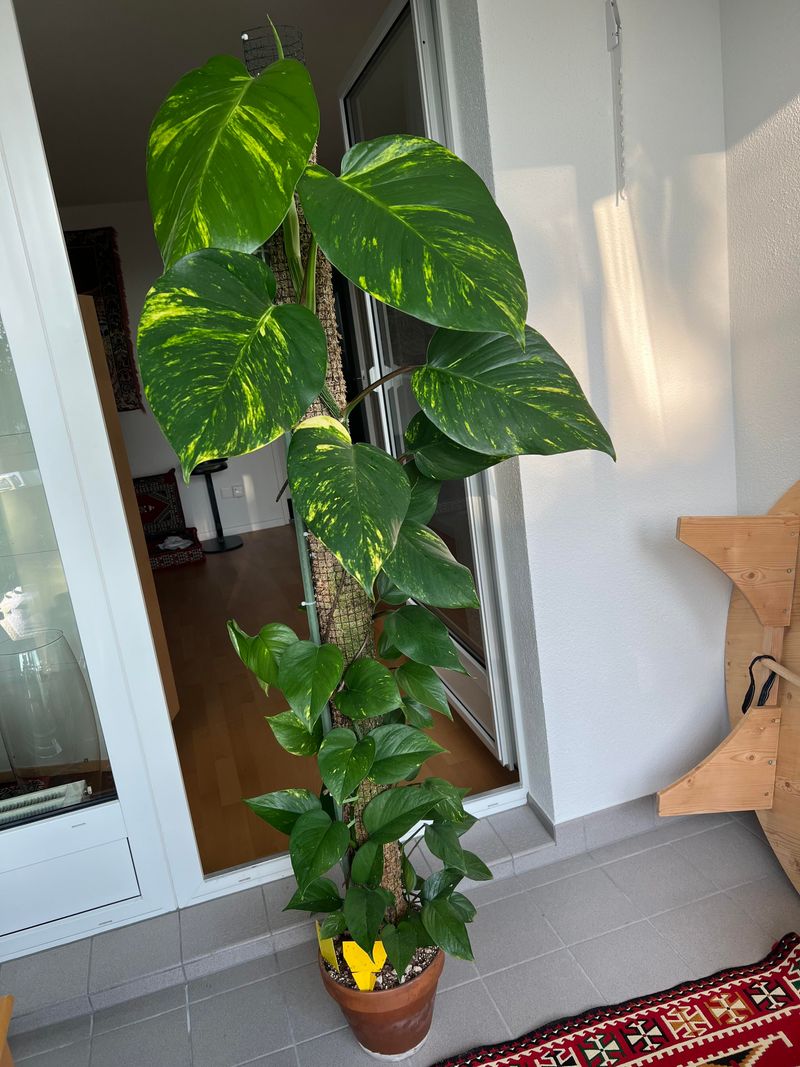
Full-sized leaves may take several growth cycles to appear.
Each new leaf is often a little bigger than the last, like steps on a staircase. Mature pothos climbing a moss pole can even grow much larger leaves than hanging vines.