These Native Texas Shrubs Block Erosion Better Than Retaining Walls
Retaining walls aren’t cheap. Depending on the size, you could spend thousands of dollars on stone, concrete, and labor.
And even then, heavy rain can find a way around them. Now imagine solving the same problem with a few well-chosen plants.
Texas weather doesn’t play nice. One month, the ground is cracked and dry. The next, a flash storm dumps inches of rain in a single afternoon. That water has to go somewhere, and too often it takes your topsoil with it.
That’s where native shrubs shine. Their roots dig deep and spread wide, gripping the soil like a living net. They slow down runoff, soak up water, and keep slopes from washing away. Plus, they’re built for Texas heat and drought.
Want a greener, cheaper way to protect your yard? These native shrubs are ready to get to work.
1. Texas Sage Holds The Line On Rocky Slopes
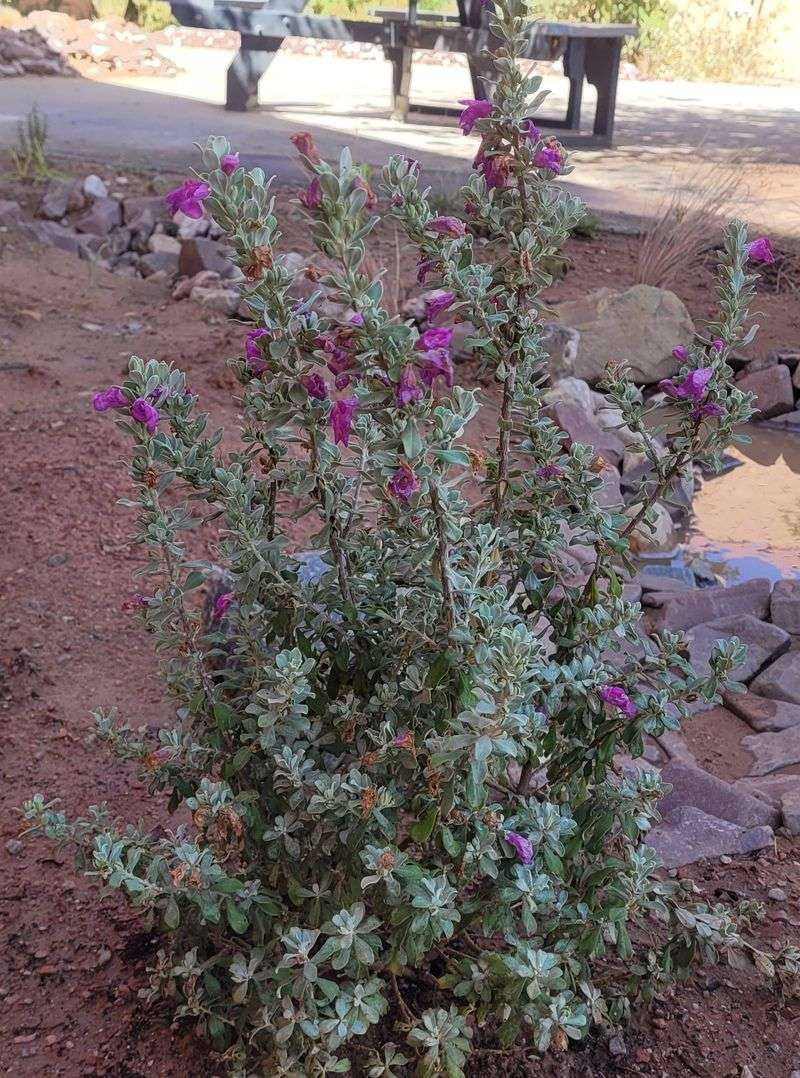
Right after a summer storm, Texas sage does something magical. It bursts into purple blooms almost overnight. That is why many Texans call it the barometer bush.
Beneath those pretty flowers is a hard-working root system. The roots dig deep into rocky, dry soil and spread out to hold it firm. On steep slopes, they act like anchors that keep dirt from sliding downhill.
A retaining wall only blocks soil at one spot. Texas sage protects the whole slope, one plant at a time. Its silvery leaves also shade the ground, which helps keep soil from drying out and cracking.
Planting it is simple. Pick a sunny spot with good drainage, since this shrub hates soggy feet. Dig a hole twice as wide as the root ball and plant it at the same depth it grew in the pot.
Water it about once a week for the first few months. After that, you can mostly leave it alone. Too much water or fertilizer can actually make it weak and floppy.
Space your plants about four to six feet apart on a slope. As they grow, their branches will touch and form a thick living barrier. Mulch with gravel or crushed rock between them to slow runoff even more.
Bees love the blooms, and deer usually leave it alone. That makes it a great choice for rural yards. It grows about five feet tall and wide, so give it room.
Fun fact: this shrub is native to the Chihuahuan Desert and the Rio Grande Valley. It has survived Texas droughts for thousands of years. Your slope will be in very good hands.
2. American Beautyberry Brings Purple Power To Shady Banks
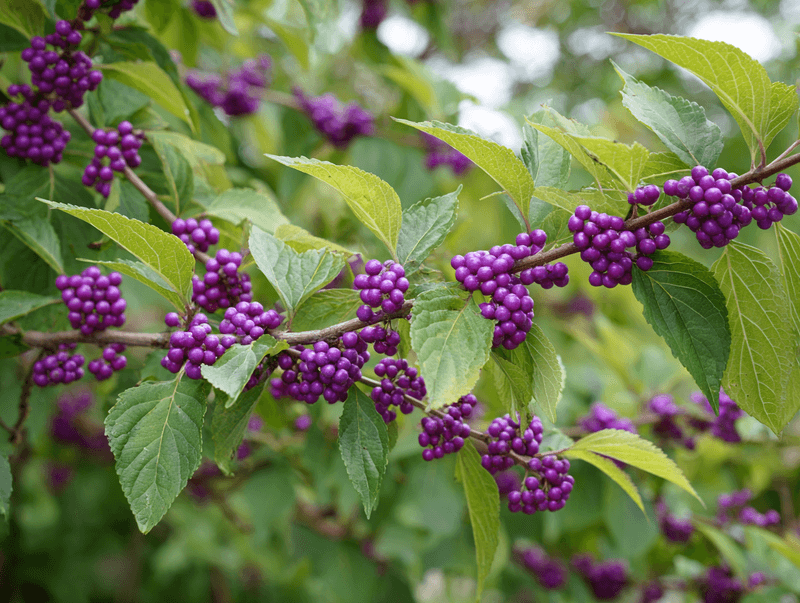
Walk through an East Texas forest in the fall, and you might spot clusters of berries so purple they look fake. They are real, and they belong to American beautyberry. Kids often stop and stare at them.
Beautyberry is a champion for shady areas where grass struggles to grow. Bare ground under trees washes away fast during heavy rain. This shrub fills those spots with arching stems and a tight web of roots.
Your Texas Garden Changes Every Week. Your Plan Should Too.
Gardening in Texas changes quickly throughout the season. Every Friday you’ll receive a simple weekly plan showing exactly what to plant, prune, fertilize, harvest, and protect so you never miss the right timing.
Creek banks and gentle slopes are its favorite places. The roots hold loose soil together, while the leaves soften the force of falling raindrops. Less splash means less soil gets knocked loose.
Here is a helpful tip. Plant beautyberry in spring or fall when temperatures are mild. It likes part shade but can handle some sun if you give it extra water in summer.
You can cut it back hard in late winter, almost to the ground. Sounds scary, right? It actually grows back fuller and makes even more berries because it blooms on new growth.
Birds go wild for the berries. Mockingbirds, robins, and cardinals will visit your yard all winter long. Deer nibble the leaves sometimes, but the plant usually bounces back.
For erosion control, plant several shrubs in a staggered row across the slope. Staggering stops water from finding an easy path straight down. Add leaf mulch around them to keep soil moist.
Did you know? Old-time farmers crushed the leaves and rubbed them on their skin and on mules to keep mosquitoes away.
Scientists later found compounds in the leaves that really do repel bugs. Pretty clever for a humble shrub.
3. Agarita Guards Dry Hills With Prickly Toughness
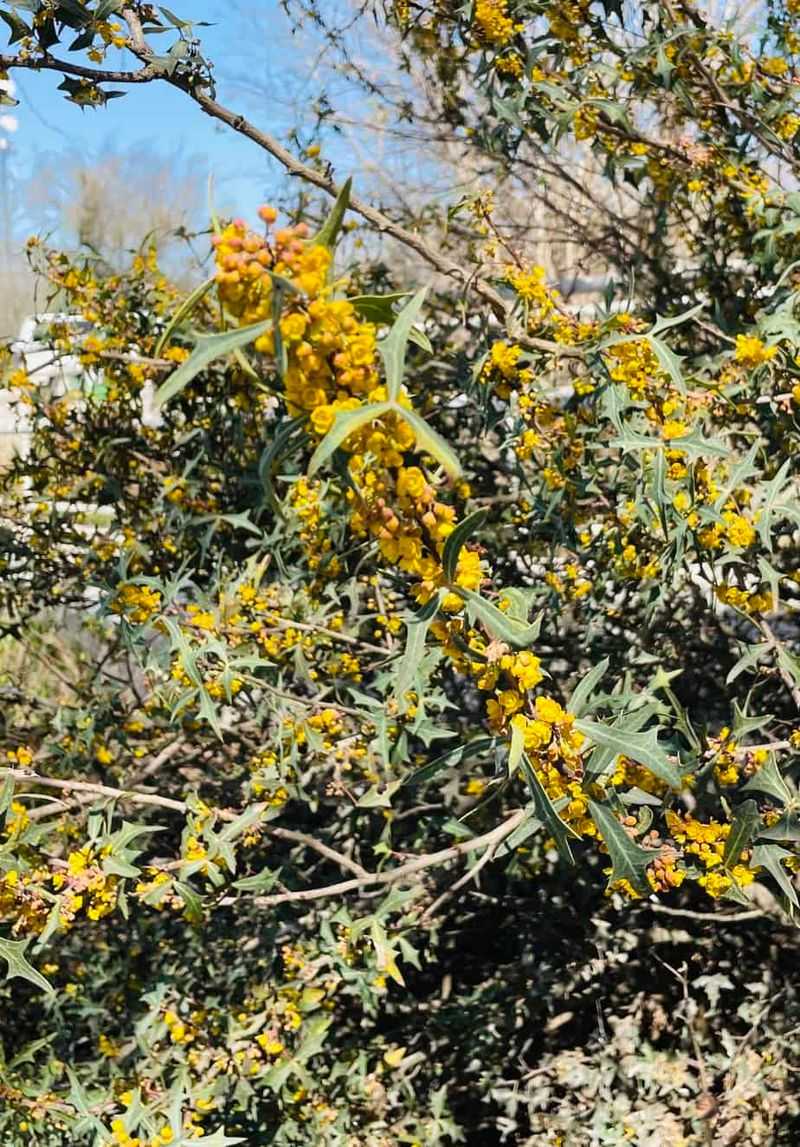
Few plants are as stubborn as agarita. Drought, heat, poor soil, and hungry deer barely bother it. Ranchers in Central Texas have watched it survive dry spells that wiped out their grass.
The secret is underground. Agarita grows a deep taproot plus side roots that grab thin, rocky soil. On caliche hillsides, it can hold ground where almost nothing else will grow.
Its leaves are spiky, like holly. That sounds like a problem, but it is a bonus. Animals avoid walking through it, so the soil around it stays undisturbed and protected.
So how do you grow one? Start with a small container plant, since agarita can be slow at first. Plant it in full sun or light shade in soil that drains well. Wear thick gloves when you handle it.
Water every week or two during its first summer. Once it is settled, rain alone is usually enough. It grows slowly, but each year its roots get stronger and wider.
Put agarita along the top edge of a slope, where runoff begins. Stopping water early keeps it from building speed. You can also use it as a living fence along property lines.
In late winter, it blooms with tiny yellow flowers that smell sweet. Those are among the first flowers bees find each year. By late spring, bright red berries appear.
Here is a tasty bit of history. Texas settlers made jelly from agarita berries, and some families still do. Picking them is tricky, though.
People often spread a sheet under the bush and tap the branches with a stick so the berries fall down.
4. Yaupon Holly Builds A Living Evergreen Wall
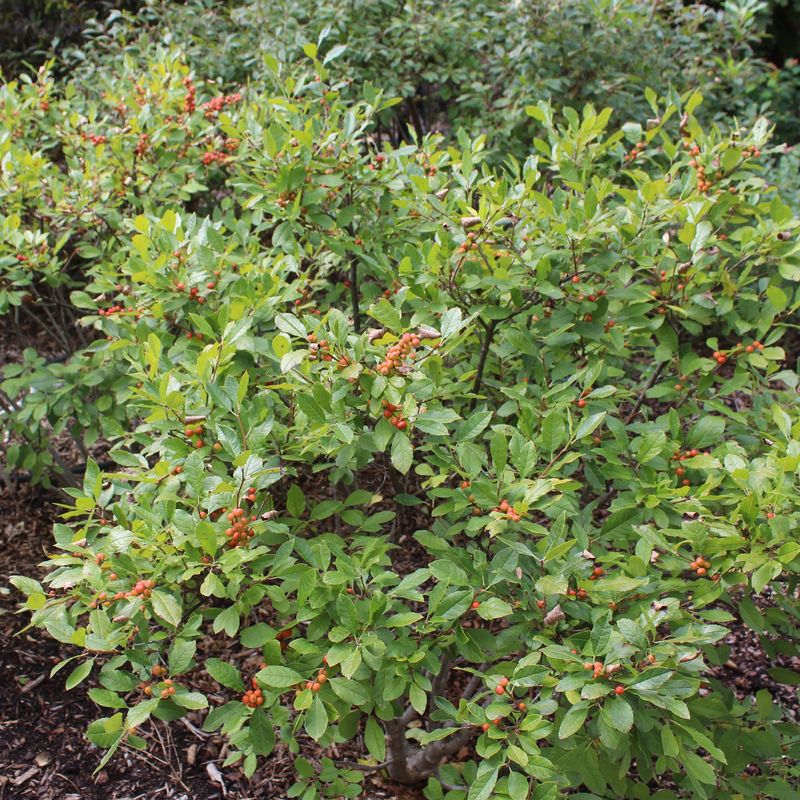
Some people plant a row of yaupon holly and forget it is there. Years later, they notice their slope has not lost a single inch of soil. That quiet strength is what makes yaupon so special.
Yaupon is evergreen, which means it keeps its leaves all year. Many plants drop leaves in winter and leave soil bare. Yaupon stays covered, so winter rains cannot wash the ground away.
The roots form a thick mat that ties soil together. It handles wet clay near the coast and dry soil farther west. Few shrubs are that flexible.
Getting started is easy. Plant in fall so roots can grow during cool months. Choose sun or part shade, and space plants about three to five feet apart for a solid hedge.
Water deeply once a week for the first year. After that, it is tough enough to handle long dry stretches. You can trim it into a neat hedge or let it grow wild and natural.
If you want berries, look for female plants. They produce bright red fruit that songbirds eat in winter. Dwarf types stay small and work well on short slopes near sidewalks.
Yaupon also grows suckers, which are new shoots from the roots. In a flower bed, that can be annoying. On an eroding slope, it is a gift, since each sucker adds more roots.
Fun fact: yaupon is the only plant native to North America that contains caffeine. Native American groups brewed tea from its leaves for centuries.
Today, small companies in Texas sell yaupon tea, so your hedge could double as a coffee break.
5. Buttonbush Loves Soggy Spots Other Plants Hate
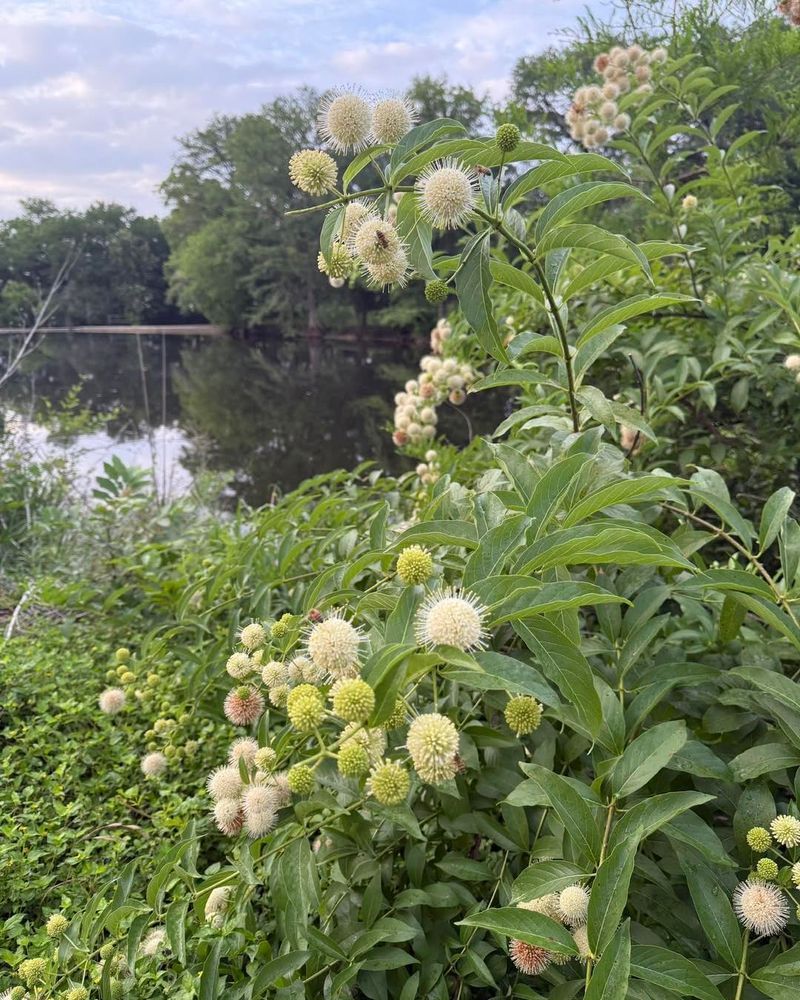
Got a wet spot that never dries out? Most shrubs would rot there. Buttonbush would throw a party.
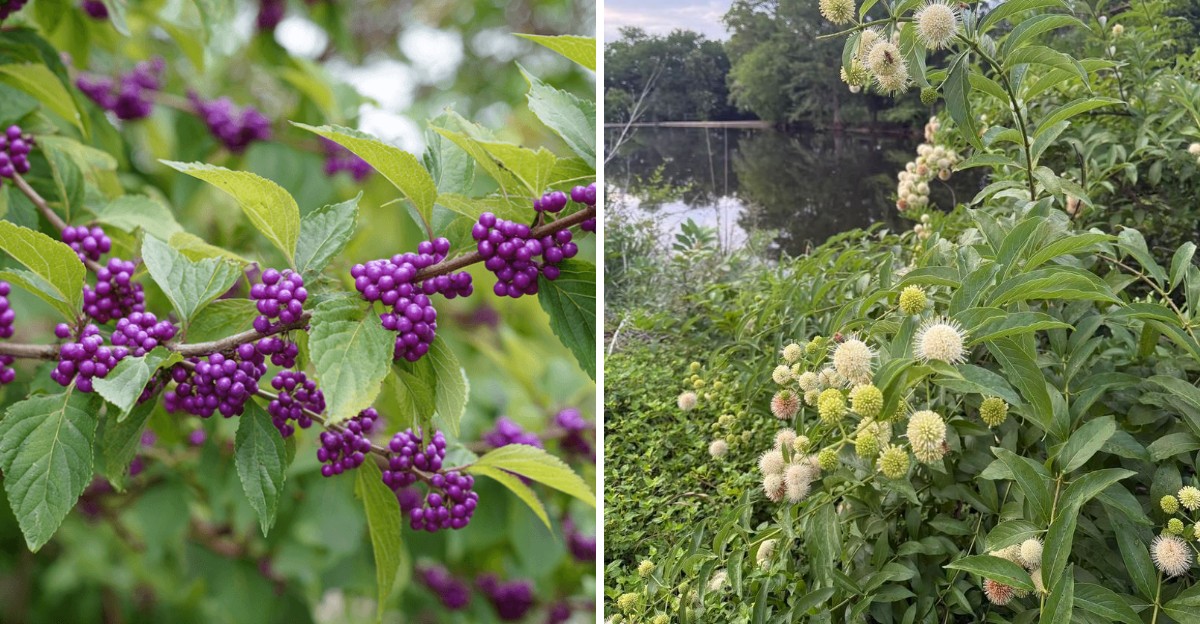
Its flowers look like tiny white fireworks or pincushions. Butterflies swarm them in summer, and kids love pointing them out. But the real hero work happens along pond edges and drainage ditches.
Water moving along a bank chews away soil bit by bit. Buttonbush roots grip that muddy edge and hold it tight. Its many stems also slow the flow, letting dirt settle instead of washing downstream.
A concrete wall next to water can crack when soil shifts underneath. Buttonbush bends and grows with the land. When floods come, it can sit underwater for days and still come back strong.
Planting tips are simple. Place it right at the water line or in low areas that flood. Full sun gives the most flowers, but part shade works too. It can reach six to twelve feet tall.
Plant in groups of three or more along a bank. Their roots will link together like a net. Keep them watered during their first summer if the spot happens to dry out.
You can prune it in late winter if it gets too big. Cut out old woody stems to keep it fresh. It grows back quickly.
Wildlife adores this plant. Ducks eat the seeds, hummingbirds sip the nectar, and frogs hide at its base. One caution, though.
The leaves are not safe for pets or livestock to eat, so keep it away from grazing areas. For pond owners, buttonbush is a beautiful and reliable guard.
6. Flame Acanthus Lights Up Hot, Thirsty Yards
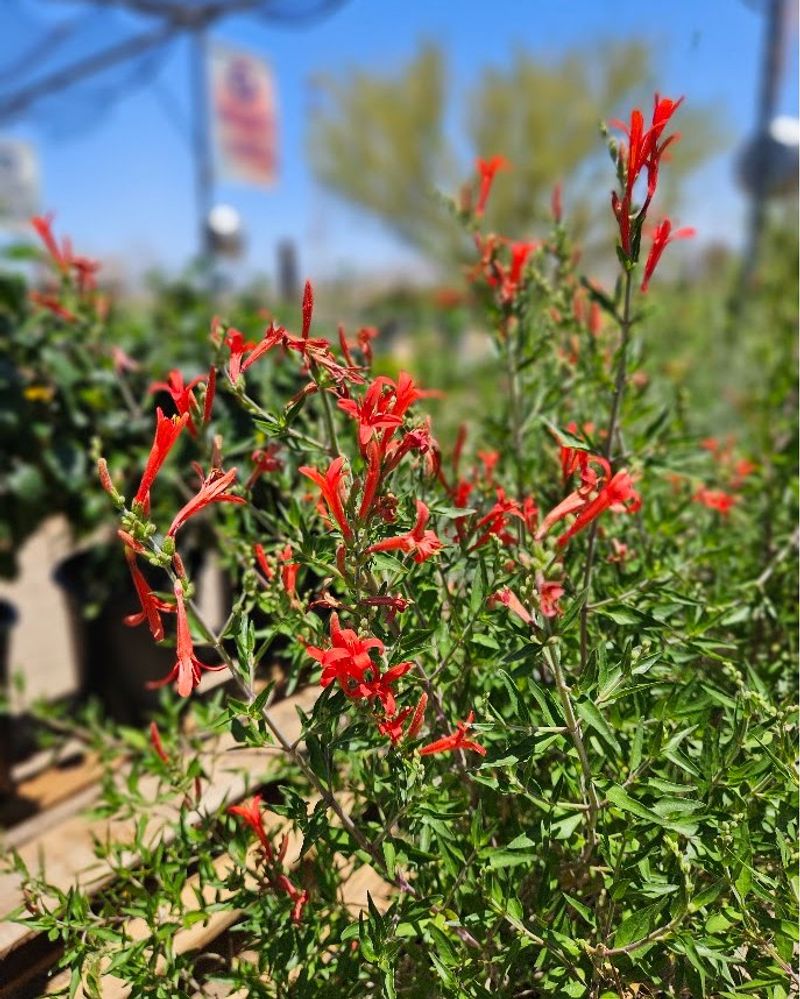
Hummingbirds seem to have a map of every flame acanthus in Texas. The moment its orange-red flowers open, they zoom in. It is like a fast food stop for tiny birds.
Flame acanthus is also a tough little soil saver. It thrives in the hottest, driest parts of the state, from San Antonio to the Rio Grande. Its roots spread out and knit loose soil together on sunny slopes.
Many plants fade in August. Flame acanthus keeps blooming from summer into fall. Its thick branches catch falling rain and slow it down before it hits the ground.
Honestly, it is one of the easiest shrubs to grow. Plant it in full sun with soil that drains well. It is fine with clay, sand, or rocky ground.
Give it water once or twice a week while it gets established. After the first year, it can handle drought like a pro. Too much shade will make it leggy with fewer flowers.
Each winter, it may freeze back or look scraggly. Cut it down to about a foot tall in late winter. New growth comes back quickly and blooms even better.
For erosion control, plant it in clusters on sunny banks. Mix it with native grasses between the shrubs. Grass roots hold the top layer of soil, while acanthus roots hold deeper.
Deer tend to skip it, which makes gardeners very happy. Butterflies visit it too. Did you know?
Its scientific name is Anisacanthus quadrifidus var. wrightii, named partly after Charles Wright, a botanist who explored Texas in the 1800s.
7. Fragrant Sumac Spreads Out To Cover Bare Ground
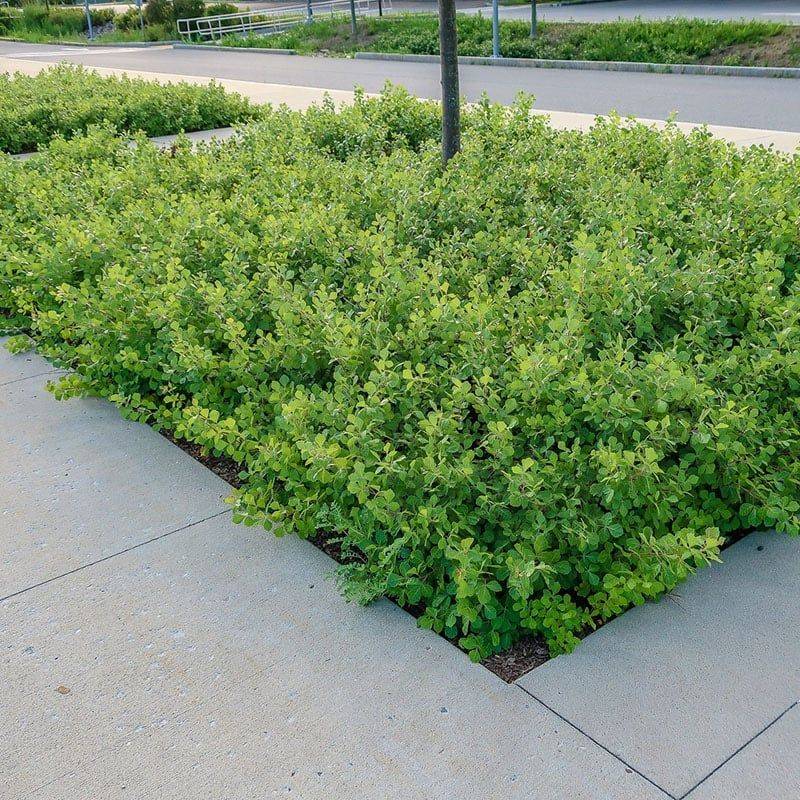
Crush a leaf of fragrant sumac and you will smell something spicy and fresh. That scent gives it its name. Its true talent, though, is covering large patches of bare ground.
Fragrant sumac grows low and wide. Branches that touch the soil can root and form new plants. Over time, one shrub turns into a thick carpet across a hillside.
That carpet is exactly what erosion hates. Rain lands on leaves instead of bare dirt. Roots hold the soil, and the dense growth slows water to a gentle trickle.
Think about a highway embankment. Road crews in Texas often use sumac on steep cuts because it needs little care. What works on a busy highway will surely work in your backyard.
Growing it is no hassle. Plant it in sun or part shade, in almost any soil that drains. Space plants about four to six feet apart, and they will fill in within a few seasons.
Water regularly during the first year. After that, it can survive on rainfall in most of Texas. Trim it in winter only if it grows over paths or driveways.
Fall brings a big show. The leaves turn fiery red, orange, and purple. Small fuzzy red berries appear too, and birds snack on them.
Here is a neat piece of history. People once soaked the tart berries in water to make a drink similar to lemonade. Some folks still call it lemonade sumac.
Unlike poison sumac, this plant is safe to touch, so you can enjoy it without worry. For big slopes, it is a wonderful choice.