This October Task Decides How Much Fruit Your Arizona Citrus Gives You Next Winter
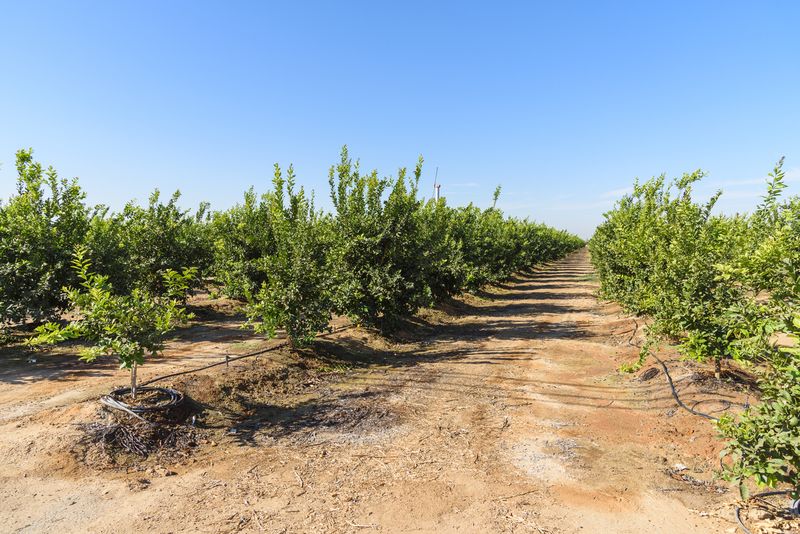
Fall in Arizona does not mean your citrus trees can coast on the same watering schedule that got them through summer. As October temperatures cool across the low desert, adjusting how often you water is the most useful thing you can do for your trees right now.
That adjustment will not magically determine how many fruits end up in your basket come winter, but skipping it can leave your trees stressed at exactly the wrong time. Here is what the science actually supports and what it does not.
October calls for an irrigation reset, not a crop guarantee
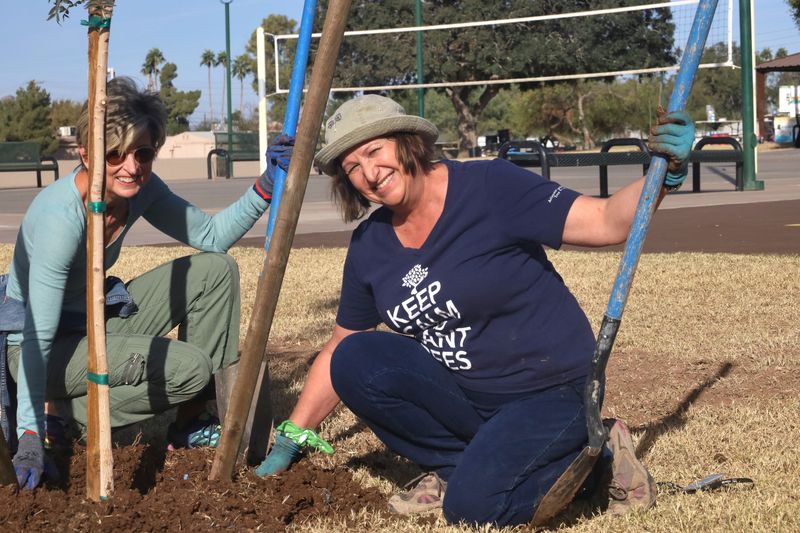
Carrying your summer watering schedule straight into October is one of the most common oversights Arizona citrus owners make. Temperatures drop, tree water demand drops with them, and the irrigation frequency that kept your tree healthy in August can become more than the soil needs by mid-fall.
University of Arizona Cooperative Extension guidance for Pima County explicitly calls out adjusting irrigation frequency as a key October task, not a summer holdover.
What that adjustment does is reduce the risk of water stress, which can affect fruit size and contribute to fruit drop. What it does not do is set the number of fruits your tree will produce.
Fruit quantity is shaped by events that happened months earlier, and no single fall action reverses or multiplies that count.
Think of the October irrigation reset as maintenance, not a lever for a bigger harvest. You are giving your tree what it needs as conditions change, nothing more and nothing less.
That framing keeps expectations honest and the care genuinely useful.
Spring fruit set limits what October can change
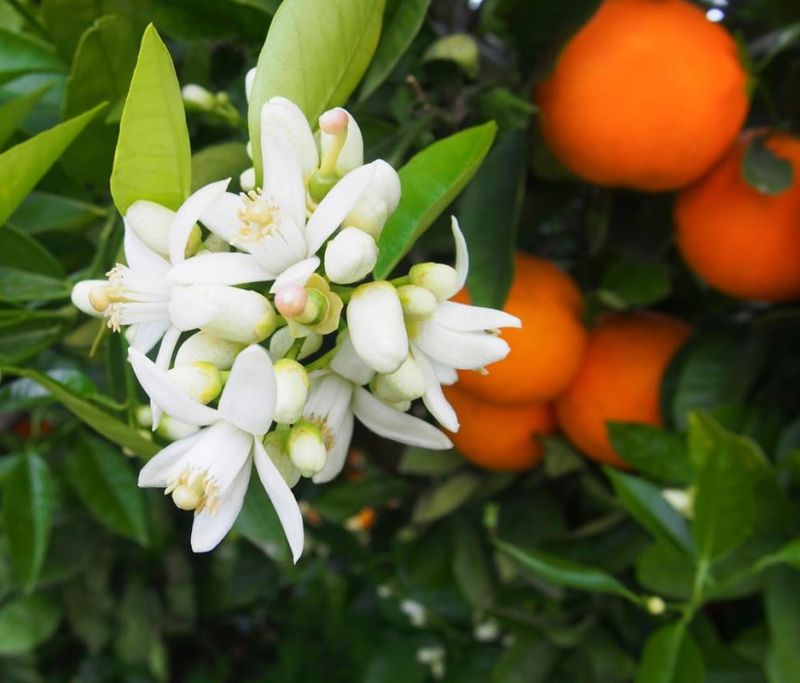
Citrus trees flower and set fruit in spring, which means the number of fruits developing on a tree by the time October arrives was largely determined back in March, April, and May. For varieties harvested in winter, that fruit set is already a done deal before fall care even begins.
October irrigation supports the fruit already on the tree; it does not reopen the question of how many fruits were retained after spring drop.
Spring conditions matter quite a bit for navel oranges in particular. Extension research on oranges in southern Arizona notes that heat and inadequate irrigation during the spring bloom and fruit development period can worsen fruit drop in navels.
That finding applies specifically to navels, not to every citrus variety in the state.
Arizona also grows a wide range of citrus with harvest windows that do not all line up in one winter month. Some varieties ripen as early as October, while others are not ready until late winter or even spring.
Treating all Arizona citrus as a single crop with one shared harvest date misses how varied the state’s citrus calendar actually is, so check your specific variety before assuming “next winter” applies to your tree.
How often should you water as fall cools?
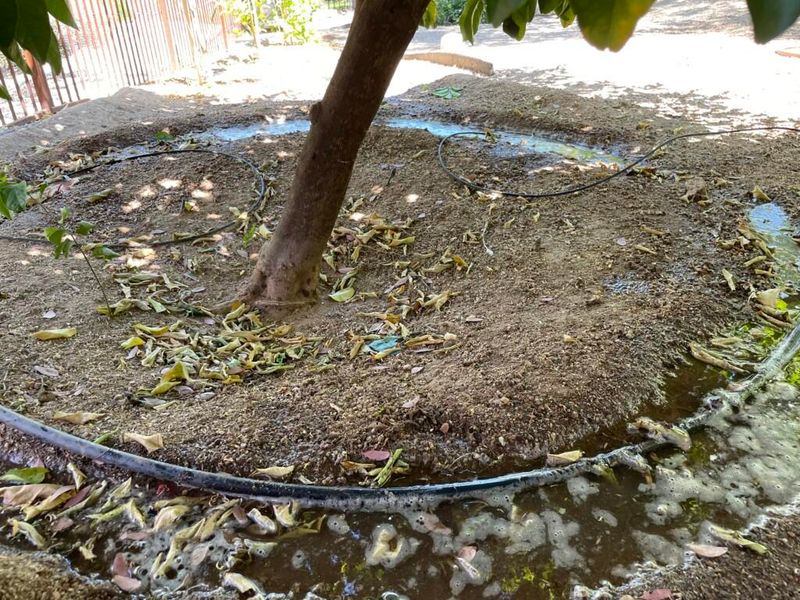
Watering frequency in October is not a single number that works for every yard. Tree age, delivery method, soil type, recent rainfall, and local temperatures all push that number in different directions.
Your Arizona Garden Changes Every Week. Your Plan Should Too.
Gardening in Arizona changes quickly throughout the season. Every Friday you’ll receive a simple weekly plan showing exactly what to plant, prune, fertilize, harvest, and protect so you never miss the right timing.
A newly planted tree needs water more often than a tree that has been in the ground for a decade, and a yard that caught two inches of monsoon rain in late September is in a different position than one that stayed dry all summer.
For established trees three years old or older using basin or flood irrigation, University of Arizona irrigation guidance suggests intervals of roughly 14 to 21 days during October and November. That range is a starting point, not a fixed calendar rule.
Soil type, tree canopy size, and actual weather in your area can all shift where your tree lands within or outside that window.
Drip and microsprinkler systems work differently and generally need more frequent cycles to deliver the same total water volume that a basin flood delivers in one long soak. If you use a drip system, do not borrow the 14-to-21-day interval from flood irrigation guidance and apply it directly.
The University of Arizona’s citrus irrigation guide recommends adjusting schedules to match your soil, weather, and delivery method rather than locking in one interval for every situation.
Water deeply enough to reach the citrus root zone
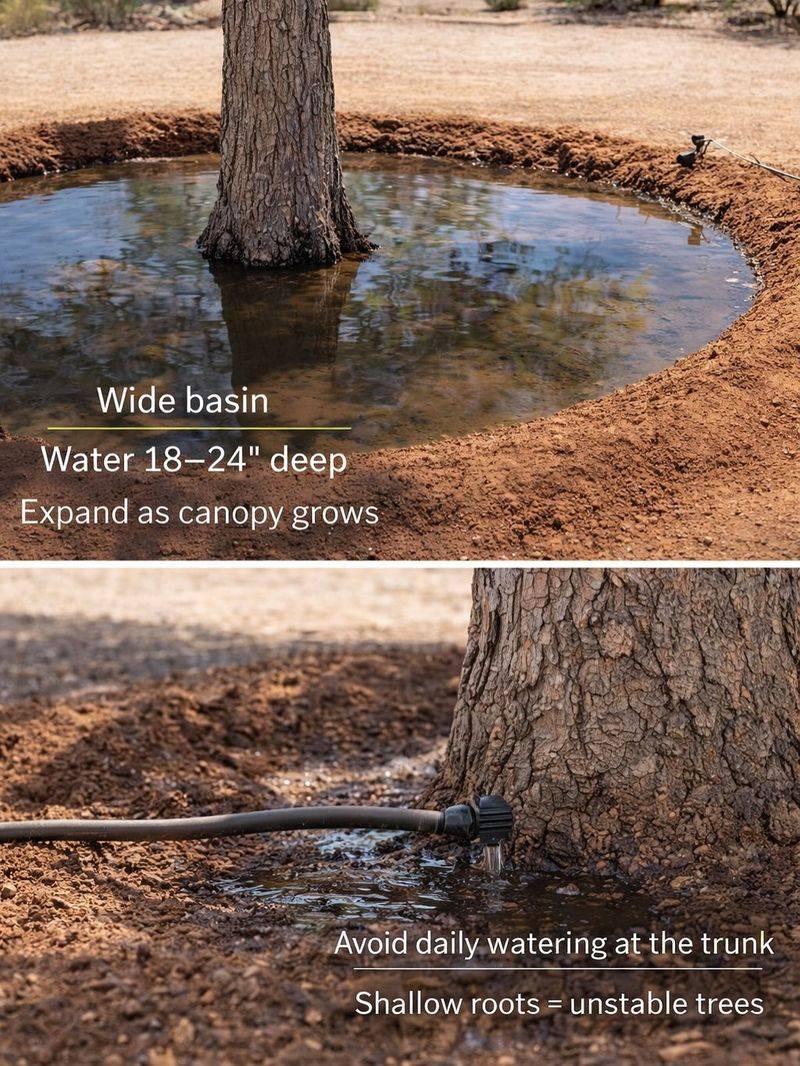
Frequency is only half of the irrigation equation. How deeply the water penetrates matters just as much, and shallow watering can leave the root zone dry even when the surface looks wet.
The goal is to wet the soil from near the trunk out to just beyond the canopy drip line, reaching a minimum of two feet deep. That depth gets water to where the active feeder roots are working.
Frequent, light applications do not accomplish the same thing. Shallow watering can leave the lower root zone inadequately wetted, which means the tree may show signs of stress even when the timer is running on schedule.
There is also a secondary concern: shallow, frequent watering can worsen salt accumulation in the upper soil profile. Arizona soils already tend to carry higher salt loads, and insufficient deep flushing lets those salts concentrate around the roots.
A simple way to check depth is to push a long screwdriver or soil probe into the ground a few hours after watering. It should slide through moist soil down to at least two feet.
If it hits dry, compacted ground well before that depth, the system needs a longer run time, not just a more frequent schedule. Let the upper soil dry out between waterings before you run the system again.
Avoid water stress and out-of-season shortcuts
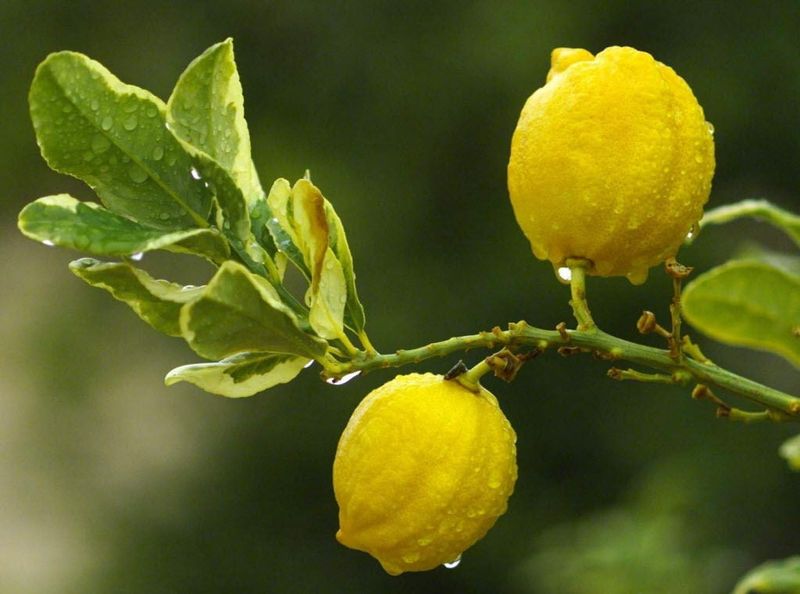
Some gardeners wonder whether cutting back water in fall will push the tree to bloom harder in spring. The short answer is: do not count on it, and the risk is not worth taking.
Water stress can reduce fruit size, and severe or prolonged stress can trigger leaf drop and fruit drop. The extension irrigation guidance is clear that deliberately withholding water to force bloom is not a recommended practice for home citrus trees.
Fertilizing is another tempting shortcut that does not fit October. For oranges, tangerines, and grapefruit, the Arizona citrus fertilization schedule runs three applications spread across January through June.
Lemons and limes get a final application in August or September. By October, that schedule is closed until the new year, and applying nitrogen late can push tender new growth that is poorly timed for the cooler months ahead.
Pruning follows a similar logic. Routine structural work on Arizona citrus belongs in February through April.
Extensive pruning between November and January can stimulate fresh, soft growth that is vulnerable to frost damage. Skipping the October prune-and-fertilize impulse is not neglect; it is appropriate timing.
The University of Arizona pruning guide supports holding off until the desert’s safer late-winter window.
Use October care to support the tree, not predict the harvest
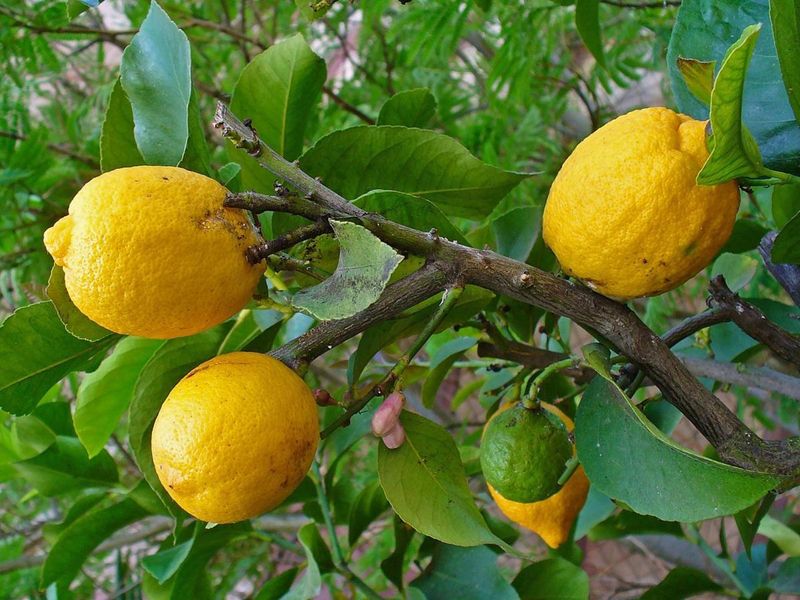
Good October care comes down to reading your specific situation: your tree’s age, your soil, your irrigation setup, and what the weather has actually done in recent weeks. Adjust frequency as temperatures cool, water deeply enough to reach the root zone, and let the upper soil dry between sessions.
That combination keeps the tree supported without overwatering or leaving it short.
None of that is a promise about how much fruit you will harvest. Fruit quantity was set in spring, harvest timing depends on your variety, and one fall adjustment cannot rewrite either of those facts.
What irrigation care in October can do is help the tree carry its current fruit load through to harvest without unnecessary stress reducing fruit size or causing drop.
Resist the pull of late-season shortcuts. Skip the out-of-schedule fertilizer, hold off on heavy pruning, and do not withhold water hoping to trigger a bigger bloom.
The most durable approach is straightforward: match your watering to the conditions in front of you, not to a fixed calendar or an optimistic crop promise. A tree that finishes fall in good health is simply better positioned for whatever the next growing season brings.