What Peeling Bark On Georgia Sycamore Trees Really Means
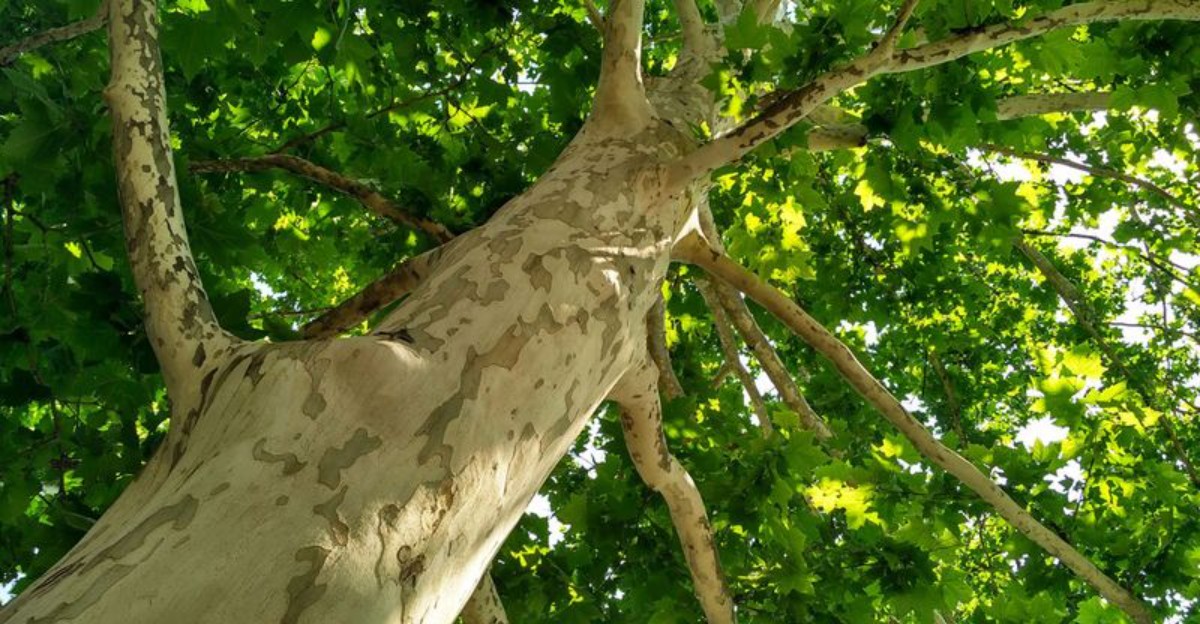
When you start finding curled strips of bark scattered under your sycamore, it is natural to wonder if the tree is in trouble. The trunk can look blotchy and bare in spots, and the pieces on the ground often keep piling up for weeks.
Most of the time, that shedding is simply how a sycamore makes room for new growth as its trunk gets thicker.
It happens on healthy trees all over Georgia, which is why those pale upper limbs stand out along creeks and roads.
The catch is that a stressed or damaged tree can lose bark too, and from a distance the two look surprisingly alike.
Knowing what normal shedding looks like up close will help you tell whether your tree needs attention or just a good rake.
1. Those White Patches Are Usually Nothing To Fear
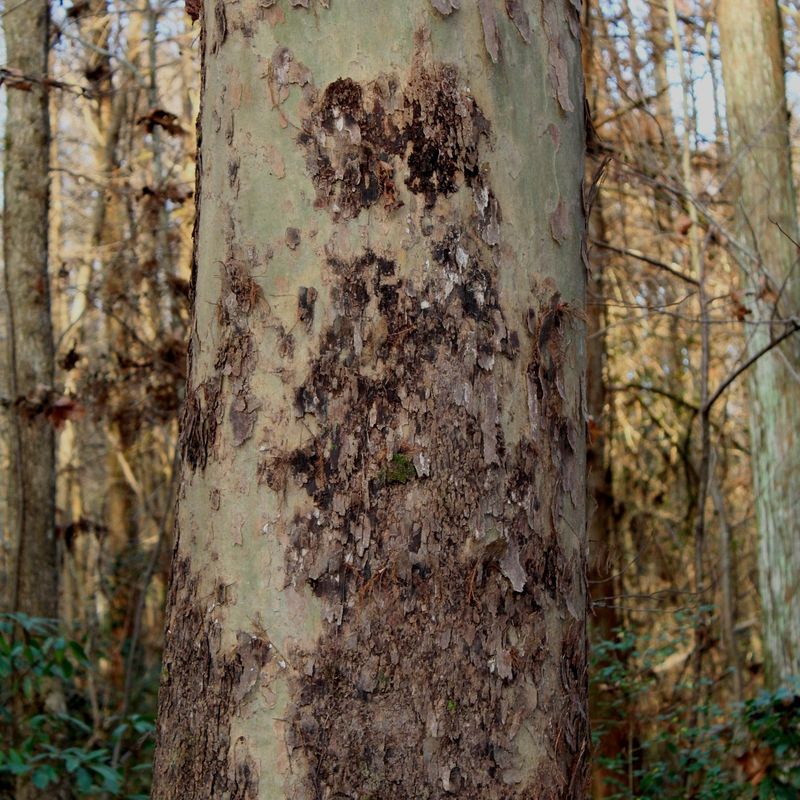
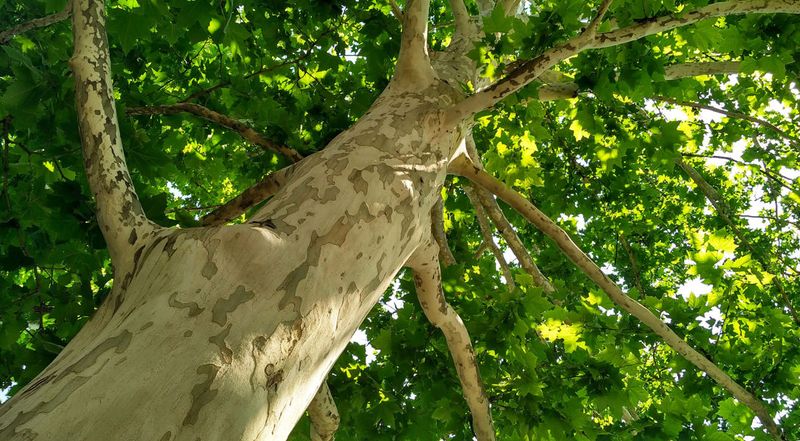
Relax, that ghostly trunk is usually a healthy tree showing off. Sycamores are famous for patchy bark, and the pale spots are simply younger layers peeking through.
Across Georgia, you will find these trees along rivers, creeks, and low spots where the soil stays damp.
Homeowners often worry when big flakes drop in late summer or early fall. In most cases, the tree is doing exactly what its species is built to do.
A quick way to judge health is to look up instead of down at the flakes.
Full, green leaves through summer suggest the tree is coping well. Some yellowing or brown spotting by September is common, especially after a hot, dry stretch.
Leaf spots from a fungal problem called anthracnose also show up on sycamores, mostly after wet springs.
That condition can look alarming on leaves, yet mature trees often recover and leaf out again. It is a separate issue from normal peeling, so keep the two apart in your mind.
Trust the overall picture rather than one strange patch on the trunk.
If growth looks steady and branches leaf out each spring, the white bark is probably just character. When in doubt, a certified arborist can confirm what you are seeing on site.
2. Constant Bark Shedding Is Part Of Normal Growth
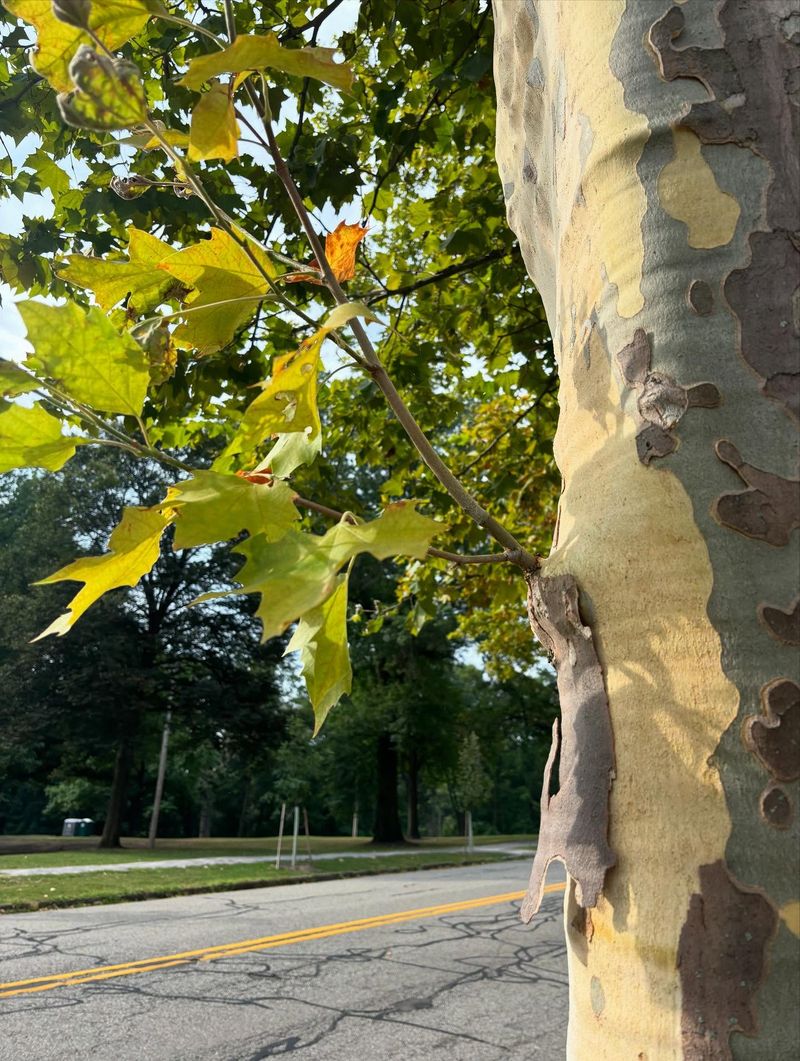
Picture wearing a jacket two sizes too small. Sycamore bark faces a similar squeeze as the trunk keeps growing wider each year.
Outer bark on sycamores is fairly stiff and does not stretch well.
As the wood underneath expands, the older layer cracks and loosens into plates. Those plates then fall away in pieces, sometimes as large as your hand.
Growth spurts in warm months can make the shedding seem heavier by late summer.
In Georgia, long growing seasons give sycamores plenty of time to add girth. That extra growth can mean more flakes in your yard than a friend up north might see.
Weather plays a part too, though exact effects vary from tree to tree.
Dry spells, heavy storms, and swings in temperature may loosen more bark at once. A windy September afternoon can shake down a surprising pile in a few hours.
Your Georgia Garden Changes Every Week. Your Plan Should Too.
Gardening in Georgia changes quickly throughout the season. Every Friday you’ll receive a simple weekly plan showing exactly what to plant, prune, fertilize, harvest, and protect so you never miss the right timing.
Raking up the pieces is fine, and they break down nicely in a compost pile.
Leave the bark still attached alone, since pulling it off gains nothing. Let the tree set its own pace, and your only job is a little extra yard cleanup now and then.
3. Fresh Layers Create The Familiar Mottled Trunk
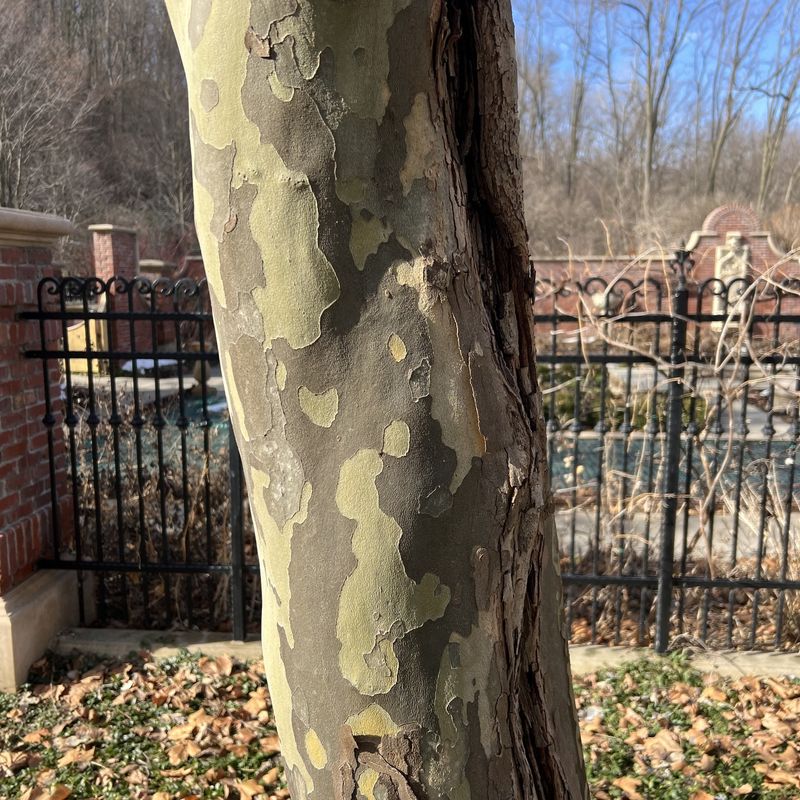
Camouflage pants have nothing on a sycamore trunk. Patches of olive, cream, gray, and brown blend together like a map of tiny islands.
Each color tells you roughly how long that section has been exposed to air.
Freshly revealed bark often looks pale green or creamy white. Over months, weather and sunlight darken it toward tan or gray before it flakes again.
Since shedding happens unevenly, the trunk ends up with a mix of old and new layers side by side.
Some Georgia gardeners call these trees “ghosts of the forest” because the pale trunks stand out at dusk. Driving past a river bottom in fall, you can often pick them out from far away.
Moisture can shift the colors a bit, so a trunk may look greener after rain.
Lichens and algae sometimes add their own green or gray tint to older bark. Those growths are generally harmless and simply use the bark as a place to live.
Snap a photo of your trunk in September and again next spring for fun.
Comparing the two shows how the pattern slowly changes. Kids especially enjoy spotting which patches look newest.
4. Upper Branches Often Become Almost Completely White
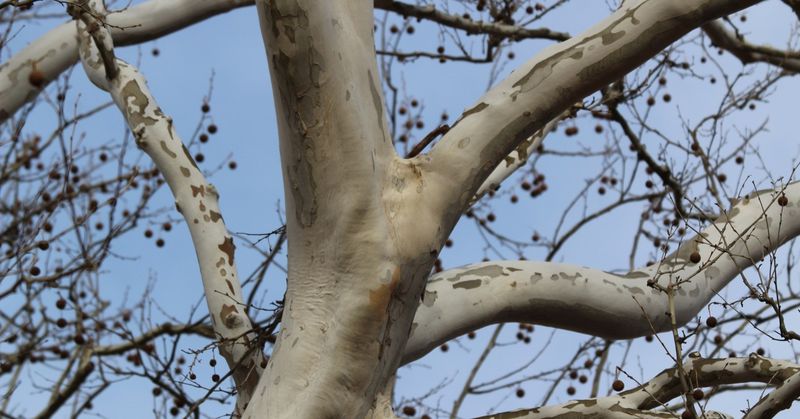
Look up on a clear day and the top of a big sycamore can seem painted white. Lower trunks stay patchy, while the upper limbs often turn smooth and pale.
Thinner branches shed their outer bark more thoroughly than the thick base does.
Near the ground, older trunks develop darker, scaly bark that hangs on longer. Higher up, the younger wood tends to expose that creamy inner layer across most of its surface.
Bright white limbs against a blue September sky make a striking view in Georgia river towns.
Folks sometimes assume the pale branches lack life because they look bleached. A better test is simple, checking whether those limbs push out leaves in spring.
Leafy white branches are healthy, even if they look like bones in winter.
A limb that stays bare after other branches leaf out deserves a closer look. It may be damaged, and large broken limbs can become a hazard over sidewalks or roofs.
Binoculars help you inspect high branches without climbing anything.
Leave any work up high to a trained tree crew with proper safety gear. Sycamores grow tall, and falls from ladders cause far more trouble than pale bark does.
5. Some Bark Changes Do Point To Trouble
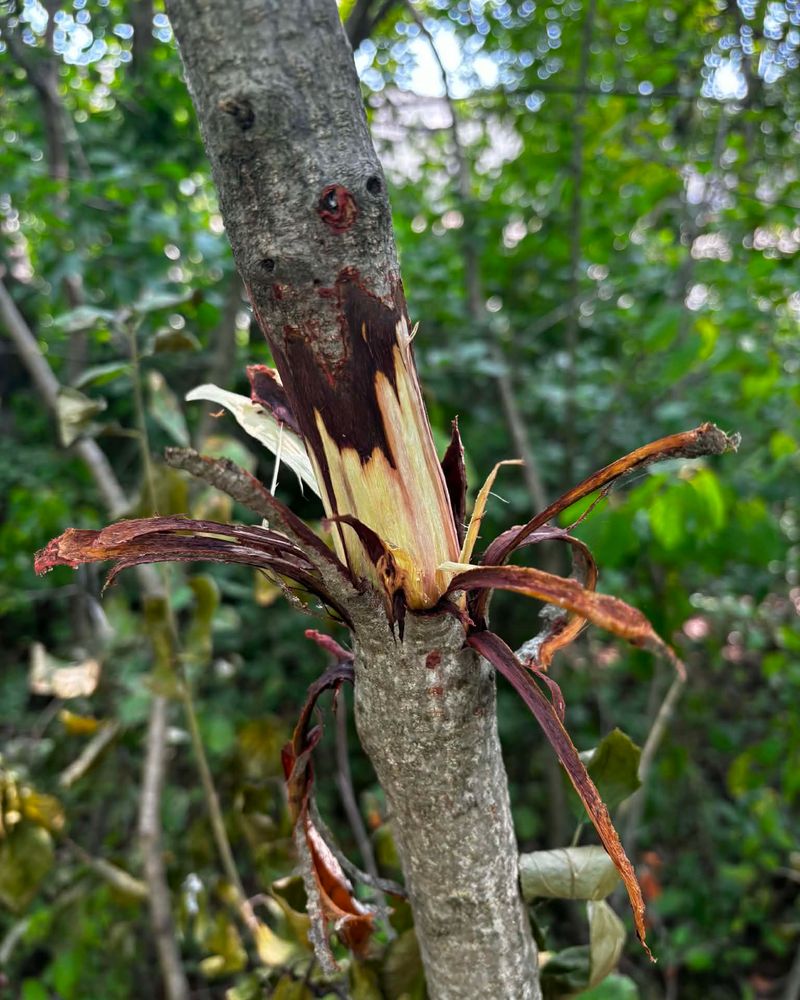
Not every flake is innocent. A few warning signs look different from ordinary shedding and are worth taking seriously.
Sunken, cracked areas called cankers can form on trunks or branches.
These spots may look darker, oozy, or split open deeper than normal peeling. Fungal problems or old injuries are common causes, though only a close inspection can say for sure.
Mushrooms or shelf-like growths near the base can hint at internal decay.
Soft, crumbly wood under bark also raises concern, since healthy wood feels firm. Tap gently with a knuckle, and listen for a hollow sound in the trunk.
Tiny holes with sawdust nearby may point to boring insects, which often target stressed trees.
Drought stress is a real factor in Georgia summers, especially for sycamores planted far from water. A thirsty tree may be more open to pests and disease than one near a creek.
Watering deeply during long dry spells can help, depending on your soil and tree size.
Sandy soils drain fast, while heavy clay holds moisture longer. Spot a worrying sign, and your local county Extension office is a solid, low-cost first call.
6. Damage Looks Different From Normal Peeling
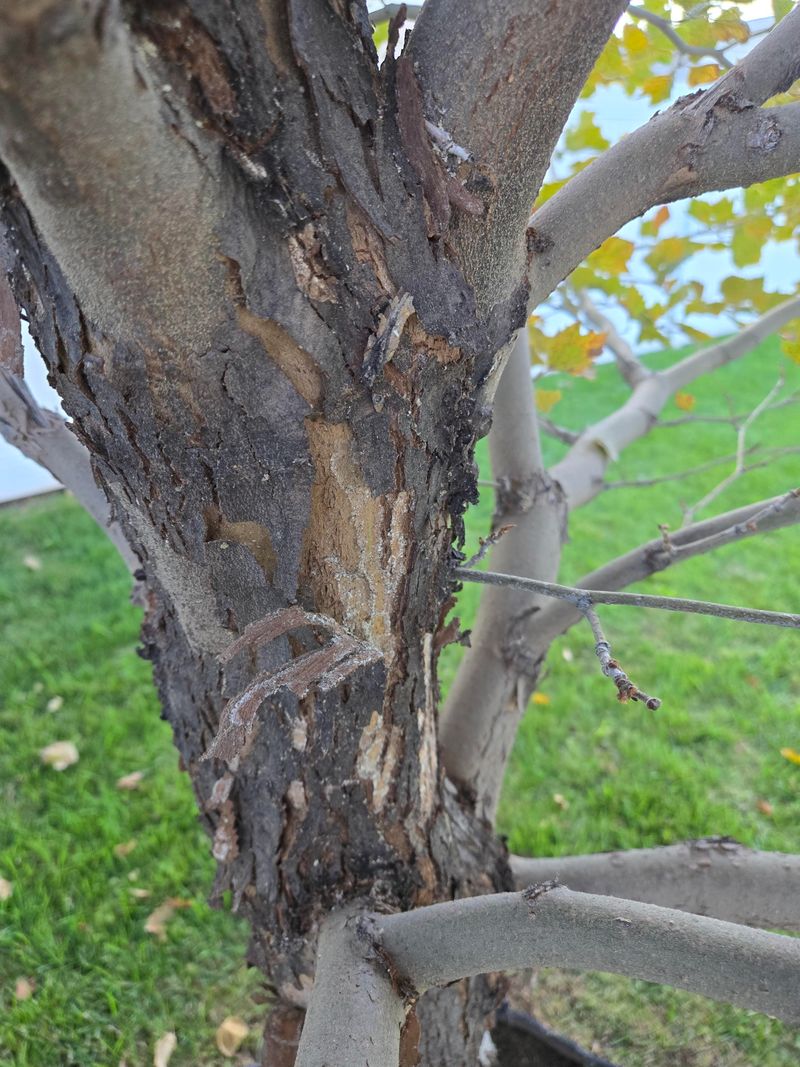
Here is a handy rule of thumb. Normal peeling leaves smooth, living bark underneath, while damage leaves bare, exposed wood.
Run a finger over a freshly exposed patch, and it should feel firm and smooth.
Damaged spots often show dry, gray, or cracked wood with no bark layer at all. Edges may curl inward as the tree tries to seal the wound over time.
Lawn mowers and string trimmers cause more trunk wounds than people expect.
Repeated bumps at the base can strip bark in a ring, which is hard on any tree. A wide circle of mulch keeps equipment back, though avoid piling it against the trunk.
Storms leave their own marks, like torn bark where a limb snapped off.
After a strong summer storm rolls through Georgia, check for jagged tears or hanging branches. Clean, proper pruning cuts heal better than ragged breaks left in place.
Deer rubbing, animal chewing, and vandal carvings can also scar the trunk.
Wound paint is generally not recommended, since trees seal injuries on their own. Keep the area clean, reduce stress, and let the tree handle the repair work.
7. Healthy Trees Are Best Left To Shed Naturally
Hands off is the best advice for a healthy sycamore. Peeling bark by hand, scrubbing, or spraying the trunk offers no real benefit.
Loose flakes that seem ready to drop will fall in their own time.
Pulling off attached bark may expose tender tissue before it is ready. That small mistake can open a door for insects or disease you would rather avoid.
Good care focuses on roots, water, and space instead of the trunk surface.
September in Georgia can bring dry, warm weeks, so a slow, deep soak helps young trees. Established sycamores usually manage fine unless drought drags on for a long time.
Fertilizer is rarely needed unless a soil test shows a real shortage.
Fall is a smart time to plan any structural pruning, since cooler months ease stress on the tree. Hire a certified arborist for large limbs, because sycamores get big fast.
Meanwhile, enjoy the show that each season brings to your yard.
Save a few interesting flakes for a craft project or a nature journal. Your patchy tree is not falling apart, it is simply wearing its history on the outside.