8 Native New York Hedges That Give You Privacy Without Constant Trimming
Nobody dreams of spending Saturdays glued to a pair of hedge clippers. You want privacy, birdsong, and a glass of iced tea in peace.
Plenty of shrubs native to New York handle the hard work on their own. They grow thick, look tidy, and shrug off cold winters without much fuss.
Picture glossy green leaves, sweet spring blooms, and berries that pull in cardinals and bluebirds. Your hedge also feeds local pollinators, turning it into a tiny wildlife refuge.
Some of these picks stay green all year, while others trade summer shade for fiery fall color. A few even offer snacks for you, not just the birds.
The hedges below block the view next door without constant trimming. Once they settle in, you can put the clippers away and enjoy your space.
1. American Holly For A Naturally Tidy Shape
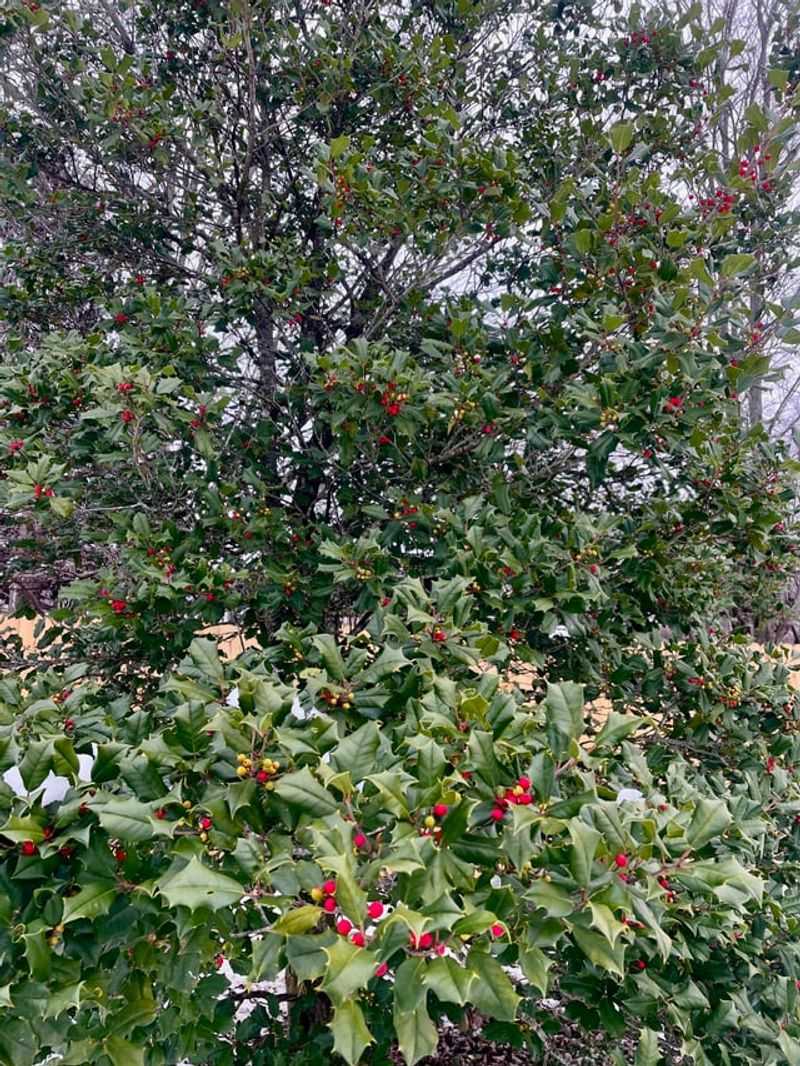
Picture a holiday card come to life, right along your property line. American holly brings glossy leaves and red berries that shine even when snow covers the lawn.
Known to botanists as Ilex opaca, it grows wild across the eastern United States. Its thick, waxy leaves make a solid windbreak and block curious eyes all year.
Height is one of its best features for privacy. Mature plants can reach about 20 feet tall and spread 12 to 15 feet wide.
Here is the real treat for busy gardeners. American holly does not need pruning to hold a neat, cone-like shape.
Want an even fuller look? Give it a light shaping during winter dormancy, when the plant is resting.
Trimming right after spring growth works too if you prefer a formal style. A few snips create that classic pointed outline many people love.
Berries only form on female plants, so plan ahead. Plant at least one male nearby to help the females produce their bright red fruit.
Birds like robins and cedar waxwings feast on those berries in late winter. Your hedge doubles as a snack bar when food runs low around New York.
Spacing matters for a strong screen. Set plants about 8 to 10 feet apart so they can grow together over time.
Choose a spot with well-drained, slightly acidic soil and some sun. A layer of mulch keeps roots cool and moist during hot summer stretches.
Patience pays off with this slow grower. Once it fills in, you get decades of green privacy with very little effort.
2. Eastern White Cedar For Neat Columns Of Green
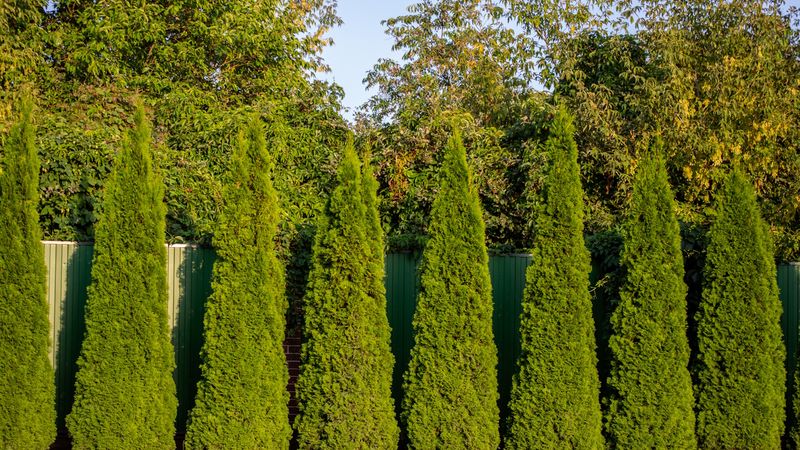
Ever notice those tall green spires lining driveways in upstate towns? Many of them are Eastern white cedar, a tree that loves New York weather.
Also called northern white cedar or Thuja occidentalis, it is native to eastern North America. The soft, flat sprays of foliage grow dense enough to hide nearly anything.
Wild trees can soar 40 to 60 feet tall. They usually stay 10 to 20 feet wide, which keeps them fairly slim for their height.
Many garden varieties stay much smaller and tighter. Ask your nursery about compact forms if you only need a 10 to 15 foot wall.
Your New York Garden Changes Every Week. Your Plan Should Too.
Gardening in New York changes quickly throughout the season. Every Friday you’ll receive a simple weekly plan showing exactly what to plant, prune, fertilize, harvest, and protect so you never miss the right timing.
Pruning is generally not needed at all. Simply remove broken, damaged, or crossing branches when you spot them.
One warning deserves your attention. Avoid cutting deep into old, bare wood, since it does not reliably sprout new growth.
Light trims on green tips are safe if you want a crisp edge. Stick to the outer layer, and the plant will reward you with fresh shoots.
Deer find cedar tasty, especially in hungry winter months. Wrap young plants in burlap or netting if deer roam your neighborhood.
Moist soil keeps these trees happiest. Water deeply during dry spells for the first two years while roots settle in.
Fun fact for history fans: early French explorers called it the tree of life. Native people shared its vitamin-rich tea to help sailors recover from scurvy.
Plant them about 3 feet apart for a quick, solid screen. Within a few seasons, you get a living fence that barely asks for attention.
3. Northern Bayberry For A Dense, Rounded Hedge
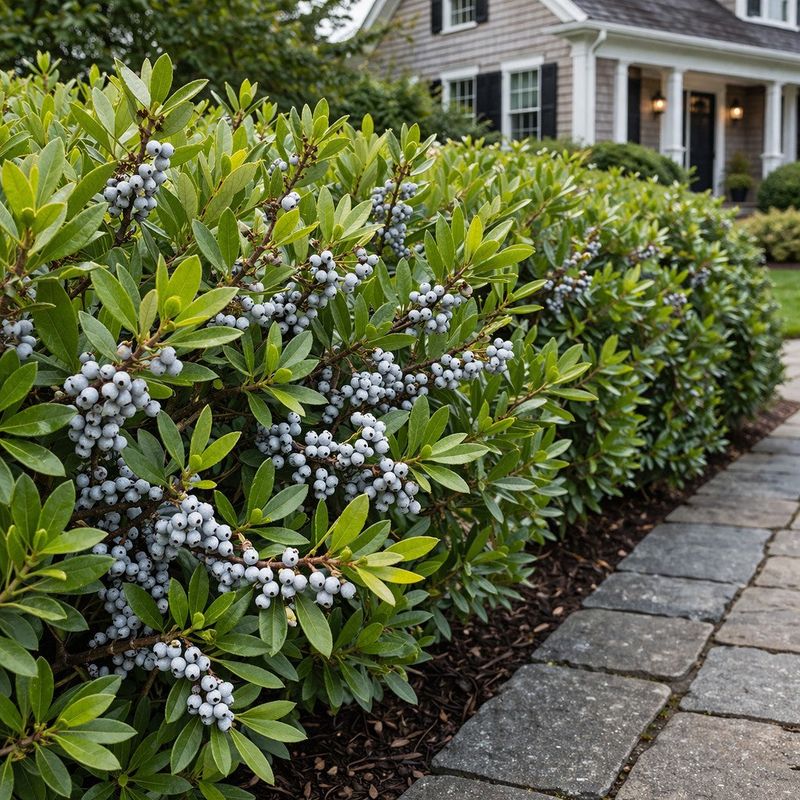
Crush a leaf and sniff. Northern bayberry releases a spicy, clean scent that smells like a seaside candle shop.
Scientists call it Myrica pensylvanica, and it thrives in many eastern states, including New York. It handles salt spray, sandy soil, and poor ground better than most shrubs.
Long Island homeowners love it for good reason. It laughs off coastal wind and still looks fresh by midsummer.
Plants reach about 6 to 10 feet tall and just as wide. That rounded shape fills gaps nicely without looking stiff or formal.
Bayberry spreads by underground stems and forms thickets over time. Such spreading makes it a champion for thick, natural screens.
Maintenance could hardly be easier. Many experts suggest skipping pruning entirely, or removing a few older stems every other year.
Suckers popping up too far away? Snip them at ground level to keep the hedge right where you want it.
Gray, waxy berries cover female plants in fall and winter. Colonial families boiled them down to make fragrant bayberry candles for the holidays.
Tree swallows and yellow-rumped warblers rely on those berries during migration. Your yard becomes a welcome rest stop for tired travelers.
Plant both male and female shrubs for the best berry show. Space them about 5 feet apart so their branches knit together.
Full sun keeps the foliage thick and healthy. Part shade works too, though the hedge may look a bit looser.
4. Inkberry Holly For A Compact Evergreen Row
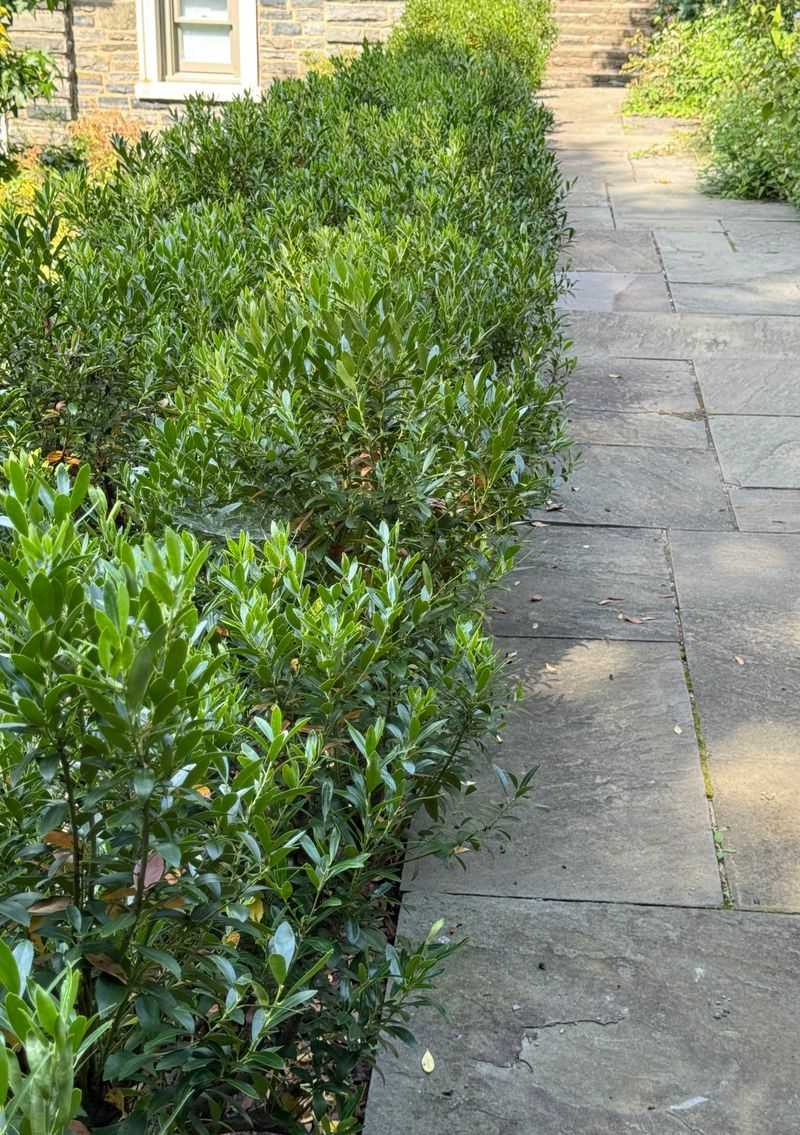
Tired of boxwood troubles? Inkberry holly might be the quiet hero your front walk has been waiting for.
Known as Ilex glabra, it grows naturally from Nova Scotia down to Florida. Its small, glossy leaves stay green through even the coldest winters.
Size makes it perfect for smaller spaces. Most plants grow 4 to 6 feet tall and 3 to 5 feet wide.
Picture a low privacy row along a patio or porch. Inkberry blocks views from the sidewalk without shading out your windows.
Growth is fairly slow, which means less work for you. Left alone, the shrub keeps a pleasant, upright shape.
Need a trim anyway? Prune right after blooming to protect next year’s flowers and berries.
Older shrubs can get leggy and bare at the bottom. Cut them back hard during dormancy, and fresh growth usually returns in spring.
Tiny white flowers appear in late spring. Bees adore them, and inkberry honey is prized in parts of the South.
Black berries follow on female plants and last into winter. They give hungry birds a meal when other food is scarce.
Wet spots do not scare this shrub. It tolerates soggy soil, making it handy near downspouts or low corners.
Plant about 3 feet apart for a tidy line. Add mulch, water during dry weeks, and let it settle into its easygoing routine.
5. Nannyberry For Tall Coverage With Little Pruning
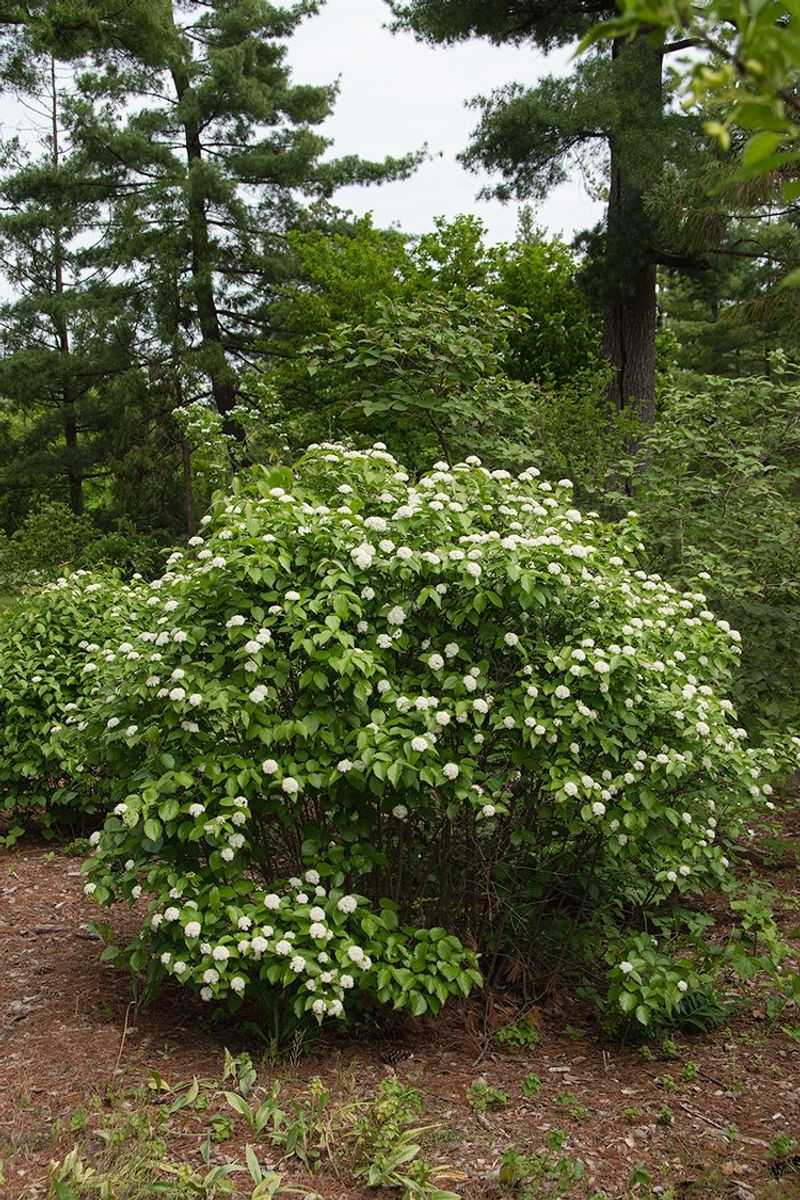
Grandparents in the countryside once snacked on nannyberries on crisp autumn walks. The sweet, raisin-like fruit gave this shrub its charming, old-fashioned name.
Botanists call it Viburnum lentago, and it grows wild across much of the state. It is tough, adaptable, and surprisingly quick to fill space.
Once settled, it often adds 1 to 2 feet per year. Such speed makes it a smart pick for impatient neighbors on either side.
Mature plants reach about 10 to 15 feet tall. Their spread is similar, creating a broad, leafy wall.
Planting several in a row gives you a strong privacy screen. Space them about 6 to 8 feet apart for full coverage.
Routine pruning is rarely needed. Shape it in late winter, early spring, or right after flowering if you feel like tidying.
Suckers may pop up around the base. Leave them for a thicker hedge, or remove them for a single trunk look.
Spring brings flat clusters of creamy white flowers. Butterflies and bees visit them eagerly on warm afternoons.
Fall is the real showstopper. Leaves turn deep red and purple while blue-black berries dangle below.
Birds such as catbirds and waxwings strip those berries fast. You might spot a few before they vanish.
Sun or part shade both suit nannyberry. It even tolerates clay and damp soil, so few yards are off limits.
6. Highbush Blueberry For A Full, Upright Form
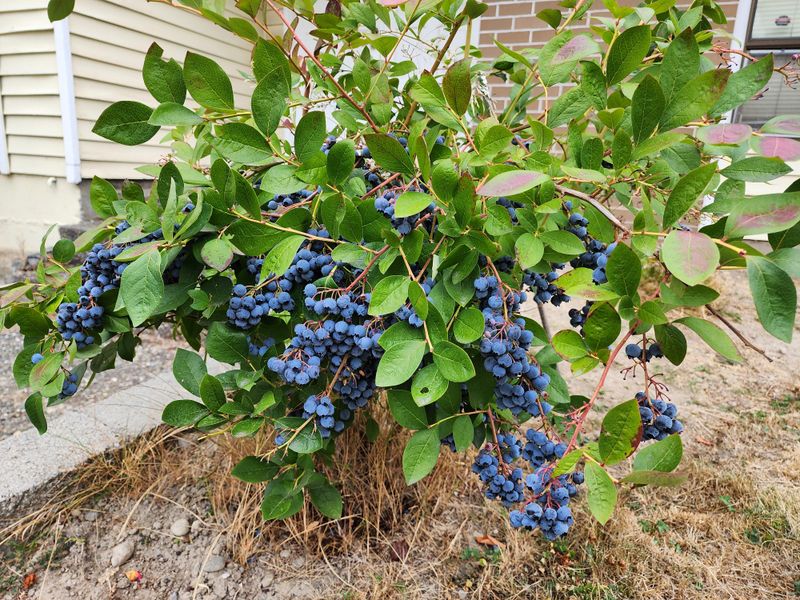
A hedge you can eat? Highbush blueberry turns your property line into a summer snack station.
Vaccinium corymbosum is native to eastern North America, including wetlands and woods across New York. Many grocery store blueberries come from its cultivated cousins.
Plants grow as multi-stemmed shrubs, often 6 to 8 feet tall. Those upright canes form a full, leafy screen from spring through fall.
Planted in a row, they make a charming informal hedge. Space them about 4 to 5 feet apart for solid coverage.
Early years are nearly hands-off. Young shrubs need little or no pruning for their first two to three seasons.
After that, plan a short winter chore. Remove weak or broken stems each year to keep air moving and berries coming.
Honestly, that task takes maybe twenty minutes per plant. It feels less like work when you remember the pies waiting in July.
Acidic soil is the secret to happy blueberries. Mix in peat or pine bark mulch if your soil leans neutral.
Plant two or more varieties for better pollination. Mixing types also stretches your harvest across several weeks.
Birds will want their share of the crop. Toss light netting over a few bushes if you want most berries for yourself.
Autumn adds one more gift. Leaves blaze scarlet and orange, giving your hedge a brilliant finish before winter.
7. Witherod Viburnum For Glossy Leaves And Blue Berries
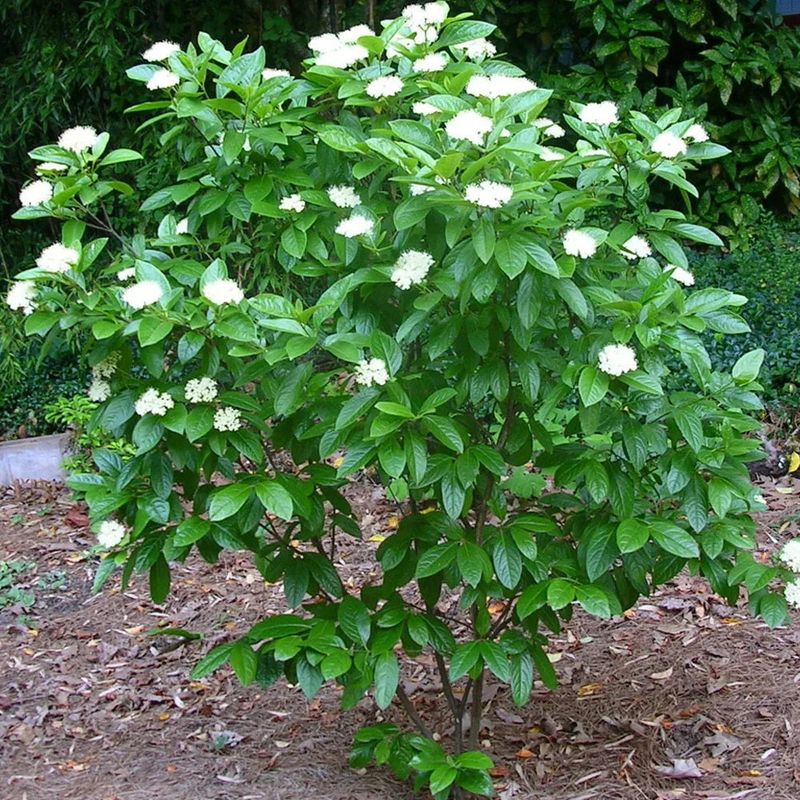
Imagine berries changing colors like a mood ring. Witherod viburnum shifts from pale green to pink to deep blue, often all on one cluster.
Viburnum cassinoides is a hardy native found across eastern North America. Hikers spot it along wet trails in the Adirondacks and Catskills.
Its dense, rounded form makes privacy simple. Plants usually grow 5 to 8 feet tall and equally wide.
Glossy leaves give it a polished look through summer. Come autumn, they turn shades of red, orange, and purple.
Care is refreshingly light. Remove weak or broken branches, and let the natural shape shine.
Want a little tidying? Shape it gently just after flowering, so next year’s blooms stay safe.
Creamy flower clusters appear in early summer. Pollinators crowd around them, from tiny native bees to butterflies.
The colorful berries feed birds in late summer and fall. Bluebirds, thrushes, and even chipmunks join the party.
Damp spots suit it well. Try it near a rain garden or low area where other shrubs sulk.
Part shade is fine, though full sun brings more flowers and fruit. Aim for spacing of about 5 feet between plants.
Group a few together for an informal screen along a woodland edge. Neighbors will ask what that jewel-toned beauty is.
8. Common Ninebark For Quick, Bushy Growth
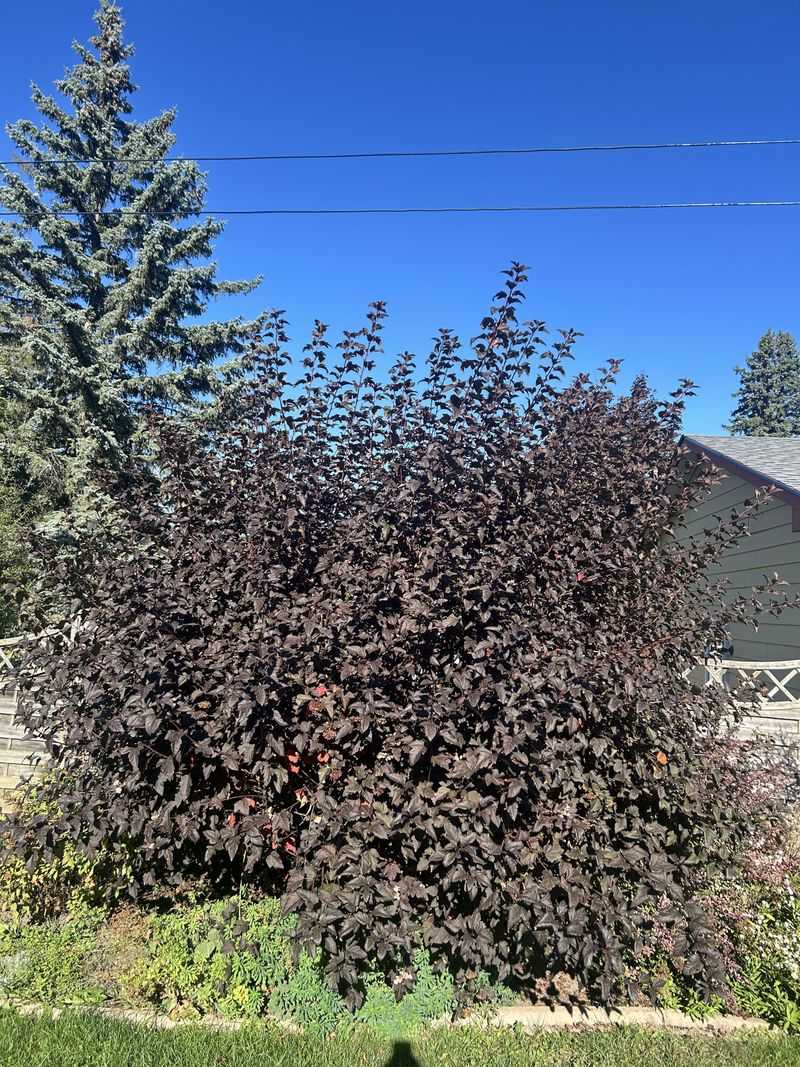
Need privacy by next summer, not next decade? Common ninebark is the sprinter of native shrubs.
Physocarpus opulifolius grows across eastern and central North America, including sunny riverbanks. It can add two feet or more in a single season.
That speed builds a dense, bushy hedge fast. Plants reach about 3 to 10 feet tall and 3 to 6 feet wide.
Where does the quirky name come from? Older stems peel in papery layers, and folks joked it had nine layers of bark.
Modern varieties add lots of color choices. Some have deep purple, gold, or copper leaves that pop against green lawns.
Spring flowers form round, white to pinkish clusters. Bees and butterflies buzz around them for weeks.
Maintenance stays low, especially in full sun. A light trim after flowering keeps the shape neat.
Every few years, try renewal pruning in early spring. Cut a few old stems to the ground to invite fresh, healthy growth.
Drought, cold, and clay soil rarely bother it. Ninebark handles tough city lots and rural yards alike.
Plant about 4 feet apart for a thick screen. Water well the first year, then let it take care of itself.
Finish your privacy plan with one of these hardy natives. Your yard will feel calmer, greener, and far easier to love.