What To Do When Skunks Keep Showing Up In Your Texas Yard
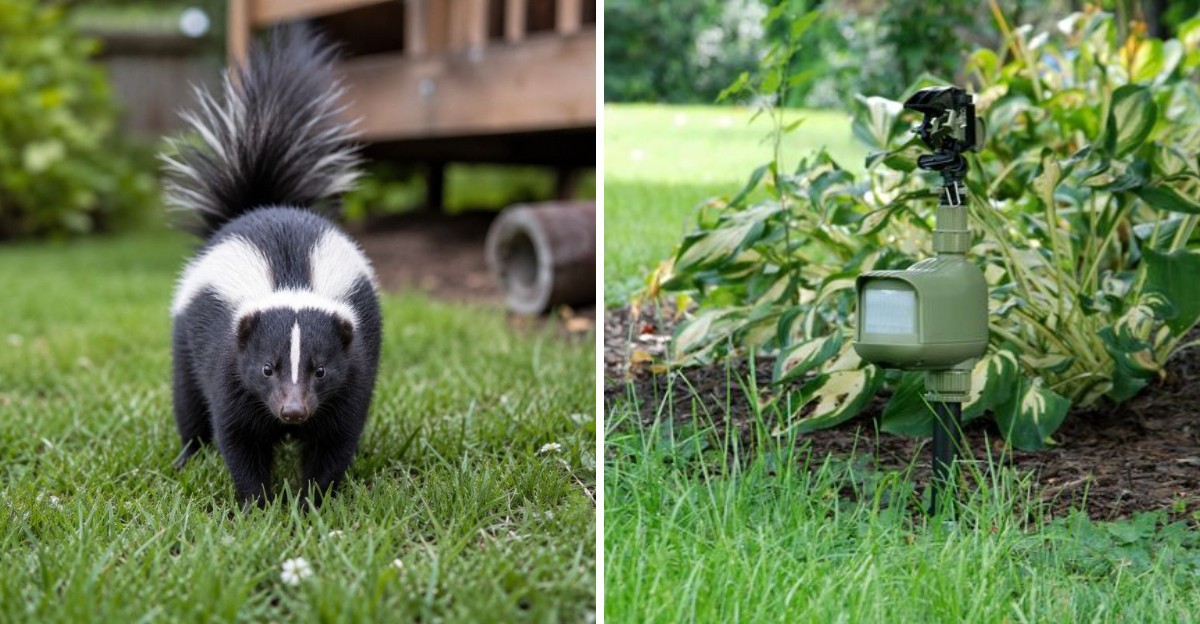
That sharp, unmistakable odor drifting through the yard at night is often the first clue that a skunk has moved into the neighborhood. Then the other signs start adding up.
Skunks are common across Texas, and they’re not out to cause trouble. They’re simply looking for food, water, and a quiet place to sleep during the day. Unfortunately, the average backyard offers all three.
Once they find a spot that works, they tend to keep coming back. Nobody wants a surprise run-in with a skunk, especially if you have pets or kids.
The good news is that you don’t need harsh methods to handle the problem. Here’s what to do when skunks won’t stop visiting your Texas yard.
1. Remove Easy Food Sources
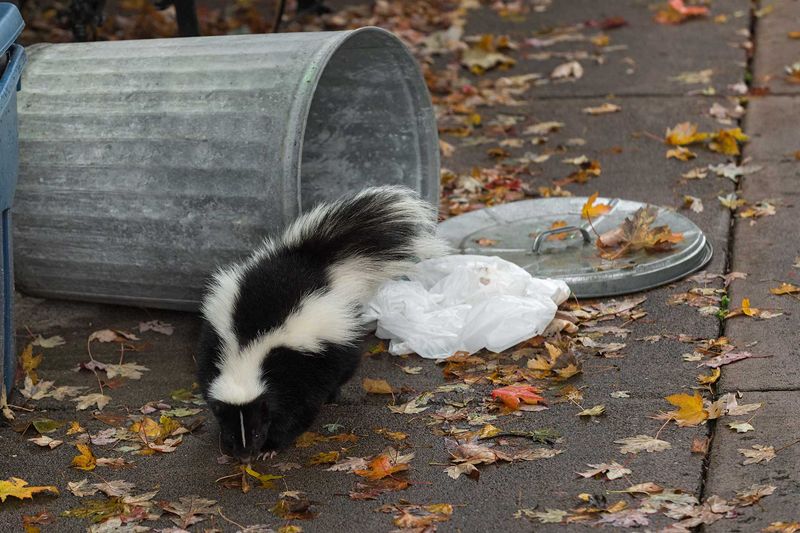
Skunks are basically tiny raccoons with a stink button. They wander from yard to yard looking for an easy meal. If your yard serves a free buffet, they will keep coming back for seconds.
Pet food is one of the biggest draws. Many Texans feed dogs and cats on the back porch and leave the bowl out all night. Try feeding pets earlier in the evening and bringing bowls inside before dark.
Bird feeders are another sneaky problem. Seeds spill onto the ground, and skunks happily scoop them up. Rake up fallen seed often, or use a tray under the feeder to catch the mess.
Fruit trees can cause trouble too. Peaches, figs, and pecans drop in summer and fall across much of Texas. Pick up fallen fruit and nuts every day or two so they do not pile up.
Trash cans deserve special attention. A skunk cannot lift a heavy lid, but it will tip an open or loose can. Use cans with tight-fitting or locking lids, and keep them in a garage or shed if you can.
Compost piles can also smell like dinner to a hungry skunk. Avoid adding meat, dairy, or greasy scraps. A closed compost bin works much better than an open heap.
Here is a fun fact to keep in mind. Skunks have a strong sense of smell but pretty poor eyesight. That means they find food mostly by sniffing, so even small crumbs count.
Cleaning up food sources costs little and works fast. Once the snacks disappear, many skunks simply move on to a neighbor who has not caught on yet.
2. Treat Your Lawn For Grubs
One morning you walk across the grass and spot dozens of tiny holes. They look like someone poked the lawn with a pencil and twisted it. Nope, that was probably a skunk hunting for breakfast.
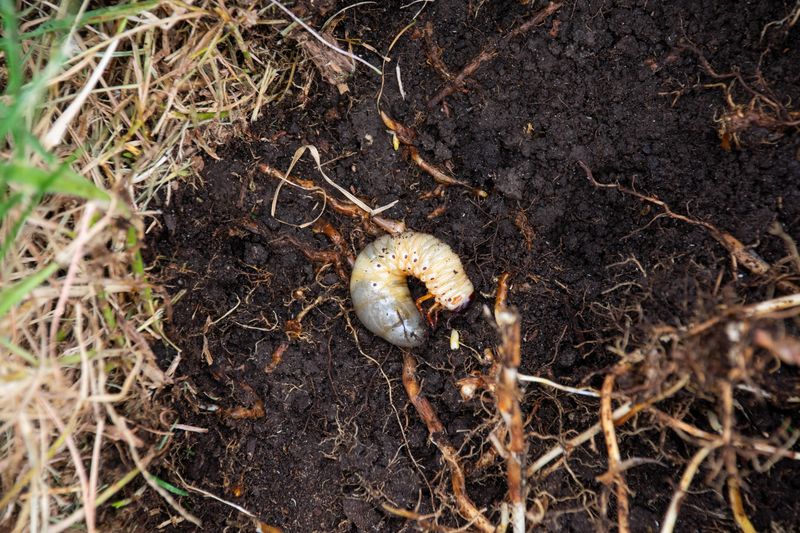
Skunks love grubs. Grubs are the fat, white, C-shaped larvae of beetles, like June bugs. They live just under the soil and munch on grass roots.
A skunk can smell grubs from above ground. It uses its long front claws to dig small, cone-shaped holes to reach them. Crickets, earthworms, and beetles are also on the menu.
So how do you know if grubs are the issue? Try a simple test. Cut a square foot of turf a few inches deep and peel it back like a carpet.
Your Texas Garden Changes Every Week. Your Plan Should Too.
Gardening in Texas changes quickly throughout the season. Every Friday you’ll receive a simple weekly plan showing exactly what to plant, prune, fertilize, harvest, and protect so you never miss the right timing.
If you count more than five or six grubs, you likely have a problem. Brown patches that lift up easily are another clue. Texas lawns often see grub activity in late summer and early fall.
You have a few choices for treatment. Garden centers sell grub control products made for home lawns. Always read the label and follow the timing it suggests.
Prefer a natural route? Beneficial nematodes are tiny worms that attack grubs but leave people, pets, and plants alone. Water your lawn before and after applying them, since they need moist soil to work.
Healthy grass helps too. Avoid overwatering, because soggy soil attracts beetles looking to lay eggs.
Once the grubs are gone, your lawn stops being a snack bar. The skunks lose interest, and your grass gets a chance to bounce back.
3. Block Access To Denning Spots
A cozy space under your deck might look like wasted room to you. To a skunk, it looks like a perfect apartment with free rent. Dark, dry, and protected spots are exactly what they want.
Skunks often den under decks, porches, sheds, and concrete slabs. They also squeeze into gaps along a home’s foundation. Mother skunks especially like these places in spring when they raise their babies.
Before you seal anything, make sure nobody is home. Trapping a skunk inside can make things much worse. You might end up with a panicked animal and a terrible smell under your floor.
A simple trick helps you check. Loosely stuff the opening with newspaper or sprinkle flour on the ground in front of it.
If the paper is pushed out or tracks lead away overnight, the skunk has left for its evening outing.
Avoid sealing dens from about April through June. Baby skunks may be inside and cannot leave yet. Wait until you see the whole family heading out together.
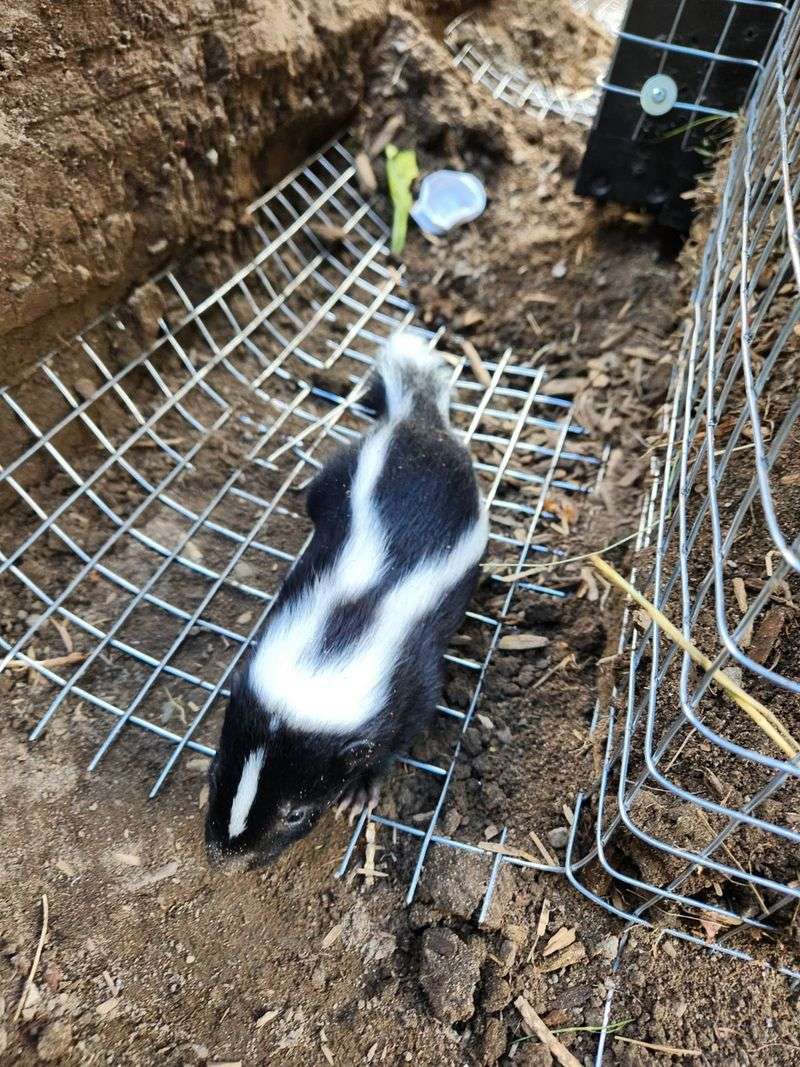
Once the space is empty, grab sturdy galvanized wire mesh. Hardware cloth with small holes works well. Dig a trench about 8 to 12 inches deep along the opening.
Bury the mesh in the trench and bend the bottom outward in an L-shape. When a skunk tries to dig under, it hits the wire and gives up. Attach the top firmly to the deck or shed frame.
Fill the trench back in and pack the soil tight. It takes an afternoon, but it can stop skunk problems for years.
4. Use Motion-Activated Lights Or Sprinklers
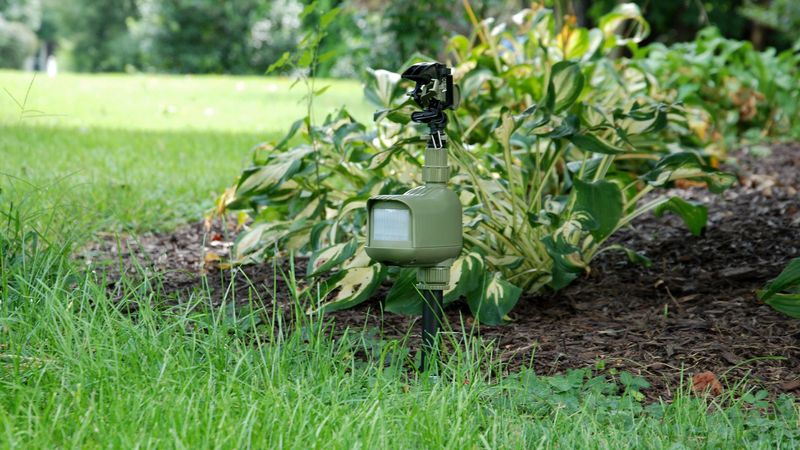
Think of it as a surprise party that skunks really hate. One second the yard is dark and quiet. The next, lights flash on or a burst of water sprays out of nowhere.
Skunks are mostly nocturnal. They sleep during the day and come out to roam after sunset. They feel safest in dark, calm places where nothing bothers them.
Motion-activated lights break up that peaceful feeling. When a skunk walks by, the sensor spots it and turns on a bright beam. Many skunks will turn around and look for a darker yard.
Place lights near spots where you have seen skunk activity. Good areas include the edges of decks, sheds, gardens, and trash can areas. Solar-powered models are easy to install and do not need wiring.
Motion-activated sprinklers can be even more effective. They connect to a garden hose and shoot a quick spray of water when something moves. The skunk gets wet, a little startled, and completely unharmed.
These sprinklers are great for gardens and flower beds. They also help keep out other critters like raccoons, armadillos, and deer. That is a real bonus in many parts of Texas.
A few tips will help you get the best results. Move your devices every week or two so skunks do not get used to them. Point sprinklers away from walkways so you do not soak yourself on the way to the car.
These tools work best alongside other steps, like removing food. Together, they send a clear message that your yard is not a relaxing hangout spot.
5. Keep Pets Protected And Vaccinated
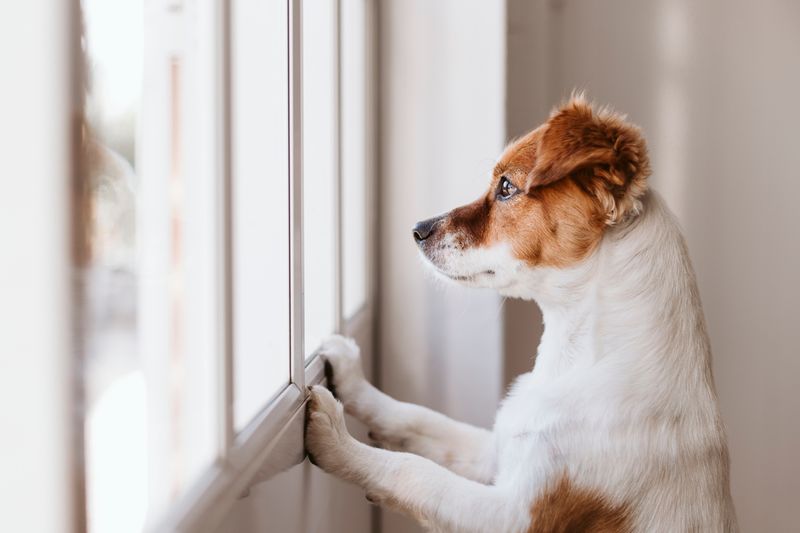
Ask any dog owner who has dealt with a skunk encounter. They will tell you about the late-night bath, the lingering smell, and the sad, stinky pup. Spraying is unpleasant, but bites are the bigger worry.
Skunks are one of the main carriers of rabies in Texas. Rabies is a serious virus that attacks the brain and nervous system. It spreads mainly through bites and saliva.
Texas law requires dogs and cats to get rabies vaccines. Pets must be vaccinated by four months of age and kept current after that. Your vet will tell you whether your pet needs a shot every year or every three years.
Keep proof of vaccination handy. A rabies tag on the collar is helpful, and so is a paper or digital record. If your pet ever tangles with a skunk, you will need that information fast.
Nighttime is when most run-ins happen. Walk your dog on a leash after dark, or stay nearby while it is in the yard. Flip on the porch light first to scare off any visitors.
Cats that roam outdoors face extra risk. Keeping them inside at night is a smart choice. It also protects them from cars, coyotes, and fights.
If your pet does get sprayed, try a homemade mix. Combine one quart of hydrogen peroxide, a quarter cup of baking soda, and a teaspoon of dish soap. Avoid the eyes and rinse well.
If your pet is bitten or scratched, call your vet right away. Quick action keeps everyone safer.
6. Watch For Signs Of Rabies
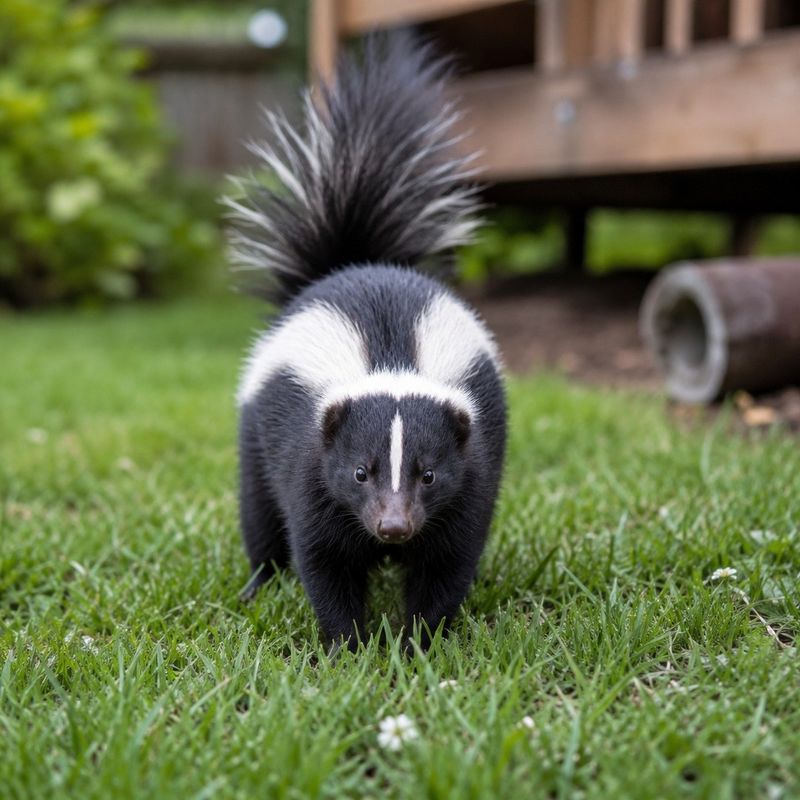
Most skunks want nothing to do with you. A healthy one will waddle away, stomp its feet, or raise its tail as a warning. When a skunk acts strange, pay close attention.
Rabies can change how an animal behaves. A sick skunk may seem unusually aggressive or oddly calm. It might walk right up to people or pets with no fear at all.
Watch for other red flags too. Stumbling, circling, shaking, or looking confused are common signs. Some sick animals drool, seem weak, or appear to have trouble moving their legs.
Seeing a skunk during the day does not always mean it is sick. Mothers sometimes hunt in daylight to feed their babies. Still, daytime activity plus odd behavior is a warning sign worth taking seriously.
The golden rule is simple. Never approach, touch, or try to catch a skunk that seems sick. Keep kids and pets inside and watch from a safe spot.
Call your local animal control office right away. Many Texas cities and counties have trained officers who handle possible rabies cases. If you are not sure who to call, your city’s non-emergency number can point you in the right direction.
Act quickly if someone gets bitten or scratched. Wash the wound with soap and water for several minutes. Then contact a doctor or go to urgent care the same day.
Rabies is very preventable when treated early. Report the incident to local health officials too. Speedy reporting helps protect your whole neighborhood, not just your household.
7. Call A Wildlife Professional If They Won’t Leave
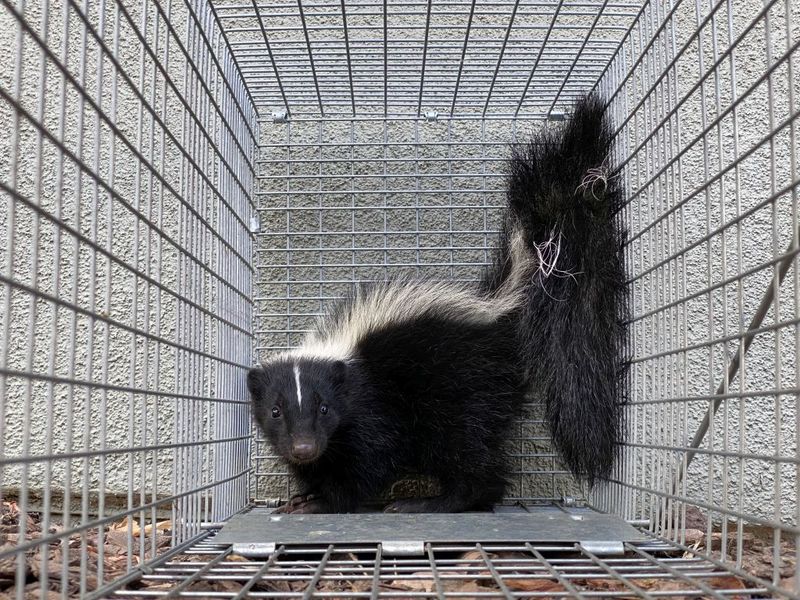
Sometimes a skunk just refuses to take the hint. You have cleaned up food, fixed the lawn, and added lights. Yet every night, there it is again, strolling across the yard like it pays the mortgage.
That is the moment to bring in a pro. A licensed wildlife control professional deals with skunks all the time. They know how to remove them safely and humanely.
Trapping a skunk yourself may seem like a money saver. In reality, it can go badly very fast. One wrong move and you, your clothes, and your garage could smell for weeks.
There is also the rabies risk. Handling a wild animal up close puts you in danger of bites or scratches. Professionals have gloves, gear, and training to reduce that risk.
Local rules matter too. Texas has specific guidelines for handling animals that can carry rabies. In many areas, you cannot simply relocate a trapped skunk to another spot. A pro will know what is allowed where you live.
Many companies offer more than removal. They can inspect your home for entry points, seal gaps, and install exclusion barriers. Some even offer warranties if animals return.
When choosing a company, ask a few smart questions. Are they licensed and insured? Do they use humane methods? Can they share reviews from local customers?
Prices vary based on how tricky the job is. Getting two or three quotes helps you find a fair deal. A good professional solves the problem for the long haul, so you can finally enjoy peaceful, fresh-smelling nights outside.