Native Georgia Shrubs That Deliver Burning Bush Color Without The Invasive Spread
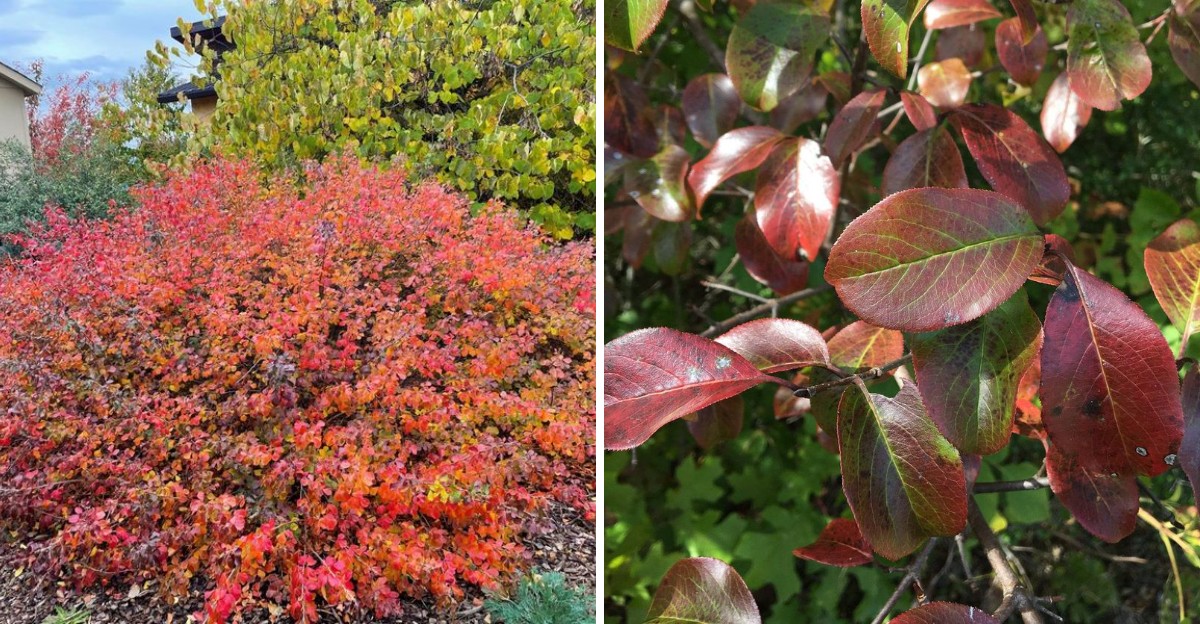
Burning bush earns its name every fall, when the leaves turn a red so bright it looks almost fake. That color is why the shrub became a standard pick along foundations.
The problem is what happens after birds eat the berries and drop the seeds elsewhere.
Those seedlings sprout in nearby woods and crowd out plants that belong there, which is why some states limit its sale.
In Georgia, it keeps turning up in more natural areas than most homeowners realize. You might even have a few volunteers along your back fence without knowing where they came from.
Pulling yours out does not have to mean giving up that fall color, though.
Several native shrubs turn rich shades of red, and they feed wildlife without taking over the woods nearby.
1. Virginia Sweetspire Holds Its Wine-Colored Leaves Well Into Winter
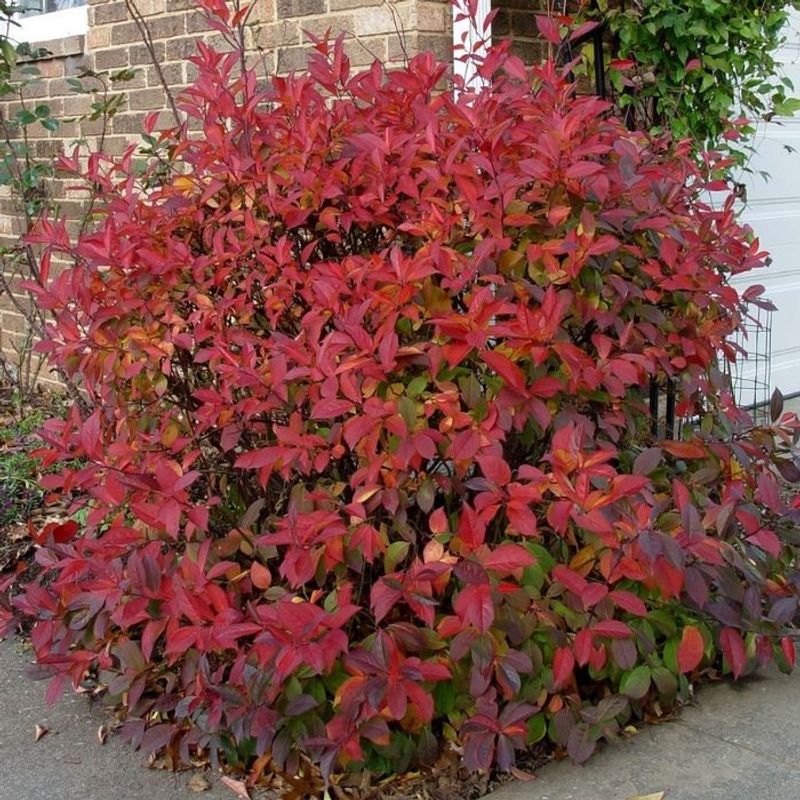
Some shrubs flash color for two weeks and quit, but Virginia sweetspire tends to linger. In mild parts of Georgia, its wine-red leaves can hang on into December or even January.
How long the leaves last depends on your winter, so a hard freeze may cut the show short.
Late spring brings a different reward, with drooping white flower spikes that smell lightly sweet. Bees and butterflies visit them often, which makes the shrub useful long before fall arrives.
Wet spots are where sweetspire really earns its keep in a yard.
It grows naturally along stream banks and swamp edges, so soggy clay near a downspout rarely bothers it. It also handles average garden soil once its roots settle in during the first year.
Plant it in full sun if you want the richest red, since heavy shade usually gives duller, more yellow tones.
Expect a mature size of about three to six feet tall, depending on the variety you buy. Plants spread slowly by underground runners, which is helpful on banks but worth knowing if you want a tidy border.
Pull or dig out extra shoots in early spring if they wander too far.
Popular selections like ‘Henry’s Garnet’ and the compact ‘Little Henry’ are easy to find at many nurseries. Both give that deep burgundy look without the invasive seed problem of burning bush.
2. Red Chokeberry Pairs Brilliant Color With Glossy Berries
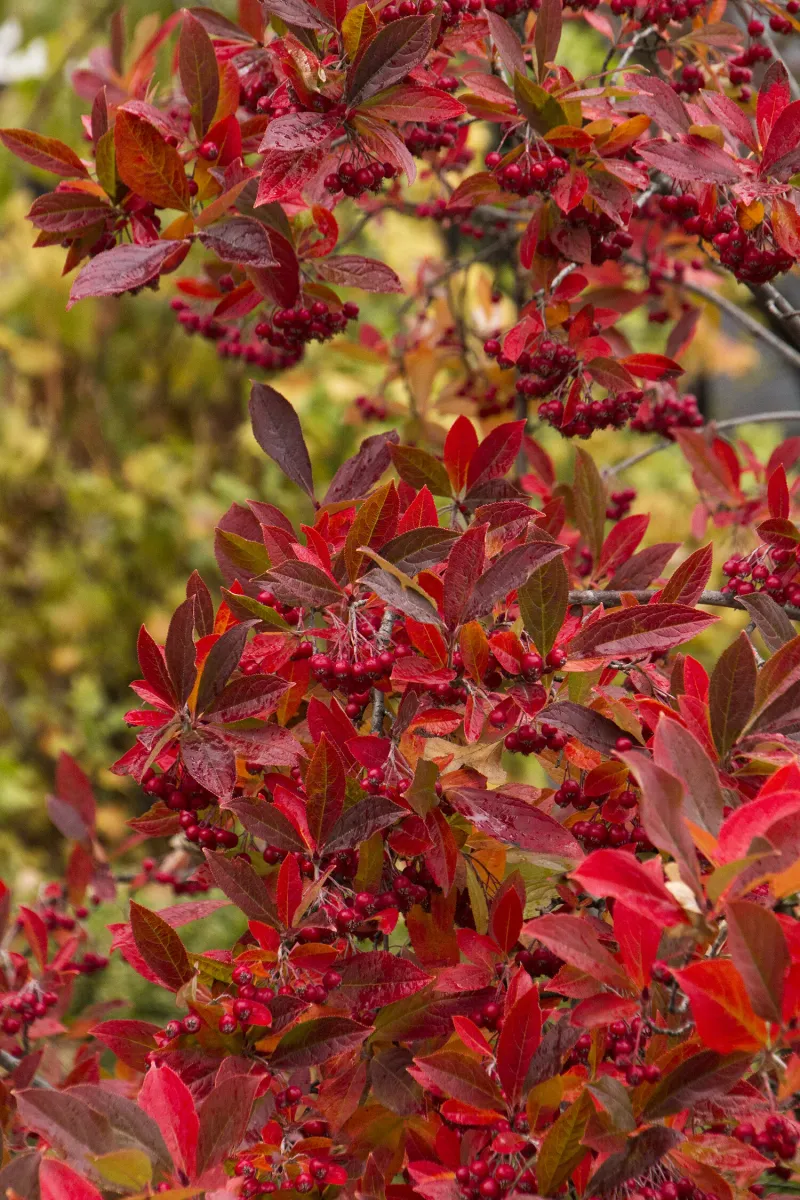
Bright red leaves plus shiny red berries make chokeberry look like it dressed up for fall. In a good year, the whole shrub glows scarlet from top to bottom.
Don’t let the name scare you off, because it comes from the sour taste of the fruit.
Birds tend to leave the berries alone until later in winter, after other food runs low. That habit means you often get fruit on the branches for weeks after the leaves drop.
Native plant fans in Georgia like red chokeberry because it handles both damp and fairly dry soil.
Give it a sunny spot for the best color and the heaviest crop of berries. It will grow in part shade, though the fall display is usually less intense there.
Your Georgia Garden Changes Every Week. Your Plan Should Too.
Gardening in Georgia changes quickly throughout the season. Every Friday you’ll receive a simple weekly plan showing exactly what to plant, prune, fertilize, harvest, and protect so you never miss the right timing.
White flowers show up in April, and small native bees are regular visitors.
Most plants reach six to ten feet tall and spread slowly into a loose clump over time. If you want a neater shape, trim a few of the oldest stems to the ground in late winter.
Leggy growth at the base is common, so tuck lower plants like ferns or sedges in front.
Look for ‘Brilliantissima’ at nurseries if you want a selection known for especially strong red fall leaves. Straight species plants work well too, especially in rain gardens or naturalized areas.
3. Scarlet Foliage And Sweet Fruit Make Highbush Blueberry A Two-Season Pick
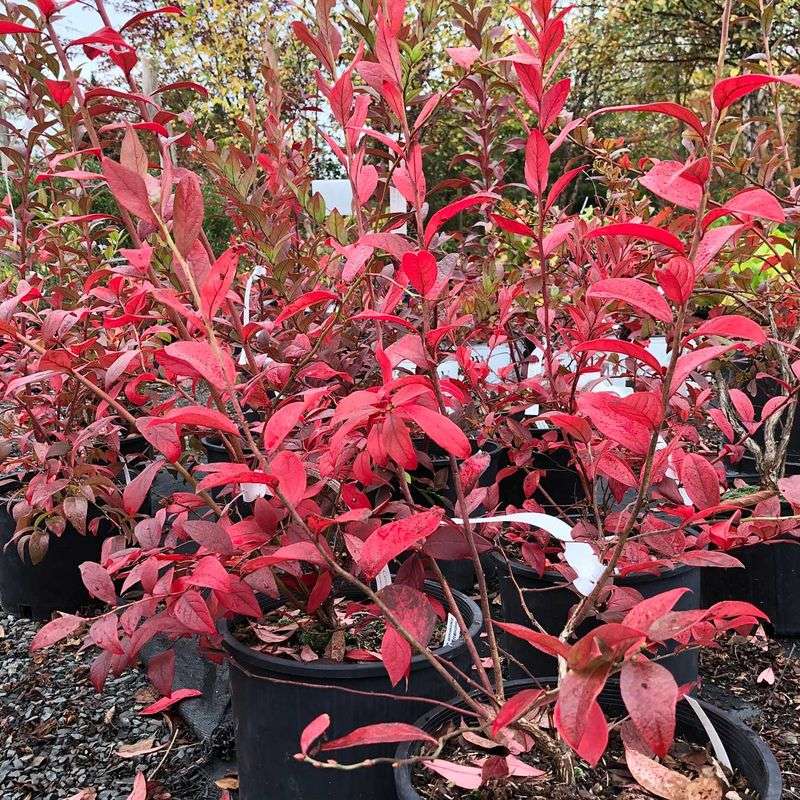
Blueberries for breakfast in June and a blaze of red in November sounds like a fair deal. Highbush blueberry offers both, which is rare for a single shrub.
Georgia already grows plenty of blueberries on farms, so this plant fits the region naturally.
Soil is the big thing to get right before you plant. Blueberries want acidic, well-drained ground rich in organic matter, and they often struggle in heavy, alkaline, or compacted soil.
A simple soil test from your county extension office can save you a lot of guessing.
Fall color usually runs from orange to deep scarlet, depending on sun and weather. Plants in full sun tend to color best, while shade can mute the leaves and reduce the berry harvest.
Plant at least two different varieties if you want a better fruit set, since cross-pollination often helps.
Mulch with pine straw or shredded bark to keep roots cool and moist through hot summers. Blueberry roots sit close to the surface, so steady watering matters during dry spells.
Birds will compete with you for the ripe fruit, and they are often faster.
Netting helps if you want most of the crop for yourself. Either way, you still get spring bell-shaped flowers, summer berries, and that bright autumn finish without any invasive spreading.
4. Dwarf Fothergilla Mixes Orange, Gold, And Crimson On One Plant
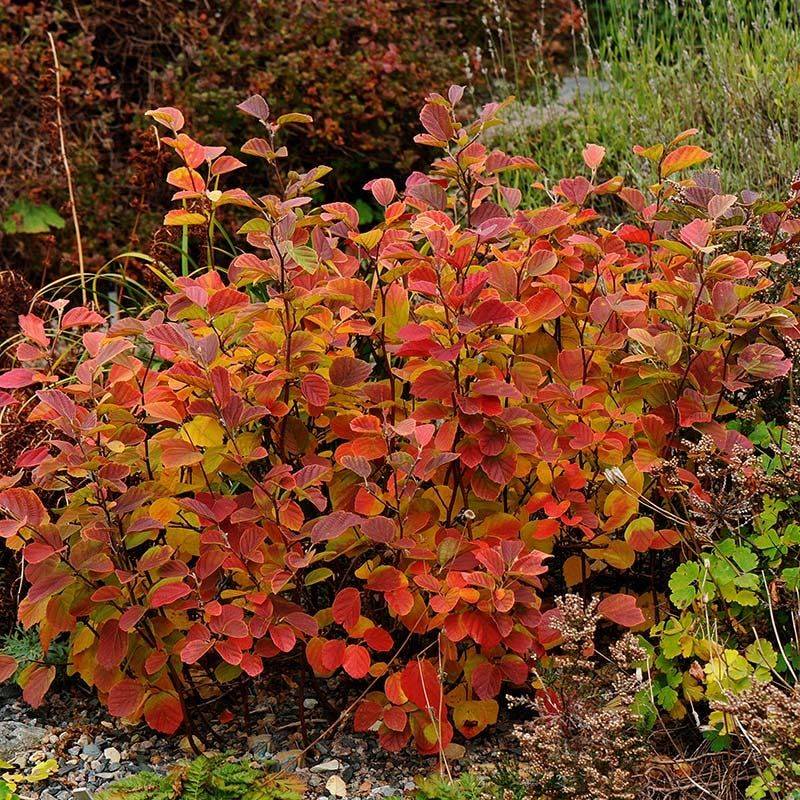
Picture a sunset shrunk down to fit a flower bed. Dwarf fothergilla often shows orange, gold, and crimson on the same branch at once.
Every plant colors a little differently, and the mix can shift from one fall to the next.
Spring is almost as fun, thanks to fuzzy white bottlebrush flowers with a honey-like scent. They open before or with the new leaves, so they really stand out against bare branches.
Small yards are where this shrub shines, since most plants stay around two to three feet tall.
It grows wild in parts of the Southeast, including a few scattered spots in Georgia. Garden plants do best in acidic, well-drained soil with steady moisture.
Sun gives the brightest color and more flowers, but afternoon shade is welcome in the hotter parts of the state.
Very little pruning is needed, which is a relief if you dislike yard chores. Just snip out any broken or crossing branches after it finishes flowering.
Pair it with evergreens like native inkberry holly for contrast.
Dark green leaves next to fothergilla make the fall colors pop even more. If you want a slightly larger plant, ‘Mount Airy’ reaches four to five feet and is known for dependable autumn color.
5. After Its Flowers Fade, Oakleaf Hydrangea Turns Rich Burgundy
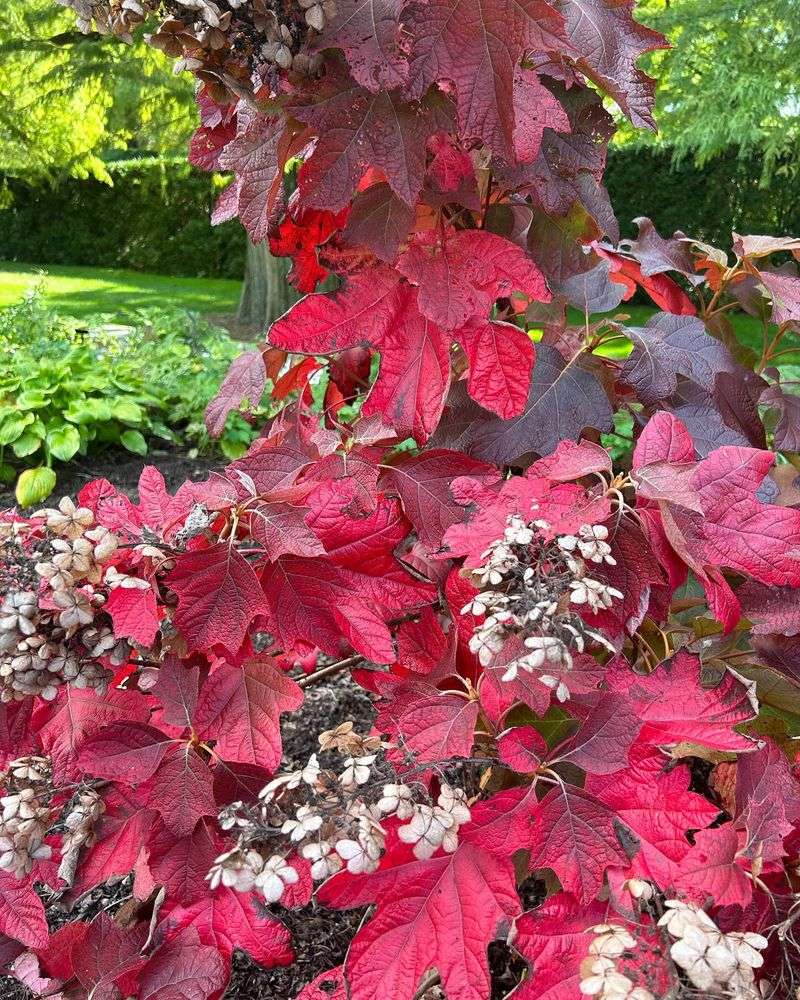
Summer flowers are only half the story with oakleaf hydrangea. Once the blooms fade, those big lobed leaves slowly shift to burgundy, red, and purple.
Gardeners across Georgia can feel proud of this one, since it is native to the Southeast and grows wild in parts of the state.
Large cone-shaped flower clusters open white in late spring. As summer goes on, they often age to pink or tan and hang on the plant well into fall.
Shade tolerance is a big plus, though some sun helps the fall color get richer.
Morning sun with afternoon shade is a sweet spot in most Southern yards. Deep shade usually means fewer flowers and weaker autumn tones.
Drainage matters more than almost anything else for this shrub.
Soggy soil can lead to root rot, so skip low spots that stay wet after rain. A gentle slope or raised area under tall trees often works well.
Winter interest comes from peeling, cinnamon-colored bark on older stems.
Standard plants can grow six to eight feet tall and wide, so give them room. For smaller spaces, look for compact selections like ‘Ruby Slippers’ or ‘Pee Wee’, and prune only right after bloom since next year’s buds form on old wood.
Leave enough space around the shrub for its broad leaves and arching stems to develop naturally.
Once established in the right spot, it can bring changing color and texture to the garden through several seasons.
6. For Slopes And Low Borders, Fragrant Sumac Glows Orange-Red
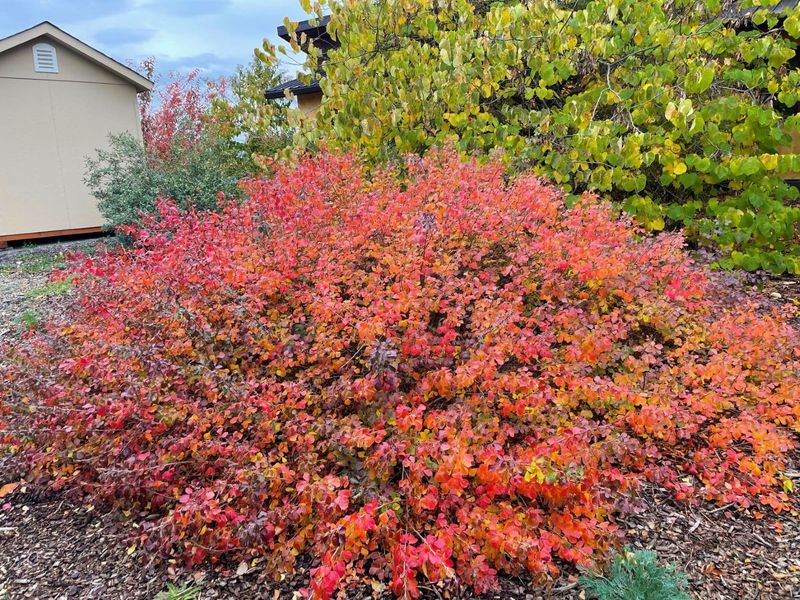
Steep banks are tough to mow and even tougher to plant. Fragrant sumac solves that problem by spreading low and holding soil in place.
Leaves turn orange, red, or reddish purple in fall, and the shade can vary from plant to plant.
Crush a leaf and you’ll catch a spicy, citrus-like smell. Some people like it, while others find it a bit strong, so give it a sniff before you buy.
Worried about poison sumac? Fragrant sumac is a different plant and does not cause that nasty rash.
Dry, rocky, or poor soil rarely slows it down once roots are established. That toughness makes it a smart pick for hot, sunny spots where other shrubs struggle in a Georgia summer.
Tiny yellow flowers appear in early spring before the leaves fully open.
Female plants may produce fuzzy red berries later in summer that birds will eat. Not every plant fruits, since the species usually needs both male and female plants nearby.
‘Gro-Low’ is the most common variety, staying about two feet tall and spreading six feet or more.
Expect it to root where branches touch soil, which helps fill a slope quickly. Trim edges in late winter if it creeps onto a path or lawn.
Once the slope fills in, the dense growth can also help reduce bare patches where soil tends to wash away.
Give each plant room to spread so the branches can gradually cover the ground without constant trimming.
7. Strawberry Bush Is A Burning Bush Relative Native To Local Woods
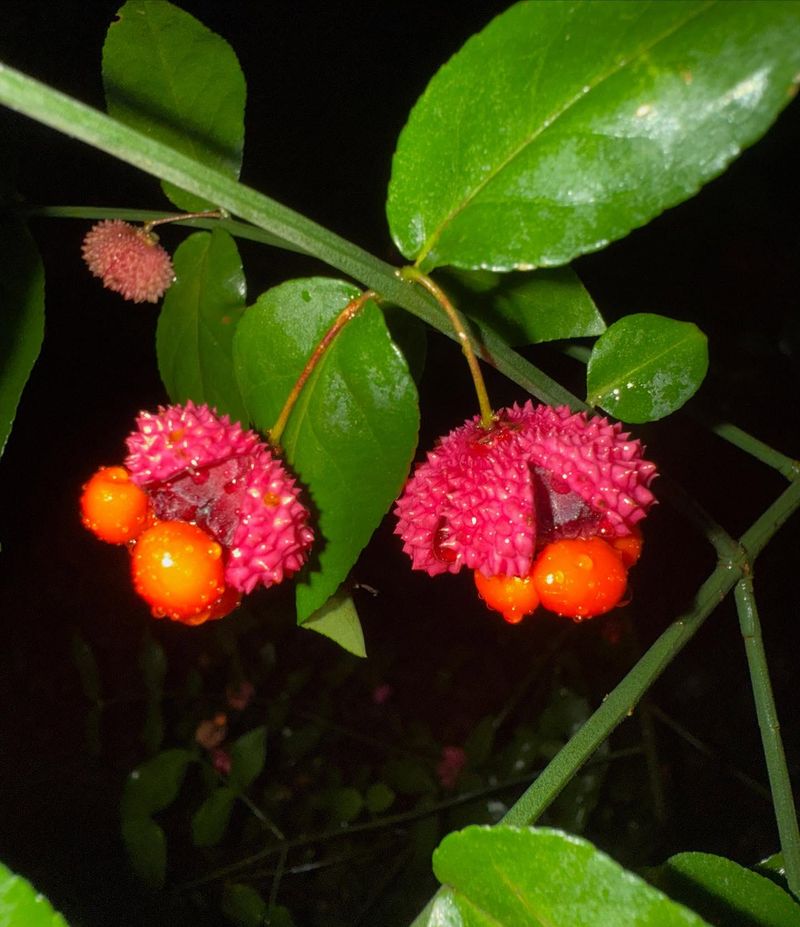
Here’s a twist most gardeners never expect. Strawberry bush belongs to the same plant genus as burning bush, yet it grows wild in Georgia forests.
Walk a shady trail in September or October and you might spot its odd fruit.
Bumpy red capsules split open to show bright orange seeds that dangle like tiny ornaments. Old Southern nicknames include “hearts-a-bustin'” because of that dramatic look.
Leaves can turn soft red or reddish purple in fall, though color is often milder than its invasive cousin.
Green stems stay visible through winter, adding a little interest when the woods look bare. The plant has a loose, airy shape and usually reaches four to six feet tall.
Shade is where strawberry bush feels most at home.
Plant it under trees in moist, well-drained soil with plenty of leaf litter. Hot, dry, full-sun sites usually stress it and reduce growth.
Deer love to browse this shrub, and that can be a real problem in some neighborhoods.
A wire cage or fencing may be needed while plants get established. Also keep in mind that the seeds and berries are not meant for eating, so it’s wise to teach kids to look but not taste.
Give strawberry bush enough room to develop its naturally open shape without crowding nearby plants. Once established, it can bring subtle fall color and unusual fruit to shady garden spaces.
8. Deep Maroon Shades Arrive On Rusty Blackhaw Viburnum Each October
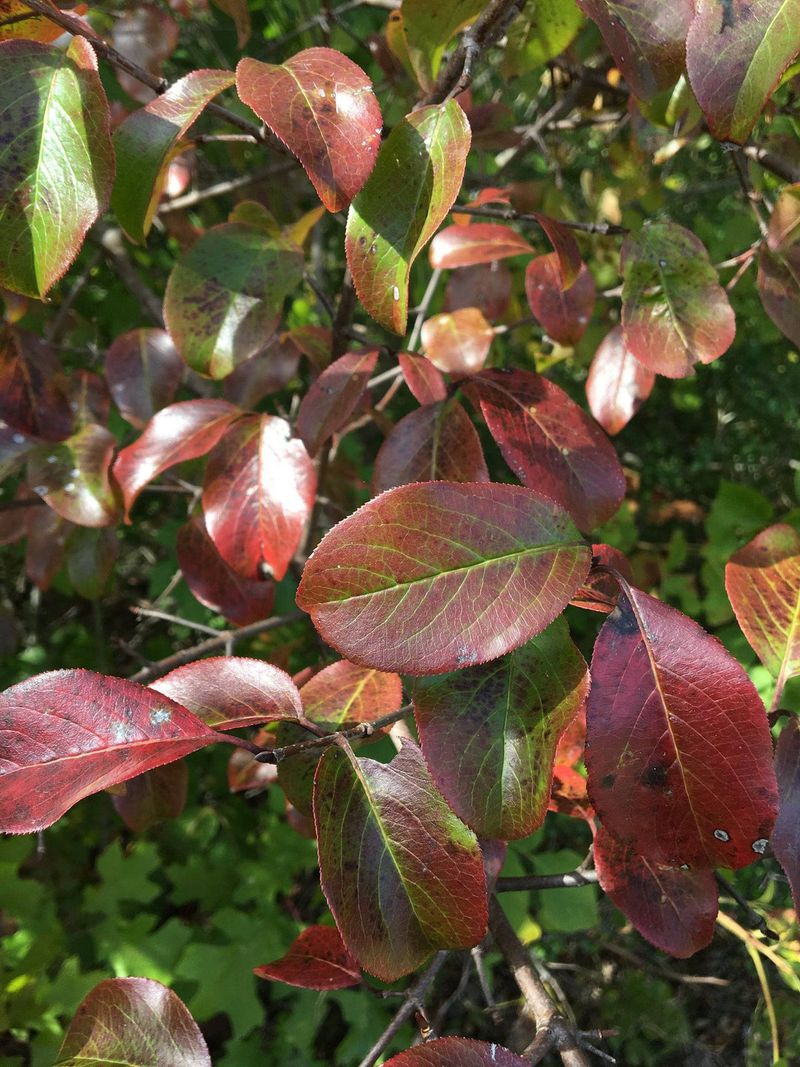
Glossy leaves give rusty blackhaw a shine that most fall shrubs lack. Around October, they often darken to deep maroon, purple, or red.
Exact timing shifts with weather, and warmer falls in south Georgia may delay the change.
Its name comes from the rusty brown fuzz on new buds and leaf stems. Look closely in early spring and you’ll see that reddish coating before the white flowers open.
Flat clusters of creamy blooms appear in spring and attract a wide range of pollinators.
By late summer and fall, those flowers become dark blue berries that birds and small mammals enjoy. Planting more than one viburnum nearby can help improve fruit production.
Size is flexible, since it can be grown as a large shrub or trained as a small tree.
Mature plants may reach ten to twenty feet tall over many years. That height makes it useful as a privacy screen or a native replacement for a row of overgrown hedges.
Drought tolerance is solid once roots are established, which helps during dry Southern summers.
Sun to part shade works fine, though fuller sun often brings stronger color. Water deeply during its first year, then let it mostly take care of itself.
Give it enough space to spread naturally as it matures. With minimal care, rusty blackhaw can provide structure and seasonal interest for years.